When an Octopus Caused the Great Staten Island Ferry Disaster (November 22, 1963)

Where were you on Novem­ber 22, 1963?

I had yet to be born, but am giv­en to under­stand that the events of that day helped shape a gen­er­a­tion.

Doc­u­men­tar­i­an Melanie Juliano knows this too, though she’s still a few months shy of the legal drink­ing age. The 2014 recip­i­ent of the New Jer­sey Film­mak­ers of Tomor­row Fes­ti­val’s James Gan­dolfi­ni Best of Fest Award uses pri­ma­ry sources and archival footage to bring an imme­di­a­cy to this dark day in Amer­i­can his­to­ry, the day a giant octopus—“a giant fuckin’ octo­pus” in the words of mar­itime expert Joey Fazzino—took down the Cor­nelius G. Kolff and all 400 hun­dred souls aboard.

What did you think I was talk­ing about, the Kennedy assas­si­na­tion?

octopus-boat

Image via the Face­book page of the Stat­en Island Fer­ry Octo­pus Dis­as­ter Memo­r­i­al Muse­um

Those who would ques­tion this tragedy’s authen­tic­i­ty need look no fur­ther than a recent­ly ded­i­cat­ed bronze memo­r­i­al in Low­er Manhattan’s Bat­tery Park. To require more proof than that is unseem­ly, nay, cru­el. If an esti­mat­ed 90% of tourists stum­bling across the site are will­ing to believe that a giant octo­pus laid waste to a Man­hat­tan-bound Stat­en Island fer­ry sev­er­al hours before John F. Kennedy was shot, who are you to ques­tion?

The memorial’s artist, Joe Reginel­la, of the Stat­en Island-based Super Fun Com­pa­ny, is find­ing it hard to dis­en­gage from a dis­as­ter of this mag­ni­tude. Instead the crafts­man, whose pre­vi­ous work includes a JAWS trib­ute infant crib, lingers near­by, not­ing vis­i­tors’ reac­tions and hand­ing out lit­er­a­ture for the (non-exis­tent) Stat­en Island Fer­ry Dis­as­ter Memo­r­i­al Muse­um.

(New York 1 reports that an actu­al muse­um across the street from the address list­ed on Reginella’s brochures is not amused, though atten­dance is up.)

A Stat­en Island Octo­pus Dis­as­ter web­site is there for the edi­fi­ca­tion of those unable to vis­it in per­son. Spend time con­tem­plat­ing this hor­rif­ic event and you may come away inspired to learn more about the Gen­er­al Slocum dis­as­ter of 1904, a real life New York City fer­ry boat tragedy, that time has vir­tu­al­ly erased from the pub­lic con­scious­ness.

(The memo­r­i­al for that one is locat­ed in an out of the way sec­tion of Tomp­kins Square Park.)

H/T to read­er Scott Her­mes/via Colos­sal

Relat­ed Con­tent:

The Dancer on the Stat­en Island Fer­ry

“Moon Hoax Not”: Short Film Explains Why It Was Impos­si­ble to Fake the Moon Land­ing

Ayun Hal­l­i­day is an author, illus­tra­tor, the­ater mak­er and Chief Pri­ma­tol­o­gist of the East Vil­lage Inky zine.  Her play Zam­boni Godot is open­ing in New York City in March 2017. Fol­low her @AyunHalliday.

1944 Instructional Video Teaches You the Lindy Hop, the Dance That Originated in 1920’s Harlem Ballrooms

1944’s MGM short Groovie Movie, abovebills itself as an instruc­tion­al film for those wish­ing to learn the Lindy Hop and its extreme­ly close cousin, the Jit­ter­bug.

The edu­ca­tion­al mod­el here is def­i­nite­ly of the “toss ‘em in the pool and see if they swim” vari­ety.

The eas­i­ly frus­trat­ed are advised to seek out a calm and patient teacher, will­ing to break the foot­work down into a num­ber of small, eas­i­ly digestible lessons.

Or bet­ter yet, find some­one to teach you in per­son. We’re about 20 years into a swing dance revival, and with a bit of Googling, you should be able to find an ath­let­ic young teacher who can school you in the dance pop­u­lar­ized by Frankie “Mus­cle­head” Man­ning and his part­ner Fre­da Wash­ing­ton at Harlem’s Savoy ball­room.

Speak­ing of teach­ers, you might rec­og­nize Arthur “King Cat” Walsh, the “top flight hep cat” star of Groovie Movie, as the fel­low who was brought in to teach I Love Lucy’s Lucy Ricar­do how to boo­gie woo­gie.

He’s got more chem­istry with his Groovie Movie part­ner, Jean Veloz. Backed by Lenny Smith, Kay Vaughn, Irene Thomas, Chuck Sag­gau, and sev­er­al tal­ent­ed kid­dies, they quick­ly achieve an aston­ish­ing­ly man­ic inten­si­ty as nar­ra­tor Pete Smith barks out a host of jazzy lin­go. (Here­in, lays the tru­ly sol­id instruc­tion. The atti­tude!)

Smith also heps view­ers to a few of the influ­ences at work, includ­ing bal­let, tra­di­tion­al Javanese dance, and even the “gay old waltz.” Sad­ly, he fails to men­tion the Harlem ball­room scene from whence it most direct­ly sprung.

At least Whitey’s Lindy Hop­pers, a pro­fes­sion­al troop drawn from the Savoy’s most skilled prac­ti­tion­ers, got their due in the 1941 film, Hel­lza­pop­pin’, below. Again, aston­ish­ing!

Okay, worms, let’s squirm.

Relat­ed Con­tent:

James Brown Gives You Danc­ing Lessons: From The Funky Chick­en to The Booga­loo

Rita Hay­worth, 1940s Hol­ly­wood Icon, Dances Dis­co to the Tune of The Bee Gees Stayin’ Alive: A Mashup

Jazz ‘Hot’: The Rare 1938 Short Film With Jazz Leg­end Djan­go Rein­hardt

Ayun Hal­l­i­day is an author, illus­tra­tor, the­ater mak­er and Chief Pri­ma­tol­o­gist of the East Vil­lage Inky zine.  Her play Zam­boni Godot is open­ing in New York City in March 2017. Fol­low her @AyunHalliday.

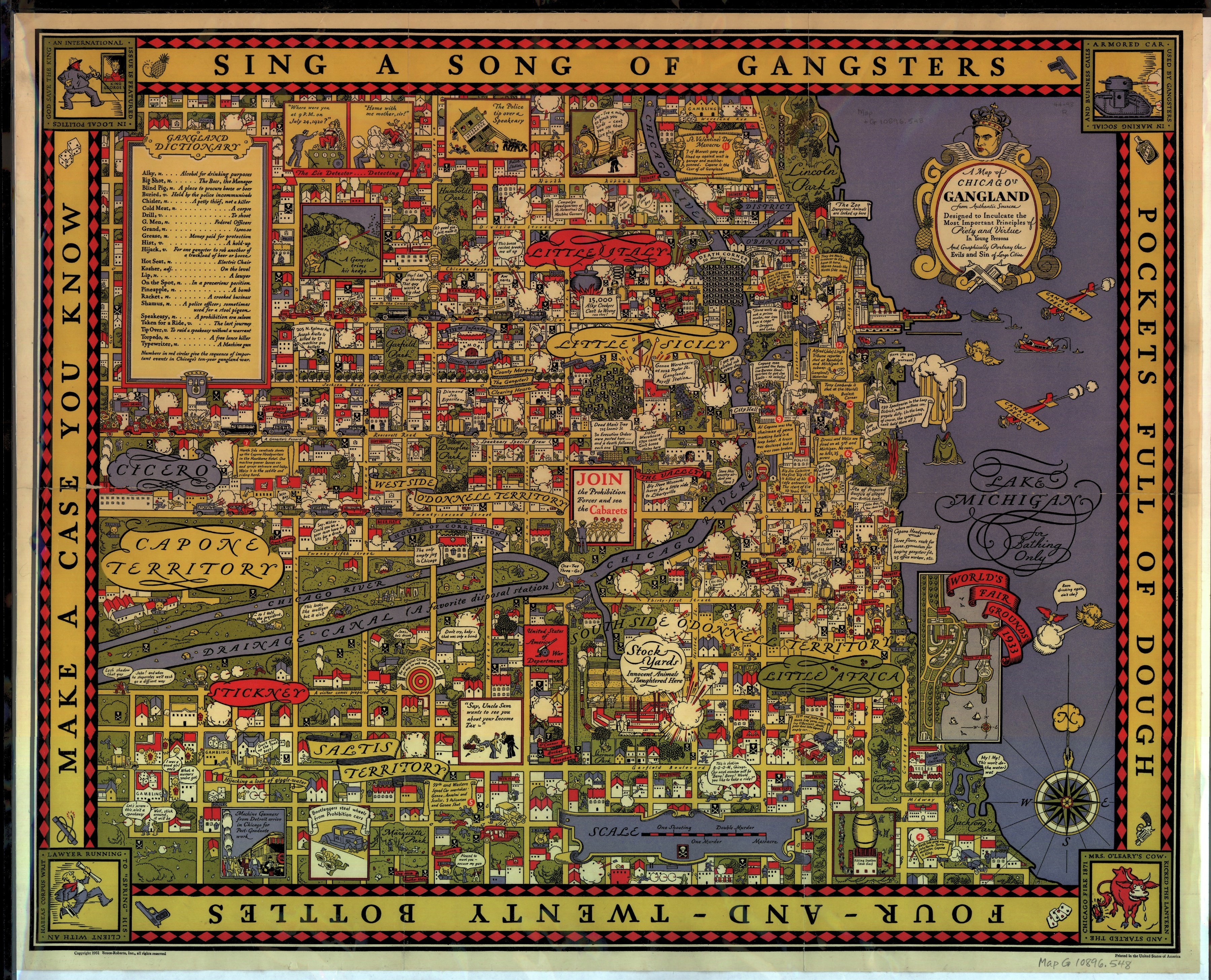
A Map of Chicago’s Gangland: A Cheeky, Cartographic Look at Al Capone’s World (1931)

lgganglandmap

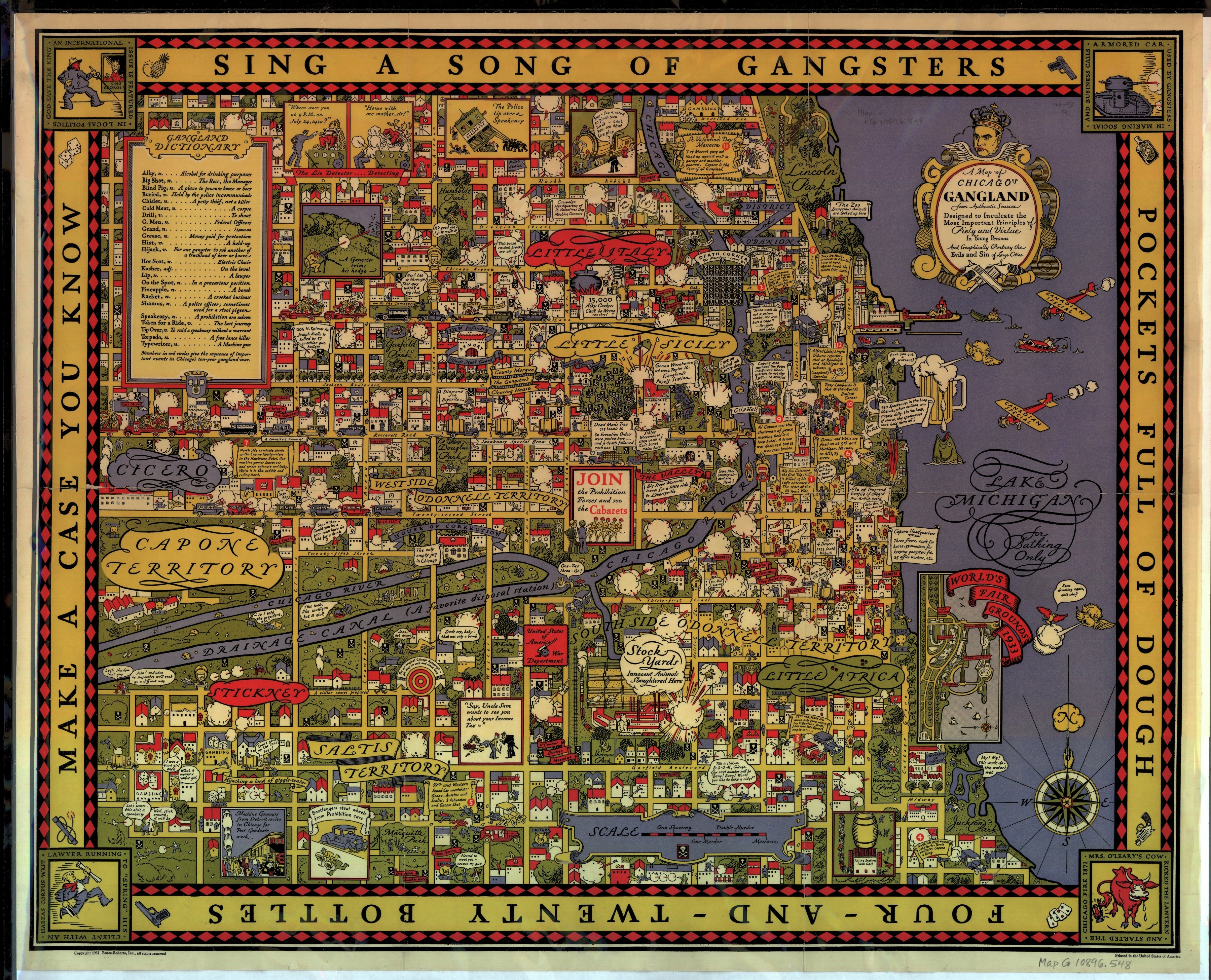
Mod­ern day Chicagoland gang activ­i­ty does not inspire quip­py car­toon “won­der maps.” Back when Al Capone ruled Chicago’s under­world, the pub­lic viewed gang­sters with movie mag­a­zine breath­less­ness. Their vio­lent crimes and glam­orous lifestyles sold news­pa­pers and movie tick­ets.

Today? Gangs­ta rap—a genre not known for its whimsy—glorifies the hard­core exis­tence of kids whom the sys­tem has failed, trapped in a cycle of pover­ty, com­pound­ing the social prob­lems that were heaped on them at birth. 

But back to 1931, the year Capone was sent to prison for tax eva­sion, and local firm Bruce-Roberts pub­lished Chicago’s Gang­land map, above, from “authen­tic sources.”

As any civic mind­ed reformer knows, the best way to “incul­cate the most impor­tant prin­ci­ples of piety and virtue in young per­sons” is to pack all “the evils and sin of large cities” into some­thing resem­bling a large-scale com­ic book. 

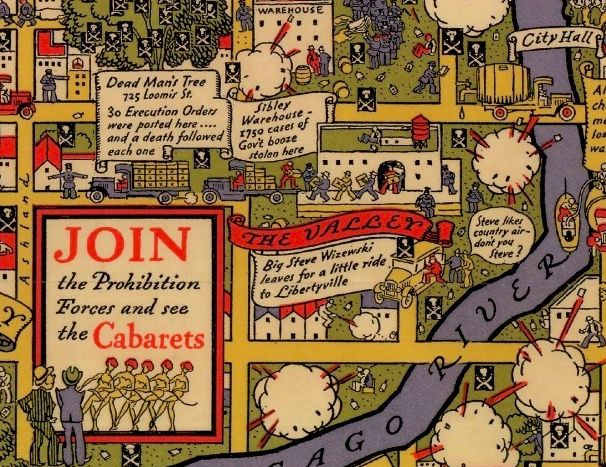
gangland-screen-shot-1

If the 30 exe­cu­tion orders post­ed on Dead Man’s Tree doesn’t scare ‘em straight, per­haps 1750 cas­es of gov­ern­ment booze and some scant­i­ly clad danc­ing girls will!

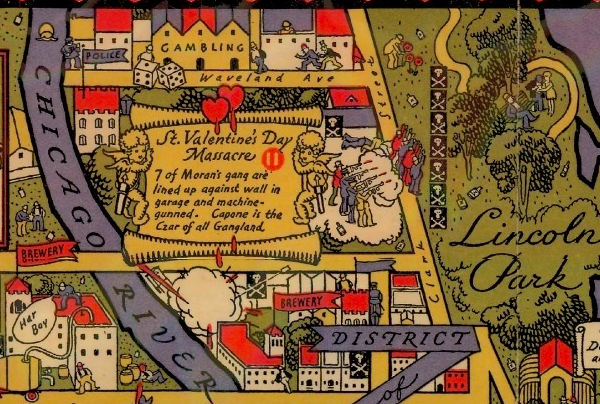
gangland-screen-shot-2

Nat­u­ral­ly, the site of 1929’s Saint Valentine’s Day Mas­sacre gets star treat­ment, with a graph­ic depic­tion guar­an­teed to stir the imag­i­na­tion far more than a vis­it to the actu­al site itself.

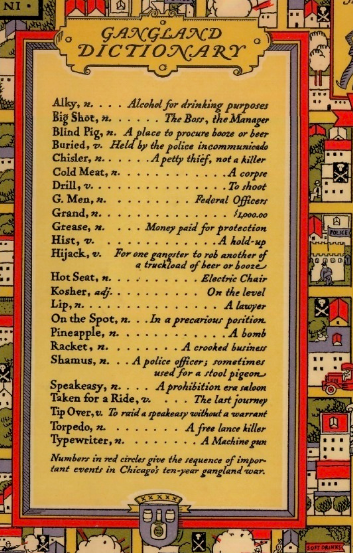
gangland-screen-shot-3

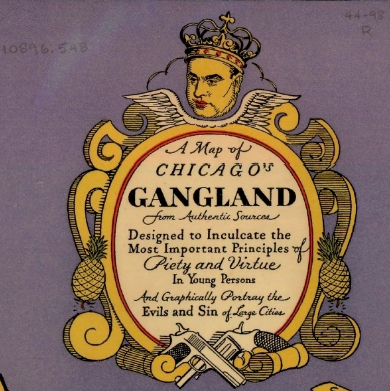
The pub­lish­er thought­ful­ly includ­ed a Gang­land Dic­tio­nary to fur­ther incul­cate the impres­sion­able youth and explain the pres­ence of two pineap­ples in the car­touche

gangland-screen-shot-4

Click here to view the map in a larg­er for­mat. Then zoom in to explore this light­heart­ed spin on Chicago’s wicked past in greater detail. The moral instruc­tion con­tin­ues in the form of poster-sized repro­duc­tions whose sale ben­e­fits Chicago’s New­ber­ry Library.

via Slate

Relat­ed Con­tent:

“The Won­der­ground Map of Lon­don Town,” the Icon­ic 1914 Map That Saved the World’s First Sub­way Sys­tem

A Won­der­ful Archive of His­toric Tran­sit Maps: Expres­sive Art Meets Pre­cise Graph­ic Design

Down­load 67,000 His­toric Maps (in High Res­o­lu­tion) from the Won­der­ful David Rum­sey Map Col­lec­tion

Ayun Hal­l­i­day is an author, illus­tra­tor, the­ater mak­er and Chief Pri­ma­tol­o­gist of the East Vil­lage Inky zine.  Her play Zam­boni Godot is open­ing in New York City in March 2017. Fol­low her @AyunHalliday.

“Charlie Rose” by Samuel Beckett: Watch Charlie Rose Meet Charlie Rose in a Comical Piece of Absurdist Theater

New York City couldn’t get enough of Ian McKel­lan and Patrick Stew­art when they appeared togeth­er in a cel­e­brat­ed 2013 revival of Samuel Beck­ett’s Wait­ing for Godot.

Five years ear­li­er, anoth­er high pro­file gent took a stab at the noto­ri­ous­ly avant-garde play­wright, and while the Inter­net took note, the same New York­ers who were des­tined to go ga ga for the adorable bowler hat­ted Brits bare­ly bat­ted a col­lec­tive eye.

Why was that?

Per­haps it’s because the ear­li­er project had a decid­ed­ly more down­town feel than the Broad­way pro­duc­tion star­ring McKel­lan and Stew­art. It was so exper­i­men­tal that its main play­er, jour­nal­ist and talk show host Char­lie Rose, a fix­ture of the New York social scene, didn’t even know he was per­form­ing in it. 

He didn’t have to. The whole thing was engi­neered by film­mak­er Andrew Fil­ip­pone Jr., in the spir­it of Beck­ett. 

By cut­ting togeth­er old footage using crowd-pleas­ing Par­ent Trap spe­cial effects, he made it pos­si­ble for Char­lie to have an absur­dist con­ver­sa­tion with him­self. It takes about 45 sec­onds to set­tle in to the prop­er sensibility—the top­ic is a bit 21st-cen­tu­ry and the famil­iar Char­lie Rose cred­its could’ve used a tweak—but once it gets going, it’s a ton of bizarre and dis­turb­ing fun.

The large table where Rose films his inter­views makes for as evoca­tive a set­ting as a bar­ren tree on a coun­try lane, a mound of earth, or a pair of garbage cans.

Beck­ett was nev­er one to shy from par­en­thet­i­cal instruc­tions, a prac­tice most play­wrights are taught to avoid on the the­o­ry that the actors should be allowed to dis­cov­er their char­ac­ters. Direc­tor Fil­ip­pone serves his muse well here, edit­ing in a host of non­ver­bal reac­tions so spe­cif­ic, they seem to be the direct embod­i­ment of some­thing writ­ten in the (non-exis­tent) script.

Relat­ed Con­tent:

Conan O’Brien Plays Char­lie Rose, Talks Pres­i­den­tial His­to­ry with Edmund Mor­ris

Watch the Open­ing Cred­its of an Imag­i­nary 70s Cop Show Star­ring Samuel Beck­ett

When Samuel Beck­ett Drove Young André the Giant to School: A True Sto­ry

Ayun Hal­l­i­day is an author, illus­tra­tor, the­ater mak­er and Chief Pri­ma­tol­o­gist of the East Vil­lage Inky zine.  Her play Zam­boni Godot is open­ing in New York City in March 2017. Fol­low her @AyunHalliday.

Gene Wilder Recalls the Beginnings of His Creative Life in Two Hilarious, Poignant Stories

We’d grown accus­tomed to his face—that wry, dis­tinc­tive mug, smirk­ing at us from beneath his Willy Won­ka pur­ple top hat in mil­lions of pro­lif­er­at­ing Con­de­scend­ing Won­ka memes, the epit­o­me of arch­ness and smug con­de­scen­sion. Apolo­gies to John­ny Depp, but no one else could have so per­fect­ly inhab­it­ed Roald Dahl’s mer­cu­r­ial can­dy­man like Gene Wilder, who passed away yes­ter­day from Alzheimer’s at the age of 83. Wilder’s Won­ka may casu­al­ly tor­ture his spoiled child guests, but we remem­ber him as a sadist with a heart of gold.

Willy Won­ka and the Choco­late Fac­to­ry, like Pee Wee’s Big Adven­ture, is one of those rare films beloved both by chil­dren and adults (or at least I remem­ber them that way); many future gen­er­a­tions will dis­cov­er Wilder’s man­ic bril­liance in his col­lab­o­ra­tions with Mel Brooks—Blaz­ing Sad­dles, Young Franken­stein, The Pro­duc­ers—and with Richard Pry­or, his friend and fre­quent com­ic foil. And those who lived through the 80s will also remem­ber Wilder for one of the great romances of the decade.

Wilder and Gil­da Rad­ner were a com­e­dy pow­er cou­ple whose mar­riage end­ed trag­i­cal­ly with her death from ovar­i­an can­cer in 1989. That same year he received a diag­no­sis of non-Hodgkin’s lym­phoma. “Wilder was dev­as­tat­ed by Radner’s death,” writes Vari­ety, “and only worked inter­mit­tent­ly after that.” But he nev­er lost his sharp, mad­cap sense of humor and deep well of gen­uine vul­ner­a­bil­i­ty as his career shift­ed into low­er gears in the ensu­ing decades. (He won an Emmy in 2003 for a guest role on Will & Grace and pub­lished a nov­el in 2007).

Wilder was always hap­py to share his cre­ative insights and sto­ries with fans, giv­ing fre­quent inter­views in the last few years and appear­ing on pan­els like that above, a 1999 forum on “The Won­ders of Cre­ativ­i­ty” with Jane Alexan­der, Dan­ny Glover, and oth­ers. Wilder shares a hilar­i­ous­ly irrev­er­ent sto­ry from his child­hood about how he learned to con­scious­ly make oth­er peo­ple laugh by prac­tic­ing on his moth­er after she’d had a heart attack.

This anec­dote gives way to anoth­er, both laugh out loud fun­ny and heart­break­ing at once, of young, 1st-grade Gene (then Jer­ry Sil­ber­man) fac­ing rejec­tion from a teacher (“That stu­pid lady”) who told him his art­work wasn’t good enough to hang on the wall. The hurt stayed with him, so that in 1984, he tells us, “I began paint­ing. Now I try to paint every day of my life.” Wilder com­mu­ni­cates his cre­ative phi­los­o­phy through per­son­al vignettes like these, col­or­ful­ly illus­trat­ing how he became an actor Pauline Kael called “a superb tech­ni­cian… [and] an inspired orig­i­nal.”

In the ani­mat­ed Blank on Blank inter­view clip above—taken from his 2007 con­ver­sa­tion with Let­ty Cot­tin Pogre­bin at the 92nd Street Y after the debut of his novel—Wilder opens with anoth­er ver­sion of the sto­ry about his moth­er, the source, he says of his con­fi­dence as an actor. He began his career in the the­ater in the ear­ly six­ties, and says he “felt on stage, or in the movies, I could do what­ev­er I want­ed to. I was free.” He also talks about actors’ mys­te­ri­ous moti­va­tions:

If you ask an actor, “Why do you want to act?,” I don’t think most of them know the real rea­sons. After sev­en and a half years of analy­sis, I have a fair­ly good idea why. My ana­lyst said, “Well, it’s bet­ter than run­ning around naked in Cen­tral Park, isn’t it?”

Wilder then tells the sto­ry of how he sug­gest­ed Willy Wonka’s dra­mat­ic entrance to the film’s director—insisted on it, in fact, as a con­di­tion for tak­ing the part. “From that time on,” he said of the character’s first moments on screen, “no one will know if I’m lying or telling the truth.” That was the comedic genius of Gene Wilder, may it live for­ev­er in some of the most sweet­ly hys­ter­i­cal and wicked­ly fun­ny char­ac­ters in film his­to­ry. Learn more about Wilder’s life and long career in the ret­ro­spec­tive doc­u­men­tary below.

Relat­ed Con­tent:

Anne Ban­croft and Mel Brooks Sing “Sweet Geor­gia Brown” Live…and in Pol­ish

John Cleese’s Phi­los­o­phy of Cre­ativ­i­ty: Cre­at­ing Oases for Child­like Play

Richard Pry­or Does Ear­ly Stand-Up Com­e­dy Rou­tine in New York, 1964

Josh Jones is a writer and musi­cian based in Durham, NC. Fol­low him at @jdmagness

A Big Super Cut of Saturday Night Live Cast Members Breaking Character and Cracking Up

Corps­ingaka laugh­ing inap­pro­pri­ate­ly onstage—requires far less skill than sol­dier­ing on when the actor play­ing oppo­site los­es con­trol, an occur­rence that almost always wins audi­ence favor.

The recent­ly released super cuts of Sat­ur­day Night Live cast mem­bers’ com­po­sure desert­ing them, above and below, sug­gest that the worst offend­ers are aware that view­ers will lap up these laps­es. Why strive to stay in char­ac­ter when bloop­er reel star­dom awaits?

It’s a fact that these crack ups have the abil­i­ty to loosen things up, recall­ing that free­wheel­ing peri­od before the show became the insti­tu­tion its cast mem­bers dreamed of audi­tion­ing for since child­hood.

It’s unclear what—if any—meaning we should ascribe to the evi­dence that the most indul­gent gig­glers are all male.

Could it be that women are fun­ny after all… enough to win the sort of punch­lines that’ll make the boys lose it on cam­era?

If so, per­haps we can arrange for aliens to abduct the next com­men­ta­tor who sug­gests oth­er­wise, probe him, then seat him oppo­site a bewigged Kate McK­in­non. No offense to guest host Ryan Gosling, the embod­i­ment of a good sport. His inabil­i­ty to stay in char­ac­ter was both under­stat­ed and heart­warm­ing, and he was­n’t pan­der­ing. SNL reg­u­lars Aidy Bryant and Bob­by Moyni­han strug­gled too. I still wager a lot of fun­ny ladies watched that Close Encoun­ters skit, and root­ed for McK­in­non to be giv­en the oppor­tu­ni­ty to take down an old school chau­vin­ist pig.

But not every­one delights in watch­ing these guys run off the rails, as Slate’s Jes­si­ca Win­ter notes in a piece about SNL’s corps­ing phe­nom­e­non:

Tra­cy Mor­gan exco­ri­at­ed his fel­low cast mem­ber (Jim­my Fal­lon) for “laugh­ing and all that dumb shit he used to do,” explain­ing, “That’s tak­ing all the atten­tion off of every­body else and putting it on you, like, ‘Oh, look at me, I’m the cute one.’

It’s true that the cam­era nev­er could resist cast mem­ber Bill Hader’s elab­o­rate, utter­ly unsuc­cess­ful attempts to bring his face to heel. Wit­ness the dress rehearsal for the West Coast-fla­vored soap opera spoof, The Cal­i­for­ni­ans, below. Amaz­ing how lit­tle it changed en route to per­for­mance.

The writ­ers out­did them­selves when they bestowed a sig­na­ture ges­ture on anoth­er of Hader’s recur­rent char­ac­ters, New York City cul­tur­al com­men­ta­tor, Ste­fon. His new­found pro­cliv­i­ty for hid­ing his face behind his hands could’ve helped the actor pull it togeth­er, but instead it turned into a bit. Won­der what Tra­cy Mor­gan thought when Had­er attrib­uted his inabil­i­ty to keep a straight face to his straight man / Week­end Update foil Seth Myers:

A per­son being patient with an insane per­son is my favorite thing in the world…. You were being so patient with this mani­ac who had the sim­plest job in the world.

Relat­ed Con­tent:

Don Par­do (1918–2014), Voice of Sat­ur­day Night Live, Sug­gests Using Short Words

John Belushi’s Impro­vised Screen Test for Sat­ur­day Night Live (1975)

Father Gui­do Sar­duc­ci Pitch­es “The Five Minute Uni­ver­si­ty”

Ayun Hal­l­i­day is an author, illus­tra­tor, the­ater mak­er and Chief Pri­ma­tol­o­gist of the East Vil­lage Inky zine.  Her lat­est script, Fawn­book, is avail­able in a dig­i­tal edi­tion from Indie The­ater Now.  Fol­low her @AyunHalliday.

A Six-Hour Playlist of Shel Silverstein’s Poems & Songs: Where the Sidewalk Ends, A Light in the Attic & More

Shel_Silverstein_Signature.svg

Image via Wiki­me­dia Com­mons

Ah, the dog days of sum­mer…

Is your fam­i­ly hot and cranky? Crammed togeth­er in a car for the long ride home? Has bore­dom set in, despite the thou­sands of Poké­mon still at large?

The per­fect anti­dote, dear read­ers, is this six-hour playlist of poet and musi­cian Shel Sil­ver­stein’s best loved work. If you need Spo­ti­fy, down­load it here.

Uncle Shel­by him­self kicks things off with an invi­ta­tion to all dream­ers, wish­ers, liars, hop­ers, pray-ers, mag­ic-bean-buy­ers, and pre­tenders.

That net seems suf­fi­cient­ly wide to encom­pass just about every­one, even (espe­cial­ly!) the sullen teen who wasn’t allowed to stay home by him or her­self.

Sil­ver­stein did not sub­scribe to the dry nar­ra­tive style that E.B.White used to such great effect on the audio­book of Charlotte’s Web.

Instead, he cracks him­self up, hiss­ing, yip­ping and howl­ing his way through Where the Side­walk Ends and A Light in the Attic. A vet­er­an of Off-Broad­way and the author of over a hun­dred one-act plays, Sil­ver­stein clear­ly rel­ished per­form­ing his own work.

(As evi­dence, we sub­mit “Warn­ing,” an instruc­tion­al poem con­cern­ing the sharp-toothed snail dwelling inside every human nose.)

His unhinged gus­to is dou­bly pleas­ing when one recalls the attempts to ban his work from libraries and ele­men­tary schools due to the pres­ence of demons, dev­ils, ghosts, and a manip­u­la­tive lit­tle girl who makes good on her threat to die if her par­ents won’t buy her a pony.

The back end of the playlist is a tes­ta­ment to the poet’s musi­cal abil­i­ties. Per­haps the best known song in his mas­sive cat­a­log is John­ny Cash’s hit “A Boy Named Sue,” above. In addi­tion to Cash and Silverstein’s own hoarse tenor, you’ll encounter the likes of Willie Nel­son, Bob­by Bare and long­time Sil­ver­stein col­lab­o­ra­tor Dr. Hook.

My only regret is the absence of my per­son­al favorite Sil­ver­stein poem …it seems unlike­ly that such a track exists, but I do love imag­in­ing the hav­oc it could wreak in the fam­i­ly car. Chil­dren, don’t for­get your eggs.

Relat­ed Con­tent:

Six Ani­ma­tions of Sto­ries and Poems by Shel Sil­ver­stein

Shel Sil­ver­stein Nar­rates an Ani­mat­ed Ver­sion of The Giv­ing Tree (1973)

Studs Terkel Inter­views Bob Dylan, Shel Sil­ver­stein, Maya Angelou & More in New Audio Trove

Ayun Hal­l­i­day is an author, illus­tra­tor, the­ater mak­er and Chief Pri­ma­tol­o­gist of the East Vil­lage Inky zine.  Her lat­est script, Fawn­book, is avail­able in a dig­i­tal edi­tion from Indie The­ater Now.  Fol­low her @AyunHalliday.

Robin Williams Uses His Stand-Up Comedy Genius to Deliver a 1983 Commencement Speech

Law school grad­u­ates always ask them­selves the same ques­tion: after all this, what have I learned? The com­mence­ment speak­er at Uni­ver­si­ty of Cal­i­for­nia, Hast­ings Col­lege of Law’s class of 1983 told them exact­ly what they’d learned. “You’ve learned to hear at twice the speed of sound, lis­ten­ing to the crim­i­nal law lec­tures of Amy Wil­son,” he said, to loud applause and laugh­ter. And “who will ever for­get pro­fes­sor Rudy Schlesinger? They say the man is a won­der­ful com­bi­na­tion of Wal­ter Bren­nan and Otto Pre­minger.” He then launch­es into not just an impres­sion of the pro­fes­sor call­ing on one of his stu­dents, but the stu­dent as well.

Few com­mence­ment speak­ers can keep their audi­ence in stitch­es, much less throw out a wide range of cul­tur­al ref­er­ences at the same time — and do all the voic­es. Robin Williams could, and while the stu­dents to whom he deliv­ered the ten-minute talk above receive it as a tour de force, the rest of us can study it as an exam­ple of how to craft a speech with your audi­ence in mind. Not only did the young San Fran­cis­can come­di­an, then just out of his career-mak­ing role on Mork & Mindy, quick­ly estab­lish his local cred­i­bil­i­ty (at one point refer­ring to the school as “UC Ten­der­loin”), he filled his remarks, swerv­ing from high to low and dialect to dialect, with jokes only a Hast­ings stu­dent would get.

“ ‘He spent sev­er­al days on cam­pus prepar­ing,’ remem­bers one alum­na,” accord­ing to the video’s notes, “and offered up flaw­less, hilar­i­ous par­o­dies of both stu­dents and fac­ul­ty mem­bers as part of a mes­sage about the val­ue of edu­ca­tion and the impor­tance of the legal sys­tem in soci­ety.” Hast­ings’ grad­u­at­ing class­es get to choose their own com­mence­ment speak­ers, and 1983’s chose Williams with vir­tu­al una­nim­i­ty. Know­ing his com­ic per­sona from tele­vi­sion, movies, and stand-up, they sure­ly knew he’d turn up and make them laugh. But how many could have imag­ined that he would so hand­i­ly demon­strate that knowl­edge is, indeed, pow­er? All of them can now rest assured that Williams, who died two years ago today, has become the most in-demand speak­er in that great San Fran­cis­co Civic Aud­to­ri­um in the sky.

Relat­ed Con­tent:

Steve Mar­tin & Robin Williams Riff on Math, Physics, Ein­stein & Picas­so in a Heady Com­e­dy Rou­tine (2002)

Robin Williams & Bob­by McFer­rin Sing Fun Cov­er of The Bea­t­les’ “Come Togeth­er”

Based in Seoul, Col­in Mar­shall writes and broad­casts on cities and cul­ture. He’s at work on a book about Los Ange­les, A Los Ange­les Primer, the video series The City in Cin­e­ma, the crowd­fund­ed jour­nal­ism project Where Is the City of the Future?, and the Los Ange­les Review of Books’ Korea Blog. Fol­low him on Twit­ter at @colinmarshall or on Face­book.

« Go BackMore in this category... »
Quantcast