Read Ulysses Seen, A Graphic Novel Adaptation of James Joyce’s Ulysses

ulysses seen 2

You’ve start­ed read­ing Ulysses, James Joyce’s mod­ernist clas­sic, and nev­er quite made it the whole way through. Sound famil­iar? You’re in good com­pa­ny.

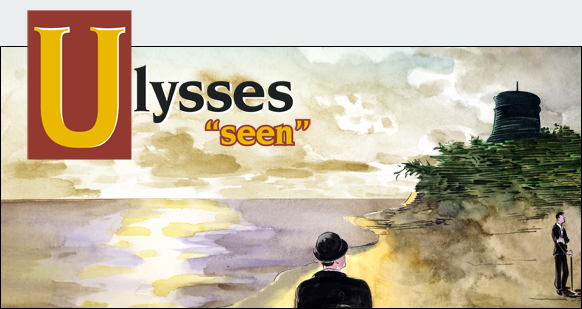
So here’s anoth­er approach. Start read­ing Ulysses Seen, the graph­ic nov­el adap­ta­tion of Joyce’s tome. The artist behind Ulysses Seen is Rob Berry, and he’s devot­ed to using “the visu­al aid of the graph­ic nov­el” to “fos­ter under­stand­ing of pub­lic domain lit­er­ary mas­ter­works.” He’s clear to point out that Ulysses Seen isn’t meant to replace Ulysses. Rather it’s meant to be a visu­al com­pan­ion to the orig­i­nal work. It uses the com­ic nar­ra­tive to “cut through jun­gles of unfa­mil­iar ref­er­ences” and to help read­ers “appre­ci­ate the sub­tle­ty and artistry” of Joyce’s text. So far Berry has com­plet­ed about 138 pages of Ulysses Seen, and more pages will be com­ing online at the Joyce Cen­ter web site in the near future. Accord­ing to Pub­lish­er’s Week­ly, the artist esti­mates that it will take rough­ly a decade to com­plete the full adap­ta­tion. (The orig­i­nal nov­el spans more than 700 pages after all.) In the mean­time, here are some more resources to help you get through Joyce’s great work:

James Joyce’s Ulysses: Down­load the Free Audio Book

Read Joyce’s Ulysses Line by Line, for the Next 22 Years, with Frank Delaney’s Pod­cast

James Joyce Man­u­scripts Online, Free Cour­tesy of The Nation­al Library of Ire­land

Stephen Fry Explains His Love for James Joyce’s Ulysses

by | Permalink | Make a Comment ( 1 ) |

New Yorker Cartoon Editor Bob Mankoff Reveals the Secret of a Successful New Yorker Cartoon

A friend of mine rails against the New York­er’s week­ly car­toon cap­tion con­test, insist­ing that while the read­er-sub­mit­ted entries are uni­ver­sal­ly bad, the win­ner is always the weak­est of the lot.

I dis­agree, agog at peo­ple’s clev­er­ness. Any line I come up with feels too obvi­ous or too obscure. Unlike my friend, I nev­er feel I could do bet­ter.

Car­toon edi­tor Bob Mankof­f’s recent TED Talk offers some key insights into what the mag­a­zine is look­ing for (incon­gruity, dis­po­si­tion­al humor, cog­ni­tive mash ups), as well as what it’s not inter­est­ed in (gross-out jokes, mild child-cen­tered can­ni­bal­ism) He also cites for­mer con­trib­u­tor and author of my father’s favorite New York­er car­toon, E.B. White on the futil­i­ty of ana­lyz­ing humor.

Fre­quent con­trib­u­tor Matthew Dif­fee’s short  satir­i­cal film Being Bob sug­gests Mankoff edi­to­r­i­al selec­tions owe much to gut response (and a jerk­ing knee). Such intu­ition is hard won. Mankoff glee­ful­ly alludes to the 2000 rejec­tion let­ters he him­self received between 1974 and 1977, fol­low­ing an uncer­e­mo­ni­ous dis­missal from psy­chol­o­gy school. Then, final­ly, he got his first accep­tance.

That accep­tance let­ter is some­thing to see.

Ayun Hal­l­i­day used Charles Bar­sotti’s New York­er car­toon of a danc­ing bird as her high­school year­book’s senior say­ing. Fol­low her @AyunHalliday

Relat­ed Con­tent:

The New Yorker’s Fic­tion Pod­cast: Where Great Writ­ers Read Sto­ries by Great Writ­ers

Improv with New York­er Car­toon­ists

Einstein’s Rel­a­tiv­i­ty: An Ani­mat­ed New York­er Car­toon

A Look Inside Mel Blanc’s Throat as He Performs the Voices of Bugs Bunny and Other Cartoon Legends

Last month we told you about The Strange Day When Bugs Bun­ny Saved the Life of Mel Blanc. It’s a true tale about how, back in 1971, Mel Blanc, the voice of Bugs Bun­ny and oth­er beloved Looney Tunes char­ac­ters, got into a ter­ri­ble car acci­dent in Los Ange­les and slipped into a coma. Blanc’s wife and son spent two long weeks in the hos­pi­tal try­ing to revive him, but got no response. But then, one day, Blanc’s neu­rol­o­gist walked into the room and said to the patient: “Bugs Bun­ny, how are you doing today?” After a pause, a voice said, â€śMyeeeeh. What’s up doc?” You can get more on that sto­ry here. In the mean­time, we’ll amuse you with anoth­er short sto­ry. Once upon a time, an ear-nose-and-throat spe­cial­ist want­ed to see how Mel Blanc (1908–1989) per­formed all of those Looney Tunes car­toon voic­es. So he took a fiber optic laryn­go­scope, stuck it down Blanc’s throat, and here’s what he saw. Watch above.

If you would like to sign up for Open Culture’s free email newslet­ter, please find it here. It’s a great way to see our new posts, all bun­dled in one email, each day.

If you would like to sup­port the mis­sion of Open Cul­ture, con­sid­er mak­ing a dona­tion to our site. It’s hard to rely 100% on ads, and your con­tri­bu­tions will help us con­tin­ue pro­vid­ing the best free cul­tur­al and edu­ca­tion­al mate­ri­als to learn­ers every­where. You can con­tribute through Pay­Pal, Patre­on, and Ven­mo (@openculture). Thanks!

Relat­ed Con­tent:

Cel­e­brate Superman’s 75th Anniver­sary by Enjoy­ing the Orig­i­nal Super­man Car­toon and Radio Show

The Sto­ry Of Men­stru­a­tion: Watch Walt Disney’s Sex Ed Film from 1946

Don­ald Duck’s Bad Nazi Dream (1942)

by | Permalink | Make a Comment ( 1 ) |

The Original 1940s Superman Cartoon: Watch 17 Classic Episodes Free Online

On the eve of yet anoth­er Super­man movie reboot—coming tomor­row with all the usu­al sum­mer hit fan­fare and noise—take a moment before gorg­ing your­self on pop­corn and extrav­a­gant CGI spec­ta­cles to reflect on the character’s endur­ing­ly sim­ple ori­gins. After all, this month marks the 75th anniver­sary of this most icon­ic of Amer­i­can super­heroes, who first appeared in the June 1938 Action Comics #1. The brain­child of Cleve­land high school stu­dents Jer­ry Siegel and Joe Shus­ter (so mem­o­rably fic­tion­al­ized in Michael Chabon’s The Amaz­ing Adven­tures of Kava­lier & Clay), Super­man is what Neil Gaiman calls an arche­typ­al “pri­mal thing,” a char­ac­ter who can be rein­vent­ed every decade while still remain­ing unmis­tak­ably him­self.

Wit­ness, for exam­ple, the first appear­ance of Super­man on the big screen in the 1941 Fleis­ch­er car­toon (top), Super­man (or The Mad Sci­en­tist)—the first in a series of sev­en­teen shorts. On the heels of the first non-print adap­ta­tion of the char­ac­ter—the Adven­tures of Super­man radio dra­ma (lis­ten below)—the car­toon series shows us the orig­i­nal Siegel and Shus­ter hero, a rough-and-tum­ble space alien raised in an orphan­age, not by the kind­ly Kents in rur­al Amer­i­ca.

You’ll notice how­ev­er, that Superman’s resume—more pow­er­ful than a loco­mo­tive, able to leap tall build­ings… etc.—hasn’t changed a bit. But some of the character’s attrib­ut­es and ori­gins were con­sid­er­ably soft­ened after DC Comics edi­tor Whit­ney Ellsworth insti­tut­ed a code of super­hero ethics (many years before the Comics Code Author­i­ty stepped in to cen­sor the whole indus­try).

You can learn even more about Superman’s ori­gins from his cre­ators them­selves, inter­viewed in the clip above for the 1981 BBC doc­u­men­tary Super­man: The Com­ic Strip Hero. Siegel reveals how the idea for Super­man came to him dur­ing one rest­less night in which he com­posed all of the basic script for the char­ac­ter, “an entire­ly new con­cept.” The very next day, Shus­ter sat down at his draw­ing board and Super­man’s look emerged ful­ly-formed. Both cre­ators and their heirs have won and lost high-pro­file law­suits over rights to their char­ac­ters. But legal wran­gling over com­pen­sa­tion aside, there’s no deny­ing that their mad eure­ka moment left an indeli­ble cul­tur­al lega­cy no updat­ed film, logo, or con­tro­ver­sy can dimin­ish.

Relat­ed Con­tent:

Orig­i­nal Super­man Car­toon Series Now Online

The Mechan­i­cal Mon­sters: Sem­i­nal Super­man Ani­mat­ed Film from 1941

Free Gold­en Age Comics

Josh Jones is a writer and musi­cian based in Wash­ing­ton, DC. Fol­low him at @jdmagness

Maurice Sendak Animated; James Gandolfini Reads from Sendak’s Story “In The Night Kitchen”

Mau­rice Sendak (1928–2012), the great writer and illus­tra­tor of chil­dren’s books, would have turned 85 today. To cel­e­brate his birth­day, Google has adorned its web site with a fan­tas­tic ani­mat­ed doo­dle (make sure you press the “play” but­ton) and Blank on Blank has released a video that ani­mates Sendak’s mus­ings about being a kid. Based on a pre­vi­ous­ly-unheard inter­view record­ed in 2009, Sendak speaks in the clip about his dif­fi­cult child­hood, which was sur­round­ed by tragedy. (He grew up in Brook­lyn, the child of Pol­ish Jew­ish immi­grants whose remain­ing fam­i­ly per­ished dur­ing the Holo­caust.) He also recalls how chil­dren all have prob­lems to work through — prob­lems that remained at the front of his mind when he start­ed writ­ing his clas­sic chil­dren’s books. It’s worth pair­ing the video above with anoth­er ani­mat­ed video of Sendak’s emo­tion­al last inter­view with NPR’s Ter­ry Gross. And, for a com­plete­ly ran­dom bonus, we’ve added below a clip of James Gan­dolfi­ni (aka Tony Sopra­no) read­ing from Sendak’s con­tro­ver­sial sto­ry book In The Night Kitchen. The read­ing took place on Sep­tem­ber 15, 2008 at the 92nd St Y in New York City, at a trib­ute held on the occa­sion of Sendak’s 80th birth­day.

Relat­ed Con­tent:

The Late James Gan­dolfi­ni, Star of The Sopra­nos, Appears on Inside the Actors Stu­dio (2004) 

The Mind & Art of Mau­rice Sendak: A Video Sketch

An Ani­mat­ed Christ­mas Fable by Mau­rice Sendak (1977)


The Religious Affiliation of Comic Book Heroes

Atheist comics

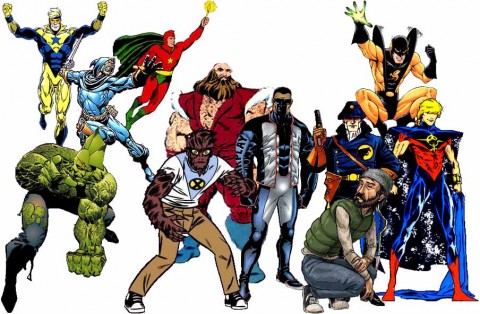
Spi­der-Man, he was appar­ent­ly a Protes­tant. The Hulk, a lapsed Catholic. Thor, a wor­ship­per of a Teu­ton­ic deity. The X‑Men, an assem­blage of Catholics and Epis­co­palians. And Stan­ley Lee, the cre­ator of these famous com­ic book fig­ures, he’s Jew­ish. If you’re a com­ic book fan with a thing for triv­ia, you can peruse this data­base of over 10,000 char­ac­ters and fig­ure out the reli­gious affil­i­a­tion of Bat­man and Won­der Woman, plus less­er-known char­ac­ters like Chameleon BoySwamp Thing, and Poi­son Ivy.

P.S. The crea­tures in the image above, they’re athe­ists, a cat­e­go­ry also tracked by this most thor­ough data­base.

via @wfmu

Relat­ed Con­tent:

Nine Clas­sic Super­man Car­toons Restored and Now on YouTube

Free Gold­en Age Comics

When Super Heroes Get Old and Retire to Mia­mi

by | Permalink | Make a Comment ( 3 ) |

The Strange Day When Bugs Bunny Saved the Life of Mel Blanc

Great tal­ents seem to embody their craft. It’s as if they invent­ed the form and then broke the mold when they were fin­ished with it.

One of the best mod­ern exam­ples of this vir­tu­os­i­ty is Mel Blanc, voice of Bugs Bun­ny and near­ly all of the Looney Tunes car­toon gang. Blanc, who voiced more than 1,000 char­ac­ters, was famous­ly hard-work­ing. At one point in his career, he scram­bled from stu­dio to stu­dio around Los Ange­les to work on 18 radio shows in one week.

As Mal­colm Glad­well likes to say, that kind of prac­tice leads to mas­tery. And, in Mel Blanc’s case, it may have saved his life.

Radio Lab, broad­cast over WNYC, recent­ly aired a piece about Blanc (lis­ten below) fea­tur­ing an inter­view with his son Noel Blanc, who is also a voice actor. Noel Blanc tells the sto­ry of a ter­ri­ble car acci­dent that bad­ly injured his father in 1961 as he was dri­ving home along Sun­set Boule­vard from a job in San Fran­cis­co. Mel Blanc, dri­ving an Aston Mar­tin, col­lid­ed with anoth­er car on Dead Man’s Curve. Blanc was almost killed and slipped into a coma. Blanc’s son and wife spent two weeks at his bed­side try­ing to revive him, but got no response.

One day, about 14 days after the acci­dent, one of Blanc’s neu­rol­o­gists walked into the room and tried some­thing com­plete­ly new. He went to Mel’s bed and asked, “Bugs Bun­ny, how are you doing today?”

There was a pause while peo­ple in the room just shook their heads. Then, in a weak voice, came the response any­one would rec­og­nize.

“Myeeeeh. What’s up doc?”

The doc­tor then asked Tweety if he was there too.

“I tot I taw a pud­dy tat,” was the reply.

It took sev­en more months in a body cast for Blanc to recov­er. He even voiced Bar­ney Rub­ble in the first episodes of The Flint­stones while lying in bed with a micro­phone dan­gling from above.

The Radio Lab piece includes excerpts from an episode of This is Your Life when Blanc’s doc­tor tried to explain how he revived his patient. “It seemed like Bugs Bun­ny was try­ing to save his life,” was all he could say.

Radio Lab fea­tures anoth­er neurologist’s opin­ion: Blanc was such a hard-work­ing pro­fes­sion­al that his char­ac­ters lived, pro­tect­ed from the brain injury, deep in his uncon­scious mind. The doctor’s ques­tion must have sound­ed like a director’s cue.

Essen­tial­ly, “Mr. Blanc, you’re on.”

And he was, until 1989. Lis­ten through to the end of the pod­cast. The end of Blanc’s life is as remark­able as his long career.

Below, we have added a relat­ed doc­u­men­tary, Mel Blanc: The Man of a Thou­sand Voic­es.

Kate Rix writes about edu­ca­tion and dig­i­tal media. Vis­it her web­site to see more of her work. Fol­low her on Twit­ter: @mskaterix.

Watch 10-Year-Old Bruce Lee in His First Starring Role (1950)

Bruce Lee has remark­able stay­ing pow­er. Forty years after his untime­ly death, he’s still cel­e­brat­ed as a charis­mat­ic and influ­en­tial lethal weapon. Remem­ber how PelĂ© ush­ered in Amer­i­ca’s soc­cer craze? Bruce did the same for kung fu. For those of us who came of age in the 70’s, he was Evel Kniev­el, the Fonz, and Sylvester Stal­lone’s Rocky rolled into one.

His star qual­i­ties were in place long before those rock hard mus­cles. Take a look at this clip from The Kid (aka Xi Lu Xiang, Kid Che­ung, and My Son A‑Chang), a 1950 Can­tonese dra­ma based on Kid­dy Che­ung, a pop­u­lar and social­ly con­scious com­ic strip of the 40s. The 10-year-old Lee brings irre­sistable Lit­tle Ras­cals-esque panache to his por­tray­al of a wily, slum-dwelling orphan in the thrall of a gang­ster named Flash Blade Lee. The part pro­vides ample oppor­tu­ni­ty to swag­ger and strut, but just when things are threat­en­ing to turn phys­i­cal, the Lit­tle Drag­on is best­ed by pen­cil-necked char­ac­ter actor Yee Chau-Sui, who shames him for falling in with the local toughs. Lee upholds his rep­u­ta­tion by pulling a knife, but the pose is more than he can main­tain.

As Rosey Gri­er would sing the year after Enter the Drag­on was released, It’s All Right to Cry …

Watch the com­plete film here.

Relat­ed Con­tent:

Bruce Lee Audi­tions for The Green Hor­net (1964)

Bruce Lee: The Lost TV Inter­view

- Ayun Hal­l­i­day had the Dyna­mite mag­a­zine with Bruce Lee on the cov­er. Fol­low her @AyunHalliday

« Go BackMore in this category... »
Quantcast