When Shostakovich Adapted Gogol’s “The Nose” Into an Opera: Watch Giant Noses Tap Dancing on the Stage

The first-time read­er of a sto­ry called “The Nose” may expect any num­ber of things: a char­ac­ter with a keen sense of smell; a mur­der evi­denced by the tit­u­lar organ, dis­em­bod­ied; a broad­er iron­ic point about the things right in front of our faces that we some­how nev­er see. But giv­en its con­cep­tion in the imag­i­na­tion of Niko­lai Gogol, “The Nose” is about a nose — a nose that, on its own, lives, breathes, walks, and dress­es in fin­ery. The nose does this, it seems, in order to rise in rank past that of its for­mer own­er, the run-of-the-mill St. Peters­burg civ­il ser­vant Col­le­giate Asses­sor Kova­ly­ov.

Writ­ten in 1835 and 1836, “The Nose” sat­i­rizes the long era in Impe­r­i­al Rus­sia after Peter the Great intro­duced the Table of Ranks. Meant to ush­er in a kind of pro­to-mer­i­toc­ra­cy, that sys­tem assigned rank to mil­i­tary and gov­ern­ment offi­cers accord­ing, at least in the­o­ry, to their abil­i­ty and achieve­ments. The fact that those who attained high enough ranks would rise the to the lev­el of hered­i­tary nobles cre­at­ed an all-out sta­tus war across many sec­tions of soci­ety — a war, to the mind of Gogol the mas­ter observ­er of bureau­cra­cy, that could pit a man not just against his col­leagues and friends but against his own body parts.

Near­ly a cen­tu­ry after the sto­ry’s pub­li­ca­tion, a young Dmitri Shostakovich took it upon him­self to adapt “The Nose” into his very first opera. In col­lab­o­ra­tion with Alexan­der Preis, Geor­gy Ion­in, and Yevge­ny Zamy­atin (author of the endur­ing dystopi­an nov­el We), the com­pos­er ren­dered even more out­ra­geous­ly this tale of a nose gone rogue. Incor­po­rat­ing pieces of Gogol’s oth­er sto­ries like the “The Over­coat” and “Diary of a Mad­man” as well as the play Mar­riage and the diary Dead Souls — not to men­tion the writ­ings of oth­er Russ­ian mas­ters, includ­ing Dos­toyevsky’s The Broth­ers Kara­ma­zov — the 1928 opera com­bines a wide vari­ety of musi­cal styles both tra­di­tion­al and exper­i­men­tal, and among its set pieces includes a num­ber per­formed by giant tap-danc­ing noses.

You can see that part per­formed in the video above. The venue is Lon­don’s Roy­al Opera House, the direc­tor is Bar­rie Kosky of Berlin’s Komis­che Oper, and the year is 2016, half a cen­tu­ry after The Nose’s revival. Though com­plet­ed in the late 1920s, it did­n’t pre­miere on stage in full until 1930, when Sovi­et cen­sor­ship con­cen­trat­ed its ener­gies on quash­ing such non-rev­o­lu­tion­ary spec­ta­cles. It would­n’t be staged again in the Sovi­et Union until 1974, near­ly a decade after its pre­miere in the Unit­ed States. (Just a cou­ple years before, Alexan­der Alex­eieff and Claire Park­er had adapt­ed the sto­ry into the pin­screen ani­ma­tion pre­vi­ous­ly fea­tured here on Open Cul­ture.) The sociopo­lit­i­cal con­cerns of Gogol’s ear­ly 19th cen­tu­ry and Shostakovich’s ear­ly 20th may have passed, but the appeal of the for­mer’s sharp satire — and the sheer Pythonesque weird­ness of the lat­ter’s oper­at­ic sen­si­bil­i­ty — cer­tain­ly haven’t.

Relat­ed Con­tent:

Niko­lai Gogol’s Clas­sic Sto­ry, “The Nose,” Ani­mat­ed With the Aston­ish­ing Pin­screen Tech­nique (1963)

Revered Poet Alexan­der Pushkin Draws Sketch­es of Niko­lai Gogol and Oth­er Russ­ian Artists

The Bizarre, Sur­viv­ing Scene from the 1933 Sovi­et Ani­ma­tion Based on a Pushkin Tale and a Shostakovich Score

George Saun­ders’ Lec­tures on the Russ­ian Greats Brought to Life in Stu­dent Sketch­es

Why You Should Read The Mas­ter and Mar­gari­ta: An Ani­mat­ed Intro­duc­tion to Bulgakov’s Rol­lick­ing Sovi­et Satire

Based in Seoul, Col­in Mar­shall writes and broad­casts on cities, lan­guage, and cul­ture. His projects include the Sub­stack newslet­ter Books on Cities, the book The State­less City: a Walk through 21st-Cen­tu­ry Los Ange­les and the video series The City in Cin­e­ma. Fol­low him on Twit­ter at @colinmarshall, on Face­book, or on Insta­gram.

Ballerina Misty Copeland Recreates the Poses of Edgar Degas’ Ballet Dancers

“I am a man of motion,” trag­ic mod­ernist bal­let dancer Vaslav Nijin­sky wrote in his famous Diary, “I am feel­ing through flesh…. I am God in a body.” Nijin­sky suf­fered the unfor­tu­nate onset of schiz­o­phre­nia after his career end­ed, but in his lucid moments, he writes of the great­est pain of his illness—to nev­er dance again. A degree of his obses­sive devo­tion seems intrin­sic to bal­let.

Misty Copeland, who titled her auto­bi­og­ra­phy Life in Motion, thinks so. “All dancers are con­trol freaks a bit,” she says. “We just want to be in con­trol of our­selves and our bod­ies. That’s just what the bal­let struc­ture, I think, kind of puts inside of you. If I’m put in a sit­u­a­tion where I am not real­ly sure what’s going to hap­pen, it can be over­whelm­ing. I get a bit anx­ious.” As Nijin­sky did, Copeland is also “forc­ing peo­ple to look at bal­let through a more con­tem­po­rary lens,” writes Stephen Mooallem in Harper’s Bazaar.

Copeland has been can­did about her strug­gles on the way to becom­ing the first African Amer­i­can woman named a prin­ci­pal dancer at the Amer­i­can Bal­let The­atre, includ­ing cop­ing with depres­sion, a leg-injury, body-image issues, and child­hood pover­ty. She is also “in the midst of the most illu­mi­nat­ing pas de deux with pop cul­ture for a clas­si­cal dancer since Mikhail Barysh­nikov went toe-to-toe with Gre­go­ry Hines in White Nights” (a ref­er­ence that may be lost on younger read­ers, but trust me, this was huge).

Like anoth­er mod­ernist artist, Edgar Degas, Copeland has rev­o­lu­tion­ized the image of the bal­let dancer. Degas’ bal­let paint­ings, “which the artist began cre­at­ing in the late 1860s and con­tin­ued mak­ing until the years before his death, in 1917, were infused with a very mod­ern sen­si­bil­i­ty. Instead of ide­al­ized visions of del­i­cate crea­tures pirou­et­ting onstage, he offered images of young girls con­gre­gat­ing, prac­tic­ing, labor­ing, danc­ing, train­ing….” He showed the unglam­orous life and work behind the cos­tumed pageantry, that is.

Pho­tog­ra­phers Ken Browar and Deb­o­rah Ory envi­sioned Copeland as sev­er­al of Degas’ dancers, pos­ing her in cou­ture dress­es in recre­ations of some of his famous paint­ings and sculp­tures. The pho­tographs are part of their NYC Dance Project, in part­ner­ship with Harper’s Bazaar. As Kot­tke points out, con­flat­ing the his­to­ries of Copeland and Degas’ dancers rais­es some ques­tions. Degas had con­tempt for women, espe­cial­ly his Parisian sub­jects, who danced in a sor­did world in which “sex work” between teenage dancers and old­er men “was a part of a ballerina’s real­i­ty,” writes author Julia Fiore (as it was too in Nijinsky’s day).

This con­text may unset­tle our view­ing, but the images also show Copeland in full con­trol of Degas’ scenes, though that’s not the way it felt, she says. “It was inter­est­ing to be on shoot and to not have the free­dom to just cre­ate like in nor­mal­ly do with my body. Try­ing to re-cre­ate what Degas did was real­ly dif­fi­cult.” Instead, she embod­ied his fig­ures as her­self. “I see a great affin­i­ty between Degas’s dancers and Misty,” says Thel­ma Gold­en, direc­tor of the Stu­dio Muse­um in Harlem. “She has knocked aside a long-stand­ing music-box stereo­type of the bal­le­ri­na and replaced it with a thor­ough­ly mod­ern, mul­ti­cul­tur­al image of pres­ence and pow­er.”

See more of Copeland’s Degas recre­ations at Harper’s Bazaar.

via Kot­tke

Relat­ed Con­tent:

Impres­sion­ist Painter Edgar Degas Takes a Stroll in Paris, 1915

Watch the 1917 Bal­let “Parade”: Cre­at­ed by Erik Satie, Pablo Picas­so & Jean Cocteau, It Pro­voked a Riot and Inspired the Word “Sur­re­al­ism”

Watch the Ser­pen­tine Dance, Cre­at­ed by the Pio­neer­ing Dancer Loie Fuller, Per­formed in an 1897 Film by the Lumière Broth­ers

Josh Jones is a writer and musi­cian based in Durham, NC. Fol­low him at @jdmagness

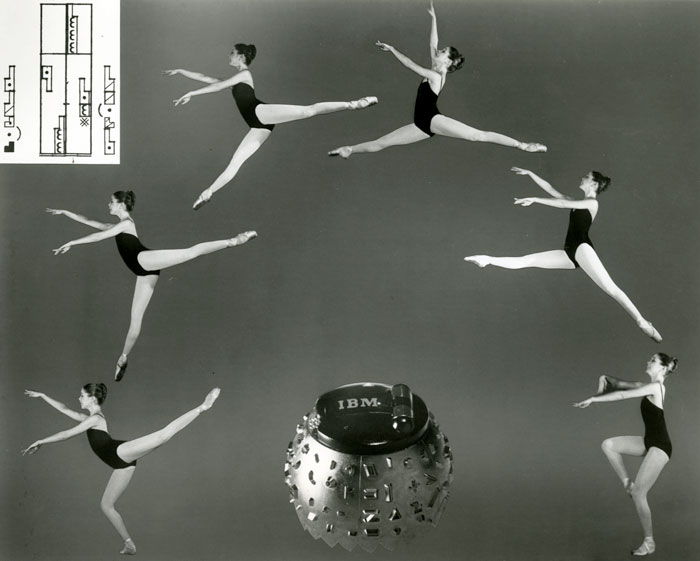
When IBM Created a Typewriter to Record Dance Movements (1973)

Increas­ing­ly many of us in the 21st cen­tu­ry have nev­er used a type­writer — indeed, have nev­er seen one in real life. But despite being deep into its obso­les­cence, the machine has a long cul­tur­al half-life. See­ing type­writ­ers in clas­sic and peri­od films, for exam­ple, keeps an idea of their look and feel in our minds. Nat­u­ral­ly it gets entan­gled with the romance of the writer, or rather the Writer, whom we imag­ine pound­ing away on a cul­tur­al­ly icon­ic mod­el: an Under­wood, an Olvetti. “If Olivet­tis could talk, you’d get the nov­el­ist naked,” writes Philip Roth in The Anato­my Les­son. From the then-new elec­tric IBM type­writ­ers, how­ev­er, you’d hear “only the smug, puri­tan­i­cal work­man­like hum telling of itself and all its virtues: I am a Cor­rect­ing Selec­tric II. I nev­er do any­thing wrong.”

Yet we under­es­ti­mate the influ­ence of the IBM Selec­tric, on not just writ­ing but late-20th-cen­tu­ry Amer­i­can life in gen­er­al, at our per­il. Intro­duced in 1961, this tech­no­log­i­cal­ly rev­o­lu­tion­ary type­writer replaced the old “type­bars” — those thin met­al arms that whack a let­ter onto the page with each key­stroke — with a “type­ball,” a “com­pact unit con­tain­ing all the let­ters and sym­bols of a key­board, rotat­ed and piv­ot­ed to the cor­rect posi­tion before strik­ing.”

So writes IBM’s Jus­tine Jablon­s­ka in an essay on the ver­sa­til­i­ty of the type­ball, which could be swapped out and mod­i­fied accord­ing to the needs of the user. In 1973, IBM could say even to those users who need­ed to type out not words, sen­tences, and para­graphs but dances that, yes, there’s a type­ball for that.

Devel­oped in col­lab­o­ra­tion with New York City’s Dance Nota­tion Bureau, this unusu­al type­ball “had spe­cial Laban­o­ta­tion sym­bols, devel­oped in the 1920s by Hun­gar­i­an dancer/choreographer Rudolf Laban to ana­lyze and record move­ment and dance.” Each sym­bol­’s loca­tion “showed which part of the body — arm, leg, tor­so — was to be used. The symbol’s shape indi­cat­ed direc­tion. The symbol’s shad­ing showed the lev­el of an arm or leg. And its length con­trolled the time val­ue of a move­ment.” In total, writes Karen Hill at Zip­py Facts, Laban­o­ta­tion had “88 dif­fer­ent sym­bols, which could be arranged to form a com­plete vocab­u­lary for record­ing move­ment of any kind, from bal­let and mod­ern to eth­nic, even folk.” Beyond dance, the sys­tem could also record “move­ments in areas like sports, behav­ioral sci­ences, phys­i­cal ther­a­py, and even indus­tri­al oper­a­tions.”

This par­tic­u­lar type­ball show­cased the Selec­tric’s ver­sa­til­i­ty, but some had high­er hopes. In a 1975 paper, dance schol­ar Drid Williams com­pares its poten­tial impact to that of “Guten­berg’s inven­tion sev­er­al cen­turies ago,” sig­nal­ing that “the graph­ic lin­guis­tic sign can now be joined by its obvi­ous coun­ter­part, the print­ed human action sign.” But she also express­es regret that “ ‘the ball’ is being looked on by many as a mere prac­ti­cal aid to record­ing human move­ment and it is being asso­ci­at­ed with spe­cial­ist fields like dance. As usu­al, con­cern with the syn­tag­ma­ta obscures the real issues of the par­a­digms.” Indeed. A more prac­ti­cal-mind­ed assess­ment comes from Charles Ditchen­dorf, employed at the time at IBM’s Office Prod­ucts Divi­sion. “To the best of my knowl­edge,” Jablon­s­ka quotes him as say­ing, I didn’t sell one.” But then, when has dance ever been enslaved to the mar­ket?

via Ted Gioia on Twit­ter

Relat­ed Con­tent:

Dis­cov­er the Inge­nious Type­writer That Prints Musi­cal Nota­tion: The Keaton Music Type­writer Patent­ed in 1936

Nota­tions: John Cage Pub­lish­es a Book of Graph­ic Musi­cal Scores, Fea­tur­ing Visu­al­iza­tions of Works by Leonard Bern­stein, Igor Stravin­sky, The Bea­t­les & More (1969)

Arnold Schoen­berg, Avant-Garde Com­pos­er, Cre­ates a Sys­tem of Sym­bols for Notat­ing Ten­nis Match­es

The Endur­ing Ana­log Under­world of Gramer­cy Type­writer

Dis­cov­er Friedrich Nietzsche’s Curi­ous Type­writer, the “Malling-Hansen Writ­ing Ball” (Cir­ca 1881)

Based in Seoul, Col­in Mar­shall writes and broad­casts on cities, lan­guage, and cul­ture. His projects include the book The State­less City: a Walk through 21st-Cen­tu­ry Los Ange­les and the video series The City in Cin­e­ma. Fol­low him on Twit­ter at @colinmarshall, on Face­book, or on Insta­gram.

How Stravinsky’s The Rite of Spring Incited a Riot? An Animated Introduction

There was a time when a bal­let could start a riot — specif­i­cal­ly, the night of May 29th, 1913. The place was Paris’ Théâtre des Champs-Élysées, and the bal­let was The Rite of Spring, com­posed by Igor Stravin­sky for the Bal­lets Rus­es com­pa­ny. Pop­u­lar his­to­ry has remem­bered this debut per­for­mance as too bold, too dar­ing, too avant-garde for its gen­teel audi­ence to han­dle — and so, with the bour­geois duly épaté, we can freely appre­ci­ate Stravin­sky’s rad­i­cal work from our posi­tion of 21st-cen­tu­ry sophis­ti­ca­tion. But whether The Rite of Spring incit­ed a riot, a “near-riot” (as some source describe it), or mere­ly a wave of dis­sat­is­fac­tion, what aspects of its art were respon­si­ble?

May 29th, 1913 at the Théâtre des Champs-Élysées comes alive again in the ani­mat­ed TED-Ed les­son above, which exam­ines all the ways The Rite of Spring broke vio­lent­ly with the bal­let form as it had estab­lished itself in the 19th cen­tu­ry. Les­son cre­ator Iseult Gille­spie (pre­vi­ous­ly fea­tured here on Open Cul­ture for her explana­to­ry work on every­thing from Shake­speare and Guer­ni­ca to Fri­da Kahlo and Haru­ki Muraka­mi) writes of its “harsh music, jerky danc­ing, and uncan­ny stag­ing,” all in ser­vice of a high­ly un-gen­teel Pagan premise that “set audi­ences on edge and shat­tered the con­ven­tions of clas­si­cal music.”

Among Stravin­sky’s musi­cal provo­ca­tions — or rather, “for­mal exper­i­ments,” — Gille­spie names “syn­co­pa­tion, or irreg­u­lar rhythm,” “atonal­i­ty, or the lack of a sin­gle key,” and “the pres­ence of mul­ti­ple time sig­na­tures,” as well as the inclu­sion of aspects of the Russ­ian folk music that was Stravin­sky’s cul­tur­al inher­i­tance. Along with the music, already star­tling enough, came visu­al design by Nicholas Roerich, a painter-philoso­pher “obsessed with pre­his­toric times” and pro­fes­sion­al­ly con­cerned with human sac­ri­fice and ancient tomb exca­va­tion.

Wear­ing Roerich’s awk­ward­ly-hang­ing peas­ant gar­ments in front of his “vivid back­drops of primeval nature full of jagged rocks, loom­ing trees, and night­mar­ish col­ors,” the bal­let’s dancers per­formed steps by Vaslav Nijin­sky, whose sense of rig­or brought him to cre­ate dances “to rethink the roots of move­ment itself.” His chore­og­ra­phy “con­tort­ed tra­di­tion­al bal­let, to both the awe and hor­ror of his audi­ence” — but then, that pos­si­bly overde­ter­mined awe and hor­ror could have arisen from sev­er­al num­ber of artis­tic sources at once. The Rite of Spring’s ten­sion and urgency still today reflects the his­tor­i­cal moment of its com­po­si­tion, “the cusp of both the first world war and the Russ­ian rev­o­lu­tion,” and we could also take the ear­ly reac­tion to its inno­va­tions as a reflec­tion of its cre­ators’ genius — or per­haps those first view­ers, as Stravin­sky him­self put it, were sim­ply “naïve and stu­pid peo­ple.”

Relat­ed Con­tent:

Igor Stravin­sky Remem­bers the “Riotous” Pre­miere of His Rite of Spring in 1913: “They Were Very Shocked. They Were Naive and Stu­pid Peo­ple”

Hear The Rite of Spring Con­duct­ed by Igor Stravin­sky Him­self: A Vin­tage Record­ing from 1929

Hear 46 Ver­sions of Stravinsky’s Rite of Spring in 3 Min­utes: A Clas­sic Mashup

Stravinsky’s The Rite of Spring, Visu­al­ized in a Com­put­er Ani­ma­tion

Watch 82-Year-Old Igor Stravin­sky Con­duct the Fire­bird, the Bal­let Mas­ter­piece that First Made Him Famous (1965)

The Night When Char­lie Park­er Played for Igor Stravin­sky (1951)

Based in Seoul, Col­in Mar­shall writes and broad­casts on cities, lan­guage, and cul­ture. His projects include the book The State­less City: a Walk through 21st-Cen­tu­ry Los Ange­les and the video series The City in Cin­e­ma. Fol­low him on Twit­ter at @colinmarshall or on Face­book.

Watch the Serpentine Dance, Created by the Pioneering Dancer Loie Fuller, Performed in an 1897 Film by the Lumière Brothers

What­ev­er their views on copy­right, artists and inven­tors of all kinds can agree on one thing: all dread hav­ing their ideas stolen with­out so much as a foot­note of cred­it. Such thefts have led to tanked careers, life­long resent­ments, homi­ci­dal rival­ries, and law­suits to fill libraries. They have allowed many a thief to pros­per and many an injured par­ty to sur­ren­der.

But not leg­endary mod­ern dance pio­neer Loie Fuller.

“Short, plump, and thir­ty years old,” the dancer from Illi­nois arrived in Paris in 1892, fresh off the “mid-lev­el vaude­ville” cir­cuit, writes Rhon­da K. Gare­lick at Pub­lic Domain Review, and bent on prov­ing her­self to Édouard Marc­hand, direc­tor of the Folies-Bergère. She scored an inter­view with­in days of her arrival.

Alight­ing from her car­riage in front of the the­ater, she stopped short at the sight of the large plac­ard depict­ing the Folies’ cur­rent dance attrac­tion: a young woman wav­ing enor­mous veils over her head, billed as the “ser­pen­tine dancer.” “Here was the cat­a­clysm, my utter anni­hi­la­tion,” Fuller would lat­er write, for she had come to the Folies that day pre­cise­ly to audi­tion her own, new “ser­pen­tine dance,” an art form she had invent­ed in the Unit­ed States.

The imposter, an Amer­i­can named May­belle Stew­art, had seen Fuller per­form in New York and had lift­ed her act and tak­en it to Paris. Rather than suc­cumb to rage or despair, Fuller sat through the mati­nee per­for­mance and was moved from a cold sweat to renewed con­fi­dence. “The longer she danced,” she wrote, “the calmer I became.” After Stew­art left the stage, Fuller ascend­ed in her ser­pen­tine cos­tume and audi­tioned for Marc­hand, who agreed to take her on and fire Stew­art.

The sto­ry gets stranger. The show had been pro­mot­ed with Stewart’s name, and so, to avoid bad pub­lic­i­ty, Fuller agreed to per­form the first two nights as Stew­art, “danc­ing her own imi­ta­tion of Stewart’s imi­ta­tion of the ser­pen­tine dance,” a “triple-lay­er sim­u­la­tion,” Gare­lick writes, “wor­thy of an essay by Jean Baudrillard”—and emblem­at­ic of a career in dance marked by “self-repli­ca­tion, mir­rored images, and iden­ti­ty play.”

Thus did the woman named Loie Fuller (born Mary-Louise Fuller), begin “what was to become an unbro­ken thir­ty-year reign as one of Europe’s most wild­ly cel­e­brat­ed dancers.” Fuller was “the only female enter­tain­er to have her own pavil­ion” at the 1900 Expo­si­tion Uni­verselle, writes Natal­ie Lemie at Art­sy. “Hen­ri de Toulouse-Lautrec fea­tured her in a num­ber of prints; Auguste Rodin com­mis­sioned a series of pho­tographs of the dancer with plans to sculpt her; and the Lumière broth­ers released a film about her in 1897.”

Fuller’s dance per­son­i­fied Art Nou­veau, express­ing its ele­gant, flow­ing lines in her bil­low­ing silk gowns, which she moved by means of bam­boo sewn into her sleeves. As she danced “col­ored lights were pro­ject­ed onto the flow­ing fab­ric, and as she twirled, she seemed to meta­mor­phose into ele­ments from the nat­ur­al world: a flower, a but­ter­fly, a tongue of flame.” Every­one came to see her. The Folies, which “typ­i­cal­ly attract­ed work­ing class patrons,” now had aris­to­crat­ic new­com­ers lin­ing up out­side.

See the ser­pen­tine dance that launched her career at the top in the Lumière Broth­ers’ 1897 film and below it in a col­orized excerpt, with the bewitch­ing music of Sig­ur Ros added for effect. Oth­er films and clips here from oth­er ear­ly cin­e­ma pio­neers show the medi­um’s embrace of Fuller’s chore­og­ra­phy. Iron­i­cal­ly, none of this footage, it seems, shows Fuller her­self, but only her imi­ta­tors. “Unfor­tu­nate­ly none of the sur­viv­ing films seem to con­tain a per­for­mance by the orig­i­nal dancer/choreographer,” notes cin­e­ma his­to­ry chan­nel Mag­i­cal Motion Muse­um, “despite some of them car­ry­ing her name in the title or oth­er­wise cred­it­ing her as the dancer.”

Her name car­ried a lot of weight. Fuller was not only a cel­e­brat­ed dancer, but also a man­ag­er, pro­duc­er, and light­ing design­er with “over a dozen patents relat­ed to her cos­tumes and inno­va­tions in stage light­ing.” (She was so inter­est­ed in the “lumi­nous prop­er­ties” of radi­um that she sought out and “befriend­ed its dis­cov­er­ers, Pierre and Marie Curie.”) By 1908, how­ev­er, she had left behind some of these elab­o­rate stage effects to focus on “nat­ur­al dancing’—dance inspired by nature, which was the fore­run­ner of mod­ern dance.”

And she had tak­en on a young dancer in her com­pa­ny named Isado­ra Dun­can, often referred to as the “Moth­er of Mod­ern Dance.” Fuller deserves cred­it, too, but she didn’t seem to care about this over­much. She was, notes Ober­lin Col­lege dance pro­fes­sor Ann Coop­er Albright, “way more inter­est­ed in mak­ing things hap­pen than cre­at­ing a name for her­self.” Fame came as a byprod­uct of her cre­ativ­i­ty rather than its sought-after reward. She was still renowned after she left the stage, and giv­en a ret­ro­spec­tive at The Lou­vre in 1924.

Fuller con­tin­ued to work behind the scenes after the Art Nou­veau move­ment gave way to new mod­ernisms and sup­port­ed and inspired younger artists until her death in 1928. Her work deserves a promi­nent place in the his­to­ry of mod­ern dance, but Fuller her­self “was—and remains—elusive,” Lemie writes, “some­thing of a phan­tom.” Oth­ers might have stolen, bor­rowed, or imi­tat­ed the ser­pen­tine dance, but Lois Fuller became it, going beyond com­pe­ti­tion and into a realm of mag­ic.

via Pub­lic Domain Review

Relat­ed Con­tent:

Watch an Avant-Garde Bauhaus Bal­let in Bril­liant Col­or, the Tri­adic Bal­let, First Staged by Oskar Schlem­mer in 1922

The Grace­ful Move­ments of Kung Fu & Mod­ern Dance Revealed in Stun­ning Motion Visu­al­iza­tions

Expres­sion­ist Dance Cos­tumes from the 1920s, and the Trag­ic Sto­ry of Lavinia Schulz & Wal­ter Holdt

Josh Jones is a writer and musi­cian based in Durham, NC. Fol­low him at @jdmagness

Expressionist Dance Costumes from the 1920s, and the Tragic Story of Lavinia Schulz & Walter Holdt

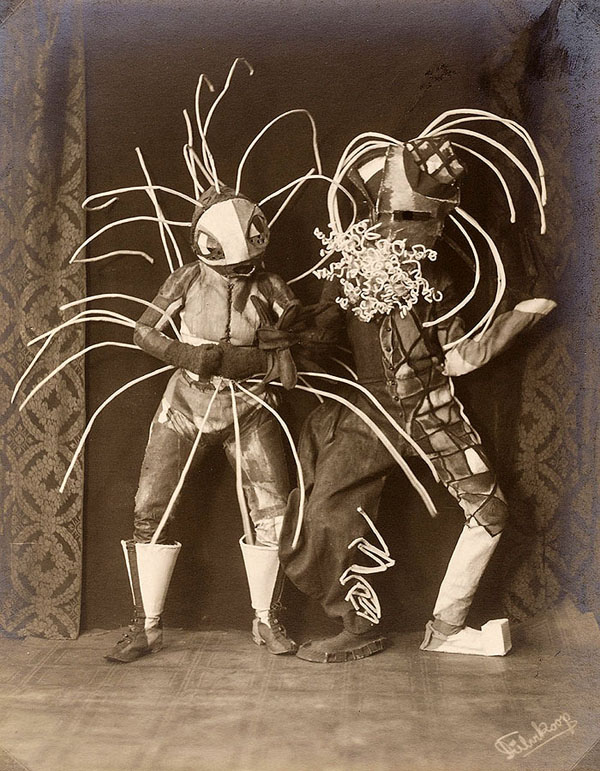
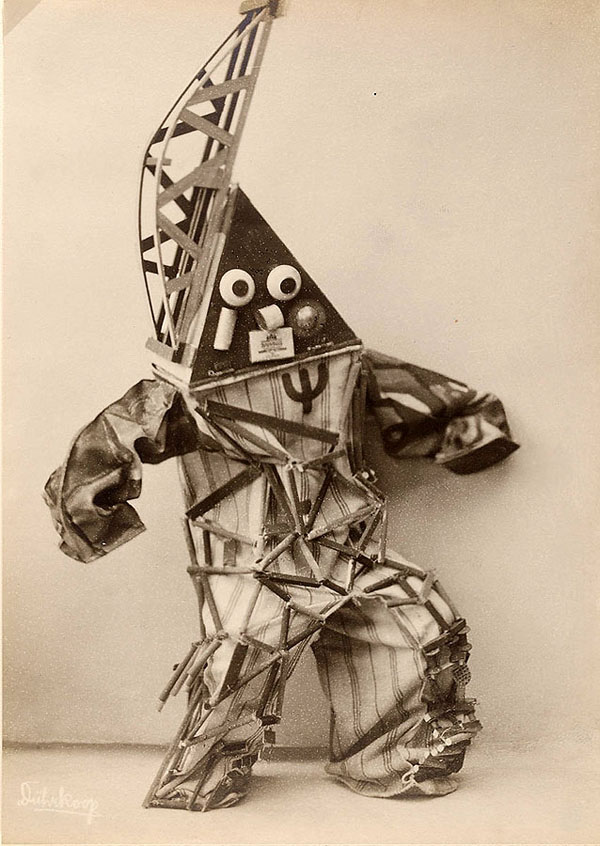
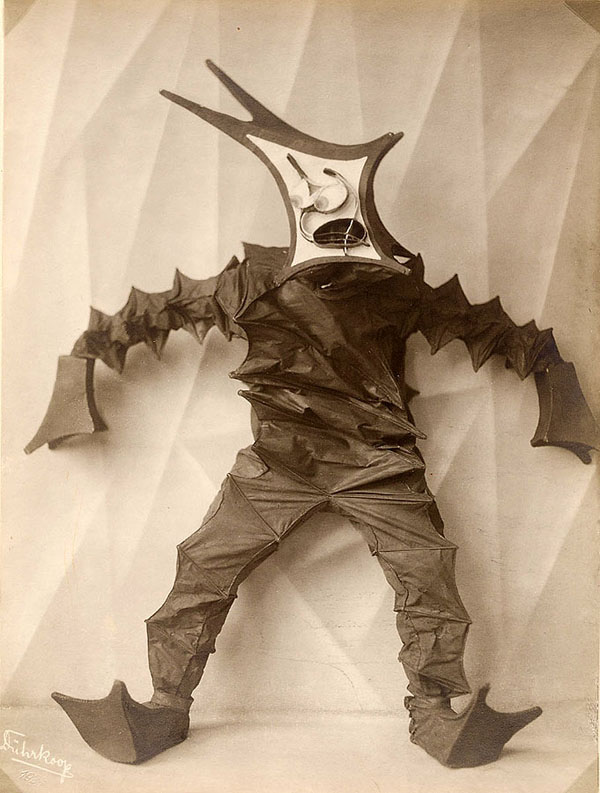
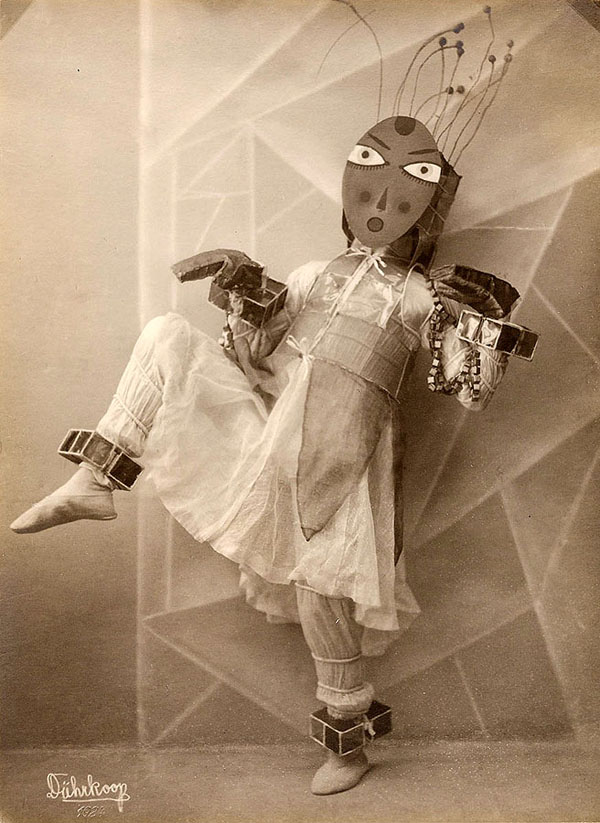
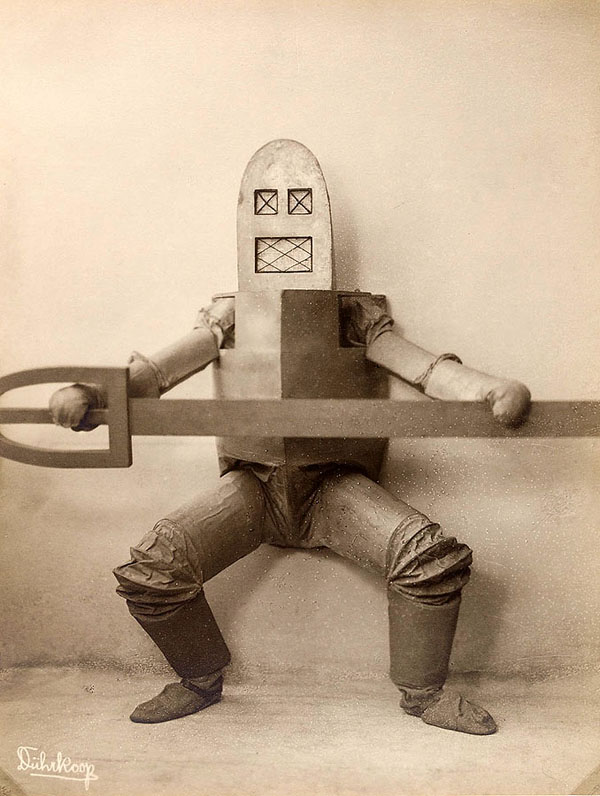
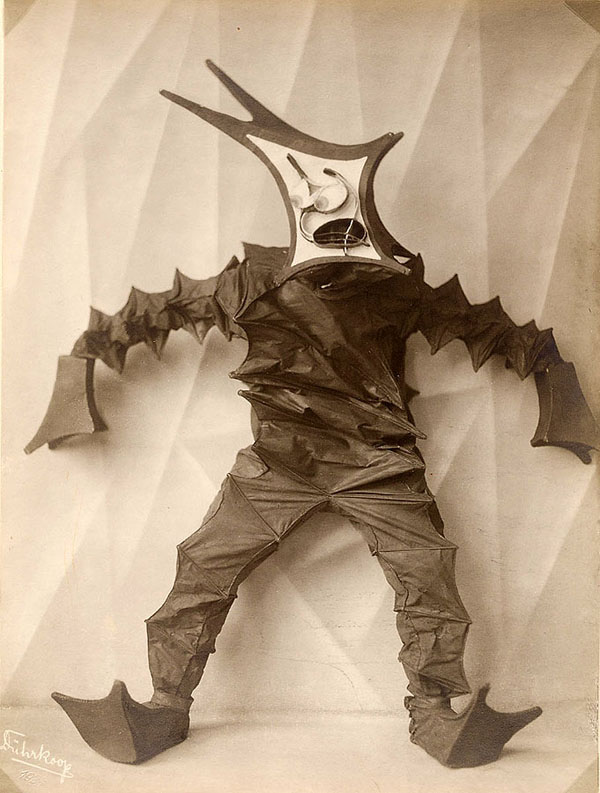
The most fruit­ful cre­ative part­ner­ships, long or short, have often been tem­pes­tu­ous. On the short­er side, and among the stormi­est, we have a hus­band-and-wife team who real­ized visions hith­er­to unseen onstage, and who very near­ly fell into total obscu­ri­ty after a mur­der-sui­cide brought their part­ner­ship to an end. But in the Ham­burg of the late 1910s and ear­ly 1920s, writes Hyper­al­ler­gic’s Alli­son Meier, Lavinia Schulz and Wal­ter Holdt “cre­at­ed wild, Expres­sion­ist cos­tumes that looked like retro robots and Bauhaus knights,” twen­ty of them, for per­for­mances accom­pa­nied by avant-garde music. After their death in 1924, Schulz and Holdt’s work went into stor­age, nev­er to be found again until the late 1980s.

The cos­tumes had been gift­ed to the Muse­um für Kun­st und Gewerbe, which in 1925 “staged an evening in mem­o­ry of Lavinia Schulz and Wal­ter Holdt,” writes blog­ger Jan Reet­ze.

“After this, the masks, pho­tos and draw­ings” — includ­ing dances dia­grammed in a sys­tem of Schulz’s own inven­tion — “went into a cou­ple of ‘acro­bat’s bag­gage’ box­es and fell into obliv­ion on the muse­um’s attic. They were not even inven­to­ried. Which turned out to be a stroke of luck because this way the objects did­n’t fall into the hands of the Nazis, who, with­out any doubt, would have seen these works as ‘degen­er­ate art’ and in all prob­a­bil­i­ty would have destroyed them.”

You can see the cos­tumes in action in the video at the top of the post, and more of the pho­tos tak­en by Minya Diez-Dührkoop in the last year of Schulz and Holdt’s lives at Hyper­al­ler­gic. Their per­for­mances began in the expres­sion­ism with which the Berlin-edu­cat­ed Schultz had been asso­ci­at­ed and moved toward “the sup­posed puri­ty of pre-Judeo-Chris­t­ian, Aryan-Nordic cul­ture,” as Dan­ger­ous Minds’ Paul Gal­lagher writes.

“Between 1920–24, the cou­ple per­formed their dance rou­tines to the bewil­dered and often antag­o­nis­tic audi­ences of Ham­burg. Though some crit­ics appre­ci­at­ed the pair’s tal­ent and star­tling orig­i­nal­i­ty, this praise was nev­er enough to pay the rent.”

“Accord­ing to con­tem­po­rary crit­ics, Lavinia seemed to be the more cre­ative one,” writes Reet­ze. “Wal­ter, on the oth­er hand, was the bet­ter and more dis­ci­plined dancer, he exact­ly knew his for­mal means and how to use them.” The coun­ter­part to Holdt’s rig­or was Schulz’s more pri­mal genius, a sen­si­bil­i­ty that man­i­fest­ed aes­thet­i­cal­ly — seen in her high­ly uncon­ven­tion­al use of every­day mate­ri­als like “wire, gyp­sum, papi­er mâché and indus­tri­al garbage” — and emo­tion­al­ly.

Reet­ze quotes from the auto­bi­og­ra­phy of com­pos­er Hans Heinz Stuck­en­schmidt, who briefly lived with the cou­ple: Depri­va­tion, hunger, cold­ness, nordic land­scape with storm, ice, and cat­a­stro­phes: That was her world, and she had found her­self in it with Holdt.”

Schulz and Holdt also refused to be paid for their per­for­mances. “You can­not sell spir­i­tu­al ideas for mon­ey,” Schulz wrote. “Spir­it and mon­ey are two antag­o­nis­tic poles, and if you sell spir­i­tu­al ideas for mon­ey, you sold the spir­it to the mon­ey and lost the spir­it.” Even­tu­al­ly their pover­ty — as well as the unusu­al­ly volatile nature of their rela­tion­ship, said to spark phys­i­cal mar­i­tal spats on stage — reached a break­ing point. “Both were in their 20s, and had earned lit­tle mon­ey from their artis­tic work,” writes Meier. “In finan­cial ruin, on June 18, 1924, Schulz shot Holdt, and then turned the gun on her­self.” But against all odds, their still-star­tling cre­ativ­i­ty — the kind that can, per­haps, emerge only from the oppo­si­tion of two incom­pat­i­ble forces — lives on.

via Dan­ger­ous Mind

Relat­ed Con­tent:

Kandin­sky, Klee & Oth­er Bauhaus Artists Designed Inge­nious Cos­tumes Like You’ve Nev­er Seen Before

Watch an Avant-Garde Bauhaus Bal­let in Bril­liant Col­or, the Tri­adic Bal­let, First Staged by Oskar Schlem­mer in 1922

1930s Fash­ion Design­ers Pre­dict How Peo­ple Would Dress in the Year 2000

An Online Trove of His­toric Sewing Pat­terns & Cos­tumes

Har­vard Puts Online a Huge Col­lec­tion of Bauhaus Art Objects

Based in Seoul, Col­in Mar­shall writes and broad­casts on cities, lan­guage, and cul­ture. His projects include the book The State­less City: a Walk through 21st-Cen­tu­ry Los Ange­les and the video series The City in Cin­e­ma. Fol­low him on Twit­ter at @colinmarshall or on Face­book.

Science Shows That Snowball the Cockatoo Has 14 Different Dance Moves: The Vogue, Headbang & More

We humans think we invent­ed every­thing.

The wheel…

The print­ing press…

Danc­ing…

Well, we’re right about the first two.

Turns out the impulse to shake a tail feath­er isn’t an arbi­trary cul­tur­al con­struct of human­i­ty but rather a hard-wired neu­ro­log­i­cal impulse in beings clas­si­fied as vocal learners—us, ele­phants, dol­phins, song­birds, and par­rots like the Inter­net-famous sul­phur-crest­ed cock­a­too, Snow­ball, above.

Ani­mals out­side of this elite set can be trained to exe­cute cer­tain phys­i­cal moves, or they may just look like they’re danc­ing when track­ing the move­ments of their food bowl or shim­my­ing with relief at being picked up from dog­gy day­care.

Snow­ball, how­ev­er, is tru­ly danc­ing, thanks to his species’ capac­i­ty for hear­ing, then imi­tat­ing sounds. Like every great spon­ta­neous dancer, he’s got the music in him.

Anirud­dh Patel, a Pro­fes­sor of Psy­chol­o­gy at Tufts who spe­cial­izes in music cog­ni­tion, was the first to con­sid­er that Snowball’s habit of rock­ing out to the Back­street Boys CD he’d had in his pos­ses­sion when dropped off at a par­rot res­cue cen­ter in Dyer, Indi­ana, was some­thing more than a par­ty trick.

Dr. Patel notes that par­rots have more in com­mon with dinosaurs than human beings, and that our mon­key cousins don’t dance (much to this writer’s dis­ap­point­ment).

(Also, for the record? That goat who sings like Ush­er? It may sound like Ush­er, but you’ll find no sci­en­tif­ic sup­port for the notion that its vocal­iza­tions con­sti­tute singing.)

Snow­ball, on the oth­er hand, has made a major impres­sion upon the Acad­e­my.

In papers pub­lished in Cur­rent Biol­o­gy and Annals of the New York Acad­e­my of Sci­ences, Patel and his co-authors John R. Iversen, Mic­ah R. Breg­man, and Ire­na Schulz delved into why Snow­ball can dance like … well, maybe not Fred Astaire, but cer­tain­ly your aver­age mosh­ing human.

After exten­sive obser­va­tion, they con­clud­ed that an indi­vid­ual must pos­sess five spe­cif­ic men­tal skills and predilec­tions in order to move impul­sive­ly to music:

  1. They must be com­plex vocal learn­ers, with the accom­pa­ny­ing abil­i­ty to con­nect sound and move­ment.
  2. They must be able to imi­tate move­ments.
  3. They must be able to learn com­plex sequences of actions.
  4. They must be atten­tive to the move­ments of oth­ers.
  5. They must form long-term social bonds.

Cock­a­toos can do all of this. Humans, too.

Patel’s for­mer stu­dent R. Joanne Jao Keehn recent­ly reviewed footage she shot in 2009 of Snow­ball get­ting down to Queen’s “Anoth­er One Bites the Dust” and Cyn­di Lauper’s “Girls Just Want to Have Fun,” iden­ti­fy­ing 14 dis­tinct moves.

Accord­ing to her research, his favorites are Vogue, Head-Foot Sync, and Head­bang with Lift­ed Foot.

If you’ve been hug­ging the wall since mid­dle school, maybe it’s time to take a deep breath, fol­lowed by an avian danc­ing les­son.

How did Snow­ball come by his aston­ish­ing rug-cut­ting con­fi­dence? Cer­tain­ly not by watch­ing instruc­tion­al videos on YouTube. His human com­pan­ion Schulz dances with him occa­sion­al­ly, but does­n’t attempt to teach him her moves, which she describes as “lim­it­ed.”

Much like two human part­ners, they’re not always doing the same thing at the same time.

And the chore­og­ra­phy is pure­ly Snowball’s.

As Patel told The Har­vard Gazette:

It’s actu­al­ly a com­plex cog­ni­tive act that involves choos­ing among dif­fer­ent types of pos­si­ble move­ment options. It’s exact­ly how we think of human danc­ing.

If he is actu­al­ly com­ing up with some of this stuff by him­self, it’s an incred­i­ble exam­ple of ani­mal cre­ativ­i­ty because he’s not doing this to get food; he’s not doing this to get a mat­ing oppor­tu­ni­ty, both of which are often moti­va­tions in exam­ples of cre­ative behav­ior in oth­er species.

You can read more sci­ence-based arti­cles inspired by Snow­ball and watch some of his many pub­lic appear­ances on the not-for-prof­it, dona­tion-based sanc­tu­ary Bird Lovers Only’s web­site.

Relat­ed Con­tent:

Why We Dance: An Ani­mat­ed Video Explains the Sci­ence Behind Why We Bust a Move

The Strange Danc­ing Plague of 1518: When Hun­dreds of Peo­ple in France Could Not Stop Danc­ing for Months

Explore an Inter­ac­tive Ver­sion of The Wall of Birds, a 2,500 Square-Foot Mur­al That Doc­u­ments the Evo­lu­tion of Birds Over 375 Mil­lion Years

Ayun Hal­l­i­day is an author, illus­tra­tor, the­ater mak­er and Chief Pri­ma­tol­o­gist of the East Vil­lage Inkyzine.  Join her in NYC on Mon­day, Sep­tem­ber 9 for anoth­er sea­son of her book-based vari­ety show, Necro­mancers of the Pub­lic Domain. Fol­low her @AyunHalliday.

Why We Dance: An Animated Video Explains the Science Behind Why We Bust a Move

Has any cul­ture, apart from that of the tiny Utah town in Foot­loose, done entire­ly with­out danc­ing? It would at first seem that any human need the rhyth­mic shak­ing of one’s limbs to orga­nized sound ful­fills must reside pret­ty low on the over­all pri­or­i­ty scale, but anthro­pol­o­gy tells us that var­i­ous human soci­eties start­ed danc­ing before they got into most every oth­er activ­i­ty that fills their time today. “Why is this osten­si­bly friv­o­lous act so fun­da­men­tal to being human?” asks the Aeon video above. “The answer, it seems, is in our need for social cohe­sion — that vital glue that keeps soci­eties from break­ing apart despite inter­per­son­al dif­fer­ences.”

Direct­ed and ani­mat­ed by Rosan­na Wan and Andrew Khos­ra­vani, the four-minute explain­er frames our deep, cul­ture-tran­scend­ing need to “bust a move” in terms of the work of both 19th- and ear­ly 20th-cen­tu­ry French soci­ol­o­gist Émile Durkheim and more recent research per­formed by Bron­wyn Tarr, an Oxford evo­lu­tion­ary biol­o­gist who also hap­pens to be a dancer her­self.

Durkheim posit­ed the phe­nom­e­non of “col­lec­tive effer­ves­cence,” or “a sort of elec­tric­i­ty,” or “that exhil­a­ra­tion, almost eupho­ria, that over­takes groups of peo­ple unit­ed by a com­mon pur­pose, pur­su­ing an intense­ly involv­ing activ­i­ty togeth­er.” When you feel it, you feel “a flow, a sense that your self is meld­ing with the group as a whole.” And has any prac­tice gen­er­at­ed as much col­lec­tive effer­ves­cence through­out human his­to­ry as dance?

Mod­ern sci­ence has shed a bit of light on why: Tarr has found that “we humans have a nat­ur­al ten­den­cy to syn­chro­nize our move­ments with oth­er humans,” thanks to a region in the brain which helps us make the same move­ments we see oth­ers mak­ing. “When we mim­ic our part­ner’s move­ments, and they’re mim­ic­k­ing ours, sim­i­lar neur­al net­works in both net­works open up a rush of neu­ro­hor­mones, all of which make us feel good.” Lis­ten­ing to music “can cre­ate such a euphor­ic delight that it appears to acti­vate opi­oid recep­tors in the brain,” mak­ing it even hard­er to resist get­ting up and danc­ing. “They said he’d nev­er win,” Foot­loose’s tagline said of the movie’s big-city teen intent on get­ting the town danc­ing again, but “he knew he had to” — an assur­ance that turns out to have had a basis in neu­rol­o­gy.

Relat­ed Con­tent:

Ani­mat­ed Intro­duc­tions to Three Soci­ol­o­gists: Durkheim, Weber & Adorno

The Strange Danc­ing Plague of 1518: When Hun­dreds of Peo­ple in France Could Not Stop Danc­ing for Months

The Addams Fam­i­ly Dance to The Ramones’ “Blitzkrieg Bop”

Based in Seoul, Col­in Mar­shall writes and broad­casts on cities, lan­guage, and cul­ture. His projects include the book The State­less City: a Walk through 21st-Cen­tu­ry Los Ange­les and the video series The City in Cin­e­ma. Fol­low him on Twit­ter at @colinmarshall or on Face­book.

« Go BackMore in this category... »
Quantcast