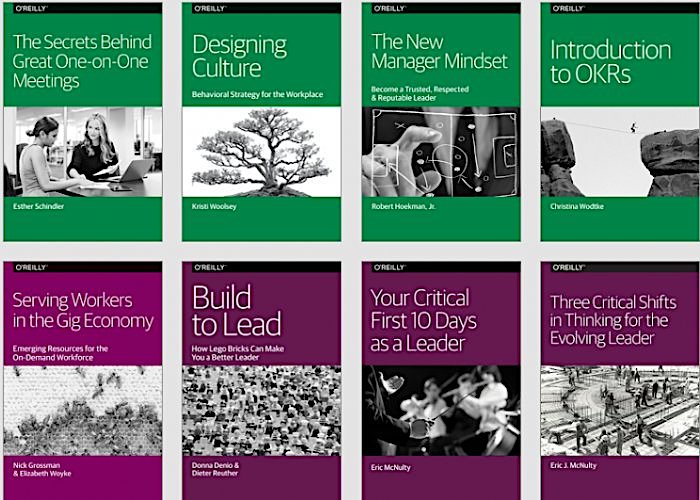
Last year we highlighted for you 20 Free eBooks on Design from O’Reilly Media. Little did we know that we were just scratching the surface of the free ebooks O’Reilly Media has to offer.
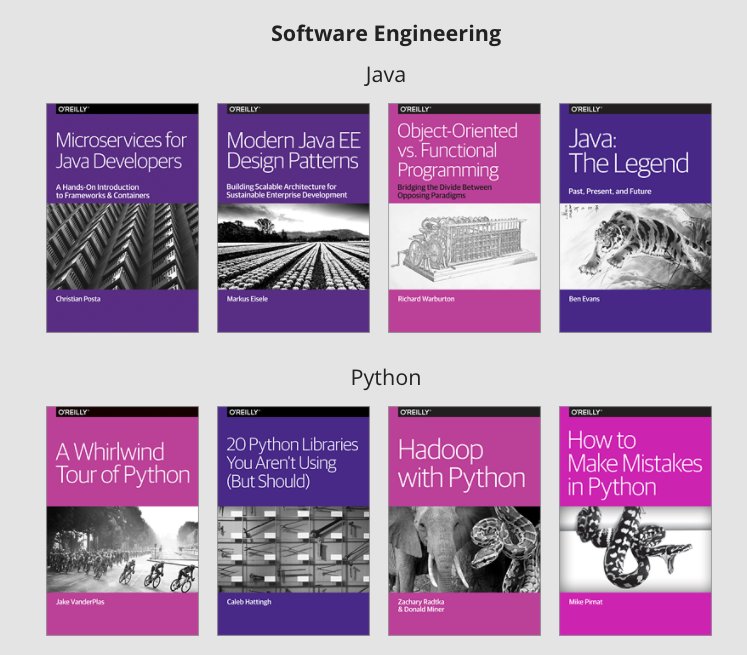
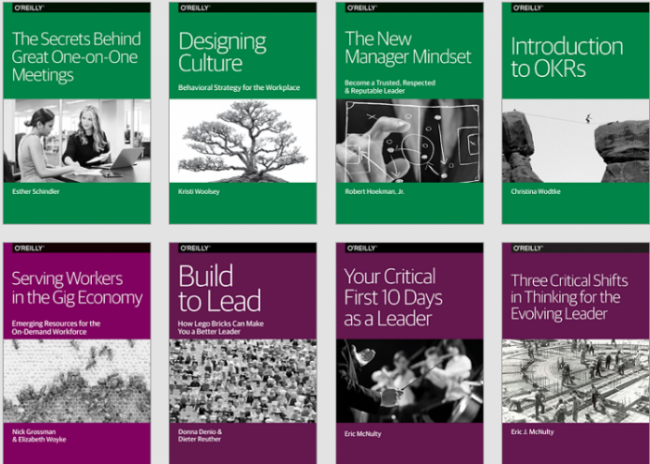
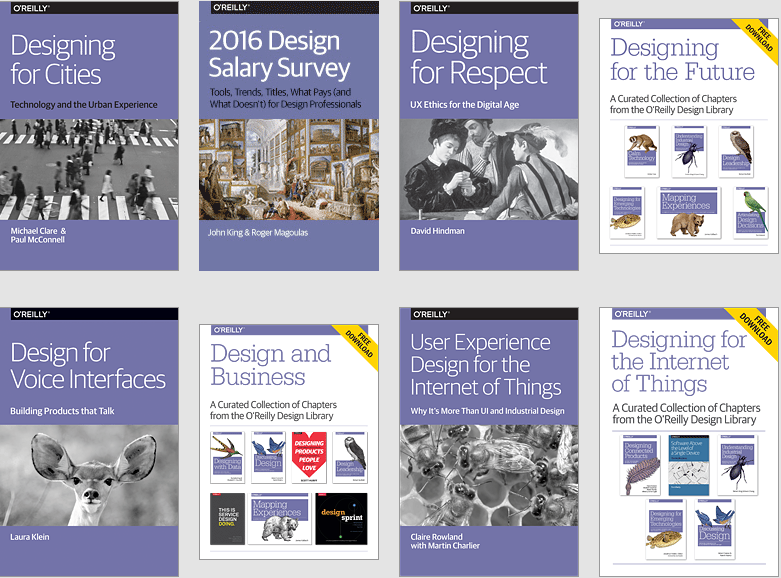
If you head over to this page, you can access 240+ free ebooks covering a range of different topics. Below, we’ve divided the books into sections (and provided links to them), indicated the number of books in each section, and listed a few attractive/representative titles.
You can download the books in PDF format. An email address–but no credit card–is required. Again the complete list is here.
Note: An earlier version of this post originally appeared on our site in January 2017.
If you would like to support the mission of Open Culture, consider making a donation to our site. It’s hard to rely 100% on ads, and your contributions will help us continue providing the best free cultural and educational materials to learners everywhere. You can contribute through PayPal, Patreon, and Venmo (@openculture). Thanks!
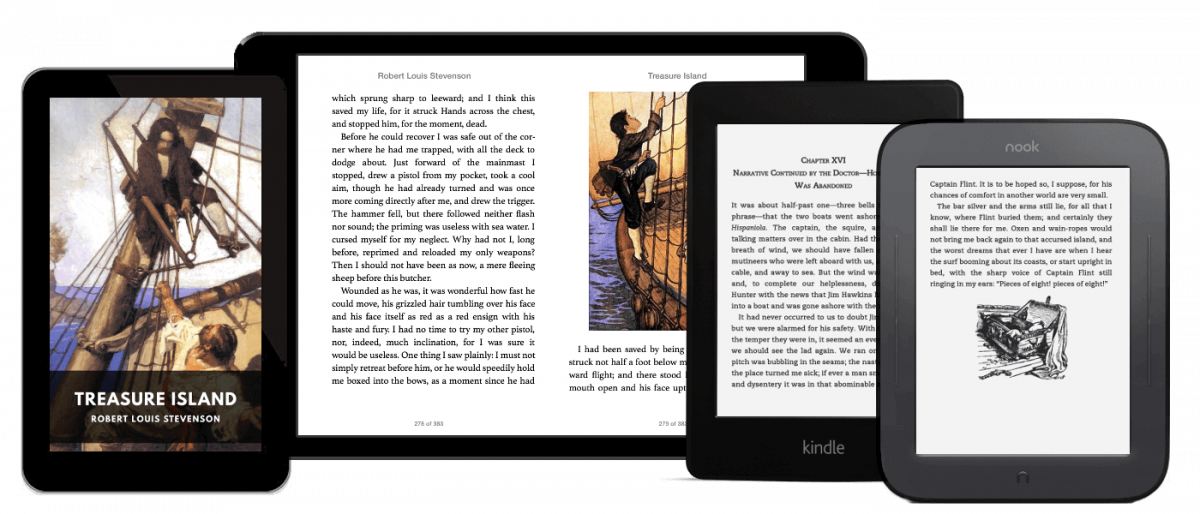
If you look through our collection of 800+ Free eBooks, you will find many public domain texts presented by providers like Project Gutenberg and Archive.org. Pretty soon, we’ll have to add texts from Standard eBooks, a volunteer-driven project that digitizes books while placing an emphasis on design and typography. Here’s how they describe their mission:
While there are plenty of places where you can download free and accurately-transcribed public domain ebooks, we feel the quality of those ebooks can often be greatly improved.
For example, Project Gutenberg, a major producer of public-domain ebooks, hosts epub and Kindle files that sometimes lack basic typographic necessities like curly quotes; some of those ebooks are automatically generated and can’t take full advantage of modern ereader technology like popup footnotes or popup tables of contents; they sometimes lack niceties like cover images and title pages; and the quality of individual ebook productions varies greatly.
Archival sites like the Internet Archive (and even Project Gutenberg, to some extent) painstakingly preserve entire texts word-for-word, including original typos and ephemera that are of limited interest to modern readers: everything including centuries-old publishing marks, advertisements for long-vanished publishers, author bios, deeply archaic spellings, and so on. Sometimes all you get is a scan of the actual book pages. That’s great for researchers, archivists, and special-interest readers, but not that great for casual, modern readers.
The Standard Ebooks project differs from those etext projects in that we aim to make free public domain ebooks that are carefully typeset, cleaned of ancient and irrelevant ephemera, take full advantage of modern ereading technology, are formatted according to a detailed style guide, and that are each held to a standard of quality and internal consistency. Standard Ebooks include carefully chosen cover art based on public domain artwork, and are presented in an attractive way on your ebookshelf. For technically-inclined readers, Standard Ebooks conform to a rigorous coding style, are completely open source, and are hosted on Github, so anyone can contribute corrections or improvements easily and directly without having to deal with baroque forums or opaque processes.
If you would like to support the mission of Open Culture, consider making a donation to our site. It’s hard to rely 100% on ads, and your contributions will help us continue providing the best free cultural and educational materials to learners everywhere. You can contribute through PayPal, Patreon, and Venmo (@openculture). Thanks!
If you would like to support the mission of Open Culture, consider making a donation to our site. It’s hard to rely 100% on ads, and your contributions will help us continue providing the best free cultural and educational materials to learners everywhere. You can contribute through PayPal, Patreon, and Venmo (@openculture). Thanks!
Last week we highlighted for you 20 Free eBooks on Design from O’Reilly Media. Little did we know that we were just scratching the surface of the free ebooks O’Reilly Media has to offer.
If you head over to this page, you can access 243 free ebooks covering a range of different topics. Below, we’ve divided the books into sections (and provided links to them), indicated the number of books in each section, and listed a few attractive/representative titles.
You can download the books in PDF format. An email address–but no credit card–is required. Again the complete list is here.
If you would like to support the mission of Open Culture, consider making a donation to our site. It’s hard to rely 100% on ads, and your contributions will help us continue providing the best free cultural and educational materials to learners everywhere. You can contribute through PayPal, Patreon, and Venmo (@openculture). Thanks!
If you would like to support the mission of Open Culture, consider making a donation to our site. It’s hard to rely 100% on ads, and your contributions will help us continue providing the best free cultural and educational materials to learners everywhere. You can contribute through PayPal, Patreon, and Venmo (@openculture). Thanks!
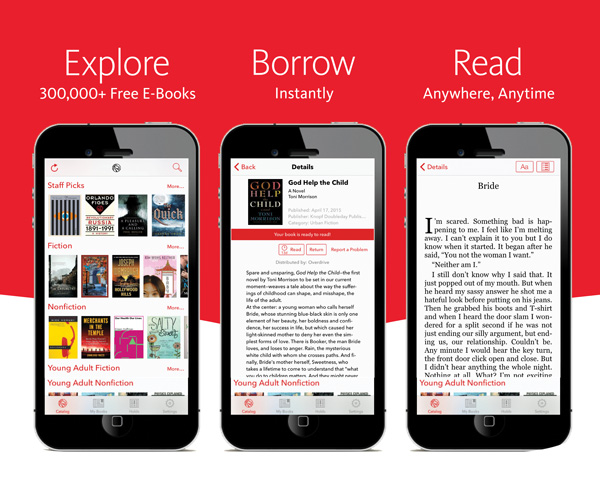
A quick heads up for readers in NYC. This summer, The New York Public Library released a new app, called SimplyE, which gives its cardholders the ability to “browse, borrow, and read more than 300,000 e‑books from the Library’s collections in just a few easy steps.” If you’re among the 3.4 million people the NYPL exists to serve, you can download SimplyE for iPhone/iPad or Android, log in with your NYPL card barcode and PIN, and start reading. Down the road, NYPL plans to make the app available on Kindle Fire, and also to make books available in mp3 format.
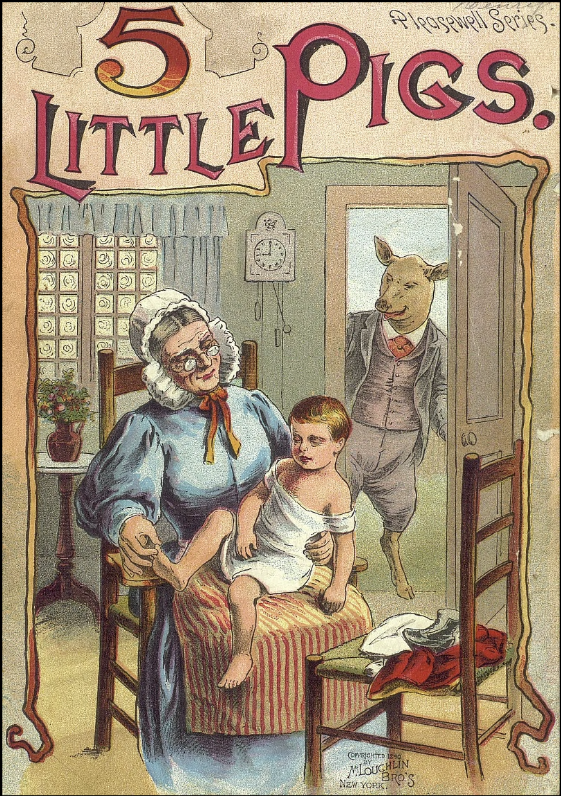
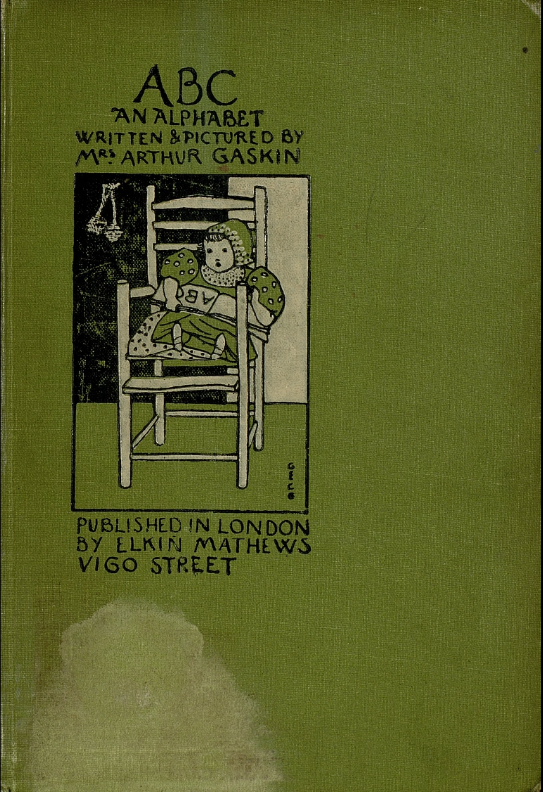
We can learn much about how a historical period viewed the abilities of its children by studying its children’s literature. Occupying a space somewhere between the purely didactic and the nonsensical, most children’s books published in the past few hundred years have attempted to find a line between the two poles, seeking a balance between entertainment and instruction. However, that line seems to move closer to one pole or another depending on the prevailing cultural sentiments of the time. And the very fact that children’s books were hardly published at all before the early 18th century tells us a lot about when and how modern ideas of childhood as a separate category of existence began.
Grenby notes that “the reasons for this sudden rise of children’s literature” and its rapid expansion into a booming market by the early 1800s “have never been fully explained.” We are free to speculate about the social and pedagogical winds that pushed this historical change.
Or we might do so, at least, by examining the children’s literature of the Victorian era, perhaps the most innovative and diverse period for children’s literature thus far by the standards of the time. And we can do so most thoroughly by surveying the thousands of mid- to late 19th century titles at the University of Florida’s Baldwin Library of Historical Children’s Literature. Their digitized collectioncurrently holds over 6,000 books free to read online from cover to cover, allowing you to get a sense of what adults in Britain and the U.S. wanted children to know and believe.
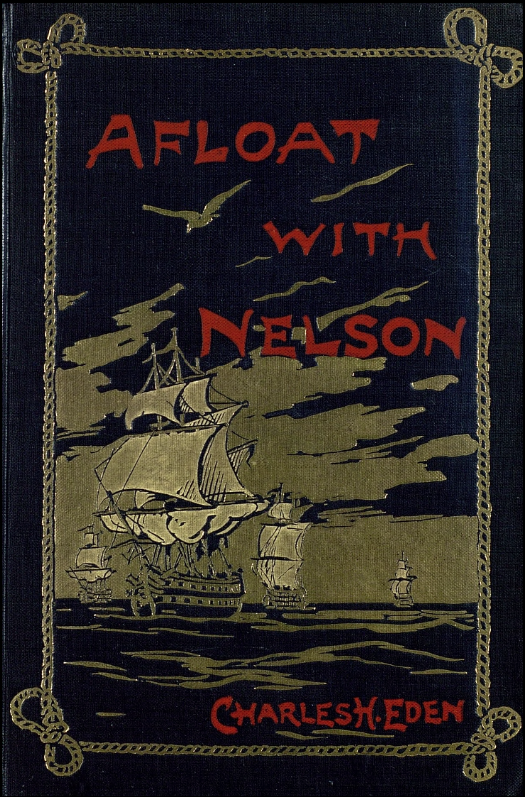
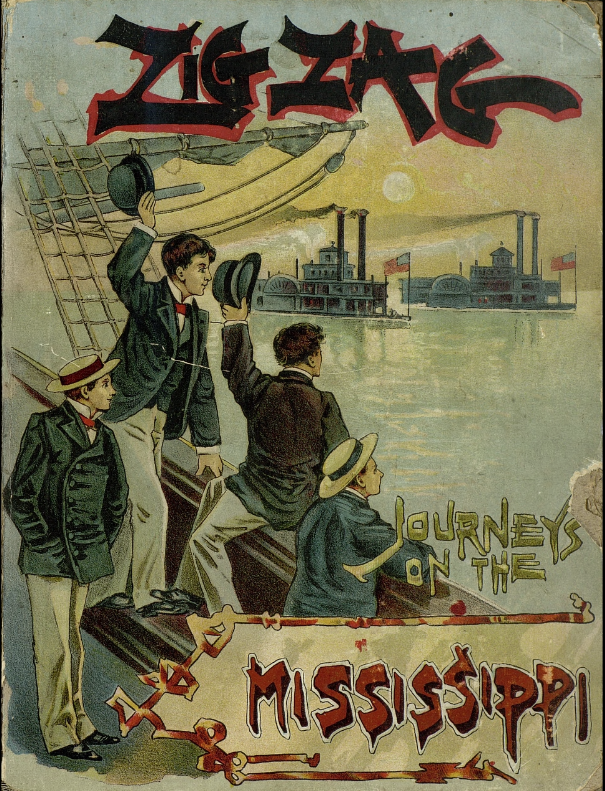
Several genres flourished at the time: religious instruction, naturally, but also language and spelling books, fairy tales, codes of conduct, and, especially, adventure stories—pre-Hardy Boys and Nancy Drew examples of what we would call young adult fiction, these published principally for boys. Adventure stories offered a (very colonialist) view of the wide world; in series like the Boston-published Zig Zag and English books like Afloat with Nelson, both from the 1890s, fact mingled with fiction, natural history and science with battle and travel accounts. But there is another distinctive strain in the children’s literature of the time, one which to us—but not necessarily to the Victorians—would seem contrary to the imperialist young adult novel.
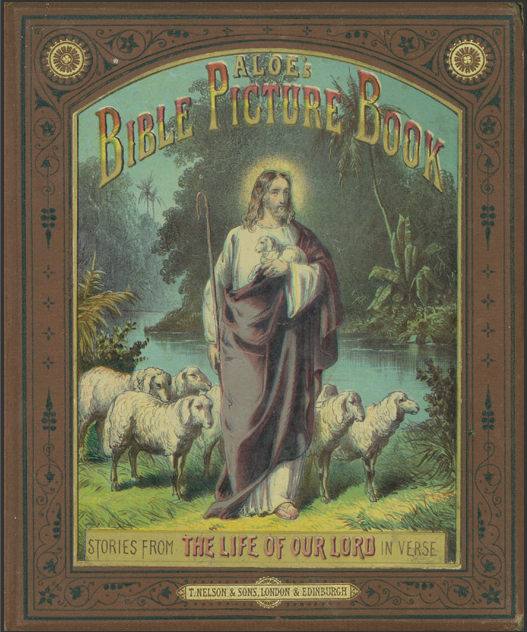
For most Victorian students and readers, poetry was a daily part of life, and it was a central instructional and storytelling form in children’s lit. The A.L.O.E.’s Bible Picture Book from 1871, above, presents “Stories from the Life of Our Lord in Verse,” written “simply for the Lord’s lambs, rhymes more readily than prose attracting the attention of children, and fastening themselves on their memories.” Children and adults regularly memorized poetry, after all. Yet after the explosion in children’s publishing the former readers were often given inferior examples of it. The author of the Bible Picture Book admits as much, begging the indulgence of older readers in the preface for “defects in my work,” given that “the verses were made for the pictures, not the pictures for the verses.”
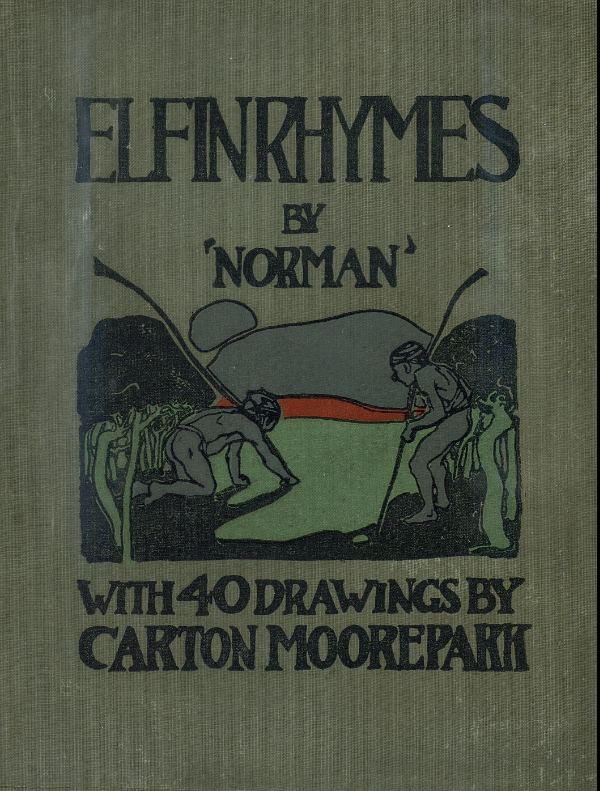
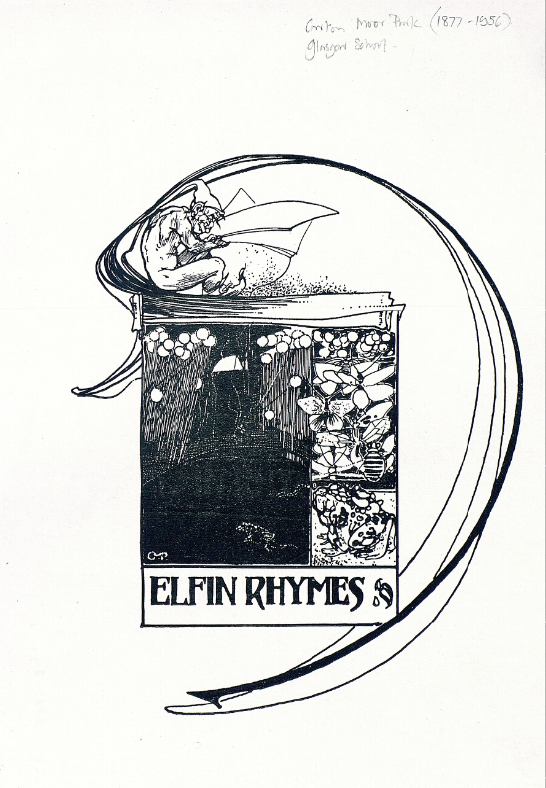
This is not an author, or perhaps a type of literature, one might suspect, that thinks highly of children’s aesthetic sensibilities. We find precisely the opposite to be the case in the wonderful Elfin Rhymes from 1900, written by the mysterious “Norman” with “40 drawings by Carton Moorepark.” Whoever “Norman” may be (or why his one-word name appears in quotation marks), he gives his readers poems that might be mistaken at first glance for unpublished Christina Rossetti verses; and Mr. Moorepark’s illustrations rival those of the finest book illustrators of the time, presaging the high quality of Caldecott Medal-winning books of later decades. Elfin Rhymes seems like a rare oddity, likely published in a small print run; the care and attention of its layout and design shows a very high opinion of its readers’ imaginative capabilities.
This title is representative of an emerging genre of late Victorian children’s literature, which still tended on the whole, as it does now, to fall into the trite and formulaic. Elfin Rhymes sits astride the fantasy boom at the turn of the century, heralded by hugely popular books like Frank L. Baum’s Wizard of Oz series and J.M. Barrie’s Peter Pan. These, the Harry Potters of their day, made millions of young people passionate readers of modern fairy tales, representing a slide even further away from the once quite narrow, “remorselessly instructional… or deeply pious” categories available in early writing for children, as Grenby points out.
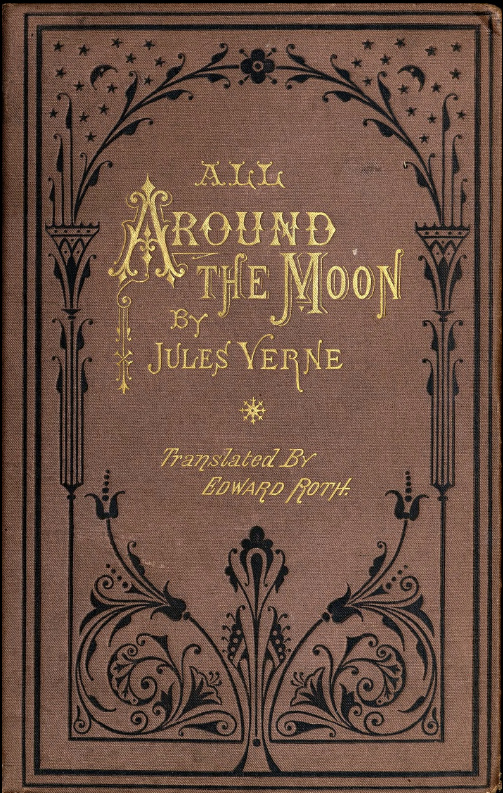
Where the boundaries for kids’ literature had once been narrowly fixed by Latin grammar books and Pilgrim’s Progress, by the end of the 19th century, the influence of science fiction like Jules Verne’s, and of popular supernatural tales and poems, prepared the ground for comic books, YA dystopias, magician fiction, and dozens of other children’s literature genres we now take for granted, or—in increasingly large numbers—we buy to read for ourselves. Enter the Baldwin Library of Historical Children’s Literature here, where you can browse several categories, search for subjects, authors, titles, etc, see full-screen, zoomable images of book covers, download XML versions, and read all of the over 6,000 books in the collection with comfortable reader views. Find more classics in our collection, 800 Free eBooks for iPad, Kindle & Other Devices.
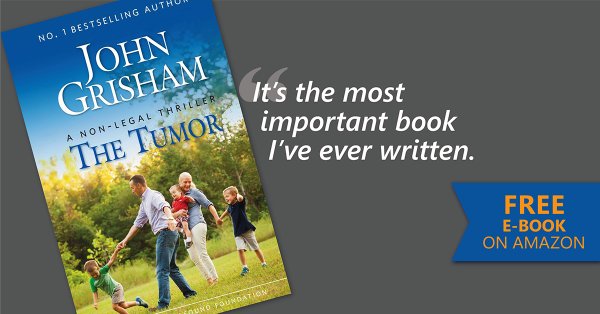
FYI: Bestselling author John Grisham is giving away his new novel called The Tumor: A Non-Legal Thriller. Available as a free ebook on Amazon, Grisham has called The Tumor “the most important book I’ve ever written.” And, as the subtitle suggests, this new book isn’t another one of those legal thrillers Grisham is known for. No, this novel focuses on medicine and how a “new medical technology could revolutionize the future of medicine by curing with sound.”
Here’s how the book is briefly summarized on Amazon:
The Tumor follows the present day experience of the fictional patient Paul, an otherwise healthy 35-year-old father who is diagnosed with a malignant brain tumor. Grisham takes readers through a detailed account of Paul’s treatment and his family’s experience that doesn’t end as we would hope. Grisham then explores an alternate future, where Paul is diagnosed with the same brain tumor at the same age, but in the year 2025, when a treatment called focused ultrasound is able to extend his life expectancy.
Focused ultrasound has the potential to treat not just brain tumors, but many other disorders, including Parkinson’s, Alzheimer’s, hypertension, and prostate, breast and pancreatic cancer…
Readers will get a taste of the narrative they expect from Grisham, but this short book will also educate and inspire people to be hopeful about the future of medical innovation.
You can also see Grisham talking about the material in his novel at this TEDx talk.
If you would like to support the mission of Open Culture, consider making a donation to our site. It’s hard to rely 100% on ads, and your contributions will help us continue providing the best free cultural and educational materials to learners everywhere. You can contribute through PayPal, Patreon, and Venmo (@openculture). Thanks!
We're hoping to rely on loyal readers, rather than erratic ads. Please click the Donate button and support Open Culture. You can use Paypal, Venmo, Patreon, even Crypto! We thank you!
Open Culture scours the web for the best educational media. We find the free courses and audio books you need, the language lessons & educational videos you want, and plenty of enlightenment in between.
 If you look through our collection of