The Earth, it seems, has only one truly unlimited resource: enthusiasm for Star Wars. Not even The Phantom Menace, the derision magnet that opened the film series’ newer trilogy, made a serious dent in our reserves. But did everyone who got together in the 1970s to make the very first Star Wars movie, from George Lucas on down the chain of command, understand how deep a vein of fandom they had drilled into? The Making of Star Wars, a 1977 documentary on that beloved space opera-turned-cultural phenomenon, will give you some idea.
Now that Star Wars has generated such a universe, if you like, of supplementary content, one more 50-minute behind-the-scenes special might strike you as no great shakes. But when The Making of Star Wars appeared in ’77, it appeared as the first documentary about Star Wars ever. And it has much higher ambitions than the average promotional short of the day, featuring not only cast and crew interviews but segments on the (decidedly pre-CGI) effects technology employed in the production.
Even the most dedicated Star Wars buffs will still find material of interest here, including footage that never made it into the picture’s theatrical cut, and footage reintroduced into 1997’s revamped “Special Edition” of the original trilogy but altered with CGI (another drain on several generation’s Star Wars love). But many of us will watch The Making of Star Wars on one of its strengths alone: C‑3PO and R2-D2 host the whole thing. Could even those precision-engineered droids have foreseen the thunderous reception that has met this year’s brand new teasers for Star Wars: The Force Awakens?
A whole generation of filmmakers who came to prominence in the late 90s and early 00s got their start in music videos. Spike Jonze, for instance, went from making the Beastie Boys’ best video, “Sabotage,” to making Being John Malkovich, the greatest film ever about being John Malkovich. Simon West has the dubious distinction of making Rick Astley’s “Never Gonna Give You Up,” making him the handmaiden to that loathsome of internet meme’s, rickrolling. He then went on to make the overstuffed spectacle Con Air, making him the handmaiden of Nicolas Cage’s dreadful action career. And Michael Bay, Mr. Death-Of-Cinema himself, made slick videos for the Divinyls before branching off into explosion porn with the Transformers franchise.
Yet the most celebrated filmmaker to come out of music videos is David Fincher. Even before he made his green-tinted feel-bad masterpieces like Zodiac and The Social Network, he already made a deep impact on American popular consciousness – especially if you were watching a lot of MTV during the waning days of the Cold War. Here are five of his most famous and finely-crafted vids.
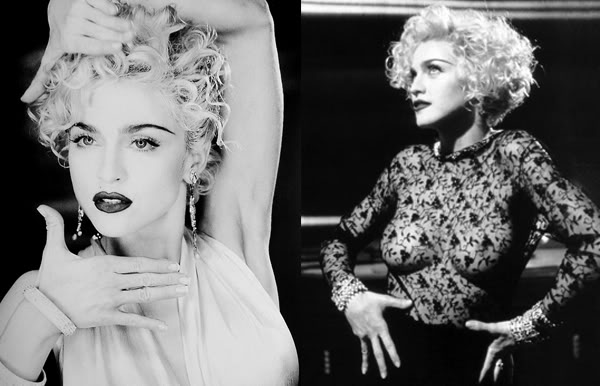
Shot in gorgeous black and white, Fincher makes Madonna look like a Hollywood icon of yore while spinning one dazzling image after another of well-appointed, and remarkably limber, men voguing. The video was reportedly shot at a breakneck pace, just 16 hours, to accommodate Madonna’s tour schedule.
Fincher captures Paula Abdul’s sass and her considerable dancing prowess in this stark, graphic video that is almost completely devoid of grey.
George Michael refused to participate in the shoot for this video. So Fincher did what I wish I could do — call up a bunch of supermodels including Naomi Campbell, Linda Evangelista and Cindy Crawford and get them to help out. The result feels like a Victoria’s Secret catalogue come to life.
The song might be catchy but the lyrics are about murder and child abuse. Fincher shoots Aerosmith’s likely arena rock anthem as a crime story, complete with lush colors and moody, expressionistic depictions of the deeds. The video proved to be great training for his subsequent films.
Madonna’s “Express Yourself” was the most expensive music video made up to that point, costing $5 million. A riff off the German Expressionist masterpiece, Metropolis, this work features far more corsets, naked men and crotch grabs than Fritz Lang’s film. Madonna had a great deal of say over the final product. “I oversaw everything — the building of the sets, everyone’s costumes, I had meetings with make-up and hair and the cinematographer, everybody,” she told Rolling Stone magazine. “Casting, finding the right cat — just every aspect.” The success of this video landed Fincher his first feature film, the troubled Alien3.
Jonathan Crow is a Los Angeles-based writer and filmmaker whose work has appeared in Yahoo!, The Hollywood Reporter, and other publications. You can follow him at @jonccrow. And check out his blog Veeptopus, featuring lots of pictures of badgers and even more pictures of vice presidents with octopuses on their heads. The Veeptopus store is here.
A quick note: Kristoffer Seland Hellesmark was looking for a documentary on Christopher Hitchens to watch, but could never find one. So, after waiting a while, he said to himself, “Why don’t I just make one?” The result is the 80-minute documentary about Hitchens, lovingly entitled The Hitch, which features clips from his speeches and interviews. We’ve added it to our collection of 200+ Free Documentaries, a subset of our larger collection, 4,000+ Free Movies Online: Great Classics, Indies, Noir, Westerns, Documentaries & More.
If you would like to support the mission of Open Culture, consider making a donation to our site. It’s hard to rely 100% on ads, and your contributions will help us continue providing the best free cultural and educational materials to learners everywhere. You can contribute through PayPal, Patreon, and Venmo (@openculture). Thanks!
Mike Leigh works like few other directors. While most movies start with the script, Leigh develops a story and characters with his actors during long rehearsals. Leigh then assembles these exercises into a script. He will shoot some of that script and then rehearse some more. The result of this unusual style is that the actors know their characters down to the marrow. The film feels alive.
Back in 1975, just as Leigh was beginning to develop his famed method, the BBC commissioned him to make a series of five-minute movies. Leigh described the concept of the assignment to writer Sean O’Sullivan:
I thought it was a cracking idea, and I would have done forty of them or fifty – so you’d see them all the time, and sometimes you might see a character you never saw again, sometimes you might see somebody popping up for a moment and then be a main character in another one, or there’d be a couple of ones that would run on to a narrative. It would be a whole microcosm of the world. There was debate about whether they should be shown at the same time or they should be dotted around the channel, like currants in the pudding, as Tony Garnett, the producer, called it.
The project, sadly, was canceled before it even aired and only five movies were made. Those five were not broadcast until 1982 when Leigh had already become a big name in British television.
In some of his best works like Life is Sweet and Naked, Leigh focused on the small dramas of working class life, mining the unarticulated sadness and anger simmering just beneath the surface of modern Britain. His Five-Minute Films show early glimmers of his later greatness.
The plot of the first film, The Birth of the Goalie of the 2001 F.A. Cup Final, is simple to an extreme. The short, which consists of ten vignettes spanning a half-dozen years, is about a couple deciding whether or not to have a baby. The nameless bloke repeatedly asks his reluctant partner, “Wouldn’t it be great to have a kid?” At the end of the movie, he’s kicking the ball around with his young son. The end. It is almost as if Leigh wanted to see how little backstory and character psychology he could get away with.
The second film, Old Chums, is the diametrical opposite to the first – it’s all about character. The story, which unfolds in real-time, shows Brian, who is disabled and in crutches, walking to the car as he parries the conversational onslaught of a boorish ex-schoolmate, Terry. The movie buries you in names and long past events that have little bearing on the story, but leaves central questions like “what does Terry actually want?” tantalizingly vague.
Jonathan Crow is a Los Angeles-based writer and filmmaker whose work has appeared in Yahoo!, The Hollywood Reporter, and other publications. You can follow him at @jonccrow. And check out his blog Veeptopus, featuring lots of pictures of badgers and even more pictures of vice presidents with octopuses on their heads. The Veeptopus store is here.
David Fincher is an auteur in the same way that Alfred Hitchcock is — you can tell a Fincher film from seeing a single frame. His shots are colored with inky blacks and sickly fluorescent greens and they are always compositionally perfect. His camera moves with an eerie disembodied smoothness that makes a Kubrick film seem down right warm and inviting. His movies mine the murky recesses of the human condition; you are more likely to see a grisly murder in a Fincher movie than a passionate kiss. Even movies that have a relatively low body count, like The Social Network, are imbued with a distinctly Finchersque grimness.
A growing number of critics are starting to pay attention. Above you can see Tony Zhou illustrate the director’s stylistic restraint in a video essay called “And the Other Way is Wrong.” Fincher himself once said, “They know you can do anything so the question is what don’t you do, not what do you do.” And Zhou elegantly shows what Fincher does not do, which is such staples of Hollywood filmmaking as hand-held cameras and close ups. He likes his camera locked down and aloof.
In another video essay series, Aaron Aradillas and the great Matt Zoller Seitz focus simply on the openings of Fincher’s films. The series starts with Fincher’s first, and most maligned, movie Alien3. Aradillas and Zoller Seitz argue that the film is distinctly different from the first two Alien films. Ridley Scott, director of Alien, kept the shots long and the edits largely invisible. Fincher, in contrast, used fast and jarring edits. He started as a music video director and was still in MTV mode when he made Alien3.
In a later episode on Zodiac, arguably his masterpiece, Aradillas and Zoller Seitz show that Fincher brilliantly packed the film’s two opening sequences with an impressive amount of exposition, setting up not just story elements but also the film’s complex, subjective point of view.
There are four videos in total in this series with a promise of a fifth. You can watch them all here.
Jonathan Crow is a Los Angeles-based writer and filmmaker whose work has appeared in Yahoo!, The Hollywood Reporter, and other publications. You can follow him at @jonccrow. And check out his blog Veeptopus, featuring lots of pictures of badgers and even more pictures of vice presidents with octopuses on their heads. The Veeptopus store is here.
For at least fifty years, the work of Stanley Kubrick has constituted an ideal object of study for serious cinephiles. Now that the technological democratization of the past decade has allowed some of the most serious cinephiles to become video essayists, that study has flowered into a host of mini-documentaries closely examining the techniques of all of film history’s most scrutinizable auteurs. The subfield of Kubrick-themed video essayism recently reached a new high watermark with filmmaker Cameron Beyl’s five-part, three-hour Directors Series study of the man’s life and work.
“Every living filmmaker today works under the shadow of Stanley Kubrick,” says Beyl in his narration toward the end of the series. “His roller-coaster ride of a career lasted 45 years and spanned two continents, leaving fourteen features and countless innovations in its wake.
In making his films, Kubrick ultimately wanted to change the form of cinema itself. His exploration of alternative story structures and new forms of expression resulted in several groundbreaking contributions to the development of the craft itself.”
If you want to find out much more about the nature of those groundbreaking contributions, block out the time and watch Beyl’s analyses of each period of Kubrick’s career: the time of his early independent features (Fear & Desire, Killer’s Kiss, The Killing), the Kirk Douglas years (Paths of Glory and Spartacus), the Peter Sellers comedies (Lolita and Dr. Strangelove or: How I Learned to Stop Worrying and Love the Bomb), the masterworks (2001: A Space Odyssey, A Clockwork Orange, Barry Lyndon, and The Shining), and the final features (Full Metal Jacket and Eyes Wide Shut.)
The project leaves no aspect of Kubrick’s mastery unmentioned: his painstaking research habits, his much-discussed take-after-take-after-take shooting method on set, his careful method of discovering each film’s form in the editing room, his eagerness to incorporate new technology into his productions, and his finished pictures’ simultaneous embodiment and subversion of genre. It makes us ask the obvious but seemingly unanswerable question: who’s the next Stanley Kubrick? But Beyl actually has an answer, and one that has become the subject of his next series, already in progress: David Fincher. The director of The Game, Fight Club, and The Social Network has big shoes to fill — or so he’ll realize even more clearly if he watches the Kubrick series himself.
Wonderful, presumably. You’re wealthy, well respected, and highly sought. Your random real world cameos bring joy to scores of unsuspecting mortals.
He doesn’t care about what just happened. He doesn’t think about what’s going to happen. He doesn’t even book round-trip tickets. Bill buys one-ways and then decides when he wants to go home.
A stunningly good use of wealth and power. If he were anyone but the inimitable Bill Murray, I bet we’d be seething with envious class rage.
He devises the rules by which he plays, from the way he rubs shoulders with the common man to the toll free number that serves as his agent to indulging in creative acts of rebellion that could get a younger, less nuanced star labelled bratty, if not mentally ill, and desperately in need of rehab.
I’ve retired a couple of times. It’s great, because you can just say, “Oh, I’m sorry. I’m retired.” And people will actually believe that you’ve retired. There are nutters out there that will go, “Oh, okay!” and then leave you alone.
…someone told me some secrets early on about living, and that you just have to remind yourself … you can do the very best you can when you’re very very relaxed. No matter what it is, whatever your job is, the more relaxed you are the better you are. That’s sort of why I got into acting. I realized the more fun I had the better I did it and I thought, that’s a job I can be proud of. If I had to go to work and no matter what my condition, no matter what my mood is, no matter how I feel … if I can relax myself and enjoy what I’m doing and have fun with it, I can do my job really well. It has changed my life, learning that.
When the question was put to him at the 2014 Toronto International Film Festival, Murray led a guided meditation, below, to help the audience get a feel for what it feels like to be as relaxed and in the moment as Bill Murray. Putting all joking to the side, he shares his formula as sincerely as Mr. Rogers addressing his young television audience. Don’t forget that this is a man who read the poetry of Emily Dickinson to a roomful of rapt construction workers with a straight and confident face. Complete text is below.
Let’s all ask ourselves that question right now: What does it feel like to be you? What does it feel like to be you? Yeah. It feels good to be you, doesn’t it? It feels good, because there’s one thing that you are — you’re the only one that’s you, right?
So you’re the only one that’s you, and we get confused sometimes — or I do, I think everyone does — you try to compete. You think, damn it, someone else is trying to be me. Someone else is trying to be me. But I don’t have to armor myself against those people; I don’t have to armor myself against that idea if I can really just relax and feel content in this way and this regard.
If I can just feel… Just think now: How much do you weigh? This is a thing I like to do with myself when I get lost and I get feeling funny. How much do you weigh? Think about how much each person here weighs and try to feel that weight in your seat right now, in your bottom right now. Parts in your feet and parts in your bum. Just try to feel your own weight, in your own seat, in your own feet. Okay? So if you can feel that weight in your body, if you can come back into the most personal identification, a very personal identification, which is: I am. This is me now. Here I am, right now. This is me now. Then you don’t feel like you have to leave, and be over there, or look over there. You don’t feel like you have to rush off and be somewhere. There’s just a wonderful sense of well-being that begins to circulate up and down, from your top to your bottom. Up and down from your top to your spine. And you feel something that makes you almost want to smile, that makes you want to feel good, that makes you want to feel like you could embrace yourself.
So, what’s it like to be me? You can ask yourself, “What’s it like to be me?” You know, the only way we’ll ever know what it’s like to be you is if you work your best at being you as often as you can, and keep reminding yourself: That’s where home is.
Note: You will hear sound 37 seconds into the film.
Humanity has endured a great many wartime atrocities since 1937, but to this day, if you think of an artwork born of one such event, you’ll more than likely still think of Guernica. Pablo Picasso’s large black-and-white canvas, which he began painting less than a month after the aerial bombing during the Spanish Civil War of the small Basque town which gave it its name, renders the horror of sudden, thorough destruction in a way nobody had ever seen before, or has seen again since.
“When I visited the town the whole of it was a horrible sight, flaming from end to end. The reflection of the flames could be seen in the clouds of smoke above the mountains from 10 miles away,” wrote The Times’ war correspondent George Steer, in the report that moved Picasso to take on the subject of Guernica for the mural the Spanish Republican government had commissioned for the 1937 World’s Fair. “Throughout the night houses were falling until the streets became long heaps of red impenetrable debris.”
In 1950, both Guernica and Guernica inspired an equally haunting short film of the same name [part one, part two] by Alain Resnais and Robert Hessens. In black and white just like Picasso’s painting, the picture uses nightmarish cutting to combine imagery from Guernica and other artistic sources, a score by Guy Bernard, and the poem “Victory of Guernica” by Paul Éluard. “You hold the flame between your fingers and paint like a fire,” said the poet to the painter during their close friendship in the years after the bombing.
Resnais, who would go on to direct such classics of French cinema as Hiroshima mon amour (another study of an aftermath) and Last Year at Marienbad, only just ended his long and distinguished filmmaking career when he died last year. But in 1950, his career had only just begun, his first forays into film having come in the form of short documentaries on working artists in the mid-1940s. Those led to a commission to do one on the paintings of Van Gogh for a Paris exhibition, which led to one on Gauguin, which led to Guernica. Clearly, Resnais had the tendency to unite the arts in his work from the very beginning, and many of his fans would say it served him well to the end.
We're hoping to rely on loyal readers, rather than erratic ads. Please click the Donate button and support Open Culture. You can use Paypal, Venmo, Patreon, even Crypto! We thank you!
Open Culture scours the web for the best educational media. We find the free courses and audio books you need, the language lessons & educational videos you want, and plenty of enlightenment in between.