Warhol’s Screen Tests of Lou Reed, Dennis Hopper, Nico & More

Between 1964 and 1966, Andy Warhol shot close to 500 short movies of friends, celebri­ties, mod­els, and any of the oth­er love­ly young things who passed through his stu­dio known as The Fac­to­ry. The indie-rock duet Dean and Brit­ta recent­ly com­posed songs for 13 of the videos, which they’ve been per­form­ing live as part of a mul­ti­me­dia con­cert for sev­er­al years. “13 Most Beau­ti­ful… Songs for Andy Warhol’s Screen Tests” is avail­able on DVD, CD, and of course, YouTube.

We espe­cial­ly loved “I’m Not A Young Man Any­more,” fea­tur­ing an icy cool Lou Reed, so hip and desir­able that even his Coke bot­tle looks as if it’s wear­ing sun­glass­es. There are oth­er gems as well, start­ing with the doomed Edie Sedgewick, one of The Fac­to­ry’s ear­li­est stars, who died of an over­dose in 1971.

The 5′10″ Ger­man mod­el Nico, before she began record­ing with the Vel­vet Under­ground.

The preter­nat­u­ral­ly beau­ti­ful Paul Amer­i­ca, star of Warhol’s film “My Hus­tler,” who even­tu­al­ly hired lawyers to seek pay­ment for his role in the movie that made him a reluc­tant gay icon. He died after being hit by a car in 1981.


And final­ly, the late Den­nis Hop­per, extra­or­di­nary on screen even by Fac­to­ry stan­dards. Accord­ing to Dean and Brit­ta, he was the first to buy one of Warhol’s soup can paint­ings.

On a some­what unre­lat­ed note, the Dean is of course Dean Ware­ham of Galax­ie 500 and Luna. If you’re a fan of his music, or even just nos­tal­gic for 90’s era pre-Nap­ster indie rock, you might want to check out his dry, thought­ful mem­oir, Black Post­cards: A Rock & Roll Romance.

If you would like to sup­port the mis­sion of Open Cul­ture, con­sid­er mak­ing a dona­tion to our site. It’s hard to rely 100% on ads, and your con­tri­bu­tions will help us con­tin­ue pro­vid­ing the best free cul­tur­al and edu­ca­tion­al mate­ri­als to learn­ers every­where. You can con­tribute through Pay­Pal, Patre­on, and Ven­mo (@openculture). Thanks!

Sheer­ly Avni is a San Fran­cis­co-based arts and cul­ture writer. Her work has appeared in Salon, LA Week­ly, Moth­er Jones, and many oth­er pub­li­ca­tions. You can fol­low her on twit­ter at @sheerly.

Charlie Chaplin Mini Film Festival

A few things to know about Char­lie Chap­lin. He starred in over 80 films, reel­ing off most dur­ing the silent film era. In 1914 alone, he act­ed in 40 films, then anoth­er 15 in 1915. By the 1920s, Chap­lin had emerged as the first larg­er-than-life movie star, if not the most rec­og­niz­able per­son on the plan­et.

The actor still holds enough cul­tur­al sway that Google gave him a spe­cial doo­dle for his birth­day last week. And now we give you a 4‑in‑1 col­lec­tion of Chap­lin films. Cre­at­ed in 1938, this mini film fes­ti­val, run­ning 46 min­utes, presents The Adven­tur­er, The Cure, Easy Street and The Immi­grant, all filmed in 1917. (Find an alter­nate ver­sion here.) Plus if you head into our col­lec­tion of Free Movies Online, you will find anoth­er 10 Chap­lin films, all free. Just scroll down to the Silent Film sec­tion, and you’ll be on your way…

via Curios­i­ty Counts

by | Permalink | Make a Comment ( 2 ) |

Diary: The Last Short Film by Tim Hetherington

Ear­li­er today, Tim Het­her­ing­ton, the pho­tog­ra­ph­er who pro­duced and direct­ed the award-win­ning film Restre­po, was killed in the Libyan city of Mis­ura­ta. Although inter­est­ed in diverse art forms, Het­her­ing­ton spent more than a decade work­ing in war zones. He was a cam­era­man on Liberia: An Unciv­il War (2004) and The Dev­il Came on Horse­back (2007), then direct­ed Restre­po, a film about a pla­toon of sol­diers in Afghanistan. It won the Grand Jury Prize at the 2010 Sun­dance Film Fes­ti­val. And, that same year, Het­her­ing­ton also shot a short film, Diary, which he sum­ma­rized in this fash­ion:

‘Diary’ is a high­ly per­son­al and exper­i­men­tal film that express­es the sub­jec­tive expe­ri­ence of my work, and was made as an attempt to locate myself after ten years of report­ing. It’s a kalei­do­scope of images that link our west­ern real­i­ty to the seem­ing­ly dis­tant worlds we see in the media.”

You can watch Diary above and also vis­it a slideshow of Het­her­ing­ton’s pho­to­graph­ic work here.

via Boing­Bo­ing

by | Permalink | Make a Comment ( 6 ) |

Morgan Spurlock: The Greatest TED Talk Ever Sold

Mor­gan Spur­lock­’s newest doc­u­men­tary, The Great­est Movie Ever Sold, expos­es the myr­i­ad ways in which pop­u­lar media is almost whol­ly spon­sored, leased, bought and brand­ed by pow­er­ful cor­po­ra­tions. Iron­i­cal­ly — and inten­tion­al­ly — Spur­lock made sure his doc­u­men­tary would also be almost whol­ly spon­sored, leased, bought and brand­ed by pow­er­ful cor­po­ra­tions. In his very fun­ny TED talk, Spur­lock (Super Size Me, 30 Days) explains how he fur­thered his exper­i­ment in “pure trans­paren­cy” by encour­ag­ing spon­sor­ships of, you guessed it, his very fun­ny TED talk.

Con­fused? That’s because pure trans­paren­cy is a lot eas­i­er to envi­sion than exe­cute. Find out why start­ing at minute 6:18.

via TED

Sheer­ly Avni is a San Fran­cis­co-based arts and cul­ture writer. Her work has appeared in Salon, LA Week­ly, Moth­er Jones, and many oth­er pub­li­ca­tions. You can fol­low her on twit­ter at @sheerly.

Rare Footage: Home Movie of FDR’s 1941 Inauguration

The vin­tage video above is an excerpt from a 16 mm home movie show­ing Pres­i­dent Franklin Delano Roo­sevelt on Jan­u­ary 20, 1941, the day of his Third Inau­gu­ra­tion. This silent col­or movie was shot by FDR’s son-in-law (Clarence) John Boet­tiger, who was then work­ing for the Motion Pic­ture Asso­ci­a­tion of Amer­i­ca, and the qual­i­ty of this rare footage is quite out­stand­ing. Watch the full 14-minute ver­sion here.

FDR can first be seen at 2:45, heav­i­ly sup­port­ed by his old­est son James. This is one of the rare moments on film where Roo­sevelt can actu­al­ly be seen walk­ing, and it’s obvi­ous how dif­fi­cult it was for him to walk after polio left him par­a­lyzed from the hips down in 1921. Next, FDR is seen on the pres­i­den­tial plat­form with his wife Eleanor and Chief Jus­tice Charles Evans Hugh­es, tak­ing the Oath of Office and giv­ing his Inau­gur­al Address. The full text of the address can be read cour­tesy of Yale Law School, and a high-res­o­lu­tion scan of the Inau­gu­ra­tion Cer­e­monies Pro­gram has been uploaded by The Library of Con­gress.

FDR was the first Amer­i­can pres­i­dent to suc­cess­ful­ly run for a third term due to the pre­car­i­ous inter­na­tion­al sit­u­a­tion in 1941. (Get the audio file of FDR’s State of the Union from Jan­u­ary 6, 1941 here). After George Wash­ing­ton declined to run for a third term in 1796, it had become an unwrit­ten rule to fol­low his lead. But it was not until the 22nd Amend­ment from 1947/1951 (“No per­son shall be elect­ed to the office of the Pres­i­dent more than twice.”) that this restric­tion was enshrined into law. FDR was, of course, elect­ed for a fourth term in 1945, but died of a mas­sive stroke on April 12, 1945.

By pro­fes­sion, Matthias Rasch­er teach­es Eng­lish and His­to­ry at a High School in north­ern Bavaria, Ger­many. In his free time he scours the web for good links and posts the best finds on Twit­ter.

The Discipline of D.E.: Gus Van Sant Adapts a Story by William S. Burroughs

Fans of film­mak­er Gus Van Sant (Good Will Hunt­ing, My Own Pri­vate Ida­ho, Milk) will love this 1982 short film – The Dis­ci­pline of D.E. – based on a sto­ry by William S. Bur­roughs. And fans of Bur­roughs him­self will par­tic­u­lar­ly love its theme: The “D.E.” in the title stands for “Doing Easy,” a qua­si-Bud­dhist notion best explained by the short­’s koan-like clos­ing ques­tion, “How fast can you take your time, kid?”

But it is to fans of Bur­roughs’ brief per­for­mance in the 1989 Van Sant clas­sic Drug­store Cow­boy that we ded­i­cate this post. Play­ing the kind, ruined dope-fiend Father Mur­phy — i.e. him­self — Bur­roughs per­fect­ly embod­ied both the allure of his junky aes­thet­ic and its under­ly­ing despair. In the six years between The Dis­ci­pline of D.E. and Drug­store Cow­boy, Van Sant seemed to have trad­ed his youth­ful infat­u­a­tion with a cult hero for the mourn­ful appre­ci­a­tion of a wise but bro­ken man. We high­ly rec­om­mend view­ing both films togeth­er.

Final­ly, in our col­lec­tion of Free Movies Online, you will also find Bur­roughs the Movie (a doc­u­men­tary by Howard Bruck­n­er) and The Junky’s Christ­mas, a short clay­ma­tion film writ­ten by William S. Bur­roughs and pro­duced by Fran­cis Ford Cop­po­la.

via Dan­ger­ous Minds

Sheer­ly Avni is a San Fran­cis­co-based arts and cul­ture writer. Her work has appeared in Salon, LA Week­ly, Moth­er Jones, and many oth­er pub­li­ca­tions. You can fol­low her on twit­ter at @sheerly.

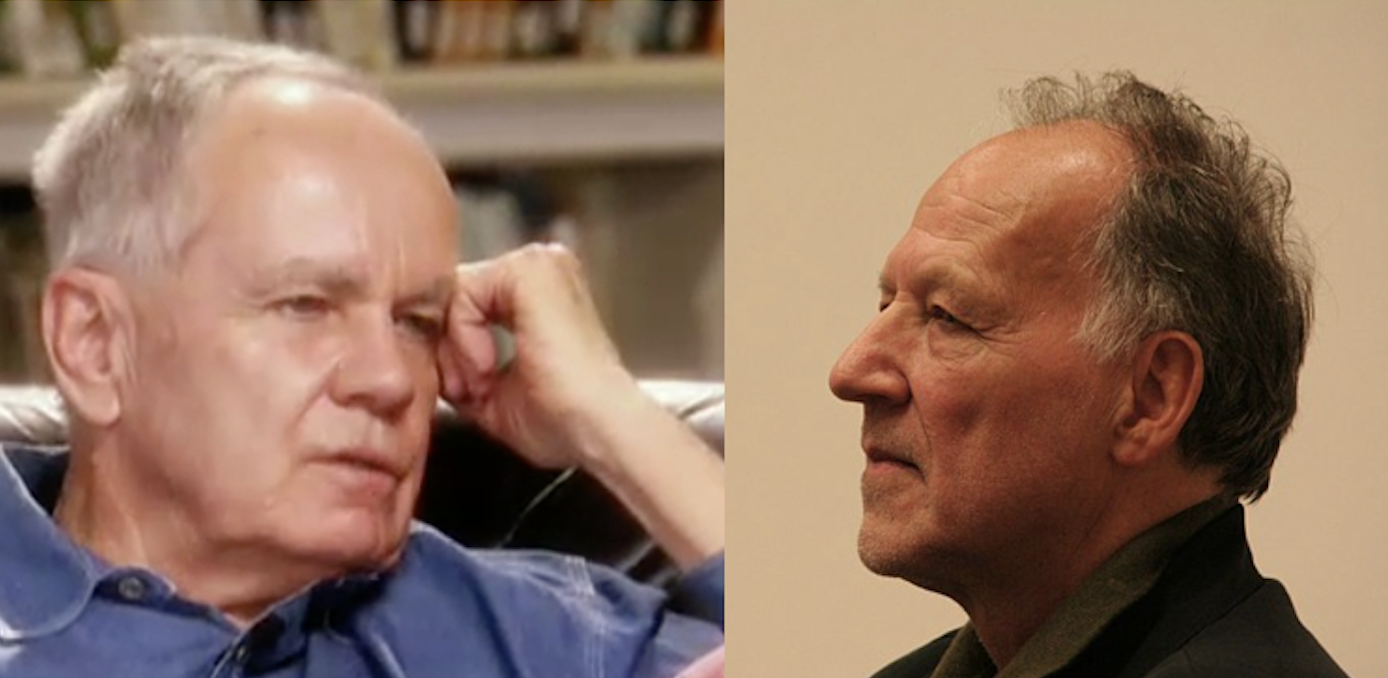
Cormac McCarthy (RIP) and Werner Herzog Talk Science and Culture

To kick off this won­der­ful episode of Sci­ence Fri­day (lis­ten below), physi­cist Lawrence M. Krauss sug­gests that sci­ence and art ask the same fun­da­men­tal ques­tion: Who are we, and what is our place in the uni­verse?

Over the next hour, Krauss is joined in his explo­ration of this ques­tion by the great film­mak­er Wern­er Her­zog (Griz­zly Man, Encoun­ters at the End of the World) and 2000 Pulitzer Prize win­ner Cor­mac McCarthy (The Cross­ing, The Road, No Coun­try For Old Men). Much of their dis­cus­sion revolves around Her­zog’s lat­est film, the 3‑D doc­u­men­tary The Cave of For­got­ten Dreams, but they also address bot­tle­neck the­o­ry, com­plex­i­ty sci­ence, the his­to­ry of paint­ing, and the upcom­ing rise of the machines.

High point: Her­zog reads a pas­sage from McCarthy’s All the Pret­ty Hors­es (38:00).

Low point: Her­zog asserts that Star Trek lied — human beings will nev­er learn to instant­ly trans­port from plan­et to plan­et. Krauss con­firms, and Trekkie hearts all over the world break into tiny unbeam­able pieces (17:00).

Relat­ed Con­tent:

Cor­mac McCarthy’s Three Punc­tu­a­tion Rules, and How They All Go Back to James Joyce

How Cor­mac McCarthy Became a Copy-Edi­tor for Sci­en­tif­ic Books and One of the Most Influ­en­tial Arti­cles in Eco­nom­ics

Nov­el­ist Cor­mac McCarthy Gives Writ­ing Advice to Sci­en­tists … and Any­one Who Wants to Write Clear, Com­pelling Prose

via Metafil­ter

Sheer­ly Avni is a San Fran­cis­co-based arts and cul­ture writer. Her work has appeared in Salon, LA Week­ly, Moth­er Jones, and many oth­er pub­li­ca­tions. You can fol­low her on twit­ter at @sheerly.

Poems as Short Films: Langston Hughes, Pablo Neruda and More

A few years ago, the genius­es over at Four Sea­sons Pro­duc­tions began shoot­ing evoca­tive short films set to clas­sic poet­ry. 21 fin­ished pieces, a long list of fes­ti­val prizes and a full DVD lat­er, many of their best “poem videos” are now avail­able to watch for free on their YouTube chan­nel.

These short pieces cap­ture the mood, rhythms and mean­ing of a wide range of poet­ic voic­es and styles in imag­i­na­tive ways. Our favorite is the above inter­pre­ta­tion of Langston Hugh­es’ “The Weary Blues,” but there are sev­er­al oth­er excep­tion­al shorts, includ­ing “Only Breath” by the great 13th cen­tu­ry sufi poet Jalal ad-Din Rumi and “100 Love Son­nets IX” by Pablo Neru­da. Note: The Neru­da poems are read in the orig­i­nal Span­ish.

Sheer­ly Avni is a San Fran­cis­co-based arts and cul­ture writer. Her work has appeared in Salon, LA Week­ly, Moth­er Jones, and many oth­er pub­li­ca­tions. You can fol­low her on twit­ter at @sheerly.

« Go Back — More in this category... »
Quantcast