A few weeks ago we directed you to a wonderful three-part BBC documentary about modern philosophy called Human, All Too Human, adding that we considered the chapter on Jean-Paul Sartre the most satisfying of the three.
Now we give you a light-hearted chaser for that documentary’s strong spirits: The French philosopher’s teachings as interpreted by the science fiction overlord Darth Vader. Perhaps more than any other 20th century supervillain, the disgraced Jedi knight tragically and perfectly embodies the Sartrian notion that “Freedom is what you do with what has been done to you.”
For those who might consider the Joker a better candidate, we humbly submit that with the Joker, it’s more of a Nietzschean thing.
Sheerly Avni is a San Francisco-based arts and culture writer. Her work has appeared in Salon, LA Weekly, Mother Jones, and many other publications. You can follow her on twitter at @sheerly
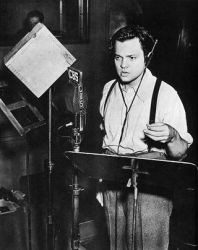
96 years ago today, Orson Welles, the “ultimate auteur,” was born in Kenosha, Wisconsin. Hence his early nickname, The Kenosha Kid. Nowadays, we remember Welles as arguably the greatest director of the 20th century, a superb actor on stage and screen, and a pioneering radio dramatist. To celebrate his 96th birthday, we have dipped into our archives and pulled together some of Welles’ finest artistic works, all now freely available online:
The Stranger
Welles’ third film, The Stranger, a 1946 film noir thriller, was a commercial success upon release. The same couldn’t be said for Citizen Kane. The Stranger features Edward G. Robinson hunting a Nazi fugitive (Welles himself) who marries the daughter (Loretta Young) of a Supreme Court justice. The film, now available online in its entirety, is one of the first post WWII films to show footage of concentration camps. You can find this film, and others mentioned below, in our collection of Free Movies Online.
Welles famously starred in The Third Man, a must-see noir film, which won the Grand Prix at the 1949 Cannes Film Festival and an Academy Award for Best Black and White Cinematography in 1950. A half century later, the British Film Institute namedThe Third Man the best British film of the 20th century. Quite a statement. You can watch it here.
Freedom River
Almost 40 years (and seven presidential administrations) have passed since Orson Welles narrated Freedom River. And although the animation shows some age, the parable, a commentary on America, still resonates today. Or, at least I suspect many viewers will think so. You can get the backstory on this intriguing little project here.
The War of the Worlds
Back in the late 1930s, Orson Welles launched The Mercury Theatre on the Air, a radio program dedicated to bringing dramatic productions to the American airwaves. The show had a fairly short run. It lasted from 1938 to 1941. But it made its mark. During these few years, The Mercury Theatre aired The War of the Worlds, an episode narrated by Welles that led many Americans to believe their country was under Martian attack. The legendary production was based on H.G. Wells’ early sci-fi novel, and you can listen to it here. We have more links to Mercury Theatre productions here.
Welles Reads Moby Dick
He only gives you two tantalizing minutes. And he’s paraphrasing more than reading the text itself. But it’s vintage Welles. You can find him reading another passage from Melville’s classic here…
French graphic artist Martin Woutisseth has put together this lovely filmography of Stanley Kubrick, based on animated posters of his own design, and set to a wonderful score by composer Romain Trouillet. Woutisseth’s visual interpretations of each film, from Killer’s Kiss (1955) to Eyes Wide Shut (1999) are works of art in their own right. We especially loved the details on the mask for Eyes Wide Shut at minute 3:00.
Sheerly Avni is a San Francisco-based arts and culture writer. Her work has appeared in Salon, LA Weekly, Mother Jones, and many other publications. You can follow her on twitter at @sheerly
A sad, loving farewell to the great playwright, librettist and director Arthur Laurents, who died in his sleep today at the age of 93. Mr. Laurents was best known for writing Gypsy (1959),The Way We Were(1973),and of course the incomparable West Side Story (1959), about which this author has nothing to say, except that without West Side Story the world as she knows and loves it would cease to exist.
Sheerly Avni is a San Francisco-based arts and culture writer. Her work has appeared in Salon, LA Weekly, Mother Jones, and many other publications. You can follow her on twitter at @sheerly.
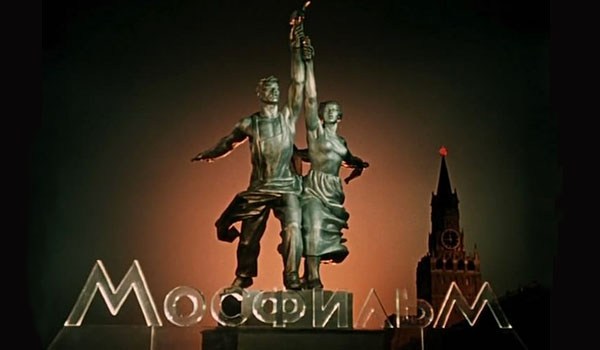
We have previously featured films by the great Russian filmmaker Andrei Tarkovsky. So we’re overjoyed to report that the Moscow film company Mosfilm has just made 5o Russian classics available on YouTube in high definition. According to Yahoo News, Mosfilm has pledged to release five more films each week, all in HD with English subtitles, eventually bringing the total for the year to 200.
You can look over the whole list of currently available classics at Mosfilm’s YouTube channel. (Non-Russian speakers might want to hit Google Translate.) In yet another concession to the decadence of Western capitalism, each film is preceded by a short commercial. We hope some balance has been restored to the universe by the inclusion of communist dictator Joseph Stalin’s favorite movie, the musical comedy Volga Volga.
Sheerly Avni is a San Francisco-based arts and culture writer. Her work has appeared in Salon, LA Weekly, Mother Jones, and many other publications. You can follow her on twitter at @sheerly
The recent 9.0‑magnitude Tōhoku earthquake and tsunami, and subsequent Fukushima nuclear accidents were among the most devastating environmental disasters in recorded history. The immediate consequences are frightening, but their full, long-term impact remains an unsettling mystery.
This, of course, isn’t the first time Japan has faced a nuclear emergency. After the World War II atomic bombings of Hiroshima and Nagasaki, the U.S. government recorded the raw aftermath of Hiroshima in candid, grim detail (while Hollywood was busy lampooning America’s nuclear obsession). Filmed in the spring of 1946 by the Department of Defense, Way of Life documents how the people of Hiroshima adapted to life after the atomic bomb. Though the archival footage lacks sound, its imagery — moving, heartbreaking, deeply human — speaks volumes about the delicate duality of despair and resilience.
Maria Popova is the founder and editor in chief of Brain Pickings, a curated inventory of cross-disciplinary interestingness. She writes for Wired UK, The Atlantic and DesignObserver, and spends a great deal of time on Twitter.
Much has been said, tweeted and written about the 2011 Egyptian Revolution, glorifying it as one of the most landmark triumphs of freedom in recent history. Yet the Western media has delivered surprisingly little on its aftermath, leaving the lived post-revolution reality of the Egyptian people a near-mystery.
This beautiful short film by British film studio Scattered Images offers a rare glimpse of a phoenix still struggling to rise from the ashes of oppression. With incredible visual eloquence, the film peels away at the now-worn media iconography of the revolution itself, revealing how life after it has actually changed — or hasn’t — as Egypt remains a nation in transition, with a future yet to be decided.
Politically, there is a vacuum. The revolution demanded a government accountable to the people and ruled by transparent institutions. But now, the only ruler is uncertainty.
Maria Popova is the founder and editor in chief of Brain Pickings, a curated inventory of cross-disciplinary interestingness. She writes for Wired UK, The Atlantic and DesignObserver, and spends a great deal of time on Twitter.
The world’s first hand-tinted motion picture was produced by Thomas Edison’s company, Edison Studios, in 1895, more than 115 years ago. The dancer, Annabelle Moore (1878–1961), was just a teenager when this film was released, and her dance caused both a sensation and a scandal. (Note the flashes of undergarment, all the way up to above the knee, about 29 seconds in.) It may have been a sign of things to come: Moore would go on to star as the Gibson bathing suit girl in the first Ziegfeld follies, where she remained until her marriage and retirement brought her back to respectability in 1912.
The film is also worth comparing with a similar but much more delicately painted version done just five years later by the Lumiere brothers.
(Special thanks to the recently-launched Weyume)
Sheerly Avni is a San Francisco-based arts and culture writer. Her work has appeared in Salon, LA Weekly, Mother Jones, and many other publications. You can follow her on twitter at @sheerly
We're hoping to rely on loyal readers, rather than erratic ads. Please click the Donate button and support Open Culture. You can use Paypal, Venmo, Patreon, even Crypto! We thank you!
Open Culture scours the web for the best educational media. We find the free courses and audio books you need, the language lessons & educational videos you want, and plenty of enlightenment in between.