Proudfoot casts a wide net in the telling, gathering stories of an unknown woman N.B.A. draftee, a would-be first Black astronaut who never got to fly, a man who could have been the “next Colonel Sanders,” and a former member of the Black Eyed Peas who quit before the band hit it big. Not all stories of loss in “Almost Famous” are equally tragic. Jocelyn Bell Burnell’s story, which she herself tells above, contains more than enough struggle, triumph, and crushing disappointment for a compelling tale.
An astronomer, Bell Burnell was instrumental in the discovery of pulsars — a discovery that changed the field forever. While her Ph.D. advisor Antony Hewish would be awarded the Nobel Prize for the discovery in 1974, Bell Burnell’s involvement was virtually ignored, or treated as a novelty. “When the press found out I was a woman,” she said in 2015, “we were bombarded with inquiries. My male supervisor was asked the astrophysical questions while I was the human interest. Photographers asked me to unbutton my blouse lower, whilst journalists wanted to know my vital statistics and whether I was taller than Princess Margaret.”
In the film, Burnell describes a lifelong struggle against a male-dominated establishment that marginalized her. She also tells a story of supportive Quaker parents who nurtured her will to follow her intellectual passions despite the obstacles. Growing up in Ireland, she says, “I knew I wanted to be an astronomer. But at that stage, there weren’t any women role models that I knew of.” She comments, with understandable anger, how many people congratulated her on her marriage and said “nothing about making a major astrophysical discovery.”
Many of us have stories to tell about being denied achievements or opportunities through circumstances not of our own making. We often hold those stories close, feeling a sense of failure and frustration, measuring ourselves against those who “made it” and believing we have come up short. We are not alone. There are many who made the effort, and a few who got there first but didn’t get the prize for one unjust reason or another. The lack of official recognition doesn’t invalidate their stories, or ours. Hearing those stories can inspire us to keep doing what we love and to keep pushing through the opposition. See more short “Almost Famous” documentaries in The New York Times series here.
“Sticks and stones may break my bones,” we chanted as kids, but “words will never hurt me.” The saying seems to both invite physical violence and deny the real effects of verbal abuse. Maybe this was once effective as a stock playground retort, but it’s never been true, as anyone who’s been picked on as a child can attest. When the taunts are racist, the damage is exponentially multiplied. Not only are kids being singled out and mocked for immutable characteristics, but their family and entire culture of origin are being targeted.
What to do? Lash out? Fight back? Ignore it and pretend it isn’t happening? To quote another cliche, “the best revenge is success.” More appropriately for the case at hand, take an original line from Radiohead’s Thom Yorke: “Be constructive with your blues.”
The Linda Lindas, a four-piece punk band ranging in age from 10 to 16 would agree. When one of the girls was harassed by a classmate, they got bummed about it, then rallied, wrote a song, went viral, and scored a record deal. Dealing with bullies will rarely lead to such joyful results, but it’s worth paying attention when it does.
The song, “Racist, Sexist Boy” has “become something of a 2021 anthem,” writes NPR, with its gleeful call-outs (“Poser! Blockhead! Riffraff! Jerk face!”) and crunchy power chords. “In what has become a very familiar cycle to music-industry watchers, the band landed a record deal almost as soon as its video went viral,” signing with L.A.’s Epitaph Records. “By Friday, the band’s performance of ‘Racist, Sexist Boy’ had been posted on Epitaph’s YouTube channel.” The video comes from a performance at the Los Angeles Public Library, which you can watch in full above, with an introduction and interview with the band. (See a setlist on YouTube and don’t miss their cover of Bikini Kill’s “Rebel Girl” at 35:56.)
So, who are the Linda Lindas? On their Bandcamp page, they describe themselves as “Half Asian / half Latinx. Two sisters, a cousin, and their close friend. The Linda Lindas channel the spirit of original punk, power pop, and new wave through today’s ears, eyes and minds.” You can meet the multi-talented tweens and teens in the video above, made in 2019 by a fifth grade teacher to inspire his students. The girls are hardly new to the music business. Clips in the video show them performing with Money Mark and opening for Bikini Kill. They got their start in 2018 at Girlschool LA, “a celebration of females challenging the status quo,” and they’ve been mentored by Karen O of the Yeah Yeah Yeahs.
The Linda Lindas also captured the attention of Amy Pohler, who featured the band in her Netflix documentary Moxie. See a clip above. Not every kid who fights bullying with music — or art, science, sports, or whatever their talent — can expect celebrity, and we shouldn’t set kids up to think they can all win the internet lottery. But the Linda Lindas have become heroes for millions of young girls who look like them, and who dream not of fame and fortune but of a united front of friendship and fun against racism, misogyny, and the pains of growing up.
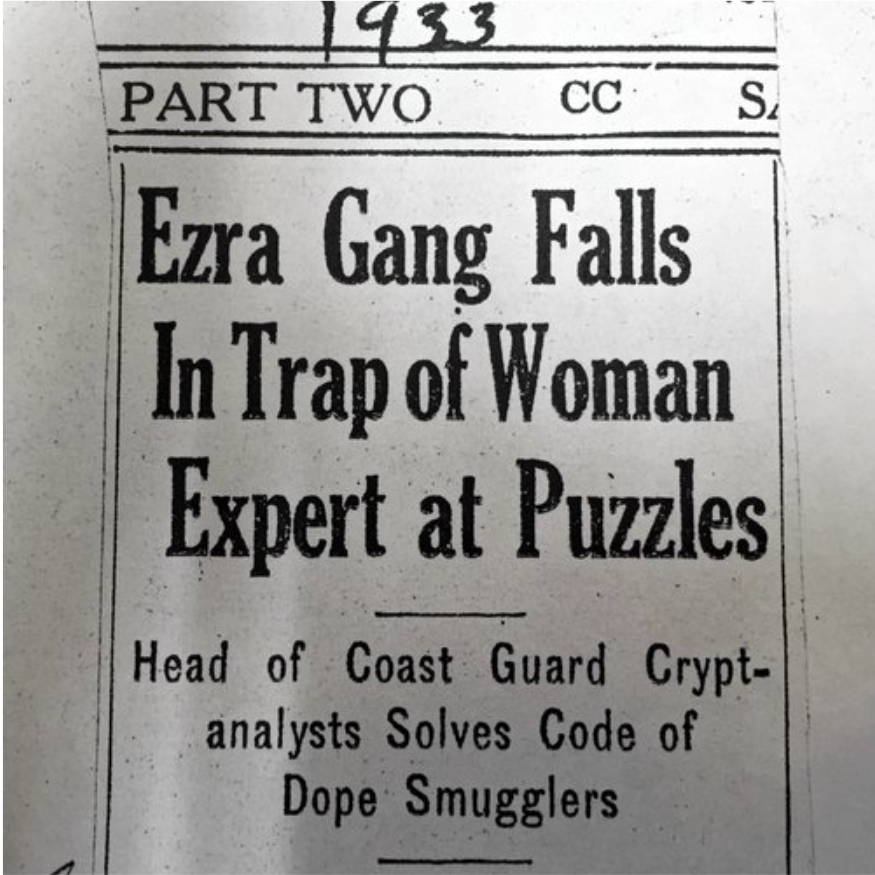
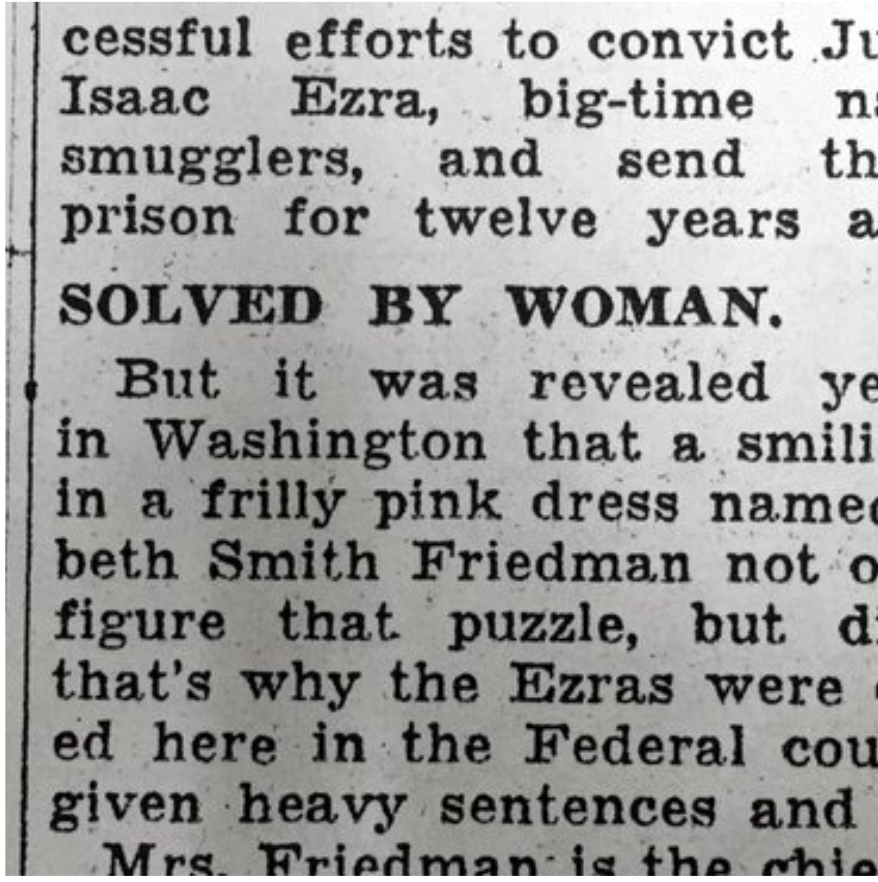
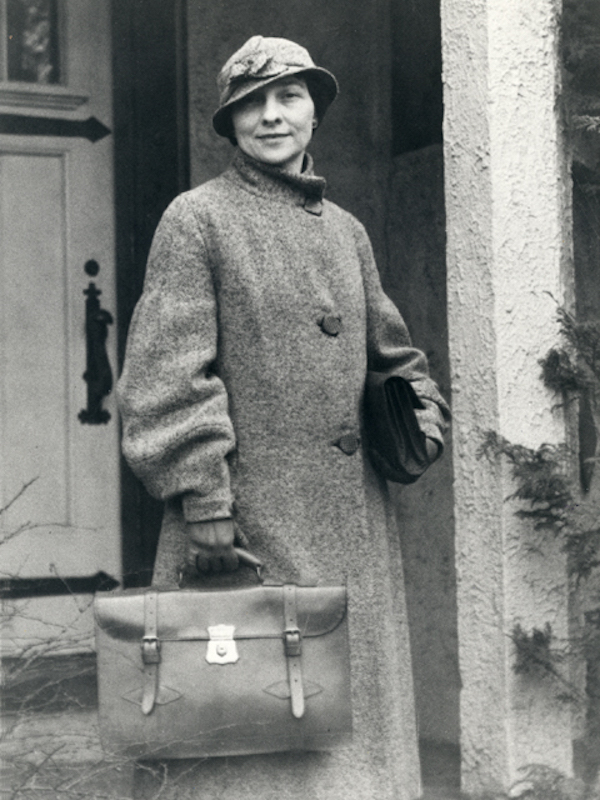
Both, though in her lifetime, the press was far more inclined to fixate on her ladylike aspect and homemaking duties than her career as a self-taught cryptoanalyst, with headlines such as “Pretty Woman Who Protects United States” and “Solved By Woman.”
The novelty of her gender led to a brief stint as America’s most recognizable codebreaker, more famous even than her fellow cryptologist, husband William Friedman, who was instrumental in the founding of the National Security Agency during the Cold War.
Renowned though she was, the highly classified nature of her work exposed her to a security threat in the person of FBI director J. Edgar Hoover.
Hoover credited the FBI, and by extension, himself, for deciphering some 50 Nazi radio circuits’ codes, at least two of them protected with Enigma machines.
He also rushed to raid South American sources in his zeal to make an impression and advance his career, scuppering Friedman’s mission by causing Berlin to put a stop to all transmissions to that area.
Too bad no one asked him to demonstrate the methods he’d used to crack these impossible nuts.
The German agents used the same codes and radio techniques as the Consolidated Exporters Corporation, a mob-backed rum-running operation whose codes and ciphers Elizebeth had translated as chief cryptologist for the U.S. Treasury Department during Prohibition.
As an expert witness in the criminal trial of international rumrunner Bert Morrison and his associates, she modestly asserted that it was “really quite simple to decode their messages if you know what to look for,” but the sample decryption she provided the jury made it plain that her work required tremendous skill. The Mob Museum’s Jeff Burbank sets the scene:
She read a sample message, referring to a brand of whiskey: “Out of Old Colonel in Pints.” She showed how the three “o” and “l” letters in “Colonel” had identical cipher code letters. From the cipher’s letters for “Colonel” she could figure out the letter the racketeers chose for “e,” the most frequently occurring letter in English, based on other brand names of liquor they mentioned in other messages. The “o” and “l” letters in “alcohol,” she said, had the same cipher letters as “Colonel.”
Cinchy, right?
Elizebeth’s biographer, Jason Fagone, notes that in discovering the identity, codename and ciphers used by German spy network Operation Bolívar’s leader, Johannes Siegfried Becker, she succeeded where “every other law enforcement agency and intelligence agency failed. She did what the FBI could not do.”
Sexism and Hoover were not the only enemies.
William Friedman’s criticism of the NSA for classifying documents he thought should be a matter of public record led to a rift resulting in the confiscation of dozens of papers from the couple’s home that documented their work.
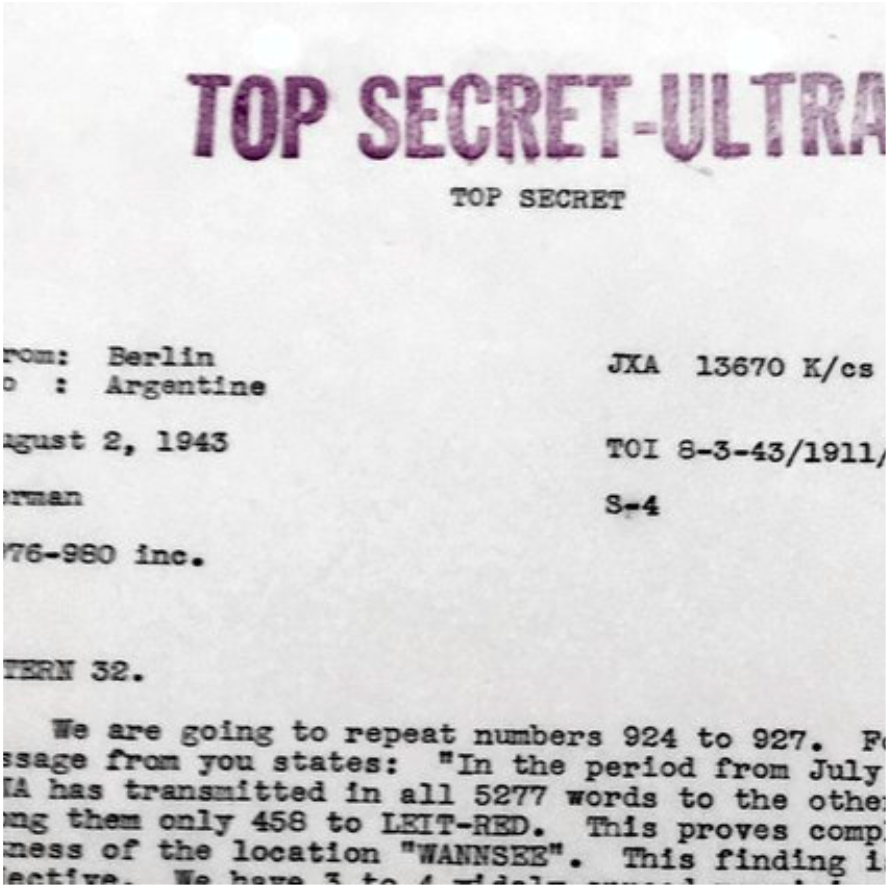
This, together with the 50-year “TOP SECRET ULTRA” classification of her WWII records, ensured that Elizebeth’s life would end beneath “a vast dome of silence.”
Recognition is mounting, however.
Nearly 20 years after her 1980 death, she was inducted into the National Security Agency’s Cryptologic Hall of Honor as “a pioneer in code breaking.”
A National Security Agency building now bears both Friedmans’ names.
The U.S. Coast Guard will soon be adding a Legend Class Cutter named the USCGC Friedman to their fleet.
Thrillseekers! Are you girding your loins to rejoin the amusement park crowds this summer?
No worries if you don’t feel quite ready to brave the socially distanced rollercoaster lines. Indulge in some low-risk vertigo, thanks to British Pathé’s vintage newsreels of steeplejacks, steelworkers, and window cleaners doing their thing.
While these tradespeople were called in whenever an industrial chimney required repair or a steel beam was in need of welding, many of the newsreels feature iconic locations, such as New York City’s Woolworth Building, above, getting a good stonework cleaning in 1931.
In 1929, some “workmen acrobats” were engaged to adorn St. Peter’s Basilica and the Vatican with thousands of lamps when Pope Pius XI, in his first official act as pope, revived the public tradition of Urbi et Orbi, a papal address and apostolic blessing for the first time in fifty-two years.
Some gender boundaries got smashed in the aftermath of WWII, but “steeplejills” were novelty enough in 1948 that the scriptwriter predictably milks it by having the announcer crack wise to and about the unidentified woman ready to climb all the way to the rim of a very tall smokestack.
“There it is! That long thing pointing up there, it’s all yours!”
These days such a jib might constitute workplace harassment.
Did she get the job?
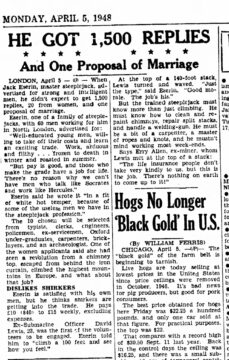
We don’t know. We hope so, whoever she is — presumably one of twenty female Londoners responding to the help wanted ad described in the Lethbridge Herald, below:
Watch more scenes of vintage steeplejacks — and jills — at work in a British Pathé “Nerves of Steel” playlist here.
Schütte-Lihotzky analyzed designs for kitchens in train dining cars and made detailed time-motion studies of housewives’ dinner preparations in her quest to come up with something that would be space saving, efficient, inexpensively pre-fabricated, and easily installed in the new housing springing up in post-WWI Germany.
Schütte-Lihotzky hoped that her design would have a liberating effect, by reducing the time women spent in the kitchen. Nothing is left to chance in these 1.9 by 3.44 meters, with the main emphasis placed on the well-traveled “golden triangle” between worktop, stove, and sink.
…as with any progress, there is friction and pressure. As women gain more rights (then and now), are they really just adding more to their to-do list of responsibilities? Adding to the number of plates they need to spin? They haven’t been excused from domestic duties in order to pursue careers or employment, the new responsibilities are additive.
(Note: enter your information to view the film.)
Choreographer Zoé Henrot, who also appears in the film, emphasizes the Frankfurt Kitchen’s design efficiencies and many of its famous features — the drawers for flour and other bulk goods, the adjustable stool, the cutting board with a receptacle for parings and peels.
At the same time, she manages to telegraph some possible Catch-22s.
Its diminutive size dictates that this workplace will be a solitary one — no helpers, guests, or small children.
The built-in expectations regarding uniformity of use leaves little room for culinary experimentation or a loosey goosey approach.
When crushingly repetitive tasks begin to chafe, options for escape are limited (if very well-suited to the expressive possibilities of modern dance).
Interestingly, many assume that a female architect working in 1926 would have brought some personal insights to the task that her male colleagues might have been lacking. Not so, as Schütte-Lihotzky readily admitted:
The truth of the matter was, I’d never run a household before designing the Frankfurt Kitchen, I’d never cooked, and had no idea about cooking.
Singer-songwriter Robert Rotifer is another artist who was moved to pay homage to Schütte-Lihotzky and the Frankfurt Kitchen, a “calculated move” that he describes as something closer to designing a kitchen than “divine inspiration”:
I sat on the train traveling from Canterbury up to London… I was about to record a new album, and I needed one more uptempo song, something driving and rhythmical. While the noisy combination of rickety train and worn-out tracks suggested a beat, I began to think about syncopations and subjects.
I thought about the mundane things nobody usually writes songs about, functional things that defy metaphor—tools, devices, household goods. As I listed some items in my head, I soon realized that kitchen utensils were the way to go. I thought about the mechanics of a kitchen, and that’s when the name of the creator of the famous Frankfurt Kitchen flashed up in my head.
There, in the natural rhythm of her name, was the syncopation I had been looking for: “I sing this out to Grete Schütte-Lihotzky.” Writing the rest of the lyrics was easy. The repetitive element would illustrate the way you keep returning to the same tasks and positions when you are working in a kitchen. In the middle-eight I would also find space for some of the criticisms that have been leveled at Schütte-Lihotzky’s kitchen over the decades, such as the way her design isolated the kitchen worker, i.e. traditionally the woman, from the rest of the family.
Rotifer, who also created the paintings used in the animated music video, gives the architect her due by including accomplishments beyond the Frankfurt Kitchen: her micro-apartment with “a disguised roll-out bed,” her terraced houses at the Werkbundsiedlung, a housing project’s kindergarten, a printing shop, and the Viennese Communist party headquarters.
It’s a lovely tribute to a design pioneer who, reflecting on her long career around the time of her 100th birthday, remarked:
If I had known that everyone would keep talking about nothing else, I would never have built that damned kitchen!
Learn more about the Kitchen Dance Project in this conversation between filmmaker Maribeth Romslo, choreographer Zoé Emilie Henrot, and Minneapolis Institute of Art curator Jennifer Komar Olivarez.
Brenda (laughing): Can you imagine a Taoist advertising agency? “Buy this if you feel like it. If it’s right. You may not need it.”
Ursula: There was an old cartoon in The New Yorker with a guy from an advertising agency showing his ad and the boss is saying “I think you need a little more enthusiasm Jones.” And his ad is saying, “Try our product, it really isn’t bad.”
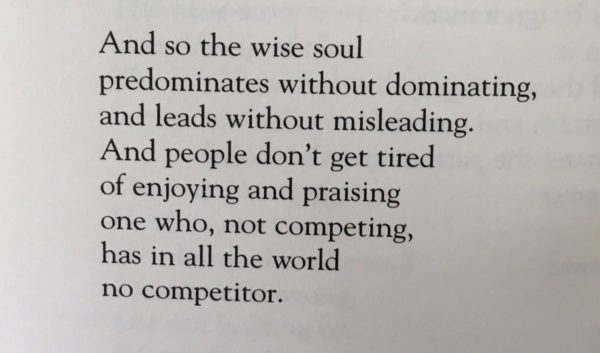
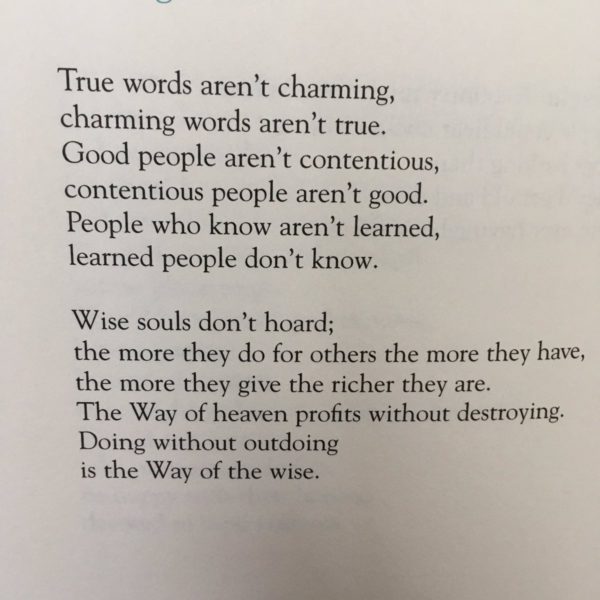
Perhaps no Chinese text has had more lasting influence in the West than the Tao Te Ching, a work so ingrained in our culture by now, it has become a “changeless constant,” writes Maria Popova. “Every generation of admirers has felt, and continues to feel, a prescience in these ancient teachings so astonishing that they appear to have been written for their own time.” It speaks directly to us, we feel, or at least, that’s how we can feel when we find the right translation.
Admirers of the Taoist classic have included John Cage, Franz Kafka, Bruce Lee, Alan Watts, and Leo Tolstoy, all of whom were deeply affected by the millennia-old philosophical poetry attributed to Lao Tzu. That’s some heavy company for the rest of us to keep, maybe. It’s also a list of famous men. Not every reader of the Tao is male or approaches the text as the utterances of a patriarchal sage. One famous reader had the audacity to spend decades on her own, non-gendered, non-hierarchical translation, even though she didn’t read Chinese.
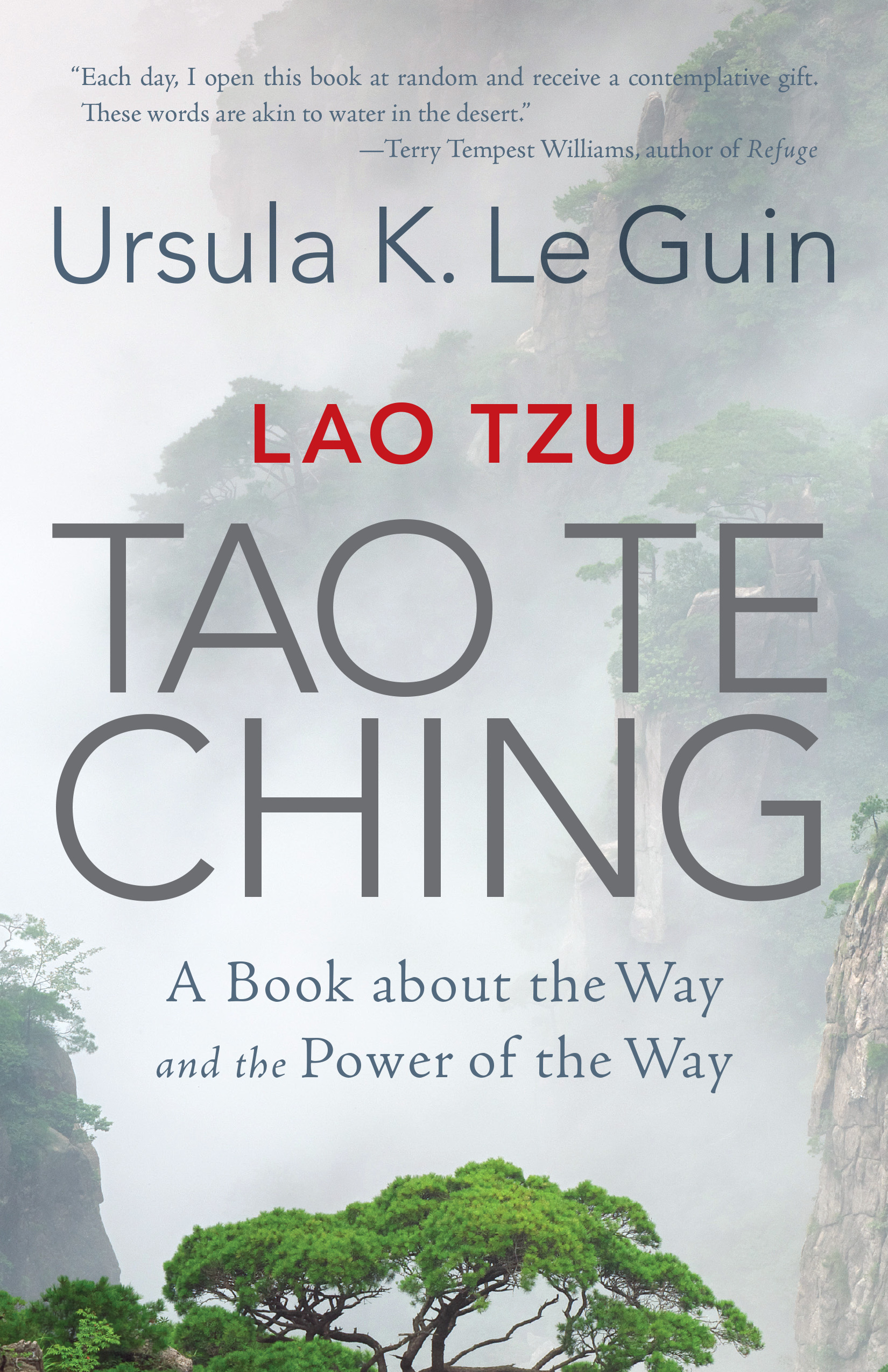
It’s not quite right to call Ursula Le Guin’s Tao Te Ching a translation, so much as an interpretation, or a “rendition,” as she calls it. “I don’t know Chinese,” she said in an interview with Brenda Peterson, “but I drew upon the Paul Carus translation of 1898 which has Chinese characters followed by a transliteration and a translation.” She used the Carus as a “touchstone for comparing other translations,” and started, in her twenties, “working on these poems. Every decade or so I’d do another chapter. Every reader has to start anew with such an ancient text.”
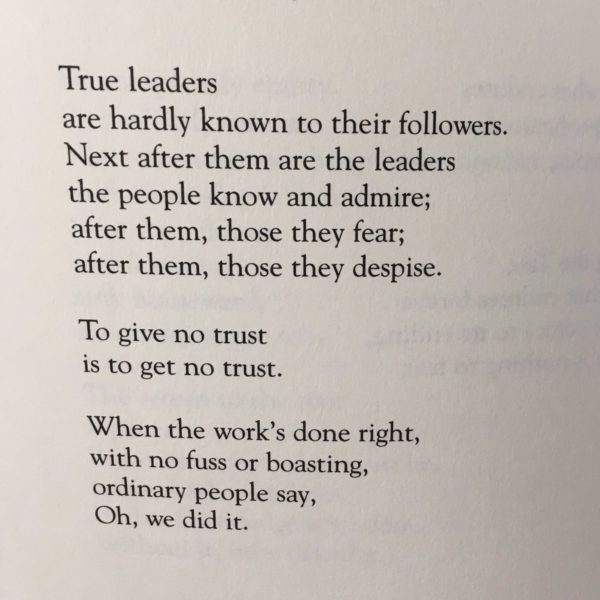
Le Guin drew out inflections in the text which have been obscured by translations that address the reader as a Ruler, Sage, Master, or King. In her introduction, Le Guin writes, “I wanted a Book of the Way accessible to a present-day, unwise, unpowerful, perhaps unmale reader, not seeking esoteric secrets, but listening for a voice that speaks to the soul.” To immediately get a sense of the difference, we might contrast editions of Arthur Waley’s translation, The Way and Its Power: a Study of the Tao Te Ching and Its Place in Chinese Thought, with Le Guin’s Tao Te Ching: A Book about the Way and the Power of the Way.
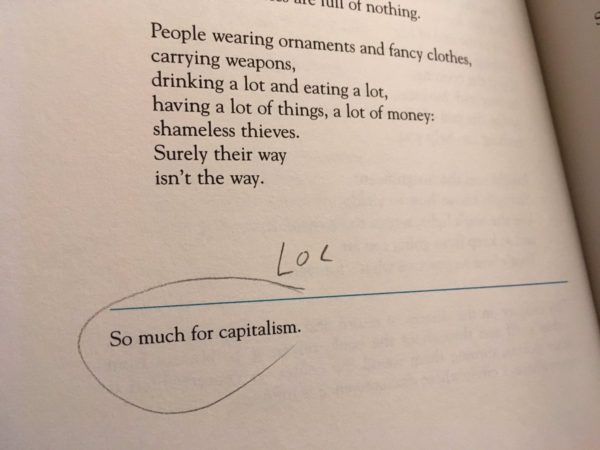
Waley’s translation “is never going to be equaled for what it does,” serving as a “manual for rulers,” Le Guin says. It was also designed as a guide for scholars, in most editions appending around 100 pages of introduction and 40 pages of opening commentary to the main text. Le Guin, by contrast, reduces her editorial presence to footnotes that never overwhelm, and often don’t appear at all (one note just reads “so much for capitalism”), as well as a few pages of endnotes on sources and variants. “I didn’t figure a whole lot of rulers would be reading it,” she said. “On the other hand, people in positions of responsibility, such as mothers, might be.”
Her version represents a lifelong engagement with a text Le Guin took to heart “as a teenage girl” she says, and found throughout her life that “it obviously is a book that speaks to women.” But her rendering of the poems does not substantially alter the substance. Consider the first two stanzas of her version of Chapter 11 (which she titles “The uses of not”) contrasted with Waley’s CHAPTER XI.
Waley
We put thirty spokes together and call it a wheel; But it is on the space where there is nothing that the usefulness of the wheel depends. We turn clay to make a vessel; But it is on the space where there is nothing that the usefulness of the vessel depends.
Le Guin
Thirty spokes meet in the hub. Where the wheel isn’t is where is it’s useful.
Hollowed out, clay makes a pot. Where the pot’s not is where it’s useful.
Le Guin renders the lines as delightfully folksy oppositions with rhyme and repetition. Waley piles up argumentative clauses. “One of the things I love about Lao Tzu is he is so funny,” Le Guin comments in her note,” a quality that doesn’t come through in many other translations. “He’s explaining a profound and difficult truth here, one of those counterintuitive truths that, when the mind can accept them, suddenly double the size of the universe. He goes about it with this deadpan simplicity, talking about pots.”
Such images captivated the earthy anarchist Le Guin. She drew inspiration for the title of her 1971 novel The Lathe of Heaven from Taoist philosopher Chuang Tzu, perhaps showing how she reads her own interests into a text, as all translators and interpreters inevitably do. No translation is definitive. The borrowing turned out to be an example of how even respected Chinese language scholars can misread a text and get it wrong. She found the “lathe of heaven” phrase in James Legge’s translation of Chuang Tzu, and later learned on good authority that there were no lathes in China in Chuang Tzu’s time. “Legge was a bit off on that one,” she writes in her notes.
Scholarly density does not make for perfect accuracy or a readable translation. The versions of Legge and several others were “so obscure as to make me feel the book must be beyond Western comprehension,” writes Le Guin. But as the Tao Te Ching announces at the outset: it offers a Way beyond language. In Legge’s first few lines:
The Tao that can be trodden is not the enduring and unchanging Tao. The name that can be named is not the enduring and unchanging name.
Here is how Le Guin welcomes readers to the Tao — noting that “a satisfactory translation of this chapter is, I believe, perfectly impossible — in the first poem she titles “Taoing”:
The way you can go isn’t the real way. The name you can say isn’t the real name.
Heaven and earth begin in the unnamed: name’s the mother of the ten thousand things.
So the unwanting soul sees what’s hidden, and the ever-wanting soul sees only what it wants.
Two things, one origin, but different in name, whose identity is mystery. Mystery of all mysteries! The door to the hidden.
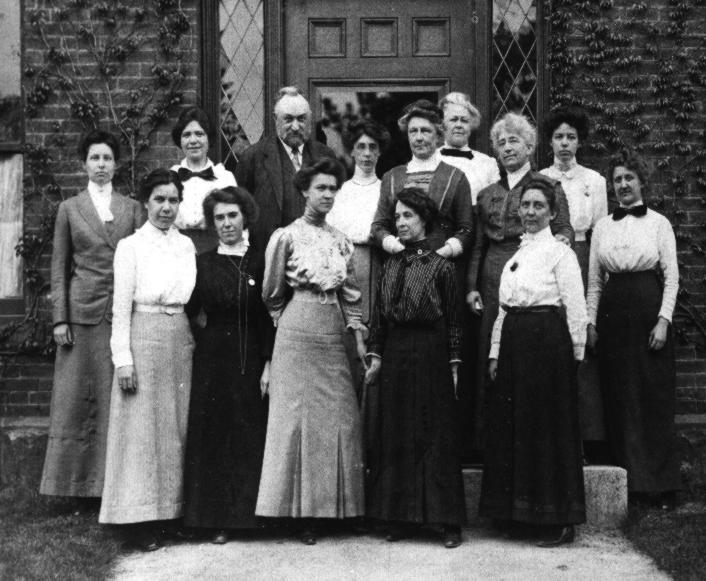
As team names go, the Harvard Computers has kind of an oddball ring to it, but it’s far preferable to Pickering’s Harem, as the female scientists brought in under the Harvard Observatory’s male director were collectively referred to early on in their 40-some years of service to the institution.
A possibly apocryphal story has it that Director Edward Pickering was so frustrated by his male assistants’ pokey pace in examining 1000s of photographic plates bearing images of stars spotted by telescopes in Harvard and the southern hemisphere, he declared his maid could do a better job.
If true, it was no idle threat.
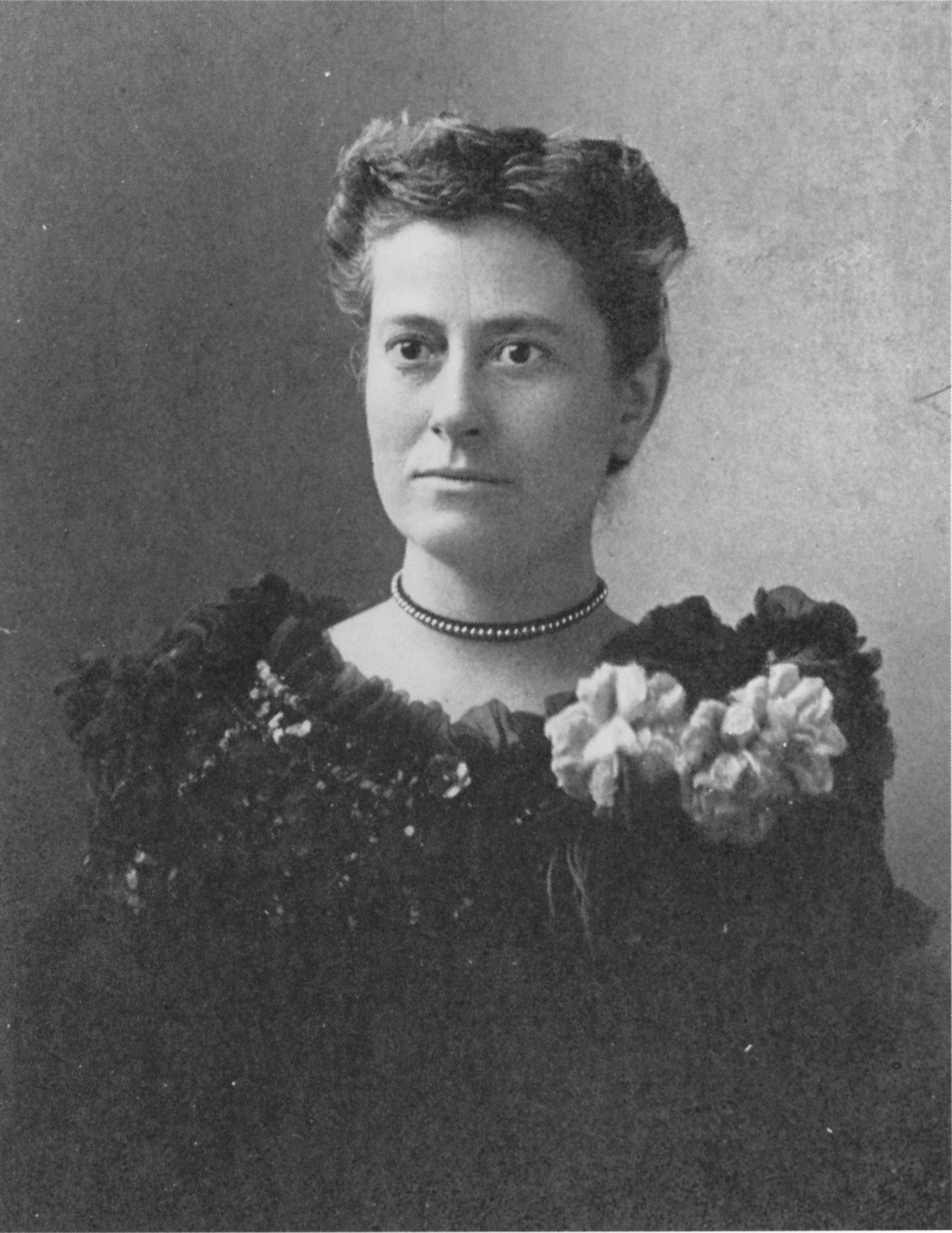
In 1881, Pickering did indeed hire his maid, Williamina Fleming, to review the plates with a magnifying glass, cataloguing the brightness of stars that showed up as smudges or grey or black spots. She also calculated—aka computed—their positions, and, when possible, chemical composition, color, and temperature.
The newly single 23-year-old mother was not uneducated. She had served as a teacher for years prior to emigrating from Scotland, but when her husband abandoned her in Boston, she couldn’t afford to be fussy about the kind of employment she sought. Working at the Pickerings meant secure lodging and a small income.
Not that the promotion represented a financial windfall for Fleming and the more than 80 female computers who joined her over the next four decades. They earned between 25 to 50 cents an hour, half of what a man in the same position would have been paid.
Image via Wikimedia Commons
At one point Fleming, who as a single mother was quite aware that she was burdened with “all housekeeping cares …in addition to those of providing the means to meet their expenses,” addressed the matter of her low wages with Pickering, leaving her to vent in her diary:
I am immediately told that I receive an excellent salary as women’s salaries stand.… Does he ever think that I have a home to keep and a family to take care of as well as the men?… And this is considered an enlightened age!
Harvard certainly got its money’s worth from its female workforce when you consider that the classification systems they developed led to identification of nearly 400,000 stars.
Fleming, who became responsible for hiring her coworkers, was the first to discover white dwarfs and the Horsehead Nebula in Orion, in addition to 51 other nebulae, 10 novae, and 310 variable stars.
An impressive achievement, but another diary entry belies any glamour we might be tempted to assign:
From day to day my duties at the Observatory are so nearly alike that there will be little to describe outside ordinary routine work of measurement, examination of photographs, and of work involved in the reduction of these observations.
Pickering believed that the female computers should attend conferences and present papers, but for the most part, they were kept so busy analyzing photographic plates, they had little time left over to explore their own areas of interest, something that might have afforded them work of a more theoretical nature.
Another diary entry finds Fleming yearning to get out from under a mountain of busy work:
Looking after the numerous pieces of routine work which have to be kept progressing, searching for confirmation of objects discovered elsewhere, attending to scientific correspondence, getting material in form for publication, etc, has consumed so much of my time during the past four years that little is left for the particular investigations in which I am especially interested.
And yet the work of Fleming and other notable computers such as Henrietta Swan Leavitt and Annie Jump Cannon is still helping scientists make sense of the heavens, so much so that Harvard is seeking volunteers for Project PHaEDRA, to help transcribe their logbooks and notebooks to make them full-text searchable on the NASA Astrophysics Data System. Learn how you can get involved here.
We may all have the best of intentions when we collect and share reading lists. We buy the books, stack them neatly by the chair or bed, then something happens. Like… literally, every day, something happens…. Let’s cut ourselves some slack. We’ll get to those books, or give them away to people who will read them, which is also a good thing to do.
But even if we can’t keep up, reading lists are still essential educational tools, especially for kids, young adults, and their parents and teachers. As we celebrate the centenary of the 19th Amendment (which fell on August 18th) and talk about its many shortcomings, it may be more important than ever to understand the U.S. history that brought us to the current moment.
This is a history in which—whether rights were guaranteed by the constitution or not—people historically denied suffrage have always had to struggle. Each generation of women, but most especially Black, Latinx, Indigenous, and LGBTQ women, must claim or reclaim basic rights, liberties, and protections. More than ever, feminist reading lists reflect the vast differences in collective and personal experience that fall under the label “Feminist.”
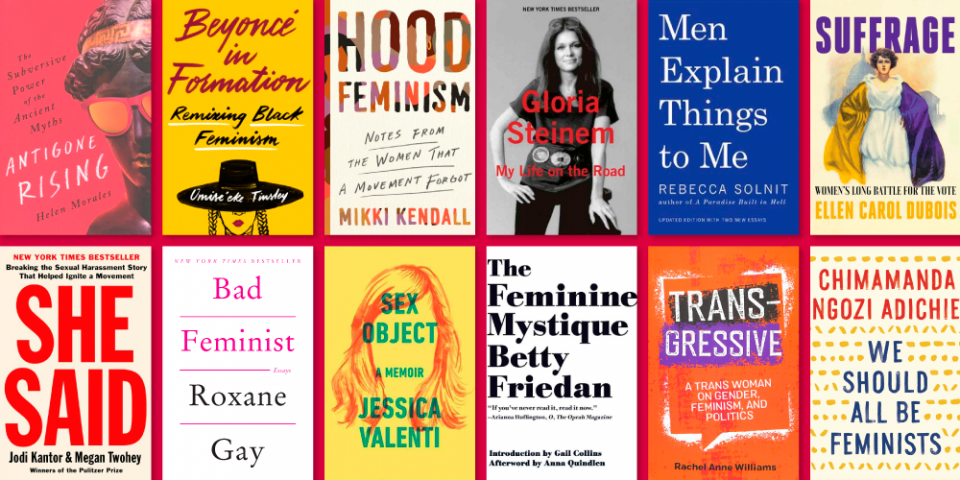
To illustrate the continued critical importance of feminist history, theory, and literature, the New York Public Library published reading lists for adults, kids, and teens on the 19th Amendment’s 100th anniversary. These books can help create community and solidarity and inspire deep reflection as kids are pushed back into schools and parents and teachers try to help them cope.
The adult list contains 126 books and includes links to the library catalog or e‑Book editions. “The titles bridge the past and present of feminist movements, from Simone de Beauvoir’s The Independent Woman(1949) to Roxane Gay’s Bad Feminist: Essays (2014), and from the earliest manifestos for equality to contemporary writings on intersectionality,” Valentina Di Liscia writes at Hyperallergic.
The lists for kids and teens are of a more manageable length, and “if you’re looking to stock the bookshelves before history class starts this fall,” you can hardly do better than to start with these titles (or just bookmark the lists for now), as Danielle Valente—who helpfully transcribes both lists, below—notes at Time Out New York.
Alice Paul and the Fight for Women’s Rights by Deborah Kops
Ask a Queer Chick: A Guide to Sex, Love, and Life for Girls Who Dig Girls by Lindsay King-Miller
Because I Was a Girl: True Stories for Girls of All Ages by Melissa de la Cruz
Beyond Magenta: Transgender Teens Speak Out by Susan Kuklin
Beyond the Gender Binary by Alok Vaid-Menon
Brazen: Rebel Ladies Who Rocked the World by Pénélope Bagieu
The Bride Was a Boy by Chii
Colonize This!: Young Women of Color on Today’s Feminism by Daisy Hernández and Bushra Rehman (eds.)
Dear Ijeawele, or a Feminist Manifesto In Fifteen Suggestions by Chimamanda Ngozi Adichie
Feminism Is… by Alexandra Black, Laura Buller, Emily Hoyle and Dr. Megan Todd
Feminism: Reinventing the F‑Word by Nadia Abushanab Higgins
Fierce Femmes and Notorious Liars: A Dangerous Trans Girl’s Confabulous Memoir by Kai Cheng Thom
Fight Like a Girl: 50 Feminists Who Changed the World by Laura Barcella
Full Frontal Feminism: A Young Woman’s Guide to Why Feminism Matters by Jessica Valenti
Girl Rising: Changing the World One Girl at a Time by Tanya Lee Stone
Girls Resist!: A Guide to Activism, Leadership, and Starting a Revolution by KaeLyn Rich
Girls Write Now: Two Decades of True Stories from Young Female Voices
Here We Are: Feminism for the Real World by Kelly Jensen (ed.)
I Know Why the Caged Bird Sings by Maya Angelou
I, Rigoberta Menchú: An Indian Woman In Guatemala by Rigoberta Menchú
Lighting the Fires of Freedom: African American Women in the Civil Rights Movement by Janet Dewart Bell
Modern Herstory: Stories of Women and Nonbinary People Rewriting History by Blair Imani
Muslim Girl: A Coming of Age by Amani Al-Khatahtbeh
Not for Ourselves Alone: The Story of Elizabeth Cady Stanton and Susan B. Anthony by Geoffrey C. Ward and Ken Burns
#NotYourPrincess: Voices of Native American Women by Lisa Charleyboy and Mary Beth Leatherdale (eds.)
Rethinking Normal: A Memoir in Transition by Katie Rain Hill
She Came to Slay: The Life and Times of Harriet Tubman by Erica Armstrong Dunbar
Sissy: A Coming-of-Gender Story by Jacob Tobia
Tomboy: A Graphic Memoir by Liz Prince
Trans Teen Survival Guide by Owl and Fox Fisher
Trans+: Love, Sex, Romance, and Being You by Kathryn Gonzales and Karen Rayne
Votes for Women!: American Suffragists and the Battle for the Ballot by Winifred Conkling
With Courage and Cloth: Winning the Fight for a Woman’s Right to Vote by Ann Bausum
You Don’t Have to Like Me: Essays on Growing Up, Speaking Out, and Finding Feminism by Alida Nugent
Amazons, Abolitionists, and Activists: A Graphic History of Women’s Fight for Their Rights by Mikki Kendall
This is, indeed, an excellent place to start. Given younger generations’ levels of engagement with current events, it’s likely your kids or students are already familiar with many of the newer books on the lists.
If there’s any overarching theme to be found among such a vast and ever-expanding canon of feminist literature, it might be summed up best in the title of a recent Angela Davis book on feminist movements around the world: “Freedom is a constant struggle.”
We're hoping to rely on loyal readers, rather than erratic ads. Please click the Donate button and support Open Culture. You can use Paypal, Venmo, Patreon, even Crypto! We thank you!
Open Culture scours the web for the best educational media. We find the free courses and audio books you need, the language lessons & educational videos you want, and plenty of enlightenment in between.