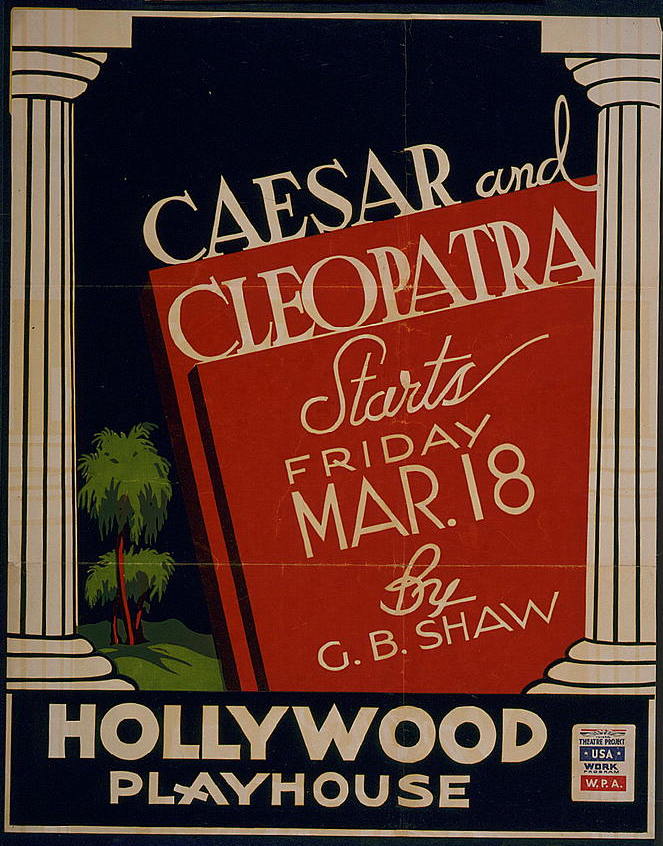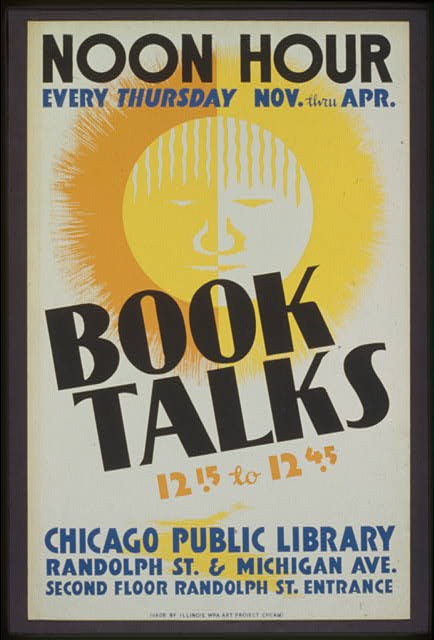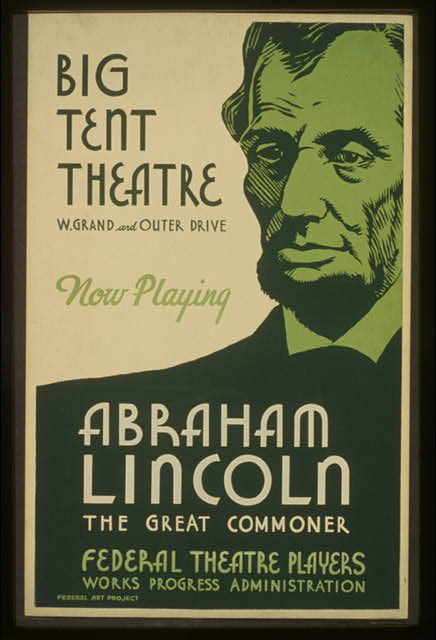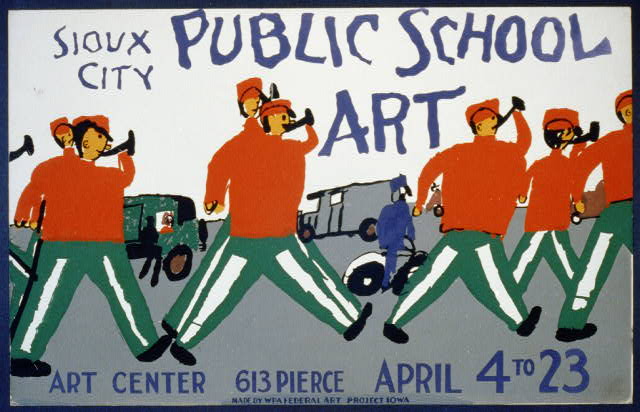
I like old newspaper, smoothing it out to read about what was happening on the day an older relative packed away the good crystal or some other fragile tchotchke.
Traveling in India, I dug how the snacks I purchased to eat on the train came wrapped in old book pages. When my traveling companion realized he had lost his journal, there was comfort in knowing that it would be reincarnated as cones to hold delicious chana jor garam.
Taking a thrift store frame apart, I was thrilled to discover that behind the previous owners kittens in a basket print lurked a homemade Mother’s Day card from the 40’s and a calendar page that noted the date someone named David quit drinking. (I sent it along to Found Magazine.)
Apparently, it’s a rich tradition, putting old pages to good use, once they start feeling like they’ve outlived their intended purpose. The bishop likely didn’t know the specifics on the material that made his hat stand up. I’ll bet the sisters of the German Cistercian convent where the dress above originated were more concerned with the outward appearance of the garments they were stitching for their wooden statues than the not-for-display lining.
As Dutch art historian Erik Kwakkel explains on his medievalfragments blog, the invention of the Gutenberg press demoted scads of handwritten text to more proletarian purpose. Ultimately, it’s not as grim as it sounds:
the dismembered books were to have a second life: they became travelers in time, stowaways… with great and important stories to tell. Indeed, stories that may otherwise not have survived, given that classical and medieval texts frequently only come down to us in fragmentary form. The early history of the Bible as a book could not be written if we were to throw out fragment evidence.
You know you’re doing something right in your life if the Nobel Prize-winning author of 100 Years of Solitude talks to you like a giddy fan boy.
Back in October 1990, Gabriel García Márquez sat down with Akira Kurosawa in Tokyo as the Japanese master director was shooting his penultimate movie Rhapsody in August — the only Kurosawa movie I can think of that features Richard Gere. The six hour interview, which was published in The Los Angeles Times in 1991, spanned a range of topics but the author’s love of the director’s movies was evident all the way through. At one point, while discussing Kurosawa’s 1965 film Red Beard, García Márquez said this: “I have seen it six times in 20 years and I talked about it to my children almost every day until they were able to see it. So not only is it the one among your films best liked by my family and me, but also one of my favorites in the whole history of cinema.”
One natural topic discussed was adapting literature to film. The history of cinema is littered with some truly dreadful adaptations and even more that are simply inert and lifeless. One of the Kurosawa’s true gifts as a filmmaker was turning the written word into a vital, memorable image. In movies like Throne of Blood and Ran, he has proved himself to be arguably the finest adapter of Shakespeare in the history of cinema.
García Márquez: Has your method also been that intuitive when you have adapted Shakespeare or Gorky or Dostoevsky?
Kurosawa: Directors who make films halfway may not realize that it is very difficult to convey literary images to the audience through cinematic images. For instance, in adapting a detective novel in which a body was found next to the railroad tracks, a young director insisted that a certain spot corresponded perfectly with the one in the book. “You are wrong,” I said. “The problem is that you have already read the novel and you know that a body was found next to the tracks. But for the people who have not read it there is nothing special about the place.” That young director was captivated by the magical power of literature without realizing that cinematic images must be expressed in a different way.
García Márquez: Can you remember any image from real life that you consider impossible to express on film?
Kurosawa: Yes. That of a mining town named Ilidachi [sic], where I worked as an assistant director when I was very young. The director had declared at first glance that the atmosphere was magnificent and strange, and that’s the reason we filmed it. But the images showed only a run-of-the-mill town, for they were missing something that was known to us: that the working conditions in (the town) are very dangerous, and that the women and children of the miners live in eternal fear for their safety. When one looks at the village one confuses the landscape with that feeling, and one perceives it as stranger than it actually is. But the camera does not see it with the same eyes.
When Kurosawa and García Márquez talked about Rhapsody in August, the mood of the interview darkened. The film is about one old woman struggling with the horrors of surviving the atomic attack on Nagasaki. When it came out, American critics bristled at the movie because it had the audacity to point out that many Japanese weren’t all that pleased with getting nuked. This is especially the case with Nagasaki. While Hiroshima had numerous factories and therefore could be considered a military target, Nagasaki had none. In fact, on August 9, 1945, the original target for the world’s second nuclear attack was the industrial town of Kita Kyushu. But that town was covered in clouds. So the pilots cast about looking for some place, any place, to bomb. That place proved to Nagasaki.
Below, Kurosawa talks passionately about the legacy of the bombing. Interestingly, García Márquez, who had often been a vociferous critic of American foreign policy, sort of defends America’s actions at the end of the war.
Kurosawa: The full death toll for Hiroshima and Nagasaki has been officially published at 230,000. But in actual fact there were over half a million dead. And even now there are still 2,700 patients at the Atomic Bomb Hospital waiting to die from the after-effects of the radiation after 45 years of agony. In other words, the atomic bomb is still killing Japanese.
García Márquez: The most rational explanation seems to be that the U.S. rushed in to end it with the bomb for fear that the Soviets would take Japan before they did.
Kurosawa: Yes, but why did they do it in a city inhabited only by civilians who had nothing to do with the war? There were military concentrations that were in fact waging war.
García Márquez: Nor did they drop it on the Imperial Palace, which must have been a very vulnerable spot in the heart of Tokyo. And I think that this is all explained by the fact that they wanted to leave the political power and the military power intact in order to carry out a speedy negotiation without having to share the booty with their allies. It’s something no other country has ever experienced in all of human history. Now then: Had Japan surrendered without the atomic bomb, would it be the same Japan it is today?
Kurosawa: It’s hard to say. The people who survived Nagasaki don’t want to remember their experience because the majority of them, in order to survive, had to abandon their parents, their children, their brothers and sisters. They still can’t stop feeling guilty. Afterwards, the U.S. forces that occupied the country for six years influenced by various means the acceleration of forgetfulness, and the Japanese government collaborated with them. I would even be willing to understand all this as part of the inevitable tragedy generated by war. But I think that, at the very least, the country that dropped the bomb should apologize to the Japanese people. Until that happens this drama will not be over.
The whole interview is fascinating. They continue to talk about historical memory, nuclear power and the difficulty of filming rose-eating ants. You can read the entire thing here. It’s well worth you time.
Jonathan Crow is a Los Angeles-based writer and filmmaker whose work has appeared in Yahoo!, The Hollywood Reporter, and other publications. You can follow him at @jonccrow.
Last Wednesday, the Jane Austen Centre in Bath, England unveiled the wax sculpture above, which they say is the closest “anyone has come to the real Jane Austen in 200 years.” The figure, The Guardianreports, is the creation of forensic artist Melissa Dring, a “specialist team using forensic techniques which draw on contemporary eye-witness accounts,” and Emmy-winning costume designer Andrea Galer.
Austen often introduced her characters with broad descriptions—Emma Woodhouse is “handsome, clever, and rich,” Pride and Prejudice’s Mr. Bingley simply “a single man in possession of a good fortune.” But her talent consisted in undermining such stock descriptions, and the societal assumptions they entail. Instead of types, she gave readers complicated individuals squirming uncomfortably inside the bonds of propriety and decorum. But what of Austen herself? Readers initially knew nothing of the author, as her novels were first published anonymously.
Since her death in 1817, biographers have told and retold her personal history, and she has become an almost cult-like figure for fans of her work. Some of the author’s first biographers were family members, including her nephew James Edward Austen-Leigh, who published A Memoir of Jane Austen in 1872 (above). In it, Austen-Leigh describes his aunt as “very attractive”: “Her figure was rather tall and slender, her step light and firm, and her whole appearance expressive of health and animation. In complexion she was a clear brunette with a rich colour; she had full round cheeks, with mouth and nose small and well-formed, bright hazel eyes, and brown hair forming natural curls round her face.”
Based partly on that description and others from niece Caroline, the wax figure, Dring told the BBC, is “pretty much like her.” Austen “came from a large… family and they all seemed to share the long nose, the bright sparkly eyes and curly brown hair. And these characteristics come through the generations.” Dring used Austen’s sister Cassandra’s famous portrait as a starting point, but noted that the sketch “does make it look like she’s been sucking lemons […] We know from all accounts of her, she was very lively, very great fun to be with and a mischievous and witty person.” All descriptions with which her devoted readers would doubtless agree. See more photos of the Austen wax sculpture here.
Another thing you can credit Thomas Jefferson with — being the first known American to record an ice cream recipe. It’s one of 10 surviving recipes written by the founding father.
According to Monticello.org, ice cream began appearing “in French cookbooks starting in the late 17th century, and in English-language cookbooks in the early 18th century.” And there “are accounts of ice cream being served in the American colonies as early as 1744.” Jefferson likely tasted his fair share of the dessert while living in France (1784–1789), and it would continue to be served at Monticello upon his return. By the first decade of the 19th century, ice cream would become increasingly found in cookbooks published throughout the U.S.
2. bottles of good cream.
6. yolks of eggs.
1/2 lb. sugar
mix the yolks & sugar
put the cream on a fire in a casserole, first putting in a stick of Vanilla.
when near boiling take it off & pour it gently into the mixture of eggs & sugar.
stir it well.
put it on the fire again stirring it thoroughly with a spoon to prevent it’s sticking to the casserole.
when near boiling take it off and strain it thro’ a towel.
put it in the Sabottiere[12]
then set it in ice an hour before it is to be served. put into the ice a handful of salt.
put salt on the coverlid of the Sabotiere & cover the whole with ice.
leave it still half a quarter of an hour.
then turn the Sabottiere in the ice 10 minutes
open it to loosen with a spatula the ice from the inner sides of the Sabotiere.
shut it & replace it in the ice
open it from time to time to detach the ice from the sides
when well taken (prise) stir it well with the Spatula.
put it in moulds, justling it well down on the knee.
then put the mould into the same bucket of ice.
leave it there to the moment of serving it.
to withdraw it, immerse the mould in warm water, turning it well till it will come out & turn it into a plate
The CIA fought most of the Cold War on the cultural front, recruiting operatives and placing agents in every possible sphere of influence, not only abroad but at home as well. As Francis Stoner Saunders’ book The Cultural Cold War: the CIA and the World of Arts and Letters details, the agency funded intellectuals across the political spectrum as well as producers of radio, TV, and film. A well-financed propaganda campaign aimed at the American public attempted to persuade the populace that their country looked exactly like its leaders wished to see it, a well-run capitalist machine with equal opportunity for all. In addition to the agency’s various forays into jazz and modern art, the CIA also helped finance and consulted on the production of animated films, like the 1954 adaptation of George Orwell’s Animal Farm we recently featured. We’ve also posted on other animated propaganda films made by government agencies, such as A is for Atom, a PR film for nuclear energy, and Duck and Cover, a short suggesting that cleanliness may help citizens survive a nuclear war.
Today we bring you three short animations funded and commissioned by private interests. These films were made for Arkansas’ Harding College (now Harding University) and financed by longtime General Motors CEO Alfred P. Sloan. The name probably sounds familiar. Today the Alfred P. Sloan Foundation generously supports public radio and television, as well as medical research and other altruistic projects. In the post-war years, Sloan, widely considered “the father of the modern corporation,” writes Karl Cohen in a two-part essay for Animation World Network, supposedly took a shine to the bootstrapping president of Harding, George S. Benson, a Christian missionary and crusading anti-Communist who used his position to promote God, family, and country. According to Cohen, Sloan donated several hundred thousand dollars to Harding as funding for “educational anti-Communist, pro-free enterprise system films.” Contracted by the college, producer John Sutherland, former Disney writer, made nine films in all. As you’ll see in the title card that opens each short, these were ostensibly made “to create a deeper understanding of what has made America the finest place in the world to live.” At the top, watch 1949’s “Why Play Leap Frog?” and just above, see another of the Harding films, “Meet King Joe,” also from 1949.
Just above, watch a third of the Harding propaganda films, “Make Mine Freedom,” from 1948. Each of these films, calling themselves “Fun and Facts about America,” present simplistic patriotic stories with an authoritative narrator who patiently explains the ins and outs of American exceptionalism. “Why Play Leapfrog?” tells the story of Joe, a disgruntled doll-factory worker who learns some important lessons about the supply chain, wages, and prices. He also learns that he’d better work harder to increase his productivity (and cooperate with management) if he wants to keep up with the rising cost of living. “Meet King Joe” introduces us to the “king of the workers of the world,” so called because he can buy more stuff than the poor schlubs in other countries. Joe, “no smarter” and “no stronger than workers in other lands” has such advantages only because of, you guessed it, the wonders of capitalism. “Make Mine Freedom” reminds viewers of their Constitutional rights before introducing us to a snake oil charlatan selling “ism,” a Commie-like tonic, to a group of U.S. labor disputants—if only they’ll sign over their rights and property. The assembled crowd jumps at the chance, but then along comes John Q. Public, who won’t give up his freedom for “some imported double-talk.”
You can read much more about the relationship between Sloan and Benson and the other films Sutherland produced with Sloan’s money, in Cohen’s essay, which also includes information on Cold War animated propaganda films made by Warner Brothers and Disney.
A catchy tribute to mid-century Soviet hipsters popped up a few years back in a song called “Stilyagi” by lo-fi L.A. hipsters Puro Instinct. The lyrics tell of a charismatic dude who impresses “all the girls in the neighborhood” with his “magnitizdat” and guitar. Wait, his what? His magnitizdat, man! Like samizdat, or underground press, magnitizdat—from the words for “tape recorder” and “publishing”—kept Soviet youth in the know with surreptitious recordings of pop music. Stilyagi (a post-war subculture that copied its style from Hollywood movies and American jazz and rock and roll) made and distributed contraband music in the Soviet Union. But, as a recent NPR piece informs us, “before the availability of the tape recorder and during the 1950s, when vinyl was scarce, ingenious Russians began recording banned bootleg jazz, boogie woogie and rock ‘n’ roll on exposed X‑ray film salvaged from hospital waste bins and archives.” See one such X‑ray “record” above, and below, see the fascinating process dramatized in the first scene of a 2008 Russian musical titled, of course, Stilyagi (translated into English as “Hipsters”—the word literally means “obsessed with fashion”).
These records were called roentgenizdat (X‑ray press) or, says Sergei Khrushchev (son of Nikita), “bone music.” Author Anya von Bremzen describes them as “forbidden Western music captured on the interiors of Soviet citizens”: “They would cut the X‑ray into a crude circle with manicure scissors and use a cigarette to burn a hole. You’d have Elvis on the lungs, Duke Ellington on Aunt Masha’s brain scan….” The ghoulish makeshift discs sure look cool enough, but what did they sound like? Well, as you can hear below in the sample of Bill Haley & His Comets from a “bone music” album, a bit like old Victrola phonograph records played through tiny transistor radios on a squonky AM frequency.
Dressed in fashions copied from jazz and rockabilly albums, stilyagi learned to dance at underground nightclubs to these tinny ghosts of Western pop songs, and fought off the Komsomol—super-square Leninist youth brigades—who broke up roentgenizdat rings and tried to suppress the influence of bourgeois Western pop culture. According to Artemy Troitsky, author of Back in the USSR: The True Story of Rock in Russia, these records were also called “ribs”: “The quality was awful, but the price was low—a rouble or rouble and a half. Often these records held surprises for the buyer. Let’s say, a few seconds of American rock ’n’ roll, then a mocking voice in Russian asking: ‘So, thought you’d take a listen to the latest sounds, eh?, followed by a few choice epithets addressed to fans of stylish rhythms, then silence.”
But they weren’t all cruel censor’s jokes. Thanks to a company called Wanderer Records, you can own a piece of this odd cultural history. Roentgenizdat records, like the scratchy Bill Haley or the Tony Bennett “Lullaby of Broadway” disc sampled above, go for somewhere between one and two hundred bucks a piece—fair prices, I’d say, for such unusual artifacts, though of course wildly inflated from their Cold War street value.
See more images of bone music records over at Laughing Squid and Wired co-founder Kevin Kelly’s blog Street Use, and above dig some historical footage of stilyagi jitterbugging through what appears to be a kind of Soviet training film about Western influence on Soviet youth culture, produced no doubt during the Khrushchev thaw when, as Russian writer Vladimir Voinovich tells NPR, things got “a little more liberal than before.”
Actually, hold up a sec. We’ll all be more happy and productive if we take a moment to start our work day with Confidence, a peppy musical animation from 1933, starring newly elected PresidentFranklin Delano Roosevelt and Mickey Mouse precursor, Oswald the Lucky Rabbit.
Few Americans—today we’d refer to them as the 1%—could escape the privation of the Great Depression. The movies were one industry that continued to thrive through this dark period, precisely because they offered a few hours of respite. No one went to the pictures to see a reflection of their own lives. Gorgeous gowns, glamorous Manhattan apartments and romantic trouble certain to be resolved in happy endings…remember Mia Farrow’s beleaguered waitress basking in the Purple Rose of Cairo’s reassuring glow?
Given the public’s preference for escapist fare, director Bill Nolan, the Father of Rubber Hose Animation, could have played it safe by glossing over the backstory that leads Oswald to seek out advice from the Commander in Chief. Instead, Nolan delivered his joyful cartoon animals into nightmare territory, the Depression personified as a cowled Death figure laying waste to the land. It’s weirdly upsetting to see those hyper-cheerful vintage barnyard animals (and a rogue monkey) undergo this graphic enervation.
Oh, for some oral history—I’d love to know how matinee crowds reacted as Oswald raced screaming before a spinning vertigo background, seeking a remedy for a host of non-cartoon problems. Irony is a luxury they didn’t have.
Unsurprisingly, the can-do spirit so central to FDR’s New Deal quickly turned Oswald’s frown upside down. As presidential campaign promises go, this one’s uniquely tailored to the demands of musical comedy. Witness Annie, in which the 32nd president was again called upon to Rex Harrison his way into audience hearts, this time from the wheelchair the creators of Confidence didn’t dare show, some forty years earlier.
Accordingly, what really sets this cartoon apart for me is the use of a Presidentially-sanctioned giant syringe as a tool to get Depression-era America back on its feet. A figurative injection of confidence is all well and good, but nothing gets the barnyard back on its singing, dancing feet like a liberal dose, delivered in the most literal way.
The origins of circumcision remain unclear. According to this online essay, a stele (carving on stone) from the 23rd century B.C.E. suggests that an author named “Uha” was circumcised in a mass ritual. He wrote:
“When I was circumcised, together with one hundred and twenty men, there was none thereof who hit out, there was none thereof who was hit, and there was none thereof who scratched and there was none thereof who was scratched.”
By the time you get to 4,000 B.C.E., you start to find exhumed Egyptian bodies that show signs of circumcision. And then come the artistic depictions. The Sakkara depiction comes with the perhaps helpful written warning,“Hold him and do not allow him to faint.”
We're hoping to rely on loyal readers, rather than erratic ads. Please click the Donate button and support Open Culture. You can use Paypal, Venmo, Patreon, even Crypto! We thank you!
Open Culture scours the web for the best educational media. We find the free courses and audio books you need, the language lessons & educational videos you want, and plenty of enlightenment in between.