Claustrophobes, take caution, and for pity’s sake, don’t try this at home!
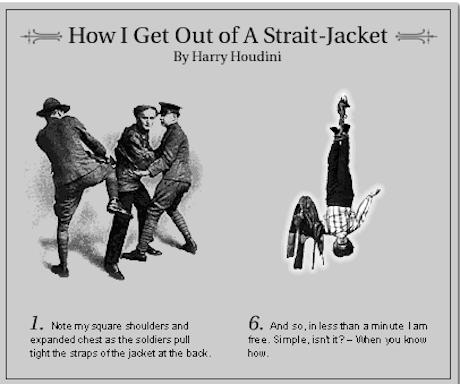
Should such warnings leave you undeterred, PBS has step-by-step instructions for performing Houdini’s strait jacket escape. Well, almost step-by-step. Derived from the master’s own 1909 Handcuff Secrets, the directions are both vague and horrifying in their specificity, falling somewhere between assembling an Ikea bookshelf and 127 Hours.
In need of more guidance? Have a look below at the how-to Houdini shared with Ladies Home Journal in 1918. (He also gave advice to genteel, post-WWI female readers on how to escape rope bondage.)
For a more manageable trick, imagine yourself a face in the crowd, gazing upward at the struggling magician, without texting, tweeting, or Instagramming. Sheer open-mouthed amazement is a trick we see precious little of these days.
Our best guess is that the video above was shot around 1917.
Book lists, despite what younger readers born into Buzzfeed’s ruthless listsicle monopoly may think, have always been popular. Some, like David Bowie’s Top 100 Books, give us a sense of the artist’s development. Others, like Joseph Brodsky’s List of 84 Books for Basic Conversation, provide a Nobel prize-winning benchmark for knowledge. Even though the books are within the reach of most readers, systematically digesting such lists often tries one’s patience. Despite the lack of will or interest in working through someone else’s literary education, however, glancing through such personal anthologies provides us with a glimpse into the maker’s life—be it their private tastes, or their social mores.
In late October, The Times Literary Supplement’s Michael Caines unearthed another Top 100 list; this one, however, has the distinction of hailing from 1898. At the turn of the 20th century, a journalist and author of numerous books on the Brontë sisters named Clement K. Shorter tried his hand at compiling the 100 Best Novels for a journal called The Bookman. The ground rules were simple: the list could feature only one novel per novelist, and living authors were excluded. Today, Shorter’s compendium looks somewhat hit-or-miss. There are some indisputable classics (many of which can be found in our Free eBooks and Free Audio Books collections) and some other texts that have faded into oblivion. Still—one can’t help but experience a certain historical frisson at a 19th century listsicle. Here it goes:
1. Don Quixote — 1604 — Miguel de Cervantes
2. The Holy War — 1682 — John Bunyan
3. Gil Blas — 1715 — Alain René le Sage
4. Robinson Crusoe — 1719 — Daniel Defoe
5. Gulliver’s Travels — 1726 — Jonathan Swift
6. Roderick Random — 1748 — Tobias Smollett
7. Clarissa — 1749 — Samuel Richardson
8. Tom Jones — 1749 — Henry Fielding
9. Candide — 1756 — Françoise de Voltaire
10. Rasselas — 1759 — Samuel Johnson
11. The Castle of Otranto — 1764 — Horace Walpole
12. The Vicar of Wakefield — 1766 — Oliver Goldsmith
13. The Old English Baron — 1777 — Clara Reeve
14. Evelina — 1778 — Fanny Burney
15. Vathek — 1787 — William Beckford
16. The Mysteries of Udolpho — 1794 — Ann Radcliffe
17. Caleb Williams — 1794 — William Godwin
18. The Wild Irish Girl — 1806 — Lady Morgan
19. Corinne — 1810 — Madame de Stael
20. The Scottish Chiefs — 1810 — Jane Porter
21. The Absentee — 1812 — Maria Edgeworth
22. Pride and Prejudice — 1813 — Jane Austen
23. Headlong Hall — 1816 — Thomas Love Peacock
24. Frankenstein — 1818 — Mary Shelley
25. Marriage — 1818 — Susan Ferrier
26. The Ayrshire Legatees — 1820 — John Galt
27. Valerius — 1821 — John Gibson Lockhart
28. Wilhelm Meister — 1821 — Johann Wolfgang von Goethe
29. Kenilworth — 1821 — Sir Walter Scott
30. Bracebridge Hall — 1822 — Washington Irving
31. The Epicurean — 1822 — Thomas Moore
32. The Adventures of Hajji Baba — 1824 — James Morier (“usually reckoned his best”)
33. The Betrothed — 1825 — Alessandro Manzoni
34. Lichtenstein — 1826 — Wilhelm Hauff
35. The Last of the Mohicans — 1826 — Fenimore Cooper
36. The Collegians — 1828 — Gerald Griffin
37. The Autobiography of Mansie Wauch — 1828 — David M. Moir
38. Richelieu — 1829 — G. P. R. James (the “first and best” novel by the “doyen of historical novelists”)
39. Tom Cringle’s Log — 1833 — Michael Scott
40. Mr. Midshipman Easy — 1834 — Frederick Marryat
41. Le Père Goriot — 1835 — Honoré de Balzac
42. Rory O’More — 1836 — Samuel Lover (another first novel, inspired by one of the author’s own ballads)
43. Jack Brag — 1837 — Theodore Hook
44. Fardorougha the Miser — 1839 — William Carleton (“a grim study of avarice and Catholic family life. Critics consider it the author’s finest achievement”)
55. The Three Musketeers — 1845 — Alexandre Dumas
56. The Wandering Jew — 1845 — Eugène Sue
57. Emilia Wyndham — 1846 — Anne Marsh
58. The Romance of War — 1846 — James Grant (“the narrative of the 92nd Highlanders’ contribution from the Peninsular campaign to Waterloo”)
59. Vanity Fair — 1847 — W. M. Thackeray
60. Jane Eyre — 1847 — Charlotte Brontë
61. Wuthering Heights — 1847 — Emily Brontë
62. The Vale of Cedars — 1848 — Grace Aguilar
63. David Copperfield — 1849 — Charles Dickens
64. The Maiden and Married Life of Mary Powell — 1850 — Anne Manning (“written in a pastiche seventeenth-century style and printed with the old-fashioned typography and page layout for which there was a vogue at the period …”)
65. The Scarlet Letter — 1850 — Nathaniel Hawthorne
66. Frank Fairleigh — 1850 — Francis Smedley (“Smedley specialised in fiction that is hearty and active, with a strong line in boisterous college escapades and adventurous esquestrian exploits”)
67. Uncle Tom’s Cabin — 1851 — H. B. Stowe
68. The Wide Wide World — 1851 — Susan Warner (Elizabeth Wetherell)
69. Nathalie — 1851 — Julia Kavanagh
70. Ruth — 1853 — Elizabeth Gaskell
71. The Lamplighter — 1854 — Maria Susanna Cummins
72. Dr. Antonio — 1855 — Giovanni Ruffini
73. Westward Ho! — 1855 — Charles Kingsley
74. Debit and Credit (Soll und Haben) — 1855 — Gustav Freytag
75. Tom Brown’s School-Days — 1856 — Thomas Hughes
77. John Halifax, Gentleman — 1857 — Dinah Mulock (a. k. a. Dinah Craik; “the best-known Victorian fable of Smilesian self-improvement”)
78. Ekkehard — 1857 — Viktor von Scheffel
79. Elsie Venner — 1859 — O. W. Holmes
80. The Woman in White — 1860 — Wilkie Collins
81. The Cloister and the Hearth — 1861 — Charles Reade
82. Ravenshoe — 1861 — Henry Kingsley (“There is much confusion in the plot to do with changelings and frustrated inheritance” in this successful novel by Charles Kingsley’s younger brother, the “black sheep” of a “highly respectable” family)
83. Fathers and Sons — 1861 — Ivan Turgenieff
84. Silas Marner — 1861 — George Eliot
85. Les Misérables — 1862 — Victor Hugo
86. Salammbô — 1862 — Gustave Flaubert
87. Salem Chapel — 1862 — Margaret Oliphant
88. The Channings — 1862 — Ellen Wood (a. k. a. Mrs Henry Wood)
89. Lost and Saved — 1863 — The Hon. Mrs. Norton
90. The Schönberg-Cotta Family — 1863 — Elizabeth Charles
91. Uncle Silas — 1864 — Joseph Sheridan Le Fanu
92. Barbara’s History — 1864 — Amelia B. Edwards (“Confusingly for bibliographers, she was related to Matilda Betham-Edwards and possibly to Annie Edward(e)s …”)
93. Sweet Anne Page — 1868 — Mortimer Collins
94. Crime and Punishment — 1868 — Feodor Dostoieffsky
95. Fromont Junior — 1874 — Alphonse Daudet
96. Marmorne — 1877 — P. G. Hamerton (“written under the pseudonym Adolphus Segrave”)
97. Black but Comely — 1879 — G. J. Whyte-Melville
98. The Master of Ballantrae — 1889 — R. L. Stevenson
99. Reuben Sachs — 1889 — Amy Levy
100. News from Nowhere — 1891 — William Morris
In addition to the canon, Shorter—unable to heed his own cautious counsel and throwing the door open to the winds of literary passion—included 8 books by living novelists whom he called “writers whose reputations are too well established for their juniors to feel towards them any sentiments other than those of reverence and regard:”
Next year marks the 40th anniversary of a modern classic, Roman Polanski’s Chinatown. And surely no other film has even come close to making the construction of an aqueduct so thrilling.
For sure, the sizable servings of incest, corruption, and greed help carry Robert Towne’s brilliant screenplay. But under Towne’s script are the bones of another story, the story of an engineering feat that eclipsed the Panama Canal. Yes we’re talking about the building of the great Los Angeles aqueduct starting in 1908.
In the preface to the script Towne wrote this, “the great crimes in California have been committed against the land—and against the people who own it and future generations. It was only natural that the script should evolve into the story of a man who raped the land and his own daughter.”
Towne didn’t worry about sticking to the facts (he set the action of Chinatown in the 1930s—an inherently more glamorous period, especially in Los Angeles). Some even argue that the film creates an entirely different (and wrong) history of the project that is remembered as fact.
The Smithsonian’s 19 museums, 9 research centers, and 140-plus affiliates boast the world’s largest collection—137 million items, in addition to a staggering array of photos, documents, films, and recordings. Choosing which to include in The Smithsonian’s History of America in 101 Objects (published on October 29)from such a wealth of options was no easy task. (On the other hand, the Director of the British Museum Neil MacGregor did manage to encapsulate two million years of world history in one object less…)
Anthropologist Richard Kurin, the Smithsonian Institution’s Under Secretary for History, Art, and Culture, prioritized objects with vivid biographies. There may be no way for a museum to recreate the Civil War, as he notes, but a “hand-drawn battle map of the time, a bullet or gunnery shelf, a uniform bearing evidence of wounds, and broken metal shackles are all objects that, having been present at the event depicted, can speak to the larger story. The parts stand for the whole.”
Celebrity may have factored into the selection process, too. Not every entry is bespangled with a famous name, but one can’t overlook the vicarious thrill inherent in Cesar Chavez’s union jacket, Abraham Lincoln’s top hat, Helen Keller’s watch, or Marian Anderson’s mink coat. Who can say whether these resonances will lose their luster in the future. In his introduction, Kurin uses the steering wheel of the U.S.S. Maine, once an object of keen national interest due to its role in the Spanish-American War, to exemplify the descent into obscurity.
To celebrate the publication of The Smithsonian’s History of America in 101 Objects, the Smithsonian Channel will be profiling some of the items in a four-part series, Seriously Amazing™ Objects (love the trademark, guys).
Or enjoy these three samples, selected by yours truly for their unifying roundness. (I could never accomplish anything on the order of Kurin’s feat, but encourage the Smithsonian to get in touch whenever they’re in the market for someone who could repackage their collection as board books for infants…)
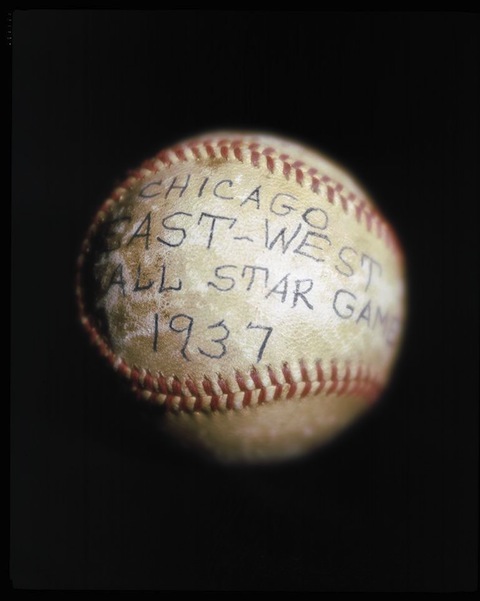
Negro League Baseball
1937, American History Museum
Sportswriter Frank Deford fulfills Kurin’s biographic requirements with an essay on the larger social implications behind this artifact, which scored a home run for Buck Leonard and the East lineup in the ’37 Comiskey All-Star game.
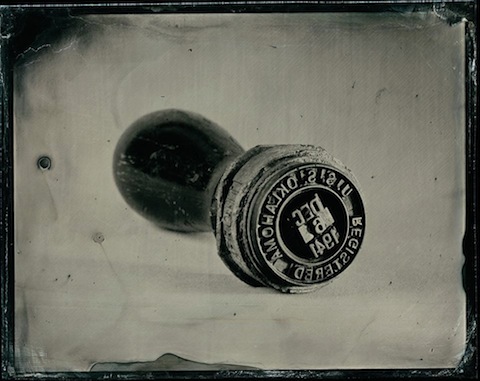
USS Oklahoma Stamp
1941, Postal Museum
“To record when a piece of mail was processed aboard ship, the Navy used wooden postmark stamps. This one bears an ominous date: Dec 6, 1941 PM. It was recovered from the battleship Oklahoma after it was hit by several torpedoes, listed to a 45-degree angle, capsized and sank in the attack on Pearl Harbor on December 7, 1941. The Oklahoma lost 429 sailors and Marines, a third of its crew.”
Wow.
The Pill
c. 1965 American History Museum
As Natalie Angier, author of Woman: An Intimate Geography pointed out in a recent article in Smithsonian magazine, “when people speak of the Pill, you know they don’t mean aspirin or Prozac but rather that mother of all blockbuster drugs, the birth control pill.” A pinnacle of both medical and feminist history, its significance extends well beyond the national borders.
How about you, readers? What item from a museum collection would you include in a book on American History?
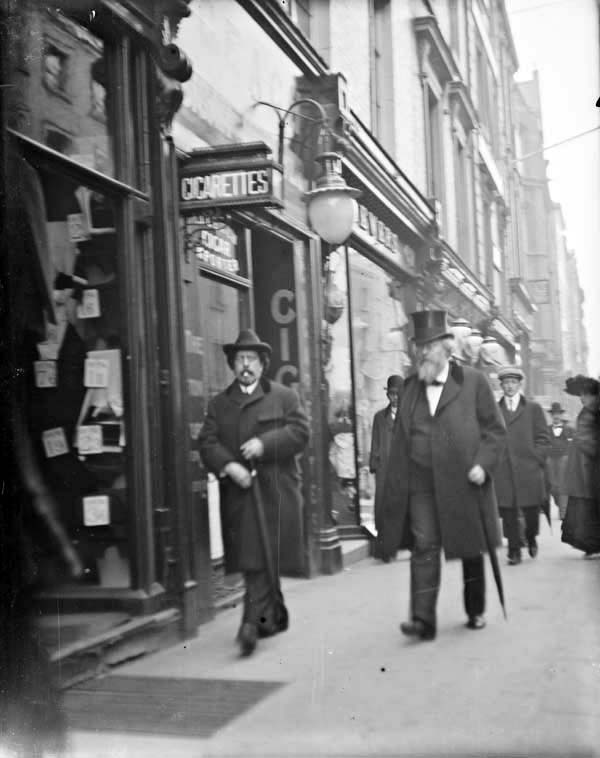
The Google Cultural Institute has drawn our attention before, with its virtual exhibitions on the rise of the Eiffel Tower, the fall of the Iron Curtain, and many other notable chapters of human history. Today, take a look at a Google Cultural Institute gallery that has a foot in literature as well as in history, Dubliners: the Photographs of J.J. Clarke from the National Library of Ireland. Subtitled “a glimpse of James Joyce’s Dublin,” the online show presents pictures taken by this fellow Clarke at the turn of the 20th century, when he came to the Irish capital to study medicine. His “photojournalistic approach to his subjects allowed him to capture vivid scenes from the daily lives of Dublin’s men, women and children.”
This made Clarke a contemporary of Joyce, and so his “images also show us how the city looked” to the writer “whose best known works — the short story collection Dubliners, and the novels A Portrait of the Artist as a Young Man and Ulysses — are all set around that time, when Joyce too was a young student fascinated by the world around him.”
Both the photographer and the novelist, in their separate forms, set about capturing the city, the era, and the culture around them, and the pictures of Clarke’s featured at the Google Cultural Institute could easily illustrate any of Joyce’s books.
I’ve long enjoyed repeating the observation that, had the real Dublin crumbled, we could rebuild it from the details given in Ulysses — or at least we could rebuild the Dublin of 1904. But I now accept that having on hand Clarke’s photographs, about which you can learn much more at the National Library of Ireland’s site, they would greatly speed the reconstruction process as well. All of the Joycean texts mentioned above can be found in our collection of Free Audio Books and Free eBooks.
Has any political party in Western history had as vexed a relationship with art as the German National Socialists? We’ve long known, of course, that their uses of and opinions on art constituted the least of the Nazi party’s problems. Still, the artistic proclivities of Hitler and company compel us, perhaps because they seem to promise a window into the mindset that resulted in such ultimate inhumanity. We can learn about the Nazis from the art they liked, but we can learn just as much (or more) from the art they disliked — or even that which they suppressed outright.
Current events have brought these subjects back to mind; this week, according to TheNew York Times, “German authorities described how they discovered 1,400 or so works during a routine tax investigation, including ones by Matisse, Chagall, Renoir, Toulouse-Lautrec, Picasso and a host of other masters,” most or all previously unknown or presumed lost amid all the flight from Nazi Germany. Hitler himself, more a fan of racially charged Utopian realism, wouldn’t have approved of most of these newly rediscovered paintings and drawings.
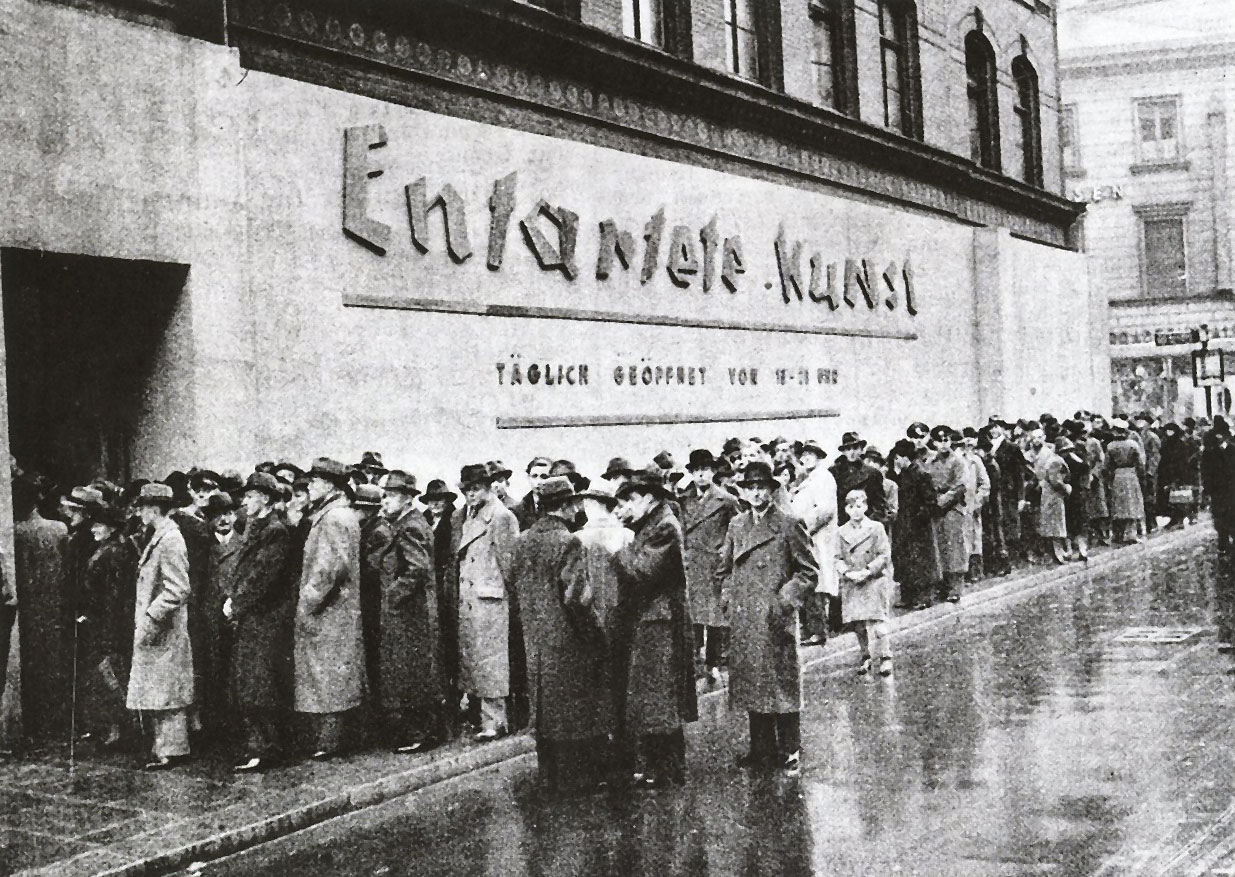
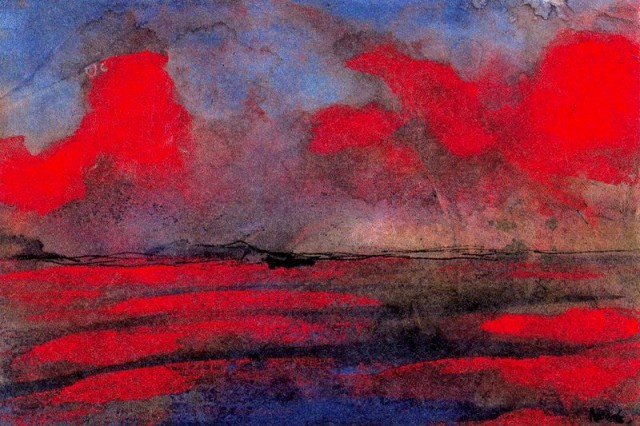
In fact, he may well have thrown them into 1937’s Degenerate Art Exhibition. Four years after it came to power,” writes the BBC’s Lucy Burns, “the Nazi party put on two art exhibitions in Munich. The Great German Art Exhibition [the Große Deutsche Kunstausstellung] was designed to show works that Hitler approved of — depicting statuesque blonde nudes along with idealised soldiers and landscapes. The second exhibition, just down the road, showed the other side of German art — modern, abstract, non-representational — or as the Nazis saw it, ‘degenerate.’ ” This Degenerate Art Exhibition (Die Ausstellung “Entartete Kunst”), the much more popular of the two, featured Paul Klee, Oskar Kokoschka, Wassily Kandinsky, Max Beckmann, Emil Nolde and George Grosz. There the Nazis quarantined these confiscated abstract, expressionistic, and often Jewish works of art, those that, according to the Führer, “insult German feeling, or destroy or confuse natural form or simply reveal an absence of adequate manual and artistic skill” and “cannot be understood in themselves but need some pretentious instruction book to justify their existence.” And if that sounds rigid, you should see how that Nazis dealt with jazz.
Note: For more on this subject, you can watch the 1993 documentary Degenerate Art.
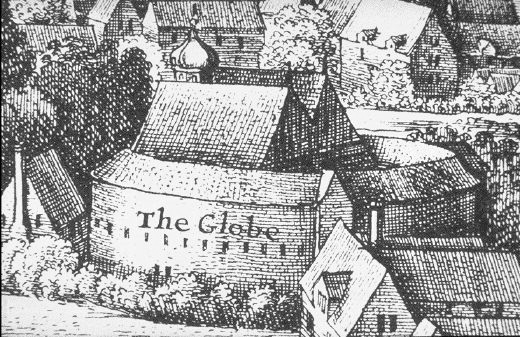
Last week, we featured a Prize-Winning Animation of 17th Century London. In many ways, it could be paired with these short virtual tours of the Globe Theatre. Built in 1599 by Shakespeare’s playing company, the Lord Chamberlain’s Men, the original theatre hosted some of the Bard’s greatest plays until it burned down 14 years later. In 1613, during a performance of Henry VIII, a stage cannon ignited the thatched roof and the theatre burned to the ground in less than two hours. Rebuilt with a tile roof, the theatre re-opened in 1614, and remained active until England’s Puritan administration closed all theatres in 1642. A modern reconstruction of the Globe, named “Shakespeare’s Globe,” was built in 1997, just a few feet away from the original structure. If you want to get a feel for what Shakespeare’s theatre looked like, then look no further than this virtual tour. All you need is this free Quicktime plugin for your browser and you can take a 360 tour of the stage, the yard, the middle gallery, and the upper gallery … all without leaving your seat.
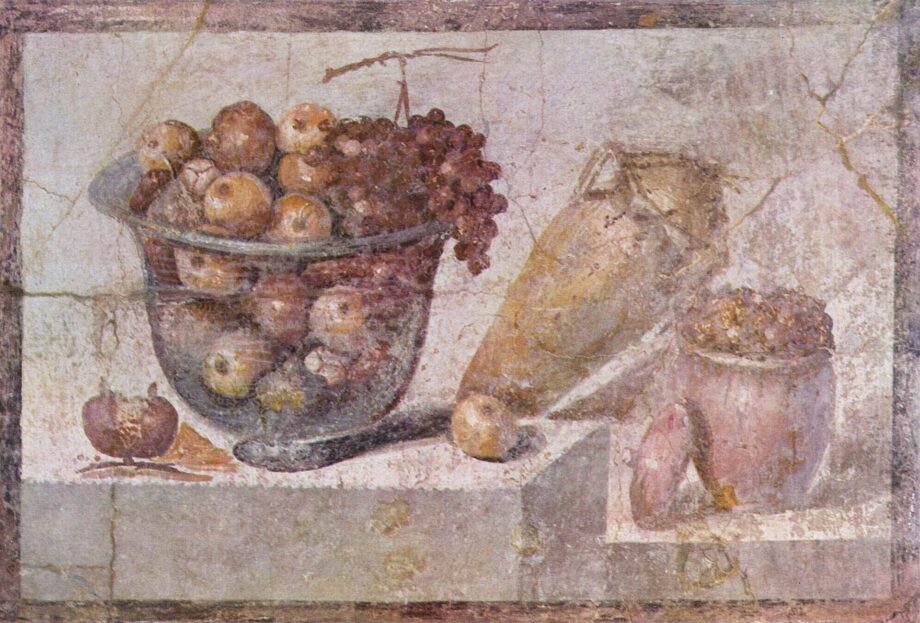
Marcus Gavius Apicius, who lived in the first century AD, was as fine an embodiment of Rome’s insatiable excess as any of his fellow citizens. While some men gained infamy for wanton cruelty or feats of courage, Apicius came to be known as Rome’s most prodigious glutton, with Pliny calling him “the most riotous glutton and bellie-god of his time.” (An alternative, and equally delectable translation, is the “most gluttonous gorger of all spendthrifts.”)
Hearing too that [the crawfish] were very large in Africa, he sailed thither, without waiting a single day, and suffered exceedingly on his voyage. But when he came near the place, before he disembarked from the ship, (for his arrival made a great noise among the Africans,) the fishermen came alongside in their boats and brought him some very fine crawfish; and he, when he saw them, asked if they had any finer; and when they said that there were none finer than those which they brought, he, recollecting those at Minturnæ, ordered the master of the ship to sail back the same way into Italy, without going near the land.
Some would say that sailing all the way to Libya for fish and refusing to set foot ashore because you weren’t impressed with some fishermen’s wares might be called petulant. They would be wrong. It is gastronomically discerning. No less, however, would be expected of a man who ended his life when, as Martial remarks, his purse could no longer support his stomach:
Apicius, you have spent 60 million [sesterces] on your stomach, and as yet a full 10 million remained to you. You refused to endure this, as also hunger and thirst, and took poison in your final drink. Nothing more gluttonous was ever done by you, Apicius.
Only fitting, then, that one of Rome’s best known gourmands became the attributed author of the oldest surviving cookbook. Apicius’ De re coquinaria, which emerged between the 4th and 5th centuries AD,is a compilation of almost 500 Roman recipes arranged, much like contemporary cookbooks, by ingredients. This culinary goldmine, which includes instructions on preparing brains and udders, was inaccessible to English speakers until the advent of Barbara Flower and Elizabeth Rosenbaum’s The Roman cookery book: A critical translation of “The art of cooking” by Apicius, for use in the study and kitchen (1958). Here’s a sample from Book 9, From The Sea:
- Mussels: liquamen, chopped leeks, passum, savory, wine. Dilute the mixture with water, and boil the mussels in it.
- (Sauce) for oysters: pepper, lovage, yolk of egg, vinegar, liquamen, oil and wine. If you wish, add honey.
- (Sauce) for all kinds of shellfish: pepper, lovage, parsley, dried mint, lots of cumin, honey, vinegar, liquamen. If you wish, add a bay leaf and folium indicum.
Unfortunately for the aspiring Roman chef, neither De re coquinaria nor Mmes. Flower and Rosenbaum included the necessary quantities of the ingredients. While one may choose to parse the translation independently to arrive at the appropriate meaning of “lots of cumin,” there is help for those looking for a quick fix.
In 2003, a chef and food historian named Patrick Faas published Around the Roman Table: Food and Feasting in Ancient Rome. While some of the content concerns Roman table manners, the heart of the book lies in the recipes. Faas provides over 150 recipes, most of which he sources from Flower and Rosenbaum’s translation (alongside a few dishes mentioned by Pliny and Cato). Eight are freely available on the University of Chicago Press website, and we’ve provided a few as an amuse-bouche:
Roast Wild Boar
Aper ita conditur: spogiatur, et sic aspergitur ei sal et cuminum frictum, et sic manet. Alia die mittitur in furnum. Cum coctus fuerit perfundutur piper tritum, condimentum aprunum, mel, liquamen, caroenum et passum.
Boar is cooked like this: sponge it clean and sprinkle with salt and roast cumin. Leave to stand. The following day, roast it in the oven. When it is done, scatter with ground pepper and pour on the juice of the boar, honey, liquamen, caroenum, and passum. (Apicius, 330)
For this you would need a very large oven, or a very small boar, but the recipe is equally successful with the boar jointed. Remove the bristles and skin, then scatter over it plenty of sea salt, crushed pepper and coarsely ground roasted cumin. Leave it in the refrigerator for 2–3 days, turning it occasionally.
Wild boar can be dry, so wrap it in slices of bacon before you roast it. At the very least wrap it in pork caul. Then put it into the oven at its highest setting and allow it to brown for 10 minutes. Reduce the oven temperature to 180°C/350°F/Gas 4, and continue to roast for 2 hours per kg, basting regularly.
Meanwhile prepare the sauce. To make caroenum, reduce 500ml wine to 200ml. Add 2 tablespoons of honey, 100ml passum, or dessert wine, and salt or garum to taste. Take the meat out of the oven and leave it to rest while you finish the sauce. Pour off the fat from the roasting tin, then deglaze it with the wine and the honey mixture. Pour this into a saucepan, add the roasting juices, and fat to taste.
Carve the boar into thin slices at the table, and serve the sweet sauce separately.
Ostrich Ragoût
Until the 1980s the ostrich was considered as exotic as an elephant, but since then it has become available in supermarkets. Cooking a whole ostrich is an enormous task, but Apicius provides a recipe for ostrich:
In struthione elixo: piper, mentam, cuminum assume, apii semen, dactylos vel caryotas, mel, acetum, passum, liquamen, et oleum modice et in caccabo facies ut bulliat. Amulo obligas, et sic partes struthionis in lance perfundis, ete desuper piper aspargis. Si autem in condituram coquere volueris, alicam addis.
For boiled ostrich: pepper, mint, roast cumin, celery seed, dates or Jericho dates, honey, vinegar, passum, garum, a little oil. Put these in the pot and bring to the boil. Bind with amulum, pour over the pieces of ostrich in a serving dish and sprinkle with pepper. If you wish to cook the ostrich in the sauce, add alica. (Apicius, 212)
You may prefer to roast or fry your ostrich, rather than boil it. Whichever method you choose, this sauce goes with it well. For 500g ostrich pieces, fried or boiled, you will need:
2 teaspoon flour
2 tablespoons olive oil
300ml passum (dessert wine)
1 tablespoon roast cumin seeds
1 teaspoon celery seeds
3 pitted candied dates
3 tablespoons garum or a 50g tin of anchovies
1 teaspoon peppercorns
2 tablespoons fresh chopped mint
1 teaspoon honey
3 tablespoons strong vinegar
Make a roux with the flour and 1 tablespoon of the olive oil, add the passum, and continue to stir until the sauce is smooth. Pound together in the following order: the cumin, celery seeds, dates, garum or anchovies, peppercorns, chopped mint, the remaining olive oil, the honey, and vinegar. Add this to the thickened wine sauce. Then stir in the ostrich pieces and let them heat through in the sauce.
Nut Tart
Patina versatilis vice dulcis: nucleos pineos, nuces fractas et purgatas, attorrebis eas, teres cum melle, pipere, liquamine, lacte, ovis, modico mero et oleo, versas in discum.
Try patina as dessert: roast pine nuts, peeled and chopped nuts. Add honey, pepper, garum, milk, eggs, a little undiluted wine, and oil. Pour on to a plate. (Apicius, 136)
400g crushed nuts—almonds, walnuts or pistachios
200g pine nuts
100g honey
100ml dessert wine
4 eggs
100ml full-fat sheep’s milk
1 teaspoon salt or garum
pepper
Preheat the oven to 240°C/475°F/Gas 9.
Place the chopped nuts and the whole pine nuts in an oven dish and roast until they have turned golden. Reduce the oven temperature to 200°C/400°F/Gas 6. Mix the honey and the wine in a pan and bring to the boil, then cook until the wine has evaporated. Add the nuts and pine nuts to the honey and leave it to cool. Beat the eggs with the milk, salt or garum and pepper. Then stir the honey and nut mixture into the eggs. Oil an oven dish and pour in the nut mixture. Seal the tin with silver foil and place it in roasting tin filled about a third deep with water. Bake for about 25 minutes until the pudding is firm. Take it out and when it is cold put it into the fridge to chill. To serve, tip the tart on to a plate and pour over some boiled honey.
Columella Salad
Columella’s writings suggest that Roman salads were a match for our own in richness and imagination:
Addito in mortarium satureiam, mentam, rutam, coriandrum, apium, porrum sectivum, aut si non erit viridem cepam, folia latucae, folia erucae, thymum viride, vel nepetam, tum etiam viride puleium, et caseum recentem et salsum: ea omnia partier conterito, acetique piperati exiguum, permisceto. Hanc mixturam cum in catillo composurris, oleum superfundito.
Put savory in the mortar with mint, rue, coriander, parsley, sliced leek, or, if it is not available, onion, lettuce and rocket leaves, green thyme, or catmint. Also pennyroyal and salted fresh cheese. This is all crushed together. Stir in a little peppered vinegar. Put this mixture on a plate and pour oil over it. (Columella, Re Rustica, XII-lix)
A wonderful salad, unusual for the lack of salt (perhaps the cheese was salty enough), and that Columella crushes the ingredients in the mortar.
100g fresh mint (and/or pennyroyal)
50g fresh coriander
50g fresh parsley
1 small leek
a sprig of fresh thyme
200g salted fresh cheese
vinegar
pepper
olive oil
Follow Columella’s method for this salad using the ingredients listed.
In other salad recipes Columella adds nuts, which might not be a bad idea with this one.
Apart from lettuce and rocket many plants were eaten raw—watercress, mallow, sorrel, goosefoot, purslane, chicory, chervil, beet greens, celery, basil and many other herbs.
We're hoping to rely on loyal readers, rather than erratic ads. Please click the Donate button and support Open Culture. You can use Paypal, Venmo, Patreon, even Crypto! We thank you!
Open Culture scours the web for the best educational media. We find the free courses and audio books you need, the language lessons & educational videos you want, and plenty of enlightenment in between.