James Boyle, a law professor at Duke University, has just put out a new book called The Public Domain: Enclosing the Commons of the Mind, and it basically tells citizens what they need to know about intellectual property law to take meaningful part in our emerging information society. The book clearly complements a lot of the work done by Lawrence Lessig. You can snap up a copy in three different formats (Free PDF copy, Free HTML copy, Buy on Amazon) and also find other free, downloadable books at Creative Commons.
The name Alex Kozinski probably won’t mean much to many of you. But if you’re a lawyer, or a Supreme Court watcher, you’ll know that he’s the Chief Judge of the United States Court of Appeals for the Ninth Circuit (a really prestigious position). Rather recently, he’s been associated with a highly visible pornography scandal related to one of his cases, and now this. A video documenting his appearance long ago on The Dating Game, a wonderful piece of Americana. And the best part is that he beat Squiggy from the other slice of Americana, Laverne & Shirley. Oh, the endless wealth of YouTube:
Below we have posted the last lecture that Lawrence Lessig will ever present on Free Culture. It’s an area where he has spent the past decade working, and this talk offers an excellent introduction to Lessig’s thought and work on this issue. Given at Stanford on January 31, the presentation is one that Steve Jobs could appreciate. Very well done. So give it a watch below (or here). Also, if you’d like to get free digital copies of Lessig’s major writings on Free Culture, look here.
As for what Lessig plans to do next. He has talked about combating corruption in Washington (something he talks about here). That’s part of the plan, but he may do it by running for Congress. Read this article in the Wall Street Journal and check out the new site: Lessig08.com
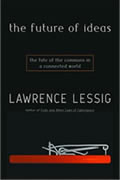
In 2001, Stanford law professor Lawrence Lessig published The Future of Ideas: The Fate of the Commons in a Connected World. Here, Lessig launched a campaign against American copyright law, arguing that it has become so restrictive that it stifles cultural innovation and social progress .… which undermines the original point of copyright law. Back in 1787, the founding fathers included the “copyright clause” in the American constitution, looking to give authors a short-term incentive to innovate and ultimately contribute to the public good. (Article I, Section 8 empowers Congress “To promote the Progress of Science and useful Arts, by securing for limited Times to Authors and Inventors the exclusive Right to their respective Writings and Discoveries.”). At the outset, copyright law protected forms of expression — and let authors profit from them — for a minimum of 14 years and a maximum of 28. Then, the material went into the public domain. But over time, the protections placed on cultural expression have been extended, and now works are protected so long as an author is alive, and then another 70 years. That’s potentially up to 140 years or more. All of this has happened because Congress has been successfully lobbied by large media corporations (e.g. Disney), wanting to monetize their media assets (think, Mickey Mouse) indefinitely.
Anyway, this is a long way of telling you that you can now download The Future of Ideasfor free. Lessig persuaded Random House to release the book under a “Creative Commons” license, using the argument that free e‑books will actually stimulate sales of paper copies. (Do you really want to read 350 pages on your computer screen?)
This is not the first time that Lessig has worked with this model. One of his previous books, Free Culture: How Big Media Uses Technology and the Law to Lock Down Culture and Control Creativity, was also made freely available in digital format. (You can download a free audiobook version or buy the paper version here.)
As a final note, I should mention that Lessig will be leaving behind his focus on these copyright issues, and turning his sights to corruption in Washington. Below you can watch him outline the problem that he’s looking to tackle.
What does the Second Amendment mean? It’s something that the Supreme Court has never really said. In this hour long video, Cass Sunstein, a very well known law professor from the University of Chicago, takes a crack at interpreting this amendment and seeing whether its original meaning actually confers the right to bear arms. Originalists/conservatives probably won’t like his conclusions, and they may be inclined to dismiss this as a talk given by another liberal elitist. But they should keep in mind that Sunstein actually saw the Bush administration’s wiretapping as having a plausible legal basis, and he’s had anything but a harsh assessment of John Roberts’ track record as a judge.
The Supreme Court has long taken heat for being in the technological arrière-garde, a criticism that has seemed fair given its unwillingness to even allow cameras into its oral arguments.
Slowly, however, that perception may be about to change. According to the ABA Journal eReport, the Court has stuck a small toe into the technology waters by providing web access to videotaped evidence that figured into a recent case, Scott v. Harris. The url for the video gets referenced within the written opinion for the case, and a link is provided from the Court’s opinions web page. (You’ll need Real Player to watch it.)
The video itself is nothing special. It features very low quality footage of a car chase taken from the dashboard of a police car, and it’s essentially the same scenario that America has seen played out for almost 20 years on Fox’s COPS. As you watch the video, you can’t help but feel that this landmark moment for the court is a non-moment. But that’s perhaps to be expected when a tradition-bound institution banally enters a brave new world.
Produced by the Journal of Law, Economics, and Policy.
Harvard Law School
MediaBerkman by The Berkman Center for Internet & SocietyiTunesFeedWeb Site
MediaBerkman “features conversations with and talks by leading cyber-scholars, entrepreneurs, activists, and policymakers as they explore topics such as the factors that influence knowledge creation and dissemination in the digital age; the character of power as the worlds of governance, business, citizenship and the media meet the internet; and the opportunities, role and limitations of new technologies in learning.”
This program focuses on the role that science and technology play in the national and global arenas. The issues discussed in these podcasts will interest students, legal professionals, businesspeople, government officials, and the public at large.
The American Constitution Society for Law and PolicyiTunesFeedWeb Site
The American Constitution Society for Law and Policy is a national organization comprised of lawyers, law students, scholars, judges, policymakers, and other concerned individuals working to ensure that fundamental principles of human dignity, individual rights and liberties, genuine equality, and access to justice enjoy their rightful, central place in American law.
Lawrence Lessig, a law professor at Stanford, has made a big name for himself by developing a sustained critique of how Congress, at the behest of corporate America, has progressively stifled cultural and scientific innovation by extending the duration and scope of copyright laws. Out of this critique, Lessig founded Creative Commons, a non-profit which issues copyright licenses that allow authors and innovators to retain some control over their works yet “dedicate [them] to the public domain” where they will contribute to the flourishing of new culture. And, even better, Lessig has published some of his own important works under these licenses, including Free Culture: How Big Media Uses Technology and the Law to Lock Down Culture and Control Creativity. What this means is that you can freely access the book in a variety of different formats (click here to pick), even an audio book version. This makes it utterly easy to find out what Lessig’s groundbreaking arguments are all about. It gets his thinking out there, into the commons, and vigorously shapes the debate on copyright law. It brings about a free flow of ideas, the very thing that Lessig cares most about.
Finally, you may also want to check out the recent work published by Lessig’s peer at Yale, Yochai Benkler: The Wealth of Networks. Though released in hardcover, it is also freely available in wiki and PDF formats.
We're hoping to rely on loyal readers, rather than erratic ads. Please click the Donate button and support Open Culture. You can use Paypal, Venmo, Patreon, even Crypto! We thank you!
Open Culture scours the web for the best educational media. We find the free courses and audio books you need, the language lessons & educational videos you want, and plenty of enlightenment in between.