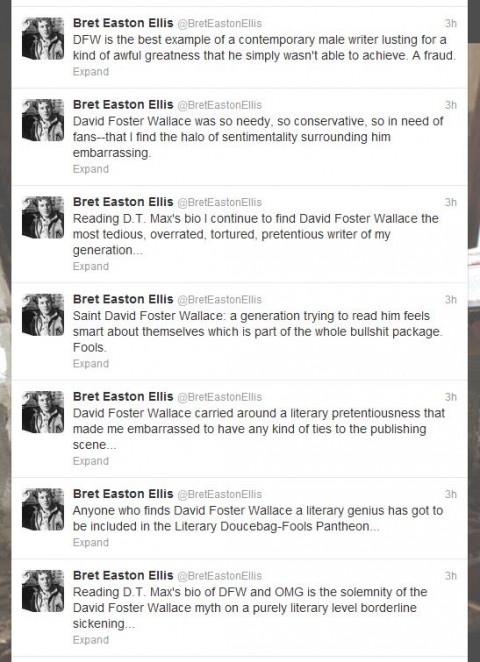
We have been in Beverly Hills shopping most of the late morning and early afternoon. My mother and my two sisters and me. My mother has spent most of this time probably at Neiman-Marcus, and my sisters have gone to Jerry Magnin and have used our father’s charge account to buy him and me something and then to MGA and Camp Beverly Hills and Privilege to buy themselves something. I sit at the bar at La Scala Boutique for most of this time, bored out of my mind, smoking, drinking red wine. Finally, my mother drives up in her Mercedes and parks her car in front of La Scala and waits for me.
Charles Bukowski, “Hank” to his friends, was once called the “best poet in America” by kindred spirit Jean Genet. He was a writer who told the truth, when he wasn’t lying, and who could tell a great story, whether sober or drunk. Bukowski once told Sean Penn in a 1987 Interview magazine piece: “Alcohol is probably one of the greatest things to arrive upon the earth — alongside of me. Yes…these are two of the greatest arrivals upon the surface of the earth. So…we get along.” This statement encapsulates the qualities Bukowski is best known for—lifelong heavy drinking and bravado. They tend to go hand in hand, especially in novelists of his generation. But what made him a poet was another quality the booze helped him cope with, his tendency to be “a shy, withdrawn person,” an almost tender person, and humane in his own low-rent way. In the video above, he tells the story of his worst hangover ever. I’ll let him tell it. There’s no way a paraphrase could come close to Bukowski’s own voice.
Josh Jones is a doctoral candidate in English at Fordham University and a co-founder and former managing editor of Guernica / A Magazine of Arts and Politics.
Fun fact about F. Scott Fitzgerald: he was a terrible speller. No, really. And his grammar wasn’t much better. Literary critic Edmund Wilson described his debut novel This Side of Paradise (find in our Free eBooks collection) as “one of the most illiterate books of any merit ever published.” Hemingway couldn’t spell either, and neither could Faulkner. Without the patient revision of great editors like Maxwell Perkins, much of the prose of these American masters may well have been unreadable. Novelists are artists, not grammarians, and their manuscript quirks—of spelling, handwriting, grammatical mistakes—can often reveal a great deal more about them than the typical reader can glean from clean, typeset copies of their work.
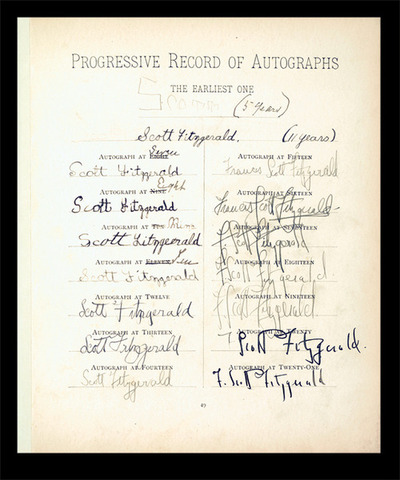
Take, for example, the evolution of Fitzgerald’s signature (above). From the labored scrawls of a five year-old, to the practiced script of an eleven-year-old schoolboy, to the experimental teenaged poses, we see the lettering get looser, more stylized, then tighten up again as it assumes its own mature identity in the confidently elegant near-calligraphy of the 21-year-old Fitzgerald–an evolution that traces the writer’s creative growth from uncertain but passionate youth to disciplined artist. Alright, maybe that’s all nonsense. I’m no expert. The practice of handwriting analysis, or graphology, is generally a forensic tool used to identify the marks of criminal suspects and detect forgeries, not a mindreading technique, although it does get used that way. One site, for example, provides an analysis of one of Fitzgerald’s 1924 letters to Carl Van Vechten. From the minute characteristics of the Gatsby novelist’s script, the analyst divines that he is “creative,” “artistic,” and appreciates the finer things in life. Color me a little skeptical.
But maybe there is something to my theory of Fitzgerald’s growing maturity and self-conscious certainty as evidenced by his signatures. He published This Side of Paradise to great acclaim three years after the final signature above. In the prior signatures, we see him struggling for control as he wrote and revised an earlier unpublished novel called The Romantic Egotist, which Fitzgerald himself told editor Perkins was “a tedious, disconnected casserole.” The outsized, extravagant lettering of the artist in his late teens is nothing if not “romantic.” But Fitzgerald achieved just enough control in his short life to write a veritable treasure chest of stories (many brilliant and some just plain silly) and a handful of novels, including, of course, the one for which he’s best known. Most of the rest of the time, as most everyone knows, he was kind of a mess.
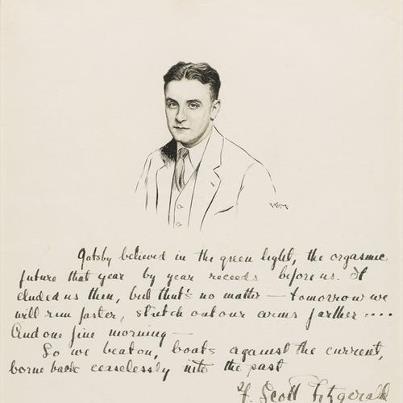
Try a little amateur handwriting analysis of your own on the last sentence of The Great Gatsby, written in Fitzgerald’s own hand below a portrait of the writer by artist Robert Kastor.
And for an added treat, watch journalist and sportswriter Bill Nack recite the final lines of Gatsby to his friend Roger Ebert. “Gatsby believed in the green light…”
via I always wanted to be a Tenenbaum
Josh Jones is a doctoral candidate in English at Fordham University and a co-founder and former managing editor of Guernica / A Magazine of Arts and Politics.
In the preface of The Swerve: How the World Became Modern, Stephen Greenblatt recalls the day he encountered a translation of Lucretius’ 2000 year old poem, On the Nature of Things. He was a grad student back at Yale, living on modest means, when he ambled into a bookstore and found a copy marked down to ten cents. He picked it up, not having much to lose and not knowing what he’d find. Soon enough he was reading one of the most scandalous and groundbreaking texts from antiquity, a book that eventually traveled a long and winding road and changed our entire modern world. That story Greenblatt tells in The Swerve.
The ten cents Greenblatt spent in the 1960s may be roughly equivalent to the deal you can get today. Right now, The Swerve, the winner of the 2012 Pulitzer Prize for general nonfiction, can be downloaded as an audio book for $5.95 via iTunes. Yes, we know, $5.95 is not free, and iTunes is not open, but it’s certainly a deal worth mentioning nonetheless.
But if you’re really hankering for something free, then don’t miss our meta lists of Free Audio Books and Free eBooks, which include a copy of Lucretius’ famous work. Or definitely check out Audible.com’s Free Trial offer, which lets you download pretty much any audio book you want (classic or modern) for free. Get details here.
“I suppose you’re wondering why I’ve called you all here,” says Ray Bradbury above, in a lengthy interview with the The Big Read project sponsored by the National Endowment for the Arts. Breaking the ice with this stock phrase, Bradbury–author of Fahrenheit 451, The Illustrated Man, The Martian Chronicles, and several dozen more fantasy and sci-fi novels and short story collections (and some truly chilling horror)–begins to talk about… Love. Specifically a love of books. “Love,” he says, “is at the center of your life. The things that you do should be things that you love, and the things that you love, should be things that you do.” That’s what books teach us, he says, and it becomes his mantra.
Bradbury, who passed away in June, was certainly an early inspiration for me, and several million other bookish kids whose warmest memories involve discovering some strange, life-altering book on the shelf of a library. As he recounts his childhood experiences with books, he’s such an enthusiastic booster for public libraries that you may find yourself writing a check to your local branch in the first ten minutes of his talk. And it’s easy to see why his most famous novel sprang from what must have been a very pressing fear of the loss of books. Bradbury was largely self-taught. Unable to afford college, he pursued his fierce ambition to become a writer immediately out of high school and published his first short story, “Hollerbochen’s Dilemma,” at the age of nineteen. As he says above, he became a writer because, “I discovered that I was alive.” But I’m not doing it justice. You have to watch him tell it to really feel the thrill of this epiphany.
The Big Read’s mission is to create a “Nation of Readers,” and to do so, it posts free audio guides for classics such as Bradbury’s Fahrenheit 451, Hemingway’s A Farewell to Arms, and Fitzgerald’s The Great Gatsby. They also feature video interviews with other authors, like Amy Tan, Ernest J. Gaines, and Tobias Wolff. Each of the interviews is fantastic, and the readers’ guides are superb as well. Bradbury’s, for example, narrated by poet and author Dana Gioia, also features sci-fi giants Orson Scott Card and Ursula K. Le Guin, as well as several other writers who were inspired by his work.
Josh Jones is a doctoral candidate in English at Fordham University and a co-founder and former managing editor of Guernica / A Magazine of Arts and Politics.
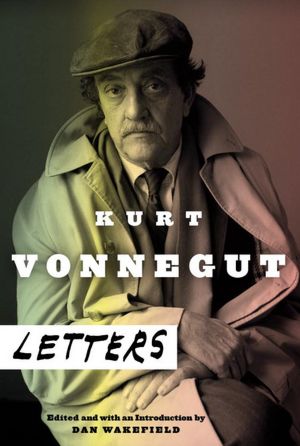
Kurt Vonnegut never did things the conventional way. He didn’t write particularly conventional novels. He certainly didn’t make very conventional speeches at universities. But he did make semi-conventional domestic agreements. Take, for example, this contract written on January 26, 1947. Posted on the Harper’s website in full, this odd little document, dubbed “The Chore List of Champions,” finds Vonnegut outlining all of the tasks he promised to do around the house — this while his young wife, Jane, prepared to give birth to their first child. The contract (the content is conventional, the form is not) will be published in Kurt Vonnegut: Letters next month. And it begins:
I, Kurt Vonnegut, Jr., that is, do hereby swear that I will be faithful to the commitments hereunder listed:
I. With the agreement that my wife will not nag, heckle, or otherwise disturb me on the subject, I promise to scrub the bathroom and kitchen floors once a week, on a day and hour of my own choosing. Not only that, but I will do a good and thorough job, and by that she means that I will get under the bathtub, behind the toilet, under the sink, under the icebox, into the corners; and I will pick up and put in some other location whatever movable objects happen to be on said floors at the time so as to get under them too, and not just around them. Furthermore, while I am undertaking these tasks I will refrain from indulging in such remarks as “Shit,” “Goddamn sonofabitch,” and similar vulgarities, as such language is nerve-wracking to have around the house when nothing more drastic is taking place than the facing of Necessity. If I do not live up to this agreement, my wife is to feel free to nag, heckle, and otherwise disturb me until I am driven to scrub the floors anyway—no matter how busy I am.
And then later continues:
g. When smoking I will make every effort to keep the ashtray I am using at the time upon a surface that does not slant, sag, slope, dip, wrinkle, or give way upon the slightest provocation; such surfaces may be understood to include stacks of books precariously mounted on the edge of a chair, the arms of the chair that has arms, and my own knees;
h. I will not put out cigarettes upon the sides of, or throw ashes into, either the red leather wastebasket or the stamp wastebasket that my loving wife made me for Christmas, 1945, as such practice noticeably impairs the beauty and ultimate practicability of said wastebaskets;
j. An exception to the above three-day time limit is the taking out of the garbage, which, as any fool knows, had better not wait that long; I will take out the garbage within three hours after the need for disposal has been pointed out to me by my wife. It would be nice, however, if, upon observing the need for disposal with my own two eyes, I should perform this particular task upon my own initiative, and thus not make it necessary for my wife to bring up a subject that is moderately distasteful to her;
l. The terms of this contract are understood to be binding up until that time after the arrival of our child (to be specified by the doctor) when my wife will once again be in full possession of all her faculties, and able to undertake more arduous pursuits than are now advisable.
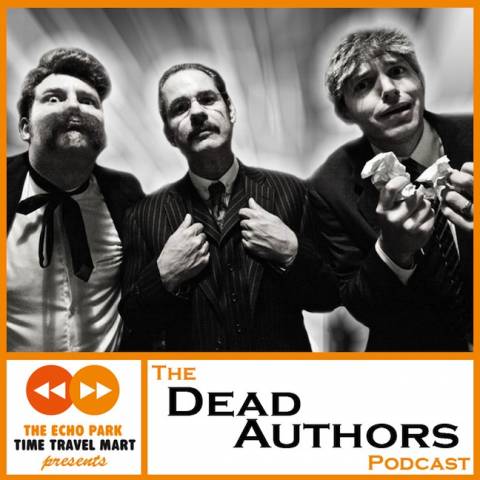
In the episode above, Wells welcomes the notoriously misogynistic and allegedly anti-Semitic Friedrich Nietzsche (James Adomian) and the notoriously racist writer of “weird tales” H.P. Lovecraft (Paul Scheer). As the podcast description has it, “if you are easily offended, you may find this one a bit challenging.” The offense is mitigated by the fact that the discussion “very rarely makes any sense AT ALL,” and that it’s damned funny.
Both “authors” spout exaggerated parodies of their philosophies, in ridiculous accents, and (as you can see from the photo above), look equally ridiculous to an audience that sometimes laughs along, sometimes doesn’t, as will happen in live comedy. The actors are game, ad-libbing with ease and confidence and clearly having a great time. The only moments that aren’t improvised are when the actors playing Nietzsche and Lovecraft read from the writers’ actual texts. In this context (and in these voices), the two both indeed make little sense. They’ll survive the takedown—these are two dead authors who tend to be taken far too seriously by their devotees. So, go ahead, listen to Nietzsche huff and puff his way through his bombastic and oracular pronouncements; hear Lovecraft hiss through his florid and paranoid prose. It’s all for a good cause. The Dead Authors podcast benefits 826LA, a non-profit writing and tutoring center for kids age 6–18.
You can find real works by Nietzsche and Lovecraft in our collection of Free eBooks and Free Audio Books.
Josh Jones is a doctoral candidate in English at Fordham University and a co-founder and former managing editor of Guernica / A Magazine of Arts and Politics.
If you’re anything like me, you yearn to become a good writer, a better writer, an inspiring writer, even, by learning from the writers you admire. But you neither have the time nor the money for an MFA program or expensive retreats and workshops with famous names. So you read W.H. Auden’s essays and Paris Review interviews with your favorite authors (or at least PR’s Twitter feed); you obsessively trawl the archives of The New York Times’ “Writers on Writing” series, and you relish every Youtube clip, no matter how lo-fi or truncated, of your literary heroes, speaking from beyond the grave, or from behind a podium at the 92nd Street Y.
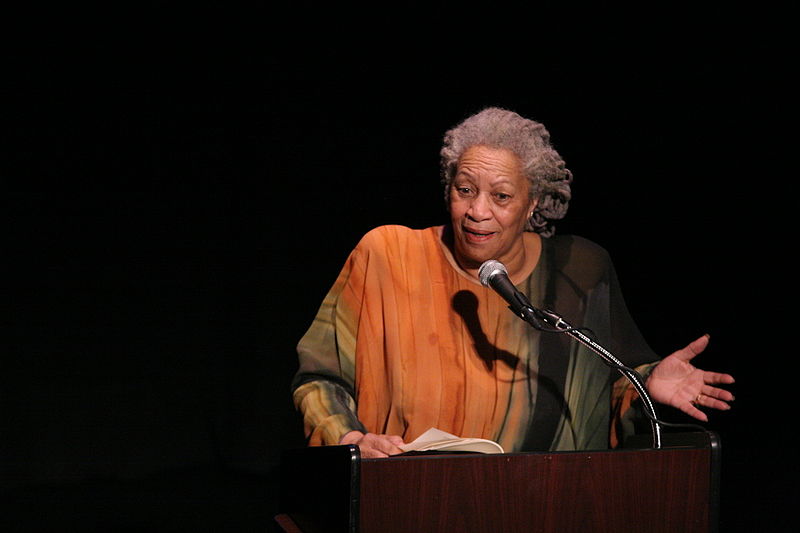
Well, friend, you are in luck (okay, I’m still talking about me here, but maybe about you, too). The Washington, DC-based non-profit Academy of Achievement—whose mission is to “bring students face-to-face” with leaders in the arts, business, politics, science, and sports—has archived a series of talks from an incredibly diverse pool of poets and writers. They call this collection “Creative Writing: A Master Class,” and you can subscribe to it right now on iTunes and begin downloading free video and audio podcasts from Nora Ephron, John Updike, Toni Morrison, Carlos Fuentes, Norman Mailer, Wallace Stegner, and, well, you know how the list goes.
The Academy of Achievement’s website also features lengthy profiles–with text and downloadable audio and video–of several of the same writers from their “Master Class” series. For example, an interview with former U.S. poet-laureate Rita Dove is illuminating, both for writers and for teachers of writing. Dove talks about the aversion that many people have for poetry as a kind of fear inculcated by clumsy teachers. She explains:
At some point in their life, they’ve been given a poem to interpret and told, “That was the wrong answer.” You know. I think we’ve all gone through that. I went through that. And it’s unfortunate that sometimes in schools — this need to have things quantified and graded — we end up doing this kind of multiple choice approach to something that should be as ambiguous and ever-changing as life itself. So I try to ask them, “Have you ever heard a good joke?” If you’ve ever heard someone tell a joke just right, with the right pacing, then you’re already on the way to the poetry. Because it’s really about using words in very precise ways and also using gesture as it goes through language, not the gesture of your hands, but how language creates a mood. And you know, who can resist a good joke? When they get that far, then they can realize that poetry can also be fun.
Dove’s thoughts on her own life, her work, and the craft of poetry and teaching are well worth reading/watching in full. Another particularly notable interview from the Academy is with another former laureate, poet W.S. Merwin.
Merwin, a two-time Pulitzer Prize winner, discusses poetry as originating with language, and its loss as tantamount to extinction:
When we talk about the extinction of species, I think the endangered species of the arts and of language and all these things are related. I don’t think there is any doubt about that. I think poetry goes back to the invention of language itself. I think one of the big differences between poetry and prose is that prose is about something, it’s got a subject… poetry is about what can’t be said. Why do people turn to poetry when all of a sudden the Twin Towers get hit, or when their marriage breaks up, or when the person they love most in the world drops dead in the same room? Because they can’t say it. They can’t say it at all, and they want something that addresses what can’t be said.
If you’re anything like me, you find these two perspectives on poetry—as akin to jokes, as saying the unsayable—fascinating. These kinds of observations (not mechanical how-to’s, but original thoughts on the process and practice of writing itself) are the reason I pore over interviews and seminars with writers I admire. I found more than enough in this archive to keep me satisfied for months.
We’ve added “Creative Writing: A Master Class” to our ever-growing collection of Free Online Courses.
Image via Angela Radulescu
Josh Jones is a doctoral candidate in English at Fordham University and a co-founder and former managing editor of Guernica / A Magazine of Arts and Politics.
We're hoping to rely on loyal readers, rather than erratic ads. Please click the Donate button and support Open Culture. You can use Paypal, Venmo, Patreon, even Crypto! We thank you!
Open Culture scours the web for the best educational media. We find the free courses and audio books you need, the language lessons & educational videos you want, and plenty of enlightenment in between.