William S. Burroughs on Saturday Night Live, 1981

Let’s rewind the video­tape to Novem­ber 7, 1981. That’s when Beat writer William S. Bur­roughs made his first appear­ance on Amer­i­can nation­al tele­vi­sion. Appro­pri­ate­ly, it was on the irrev­er­ent, late-night com­e­dy show, Sat­ur­day Night Live. Actress Lau­ren Hut­ton makes the intro­duc­tion, set­ting up Bur­roughs to read from Naked Lunch (1959) and Nova Express (1964). You can watch the action above, which hap­pens to be the open­ing scene of Bur­roughs, a 1983 doc­u­men­tary by Howard Brookn­er. The com­plete film is list­ed in our col­lec­tion of 450 Free Movies Online (look under Doc­u­men­taries), along with a 1997 BBC doc­u­men­tary on the author. For more good video ded­i­cat­ed to Bur­roughs, don’t miss the fol­low­ing:

William S. Bur­roughs Reads His First Nov­el, Junky (find it also in our col­lec­tion of Free Audio Books)

“The Thanks­giv­ing Prayer,” Read by William S. Bur­roughs and Shot by Gus Van Sant

Gus Van Sant Adapts William S. Bur­roughs’ The Dis­ci­pline of D.E.: An Ear­ly 16mm Short

William S. Bur­roughs on the Art of Cut-up Writ­ing

via @BrainPicker

by | Permalink | Make a Comment ( 2 ) |

Famous Literary Characters Visualized with Police Composite Sketch Software

In his 1955 clas­sic, Loli­ta, Vladimir Nabokov described the facial fea­tures of his scan­dalous pro­tag­o­nist, Hum­bert Hum­bert, in small bits. When tak­en togeth­er, here’s what you get:

Gloomy good looks… Clean-cut jaw, mus­cu­lar hand, deep sonorous voice… broad shoul­ders … I was, and still am, despite mes mal­heurs, an excep­tion­al­ly hand­some male; slow-mov­ing, tall, with soft dark hair and a gloomy but all the more seduc­tive cast of demeanor. Excep­tion­al viril­i­ty often reflects in the subject’s dis­playable fea­tures a sullen and con­gest­ed some­thing that per­tains to what he has to con­ceal. And this was my case… But instead I am lanky, big-boned, wooly-chest­ed Hum­bert Hum­bert, with thick black eye­brows… A cesspool­ful of rot­ting mon­sters behind his slow boy­ish smile… aging ape eyes… Humbert’s face might twitch with neu­ral­gia.

In a rather bril­liant move, Bri­an Joseph Davis has run these descrip­tions through law enforce­ment com­pos­ite sketch soft­ware and brought Hum­bert Hum­bert almost to life. (See above.) And he has done the same for a cast of oth­er lit­er­ary char­ac­ters on his Tum­blr, called The Com­pos­ites. Oth­er char­ac­ters get­ting the perp treat­ment include Emma Bovary (Gus­tave Flaubert’s Madame Bovary), Edward Rochester (Char­lotte Bron­të’s Jane Eyre), and Kei­th Tal­ent (Mar­tin Amis’ Lon­don Fields), among oth­ers. Find them all here. h/t Metafil­ter

Relat­ed Con­tent:

Vladimir Nabokov on Loli­ta: Just Anoth­er Great Love Sto­ry?

Vladimir Nabokov Mar­vels Over Dif­fer­ent “Loli­ta” Book Cov­ers

Nabokov Reads Loli­ta, Names the Great Books of the 20th Cen­tu­ry

by | Permalink | Make a Comment ( 2 ) |

Celebrate the 200th Birthday of Charles Dickens with Free Movies, eBooks and Audio Books

Today is the 200th birth­day of Charles Dick­ens. He was born in Portsmouth, Eng­land on Feb­ru­ary 7, 1812, the sec­ond of eight chil­dren. When he was 12 years old his father was sent to debtors’ prison, along with most of his fam­i­ly, and Charles went to live with a friend of the fam­i­ly, an impov­er­ished old lady. He was forced to quit school and work in a black­ing fac­to­ry, where he past­ed labels on jars of shoe pol­ish.

Dick­ens nev­er for­got those ear­ly trau­mas. He incor­po­rat­ed his expe­ri­ences and obser­va­tions of social injus­tice into his works, includ­ing David Cop­per­field, Oliv­er Twist and A Christ­mas Car­ol. (Find free nov­els below.) He was the most pop­u­lar writer of Vic­to­ri­an Eng­land, a vir­tu­al rock star in the days before record­ed music and movies. His sto­ries, pub­lished seri­al­ly in mag­a­zines, were eager­ly await­ed by the pub­lic. Most have remained in print ever since.

The Dick­ens bicen­te­nary is being cel­e­brat­ed with spe­cial events around the world, includ­ing a wreath-lay­ing cer­e­mo­ny this morn­ing at Poets’ Cor­ner in West­min­ster Abbey, where actor and film­mak­er Ralph Fiennes, author Claire Toma­lin, and two of Dick­en­s’s descen­dants are sched­uled to give read­ings. For a list­ing of events today and through­out the year, go to Dickens2012.org. Also take a look at the short ret­ro­spec­tive of Dick­ens-inspired movies (above) from the British Film Insti­tute.

To help cel­e­brate, we have gath­ered togeth­er some of the best Dick­ens mate­r­i­al from across the Web:

Films (see our com­plete list of Free Movies):

  • Oliv­er Twist: Anoth­er clas­sic by David Lean, this 1948 film stars John Howard Davies as Oliv­er and Alec Guin­ness as Fagin. In 1999 it was ranked 46th on the BFI’s list of the top 100 British films of all time.
  • A Tale of Two Cities: The 1958 film by Ralph Thomas, star­ring Dirk Bog­a­rde as Syd­ney Car­ton and Dorothy Tutin as Lucie Manette. The film was shot in France’s Loire Val­ley, with sev­er­al thou­sand U.S. sol­diers, post­ed in near­by Orleans, cast as extras.
  • A Christ­mas Car­ol: George C. Scott gives an excel­lent per­for­mance as Ebenez­er Scrooge in this crit­i­cal­ly acclaimed 1984 film direct­ed by Clive Don­ner. It pre­miered in Amer­i­ca on CBS tele­vi­sion, and was released the­atri­cal­ly in Great Britain.
  • David Cop­per­field: A 2000 U.S.-Irish tele­vi­sion adap­ta­tion star­ring Hugh Dan­cy as David Cop­per­field, Michael Richards as Wilkins Micaw­ber and Sal­ly Field as Bet­sey Trot­wood.
  • The Pick­wick Papers: A 1952 film, adapt­ed and direct­ed by Noel Lan­g­ley and star­ring James Hayter as Samuel Pick­wick.

eBooks (see our com­plete list of Free eBooks)

Audio Books (see our com­plete list of Free Audio Books)

Relat­ed Con­tent:

Down­load 20 Pop­u­lar High School Books Avail­able as Free eBooks & Audio Books

Harold Bloom Recites ‘Tea at the Palaz of Hoon’ by Wallace Stevens

Lit­er­ary crit­ic Harold Bloom once called Wal­lace Stevens (1879–1955) “the best and most rep­re­sen­ta­tive Amer­i­can poet of our time.” In this video from Boston Col­lege’s Guest­book Project, Bloom recites a poem from Steven­s’s first book, Har­mo­ni­um, which was pub­lished in 1923:

Tea at the Palaz of Hoon

Not less because in pur­ple I descend­ed
The west­ern day through what you called
The loneli­est air, not less was I myself.

What was the oint­ment sprin­kled on my beard?
What were the hymns that buzzed beside my ears?
What was the sea whose tide swept through me there?

Out of my mind the gold­en oint­ment rained,
And my ears made the blow­ing hymns they heard.
I was myself the com­pass of that sea:

I was the world in which I walked, and what I saw
Or heard or felt came not but from myself;
And there I found myself more tru­ly and more strange.

“The palaz of Hoon is sky and space seen as a gaudy and ornate dwelling,” writes Bloom in Wal­lace Stevens: The Poems of Our Cli­mate; “to have tea at the palaz is to watch the twi­light while con­vers­ing with the set­ting sun, who is hard­ly lone­ly since all the air is his and since all direc­tions are at home in him. He is him­self when most impe­r­i­al, in pur­ple and gold, and his set­ting is a coro­na­tion.”

The video con­cludes with Bloom recit­ing the open­ing stan­za from a lat­er poem by Stevens that echoes the ear­li­er one, a poem regret­tably titled “Like Dec­o­ra­tions in a Nig­ger Ceme­tery”:

In the far South the sun of autumn is pass­ing
Like Walt Whit­man walk­ing along a rud­dy shore.
He is singing and chant­i­ng the things that are part of him,
The worlds that were and will be, death and day.
Noth­ing is final, he chants. No man shall see the end.
His beard is of fire and his staff is a leap­ing flame.

“Whit­man, like Hoon,” writes Bloom, “both con­tains every­thing else and is an idea of the sun, not as a god but as a god might be. Hoon is him­self the com­pass of the sea whose tides sweep through him; Walt encom­pass­es worlds but him­self is not to be encom­passed.”

James Joyce Reads ‘Anna Livia Plurabelle’ from Finnegans Wake

Today is the birth­day of James Joyce, who was born in Dublin on Feb­ru­ary 2, 1882, and wrote in A Por­trait of the Artist as a Young Man: “Wel­come, O life! I go to encounter for the mil­lionth time the real­i­ty of expe­ri­ence and to forge in the smithy of my soul the uncre­at­ed con­science of my race.”

To cel­e­brate his life, we present an August 1929 record­ing of Joyce read­ing a melo­di­ous pas­sage from the “Anna Livia Plura­belle” chap­ter of his Work in Progress, which would be pub­lished ten years lat­er as Finnegans Wake. The record­ing was made in Cam­bridge, Eng­land, at the arrange­ment of Joyce’s friend and pub­lish­er Sylvia Beach. “How beau­ti­ful the ‘Anna Livia’ record­ing is,” wrote Beach in her mem­oir, Shake­speare and Com­pa­ny, “and how amus­ing Joyce’s ren­der­ing of an Irish wash­er­wom­an’s brogue!”

If you would like to sign up for Open Culture’s free email newslet­ter, please find it here. It’s a great way to see our new posts, all bun­dled in one email, each day.

If you would like to sup­port the mis­sion of Open Cul­ture, con­sid­er mak­ing a dona­tion to our site. It’s hard to rely 100% on ads, and your con­tri­bu­tions will help us con­tin­ue pro­vid­ing the best free cul­tur­al and edu­ca­tion­al mate­ri­als to learn­ers every­where. You can con­tribute through Pay­Pal, Patre­on, and Ven­mo (@openculture). Thanks!

Relat­ed Con­tent:

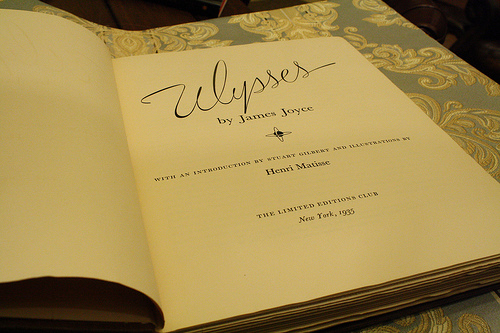
Mar­i­lyn Mon­roe Reads Joyce’s Ulysses at the Play­ground (1955)

James Joyce’s Ulysses: Down­load the Free Audio Book

Death Masks: From Dante to James Joyce and Friedrich Niet­zsche

Shakespeare’s Julius Caesar Read in Celebrity Voices

Last sum­mer, actor Jim Meski­men pro­duced a viral video where he imper­son­at­ed 25 famous fig­ures recit­ing Clarence’s mono­logue from Shake­speare’s great his­to­ry play, Richard III. Woody Allen, Jack Nichol­son, Jim­my Stew­art — they all made an appear­ance.

Now, Meski­men returns with a new cast of char­ac­ters, and this time he’s read­ing lines from Marc Antony’s famous speech in Julius Cae­sar.

If you live in LA, you can see the impres­sion­ist per­form live at The Act­ing Cen­ter on Feb­ru­ary 17 & 18 at 8 p.m. Enjoy.

Relat­ed Con­tent:

Nine Imper­son­ations by Kevin Spacey in Six Min­utes

F. Scott Fitzger­ald Reads Shake­speare

William S. Bur­roughs Shoots Shake­speare

Three Passions of Bertrand Russell (and a Collection of Free Texts)

“Three pas­sions, sim­ple but over­whelm­ing­ly strong, have gov­erned my life,” wrote Bertrand Rus­sell in the pro­logue to his auto­bi­og­ra­phy: “the long­ing for love, the search for knowl­edge, and unbear­able pity for the suf­fer­ing of mankind.”

This five minute video, a pre­view of a three-part series pro­duced in 2005 for Ontario pub­lic tele­vi­sion called “The Three Pas­sions of Bertrand Rus­sell,” fea­tures a record­ing of Rus­sell read­ing pas­sages from the pro­logue, enti­tled “What I Have Lived For.” You can read the orig­i­nal text at the Bertrand Rus­sell Soci­ety, an excel­lent online resource, that also makes avail­able free books by Rus­sell, includ­ing:

You can also down­load the first edi­tion of Rus­sel­l’s land­mark 1910–13 col­lab­o­ra­tion with Alfred North White­head, Prin­cip­ia Math­e­mat­i­ca, as well as many of Rus­sel­l’s essays, includ­ing:

To explore the full list of avail­able resources, and to learn how you can sup­port the soci­ety’s activ­i­ties, vis­it the Bertrand Rus­sell Soci­ety web­site.

Also don’t miss some great Rus­sell mate­r­i­al in our own archives, includ­ing all six of his 1948 BBC Rei­th Lec­tures, a clip from a Cana­di­an tele­vi­sion inter­view fea­tur­ing his views on God, and his elo­quent 1959 mes­sage to the future.

Richard Brautigan’s Story, ‘One Afternoon in 1939,’ Read From a Wooden Spool

Today is the birth­day of Richard Brauti­gan, whose fun­ny and imag­i­na­tive books were a touch­stone for the 1960s coun­ter­cul­ture and have remained an inspi­ra­tion to free spir­its ever since. He would have been 77.

In this video, uploaded to the Inter­net exact­ly a year ago, Ianthe Brauti­gan Swensen reads her father’s sto­ry, “One After­noon in 1939,” from his col­lec­tion Revenge of the Lawn. Ianthe was one year old in 1961 when her father sat down with a portable type­writer on a fam­i­ly camp­ing trip to write his most famous work, Trout Fish­ing in Amer­i­ca, and she was 24 when he took his own life in 1984. Now she’s a writer and a teacher.

In 2001 Brauti­gan Swensen pub­lished You Can’t Catch Death: A Daugh­ter’s Mem­oir about her life with a dif­fi­cult but lov­ing father who liked to take her with him to his favorite San Fran­cis­co haunts dur­ing the 60s. “When I’m here,” she told the San Fran­cis­co Chron­i­cle on a vis­it to the city in 2000, “I still feel my father walk­ing the streets, I still feel my hand in his. And that’s a very hap­py feel­ing.”

If you would like to sign up for Open Culture’s free email newslet­ter, please find it here. It’s a great way to see our new posts, all bun­dled in one email, each day.

If you would like to sup­port the mis­sion of Open Cul­ture, con­sid­er mak­ing a dona­tion to our site. It’s hard to rely 100% on ads, and your con­tri­bu­tions will help us con­tin­ue pro­vid­ing the best free cul­tur­al and edu­ca­tion­al mate­ri­als to learn­ers every­where. You can con­tribute through Pay­Pal, Patre­on, and Ven­mo (@openculture). Thanks!

« Go BackMore in this category... »
Quantcast