Anne Frank’s Diary: From Reject Pile to Bestseller

We’re lucky to have Anne Frank’s diary — lucky that the diary was ever dis­cov­ered, and lucky, too, that some­one took a chance on pub­lish­ing the even­tu­al best­seller. This is all nice­ly out­lined by Francine Prose, who has a new book out called Anne Frank: The Book, The Life, The After­life. You can lis­ten to her full book talk here. And also be sure to see our recent post show­ing the only exist­ing video of Anne Frank. It’s now online.

by | Permalink | Make a Comment ( 1 ) |

Plagiarism Software Discovers New Shakespeare Play

Or so that’s the claim of Bri­an Vick­ers, a pro­fes­sor at the Insti­tute of Eng­lish Stud­ies at the Uni­ver­si­ty of Lon­don. Accord­ing to a short piece in The New York Times, a soft­ware pack­age called Pl@giarism, usu­al­ly used to detect cheat­ing stu­dents, demon­strates that “The Reign of King Edward III,” a play pub­lished anony­mous­ly in 1596, has ele­ments of Shake­speare’s lin­guis­tic fin­ger­print. In short, phras­es used in the play match phras­es found in ear­li­er Shake­speare plays at least 200 times. Inter­est­ing­ly, the soft­ware also iden­ti­fies phras­es match­ing the lin­guis­tic fin­ger­print of anoth­er play­wright, Thomas Kyd, sug­gest­ing that Shake­speare did­n’t write the Edward play (or oth­er plays?) alone. The Times of Lon­don has more on these new claims.

Relat­ed Con­tent:

Free Shake­speare on the iPhone

Goethe and Shake­speare on Google

What Did Shake­speare Real­ly Look Like

by | Permalink | Make a Comment ( 2 ) |

James Ellroy on Re-Writing History

James Ell­roy’s new crime fic­tion nov­el, Blood­’s a Rover, takes you back to the tumul­tuous sum­mer of 1968, to a world inhab­it­ed by J. Edgar Hoover, Howard Hugh­es, the Black Pan­thers, and the mob run­ning their rack­ets in the Domini­can Repub­lic. Above, in his own inim­itable style, Ell­roy gives you the scoop on how he goes about writ­ing his­tor­i­cal fic­tion. To get a feel for the book, you can read a PDF of the first chap­ter here. And if you want to get the audio book for free, check out Audible.com’s stand­ing offer.

via Media Bistro

by | Permalink | Make a Comment ( 2 ) |

Who is Herta Muller?

This morn­ing, the Nobel Prize for Lit­er­a­ture was award­ed to the Roman­ian author, Her­ta Muller. There’s a good chance that you’re not famil­iar with her work. So let me steer you to this pro­file in the Tele­graph. You can also read this excerpt­ed inter­view that goes back to 1999. If I come across any media fea­tur­ing Muller (so far, not much is com­ing up), I will post it as the day goes on.

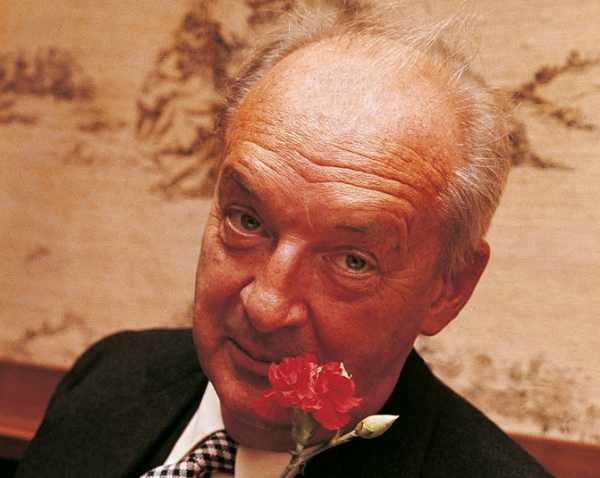
Nabokov Makes Editorial Improvements to Kafka’s “The Metamorphosis”

nabokov_on_kafka

Vladimir Nabokov admired Franz Kafka’s novel­la, “The Meta­mor­pho­sis.” Hence the lec­ture that Nabokov ded­i­cat­ed to the work here. But he also saw some small ways to improve the sto­ry, or at least the Eng­lish trans­la­tion of it. Above, we have some edits that Nabokov penned him­self. And, just as an fyi, you can down­load a free ver­sions of Kafka’s work in our col­lec­tions of Free Audio Books and Free eBooks.

The Life and Works of William Butler Yeats

William_Butler_Yeats_by_John_Singer_Sargent_1908

Por­trait of William But­ler Yeats by John Singer Sar­gent, via Wiki­me­dia Com­mons

It’s a hap­py trend. Increas­ing­ly, we’re see­ing muse­ums launch­ing dynam­ic online exhi­bi­tions to accom­pa­ny their exhi­bi­tions on the ground. In the past, we high­light­ed the Tate Mod­ern’s panoram­ic tour of Mark Rothko’s work. And now we point you to The Life and Work of William But­ler Yeats, an online exhi­bi­tion cre­at­ed by The Nation­al Library of Ire­land. When you enter the tour, you can scan through 200 arti­facts & man­u­scripts and “attend” three in-depth tuto­ri­als explor­ing the evo­lu­tion of three major poems (‘Sail­ing to Byzan­tium’, ‘Leda and the Swan’ and ‘Nine­teen Hun­dred and Nine­teen’). You can also lis­ten to Yeats, one of Ire­land’s tow­er­ing poets, recit­ing his famous poem ‘The Lake Isle of Inn­is­free.’ To lis­ten, click “Areas” on the bot­tom nav­i­ga­tion, then click “Verse and Vision” on the cen­ter menu, and then the audio will begin to play. You can read the text of the poem here. Final­ly, you’ll find more Yeats poems in our Free Audio Book col­lec­tion.

by | Permalink | Make a Comment ( 2 ) |

The Edgar Allan Poe Digital Collection

poeA quick note: The Har­ry Ran­som Cen­ter, a human­i­ties research library and muse­um at The Uni­ver­si­ty of Texas at Austin, is com­mem­o­rat­ing the 2009 bicen­ten­ni­al of Edgar Allan Poe, Amer­i­can poet, crit­ic and inven­tor of the detec­tive sto­ry, with the exhi­bi­tion “From Out That Shad­ow: The Life and Lega­cy of Edgar Allan Poe.” To mark the occa­sion, the Cen­ter’s web site has launched The Edgar Allan Poe Dig­i­tal Col­lec­tion, and it nice­ly fea­tures Poe’s man­u­scripts, his let­ters and doc­u­ments, pho­tographs and even cryp­tographs that Poe liked to solve. (You can try to solve them too.) Have a look, and then feel free to down­load read­ings of Poe’s work in our col­lec­tion of  Free Audio Books.

“September 1, 1939” by W.H. Auden

The poem was W.H. Auden’s. The date marked the moment when Ger­many invad­ed Poland, ini­ti­at­ing the start of World War II. “Sep­tem­ber 1, 1939” was orig­i­nal­ly pub­lished in The New Repub­lic on Octo­ber 18, 1939. You can find the text of the poem here. Plus, you can also read George Orwell’s account of what hap­pened that his­toric day in Poland. I found it, and just had to throw that in.

« Go BackMore in this category... »
Quantcast