This morning, the Nobel Prize for Literature was awarded to the Romanian author, Herta Muller. There’s a good chance that you’re not familiar with her work. So let me steer you to this profile in the Telegraph. You can also read this excerpted interview that goes back to 1999. If I come across any media featuring Muller (so far, not much is coming up), I will post it as the day goes on.
Nabokov Makes Editorial Improvements to Kafka’s “The Metamorphosis”
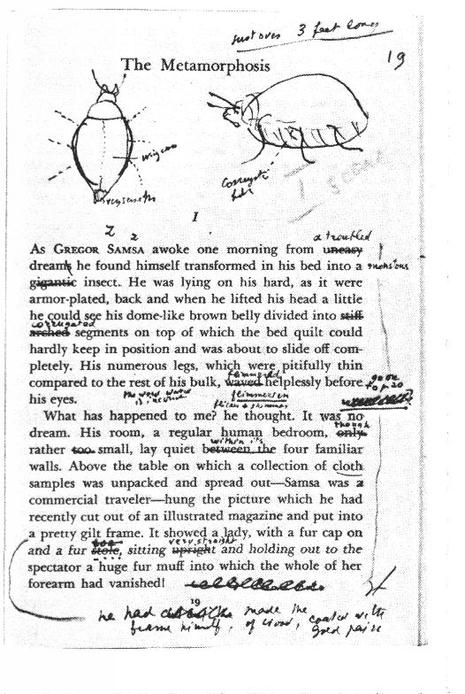
Vladimir Nabokov admired Franz Kafka’s novella, “The Metamorphosis.” Hence the lecture that Nabokov dedicated to the work here. But he also saw some small ways to improve the story, or at least the English translation of it. Above, we have some edits that Nabokov penned himself. And, just as an fyi, you can download a free versions of Kafka’s work in our collections of Free Audio Books and Free eBooks.
The Life and Works of William Butler Yeats
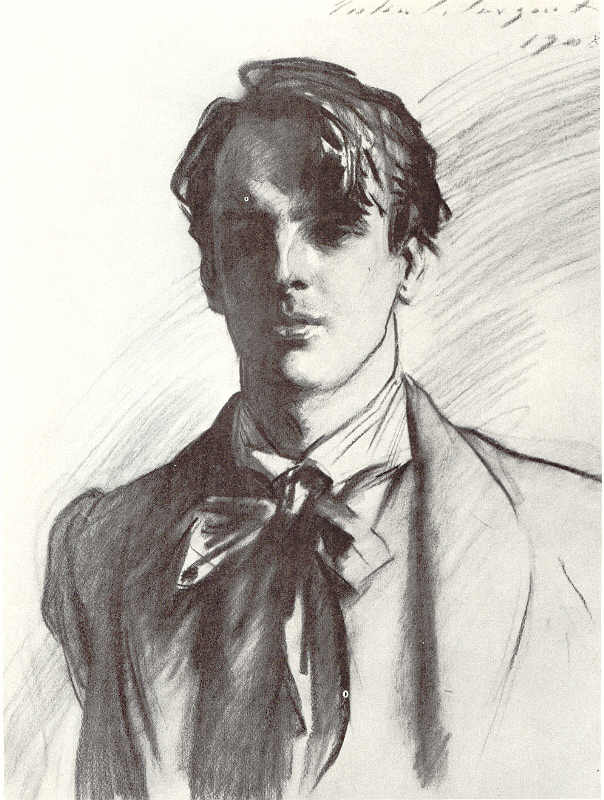
Portrait of William Butler Yeats by John Singer Sargent, via Wikimedia Commons
It’s a happy trend. Increasingly, we’re seeing museums launching dynamic online exhibitions to accompany their exhibitions on the ground. In the past, we highlighted the Tate Modern’s panoramic tour of Mark Rothko’s work. And now we point you to The Life and Work of William Butler Yeats, an online exhibition created by The National Library of Ireland. When you enter the tour, you can scan through 200 artifacts & manuscripts and “attend” three in-depth tutorials exploring the evolution of three major poems (‘Sailing to Byzantium’, ‘Leda and the Swan’ and ‘Nineteen Hundred and Nineteen’). You can also listen to Yeats, one of Ireland’s towering poets, reciting his famous poem ‘The Lake Isle of Innisfree.’ To listen, click “Areas” on the bottom navigation, then click “Verse and Vision” on the center menu, and then the audio will begin to play. You can read the text of the poem here. Finally, you’ll find more Yeats poems in our Free Audio Book collection.
The Edgar Allan Poe Digital Collection
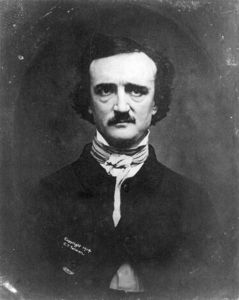 A quick note: The Harry Ransom Center, a humanities research library and museum at The University of Texas at Austin, is commemorating the 2009 bicentennial of Edgar Allan Poe, American poet, critic and inventor of the detective story, with the exhibition “From Out That Shadow: The Life and Legacy of Edgar Allan Poe.” To mark the occasion, the Center’s web site has launched The Edgar Allan Poe Digital Collection, and it nicely features Poe’s manuscripts, his letters and documents, photographs and even cryptographs that Poe liked to solve. (You can try to solve them too.) Have a look, and then feel free to download readings of Poe’s work in our collection of Free Audio Books.
“September 1, 1939” by W.H. Auden
The poem was W.H. Auden’s. The date marked the moment when Germany invaded Poland, initiating the start of World War II. “September 1, 1939” was originally published in The New Republic on October 18, 1939. You can find the text of the poem here. Plus, you can also read George Orwell’s account of what happened that historic day in Poland. I found it, and just had to throw that in.
Dominick Dunne Looks at the Dark Side
Crime writer Dominick Dunne passed yesterday today at 83, his death overshadowed by that of Ted Kennedy. Above, we feature Dunne remembering his rather unpleasant relationship with Frank Sinatra. It’s a perverse story, though told in a somewhat humorous way.
Initially, I considered featuring another video, but it’s entirely too sad, especially for any parents among us. Back in 1982, Dunne’s daughter, an actress, was strangled to death by her boyfriend. And, in this clip, Dunne reflects on his relationship with his daughter. A heartbreaking bit.
As a side note, Dunne kept a diary during the trial of his daughter’s murderer. The account was eventually published in Vanity Fair, and you can find it here, along with many other major pieces that Dunne wrote for VF. Amazingly, the murderer was convicted and served less than 4 years. Meanwhile, millions who have peddled small amounts of drugs are doing considerably more time across the US.
Good “Reads” On Audible (with Freebie Possibilities)
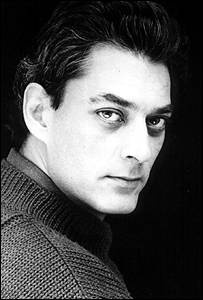 A quick note: Audible has recently launched a series called the Audible Modern Vanguard (more details here) that brings groundbreaking works and authors into unabridged audio for the first time. Here, you’ll find works by Paul Auster (one of my faves), Saul Bellow, John Cheever, John Irving, Kurt Vonnegut, and William Kennedy.
There are some good “reads” here, and, unless I’m mistaken, there’s a way that you can download one for free. I’ve created a page where you can get information on Audible’s (no strings attached) 14 day trial here, which gives you a completely free download of any audio book you choose.
Reading Free Books on the Kindle
Even though we sometimes give Amazon’s Kindle a hard time, the device is undoubtedly handy for reading e‑books. The Kindle lets you seamlessly download books straight from Amazon in a matter of seconds. And, even better, you can load the Kindle with thousands of free e‑books from sources such as Project Gutenberg. (Few people know this.) This guide will show you how to download a free book from Project Gutenberg, and then read it on your Kindle. You can also find many free ebooks for the Kindle in our Free eBook collection.
Step 1:
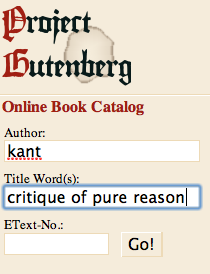
Go to http://www.gutenberg.org and search for a book you would like to read.
Step 2:
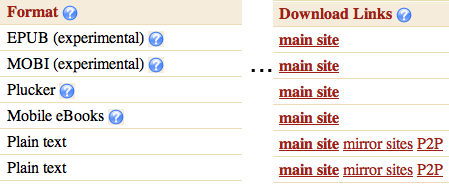
Once you’ve found a book that you want to download, download it in MOBI format if possible. If no MOBI format exists, then using plain text works as well.
Step 3:
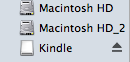
After your download is complete, plug in your Kindle to your computer’s USB port. The Kindle will show up as a USB Drive.
Step 4:
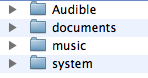
Go to the Documents directory on your Kindle.
Step 5:
Copy the e‑book file to the Documents folder. You can optionally rename the file to something more meaningful if you’d like.
Step 6:
The silver cursor on your Kindle will begin to spin. When it stops, the Kindle is finished syncing. Now you can eject and unplug your Kindle and enjoy your free ebook!
Fred Hsu designed the handy Open Culture app. Give it a spin. It’s free and it’s good for you.
Support Us
We're hoping to rely on loyal readers, rather than erratic ads. Please click the Donate button and support Open Culture. You can use Paypal, Venmo, Patreon, even Crypto! We thank you!

About Us

Open Culture scours the web for the best educational media. We find the free courses and audio books you need, the language lessons & educational videos you want, and plenty of enlightenment in between.
Advertise With Us


