Imagining a “brotherhood of man” sounds Pollyannaish and painfully naïve when even an “uneasy truce of man” seems hardly possible. But when John Lennon sings about it with conviction in “Imagine,” we sit up and listen. Such is the power of “Imagine”’s utopian vision, and Lennon later admitted it “should be credited as a Lennon/Ono song,” since “a lot of it—the lyric and the concept—came from Yoko,” specifically from Grapefruit, her little book of whimsical “instructions.” For decades the pair’s collaborations have received withering scorn from Beatles fans, but no greater testament to their combined humanist vision exists than “Imagine,” a product of Ono’s conceptual dream verse and Lennon’s earnest songcraft.
So much has been said and written about the song, so many great and not-so-great covers performed since its 1971 release, that we might think we know all there is to know about it. We even have behind the scenes footage in the documentary Gimme Some Truthof the sometimes tense recording sessions. Yet it turns out that the original demo version Lennon recorded at his own Ascot Sound studios went unnoticed in a box of tapes for 45 years. We can celebrate its 2016 rediscovery and now hear it for ourselves, that eight-track tape transferred to digital and enhanced by engineer Paul Hicks, above.
The recording was discovered by Rob Stevens who found it, reports Jason Kottke, “while sifting through boxes upon boxes of the original tapes for Yoko Ono.” It seems that improper labeling damned the tape to decades of obscurity. “There’s a one-inch eight-track,” remembered Stevens, “that says nothing more on the ‘Ascot Sound’ label than John Lennon, the date, and the engineer (Phil McDonald), with DEMO on the spine. No indication of what material was on the tape.” The find was “true serendipity,” he remarks.
Hearing this moving, stripped-down solo version reminds me of David Bowie telling an audience in 1983—just before singing the song on his Serious Moonlight tour—of how Lennon approached his songwriting: “’It’s easy,’ he said, ‘you just say what you mean and put a backbeat to it.’” Even without the backbeat, “Imagine” says exactly what it means. Imagine all the people living for today.
A set of “Ultimate Mixes” of the Imagine album will be released in October (pre-order here) and will of course include the newly-unearthed demo along with many other demos and rarities. Till then, enjoy this amazing discovery, just above.
In the 1940s and 50s, experimental composers like Halim El-Dabh, Pierre Schaeffer, and Pierre Henry began making experimental compositions that Schaeffer would call musique concrete. They used tape recorders, phonographs, microphones and other analog electro-acoustic devices to create music, as Henry put it, from “non-musical sounds.” These techniques became mainstays of more familiar audio art, such as the radio and television sound designs of the BBC’s Radiophonic Workshop. With the advent of synthesizers, electronic music overtook these sound experiments, just as other new technologies replaced the playback and recording devices used to make them.
A Japanese group called Open Reel Ensemble recalls this legacy of musique concrete, deploying reel-to-reel tape machines, cathode ray tube TVs, overhead projectors, and other analog technology to make 21st century music with “non-musical sounds.” Headed by programmer-turned-composer Ei Wada, the group embraces a very different compositional philosophy than the experimental electro-acoustic composers of the past, who worked in reaction to European classical music, opposing “concrete” sounds to abstract musical ideas. Wada, on the other hand, was first inspired by hearing a gamelan ensemble at a performance in Indonesia as a very small child.
Given a collection of 70s reel-to-reel recorders by a family friend, he attempted to re-create the polyphony of those traditional Javanese gong ensembles. He has, writes Motherboard, “been on a quest to reproduce otherworldly sounds with tech that nobody wants.” But he freely combines these outdated machines with contemporary mixers, amplifiers, light shows, beats, and tempos. Formed with friends Haruka Yoshida and Masaru Yoshida, Wada’s Open Reel Ensemble might be compared to both the avant-garde experiments of composers like John Cage and the popular experiments of hip hop turntablists, both of whom used analog technology in innovative, unconventional ways.
Some of the group’s work is a kind of experimental dance music, as you can see in the live performance further up; some is more ambient sound art, as in Wada’s solo ventilation fan performance above, with implicit commentary on Japan’s economy and the disposable nature of consumer technology. “All these tech objects are a symbol of Japan’s economic growth,” says Wada. “but they also get thrown away in great numbers. It’s good to not just say bye to things that are thrown away but to instill old things with new meaning, and celebrate their unique points.”
The detourning of technology that would otherwise end up as landfill requires some ingenuity, given the increasing rarity of such instruments. In the performance above, we see Wada play with invented devices his group calls in English the “Exhaust Fancillator” and in Japanese a kankisenthizer, a neologism formed from the word for ventilation fan. “We used laser cutters and 3D printers to design the ventilation fans,” he says. This willingness to improvise, invent, and repurpose whatever works makes for some fascinating experiments that are as much performance art as sound composition.
In the Wada performance above from 2010, he uses old tube TVs as drums, hitting the screens to trigger both sound and light effects and bringing to mind not only the sound art of the early 20th century, but also the 1980s video installations of Nam June Paik, fully immersive experiences that foreground their technological artifice even as they produce an inexplicable kind of magic.
In 1945, Walt Disney and Salvador Dalí began collaborating on an animated film. 58 years later, with Dalí long gone and Disney gone longer still, it came out. The delayed arrival of Destino had to do with money trouble at the Walt Disney Studios not long after the project began, and it seems that few laid eyes on its unfinished materials again until Disney’s nephew Roy E. Disney came across them in 1999. Completed, it premiered at the 2003 New York Film Festival and received an Oscar nomination for Best Animated Short Film. Now, fifteen years later, we know for sure that Destino has found a place in the culture, because someone has mashed it up with Pink Floyd.
Though in many ways a more visual experience than a narrative one — if completed in the 1940s, it might have become part of a Fantasia-like “package film” — Destino does tell a story, showing a graceful woman who catches the eye of Chronos, the mythical personification of time itself. This allows the film to indulge in some clock imagery, which one might expect from Dalí, though it also includes clocks of the non-melting variety.
Only with “Time” as its soundtrack does Destino include the sound of clocks as well. All the ringing and bonging that opens the song came as a contribution from famed producer Alan Parsons, who worked onDark Side of the Moon as an engineer. Before the album’s sessions, he’d happened to go out to an antique shop and record its clocks as a test of the then-novel Quadraphonic recording technique. The transition from Parsons’ clocks to Nick Mason’s drums fits uncannily well with the opening of Destino, as does much that follows. “Every year is getting shorter, never seem to find the time,” sings David Gilmour. “Plans that either come to naught or half a page of scribbled lines.” Though Disney and Dalí came up with much more than half a page of scribbled lines, both of them probably assumed Destino had come to naught. Or might they have suspected that the project would find its way in time?
If you would like to support the mission of Open Culture, consider making a donation to our site. It’s hard to rely 100% on ads, and your contributions will help us continue providing the best free cultural and educational materials to learners everywhere. You can contribute through PayPal, Patreon, and Venmo (@openculture). Thanks!
Based in Seoul, Colin Marshall writes and broadcasts on cities and culture. His projects include the book The Stateless City: a Walk through 21st-Century Los Angeles and the video series The City in Cinema. Follow him on Twitter at @colinmarshall or on Facebook.
Rather, it’s a portrait of ambivalence, viewed at some remove.
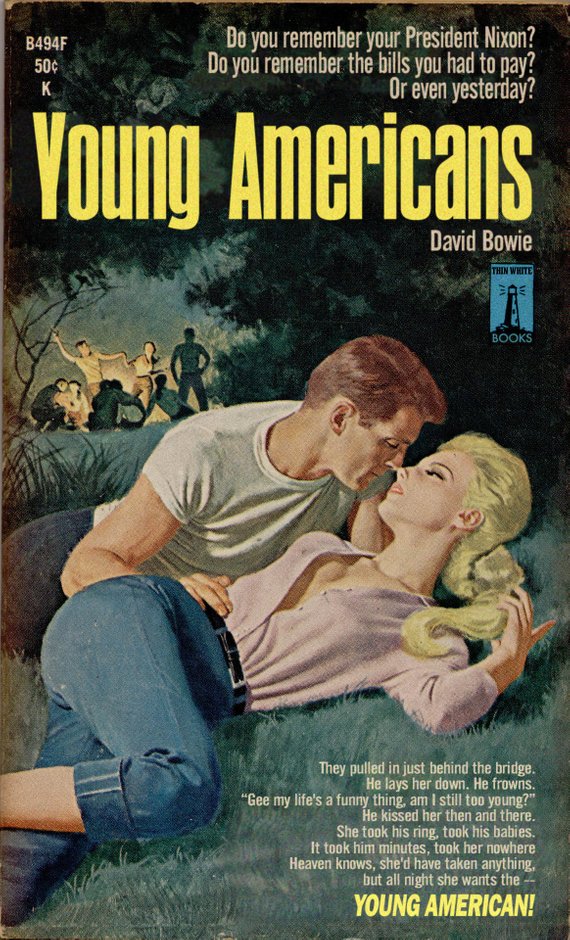
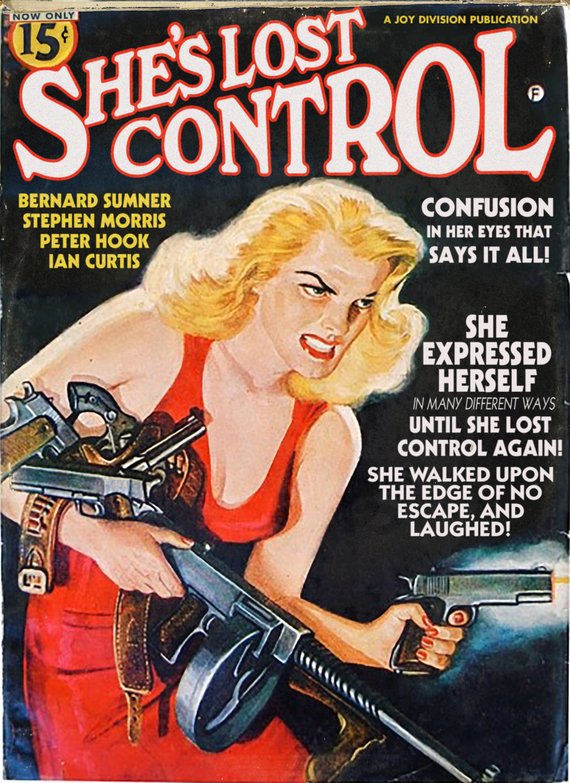
The same cannot be said for Young Americans, the wholly imaginary midcentury pulp novel.
One look at the lurid cover, above, and one can guess the sort of steamy passages contained within. Bowie’s sweaty palmed classmates at Bromley Technical High School could probably have recited them from memory!
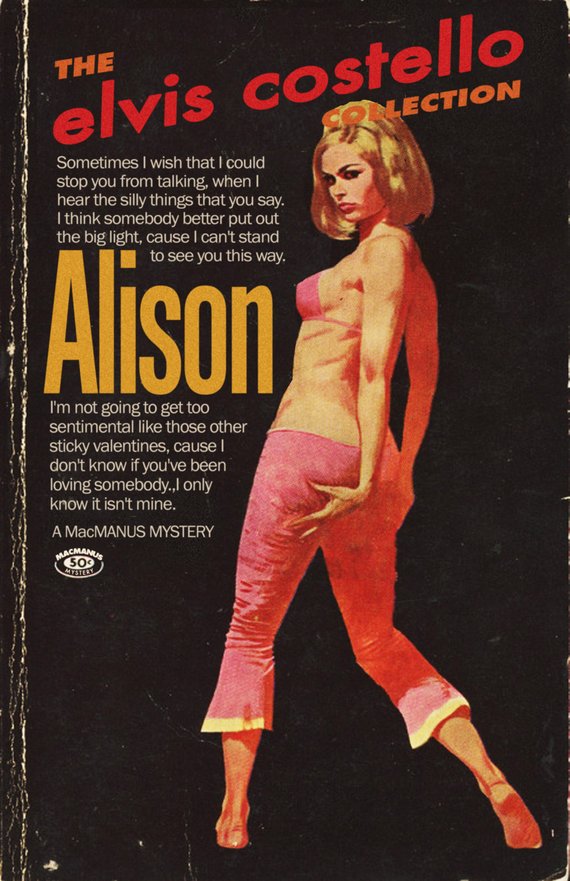
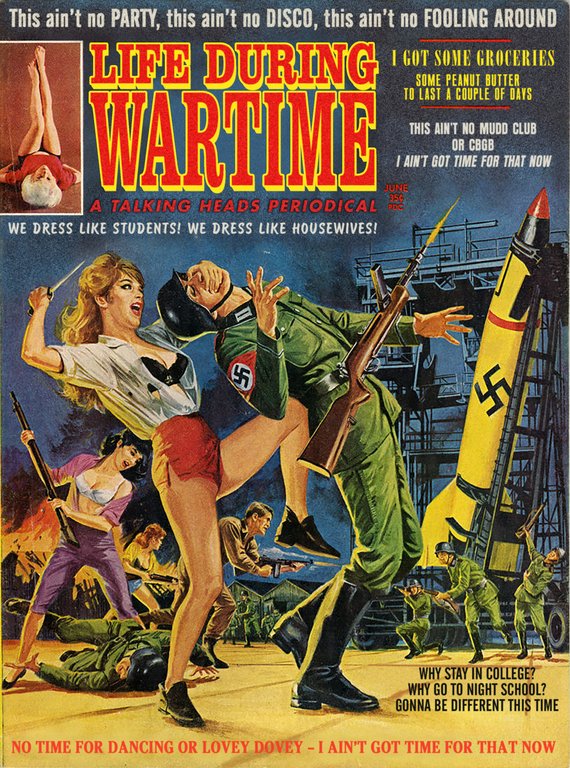
He’s also got quite a knack for extracting lyrics from their original context and rendering them in the period font, magically retooling them as the sort of suggestive quotes that once beckoned from drugstore book racks.
Font has been important to him since the age of 13, when a school art project required him to combine text with an image:
I decided that I wanted the text to look like the text I’d seen in an ad for a John Lennon album, so I copied that font style. I didn’t know that the font style had a name, but I knew that my instincts for how to draw those letters didn’t match how the letters ended up looking. The font, as it turns out, was Franklin Gothic, and, as a 13-year-old, all I remember was that I would start to draw the “S” and then realize that my “S” didn’t look like Franklin Gothic’s “S,” and that the curvy letters, like “G” and “O,” didn’t look right when they sat on the lines I’d made for the other letters, because of course for a font, the curvy letters have to be a little bit bigger than the straight letters, or else they end up looking too small. I became fascinated with that kind of thing, how one font would give off one kind of feeling, and other one would give off a completely different feeling. And it turns out there’s a reason for all of that, that every font carries with it a specific cultural connotation whether the reader is aware of it or not. When I drive down the street in LA, I see billboards and I can’t just look at one and say “Okay, got it,” I get a whole other layer of meaning from them because their design and font choices tell me a whole history of the people who designed them.
While Alcott discovers many of his visuals online, he has a soft spot for the battered originals he finds in second hand shops. Their wear and tear confers the sort of verisimilitude he seeks. The rest is equal parts inspiration, Photoshop, and a growing understanding of a design form he once dismissed as the tawdry fruit of Low Culture:
I’d never understood pulp design until I started this project. As I started looking at it, I realized that the aesthetic of pulp is so deeply attached to its product that it’s impossible to separate the two. And that’s what great design is, a graphic representation of ideas. When I started examining the designs, to see why some work and some don’t, I was overwhelmed with the sheer amount of artistry involved in the covers. Pulp was a huge cultural force, there were dozens of magazines and publishers, cranking out stuff every month for decades, detective stories and police stories and noir stories and mysteries. It employed thousands of artists, writers and painters and illustrators. And the energy of the paintings is just off the charts. It had to be, because any given book cover had to compete with the ten thousand other covers that were on display. It had to grab the viewer fast, and make that person pick up the book instead of some other book. I love all kinds of midcentury stuff, but nothing grabs you the way a good pulp cover does.
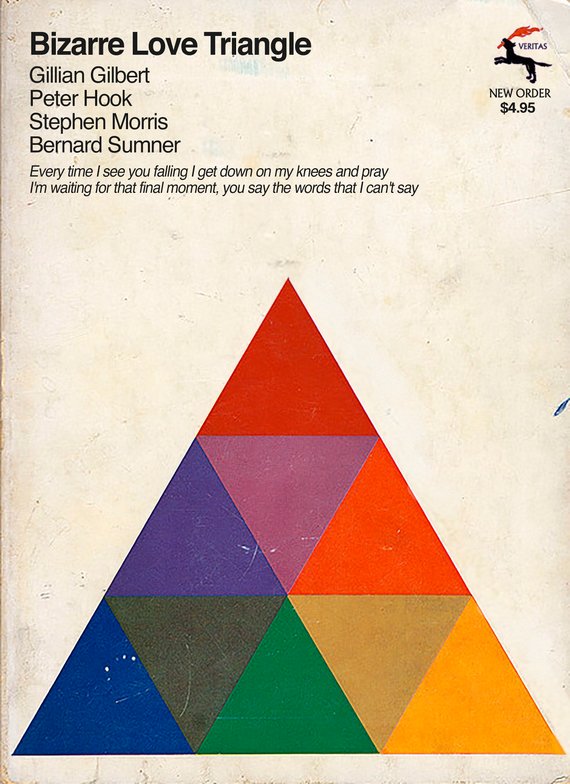
Not all of his mash ups traffic in mid-century drugstore rack nymphomania.
Needless to say, Alcott’s covers are also a tribute to the musicians he lists as authors, particularly those dating to his New Wave era youth—Bowie, Costello, Joy Division, Talking Heads, King Crimson…
I know I could find more popular contemporary artists to make tributes for, but these are the artists I love, I connect to their work on a deep level, and I try to make things that they would see and think “Yeah, this guy gets me.”
My favorite thing is when people think the pieces are real. That’s the highest compliment I can receive. I’ve had band members contact me and say “Where did you find this?” or “I don’t even remember doing this album” or “Where did you find this?” That’s when I know I’ve successfully combined ideas.
A Karlheinz Stockhausen Opel. That’s what Kenneth Goldsmith (poet, critic and founding editor of UbuWeb)spotted in Trieste, Italy several days ago.
No, it’s not an official model. It’s just an Opel Karl lovingly re-branded by its owner, an homage to one of the groundbreaking electronic composers of the 20th century.
From their beginnings as Late Night on NBC in 1982, to their end as the Late Show in 2015, David Letterman’s network talk show years were reliable guides for those who shared his distinctive musical tastes. His impeccable house band was legendary, and he developed an abiding love for the Foo Fighters in later years, who played him out on his last show over an emotional montage.
Other standout musical guests tended toward the more off-kilter. Frank Zappa and outsider singer-songwriter Warren Zevon were clear favorites, their wry humor rivaling Letterman’s own. Zevon may not have sold out stadiums but made a perfect musical foil for the host, even sitting in once for Paul Shaffer.
“When it comes to music,” said Letterman, introducing Zevon, “there’s just a handful of folks that I really love and adore.” Second only to Zevon was another songwriter with an even more vaudevillian sensibility: Tom Waits, who made his debut on Late Night in 1983 and came back every few years until one of Letterman’s final shows on May 14, 2015.
At the top, you can catch Waits’ debut appearance, promoting Swordfishtrombones and doing his very Bukowski-like spoken word bit “Frank’s Wild Years” and “On the Nickel,” from a little-known 1980 skid-row themed film. In-between performances, Waits proves himself an old hand at banter, his sandpaper-on-asphalt voice making him sound twice as old as his tender 34 years at the time.
Waits returned for a second time in 1986. Further up, see his third appearance the following year, promoting the Frank’s Wild Years, the album, a collection of songs written by Waits, his wife Kathleen Brennan, and bassist Greg Cohen for a play of the same name. (He was also coming off the production of Ironweed, in which he starred with Jack Nicholson and Meryl Streep.) Just above, see Waits on the Late Show in 1999 performing “Chocolate Jesus,” a “song for those of you in the audience,” he says, “who have trouble getting up on Sunday mornings and going to church.”
Waits came back again in 2002 and 2004. In 2006, he released his massive, three-disc Orphans: Brawlers, Bawlers & Bastards, which covered all of the musical territory he had explored over his long career, and then some. Just above, see him do “Lie to Me,” a classic jazz-blues stomper and high contrast to his final appearance on Letterman, below.
Waits released his last album, Bad as Mein 2011, and appeared on the show the next year. Though he’s been active since then, with acting roles and a collaboration with Keith Richards in 2013, he hasn’t released any new original music yet save a moving new song, “One Last Look,” performed exclusively on that 2015 appearance after his last interview with Letterman (and an interloping George Clooney).
Despite Letterman’s retirement announcement after the end of his Late Show run, we’ve seen him return to the small screen to do what he does best on his Netflix show My Next Guest Needs No Introduction. Let’s hope we haven’t also heard the last of Tom Waits. Maybe Letterman will have him on again soon to promote yet another brilliant record of the music only Tom Waits can make.
When R&B legend Otis Redding, who wrote and first recorded “Respect,” heard Aretha Franklin’s version of the song, he reportedly said, “well, I guess it’s that girl’s song now.”
Aretha didn’t just cover Redding’s song, she “flipped the script,” notes The Washington Post video above, turning his call for entitlement into a demand for empowerment and creating a feminist and civil rights anthem. She changed the lyrics to suit her, spelled it out in the chorus, and added the “sock it to me” refrain with her sisters Carolyn and Erma—both successful soul singers in their own right—backing her up.
Franklin’s 1967 recording was “a declaration of independence that was unapologetic, uncompromising and unflinching… a demand for something that could no longer be denied…. The country had never heard anything like it.”
After Aretha reshaped it, the song “took on a universality the original never had,” says Franklin’s biographer David Ritz. “It is a credit to her genius she was able to do so much with it. She should have been listed as a co-producer of the song.”
Indeed, she might have been credited as a co-writer of her version, but in a tragic irony, her biggest hit, in which she proclaimed financial independence and personal power, netted her exactly zero in royalties.
“For the roughly seven million times the song has been played on American radio stations,” notes Ben Sisario at The New York Times, “she was paid nothing” due to “an aspect of copyright law that has long irked the record business,” in which radio stations pay the writers and publishers of songs and not the performers. This inequity has made Aretha’s “Respect” an anthem for musicians fighting for their rights as well.
But first and foremost, Franklin’s “’Respect’… caught on with the black power movement and feminists and human rights activists across the world,” notes the Post’s DeNeen Brown. “The country was a tinder box, as people of color demanded equality and justice that had been too long in coming.” Despite landmark civil rights cases in the Supreme Court and passage of the 1964 Civil Rights Act, resistance to change in both the North and South was sustained and often brutally violent.
For all its deep resonance in the black community, “Respect” spoke to everyone, characterizing defiance to a social order that seemed intent on preserving oppressive hierarchies and historic injustices; “the song immediately crossed over, obliterating color lines.” Released in April of 1967, it hit Number One on the charts and “stayed there for at least 12 weeks.” It may not have made Franklin the money she deserved—though it made a mint for Otis Redding—but her recording propelled her from stardom to international superstardom. Hear her version further up and Redding’s original recording just above.
There are many films of the 70s and 80s that could never get made today. This is not your grumpy uncle’s rant about political correctness gone wild. In many cases, it’s very much for the best. (And did we ever need “movies” like Porky’s or Hardbodies in the first place? I’m going to say no.) Styles and social mores change. Actors and directors who alone could have pulled off what they did, when they did, pass away. And so too do musicians whose equal we will never see again. When these inimitable forces come together, it’s once-in-a-lifetime celluloid magic. Remakes and ill-advised sequels seem like sacrilege.
I am speaking on this occasion of The Blues Brothers, the 1980 musical comedy that brought together a pantheon of legends now mostly departed for that hall of fame in the sky. John Belushi, of course, but also John Candy and Carrie Fisher. James Brown, Cab Calloway, Ray Charles, John Lee Hooker… and Aretha Franklin, whom the whole world now mourns. Charges of cultural appropriation might get lobbed at The Blues Brothers, but they would be misplaced. For all its absurdist slapstick, the film was nothing if not a celebration of black American music, a reverent, loving tribute to the blues, R&B, and classic soul that went directly to the source, and in so doing, reinvigorated Aretha’s flagging career.
The music scene of the late seventies had “turned away from soul and toward disco,” writes Laura Bradley at Vanity Fair. “Franklin was struggling to make the transition, especially after Atlantic allowed her contract to expire.” Her attempt to keep up in the 1979 disco album La Divahad flopped. She was the Queen of Soul, not sweaty dancefloors, and so she would remain, thanks in part to the antics of Jake and Elwood and writer/director John Landis, who cast her as Mrs. Murphy, a diner waitress who gets to call the brothers “two honkys dressed like Hasidic diamond merchants” who “look like they’re from the CIA.”
The story of her casting is bittersweet. “You have to remember that in 1979,” says Landis, “rhythm and blues was basically over, and the number one music in the world was Abba, the Bee Gees… when people ask, how did you get the likes of Aretha Franklin and James Brown, it was easy. We just called them and said, ‘Wanna job?’” Studio executives balked, wanting hipper acts like Rose Royce, who had sung the theme from Car Wash. It would have been a tragedy.
Thankfully, Landis persisted—he had written the part for her. “Everyone in the movie,” he says in a recent interview, “the parts were written specifically for them.” (Except James Brown, who took over as the preacher when Little Richard “found Jesus, again,” and went to back to his church in Tennessee.) Landis also insisted on Aretha singing “Think,” a song from her 1968 album Aretha Now, instead of her biggest hit. (“Really?” he recalls her saying, “Don’t you want me to sing ‘Respect’?”) The song came directly out of the dialogue between her and blues guitarist Matt Murphy, playing her husband.
Landis remembers Aretha’s re-recording of the extended film version of the song:
So, we laid down the tracks for “Think.” She came in, a couple days before she was to be shot. She listened to the track once and said, “OK, but I would like to replace the piano.” We said, great, what do you want to do? She said, “I’ll play.”
So we got a piano, she sat in a recording studio, and it was Universal Studios’ recording studios in Chicago, a very old, funky studio we were delighted to be in because it was where Chess Records did all their recordings. We had a piano for her. She sat with her back to us, at the keys, and the piano and her voice was mic’d. She did it once, listened to the playback. She said, “I’d like to do it again.” She played piano as she sang, and the second take is the one in the movie. She was just wonderful. She didn’t like doing so many takes and she had issues with lip-syncing.
Franklin also thought of the experience fondly, writing in her autobiographythat it was “something I enjoyed making tremendously.” She did finally get the chance to sing “Respect” in a Blues Brothers film, almost twenty years later, when she reprised her role in Blues Brothers 2000. It’s arguable whether that movie ever should have been made. But there’s never any arguing with Aretha Franklin’s commanding voice. See her tell off Murphy and Elwood Blues, again, in a clip from the belated sequel below. Queen Aretha may have left us, but her legacy will live forever.
We're hoping to rely on loyal readers, rather than erratic ads. Please click the Donate button and support Open Culture. You can use Paypal, Venmo, Patreon, even Crypto! We thank you!
Open Culture scours the web for the best educational media. We find the free courses and audio books you need, the language lessons & educational videos you want, and plenty of enlightenment in between.