Tim Curry (RIP) Breaks Down His Most Iconic Roles: Rocky Horror, Clue, Muppet Treasure Island & More

Upon hear­ing of Tim Cur­ry’s death last week, some of us could recall hav­ing seen him on stage: in Amadeus or Spa­malot on Broad­way, per­haps, though he also drew acclaim in the work of Stop­pard, Brecht, and Shake­speare. For many more of us — per­haps all of us — it was his most mem­o­rable film and tele­vi­sion per­for­mances that sprang to mind. To an extent, which ones are most mem­o­rable depends on the view­er. Some will for­ev­er remem­ber Cur­ry as DJ John­ny LaGuardia in Times Square, the deceit­ful Roman­ian phil­an­thropist in Con­go, the arch-neme­sis King Chick­en on Duck­man, or even as the Bard him­self in the series Will Shake­speare.

More will remem­ber him as Dr. Frank-N-Furter, the cross-dress­ing mad sci­en­tist from the plan­et Trans­sex­u­al at the cen­ter of the stage musi­cal The Rocky Hor­ror Show as well as its film adap­ta­tion The Rocky Hor­ror Pic­ture Show. The lat­ter end­ed up becom­ing the much larg­er-scale cul­tur­al phe­nom­e­non, still screened at mid­night to this day, more than half a cen­tu­ry after its the­atri­cal release.

In that time, the audi­ence-par­tic­i­pa­tion rit­u­als have grown elab­o­rate enough to over­shad­ow the con­tent. Still, if you real­ly try to focus on the action onscreen, you’ll notice the remark­able extent to which — even now that all the tropes of sci­ence-fic­tion B movies, nine­teen-fifties teen cul­ture, and delib­er­ate glam-rock excess have become bare­ly rec­og­niz­able — Cur­ry’s per­for­mance remains vital.

Just six months ago, the Acad­e­my of Motion Pic­ture Arts and Sci­ences put up a video in which Cur­ry looks back at his defin­ing roles. The list begins, nat­u­ral­ly, with Rocky Hor­ror, but also includes his turns as the Lord of Dark­ness in Leg­end (which he was offered after Rid­ley Scott saw him as Dr. Frank-N-Furter), Pen­ny­wise in Stephen King’s It (now regard­ed as the ne plus ultra of evil clown char­ac­ters), and Long John Sil­ver in Mup­pet Trea­sure Island (his per­son­al favorite of his movies). We’re also told of parts he did­n’t get, like Ian Mal­colm in Juras­sic Park, for which he was con­sid­ered, or — more tan­ta­liz­ing­ly — Han­ni­bal Lecter in The Silence of the Lambs, whom he “des­per­ate­ly want­ed to play.” He also offhand­ed­ly men­tions that, in addi­tion to Clue’s three exist­ing end­ings, he also shot a fourth in which his but­ler is revealed to have com­mit­ted all the mur­ders. “Of course, that was my favorite,” he says. Alas, “they nev­er released that end­ing, because they thought it was too obvi­ous.”

via Laugh­ing Squid

Relat­ed con­tent:

How Rocky Hor­ror Became a Cult Phe­nom­e­non

Rare Inter­view: Tim Cur­ry Dis­cuss­es The Rocky Hor­ror Pic­ture Show, Dur­ing the Week of Its Release (1975)

1978 News Report on the Rocky Hor­ror Craze Cap­tures a Teenage Michael Stipe in Drag

The Rocky Hor­ror Pic­ture Show Is Now a Retro Video Game

Ray Liot­ta (RIP) Talks About His Most Mem­o­rable Per­for­mances: Some­thing Wild, Good­fel­las, Field of Dreams, and More

“I Saw the Future”: Rut­ger Hauer (RIP) Remem­bers His Most Mem­o­rable Role in Blade Run­ner

Based in Seoul, Col­in Marshall writes and broad­casts on cities, lan­guage, and cul­ture. He’s the author of the newslet­ter Books on Cities as well as the books 한국 요약 금지 (No Sum­ma­riz­ing Korea) and Kore­an Newtro. Fol­low him on the social net­work for­mer­ly known as Twit­ter at @colinmarshall.

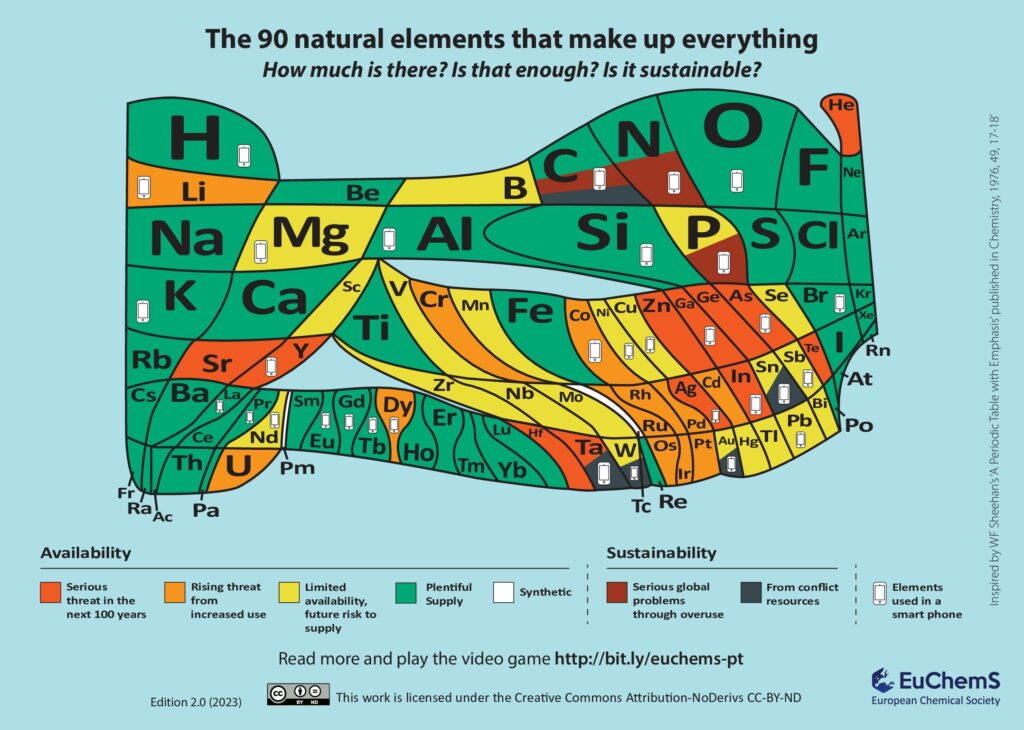
The Periodic Table of Endangered Elements: Visualizing the Chemical Elements That Could Vanish Before You Know It

The Peri­od­ic Table of Ele­ments lists the 118 chem­i­cal ele­ments that make up every­thing in our world. Some you’re famil­iar with—Hydrogen, Oxy­gen, Nitro­gen, etc. Oth­ers maybe less so—Vanadium, Ger­ma­ni­um, and Yttri­um.

Accord­ing to the Amer­i­can Chem­i­cal Soci­ety, 44 of those 118 ele­ments might dis­ap­pear by cen­tu­ry’s end. Enter the Peri­od­ic Table of Endan­gered Ele­ments (shown above). The most endan­gered ones, high­light­ed in red, are Zinc, Gal­li­um, Ger­ma­ni­um, Arsenic (is this a good or very bad thing?), Sil­ver, Indi­um, Tel­luri­um, and Hafni­um. Made avail­able under a Cre­ative Com­mons license, the Peri­od­ic Table of Endan­gered Ele­ments can be viewed in a larg­er for­mat here.

The orig­i­nal image (top of the page), cre­at­ed in 2015, was updat­ed by EuChemS in 2023 (above). The updat­ed table fea­tures the cur­rent-day avail­abil­i­ty of all 90 ele­ments, rather than just the endan­gered 44 ele­ments, adds an axis for sus­tain­abil­i­ty, and flags ele­ments used in smart­phone pro­duc­tion.

If you would like to sup­port the mis­sion of Open Cul­ture, con­sid­er mak­ing a dona­tion to our site. It’s hard to rely 100% on ads, and your con­tri­bu­tions will help us con­tin­ue pro­vid­ing the best free cul­tur­al and edu­ca­tion­al mate­ri­als to learn­ers every­where. You can con­tribute through Pay­Pal, Patre­on, and Ven­mo (@openculture). Thanks!

Relat­ed Con­tent:

Inter­ac­tive Peri­od­ic Table of Ele­ments Shows How the Ele­ments Actu­al­ly Get Used in Mak­ing Every­day Things

The Peri­od­ic Table of Ele­ments Scaled to Show The Ele­ments’ Actu­al Abun­dance on Earth

Peri­od­ic Table Bat­tle­ship!: A Fun Way To Learn the Ele­ments

“The Peri­od­ic Table Table” — All The Ele­ments in Hand-Carved Wood

World’s Small­est Peri­od­ic Table on a Human Hair

“The Peri­od­ic Table of Sto­ry­telling” Reveals the Ele­ments of Telling a Good Sto­ry

Chem­istry on YouTube: “Peri­od­ic Table of Videos” Wins SPORE Prize

Free Online Chem­istry Cours­es

by | Permalink | Make a Comment ( 14 ) |

Why AI Companies Are Buying—And Then Destroying—Old Books

We’ve long joked about delay­ing bed­time in order to read the entire inter­net, but the prospect of actu­al­ly doing so does­n’t sound as appeal­ing as it used to. An ever-grow­ing pro­por­tion of text online, we may sense, has­n’t been writ­ten by humans, but gen­er­at­ed by arti­fi­cial intel­li­gence. One solu­tion is to return to read­ing on paper, and beyond that, spend­ing our time only with books pub­lished before the advent — and thus uncor­rupt­ed by the out­put — of large lan­guage mod­els. Iron­i­cal­ly, that’s what large lan­guage mod­els them­selves have had to do, and in order to ensure them a steady diet of man­made text, their own­ers are resort­ing to con­tro­ver­sial­ly destruc­tive meth­ods.

Sus­pi­cions first arose when book deal­ers noticed a spike in their income due to large orders from mys­te­ri­ous buy­ers for titles they assumed they’d nev­er unload. Books on home oxy­gen treat­ment in Italy, mar­riage lit­i­ga­tion in medieval Eng­land, Texas civ­il pro­ce­dure in the twen­ty-tens, Swedish com­e­dy in the six­ties: these enti­ties bought them all, and for what­ev­er price the sell­er hap­pened to be ask­ing.

404 Media reporter Emanuel Maiberg tracked the path of one such book, which even­tu­al­ly wound up at a Las Vegas scan­ning facil­i­ty run by Ama­zon. Though under­gird­ed by advanced tech­nol­o­gy, the work done there is sim­ple: dig­i­tize as many books as pos­si­ble, then destroy them.

“In order to scan them real­ly fast, they cut the spines off the books and fed the pages to the scan­ner,” Maiberg explained to NPR. Many are tech­ni­cal­ly rare, albeit eso­teric obscu­ri­ties like van­i­ty pub­li­ca­tions and old instruc­tion man­u­als rather than first-edi­tion clas­sics. Humans may not val­ue them, but LLMs do: their con­sump­tion fore­stalls “a prob­lem called mod­el col­lapse, where if an AI trains on AI train­ing data, it gets worse.” Ama­zon and Anthrop­ic have both been found to use the book-sac­ri­fic­ing method to har­vest text, but every com­pa­ny with mod­els to train needs a solu­tion. All this makes for “an unusu­al­ly on-the-nose exam­ple of dig­i­tal tech­nol­o­gy devour­ing lit­er­ary cul­ture,” as the Wall Street Jour­nal’s Melis­sa Korn puts it. But when you real­ly have read the entire inter­net, per­haps extreme mea­sures are inevitable.

Relat­ed Con­tent:

How the Inter­net Archive Dig­i­tizes 3,500 Books a Day–the Hard Way, One Page at a Time

Libraries & Archivists Are Dig­i­tiz­ing 480,000 Books Pub­lished in 20th Cen­tu­ry That Are Secret­ly in the Pub­lic Domain

How Will AI Change the World?: A Cap­ti­vat­ing Ani­ma­tion Explores the Promise & Per­ils of Arti­fi­cial Intel­li­gence

How to Read Many More Books in a Year: Watch a Short Doc­u­men­tary Fea­tur­ing Some of the World’s Most Beau­ti­ful Book­stores

How 99% of Ancient Lit­er­a­ture Was Lost

Based in Seoul, Col­in Marshall writes and broad­casts on cities, lan­guage, and cul­ture. He’s the author of the newslet­ter Books on Cities as well as the books 한국 요약 금지 (No Sum­ma­riz­ing Korea) and Kore­an Newtro. Fol­low him on the social net­work for­mer­ly known as Twit­ter at @colinmarshall.

The Art of Splendor Solis, the Most Glorious Illuminated Alchemical Manuscript of Them All

When it was pub­lished in the Unit­ed States in 1998, Har­ry Pot­ter and the Philoso­pher’s Stone was reti­tled Har­ry Pot­ter and the Sor­cer­er’s Stone. The jokes about the Amer­i­can read­ing pub­lic’s appar­ent aller­gy to the very word philoso­pher write them­selves, but the change was also unfor­tu­nate for more sub­stan­tial rea­sons. A “sor­cer­er’s stone” had no cul­tur­al res­o­nance at all, where­as the philoso­pher’s stone had been sought after since, at the very lat­est, the dawn of the fourth cen­tu­ry. Some sources claim that human knowl­edge of it goes all the way back to Adam, who got the word direct­ly from God. In any case, it’s no mys­tery why the philoso­pher’s stone has long cap­tured the col­lec­tive imag­i­na­tion of human­i­ty, giv­en that it’s reput­ed to turn lead into gold.

Among the rumored pos­ses­sors of the philoso­pher’s stone through­out his­to­ry is Salomon Tris­mosin, a six­teenth-cen­tu­ry Renais­sance alchemist who taught the influ­en­tial physi­cian Paracel­sus. He’s also cred­it­ed, at least in leg­ends, with writ­ing Splen­dor Solis, a book once no less desir­able than the next Har­ry Pot­ter vol­ume in that series’ hey­day.

Noth­ing so mun­dane as “a list of instruc­tions for whip­ping up a lit­tle alchem­i­cal soup in the hope of find­ing a nugget of arti­fi­cial gold in the pot at the end,” writes Jörg Völl­nagel at Medievalists.net, it rather “sets forth the phi­los­o­phy of alche­my, a world view accord­ing to which the human being (the alchemist) exists and acts in har­mo­ny with nature, respect­ing divine cre­ation and at the same time inter­ven­ing in the process­es under­ly­ing that cre­ation, all the while sup­port­ing its growth with the help of alche­my.”

As “a — or rather the – prime exam­ple of an illu­mi­nat­ed alchem­i­cal man­u­script,” Splen­dor Solis has drawn the fas­ci­na­tion of even such mod­ern fig­ures as William But­ler Yeats, James Joyce, and Umber­to Eco. It also became an impor­tant work in the sym­bol­ic-cul­tur­al uni­verse of Carl Jung, who, accord­ing to the Asso­ci­a­tion of Jun­gian Ana­lysts, “rec­og­nized the alchem­i­cal motifs and sym­bols as expres­sions of the indi­vid­u­a­tion process, the trans­for­ma­tion and inte­gra­tion of the psy­che. Splen­dor Solis, with its rich sym­bol­ism and pro­found alle­gories, res­onat­ed with Jung’s under­stand­ing of the arche­typ­al imagery and the trans­for­ma­tive nature of the human psy­che, con­tribut­ing to his the­o­ries on ana­lyt­i­cal psy­chol­o­gy.”

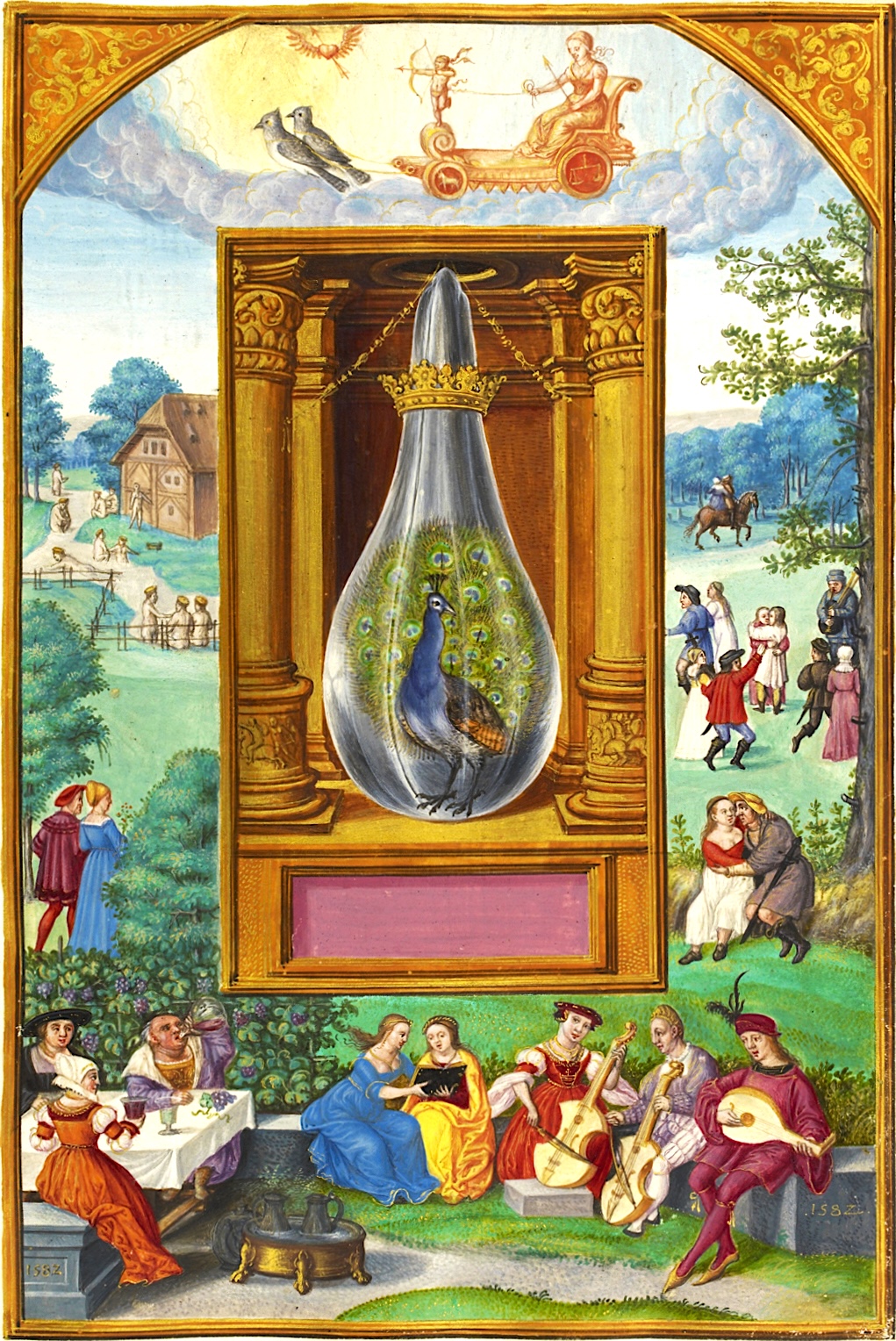
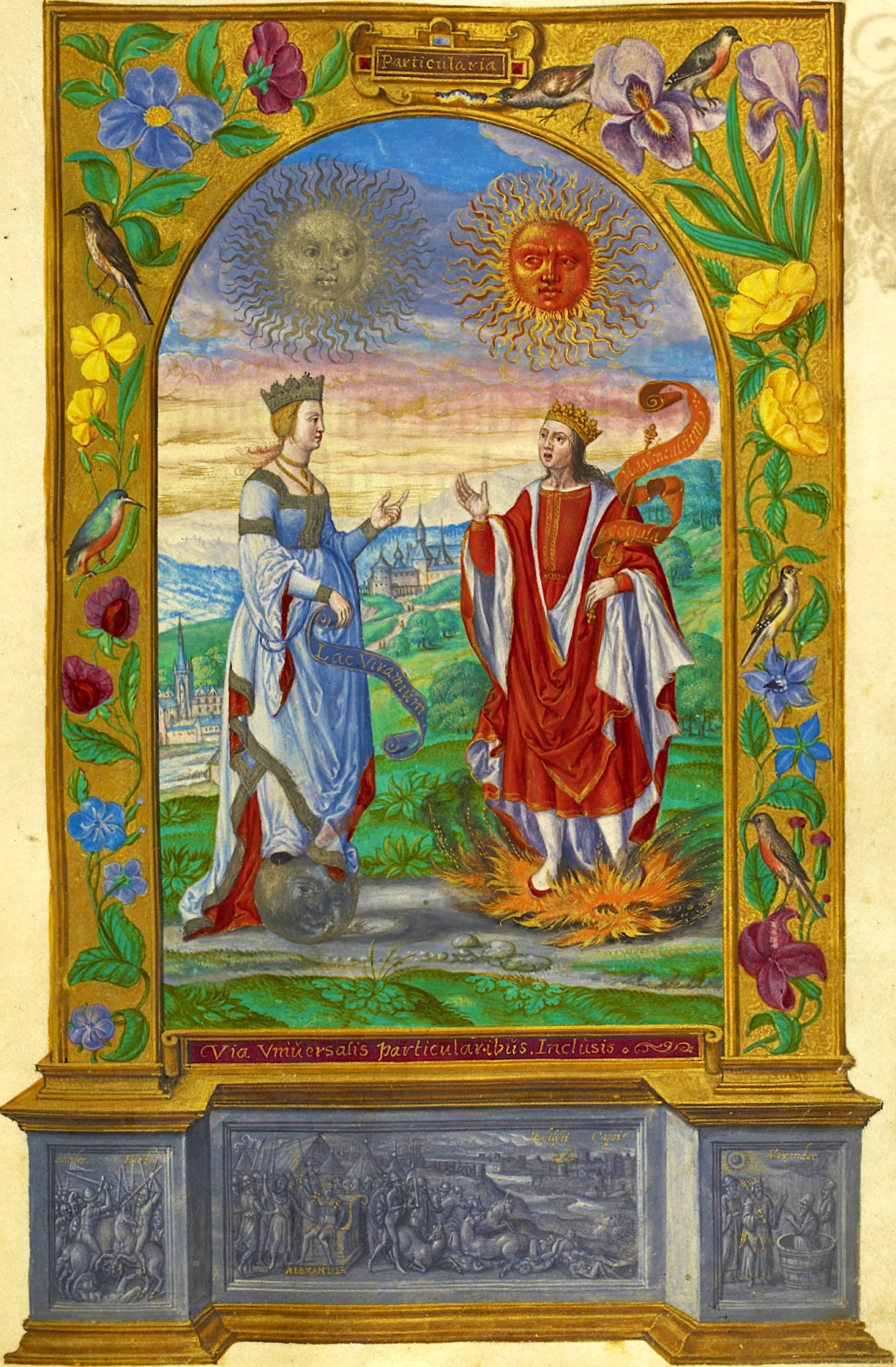
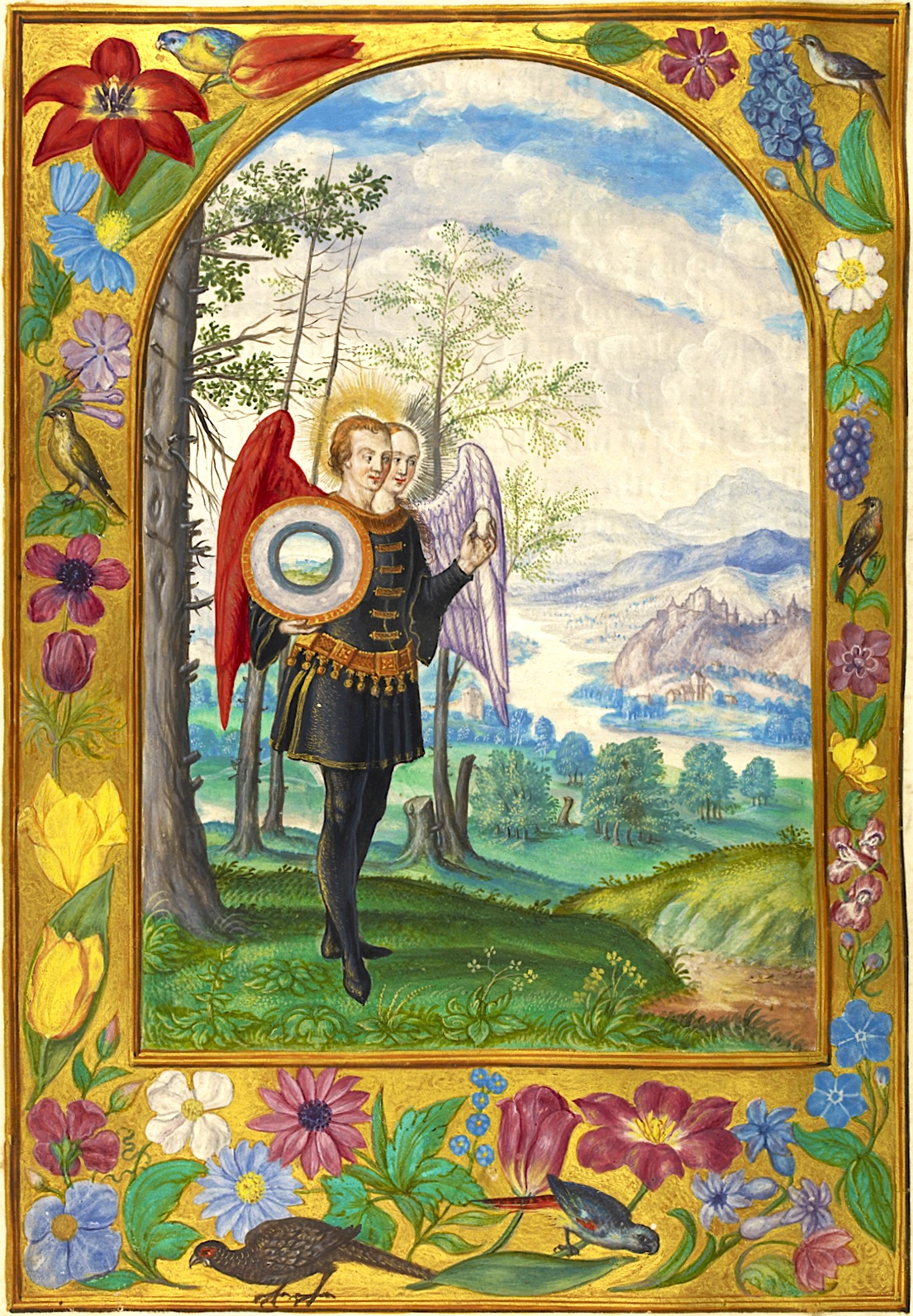
None of this is to say that Jung, or many oth­er esteemed intel­lec­tu­als of the past cou­ple of cen­turies, believed that base met­als real­ly could be trans­mut­ed to gold and sil­ver. But they did under­stand that the phe­nom­e­non of alche­my has much to reveal about the irre­solv­able exis­ten­tial nego­ti­a­tion between man and the world he inhab­its. It res­onates so deeply that it’s even worked in chil­dren’s lit­er­a­ture, and to great com­mer­cial suc­cess at that. You can even feel some of it just by gaz­ing upon Splen­dor Solis’ 22 gold-high­light­ed, book-of-hours-style illus­tra­tions at the web site of M. Moleiro, pub­lish­er of one fac­sim­i­le edi­tion. And who knows? If, as in the world of Har­ry Pot­ter, the philoso­pher’s stone also grants immor­tal­i­ty, per­haps Salomon Tris­mosin still walks some­where among us.

You can view pages of Splen­dor Solis on Wikipedia. Enter the image gallery here.

Relat­ed Con­tent:

A Gallery of Fan­tas­ti­cal Alchem­i­cal Draw­ings

Isaac Newton’s Recipe for the Myth­i­cal ‘Philosopher’s Stone’ Is Being Dig­i­tized & Put Online (Along with His Oth­er Alche­my Man­u­scripts)

How the Bril­liant Col­ors of Medieval Illu­mi­nat­ed Man­u­scripts Were Made with Alche­my

Videos Recre­ate Isaac Newton’s Neat Alche­my Exper­i­ments: Watch Sil­ver Get Turned Into Gold

Hun­dreds of Medieval Med­ical Man­u­scripts with Strange Cures Get Dig­i­tized & Put Online: From Leech­es to Crushed Weasel Tes­ti­cles

The Vision­ary Mys­ti­cal Art of Carl Jung: See Illus­trat­ed Pages from the Red Book

Based in Seoul, Col­in Marshall writes and broad­casts on cities, lan­guage, and cul­ture. He’s the author of the newslet­ter Books on Cities as well as the books 한국 요약 금지 (No Sum­ma­riz­ing Korea) and Kore­an Newtro. Fol­low him on the social net­work for­mer­ly known as Twit­ter at @colinmarshall.

Isaac Asimov Explains His Three Laws of Robots: Do No Harm, Follow Orders, Survive, in That Order

A num­ber of futur­ists, philoso­phers, and technophiles believe we are approach­ing what they call the “sin­gu­lar­i­ty”: a point in time when smart machines become much smarter, stronger, and faster than their cre­ators, and then become self-con­scious. What­ev­er the chance of this occur­ring, it’s worth­while to pon­der the con­se­quences. But we do already, all the time—in exis­ten­tial­ly bleak sce­nar­ios like Blade Run­ner, the Ter­mi­na­tor series, the reboot­ed Bat­tlestar Galac­ti­ca (and its failed pre­quel Capri­ca).

The prospects are nev­er pleas­ant. Robot­ic engi­neers in these worlds hard­ly seem to both­er teach­ing their machines the kind of moral code that would keep them from turn­ing and destroy­ing us (that is, when they aren’t explic­it­ly designed to do so).

I won­der about this con­cep­tu­al gap—convenient as it may be in nar­ra­tive terms—given that Isaac Asi­mov, one of the fore­fa­thers of robot fic­tion invent­ed just such a moral code. In the video above, he out­lines it (with his odd pro­nun­ci­a­tion of “robot”). The code con­sists of three laws; in his fic­tion these are hard­wired into each robot’s “positron­ic brain,” a fic­tion­al com­put­er that gives robots some­thing of a human-like con­scious­ness.

First Law: A robot may not injure a human being, or, through inac­tion, allow a human being to come to harm.

Sec­ond Law: A robot must obey the orders giv­en it by human beings except where such orders would con­flict with the First Law.

Third Law: A robot must pro­tect its own exis­tence as long as such pro­tec­tion does not con­flict with the First or Sec­ond Law.

Isaac Asi­mov devot­ed a good deal of his writ­ing career to the sub­ject of robots, so it’s safe to say, he’d done quite a bit of think­ing about how they would fit into the worlds he invent­ed. In doing so, Asi­mov had to solve the prob­lem of how robots would inter­act with humans once they had some degree of free will. But are his three laws suf­fi­cient? Many of Asimov’s sto­ries—I, Robot, for example—turn on some fail­ure or con­fu­sion between them. And even for their chase scenes, explo­sions, and melo­dra­ma, the three screen explo­rations of arti­fi­cial life men­tioned above thought­ful­ly exploit philo­soph­i­cal ambi­gu­i­ties and insuf­fi­cien­cies in Asimov’s sim­ple sys­tem.

For one thing, while Asimov’s robots were hunks of met­al, tak­ing only vague­ly humanoid form, the robots of our cur­rent imag­in­ings emerge from an uncan­ny val­ley with real­is­tic skin and hair or even a genet­ic code and cir­cu­la­to­ry sys­tem. They are pos­si­ble sex­u­al part­ners, friends and lovers, co-work­ers and supe­ri­ors. They can deceive us as to their nature (a fourth law by Bul­gar­i­an nov­el­ist Lyuben Dilov states that a robot “must estab­lish its iden­ti­ty as a robot in all cas­es”); they can con­ceive chil­dren or desires their cre­ators nev­er intend­ed. These dif­fer­ences beg impor­tant ques­tions: how eth­i­cal are these laws? How fea­si­ble? When the sin­gu­lar­i­ty occurs, will Skynet become aware of itself and destroy us?

Unlike Asi­mov, we now live in a time where the ques­tions have direct applic­a­bil­i­ty to robots liv­ing among us, out­side the pages of sci-fi. As Japan­ese and South Kore­an roboti­cists have found, the three laws can­not address what they call “open tex­ture risk”— unpre­dictable inter­ac­tions in unstruc­tured envi­ron­ments. Humans rely on nuanced and often pre­con­scious read­ings of com­plex social codes and the fine shades of mean­ing embed­ded in nat­ur­al lan­guage; despite many advances, machines are still catch­ing up. Whether or not they can suc­cess­ful­ly devel­op it is an open ques­tion, mak­ing humanoid robots with arti­fi­cial intel­li­gence an “open tex­ture risk.” But as you can see from the video below, we’re per­haps much clos­er to Blade Run­ner or, of course, arti­fi­cial intel­li­gence than to the clunky, inter­stel­lar min­ing machines in Asi­mov’s fic­tion.

Josh Jones is a writer and musi­cian based in Durham, NC.

Note: An ear­li­er ver­sion of this post appeared on our site in 2012.

Relat­ed Con­tent

Isaac Asi­mov Laments the Cult of Igno­rance

200-Year-Old Robots That Play Music, Shoot Arrows & Even Write Poems: Watch Automa­tons in Action

Isaac Asi­mov Reviews George Orwell’s Nine­teen Eighty-Four and Calls It “Not Sci­ence Fic­tion, But a Dis­tort­ed Nos­tal­gia for a Past that Nev­er Was”

by | Permalink | Make a Comment ( 1 ) |

Why Reading Egyptian Hieroglyphics Is Easier Than You Think

We’ve fea­tured Egyp­tol­o­gist Ilona Regul­s­ki here on Open Cul­ture a few times before. Once, she explained how to read ancient Egypt­ian hiero­glyphs; anoth­er time, she told us what the Roset­ta Stone actu­al­ly says. It was, per­haps, inevitable that she would cross paths with Rob Watts, cre­ator of the YouTube chan­nel Rob­Words, whose videos we often post. When he made the jour­ney to Berlin’s Neues Muse­um, and specif­i­cal­ly to its Egypt­ian Muse­um, Regul­s­ki was the expert he sought out to tell him — and us — all about how hiero­glyphs, lit­er­al­ly “sacred carv­ings,” actu­al­ly make words.

Faced with a stone chis­eled full of hiero­glyphs, where do we start? Ancient Egypt­ian texts are all read from top to bot­tom, but some go left to right, and oth­ers right to left. To know which way, Regul­s­ki says, we must first look for sym­bols with a clear front and back, such as those in human or ani­mal shapes.

Some names are writ­ten in blocks, them­selves read from top to bot­tom — unless they con­tain a sign refer­ring to a god, which, of course, gets cus­tom­ar­i­ly ele­vat­ed to the top. But even if we under­stand the exact order in which we should read a giv­en string of hiero­glyphs, the ques­tion remains: how do we actu­al­ly do that read­ing?

Though many hiero­glyphs do appear to be fig­u­ra­tive, with their rec­og­niz­able forms of birds, bugs, arms, legs, and such, only some­times are they meant to rep­re­sent what they look like. Regul­s­ki explains that some of these signs are let­ters, and can be pro­nounced in much the same way as our own alpha­bet. What looks like a mouth sounds like an r; a high­ly abstract­ed bread loaf, t; a horned viper, ph; an owl, m. There is, of course, more to it. Signs can be com­bined not just to indi­cate sound, but also to dis­am­biguate mean­ing. As you may have noticed, hiero­glyph­ic writ­ing is also what Watts calls a “vow­el-free zone.” Exact­ly which of those sounds go where is, like cer­tain oth­er unre­solved aspects of hiero­glyphs, a mat­ter of ongo­ing expert inquiry. But Egyp­tol­o­gists, as see­ing Regul­s­ki in action reminds us, are a ded­i­cat­ed bunch.

Relat­ed con­tent:

How to Read Ancient Egypt­ian Hiero­glyphs: A British Muse­um Cura­tor Explains

How to Carve Hiero­glyphs Just Like the Ancient Egyp­tians Did

You Could Soon Be Able to Text with 2,000 Ancient Egypt­ian Hiero­glyphs

An Ani­mat­ed Intro­duc­tion to the Roset­ta Stone, and How It Unlocked Our Under­stand­ing of Egypt­ian Hiero­glyphs

What the Roset­ta Stone Actu­al­ly Says

What Ancient Egypt­ian Sound­ed Like & How We Know It

Based in Seoul, Col­in Marshall writes and broad­casts on cities, lan­guage, and cul­ture. He’s the author of the newslet­ter Books on Cities as well as the books 한국 요약 금지 (No Sum­ma­riz­ing Korea) and Kore­an Newtro. Fol­low him on the social net­work for­mer­ly known as Twit­ter at @colinmarshall.

Dolly Parton’s “Jolene” Slowed Down to 33 RPM Sounds Great and Takes on New, Unexpected Meanings (RIP)

Note: We were sad to see the news that Dol­ly Par­ton passed away. Today we are bring­ing back one of our favorite Dol­ly Par­ton posts. She will be missed.

The Wal­rus is… Dol­ly Par­ton?

Not every record yields gold when played back­wards or spun more slow­ly than rec­om­mend­ed, but a 45 of Parton’s 1973 hit “Jolene” played at 33 RPM not only sounds won­der­ful, it also man­ages to reframe the nar­ra­tive.

As Andrea Den­Hoed notes in The New York­er, “Slow Ass Jolene,” above, trans­forms Parton’s “baby-high sopra­no” into some­thing deep, soul­ful and seem­ing­ly, male.

In its orig­i­nal ver­sion, the much-cov­ered “Jolene” is a straight up woman-to-woman chest-bar­ing. Our nar­ra­tor knows her man is obsessed with the sexy, auburn-haired Jolene, to the point where he talks about her in his sleep.

Appar­ent­ly she also knows bet­ter than to raise the sub­ject with him. Instead, she appeals to Jolene’s sense of mer­cy:

You could have your choice of men

But I could nev­er love again

He’s the only one for me, Jolene

The song is some­what auto­bi­o­graph­i­cal, though the sit­u­a­tion was nowhere near as dire as lis­ten­ers might assume. In an inter­view with NPR, Par­ton recalled a red-haired bank teller who devel­oped a big crush on her hus­band when she was a young bride:

And he just loved going to the bank because she paid him so much atten­tion. It was kin­da like a run­ning joke between us — when I was say­ing, ‘Hell, you’re spend­ing a lot of time at the bank. I don’t believe we’ve got that kind of mon­ey.’ So it’s real­ly an inno­cent song all around, but sounds like a dread­ful one. 

For the record, the teller’s name wasn’t Jolene.

Jolene was a pret­ty lit­tle girl who attend­ed an ear­ly Par­ton con­cert. Par­ton was so tak­en with the child, and her unusu­al name, that she resolved to write a song about her.

Yes, the kid had red hair and green eyes.

Wouldn’t it be wild if she grew up to be a bank teller?

I digress…

In the orig­i­nal ver­sion, the irre­sistible cho­rus where­in the soon-to-be-spurned par­ty invokes Jolene’s name again and again is plain­tive and fierce.

In the slow ass ver­sion, it’s plain­tive and sad.

The pain is the same, but the sit­u­a­tion is much less straight­for­ward, thanks to blur­ri­er gen­der lines.

Par­ton told NPR that women are “always threat­ened by oth­er women, peri­od.”

Jolene’s prodi­gious fem­i­nine assets could also prove wor­ri­some to a gay man whose bisex­u­al lover’s eye is prone to wan­der.

Or maybe the singer and his man live in a place where same-sex unions are frowned on. Per­haps the singer’s man craves the com­fort of a more social­ly accept­able domes­tic sit­u­a­tion.

Or per­haps Jolene is one hot female-iden­ti­fied toma­to, and as far as the singer’s man’s con­cerned, his pas­tor and his granny can go to hell! Jolene’s the only one for him.

Or, as one wag­gish Youtube com­menter suc­cinct­ly put it, “Jolene bet­ter stay the hell away from Roy Orbi­son’s man!”

Jolene, Jolene, Jolene, Jolene

I’m beg­ging of you please don’t take my man

Jolene, Jolene, Jolene, Jolene

Please don’t take him just because you can

Your beau­ty is beyond com­pare

With flam­ing locks of auburn hair

With ivory skin and eyes of emer­ald green

Your smile is like a breath of spring

Your voice is soft like sum­mer rain

And I can­not com­pete with you, Jolene

He talks about you in his sleep

There’s noth­ing I can do to keep

From cry­ing when he calls your name, Jolene

And I can eas­i­ly under­stand

How you could eas­i­ly take my man

But you don’t know what he means to me, Jolene

Jolene, Jolene, Jolene, Jolene

I’m beg­ging of you please don’t take my man

Jolene, Jolene, Jolene, Jolene

Please don’t take him just because you can

You could have your choice of men

But I could nev­er love again

He’s the only one for me, Jolene

I had to have this talk with you

My hap­pi­ness depends on you

And what­ev­er you decide to do, Jolene

Jolene, Jolene, Jolene, Jolene

I’m beg­ging of you please don’t take my man

Jolene, Jolene, Jolene, Jolene

Please don’t take him even though you can

Jolene, Jolene

via @WFMU

Note: An ear­li­er ver­sion of this post appeared on our site in 2018.

Relat­ed Con­tent:

Feel Strange­ly Nos­tal­gic as You Hear Clas­sic Songs Reworked to Sound as If They’re Play­ing in an Emp­ty Shop­ping Mall: David Bowie, Toto, Ah-ha & More

Hear Nirvana’s “Smells Like Teen Spir­it” Shift­ed from Minor to Major Key, and Radiohead’s “Creep” Moved from Major to Minor

R.E.M.’s “Los­ing My Reli­gion” Reworked from Minor to Major Scale

Ayun Hal­l­i­day is an author, illus­tra­tor, and the­ater mak­er in NYC.

by | Permalink | Make a Comment ( 1 ) |

The Wisdom of David Bowie: On Art, Religion, Technology and More

It does­n’t quite ring true to call David Bowie a rock star. Zig­gy Star­dust, the neon syn­thet­ic-clad alien alter ego he both cre­at­ed and retired in the ear­ly sev­en­ties, was, of course, rock star­dom out­landish­ly per­son­i­fied. But then, that was the con­cept of what turned out to be just one of many per­son­ae he delib­er­ate­ly craft­ed through­out the course of his career. That career was in music, pri­mar­i­ly, but look­ing back on it today, more than a decade after Bowie’s death, it looks more like his medi­um was cul­ture itself. That’s under­scored by his inter­views, clips from a vari­ety of which appear in the new video above from YouTube chan­nel T&H Inspi­ra­tion.

Most of T&H’s most pop­u­lar videos add visu­als to speech­es by the pop­u­lar­iz­er of East­ern phi­los­o­phy Alan Watts, who’s been fea­tured here on Open Cul­ture before. He and Bowie had more in com­mon than it may seem at first, begin­ning with an Eng­lish­ness that remained thor­ough­go­ing no mat­ter how far out they ven­tured into the world.

Though Watts’ inter­est in Bud­dhism hard­ly needs stat­ing, it’s worth remem­ber­ing that he chose to be ordained as an Epis­co­palian priest rather than as a Bud­dhist monk. The young Bowie, for his part, very near­ly took the lat­ter path, study­ing under the late Lama Chime Rin­poche, who even­tu­al­ly told him he’d be bet­ter off going into the music busi­ness.

Bowie did so, of course, but with a new “sense of tran­sience and change, which actu­al­ly became fun­da­men­tal to my life and my approach to it,” as he put it decades lat­er. That sense man­i­fests even in his ear­ly work, but embrac­ing and even pur­su­ing imper­ma­nence — the imper­ma­nence of sounds, of fash­ions, of hit records, of life itself — also kept him from get­ting mired in the irrel­e­vance or auto-kitsch that threat­ens every super­star. Giv­en the belief that noth­ing lasts for­ev­er, “look­ing for the source of one’s own being becomes much more impor­tant,” as does attempt­ing artis­tic or intel­lec­tu­al chal­lenges at the very edge of one’s abil­i­ties. Alan Watts would prob­a­bly have agreed. The big­ger ques­tion is, did he ever hear “Changes”?

Relat­ed Con­tent:

David Bowie Offers Advice for Aspir­ing Artists: “Go a Lit­tle Out of Your Depth,” “Nev­er Ful­fill Oth­er People’s Expec­ta­tions”

David Bowie on Why It’s Crazy to Make Art — and We Do It Any­way (1998)

The Art Col­lec­tion of David Bowie: An Intro­duc­tion

David Bowie Pre­dicts the Good & Bad of the Inter­net in 1999: “We’re on the Cusp of Some­thing Exhil­a­rat­ing and Ter­ri­fy­ing”

How Leonard Cohen & David Bowie Faced Death Through Their Art: A Look at Their Final Albums

Stream David Bowie’s Com­plete Discog­ra­phy in a 19-Hour Playlist: From His Very First Record­ings to His Last

Based in Seoul, Col­in Marshall writes and broad­casts on cities, lan­guage, and cul­ture. He’s the author of the newslet­ter Books on Cities as well as the books 한국 요약 금지 (No Sum­ma­riz­ing Korea) and Kore­an Newtro. Fol­low him on the social net­work for­mer­ly known as Twit­ter at @colinmarshall.

More in this category... »
Quantcast