When it was published in the United States in 1998, Harry Potter and the Philosopher’s Stone was retitled Harry Potter and the Sorcerer’s Stone. The jokes about the American reading public’s apparent allergy to the very word philosopher write themselves, but the change was also unfortunate for more substantial reasons. A “sorcerer’s stone” had no cultural resonance at all, whereas the philosopher’s stone had been sought after since, at the very latest, the dawn of the fourth century. Some sources claim that human knowledge of it goes all the way back to Adam, who got the word directly from God. In any case, it’s no mystery why the philosopher’s stone has long captured the collective imagination of humanity, given that it’s reputed to turn lead into gold.
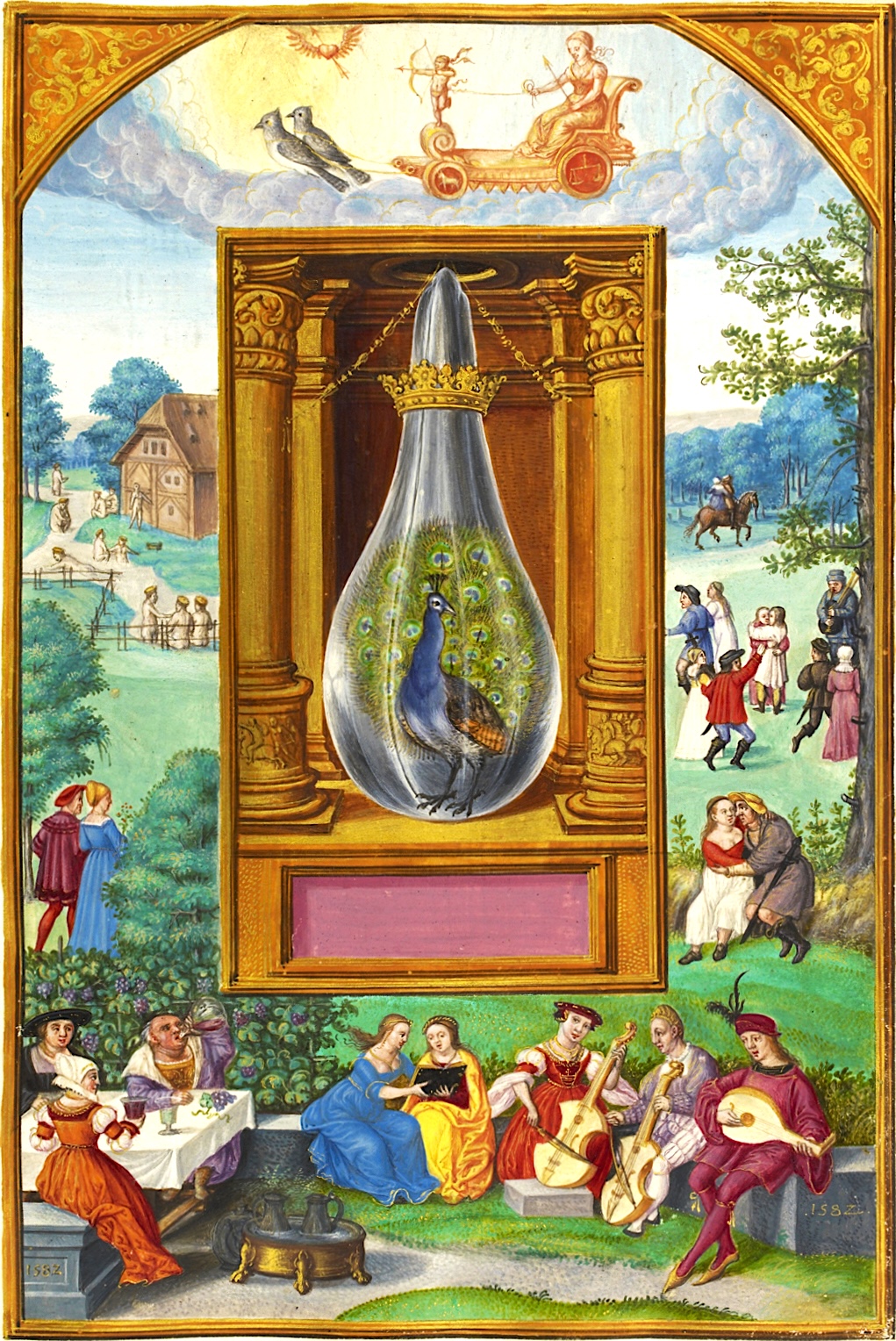
Among the rumored possessors of the philosopher’s stone throughout history is Salomon Trismosin, a sixteenth-century Renaissance alchemist who taught the influential physician Paracelsus. He’s also credited, at least in legends, with writing Splendor Solis, a book once no less desirable than the next Harry Potter volume in that series’ heyday.
Nothing so mundane as “a list of instructions for whipping up a little alchemical soup in the hope of finding a nugget of artificial gold in the pot at the end,” writes Jörg Völlnagel at Medievalists.net, it rather “sets forth the philosophy of alchemy, a world view according to which the human being (the alchemist) exists and acts in harmony with nature, respecting divine creation and at the same time intervening in the processes underlying that creation, all the while supporting its growth with the help of alchemy.”
As “a — or rather the – prime example of an illuminated alchemical manuscript,” Splendor Solis has drawn the fascination of even such modern figures as William Butler Yeats, James Joyce, and Umberto Eco. It also became an important work in the symbolic-cultural universe of Carl Jung, who, according to the Association of Jungian Analysts, “recognized the alchemical motifs and symbols as expressions of the individuation process, the transformation and integration of the psyche. Splendor Solis, with its rich symbolism and profound allegories, resonated with Jung’s understanding of the archetypal imagery and the transformative nature of the human psyche, contributing to his theories on analytical psychology.”
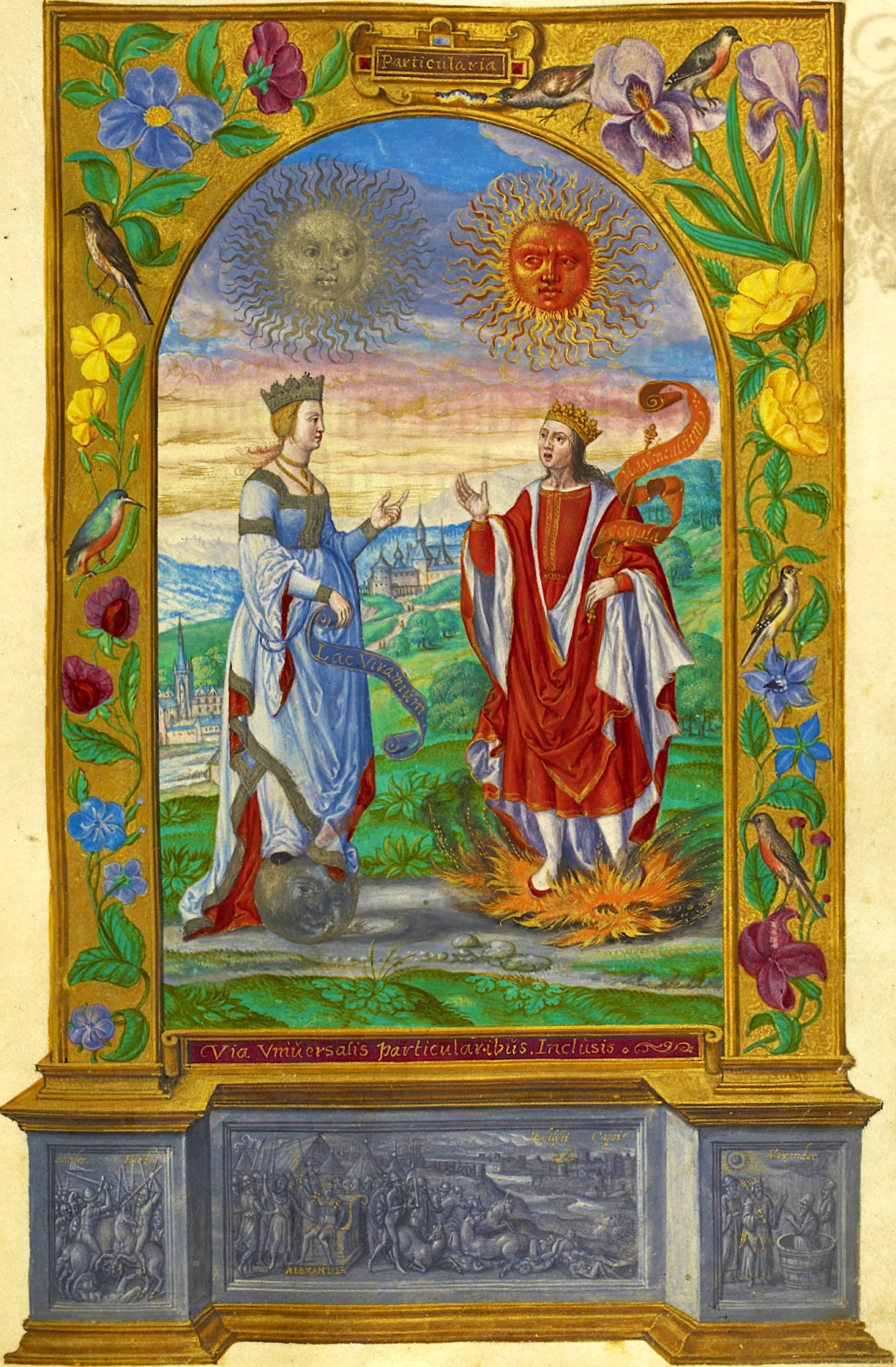
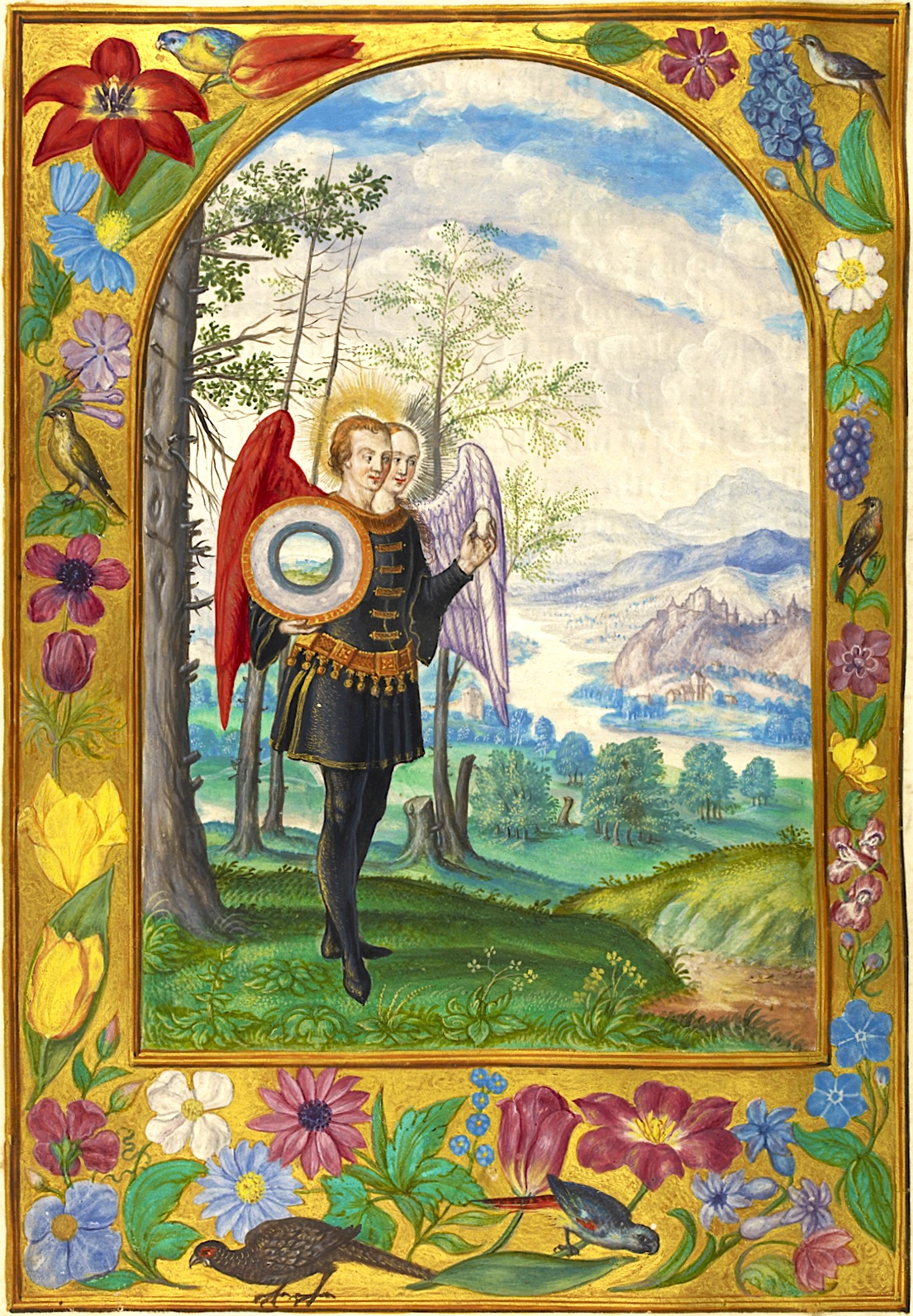
None of this is to say that Jung, or many other esteemed intellectuals of the past couple of centuries, believed that base metals really could be transmuted to gold and silver. But they did understand that the phenomenon of alchemy has much to reveal about the irresolvable existential negotiation between man and the world he inhabits. It resonates so deeply that it’s even worked in children’s literature, and to great commercial success at that. You can even feel some of it just by gazing upon Splendor Solis’ 22 gold-highlighted, book-of-hours-style illustrations at the web site of M. Moleiro, publisher of one facsimile edition. And who knows? If, as in the world of Harry Potter, the philosopher’s stone also grants immortality, perhaps Salomon Trismosin still walks somewhere among us.
You can view pages of Splendor Solis on Wikipedia. Enter the image gallery here.
Related Content:
A Gallery of Fantastical Alchemical Drawings
How the Brilliant Colors of Medieval Illuminated Manuscripts Were Made with Alchemy
Videos Recreate Isaac Newton’s Neat Alchemy Experiments: Watch Silver Get Turned Into Gold
The Visionary Mystical Art of Carl Jung: See Illustrated Pages from the Red Book
Based in Seoul, Colin Marshall writes and broadcasts on cities, language, and culture. He’s the author of the newsletter Books on Cities as well as the books 한국 요약 금지 (No Summarizing Korea) and Korean Newtro. Follow him on the social network formerly known as Twitter at @colinmarshall.




Leave a Reply