If you’ve ever listened to Radiolab, one of the most popular and enduring podcasts out there, you know how much music (and sound more generally) plays a special role in the show’s production. And that’s all largely the creation of Radiolab’s co-host, Jad Abumrad. You know those “jaggedy sounds, little plurps and things, strange staccato, percussive things” that make the show so distinctive? That’s all Abumrad, who majored in experimental music composition and production at Oberlin College.
To get inside Abumrad’s thinking about music (what is sound? what is music? why do we organize sound into music?) watch the video above. Mac Premo interviewed Jad, then turned the conversation into a short creative film. Note: If you don’t react well to seeing fast-moving images, you might want to skip this one.
If you would like to support the mission of Open Culture, consider making a donation to our site. It’s hard to rely 100% on ads, and your contributions will help us continue providing the best free cultural and educational materials to learners everywhere. You can contribute through PayPal, Patreon, and Venmo (@openculture). Thanks!
In March of 2015, The Guardian published a piece on Prince’s vault, begun by his former sound engineer Susan Rogers before his Purple Rain superstardom: “It’s an actual bank vault, with a thick door,” she said, “in the basement of Paisley Park. When I left in 87, it was nearly full.” That was 30 years ago. Composer and Prince orchestrator Brent Fischer speculated that “over 70% of the music we’ve worked on for Prince is yet to come out.” Already able to release “in a decade what most musicians couldn’t put out in a lifetime,” Prince stored in his vaults enough to reveal him as thrice the prolific genius we knew in life.
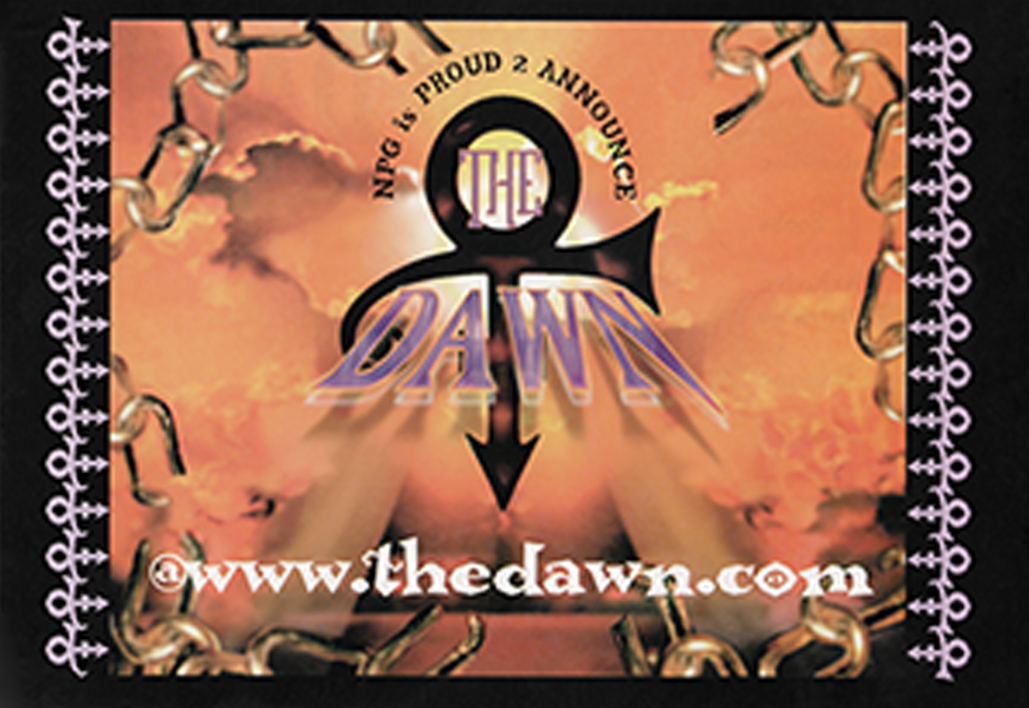
Now that Prince has departed, the vault has been finally been opened. What’s in it? Speculation, rumor, and hoaxes abound; we could see a posthumous album a year for the next century. As they trickle out we’ll likely see more conventional, less Prince-like releasing strategies, now that he is no longer personally in control of his output. This will surely make it easier on his fans, but will also strip the music of much of its curious mystique. “A streaming skeptic before it was fashionable,” writes August Brown at the L.A. Times, and “a born futurist,” Prince excelled at “creating new distribution systems under his purview.” As an early adopter of web technology, he began giving away and selling his music and merchandise online as early as 1996, when he created his first official website, “The Dawn” (above).
Prince’s web debut happened in the midst of his pitched battle with Warner Brothers, and three years after he changed his name to the “Love Symbol.” Browsing through the history of his internet strategies allows us to see how his personalized distribution approaches and online identities evolved over the next two decades as he regained full creative independence. We can easily survey that history all in one place now, thanks to the Prince Online Museum, an archive of 16 of Prince’s various websites, each one with its own profile written in Prince’s distinctive idiom, with “testimonials from the people who were involved in creating and running them for Prince,” writes The New York Times, and “links as well as screen shots and videos” of each site, none of them currently active.
There’s even a precursor to Prince’s online world, Prince Interactive, a 1994 CD-Rom “coupled with Prince’s underground film, The Beautiful Experience.” This early attempt makes clear that “Prince was fascinated and excited by the possibilities of connecting directly 2 his audience through their computers. It would be several years until that became a reality 4 him, but the idea started here.” (See a slow video walk-through of the CD-Rom above). After 1996’s “The Dawn” came the first official online retail store, “1–800-NewFunk,” and an online lyric book, “Crystal Ball Online.” Successive sites each had a distinctive focus: on Prince’s charitable foundation with “Love 4 One Another”; on various iterations of his “NPG Music Club,” an “online distribution hub”—including the “virtual estate” of the 2003 iteration (see picture further up); and on rebranding efforts like “3121.com.”
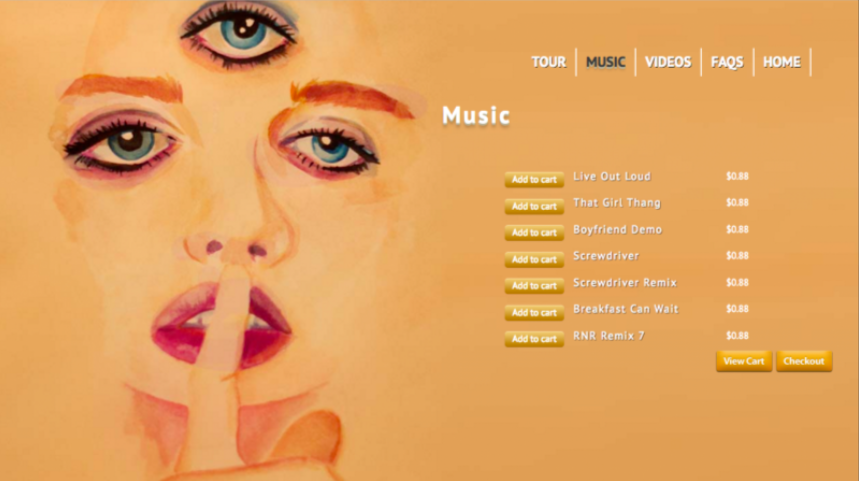
One of the most striking of all of the various sites, “Lotusflow3r” (top) contained “vibrant 3D imagery and animation connected 2 the music” and design of the 3‑CD album set of the same name from 2009. The last entry in the archive, the “3rdEyeGirl” site from 2013, was created for Prince’s new band and “was another example of choosing 2 bypass traditional channels and go his own way.” Each of these site profiles act as “snapshots in time to experience the Web sites just like when they were active,” writes Prince Online Museum director Sam Jennings. They also showcase “his fierce independence” and desire “to connect directly with his audience without any middleman.”
The question of what an artist is willing to give up for her art is unanswerable until the moment of sacrifice arrives, and she must make a choice—safety, comfort, family, etc, or the leap into a creative endeavor whose outcome is uncertain? Then there are those artists—often just as talented and ambitious—who make these choices for other people’s art: the pop star’s dance troupe, the Broadway chorus members, and the rock and roll back-up singers, some of whom we got to know in the 2014 documentary 20 Feet from Stardom, including the great Merry Clayton, who contributed her haunting gospel chops to the Rolling Stones’ “Gimme Shelter.”
For the working backup singers in the documentary, the choices between everyday security and creativity aren’t binary. They often present themselves instead as the kind of seemingly ordinary compromises we all make to some degree: do I go on this lucrative tour or attend my daughter’s recital? Do I turn down this job—and paycheck—or miss a birthday, a family dinner, a night’s sleep? Clayton had to make such a spur-of-the-moment decision late one night, while just getting ready for bed at her L.A. home. She got a call from producer Jack Nietzsche, she tells us in a clip from the documentary above, whom she remembers saying: “There’s a group of guys in town called… the Rolling… Somebodies… and they need somebody that will sing with them.”
Clayton had no idea who the Stones were, but at her husband’s urging, she took the gig. She was, after all, a pro. As Mike Springer wrote in a previous post on the Stones’ side of the story, Clayton “made her professional debut at age 14, recording a duet with Bobby Darin. She went on to work with The Supremes, Elvis Presley and many others, and was a member of Ray Charles’s group of backing singers, The Raelettes.” When she got to the studio, she had some reservations when Richards and Jagger asked her to sing “Rape, murder/It’s just a shot away,” but when the band explained the gist of the song, she said “Oh, okay, that’s cool,” and totally went for it, as you can hear in her isolated part above.
Determined to “blow them out of this room,” she did three increasingly intense takes, pitching it up an octave and pushing her voice till it cracked. The results give the song its chilling apocalyptic urgency, and they also came at a great personal cost to Clayton. Pregnant at the time of recording, “the physical strain of the intense duet with Mick Jagger,” notes the Los Angeles Times, “resulted in a miscarriage after the session.” As Mike Springer wrote in his post, the Stones’ song, and the entire Let It Bleed album, captured a particularly dark time for the band—as Brian Jones deteriorated into addiction and mental illness—and for the world, coming as it did after the assassinations of Martin Luther King, Jr. and the Kennedys and the escalation of the Vietnam War. “Gimme Shelter” also came to represent, Clayton told the L.A. Times, “a dark, dark period for me,” though she couldn’t have known the price she’d pay for that session when she agreed to do it.
But she “turned it around,” she says: “I took it as life, love and energy and directed it in another direction so it doesn’t really bother me to sing ‘Gimme Shelter’ now. Life is too short as it is and I can’t live on yesterday.” Watch her above take the lead in an incredibly powerful recent rendition of the song at the Gibson Amphitheatre in Universal City, CA. The performance further proves, I think, that, just as much as Richards’ guitar lines and Jagger’s lyrics, her voice played a crucial, starring role in the classic recording.
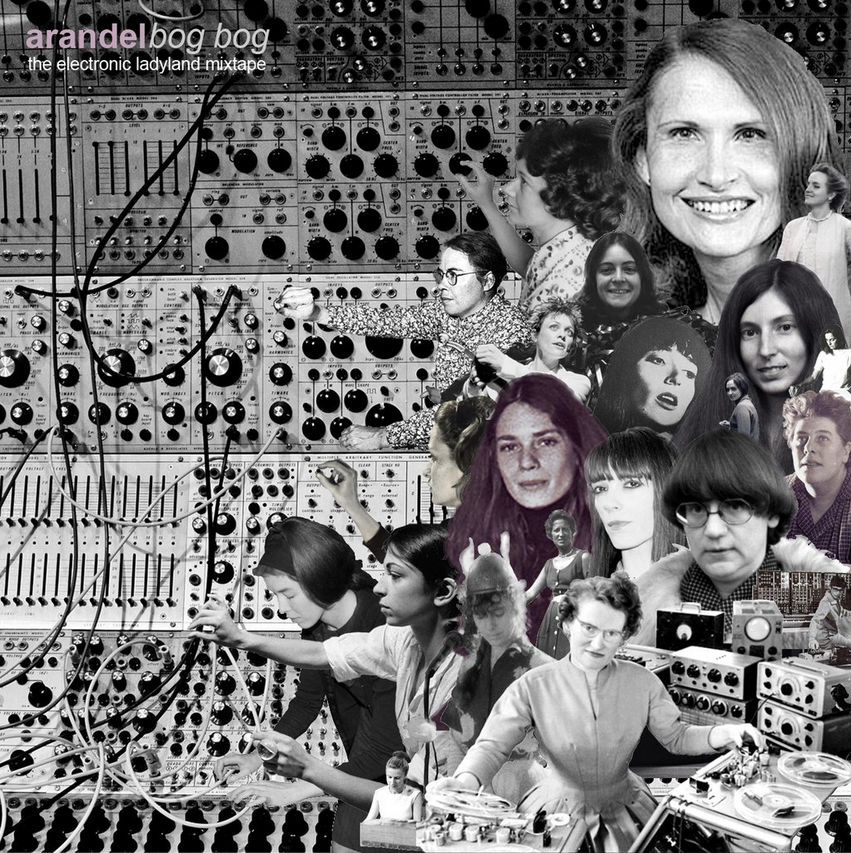
“We realized that an unconscious feminine electronic music Internationale has existed throughout the ages and we wondered whether a secret intuition might have gathered around shared research,” says Arandel in a translated interview. “Was their mutual desires achieved differently in different countries, with different tools in different timezones? The idea was to see what would happen if we gathered them in the same fictitious room for 45 minutes, and built a choir from all their productions.”
Arandel’s interviewer describes the musicians in the mix as coming from “very different musical horizons: we find academic learned musicians, research music composers and experimenters who used to do DIY works composed for advertising or television in a pop or easy listening context, some eccentric women like The Space Lady or Ruth White.” We also hear from famous names like Laurie Anderson and Wendy Carlos, and Delia Derbyshire. “What she accomplished is fascinating,” says Arandel of Derbyshire, “as is listening to her talk about her interesting work in documentaries,” and they’ve also included work from Daphne Oram, Laurie Spiegel, Eliane Radigue, and Pauline Oliveiros, subjects of the other documentaries we’ve posted here.
Electronic Ladyland drops you right into a retro-futuristic sonic landscape equally danceable and haunting, one with great variety as well as an unexpected consistency. It provides not just a kind of brief overview of what certain generations of female composers discovered with their new and then-strange electronic instruments and other devices, but one you may well want to keep in your library for frequent listening. It will also, according to Arandel, make you think: “There is an almost magic link between women and electronic music, from the 50’s / 60’s. Have you asked yourself the question of social, artistic, maybe magic reasons behind this link?” Hit the play button, and you may start. Find the list of tracks below.
1. Glynis Jones : Magic Bird Song (1976)
2. Doris Norton : Norton Rythm Soft (1986)
3. Colette Magny : « Avec » Poème (1966)
4. Daphne Oram : Just For You (Excerpt 1)
5. Laurie Spiegel : Clockworks (1974)
6. Pauline Oliveiros : Bog Bog (1966)
7. Megan Roberts — I Could Sit Here All Day (1977)
We’ve seen 1999 members of Choir! Choir! Choir! perform “When Doves Cry,” a moving, mass tribute to Prince. And they’re now back, 1500 strong, with Rufus Wainwright at the helm, singing Leonard Cohen’s beloved and oft-covered song, Hallelujah.” Performed at the Hearn Generating Station in Toronto, it must have been a wonderful thing to experience live in person.
If you would like to support the mission of Open Culture, consider making a donation to our site. It’s hard to rely 100% on ads, and your contributions will help us continue providing the best free cultural and educational materials to learners everywhere. You can contribute through PayPal, Patreon, and Venmo (@openculture). Thanks!
You may have followed the story in the news lately–the song, “Happy Birthday to You,” has officially entered the public domain, thanks to a court battle fought by the documentary filmmaker Jennifer Nelson. The battle started years ago when Nelson was billed $1,500 to use “Happy Birthday to You” in a documentary–the price of licensing a song still under copyright. Wait, what? Flabbergasted that “the world’s most popular song,” which could be traced back to 1893, could still be under copyright, Nelson filed a class action suit against Warner/Chappell Music, the group claiming rights to “Happy Birthday.” And won.
In this new short documentary from The Guardian, Nelson tells the story of the song and her four-year struggle to give “Happy Birthday” back to the world. With a little luck, “This Land is Your Land,” will be next.
If you would like to support the mission of Open Culture, consider making a donation to our site. It’s hard to rely 100% on ads, and your contributions will help us continue providing the best free cultural and educational materials to learners everywhere. You can contribute through PayPal, Patreon, and Venmo (@openculture). Thanks!
Regular readers of Open Culture know us to gush over our favorite celebrity couples now and then: John and Yoko, Jean-Paul and Simone, Frida and Diego…. Not your usual tabloid fare, but the juicy details of these amorous partners’ lives also happen to intersect with some of our favorite art, music and literature. One cultural power couple we haven’t covered much, surprisingly, well deserves the “power” adjective: Lou Reed and Laurie Anderson, two personalities whose influence on the art and music of the last several decades can hardly be overstated.
Has Reed’s reputation at times been inflated, and Anderson’s underplayed? Maybe. She doesn’t get nearly enough credit for the witty, profound, moving work she’s done, year after year (with one lengthy hiatus) since the 70s. Reed’s career since the 70s consisted of more misses than hits. But put them together (in 1992) and you get a harmonious meeting of Reed’s raw, gut-level assertions and Anderson’s curious, playful concepts.
Witness their personal strength together in the Charlie Rose excerpt at the top of the post. Reed, who was often a difficult interview subject, to put it mildly, and who gained a reputation as a brutally unpleasant, abusive rock and roll diva (immortalized lovingly in Bowie’s “Queen Bitch”), comes off in this sit-down with Anderson as almost warm and fuzzy. Did she make him want to be a better person? I don’t know. But Anderson’s short obituary after his 2013 death remembered Reed as a “prince and fighter,” her longer obit as a “generous” soul who enjoyed butterfly hunting, meditation, and kayaking. No reason he wasn’t all those things too.
When it came to music, Reed could pull his partner into the orbit of his sweet R&B songcraft, as in their duet of “Hang on to Your Emotions,” further up, and she could pull him out of it—like John Cale and Nico had done in the Velvet Underground—and into the avant-garde drone of her experimental scene (as above in the pair’s collaboration with composer and saxophonist John Zorn). Just this past Spring, in one of the most touching musical tributes I’ve ever seen, Anderson recreated Reed’s abrasive screw-you to his record label, Metal Machine Music, as a conceptual art piece called Drones, leaning several of his guitars against several fully-cranked vintage amps, letting the feedback ring out for five days straight.
None of us can be Lou Reed and Laurie Anderson; every couple is happy, or unhappy, in their own way. But what, in the grand tradition of mining celebrity couple’s lives for advice, can we learn from them? I guess the overall message—as Anderson herself suggested in her Rock & Roll Hall of Fame acceptance speech for Reed (above, in shaky audience video)—is this: keep it simple. Kansas State English ProfessorPhilip Nel points out Anderson’s “wise… thoughtful” words on the subject of living well, delivered in her speech at the 8:55 mark:
I’m reminded also of the three rules we came up with, rules to live by. And I’m just going to tell you what they are because they come in really handy. Because things happen so fast, it’s always good to have a few, like, watchwords to fall back on.
And the first one is: One. Don’t be afraid of anyone. Now, can you imagine living your life afraid of no one? Two. Get a really good bullshit detector. And three. Three is be really, really tender. And with those three things, you don’t need anything else.
Can you imagine Lou Reed as “really, really tender”? He certainly was in song, if not always in person. In any case, these three rules seem to me to encapsulate a personal philosophy built solidly on fearless integrity and compassion. Difficult to live by, but well worth the effort. And because I’m now feeling super warm and fuzzy about Lou and Laurie, I’ll leave you with the short WNYC interview clip below, in which she reveals her favorite Lou Reed song, which he happened to write about her.
Bringing her down-home North Carolina background to the world of funk, Betty Mabry spent a better part of the sixties trying to make it big in the music scene, while also modeling to pay the rent. She ran in the same crowds as Jimi Hendrix, Eric Clapton, and Hugh Masekela (who she dated), and she wrote her own songs, selling one to the Chambers Brothers, and then got a couple of singles on Capitol Records.
And then Miles Davis stepped in the picture. First as a whirlwind romance and marriage, then as a producer who was going to launch Betty Davis as the queen of funk (and refurbish his image in the process.) He had already dedicated two songs to her and put her on the cover of his 1968 album Filles de Kilimanjaro. And now he was set to produce her solo debut.
That album is finally being released. Betty Davis: The Columbia Years 1968–1969drops tomorrow. To hear Light in the Attic’s video press release above breathlessly tell it, “music fans have long debated the truth about one legendary session recorded in 1969 at Columbia’s 52nd Street Studios.” Personally I don’t know what was actually debated, but yes, Betty Davis recorded tracks for a funk album using members of Jimi Hendrix’s Experience band (Mitch Mitchell, drums) and his Band of Gypsies (Billy Cox, bass), along with guitarist John McLaughlin, keyboardist Herbie Hancock, Harvey Brooks on bass, Wayne Shorter on sax, and Larry Young on organ. Teo Macero co-produced with Miles Davis.
If this sounds like most of the band that went on to make Miles’ Bitches Brew (a record title suggested by Betty), then you’re right. It could be seen as a session that got the wheels spinning in Miles’ mind about a new direction to take his own work. And it’s that moment that so fascinates music fans.
Columbia passed on the Betty Davis album and buried it in its vaults. It would take four years until Betty Davis was able to get a solo album out on her own terms. That eponymous 1973 album and the two that followed were poor sellers, but earned cult status due to Betty Davis’ unabashed and unapologetic sexuality, feminism, and ferocity on stage—the same factors that scared radio operators and concert venues.
“She was the first Madonna, but Madonna was like Donny Osmond by comparison,” Carlos Santana once quipped about her.
The Light in the Attic site has very brief clips from the songs on the new release, but since they are all from the openings of the tracks, they give little indication of the funky stew to follow, from the Cream and Creedence Clearwater Revival covers (“Politician Man,” “Born on the Bayou”) to her own songs. The CD and LP package looks gorgeous of course, with liner notes and photos.
Davis retired from music after her fourth album went nowhere but she is still around, and, according to the Light in the Attic website, a documentary is in the works on this influential funky icon who needs rediscovering.
Ted Mills is a freelance writer on the arts who currently hosts the FunkZone Podcast. You can also follow him on Twitter at @tedmills, read his other arts writing at tedmills.com and/or watch his films here.
We're hoping to rely on loyal readers, rather than erratic ads. Please click the Donate button and support Open Culture. You can use Paypal, Venmo, Patreon, even Crypto! We thank you!
Open Culture scours the web for the best educational media. We find the free courses and audio books you need, the language lessons & educational videos you want, and plenty of enlightenment in between.