Discovered: Conversation with John Lennon, Yoko Ono, and Timothy Leary at Montreal Bed-In (1969)

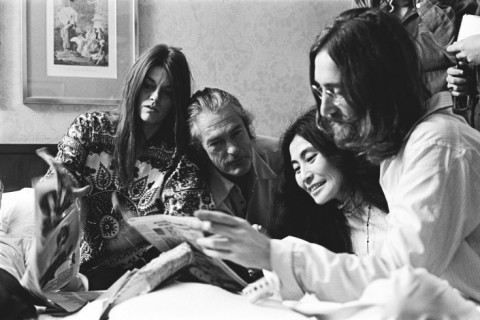
On May 26, 1969, John Lennon and Yoko One began their sec­ond “Bed-In,” a form of anti-Viet­nam War protest that com­bined the media impact of a press con­fer­ence with the com­fort of hotel sheets. Their first Bed-In, which hap­pened in var­i­ous rooms of the Ams­ter­dam Hilton in late March of that year, saw them grant inter­view after inter­view about peace all day long with­out mov­ing from the bed in which they had ensconced them­selves. They’d sched­uled its fol­low up in New York City, but Lennon found he could­n’t enter the Unit­ed States due to a pre­vi­ous con­vic­tion for mar­i­jua­na pos­ses­sion. They relo­cat­ed it to the Bahamas, where the heat soon prompt­ed them to move again to the entire­ly cool­er Queen Eliz­a­beth Hotel in Mon­tre­al. There they record­ed the song “Give Peace a Chance,” aid­ed by such vis­i­tors as Tom­my Smoth­ers, Dick Gre­go­ry, Mur­ray the K, and psy­che­del­ic drug advo­cate Tim­o­thy Leary.

But Leary did­n’t just come to pro­vide a back­ing vocal. With his wife Rose­mary, he record­ed a con­ver­sa­tion with Lennon and Ono about… well, about a vari­ety of sub­jects, but they’d all fall under the broad head­ing of Leary’s one great pur­suit, “con­scious­ness.” Only recent­ly did Leary archivist Michael Horowitz dis­cov­er the tran­script of this ses­sion in “an unmarked enve­lope in a box of mis­cel­la­neous papers,” and this week the Tim­o­thy Leary Archives made it avail­able to the pub­lic for the first time ever. The con­ver­sa­tion begins with the fin­er points of teepee life, moves on to the effects of place on one’s state of mind, touch­es on both cou­ples’ hav­ing found them­selves on the wrong side of drug law enforce­ment, and ends with Lennon and Leary com­par­ing notes on how they use the media to con­vey their mes­sage:

TIMOTHY: John, about the use of the mass media … the kids must be taught how to use the media. Peo­ple used to say to me–I would give a rap and some­one would get up and say, “Well, what’s this about a reli­gion? Did the Bud­dha use drugs? Did the Bud­dha go on tele­vi­sion? I’d say, “Ahh—he would’ve. He would’ve….”

JOHN: I was on a TV show with David Frost and Yehu­di Menuhin, some cul­tur­al vio­lin­ist y’know, they were real­ly attack­ing me. They had a whole audi­ence and every­thing. It was after we got back from Amsterdam…and Yehu­di Menuhin came out, he’s always doing these Hin­du num­bers. All that pious bit, and his school for vio­lin­ists, and all that. And Yehu­di Menuhi said, “Well, don’t you think it’s nec­es­sary to kill some peo­ple some times?” That’s what he said on TV, that’s the first thing he’s ever said. And I said, “Did Christ say that? Are you a Chris­t­ian?” “Yeah,” I said, and did “Christ say any­thing about killing peo­ple?” And he said, “Did Christ say any­thing about tele­vi­sion? Or gui­tars?”

To learn more about Lennon and Ono’s Bed-Ins, you can vis­it the 70-minute doc­u­men­tary Bed Peace (below), pre­vi­ous­ly fea­tured on Open Cul­ture and still freely view­able on YouTube:

Relat­ed con­tent:

Tim­o­thy Leary’s Wild Ride and the Fol­som Prison Inter­view

Beyond Tim­o­thy Leary: 2002 Film Revis­its His­to­ry of LSD

Bed Peace Star­ring John Lennon & Yoko Ono (Free for Lim­it­ed Time)

Col­in Mar­shall hosts and pro­duces Note­book on Cities and Cul­ture. Fol­low him on Twit­ter at @colinmarshall.

Robert Penn Warren Archive Brings Early Civil Rights to Life

While an under­grad­u­ate at Van­der­bilt Uni­ver­si­ty in Ten­nessee, writer Robert Penn War­ren began writ­ing about the south and its tur­bu­lent racial his­to­ry. He trav­eled through­out the Unit­ed States and inter­viewed men and women involved with the Civ­il Rights Move­ment, record­ing each con­ver­sa­tion on a reel-to-reel tape recorder—a project that result­ed in the 1965 book Who Speaks for the Negro? This month, Van­der­bilt University’s Robert Penn War­ren Cen­ter for the Human­i­ties makes a full dig­i­tal record avail­able of Warren’s research for the book—an impres­sive and well-con­struct­ed col­lec­tion of inter­views with his­tor­i­cal fig­ures includ­ing Ralph Elli­son, James Bald­win and Mal­colm X. The rich­ness of the site is its con­nec­tive design. Each inter­view is tagged by top­ic, includ­ing a subject’s link to broad­er issues or to oth­er inter­vie­wees, mak­ing evi­dent through user expe­ri­ence the com­plex nature of the Civ­il Rights Move­ment. A search for the NAACP, for exam­ple, yields mul­ti­ple inter­views fea­tur­ing dif­fer­ent points of view on the organization’s for­ma­tion along with PDFs of orig­i­nal let­ters and the search­able text of news­pa­per arti­cles about ear­ly NAACP demon­stra­tions. But the site’s audio offer­ings are its most pow­er­ful assets.

The mate­r­i­al offers a potent por­trait of a his­tor­i­cal moment and is rich with ref­er­ences to pol­i­tics, art and spe­cif­ic con­flicts over inte­gra­tion. The group inter­views with uni­ver­si­ty stu­dents and pro­test­ers are worth a lis­ten, both for the con­tent and for the ear­ly 1960s group dynam­ics. When War­ren inter­views men and women togeth­er, men tend to speak first and at most length. But the views expressed are fas­ci­nat­ing, as in one case when a female sit-in par­tic­i­pant gives her opin­ion about assim­i­la­tion.

“My first reac­tion of course would be, think­ing of Socrates: Know thy­self. We do face the prob­lem of amal­ga­ma­tion into the whole of Amer­i­can life, being Amer­i­cans first, say, or being what I would like to term Negro Amer­i­cans or Black Amer­i­cans. I think that we as black men have an oblig­a­tion to know our­selves as black men and be proud of what we are, and con­tribute to Amer­i­ca what we could actu­al­ly offer to this cul­ture.”

Kate Rix is an Oak­land based writer. See more of her work at .

Relat­ed Con­tent: 

Mal­colm X at Oxford, 1964

Great Cul­tur­al Icons Talk Civ­il Rights (1963)

MLK’s Omi­nous Final Speech

Google Gives 360° Tour of the White House

Ear­li­er this week, we men­tioned the expan­sion of Google Art Project, which now gives you vir­tu­al access to 30,000 works of art from 151 muse­ums world­wide. What we did­n’t men­tion is that the expand­ed Art Project also includes a 360 degree walk through the White House — the same one vis­i­tors expe­ri­ence when they take a pub­lic tour of the man­sion. The White House tour was made with Google Street View tech­nol­o­gy, which oth­er­wise lets you take a jour­ney to the Ama­zon Basin, the Swiss Alps, and var­i­ous oth­er his­tor­i­cal sites (Pom­peii, Stone­henge and Ver­sailles).

If you would like to sign up for Open Culture’s free email newslet­ter, please find it here. It’s a great way to see our new posts, all bun­dled in one email, each day.

If you would like to sup­port the mis­sion of Open Cul­ture, con­sid­er mak­ing a dona­tion to our site. It’s hard to rely 100% on ads, and your con­tri­bu­tions will help us con­tin­ue pro­vid­ing the best free cul­tur­al and edu­ca­tion­al mate­ri­als to learn­ers every­where. You can con­tribute through Pay­Pal, Patre­on, and Ven­mo (@openculture). Thanks!

by | Permalink | Make a Comment ( 1 ) |

For 95 Minutes, the BBC Brings George Orwell to Life

George Orwell occu­pies a fun­ny place in the mod­ern lit­er­ary con­scious­ness. The last few gen­er­a­tions came to know him, in Eng­lish class, as the author of the nov­els Ani­mal Farm and Nine­teen Eighty-Four. My own peers may remem­ber their teach­ers’ awk­ward inver­sion of the ear­li­er book, forced as they were to clar­i­fy Orwell’s already direct Russ­ian Rev­o­lu­tion alle­go­ry by explain­ing that, a long time ago, there lived a man named Trot­sky who was a lot like Snow­ball the pig, and so on. The lat­er book, many read­ers’ first glimpse at a real­is­tic dystopia, tends to hit us hard­er. All those tin­ny, piped-in patri­ot­ic anthems; the vari­cose veins; the saw­dusty cig­a­rettes; the defeat­ed cups of watery tea — why on Earth, we asked our­selves, did Orwell so con­fi­dent­ly fore­see a sham­bol­ic world of such simul­ta­ne­ous chintzi­ness and bru­tal­i­ty?

Apart from his six nov­els and four vol­umes of mem­oir, Orwell pro­duced an aston­ish­ing quan­ti­ty of essays. These I reg­u­lar­ly con­sult in my brick-like Everyman’s Library edi­tion, and I bought that on the strength of two par­tic­u­lar pieces: “Pol­i­tics and the Eng­lish Lan­guage” and “Why I Write.” Many of us encounter these here or there in the course of high­er edu­ca­tion, and none of us with an inter­est in read­ing, writ­ing, think­ing, and the feed­back loop between the three for­get them. Pres­sured to cite the most inci­sive pas­sage in all of Orwell, how could I decide between the for­mer essay’s descrip­tion of how “a mass of Latin words falls upon the facts like soft snow, blur­ring the out­line and cov­er­ing up all the details,” and the lat­ter essay’s con­trast of the writer’s ego against that of “the great mass of human beings” who, after thir­ty, “almost aban­don the sense of being indi­vid­u­als at all — and live chiefly for oth­ers, or are sim­ply smoth­ered under drudgery”?

Despite pass­ing at only 46, Orwell left an almost impos­ing­ly large body of writ­ten work. Read­ers who’ve savored it and want to learn, hear, and see more come up against a cer­tain dif­fi­cul­ty: we have a few pho­tographs of Orwell, but as far as sound or film, noth­ing exists. Yet that didn’t stop BBC Four from putting togeth­er George Orwell: A Life in Pic­tures, cast­ing actor Chris Lang­ham as Orwell, hav­ing him speak Orwell’s words, and insert­ing him, Zelig-like, into his­tor­i­cal footage real and recon­struct­ed of Orwell’s places and times. Doc­u­men­tary purists may balk at this, but strong choic­es make strong films. As a com­pul­sive read­er of Orwell myself, I’ll take any chance I can to expe­ri­ence more rich­ly the mind of this child of the “low­er upper-mid­dle class” whose fas­ci­na­tion with pover­ty drove him down into it; this social­ist who loathed both the trap­pings and pro­po­nents of social­ism; this wor­shiper of hard man­u­al labor who under­stood more about the impact of words than most of us do today; this famed writer who cloaked his giv­en name of Eric Arthur Blair to bet­ter retreat, alone, into his gray, qua­si-ascetic Eng­lish plea­sures.


Col­in Mar­shall hosts and pro­duces Note­book on Cities and Cul­ture. Fol­low him on Twit­ter at @colinmarshall.


Frank Zappa Debates Censorship on CNN’s Crossfire (1986)

Cross­fire aired on CNN from 1982 to 2005, famous­ly pit­ting lib­er­al pun­dits and spe­cial guests against their con­ser­v­a­tive coun­ter­parts. Per­haps you will remem­ber the most famous episode — the day in 2004 when Jon Stew­art paid a vis­it and demol­ished the whole premise of the show. It’s hard to top that moment. But, maybe com­ing in a close sec­ond was Frank Zap­pa’s mem­o­rable appear­ance in 1986.

On that March day, Zap­pa jumped into the fray and fought the cul­ture wars of the 1980s. His main oppo­nent was­n’t the often prick­ly con­ser­v­a­tive com­men­ta­tor Robert Novack. Instead, it was John Lofton, a right-wing colum­nist for The Wash­ing­ton Times, who argued that gov­ern­ment should cen­sor rock lyrics deemed unfriend­ly to fam­i­lies. Zap­pa, who con­sid­ered him­self a con­ser­v­a­tive too, took umbrage and you can watch the con­ver­sa­tion unfold … and at times dete­ri­o­rate. Also don’t miss Zap­pa’s tes­ti­mo­ny before Con­gress in 1985.

If you would like to sign up for Open Culture’s free email newslet­ter, please find it here. It’s a great way to see our new posts, all bun­dled in one email, each day.

If you would like to sup­port the mis­sion of Open Cul­ture, con­sid­er mak­ing a dona­tion to our site. It’s hard to rely 100% on ads, and your con­tri­bu­tions will help us con­tin­ue pro­vid­ing the best free cul­tur­al and edu­ca­tion­al mate­ri­als to learn­ers every­where. You can con­tribute through Pay­Pal, Patre­on, and Ven­mo (@openculture). Thanks!

Relat­ed Con­tent:

A Young Frank Zap­pa Plays the Bicy­cle on The Steve Allen Show (1963)

Hear the Musi­cal Evo­lu­tion of Frank Zap­pa in 401 Songs

Watch Frank Zap­pa Play Michael Nesmith on The Monkees(1967)


by | Permalink | Make a Comment ( 4 ) |

The Crazy Never Die: Hunter S. Thompson in Rare 1988 Documentary (NSFW)

What should we make of Hunter S. Thomp­son today? Only a hard­ened con­trar­i­an could down­play his impor­tance as a chron­i­cler of the col­lapse of six­ties-style utopi­anism in Amer­i­ca. Few read­ers could for­get — or refrain from com­mit­ting to mem­o­ry — the famous pas­sage of Thomp­son’s jour­nal­is­tic and psy­che­del­ic nov­el Fear and Loathing in Las Vegas (1971) that looks back on the ruins of hip­piedom from with­in the hang­over of the ear­ly sev­en­ties. With unmatched clar­i­ty, he traces how “the ener­gy of a whole gen­er­a­tion comes to a head in a long fine flash,” the “sense of inevitable vic­to­ry over the forces of Old and Evil,” the feel­ing of “rid­ing the crest of a high and beau­ti­ful wave,” and how, “less than five years lat­er, you can go up on a steep hill in Las Vegas and look West, and with the right kind of eyes you can almost see the high-water mark — that place where the wave final­ly broke and rolled back.”

In the sev­en­ties, Thomp­son count­ed among his friends San Fran­cis­co pornog­ra­phers the Mitchell broth­ers, best known for pro­duc­ing Behind the Green Door, which hit the zeit­geist the year after Fear and Loathing in Las Vegas. In 1988, the Mitchell broth­ers grabbed their cam­eras and fol­lowed Thomp­son around on a lec­ture tour, to places like the Uni­ver­si­ty of Kansas and Port­land, Ore­gon’s First Con­gre­ga­tion­al Church, col­lect­ing mate­r­i­al for what would become the half-hour doc­u­men­tary The Crazy Nev­er Die. It fol­lows from the title that, since the news of Thomp­son’s hav­ing removed him­self from this mor­tal coil broke sev­en years ago last week, he either did not die, or was not crazy. Though the lat­ter pos­si­bil­i­ty seems more plau­si­ble on its face, those famil­iar with the trap­pings of Thomp­son’s pub­lic per­sona — the “for­ti­fied com­pound,” the rounds unloaded into the type­writer, the pea­cocks — may find the for­mer eas­i­er to swal­low. Just look at the footage cut between the lec­ture seg­ments: Thomp­son spray­ing a makeshift aerosol flamethrow­er, Thomp­son light­ing a can­non, Thomp­son vicious­ly attack­ing the cam­era with a Mex­i­can restau­rant-nap­kin — all rigid­ly in line with his man-out-of-con­trol image.

Wit­ness to the end of the Age of Aquar­ius, drug-fueled bon viveur, sociopo­lit­i­cal crit­ic, flail­ing mani­ac: Thomp­son con­tained mul­ti­tudes. His Fear and Loathing on the Cam­paign Trail ’72 remains one of the most inci­sive texts I’ve read on the Demo­c­ra­t­ic par­ty — more so than any­thing polit­i­cal sci­ence class­es assigned me — but over the fol­low­ing decades his polit­i­cal posi­tions cur­dled into a sad sort of para­noia. The Crazy Nev­er Die cap­tures Thomp­son in full gad­fly mode, pack­ing hous­es and eas­i­ly enter­tain­ing them, whether on time or (more com­mon­ly) not. But the con­tent of these talks, assum­ing you can fol­low it, seems alto­geth­er less rel­e­vant to the man’s endur­ing appeal than the life and sen­si­bil­i­ty that pro­duced it. He takes the usu­al crowd-pleas­ing swipes at Nixon and Rea­gan, but then delves hap­haz­ard­ly into elab­o­rate the­ses involv­ing Oliv­er North, George H.W. Bush, and Iran. (1988, recall.) He takes par­tic­u­lar excep­tion to Ed Meese, a name I imag­ine very few of Thomp­son’s younger fans rec­og­nize. But when the name of Meese and what­ev­er crimes may or may not be pinned upon it has long fad­ed from liv­ing mem­o­ry — and sure­ly that time is upon us — the name of Thomp­son will keep on res­onat­ing and fas­ci­nat­ing.

(NSFW warn­ing: Stay­ing true to form, the Mitchell broth­ers saw fit to include a few flash­es of nudi­ty through­out this doc­u­men­tary.)

The Crazy Nev­er Die has been added to our col­lec­tion of Free Online Doc­u­men­taries, a sub­set of our meta list 4,000+ Free Movies Online: Great Clas­sics, Indies, Noir, West­erns, Doc­u­men­taries & More.

Relat­ed con­tent:

Hunter S. Thomp­son Gets Con­front­ed by the Hel­l’s Angels

Hunter S. Thomp­son Inter­views Kei­th Richards

John­ny Depp Reads Let­ters from Hunter S. Thomp­son (NSFW)

Col­in Mar­shall hosts and pro­duces Note­book on Cities and Cul­ture. Fol­low him on Twit­ter at @colinmarshall.

David Foster Wallace: The Big, Uncut Interview (2003)

In 2003, an inter­view­er from Ger­man pub­lic tele­vi­sion sta­tion ZDF sat down with nov­el­ist David Fos­ter Wal­lace in a hotel room. The ensu­ing con­ver­sa­tion, whose raw, unedit­ed 84 min­utes (find links to the com­plete inter­view below) made it to the inter­net after Wal­lace’s sui­cide, remains the most direct, expan­sive, and dis­arm­ing­ly rough-hewn media treat­ment of his themes, his per­son­al­i­ty, and the fas­ci­nat­ing (if at times chill­ing) feed­back loop between them.

You can also expe­ri­ence this con­ver­sa­tion in short, the­mat­i­cal­ly orga­nized clips; above, we have “David Fos­ter Wal­lace on Polit­i­cal Think­ing in Amer­i­ca.” Wal­lace express­es his con­cerns about the strong influ­ence of tele­vi­sion ads on elec­tions, which means, he says, “we get can­di­dates who are behold­en to large donors and become, in some ways, cor­rupt, which dis­gusts the vot­ers, makes them even less inter­est­ed in pol­i­tics, less will­ing to read and do the work of cit­i­zen­ship.” This he sees cou­pled with an indi­vid­u­al­is­tic mar­ket­ing cul­ture which stokes “that feel­ing of hav­ing to obey every impulse and grat­i­fy every desire” — “a strange kind of slav­ery.”

But as his pained, self-ques­tion­ing expres­sion reveals — espe­cial­ly when it retreats into strange­ly endear­ing post-answer cringes — Wal­lace did not believe he pos­sessed the cure for, or even a pre­cise­ly accu­rate diag­no­sis of, a sick soci­ety. Offer­ing social crit­i­cism at a vast remove from the avun­cu­lar con­dem­na­tion of a Noam Chom­sky or the raised mid­dle fin­ger of a Bill Hicks, Wal­lace dis­cuss­es his fears through a nov­el­ist’s con­scious­ness that longs to, as he explains the desire else­where in the inter­view, “jump over the wall of self and inhab­it some­one else.” When the inter­view­er tells him about her peers’ frus­tra­tion at feel­ing edu­cat­ed but “not being able to do any­thing with it,” Wal­lace puts him­self in the mind of stu­dents who go from study­ing “the lib­er­al arts: phi­los­o­phy, clas­si­cal stuff, lan­guages, all very much about the nobil­i­ty of the human spir­it and broad­en­ing the mind” to “a spe­cial­ized school to learn how to sue peo­ple or to fig­ure out how to write copy that will make peo­ple buy a cer­tain kind of SUV” to “jobs that are finan­cial­ly reward­ing, but don’t have any­thing to do with what they got taught — and per­sua­sive­ly taught — was impor­tant and worth­while.”

Under­neath Wal­lace’s respons­es rush­es a cur­rent of the ques­tions his writ­ing leads read­ers to think — and think hard — about: How far has enter­tain­ment evolved toward pure anes­thet­ic? Can we still sep­a­rate our needs from our wants, if we try? Has post-Gen X irony made us not just col­lec­tive­ly inef­fec­tu­al but that much eas­i­er to sell things to? Can we ever again use terms like “cit­i­zen­ship” with­out instinc­tive­ly sneer­ing at our­selves? To the David Fos­ter Wal­lace novice, these clips make for a help­ful the­mat­ic primer, but the full record­ing (see below) will there­after become required view­ing. The inter­view brims with the kind of asides that make it feel like a page from the note­book of one of Wal­lace’s own favorite lit­er­ary crafts­men, Jorge Luis Borges. Wal­lace won­ders aloud how much of what he says will get edit­ed out, if he can dis­cuss his all-con­sum­ing sus­pi­cion that “there’s some­thing real­ly good on anoth­er chan­nel and I’m miss­ing it” while he’s actu­al­ly on tele­vi­sion, and how to talk to the media about how dif­fi­cult it is to talk to the media while pre­tend­ing you don’t know you’re talk­ing to the media. As he admits after unpack­ing one par­tic­u­lar­ly dif­fi­cult issue, “It’s all… com­pli­cat­ed.”

The com­plete inter­view can be viewed up top.

Col­in Mar­shall hosts and pro­duces Note­book on Cities and Cul­ture. Fol­low him on Twit­ter at @colinmarshall.

Trotsky, Russian Revolutionary, Makes Debut Performance Before Microphone (1932)

Many moons ago, we fea­tured a speech by Leon Trot­sky giv­en in his Mex­i­can exile in 1937. Turns out record­ings of his tele­vi­sion address­es go back even fur­ther. The short clip above was record­ed in Den­mark in 1932 and is titled “Trotzky makes debut per­for­mance before micro­phone”. (A lit­tle aside: The clip was pro­duced by Fox Movi­etone News, a news­reel that ran in the U.S. from 1928 to 1963. Would Fox still show some­thing like this today?) In Novem­ber 1932, Trot­sky left his exile in Turkey to accept an invi­ta­tion by the Dan­ish Social Demo­c­ra­t­ic Stu­dents’ Asso­ci­a­tion to come to Copen­hagen and speak about the Russ­ian Rev­o­lu­tion. You can read the text of the speech called “In Defence of Octo­ber” held on Novem­ber 27 here. There are also two impres­sive pho­tos secret­ly tak­en by a pho­to­jour­nal­ist. There was a lot of com­mo­tion sur­round­ing Trot­sky’s trip to Den­mark: the Dan­ish Com­mu­nist Par­ty, con­trolled by Stal­in, staged demon­stra­tions and the Roy­al Fam­i­ly protest­ed against his vis­it — they held Trot­sky respon­si­ble for the vio­lent deaths of their rel­a­tives, the Tsar and his fam­i­ly. Nev­er­the­less, Trot­sky deliv­ered his speech before an audi­ence of about 2,500. The video address was record­ed in Eng­lish two weeks lat­er, on Decem­ber 10, 1932.

To see oth­er famous lead­ers mak­ing their debut per­for­mances, check out Mahat­ma Gand­hi in his First Record­ed Video and Nel­son Mandela’s First-Ever Inter­view.

By pro­fes­sion, Matthias Rasch­er teach­es Eng­lish and His­to­ry at a High School in north­ern Bavaria, Ger­many. In his free time he scours the web for good links and posts the best finds on Twit­ter.


« Go BackMore in this category... »
Quantcast