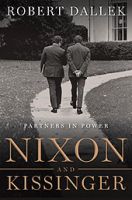
 Robert Dallek’s latest book recounts in plentiful detail (752 pages) the odd working relationship that existed between Richard Nixon and Henry Kissinger (Nixon’s national security adviser and, later, secretary of state). They were partly allies, in many ways strongly dependent upon one another, particularly when it came to making American foreign policy. But they also distrusted one another, sometimes deeply, and they’d occasionally maneuver behind each others’ backs. Dallek’s book, Nixon and Kissinger: Partners in Power, has just come out in paperback, which brings us to this NPR interview with the author (iTunes — Feed — Web Site). Dallek, who has previously written extensively on Kennedy and Johnson, gives a good interview that outlines “Nixinger’s” substantive accomplishments and the many behind-the-scenes intrigues. Give a listen.
Nixon and Kissinger: Best of Allies and Rivals

A Short History of Man, God, and Political Philosophy
In case you missed it, The New York Times published a lengthy article — The Politics of God — last weekend which essentially traces how the thought of Thomas Hobbes, John Locke, and other major political philosophers gave us secular politics, and particularly the separation of Church and State. They’re innovations with many upsides, but also the downside that they put us at an intellectual distance from entire regions where faith still governs political affairs. This includes large swathes of the Middle East and other areas within the “Muslim orbit.” It’s a good piece to read if you’ve ever wondered how philosophy tangibly shapes our modern world. Written by Mark Lilla, a Columbia University professor, the highly-readable article is adapted from his new book, The Stillborn God: Religion, Politics, and the Modern West. Get the article here, and don’t forget to subscribe to our feed.
Related Content for Philosophy Buffs:
- Philosophy Bites (Philosophers Interviews on Podcast)
- Enlightenment on iTunes: The Philosophy of Immanuel Kant
- Philosophy Talk and Intelligent Design
- Plato To Go (The Republic Now on iTunes)
Jon Stewart on 1994 and 2003 Dick Cheney
Strange culture we live in these days. It’s the comedians that ask the hard questions. See John Stewart below and the referenced Dick Cheney video below that.
America’s Philosopher President
What’s gone wrong with America’s democracy? It’s a question that Al Gore takes a hard look at in his recent (and well-reviewed) book, The Assault on Reason. Below, Gore gives you the gist of his argument in a half-hour video. It’s a bit heady. He’s invoking the Ancient Greeks, the Enlightenment, Edward Gibbon, Adam Smith and John Stuart Mill. What’s more, his thinking is heavily informed by Jurgen Habermas and his writings on rational political discourse. And it all loops into an explanation of how we’ve taken a wrong turn on the Iraq war, the environment, civil liberties and beyond. Yes, it’s heady stuff. But if Open Culture readers can’t handle it, who can?
The link to the original video is here.
Filling the Idea Void in Iraq
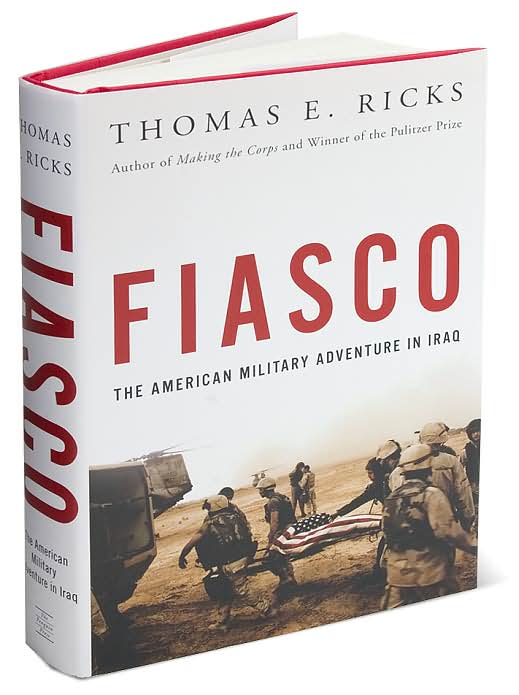 We have hit bottom in Iraq. And you know it because the debates over Iraq (whether the war was just, whether we planned it adequately, whether we have a meaningful exist strategy, etc.) have ground to a halt. The big defenders of the war effort have mostly gone silent, or they’re no longer taken seriously, and what we’re left with is a deficit of ideas all around. There are those who talk about staying in Iraq, but can’t articulate a credible strategy for moving forward. And those who talk about leaving, but can’t outline how we’ll leave Iraq in a morally defensible position. We hear a lot in the way of platitudes, little in the way of substance.
This Fresh Air interview (stream it here) with Thomas Ricks, author of the bestseller Fiasco: The American Military Adventure in Iraq, helps fill the idea void a bit. (His book, by the way, comes out in paperback later this week.) Having recently returned from Iraq, Ricks talks about the real options now available to the US, and what steps the Bush administration will likely take during its last 18 months. Also, he discusses how the American military has changed its m.o. in Iraq. Gone are the days when politics dictated a sunny outlook and no real plans. Now, adults are running the show, and they’re getting a good deal more realistic and pragmatic. But even they recognize that this newfound wisdom is coming perhaps too late.
Related Note: George Packer, the main journalist who covered the war effort for The New Yorker, has recently rolled out a blog for the magazine. It’s called “Interesting Times” and it’s sure to help fill the idea void as well. Give it a look here.
Want to download free courses from top universities? Check out this new podcast collection.

A Whole Lotta Chomsky
We recently stumbled upon a big trove of political dissent. This collection features over 200 talks — some in audio, some in video — given by MIT’s Noam Chomsky. The talks, which focus on politics (and not his work on linguistics) range from the 1970s to today. For an archive of his political writings, which includes many complete online texts, click here.
Tell a Friend About Open Culture -  Subscribe to Our Feed
Who Didn’t See This One Coming?
America’s 42nd president spoke this weekend at Harvard’s Class Day, a traditional event held for graduating seniors. While Class Day often features pop icons and comedians — take this speech by Ali G from a few yeas ago — Clinton’s speech was a bit more serious and idealistic, and it reminds us that there may be again a day when we can look to the White House for substance and inspiration. This too shall pass. You can watch Part 1 of his presentation below. Here are links to Parts 2 and 3.
YouTube’s Impact on the 2008 Election: The Hype and the Fact

YouTube is a little more than two years old. It’s a mere toddler. But, it’s now owned by an overgrown, fully-bearded nine year old. Yes, that would be Google, and that means that YouTube is ready to storm its way into the media mainstream, pampers and all. You can be sure that GooTube has already cooked up several strategies that will lead the video unit to media domination. But, even to the untrained media observer, it’s fairly clear that Google’s video unit has chosen the 2008 election as an arena in which it intends to compete with other major media outfits for eyeballs. In April, YouTube launched its political channel CitizenTube (get more info here) and, along with it, its first major line of video programming called You Choose ’08. The concept here is simple and promising: Citizens ask questions to the ’08 candidates, and the candidates respond. The results, however, have been largely disappointing. When you strip everything away, what you get are politicians speaking the same platitudes that we’ve seen for decades on TV. (See a sample reply here.) The only difference is that the video quality is worse, and they’re managing to get their platitudes in front of a young demographic, which is no small feat. For better or for worse, YouTube is to the ’08 election what MTV (remember Bill playing the sax?) was to the ’92 election. While neither CitizenTube nor the political campaigns are using the video platform in revolutionary ways, the millions of average users who make YouTube what it is are doing a better job of it. Of particular interest is the way in which videos are emerging on YouTube that counter images being carefully projected by candidates and their campaigns. Here are two quick examples. GOP candidate Mitt Romney has been predictably working to cast himself as a social conservative. Twice in recent months, he has shown up at Pat Robertson’s Regent University to deliver lines like this:
But then, however inconveniently, videos from Mitt Romney’s past political campaigns show up on YouTube, ones which should make evangelicals think twice, and there is not much Romney can do about it. The past hurts, but it doesn’t lie: Then there is Hillary Clinton. She’s got the money, the party machine is backing her, trying to wrap up the nomination with a bow. But then a damning attack ad crops up on YouTube. This pitch for Barack Obama remixes the “1984” TV ad that famously introduced Apple computers to America, and it casts Hillary as a political automaton, an image that rings true for many. (The Obama campaign denies having anything do with the video, and its creator remains unknown.) It is with videos like these that YouTube gets politically interesting. Just as quickly as a political campaign projects an image for Romney or Clinton, your average web user can scrounge up footage that calls that image into question. A retort is always possible, which was never the case on TV. And the cost of delivering/countering a message runs next to nothing. Again a first. YouTube equalizes, and it isn’t a terrain on which the rich can instantly claim victory. Just ask Romney and his over $200 million in personal wealth. What good has it done him in YouTube land? |
Support Us
We're hoping to rely on loyal readers, rather than erratic ads. Please click the Donate button and support Open Culture. You can use Paypal, Venmo, Patreon, even Crypto! We thank you!

About Us

Open Culture scours the web for the best educational media. We find the free courses and audio books you need, the language lessons & educational videos you want, and plenty of enlightenment in between.
Advertise With Us


