Chinese Youth Announce That They’re “Lying Flat” and Resisting the Pressures of Modern Life

The “Lying Flat” move­ment tak­ing hold among young peo­ple in Chi­na involves doing exact­ly what it sug­gests: work­ing lit­tle, rest­ing a lot, and cul­ti­vat­ing the most min­i­mal­ist lifestyle pos­si­ble. Unlike Tim­o­thy Leary’s 1960’s mantra, “turn on, tune in, drop out,” lying flat, or tang ping (躺平), takes no stance on a coun­ter­cul­tur­al ethos or the con­sump­tion of mind-alter­ing drugs. But it has caused the author­i­ties alarm, even among Eng­lish-lan­guage observers. Con­sid­er the Brook­ings Insti­tute head­line, “The ‘lying flat’ move­ment stand­ing in the way of China’s inno­va­tion dri­ve.” Stand­ing in the way of inno­va­tion is a car­di­nal sin of cap­i­tal­ism, one rea­son the “niche Chi­nese Gen Z meme” of tang ping, Jane Li writes, “is ring­ing alarm bells for Bei­jing.”

The phe­nom­e­non began — where else — on social media, when 31-year-old for­mer fac­to­ry work­er Luo Huazhong “drew the cur­tains and crawled into bed,” Cas­sady Rosen­blum writes at The New York Times. Luo then “post­ed a pic­ture of him­self [in bed] to the Chi­nese web­site Baidu along with a mes­sage: ‘Lying Flat is Jus­tice.’”

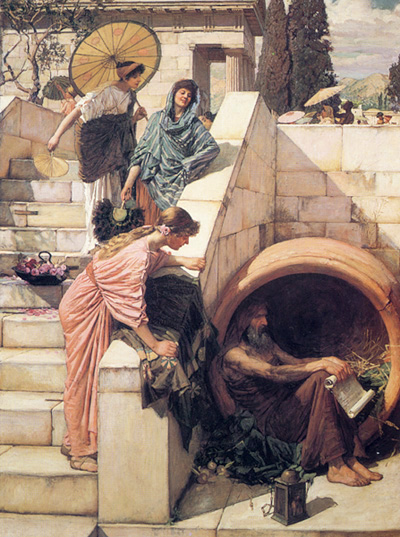
His man­i­festo (above) claimed the “right to choose a slow lifestyle” by doing lit­tle work to get by, read­ing, gar­den­ing, exer­cis­ing, and, yes, lying supine as often as he liked. To fur­ther elab­o­rate, Luo wrote, “lying flat is my sophis­tic move­ment,” with a ref­er­ence to Dio­genes the Cyn­ic, the Greek philoso­pher “said to have lived inside a bar­rel to crit­i­cize the excess­es of Athen­ian aris­to­crats.”

Dio­genes did more than that. He and his fol­low­ers reject­ed every­thing about Athen­ian soci­ety, from work and mar­riage to the abstract rea­son­ing of Pla­to. Luo might have turned to a more tra­di­tion­al source for “lying flat” — the Daoist prin­ci­ple of wu-wei, or non-doing. But lying flat is not so much about liv­ing in har­mo­ny with nature as it is a state of exhaus­tion, a full-body admis­sion that the promis­es of cap­i­tal­ism — work hard now, rest hard lat­er — have not and will not mate­ri­al­ize. They are phan­toms, mirages, pre­cise­ly the kind of fic­tions that made Dio­genes bark with laugh­ter. The truth, Rosen­blum writes, is that for “essen­tial” work­ers at the bot­tom all the way up to the “inner sanc­tums” of Gold­man Sachs, “work has become intol­er­a­ble. Rest is resis­tance.”

In a work cul­ture that cel­e­brates “996” — 12-hour days, six days a week– rest may be the only form of resis­tance. Polit­i­cal repres­sion and lack of upward mobil­i­ty have fos­tered “an almost monas­tic out­look” in Chi­na, writes Li, “includ­ing not get­ting mar­ried, not hav­ing chil­dren, not hav­ing a job, not own­ing prop­er­ty, and con­sum­ing as lit­tle as pos­si­ble.” Since pick­ing up tens of thou­sands of fol­low­ers online, the lying flat move­ment has become the tar­get of a cen­sor­ship cam­paign aimed at stop­ping young Chi­nese work­ers from check­ing out. One gov­ern­ment-backed news­pa­per called the move­ment “shame­ful,” and news agency Xin­hua unfa­vor­ably com­pared “lying flat­tists” to front-line med­ical work­ers. The orig­i­nal man­i­festo, Lying Flat groups, and mes­sage boards where users post­ed pho­tos of seals, cats, and them­selves lying flat have been tak­en down.

Zijia Song writes of tang ping as part­ly a response to a tra­di­tion­al Chi­nese cul­ture of com­pet­i­tive­ness and over­work, but notes that there are sim­i­lar move­ments in Japan, Korea, and the U.S., where “Black activists, writ­ers and thinkers are among the clear­est voic­es artic­u­lat­ing this spir­i­tu­al malaise and its solu­tions,” writes Rosen­blum, “per­haps because they’ve borne the brunt of cap­i­tal­ism more than oth­er groups of Amer­i­cans.” What­ev­er their nation­al ori­gin, each of these state­ments defi­ant­ly claims the right to rest, pos­ing a threat not only to the Par­ty but to an ide­al of human life as end­less over­work for shiny trin­kets and emp­ty promis­es, dur­ing a glob­al pan­dem­ic and cli­mate cri­sis that have revealed to us like noth­ing else the need to slow down, rest, and com­plete­ly reimag­ine the way we live.

Relat­ed Con­tent: 

Bertrand Rus­sell & Buck­min­ster Fuller on Why We Should Work Less, and Live & Learn More

Bri­an Eno’s Advice for Those Who Want to Do Their Best Cre­ative Work: Don’t Get a Job

Will You Real­ly Achieve Hap­pi­ness If You Final­ly Win the Rat Race? Don’t Answer the Ques­tion Until You’ve Watched Steve Cutts’ New Ani­ma­tion

Josh Jones is a writer and musi­cian based in Durham, NC. Fol­low him at @jdmagness

Hear Vincent Price Star in a Classic Radio Adaptation of George Orwell’s 1984

Here are some things you may not know about Vin­cent Price:

He was once a young man.

Before becom­ing a hor­ror icon in the 1950s, he was a suc­cess­ful char­ac­ter actor. “Only a third of his movies that he made were actu­al­ly hor­ror films,” says his daugh­ter, Vic­to­ria Price. “He made 105 films. Peo­ple don’t real­ize he had an exten­sive career in the­ater and radio.”

He came from a wealthy St. Louis fam­i­ly and har­bored ear­ly anti-semit­ic views and a mis­guid­ed admi­ra­tion for Hitler in the 1930s.

He com­plete­ly changed his views after mov­ing to New York and was placed on Sen. Joseph McCarthy’s “Pre­ma­ture Anti-Nazi Sym­pa­thiz­er list” in the 1950s, along with Eleanor Roo­sevelt, notes Susan King at the L.A. Times, a list that “raised ques­tions about those who had been against the Nazis before the U.S. went to war with Ger­many.”

He was a gourmet cook, had a degree in art his­to­ry, and worked for nine years in the six­ties as an art con­sul­tant for Sears….

He was black­list­ed for being anti-Nazi too ear­ly….

After being denied work for almost a year, as Price’s daugh­ter writes in her 1999 mem­oir, Vin­cent Price: A Daughter’s Biog­ra­phy, he chose to sign a “secret oath” offered by the FBI to sal­vage his career. Per­haps not coin­ci­den­tal­ly, he took a radio part soon after­ward in Aus­tralia, as a split narrator/Winston Smith in a 1955 Lux Radio The­ater adap­ta­tion of George Orwell’s 1984, per­haps fear­ful of a future in which secret oaths became the norm.

Orwell him­self had made it per­fect­ly clear what he feared. “Rad­i­cal in his pol­i­tics and in his artis­tic tastes,” Lionel Trilling wrote in a New York­er review the year the book came out, “Orwell is whol­ly free of the cant of rad­i­cal­ism”; his tal­ent as a writer of fic­tion is to make “com­mon sense” polit­i­cal obser­va­tions serve plot and char­ac­ter. Per­haps the most chill­ing of these arrives in the first few para­graphs of 1984:

In the far dis­tance a heli­copter skimmed down between the roofs, hov­ered for an instant like a blue­bot­tle, and dart­ed away again with a curv­ing flight. It was the police patrol, snoop­ing into peo­ple’s win­dows. The patrols did not mat­ter, how­ev­er. Only the Thought Police mat­tered. 

We may be remind­ed of the dis­tinc­tions between what “Orwellian” means and what it does not, as Noah Tavlin describes in a recent explain­er: if someone’s “talk­ing about mass sur­veil­lance and intru­sive gov­ern­ment, they’re describ­ing some­thing author­i­tar­i­an, but not nec­es­sar­i­ly Orwellian.” Author­i­tar­i­an­ism is pure brute force. The Orwellian requires a con­stant mis­use of lan­guage, a vio­lent twist­ing of con­science, a per­pet­u­al shout­ing of lies as truth until the two are indis­tin­guish­able. No one is served by this but nihilis­tic oli­garchs, Trilling writes:

The rulers of Orwell’s State know that pow­er in its pure form has for its true end noth­ing but itself, and they know that the nature of pow­er is defined by the pain it can inflict on oth­ers. They know, too, that just as wealth exists only in rela­tion to the pover­ty of oth­ers, so pow­er in its pure aspect exists only in rela­tion to the weak­ness of oth­ers, and that any pow­er of the ruled, even the pow­er to expe­ri­ence hap­pi­ness, is by that much a diminu­tion of the pow­er of the rulers.

Orwellian soci­eties exist sole­ly to spread hatred and mis­ery, even to their detri­ment, a point Price made at the end of anoth­er radio broad­cast, a 1950 episode of NBC’s The Saint, in which the actor denounced racism and reli­gious prej­u­dice. Not long after­ward, his name appeared on McCarthy’s list.

Price learned that the gov­ern­ment could deprive him of his hap­pi­ness unless he swore feal­ty to an insane­ly non­sen­si­cal polit­i­cal moral­i­ty. His daugh­ter offers the expe­ri­ence as one rea­son for his love of play­ing vil­lains. “Most of the vil­lains that he played had been wronged in some way. There was a rea­son for their vil­lainy.”

Relat­ed Con­tent: 

What “Orwellian” Real­ly Means: An Ani­mat­ed Les­son About the Use & Abuse of the Term

Hux­ley to Orwell: My Hell­ish Vision of the Future is Bet­ter Than Yours (1949)

George Orwell Explains in a Reveal­ing 1944 Let­ter Why He’d Write 1984

Josh Jones is a writer and musi­cian based in Durham, NC. Fol­low him at @jdmagness

How Steven Van Zandt Organized the Sun City Boycott and Helped Catalyze the Anti-Apartheid Movement (1985)

Actor and musi­cian Steven Van Zandt — known to Spring­steen fans as E Street Band gui­tarist Lit­tle Steven — played the steady voice of rea­son Sil­vio Dante on The Sopra­nos. With­out his guid­ing hand and sense of style, Tony would not have made it as far as he did. How much of Steven Van Zandt was in Sil­vio? Maybe a lot. As Van Zandt told Vice in a 2019 inter­view, he invent­ed the char­ac­ter and gave it to David Chase, who turned his vision of “big bands, cho­rus girls, Jew­ish Catskills comics” into the Bada Bing, a “strip club for the fam­i­ly.”

It’s not hard to imag­ine Sil­vio in his shiny suits get­ting onstage with the Boss, but he would nev­er have played Van Zandt’s role as an anti-racist activist. After leav­ing the E Street Band in 1984, Van Zandt start­ed orga­niz­ing musi­cians against apartheid for what would become an unprece­dent­ed action against Sun City, “a ritzy, whites only resort in South Africa,” Josh Haskell writes at ABC News, “that Van Zandt and his group Artists Unit­ed Against Apartheid decid­ed to boy­cott.”

Van Zandt and leg­endary hip hop pro­duc­er Arthur Bak­er brought togeth­er what rock crit­ic Dave Marsh calls “the most diverse line up of pop­u­lar musi­cians ever assem­bled for a sin­gle ses­sion” to record “Sun City,” a song that “raised aware­ness about apartheid,” says Haskell, “dur­ing a time in the 1980s when many Amer­i­cans weren’t aware of what was hap­pen­ing.” It wasn’t dif­fi­cult to bury the news pre-inter­net. Since the South African gov­ern­ment received tac­it sup­port from U.S. cor­po­ra­tions and the Rea­gan admin­is­tra­tion, there was hard­ly a rush to char­ac­ter­ize the coun­try too neg­a­tive­ly in the media.

Van Zandt him­self remem­bered being “shocked to find real­ly slav­ery going on and this very bril­liant but evil strat­e­gy called apartheid,” he said in 2013. “At the time, it was quite coura­geous for the artists to be on this record. We crossed a line from social con­cerns to polit­i­cal con­cerns.” The list of famous artists involved in the record­ing ses­sions and video is too long to repro­duce, but it notably includ­ed hip-hop and rock roy­al­ty like Bruce Spring­steen, DJ Kool Herc, Bob Dylan, Pat Benatar, Ringo Starr, Lou Reed, Run D.M.C., Peter Gabriel, Kur­tis Blow, Bono, Kei­th Richards, Bon­nie Raitt, Joey Ramone, Gil Scott-Heron, and Bob Geld­of.

As with oth­er occa­sion­al super­groups assem­bled at the time (by Geld­of) to raise funds and/or aware­ness for glob­al caus­es, there’s a too-many-cooks feel to the results, but the music is sec­ondary to the mes­sage. Even so, “Sun City” turned out to be a pio­neer­ing crossover track: “too black for white radio and too white for black radio,” says Van Zandt. Instead, it hit its stride on tele­vi­sion in the ear­ly days of MTV and BET: “They real­ly embraced it and played it a lot. Con­gress­men and sen­a­tors’ chil­dren were com­ing up to them and telling them about apartheid and what they saw hap­pen­ing in South Africa. That put us over the edge.”

When pop, punk, rock, and hip-hop artists linked arms, it “re-ener­gized the whole anti-apartheid move­ment, says Van Zandt, which had kind of hit a wall at that point and was not get­ting much trac­tion.” Unlike oth­er super­group protest songs, “Sun City” also gave its lis­ten­ers an inci­sive polit­i­cal edu­ca­tion, sum­ming up the sit­u­a­tion in the lyrics. You can see a 1985 doc­u­men­tary on the mak­ing of the song just above. “The refrain of ‘I ain’t gonna play Sun City’ is a sim­ple one,” notes the Zinn Edu­ca­tion Project, “but the issues raised in the song and film are not.” See the lyrics (along with the artists who sang the lines) here, and learn more about the his­to­ry of South African apartheid at the Zinn Ed Project.

Relat­ed Con­tent:

When South Africa Banned Pink Floyd’s The Wall After Stu­dents Chant­ed “We Don’t Need No Edu­ca­tion” to Protest the Apartheid School Sys­tem (1980)

Peter Gabriel Re-Records “Biko,” His Anti-Apartheid Protest Song, with Musi­cians Around the World

Take a Vir­tu­al Tour of Robben Island Where Nel­son Man­dela and Oth­er Apartheid Oppo­nents Were Jailed

Josh Jones is a writer and musi­cian based in Durham, NC. Fol­low him at @jdmagness

757 Episodes of the Classic TV Game Show What’s My Line?: Watch Eleanor Roosevelt, Louis Armstrong, Salvador Dali & More

What would the host and pan­elists of the clas­sic prime­time tele­vi­sion game show What’s My Line? have made of The Masked Singera more recent offer­ing in which pan­elists attempt to iden­ti­fy celebri­ty con­tes­tants who are con­cealed by elab­o­rate head-to-toe cos­tumes and elec­tron­i­cal­ly altered voiceovers.

One expects such shenani­gans might have struck them as a bit uncouth.

Host John Charles Daly was will­ing to keep the ball up in the air by answer­ing the panel’s ini­tial ques­tions for a Mys­tery Guest with a wide­ly rec­og­niz­able voice, but it’s hard to imag­ine any­one stuff­ing for­mer First Lady Eleanor Roo­sev­elt into the full body steam­punk bee suit the (SPOILER) Empress of Soul wore on The Masked Singer’s first sea­son.

Mrs. Roosevelt’s Oct 18, 1953 appear­ance is a delight, espe­cial­ly her pan­tomimed dis­gust at the 17:29 mark, above, when blind­fold­ed pan­elist Arlene Fran­cis asks if she’s asso­ci­at­ed with pol­i­tics, and Daly jumps in to reply yes on her behalf.

Lat­er on, you get a sense of what play­ing a jol­ly par­lor game with Mrs. Roo­sevelt would have been like. She’s not above fudg­ing her answers a bit, and very near­ly wrig­gles with antic­i­pa­tion as anoth­er pan­elist, jour­nal­ist Dorothy Kil­gallen, begins to home in on the truth.

While the ros­ter of Mys­tery Guests over the show’s orig­i­nal 17-year broad­cast is impres­sive — Cab Cal­lowayJudy Gar­land, and Edward R. Mur­row to name a few — every episode also boast­ed two or three civil­ians hop­ing to stump the sophis­ti­cat­ed pan­el with their pro­fes­sion.

Mrs. Roo­sevelt was pre­ced­ed by a bath­tub sales­man and a fel­low involved in the man­u­fac­ture of Blood­hound Chew­ing Tobac­co, after which there was just enough time for a woman who wrote tele­vi­sion com­mer­cials.

Non-celebri­ty guests stood to earn up to $50 (over $500 today) by pro­long­ing the rev­e­la­tion of their pro­fes­sions, as com­pared to the Mys­tery Guests who received an appear­ance fee of ten times that, win or lose. (Pre­sum­ably, Mrs. Roo­sevelt was one of those to donate her hon­o­rar­i­um.)

The reg­u­lar pan­elists were paid “scan­dalous amounts of mon­ey” as per pub­lish­er Ben­nett Cerf, whose “rep­u­ta­tion as a nim­ble-wit­ted gen­tle­man-about-town was rein­forced by his tenure on What’s My Line?”, accord­ing to Colum­bia University’s Oral His­to­ry Research Office.

The unscript­ed urbane ban­ter kept view­ers tun­ing in. Broad­way actor Fran­cis recalled: “I got so much plea­sure out of ‘What’s My Line?’ There were no rehearsals. You’d just sit there and be your­self and do the best you could.”

Pan­elist Steve Allen is cred­it­ed with spon­ta­neous­ly alight­ing on a bread­box as a unit of com­par­a­tive mea­sure­ment while ques­tion­ing a man­hole cov­er sales­man in an episode that fea­tured June Hav­oc, leg­end of stage and screen as the Mys­tery Guest (at at 23:57, below).

“Want to show us your bread­box, Steve?” one of the female pan­elists fires back off-cam­era.

The phrase “is it big­ger than a bread­box” went on to become a run­ning joke, fur­ther con­tribut­ing to the illu­sion that view­ers had been invit­ed to a fash­ion­able cock­tail par­ty where glam­orous New York scene­mak­ers dressed up to play 21 Pro­fes­sion­al Ques­tions with ordi­nary mor­tals and a celebri­ty guest.

Jazz great Louis Arm­strong appeared on the show twice, in 1954 and then again in 1964, when he employed a suc­cess­ful tech­nique of light mono­syl­lab­ic respons­es to trick the same pan­elists who had iden­ti­fied him quick­ly on his ini­tial out­ing.

“Are you relat­ed to any­body that has any­thing to do with What’s My Line?” Cerf asks, caus­ing Arm­strong, host Daly, and the stu­dio audi­ence to dis­solve with laugh­ter.

“What hap­pened?” Arlene Fran­cis cries from under her pearl-trimmed mask, not want­i­ng to miss the joke.

Tele­vi­sion — and Amer­i­ca itself — was a long way off from acknowl­edg­ing the exis­tence of inter­ra­cial fam­i­lies.

“It’s not Van Clyburn, is it?” Fran­cis ven­tures a cou­ple of min­utes lat­er.…

Expect the usu­al gen­der-based assump­tions of the peri­od, but also appear­ances by Mary G. Ross, a Chero­kee aero­space engi­neer, and physi­cist Helen P. Mann, a data ana­lyst at Cape Canaver­al.

If you find the con­vivial atmos­phere of this sem­i­nal Good­son-Tod­man game show absorb­ing, there are 757 episodes avail­able for view­ing on What’s My Line?’YouTube chan­nel.

Allow us to kick things off on a Sur­re­al Note with Mys­tery Guest Sal­vador Dali, after which you can browse chrono­log­i­cal playlists as you see fit:

1950–54

1955–57

1958–60

1961 ‑63

1964–65

Relat­ed Con­tent: 

Sal­vador Dalí Gets Sur­re­al with 1950s Amer­i­ca: Watch His Appear­ances on What’s My Line? (1952) and The Mike Wal­lace Inter­view (1958)

How Amer­i­can Band­stand Changed Amer­i­can Cul­ture: Revis­it Scenes from the Icon­ic Music Show

How Dick Cavett Brought Sophis­ti­ca­tion to Late Night Talk Shows: Watch 270 Clas­sic Inter­views Online

Ayun Hal­l­i­day is an author, illus­tra­tor, the­ater mak­er and Chief Pri­ma­tol­o­gist of the East Vil­lage Inky zine.  Fol­low her @AyunHalliday.

When Rage Against the Machine Interviewed Noam Chomsky (1999)

“The first great [eco­nom­ic] exper­i­ment was a ‘bad idea’ for the sub­jects, but not for the design­ers and local elites asso­ci­at­ed with them. This pat­tern con­tin­ues until the present: plac­ing prof­it over peo­ple.” — Noam Chom­sky, Prof­it Over Peo­ple

“A glob­al decom­po­si­tion is tak­ing place. We call it the Fourth World War: neoliberalism’s glob­al­iza­tion attempt to elim­i­nate that mul­ti­tude of peo­ple who are not use­ful to the pow­er­ful — the groups called ‘minori­ties’ in the math­e­mat­ics of pow­er, but who hap­pen to be the major­i­ty pop­u­la­tion in the world.” — Sub­co­man­dante Mar­cos

Whether we think of glob­al neolib­er­al­ism — to the extent that we think about it — as the iner­tia of cen­turies-old eco­nom­ic the­o­ry or as delib­er­ate geno­cide, the effects are the same. The major­i­ty of the world’s pop­u­la­tion suf­fers under mas­sive inequal­i­ty, includ­ing, now, vac­cine inequal­i­ty, lead­ing to rag­ing COVID epi­demics in some parts of the world as oth­er places emerge from lock­downs and resume “nor­mal” oper­a­tions. The “Cap­i­tal­ist Hydra,” as Zap­atista leader Sub­co­man­dante Mar­cos once called it, always seems to grow more heads.

Indeed, most plans to alle­vi­ate glob­al pover­ty and dis­ease seem to fur­ther enrich the archi­tects and immis­er­ate the tar­gets of their pur­port­ed care. Noam Chom­sky has point­ed out repeat­ed­ly that neolib­er­al eco­nom­ic rules are only applied to sub­ject pop­u­la­tions, since the wealthy ignore the strict con­di­tions they impose by force and coer­cion on oth­ers, call­ing the out­comes a nat­ur­al sort­ing of “win­ners and losers.” Ongo­ing glob­al eco­nom­ic prac­tices have accel­er­at­ed a cli­mate cri­sis that impacts the major­i­ty of the world’s (poor) pop­u­la­tion, send­ing mil­lions on a col­li­sion course with bru­tal­i­ty at the bor­ders as they flee to oth­er parts of the world for bare sur­vival.

The mul­ti­ple crises we now face were clear­ly evi­dent at the turn of the mil­len­ni­um, when Rage Against the Machine played Mex­i­co City for the first time in 1999. They released the con­cert footage in a video titled The Bat­tle of Mex­i­co City in 2001, the same year the indige­nous guer­ril­la force EZLN — pop­u­lar­ly known as the Zap­atis­tas — marched on Mex­i­co City. (Con­cert audio was released on vinyl this past June.) The video release includ­ed inter­views with Chom­sky and then-EZLN mil­i­tary leader Mar­cos, and you can see them both here.

At the top, Chom­sky responds to a ques­tion about NAFTA, a “free-trade” agree­ment that proved his point about how such poli­cies do the oppo­site of what they pro­pose, ben­e­fit­ting the very few instead of the many. Chom­sky, who ana­lyzed the ways that the gov­ern­ment and cor­po­rate media man­u­fac­tured con­sent for their poli­cies dur­ing the Viet­nam War, wasn’t tak­en in by the hype. The agree­ment nev­er had any­thing to do with free trade, he says, but with lock­ing Mex­i­co into pro­grams of “struc­tur­al adjust­ment” that kept peo­ple in pover­ty and the coun­try depen­dent on eco­nom­ic terms dic­tat­ed from out­side its bor­ders.

From the per­spec­tive of the indige­nous peo­ple in Mex­i­co fight­ing for an autonomous region in Chi­a­pas, the strug­gle is not only against the Mex­i­can gov­ern­ment, but also an inter­na­tion­al eco­nom­ic order that impos­es its will on the coun­try and its cit­i­zens, who then turn on the poor­est and most dis­pos­sessed among them in con­di­tions of man­u­fac­tured scarci­ty. Indige­nous Mex­i­cans, like oth­er inter­nal­ly sub­ject­ed peo­ple around the world, are deemed expend­able, fig­ured as a “prob­lem” to be solved or elim­i­nat­ed. What is so strik­ing about these per­spec­tives, twen­ty years after the release of The Bat­tle of Mex­i­co City, is just how pre­scient, even prophet­ic, they sound today.

Relat­ed Con­tent: 

An Ani­mat­ed Intro­duc­tion to Noam Chomsky’s Man­u­fac­tur­ing Con­sent and How the Media Cre­ates the Illu­sion of Democ­ra­cy

Requiem for the Amer­i­can Dream: Noam Chom­sky on the 10 Prin­ci­ples That Have Led to Unprece­dent­ed Inequal­i­ty in the US 

Noam Chom­sky Explains the Best Way for Ordi­nary Peo­ple to Make Change in the World, Even When It Seems Daunt­ing

An Ani­mat­ed Intro­duc­tion to Noam Chomsky’s Ground­break­ing Lin­guis­tic The­o­ries

Josh Jones is a writer and musi­cian based in Durham, NC. Fol­low him at @jdmagness

Watch a Never-Aired TV Profile of James Baldwin (1979)

In 1979, just a cou­ple of months into his stint with 20/20, ABC’s fledg­ling tele­vi­sion news mag­a­zine, pro­duc­er and doc­u­men­tar­i­an Joseph Lovett was “beyond thrilled” to be assigned an inter­view with author James Bald­win, whose work he had dis­cov­ered as a teen.

Know­ing that Bald­win liked to break out the bour­bon in the after­noon, Lovett arranged for his crew to arrive ear­ly in the morn­ing to set up light­ing and have break­fast wait­ing before Bald­win awak­ened:

He hadn’t had a drop to drink and he was bril­liant, utter­ly bril­liant. We couldn’t have been hap­pi­er.

Pio­neer­ing jour­nal­ist Sylvia Chase con­duct­ed the inter­view. The seg­ment also includ­ed stops at Lin­coln Cen­ter for a rehearsal of Baldwin’s play, The Amen Cor­ner, and the Police Ath­let­ic League’s Harlem Cen­ter where Bald­win (and per­haps the cam­era) seems to unnerve a teen reporter, cup­ping his chin at length while answer­ing his ques­tion about a Black writer’s chances:

There nev­er was a chance for a Black writer.  Lis­ten, a writer, Black or white, doesn’t have much of a chance. Right? Nobody wants a writer until he’s dead. But to answer your ques­tion, there’s a greater chance for a Black writer today than there ever has been.

In the Man­hat­tan build­ing Bald­win bought to house a num­ber of his close-knit fam­i­ly, Chase cor­ners his moth­er in the kitchen to ask if she’d had any inkling her son would become such a suc­cess.

“No, I didn’t think that,” Mrs. Bald­win cuts her off. “But I knew he had to write.”

Bald­win speaks frankly about out­ing him­self to the gen­er­al pub­lic with his 1956 nov­el Giovanni’s Room and about what it means to live as a Black man in a nation that has always favored its white cit­i­zens:

The Amer­i­can sense of real­i­ty is dic­tat­ed by what Amer­i­cans are try­ing to avoid. And if you’re try­ing to avoid real­i­ty, how can you face it?

Near­ly 35 years before Black Lives Matter’s for­ma­tion, he tack­les the issue of white fragili­ty by telling Chase, “Look, I don’t mean it to you per­son­al­ly. I don’t even know you. I have noth­ing against you. I don’t know you per­son­al­ly, but I know you his­tor­i­cal­ly. You can’t have it both ways. You can’t swear to the free­dom of all mankind and put me in chains.”

The fin­ished piece is a superb, 60 Min­utes-style pro­file that cov­ers a lot of ground, and yet, 20/20 chose not to air it.

After the show ran Chase’s inter­view with Michael Jack­son, pro­duc­er Lovett inquired as to the delay and was told that no one would be inter­est­ed in a “queer, Black has-been”:

I was stunned, I was absolute­ly stunned, because in my mind James Bald­win was no has-been. He was a clas­sic Amer­i­can writer, trans­lat­ed into every lan­guage in the world, and would live on for­ev­er, and indeed he has. His courage and his elo­quence con­tin­ue to inspire us today.

On June 24, Joseph Lovett will mod­er­ate James Bald­win: Race, Media, and Psy­cho­analy­sis, a free vir­tu­al pan­el dis­cus­sion cen­ter­ing on his 20/20 pro­file of James Bald­win, with psy­cho­an­a­lysts Vic­tor P. Bon­fil­io and Annie Lee Jones, and Baldwin’s niece, author Aisha Kare­fa-Smart. Reg­is­ter here.

H/T to author Sarah Schul­man

Relat­ed Con­tent: 

Why James Baldwin’s Writ­ing Stays Pow­er­ful: An Art­ful­ly Ani­mat­ed Intro­duc­tion to the Author of Notes of a Native Son

Watch the Famous James Bald­win-William F. Buck­ley Debate in Full, With Restored Audio (1965)

James Baldwin’s One & Only, Delight­ful­ly-Illus­trat­ed Children’s Book, Lit­tle Man Lit­tle Man: A Sto­ry of Child­hood (1976)

Lis­ten to James Baldwin’s Record Col­lec­tion in a 478-track, 32-Hour Spo­ti­fy Playlist

Ayun Hal­l­i­day is an author, illus­tra­tor, the­ater mak­er and Chief Pri­ma­tol­o­gist of the East Vil­lage Inky zine. Fol­low her @AyunHalliday.

Revisiting Marvin Gaye’s “What’s Goin’ On,” and the Album That Opened R&B to Resistance: Revisited 50 Years Later

I just want to be heard and that’s all that mat­ters. — Mar­vin Gaye

R&B super­star Mar­vin Gaye was more than will­ing to risk his career on a record.

His pol­ished pub­lic per­sona was a false front behind which lurked some seri­ous demons — depres­sion and addic­tion, exac­er­bat­ed by the ill­ness and death of his close friend and duet mate, Tam­mi Ter­rell.

His down­ward spi­ral was also fueled by his dis­tress over events of the late 60s.

How else to respond to the Viet­nam War, the mur­der of civ­il rights lead­ers, police bru­tal­i­ty, the Watts Riots, a dire envi­ron­men­tal sit­u­a­tion, and the dis­en­fran­chise­ment and aban­don­ment of low­er income Black com­mu­ni­ties?

Per­haps by refus­ing to adhere to pro­duc­er Bar­ry Gordy’s man­date that all Motown artists were to steer clear of overt polit­i­cal stances….

He con­trolled their careers, but art is a pow­er­ful out­let.

Obie Ben­son also came under Gordy’s thumb as a mem­ber of the R&B quar­tet, the Four Tops. The shock­ing vio­lence he wit­nessed in Berkeley’s Peo­ple’s Park on Bloody Thurs­day while on tour with his band pro­vid­ed the lyri­cal inspi­ra­tion for “What’s Goin’ On.”

When the oth­er mem­bers of the group refused to touch it, not want­i­ng to rock the boat with a protest song, he took it to Gaye, who had lost all enthu­si­asm for the “bull­shit” love songs that had made him a star

Ben­son recalled that Gaye added some “things that were more ghet­to, more nat­ur­al, which made it seem more like a sto­ry than a song… we mea­sured him for the suit and he tai­lored the hell out of it.”

Gordy was not pleased with the song’s mes­sage, nor his loosey goosey approach to lay­ing down the track. Eli Fontaine’s famous sax­o­phone intro was impro­vised and “Motown’s secret weapon,” bassist James Jamer­son was so plas­tered on Metaxa, he was record­ed sprawl­ing on the floor.

Jamer­son told his wife they’d been work­ing on a “mas­ter­piece,” but Gordy dubbed “What’s Going On” “the worst thing I ever heard in my life,” pooh-poohing the “Dizzy Gille­spie stuff in the mid­dle, that scat­ting.” He refused to release it.

Gaye stonewalled by going on strike, refus­ing to record any music what­so­ev­er.

Eight months in, Motown’s A&R Head Har­ry Balk, des­per­ate for anoth­er release from one of the label’s most pop­u­lar acts, direct­ed sales vice pres­i­dent Bar­ney Ales to drop the new sin­gle behind Gordy’s back.

It imme­di­ate­ly shot to the top of the charts, sell­ing 70,000 copies in its first week.

Gordy, warm­ing to the idea of more sales, abrupt­ly reversed course, direct­ing Gaye to come up with an entire album of protest songs. It ush­ered in a new era in which Black record­ing artists were not only free, but encour­aged to use their voic­es to bring about social change.

The album, What’s Going On, recent­ly claimed top hon­ors when Rolling Stone updat­ed its  500 Great­est Albums list. Now, it is cel­e­brat­ing its 50th anniver­sary, and as Poly­phon­ic, pro­duc­ers of the mini-doc above note, its sen­ti­ments couldn’t be more time­ly.

Relat­ed Con­tent: 

Hear Mar­vin Gaye Sing “I Heard It Through the Grapevine” A Capel­la: The Haunt­ing Iso­lat­ed Vocal Track

Nina Simone’s Live Per­for­mances of Her Poignant Civ­il Rights Protest Songs

Hear a 4 Hour Playlist of Great Protest Songs: Bob Dylan, Nina Simone, Bob Mar­ley, Pub­lic Ene­my, Bil­ly Bragg & More

Ayun Hal­l­i­day is an author, illus­tra­tor, the­ater mak­er and Chief Pri­ma­tol­o­gist of the East Vil­lage Inky zine.  Join her June 7 for a Necro­mancers of the Pub­lic Domain: The Peri­od­i­cal Cica­da, a free vir­tu­al vari­ety hon­or­ing the 17-Year Cicadas of Brood X. Fol­low her @AyunHalliday.

What Karl Marx Meant by “Alienation”: Two Animated Videos Explain

A com­mon polit­i­cal dis­tor­tion claims that social­ists are lazy and want to live off oth­er people’s labor. Nev­er mind that this descrip­tion best applies to those who do not work but live off rents, div­i­dends, and tax breaks. A big­ger prob­lem with the idea lies in its def­i­n­i­tion of “work,” con­flat­ing labor-for-hire with labor for a pur­pose. In Karl Marx’s the­o­ries, work occu­pies a cen­tral posi­tion as a human val­ue. We all want to work, he thought. We are not born, how­ev­er, want­i­ng to max­i­mize share­hold­er val­ue.

Marx believed that “work, at its best, is what makes us human,” X‑Files star Gillian Ander­son tells us in the BBC Radio 4 ani­ma­tion above. “‘It ful­fills our species essence,’ as he put it. Work allows us “to live, to be cre­ative, to flour­ish.” Work in the indus­tri­al 19th cen­tu­ry, how­ev­er, did noth­ing of the kind. You only need to imag­ine for a moment the soot-filled fac­to­ries, child labor, com­plete lack of work­er pro­tec­tions and ben­e­fits to see the kinds of con­di­tions to which Marx wrote in response. “Work,” says Ander­son, in brief, “destroyed work­ers.”

Under cap­i­tal­ism, Marx main­tained, work­ers are “alien­at­ed” from their labor, a con­cept that does not just mean emo­tion­al­ly depressed or cre­ative­ly unful­filled. As ear­ly as 1844, over twen­ty years before the first vol­ume of Cap­i­tal appeared, Marx would elab­o­rate the con­cept of “estranged labor”  in an essay of the same name:

The work­er becomes all the poor­er the more wealth he pro­duces, the more his pro­duc­tion increas­es in pow­er and size. The work­er becomes an ever cheap­er com­mod­i­ty the more com­modi­ties he cre­ates. The deval­u­a­tion of the world of men is in direct pro­por­tion to the increas­ing val­ue of the world of things. Labor pro­duces not only com­modi­ties; it pro­duces itself and the work­er as a com­mod­i­ty.

In an econ­o­my where things mat­ter more than peo­ple, peo­ple become deval­ued things: the “real­iza­tion of labor appears as loss of real­iza­tion for the work­ers; objec­ti­fi­ca­tion as loss of the object and bondage to it; appro­pri­a­tion as estrange­ment, as alien­ation.” Work­ers are not only spir­i­tu­al­ly dis­sat­is­fied under cap­i­tal­ism, they are alien­at­ed from the fruit of their labor “to the point of starv­ing to death.” To be an alien­at­ed work­er means to be lit­er­al­ly kept from things one needs to live.

This is the kind of work Marx­ists and social­ists have opposed, that which gross­ly enrich­es a few at the expense of most every­one else. Whether or not we are con­tent with Marx­ist solu­tions or feel a need for new the­o­ries, every seri­ous stu­dent of his­to­ry, econ­o­my, and cul­ture has to come to grips with Marx’s for­mi­da­ble cri­tiques. In the video above, Alain de Botton’s School of Life, a self-described “pro-Cap­i­tal­ist insti­tu­tion,” attempts to do so in ten min­utes or less.

“Most peo­ple agree that we need to improve our eco­nom­ic sys­tem some­how,” says de Bot­ton. “It threat­ens our plan­et through exces­sive con­sump­tion, dis­tracts us with irrel­e­vant adver­tis­ing, leaves peo­ple hun­gry and with­out health­care, and fuels unnec­es­sary wars.” It per­pet­u­ates, in oth­er words, pro­found alien­ation on a mas­sive scale. Of course it does, Marx might respond. That’s exact­ly what the sys­tem is designed to do. Or as he actu­al­ly wrote, “the only wheels which polit­i­cal econ­o­my sets in motion are greed, and the war amongst the greedy — com­pe­ti­tion.”

Relat­ed Con­tent: 

Marx­ism by Ray­mond Geuss: A Free Online Course 

A Short Ani­mat­ed Intro­duc­tion to Karl Marx

5 Free Online Cours­es on Marx’s Cap­i­tal from Prof. David Har­vey

Josh Jones is a writer and musi­cian based in Durham, NC. Fol­low him at @jdmagness

« Go BackMore in this category... »
Quantcast