Another great New York City moment. In the spring of 2009, construction workers building the new home for Poets House were treated to a short poetry reading by the actor Bill Murray. We initially encounter Murray (at the 59 second mark) reading lines from Billy Collins’ Another Reason I Don’t Keep a Gun in the House. Next up? Lorine Niedecker’s very pithy poem, Poets Work, and then, of course, a little Emily Dickinson.
For more free poetry, visit our collection of Free Audio Books.
Looking for free, professionally-read audio books from Audible.com? Here’s a great, no-strings-attached deal. If you start a 30 day free trial with Audible.com, you can download two free audio books of your choice. Get more details on the offer here.
This year, Tim Burton’s production of Alice In Wonderland was welcomed by a flurry of media buzz and a rather polarized public response debating whether the iconic director had butchered or reinvented the even more iconic children’s classic. But discussion of the film’s creative merits aside, one thing it did do brilliantly was rekindle the public’s interest in what’s easily the most beloved work of children’s literature of the past two centuries.
So beloved, in fact, that Lewis Carroll’s 1865 novel has generated hundreds of reprints, film adaptations and various derivative works over the years. Many of these works are now available in the public domain — even a simple search in the Internet Archive sends you down a rabbit hole of adaptations and remakes, spanning from landmark early cinema treasures to offbeat products of contemporary digital culture.
Today, we’ve curated a selection of the most interesting and culturally significant — the “curiouser and curiouser,” if you will — free versions of, tributes to, and derivatives of Alice’s Adventures In Wonderland.
The fundamentals: A Project Gutenberg free digital copy of Carroll’s original Alice’s Adventures In Wonderland text
A 1916 abridged version intended for younger children, digitized by the Library of Congress, is available from the International Children’s Digital Library and features some wonderful illustration — though, regrettably, it lacks the Cheshire Cat
For a classic with a spin, try this audio version read by blogger extraordinaire, BoingBoing co-editor, Popular Science columnist and vocal free content advocate Cory Doctorow
The earliest cinematic adaptation of the book, directed by Cecil Hepworth in 1903, is a silent film gem, clocking in at just 8 minutes and 19 seconds. Watch above.
In 1915, W. W. Young directed the second American adaptation of Alice — a massive six-reel production that showcased the rapid evolution of filmmaking in just a decade since the first production. Though much of the film is now lost, 42 minutes of it can be seen at the Internet Archive for free
A 1966 British adaptation by director Jonathan Miller for the BBC features an ambitious cast — including Peter Sellers as the King of Hearts, Sir John Gielguld as Mock Turtle, Michael Redgrave as The Caterpillar and Peter Cook as the Mad Hatter — and its soundtrack, scored by the legendary Ravi Shankar, exudes the borderline folk-psychedelia sound of the Woodstock era. The film, divided into seven parts, is available for free on YouTube.
This 2‑minute version of Alice In Wonderland shot in the virtual world Second Life is an eerie testament to just how widely Carroll’s classic resonates.
Perhaps the biggest treasure of all, Lewis Carroll’s original manuscript, available from the British Library — 91 pages of precious literary history, with original illustrations from artist John Tenniel. The online gallery also features a preface telling the fascinating story of the Oxford mathematician’s real-life inspiration for the book and the fate of the real Alice
Maria Popova is the founder and editor in chief of Brain Pickings, a curated inventory of eclectic interestingness and indiscriminate curiosity. She writes for Wired UK, GOOD Magazine and Huffington Post, and spends a disturbing amount of time curating interestingness on Twitter.
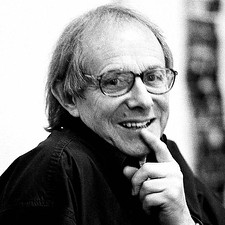
Ken Loach is Britain’s most famous – and often controversial – director, known for his social realist directing style and socialist politics. Given his approach, it’s quite fitting that he has made some of his finest films available on YouTube – for free. The Ken Loach YouTube channel gives you access to his early major films, including Cathy Come Home, a 1966 BBC docudrama that portrays a young couple grappling with poverty, unemployment, and homelessness, and also Kes, a 1970 movie that’s now ranked seventh on the British Film Institute’s list of the Top Ten (British) Films.
But you wouldn’t want to miss Loach’s more recent films. And the new YouTube collection doesn’t disappoint. It features Hidden Agenda (1990), a political thriller that won the Jury Prize at the Cannes Film Festival; Riff Raff (1991), another prize winner that takes a hard look at the working class in the UK; and Ae Fond Kiss (2004), which delves into what happens when a young Pakistani man enters into a relationship with a Caucasian woman in Glasgow.
Filmed in 1986, Meetin’ WA is a short (26 minute) film that not many have seen. What you get is Godard, one of the driving forces behind La Nouvelle Vague, in conversation with Woody Allen. The trademark Godard approach to film, the expected dose of Woody Allen neuroses — they’re all there. You’ll find this gem and 340+ other films (including many classics) listed in our collection of Free Movies Online.
We take you back to July 16, 1969 and the launch of Apollo 11, which landed humans on the moon for the first time. The footage slows things down, stretching 30 seconds of action to over eight minutes of viewing time. Here’s what it looked like in real time.
Take Johannes Vermeer’s, The Girl with a Pearl Earring, and then try to reproduce it with a simple BiC pen. That’s what artist James Mylne does here. In 90 seconds, we see what took him 90 hours to pull off. Here it goes.
We’re bringing you some great authors this week. First it was Hemingway, then Orwell, and now Capote.
In 1958, Truman Capote put his stamp on the American literary scene when he published his short novel, Breakfast at Tiffany’s, in the pages of Esquire magazine. Authors and critics were quick to recognize what Capote had accomplished here. The always opinionated Norman Mailer would say that Capote “is the most perfect writer of my generation, he writes the best sentences word for word, rhythm upon rhythm. I would not have changed two words in Breakfast at Tiffany’s which will become a small classic.” About that, Mailer was exactly right. Breakfast at Tiffany’s is now a classic book – not to mention a classic film too (watch the trailer with the iconic Audrey Hepburn here). And now let’s rewind the audiotape and take you back to 1963, to the great 92nd Street Y in New York city, where Truman Capote reads from his little classic in his own distinctive voice. This audio clip runs about 17 minutes. Have a listen.
Looking for free, professionally-read audio books from Audible.com? Here’s a great, no-strings-attached deal. If you start a 30 day free trial with Audible.com, you can download two free audio books of your choice. Get more details on the offer here.
Perhaps Ernest Hemingway wasn’t the best at reading literature aloud. And it’s why A.E. Hotchner once said, “one of Ernest Hemingway’s deadliest enemies was The Microphone.”
But even so, it’s worth recapturing the voice of the American literary giant – especially when we can hear him read from his own work. The reading is called “In Harry’s Bar in Venice,” and it was recorded with a pocket recorder sometime in the late 1950s. You can access the recording (thanks to HarperAudio) in multiple formats here: .au format, .gsm format, .ra format. Or you can buy it as part of a larger collection called Ernest Hemingway Reads Ernest Hemingway.
It’s a creative take on Oscar Wilde. And Erika Iris Simmons doesn’t stop there. You can find more of her creative “paperwork” creations on her web site. Beethoven, Hitchcock, Einstein – they’re all here… (For more of her work, also see Simmons’ Flickrstream.)
Thanks to Yoni for sending this one along. If you have a great piece of open culture to share with your fellow readers, feel free to contact us any time.
Dean’s performance is superb, and the episode (edited to 6 minutes) is a parable of the cultural tensions of the time — with drugged up, beatnik delinquents invading the home of a decent couple to subject them at gunpoint to jazz and slang: “man,” “fake it, Dad,” “you dig me,” “that’s crazy,” “don’t goof on me now.” It’s a quite fitting scene, especially given that Reagan went on to be the icon of the conservative movement, while Dean became emblematic of the rebellious youth culture to which Reagan’s movement was a reaction. But while the overt moral lesson of this episode is anti-rebel, there’s no doubt that powerful depictions like these–in which Dean’s expressiveness is as charismatic as it is frightening–only contributed to making rebellion cool.
Wes Alwan lives in Boston, Massachusetts, where he works as a writer and researcher and attends the Institute for the Study of Psychoanalysis and Culture. He also participates in The Partially Examined Life, a podcast consisting of informal discussions about philosophical texts by three philosophy graduate school dropouts.
We're hoping to rely on loyal readers, rather than erratic ads. Please click the Donate button and support Open Culture. You can use Paypal, Venmo, Patreon, even Crypto! We thank you!
Open Culture scours the web for the best educational media. We find the free courses and audio books you need, the language lessons & educational videos you want, and plenty of enlightenment in between.