In 1970, when conceptual artist John Baldessari was teaching studio art at the experimental CalArts campus near Valencia, CA, the assignments he handed out to his class were art in themselves. Humorous, confounding, sometimes very specific but often like zen koans, the assignments must have come as a shock, especially to those students with a more traditional sense of what constitutes art.
They probably didn’t know that Baldessari was questioning art itself and in the middle of a crisis. That year he had taken all his previous painted work from 1953 — 1966 and cremated it at a San Diego mortuary. He turned from painting to photography. And he expected his students to rethink everything they thought they knew.
Looking back at his class assignments, which you can see here, here, and here, it’s like seeing the seeds of ideas that were to be turned into whole careers by the likes of Cindy Sherman, Wayne White, Komar & Melamid, and others.
Here’s a selection of favorites:
One person copies or makes up random captions. Another person takes photos. Match photos to captions.
Defenestrate objects. Photo them in mid-air.
Photograph backs of things, underneaths of things, extreme foreshortenings, uncharacteristic views. Or trace them.
Repaired or patched art. Recycled. Find something broken and discarded. Perhaps in a thrift store. Mend it.
Imitate Baldessari in actions and speech.
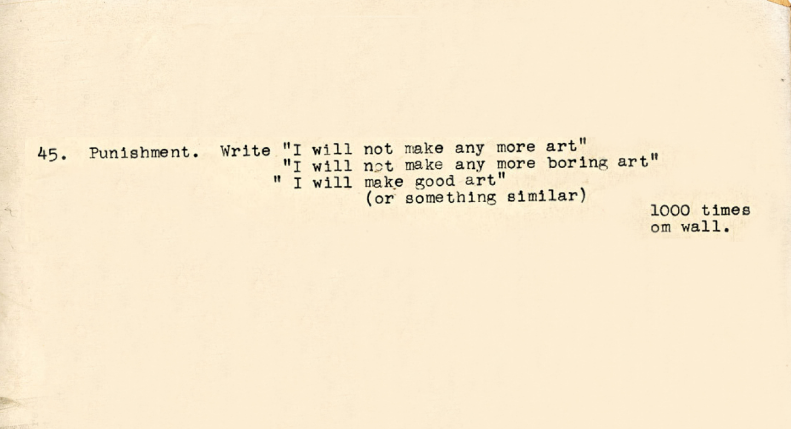
Punishment: Write “I will not make any more art” / “I will not make any more boring art” / “I will make good art” (or something similar) 1000 times on wall. (Apparently, Baldessari punished himself.)
Some of these assignments are intentionally silly. Some could produce good work. But all are meant to wake the artist up to the possibilities of the form.
Ted Mills is a freelance writer on the arts who currently hosts the artist interview-based FunkZone Podcast. You can also follow him on Twitter at @tedmills, read his other arts writing at tedmills.com and/or watch his films here.
The Beatles gave us enough. You couldn’t ask for more. But if you want to get a little greedy, you could ask for a few more songs from George. Though crowded out by the prolific Lennon-McCartney songwriting partnership, Harrison squeezed in some Beatles songs that rival their best. Shall I refresh your memories? “Taxman.” “I Want to Tell You.” “It’s All Too Much.” “Something.” “Here Comes the Sun.” “While My Guitar Gently Weeps.” You owe them all to George.
Written in 1968 for The White Album, “While My Guitar Gently Weeps” is ranked #136 on Rolling Stone magazine’s list, “The 500 Greatest Songs of All Time.” Clapton played the solo on the original recording–the same solo Prince shredded at the 2004 Rock & Roll Hall of Fame Induction ceremony. And it’s perhaps partly thanks to that Prince performance, witnessed so widely when the musician passed earlier this year, that we now have this: a new video paying tribute to “While My Guitar Gently Weeps,” featuring scenes from LOVE, Cirque du Soleil’s mesmerizing Beatles production that’s been running in Las Vegas since 2006. If you like the beautiful LOVEsoundtrack, you’ll enjoy the remixed version of Harrison’s song and all of the dreamy Cirque du Soleil visuals that accompany it above.
The Internet has been abuzz and atwitter these past few months with stories about prophetic predictions of the rise of Trump, buried in ancient texts like Back to the Future II, and an episode of The Simpsons from 2000. Then there’s Mike Judge’s now ten-year-old satire Idiocracy. While not specifically modeled after a Trump presidency, its depiction of the country as a violent, backward dystopia, armed and corporate-branded to the teeth, sure does resemble the kind of place many imagine Trump and his supporters might build. These allusions and direct references don’t necessarily provide evidence of the writers’ clairvoyance; after all, Trump has threatened us with his candidacy since 1988, with mostly unserious statements. But they do show us that we’ve seen this version of the future coming for the last thirty years or so.
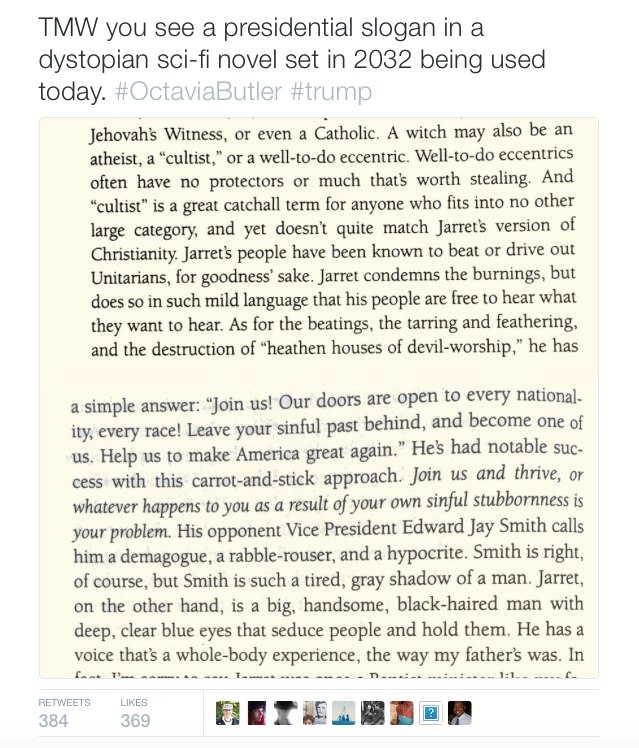
One prediction you may have missed, however, offers us a much more sober take on the rise of a frightening neo-fascist during a time of fear and civil unrest. As Twitter user @oligopistos pointed out, in the second book of her Earthseed series, The Parable of the Talents(1998), Hugo and Nebula-award winning science fiction writer Octavia Butler gave us Senator Andrew Steele Jarret, a violent autocrat in the year 2032 whose “supporters have been known… to form mobs.” Jarret’s political opponent, Vice President Edward Jay Smith, “calls him a demagogue, a rabble-rouser, and a hypocrite,” and—most presciently—Jarret rallies his crowds with the call to “make America great again.”
Though Trump has trademarked it, the slogan did not originate with him, nor even with Butler’s Jarret character—the 1980 Reagan-Bush campaign used it, as Matt Taibbi pointed out Rolling Stone last year. (Historians have even shown that another of Trump’s slogans, “America First,” was used by Charles Lindbergh and “Nazi-friendly Americans in the 1930s.”) Again, proto-Trumpism has been in the zeitgeist for a long time. While Butler may have used “Make American Great Again” from her memory of Reagan’s first campaign, the way her character employs it speaks to our moment for a number of reasons.
It’s true that Senator Jarret differs from Trump in some significant ways: “Jarret’s beef is with Canada instead of Mexico,” writes Fusion, and “instead of business acumen as his main credential, religion is Jarret’s stump. He’s the head of a group called Christian America, which is intolerant of other religious views, and whose supporters burn ‘witches’—meaning Muslims, Jews, Hindus and Buddhists—at the stake.” Our current candidate may have co-opted the religious right, but he doesn’t speak their language at all. Nonetheless, he has made promises that give secularists and non-Christians chills, and religious intolerance has formed the backbone of his campaign and of the rhetoric that has driven his party to the far right.
Jarret and the fanaticism he inspires become central the novel’s story, but the crucial background in Butler’s 1998 depiction of a post-apocalyptic 2032 are the conditions she identifies as giving rise to the Senator’s rule (and which she described in the first book, Parable of the Sower). In Talents, the narrator’s father Taylor Franklin Bankole writes,
I have read that the period of upheaval that journalists have begun to refer to as “the Apocalypse” or more commonly, more bitterly, “the Pox” lasted from 2015 through 2030—a decade and a half of chaos…. I have also read that the Pox was caused by accidentally coinciding climatic, economic, and sociological crises. It would be more honest to say that the Pox was caused by our own refusal to deal with obvious problems in those areas. We caused the problems: then we sat and watched as they grew into crises.
In Butler’s fiction, the rise of Senator Jarret and his mobs is an outcome of the same kinds of impending crises we face now, and that far too many of our leaders dutifully ignore as they stage increasingly acrimonious and bizarre forms of political theater. Butler’s indirect warning to us in Parable of the Talents may be less about the demagogic leader and his cult—though they pose the most dire existential threat in the book—than about the causes and conditions that created “the Pox,” the kind of social collapse that Kurt Vonnegut warned of ten years before Butler in his time-capsule letter to the people of 2088, vaguely identifying similar kinds of “climatic, economic, and sociological” crises to come. Would that we could abandon empty spectacle and heed these Cassandras of the near future.
The shibboleths of our political culture have trended lately toward the loathesome, crude, and completely specious to such a degree that at least one prominent columnist has summed up the ongoing spectacle in Cleveland as “grotesquerie… on a level unique in the history of our republic.” It’s impossible to quantify such a thing, but the sentiment feels accurate in the fervor of the moment. We’ll hear a torrent of well-worn counter-clichés at the other party’s big convention, and one of them that’s sure to come up again and again is the phrase “nation of immigrants.” The U.S., we’re told over and over, is a “nation of immigrants.” And it is. Or has become so, though the term “immigrant” is not an uncomplicated one, as we’ve seen in the EU’s struggle to parse “refugees” from “economic migrants.”
The U.S. is also a nation of indigenous people and former slaves, indentured servants, and settler colonists, all very different histories—and academic historians are careful not to blur the categories, even if politicians, ordinary citizens, and textbook publishers often do. Yet rhetoric about who owns the country, and who gets to “take it back,” clouds every issue—it belongs to everyone and no one, or as Wallace Stevens put it, “this is everybody’s world.”
But when we talk about the history of immigration, we usually talk about a specific history dating from the mid-19th to early-20th century, during which diverse groups of people arrived from all over the world, bringing with them their languages, customs, food, and cultures, and only slowly becoming “Americans” as they naturalized and assimilated to various degrees, forcibly or otherwise. We also talk about a legal history that proscribed certain kinds of people and created hierarchies of desirable and undesirable immigrants with respect to ethnic and national origin and economic status.
Millions of the people who arrived during the peak of U.S. immigration passed through the immigration inspection station at New York’s Ellis Island, which operated between the years 1882 and 1954. The individuals and families who spent any time there were working people and peasants. Among new arrivals, “the first and second class passengers were considered wealthy enough,” writes The Public Domain Review, “not to become a burden to the state and were examined onboard the ships while the poorer passengers were sent to the island where they underwent medical examinations and legal inspections.”
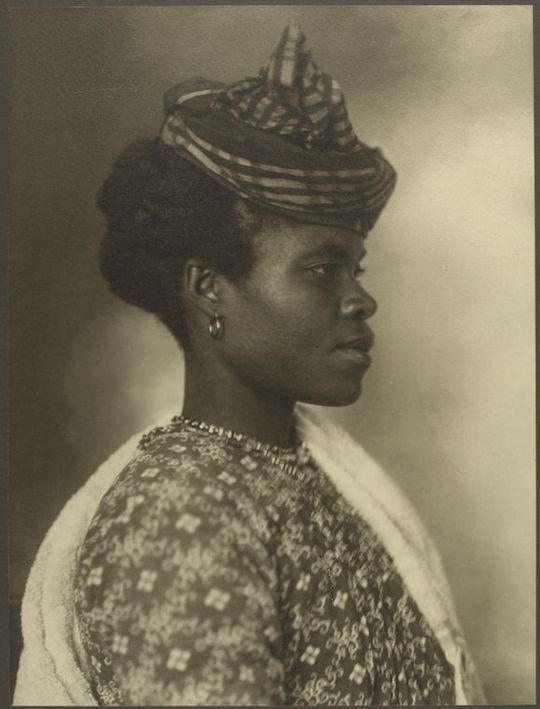
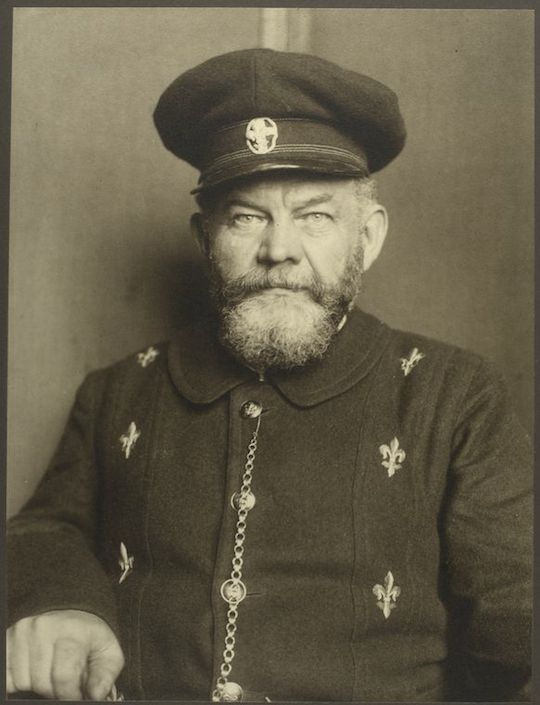
Many of these individuals also sat for portraits taken by the Chief Registry Clerk Augustus Sherman while “waiting for money, travel tickets or someone to come and collect them from the island.” Sherman’s camera captured striking images like the poised Guadeloupean woman in profile at the top, the defiant German stowaway below her, stern Danish man further down, Algerian man and Italian woman above, and severe-looking trio of Dutch women and Georgian man below.
These photographs date from before 1907, which was the busiest year for Ellis Island, “with an all-time high of 11,747 immigrants arriving in April.” About two percent of immigrants at the time were denied entry because of disease, insanity, or a criminal background. That percentage of people turned away rose in the following decade, and the diversity of people coming to the country narrowed significantly in the 1920s, until the 1924 immigration act imposed strict quotas, “as immigrants from Southern and Eastern Europe were seen as inferior to the earlier immigrants from Northern and Western Europe” and those from outside the European continent were limited to a tiny fraction of the almost 165,000 allowed that year.
“Following the Red Scare of 1919,” writes the Densho Encyclopedia, “widespread fear of radicalism fueled anti-foreign sentiment and exclusionist demands. Supporters of immigration legislation stressed recurring themes: Anglo-Saxon superiority and foreigners as threats to jobs and wages.” Not coincidentally, during this time the country also saw the resurgence of the Klu Klux Klan, which—notes PBS—“moved in many states to dominate local and state politics.” It was a time that very much resembled our own, sadly, as fanatical nativism and white supremacy became dominant strains in the political discourse, accompanied by much fearmongering, demagoguery, and violence. (It was also in the teens and twenties that the idea of a superior “Western Civilization” was invented.)
The portraits above were published in National Geographic and “hung on the walls of the lower Manhattan headquarters of the federal Immigration Service” in 1907, before the hysteria began. They show us the human face of an abstract phenomenon far too often used as an epithet or catch-all scare word rather than a fact of human existence since humans have existed. Becoming acquainted with the history of immigration in the U.S. allows us to see how we have handled it well in the past, and how we have handled it badly, and the photographic evidence preserves the dignity of the various individual people from all over the world who were lumped together collectively—as they are today—with the loaded word “immigrant.”
When I’m feeling depressed or uninspired, I can always count on one of my favorite visionary musicians to remind me just how much wild weirdness and unexpected beauty the world contains. That person is Kate Bush, and for all of her many brilliant songs—too many to name—the touchstone for true fans will always be her first single, “Wuthering Heights,” written when she was only 16, recorded two years later, and turned into two astonishing videos. The first, UK version does Kate’s ethereal strangeness justice, without a doubt, placing her on a dark stage, in flowing white gown, fog machine at her feet, showcasing her idiosyncratic dance moves with several double-exposure versions of herself. All very Kate, but we’d seen this kind of thing before, if only at the meetings of our high school drama club.
It really wasn’t until the second, U.S. video’s release that audiences fully grasped the uniqueness of her genius. In this version, above, the young prodigy—who trained, by the way, with David Bowie’s mime and dance teacher Lindsay Kemp—appears in a flowing, Bohemian red gown, matching tights, and black belt, haunting a “wiley, windy” moor like Catherine Earnshaw, the doomed heroine of Emily Brontë’s novel.
Everything about this: the flowers in her hair, the editing tricks that have her fading in and out of the shot like a ghost, and most especially the fully uninhibited dance moves—not confined this time to the boundaries of a stage (which could never contain her anyway)…. It’s perfect, the very acme of melodramatic theatricality, and simply could not be improved upon in any possible way.
And so when fans seek to pay tribute to Kate Bush, they invariably call back to this video. In 2013, Kate Bush parody troupe Shambush! organized a group dance in Brighton, with 300 eager fans in red dresses and wigs, each one doing their best Kate Bush impression in a synchronized comedy homage. This year, on July 16th, a flashmob gathered in Berlin’s Tempelhof Field for “The Most Wuthering Heights Day Ever,” breaking the Shambush! record for most Kate Bush-attired dancing fans in one place. See them at the top of the post. Other flashmobs assembled around the world as well, in London, Wellington, Sydney, Adelaide, Melbourne, and elsewhere, reports German site Tonspion. Melbourne, it seems put on a particularly “strong showing of Bush-mania” (watch it above), according to Electronic Beats, who also suggest that next year the organizers “switch it up and find a good forest for a ‘The Sensual World’ flashmob.” That is indeed a stunning video, and it’s very hard to choose a favorite among Bush’s many visual masterpieces, but I’d like to see them try the wartime choreography of “Army Dreamers” next.
It has been a while, but RSA has returned with another one of their whiteboard animated videos. During the early days of YouTube, they broke some aesthetic ground by animating Slavoj Zizek on the Surprising Ethical Implications of Charitable Giving; Barbara Ehrenreich (author of Nickel and Dimed) on The Perils of Positive Psychology; Daniel Pink on The Surprising Truth About What Motivates Us, and Stanford psychologist Philip Zimbardo on The Secret Powers of Time. Now, they’re back with the influential Cambridge economist Ha-Joon Chang explaining “why every single person can and SHOULD get their head around basic economics.” Here, Chang “pulls back the curtain on the often mystifying language of derivatives and quantitative easing, and explains how easily economic myths and assumptions become gospel,” helping you to “arm yourself with some facts” and take part in “discussions about the fundamentals that underpin our day-to-day lives.” If you want to get up to speed on economics, some of the resources below will undoubtedly give you a hand.
If you would like to support the mission of Open Culture, consider making a donation to our site. It’s hard to rely 100% on ads, and your contributions will help us continue providing the best free cultural and educational materials to learners everywhere. You can contribute through PayPal, Patreon, and Venmo (@openculture). Thanks!
Jack Kerouac’s On the Roadhas, in the almost 60 years since its publication, inspired its readers to do many things: some try their hands at writing their own carefully composed yet carelessness-exuding prose, but others find themselves moved to replicate the American road trip whose story Kerouac uses that near-inimitable style to tell. They might do so by following the author’s own hand-drawn map, or the more recently composed set of Google driving directions we featured a couple years ago. But now they have another detailed research tool in the form of Dennis Mansker’s interactive maps.
Mansker, himself the author of a book called A Bad Attitude: A Novel from the Vietnam War, has put together not one but four On the Road maps, each one detailing one of the road trips Kerouac used to create his Beat narrative of America: Map One follows his summer 1947 trip from New York to San Francisco by way of Denver and back again; Map Two, his winter 1949 trip from Rocky Mount, North Carolina to San Francisco by way of New Orleans; Map Three, his spring 1949 trip from Denver to New York by way of San Francisco; Map Four, his spring 1950 trip from New York to Mexico City by way of Denver.
“Click on one of the placemarkers on the map to see a quotation from the book,” Mansker explains. “Zoom in it to see the location on the map. In many cases where the narrative wasn’t clear on a given place, I’ve had to approximate — apply a ‘best guess’ solution to a given location.” He also provides information on the three cars, a 1949 Hudson, a 1947 Cadillac Limousine, and a 1937 Ford Sedan (as well as a Greyhound Bus (protagonist Sal Paradise’s transportation mode of choice “when he couldn’t boost a ride” with the irrepressible Dean Moriarty) which “themselves became sort of minor characters during the course of the adventures.”
“He came right out to Paterson, New Jersey, where I was living with my aunt,” writes Kerouac of Dean’s return to Sal’s life in the small city that figured early in that first 1947 road trip. “He was gone,” says Sal of Dean’s departure from his life as he recovers from a fever in Mexico City, the last stop of Kerouac’s 1950 road trip. “When I got better I realized what a rat he was, but then I had to understand the impossible complexity of his life, how he had to leave me there, sick, to get on with his wives and woes.” If you love Kerouac’s novel, by all means follow in his tire tracks — just make sure to find a more reliable traveling companion.
You might have seen a new type of ancient human on the news recently, nicknamed, affectionately, ‘the hobbit’ (not because they were taking the ring to Mordor, but because of their rather diminutive stature).
If you didn’t, here’s the news in brief: a team of scientists went digging for the first Australians and instead found a completely new (and tiny) ancient human. Since then they’ve been trying to work out what happened to these small ancestors of ours.
To share their findings, some of the scientists involved in understanding ‘the hobbit’ have put together a 4 week free online course to explain how the discovery unfolded…
The course has been created with FutureLearn and will take you inside the world of this new species, giving you a run through modern scientific archaeological techniques along the way.
Here’s what’s on the syllabus:
Week 1 — Human Origins and Introduction to Archaeology
Learn about where you, me and everyone came from — before getting onto the moment ‘the hobbit’ was discovered.
Week 2 — Archaeological Methods: In the Cave
You think a festival is bad? Get to grips with how science translates in somewhere without electricity or water.
Week 3 — Archaeological Science: In the Lab
Understand what happens once all the archaeological finds are delicately hauled back to the lab.
Week 4 — Future Directions
‘The Hobbit’, despite it’s size, is having a big impact in the world of archaeology — find out exactly what this little ancient human might mean for the story of our origins.
Intrigued? Join the course today — it started this week, and you’re not too late to join.
Jess Weeks is a copywriter at FutureLearn. She has never conducted ground-breaking science in a cave, or discovered a new species, but there’s still time.
William S. Burroughs may have died almost twenty years ago, but that doesn’t mean his fans have gone entirely without new material since. This year, for instance, has seen the release of the Naked Lunchauthor’s new spoken word album Let Me Hang You, which you can listen to free on Spotify. (If you don’t have Spotify’s free software, download it here.) Its content, in fact, comes straight from that form- and taboo-breaking 1959 novel, which Burroughs committed to tape — along with a trio of accomplished experimental musicians — not long before his passing, and which thus got lost along the way to commercial release.
“But more than 20 years later,” writes the New York Times’ Joe Coscarelli, “those surreal recordings — which featured music from the guitarist and composer Bill Frisell, along with the pianist Wayne Horvitz and the violist Eyvind Kang — are getting a second life as an album with an assist from the independent musician King Khan, best known for his raucous live shows as an eccentric punk and soul frontman.” Fans of Burroughs’ roughest-edged material can rest assured that, in these sessions, the writer focused on speaking the “unspeakable” parts of Naked Lunch: “think sex, drugs, and defecation,” Coscarelli says.
Hard as it may seem to believe that a novel written well over half a century ago, let alone one written by an author born more than a century ago, could retain its power to shock, this newly published musical interpretation of Burrough’s substance-inspired, random-access, “obscenity”-laden text freshens its transgressive impact. “One particularly jagged track on the record is ‘Clem Snide the Private Ass Hole,’ ” writes Rolling Stone’s Kory Grow. “As Burroughs stiltedly reads his own bizarre prose in which the titular Snide recites every lurid, gritty detail he notices while watching a junky ‘female hustler,’ Khan and his fellow musicians play a brittle, upbeat groove and funky, bluesy guitar solos.” Finally, someone has taken this work of the most offbeat of all the Beats and set it to a beat.
You’ve likely heard a good deal recently—especially if you hang around these parts—about the 100th anniversary of Dada, supposedly begun when poet and Cabaret Voltaire owner Hugo Ball penned his manifesto in 1916 and began disseminating the ideas of the nascent anti-art movement. This makes a convenient origin story, as they say in the comics, and helps us contextualize the avant-garde explosion that followed. But, historically speaking, there is no such thing as creation ex nihilo, and the beginnings of Dada—before Ball coined the name—lie further back in time. (We might refer to the distinction Edward Said makes between a divine “origin” and a secular “beginning.”)
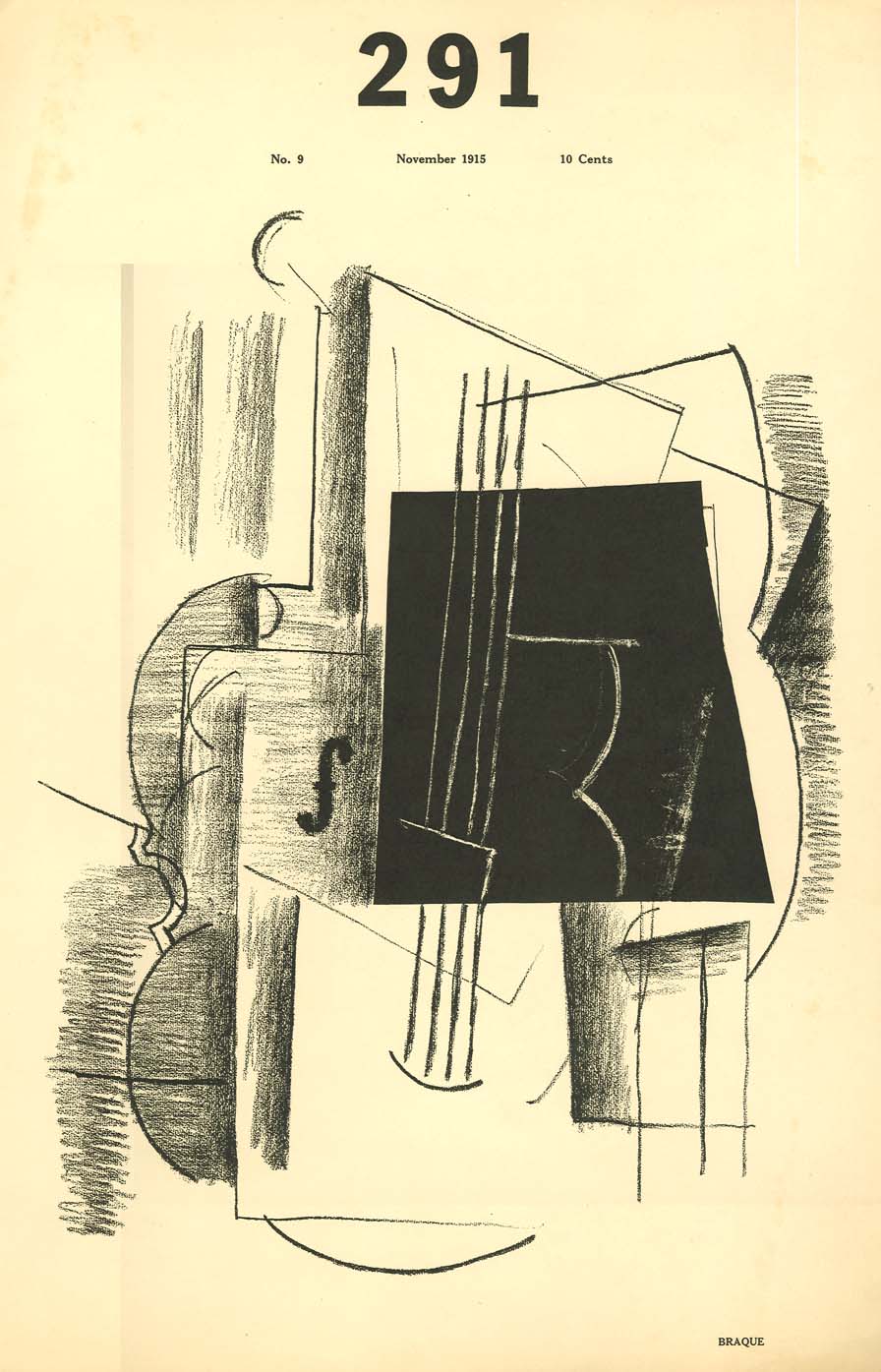
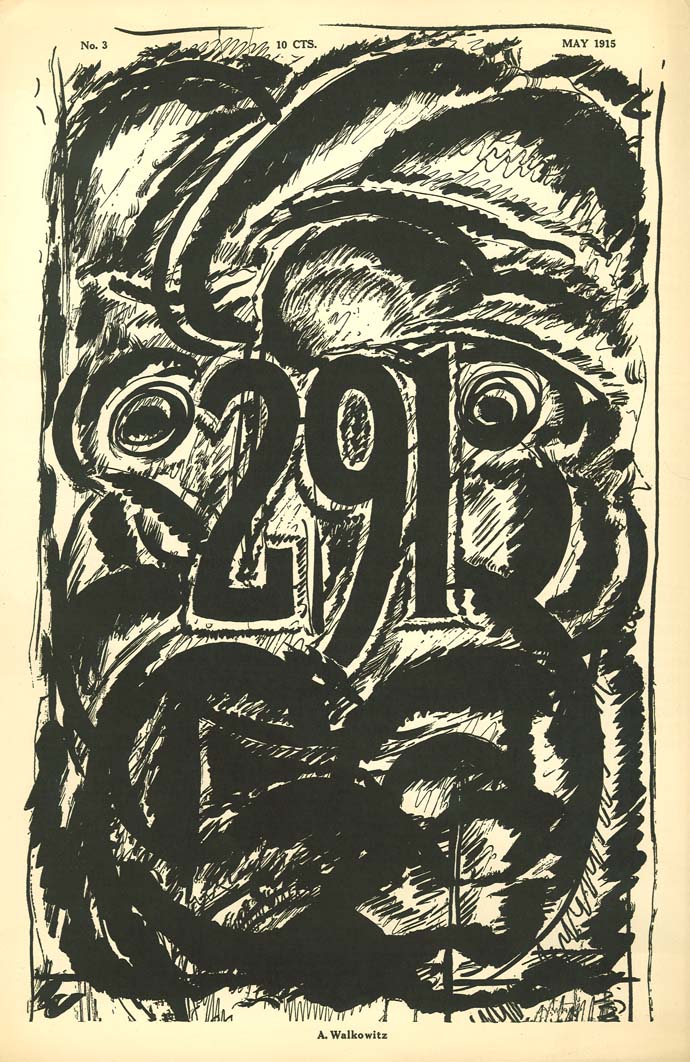
We could, as many do, situate the beginnings of Dada in the previous century, in Alfred Jarry’s bizarre 1896 play Ubu Roi or Erik Satie’s minimalist late 19th century Gymnopedies. We might also refer to an arts magazine in New York that preceded Tristan Tzara’s Dada and Ball’s single issue Cabaret Voltaire. Edited by famed photographer and art promoter Alfred Stieglitz, the journal 291 ran for 12 issues between 1915 and 1916 and is known, writes Dada-Companion.com, as “the first expression of the dada esthetic in the United States; proto-dada, actually, dada avant la lettre, before dada had started in Zürich in 1916.” Along with the University of Iowa, Ubuweb hosts the entire 12-issue print run, “a financial fiasco” in its day, “failing to sell more than eight subscriptions on vellum and a hundred on ordinary paper…. In the end Stieglitz sold the entire backstock to a ragpicker for $5.80.”
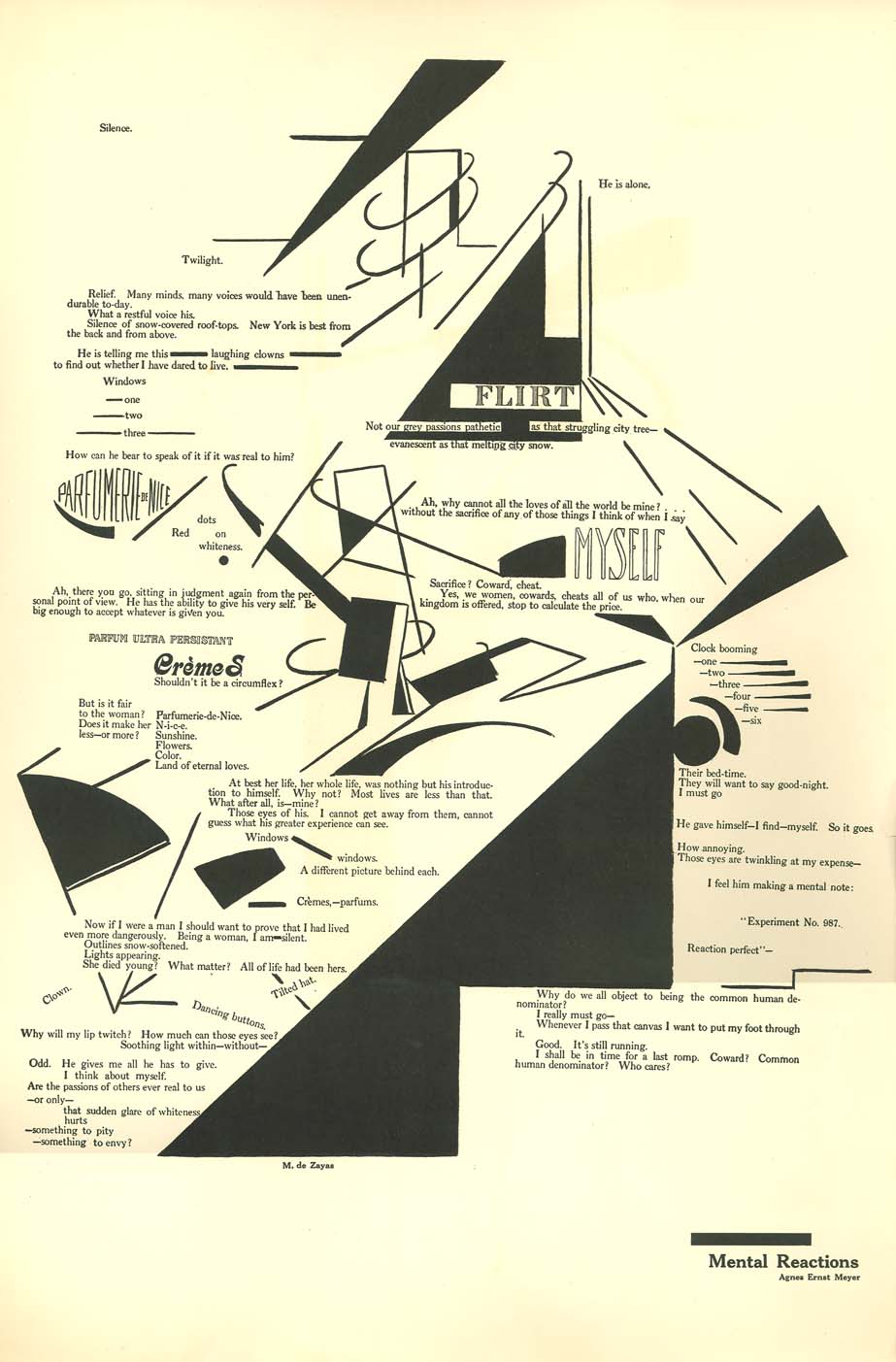
Despite this inglorious end, 291 is notable not only for its proto-dada status—and for featuring the work of modernists like Georges Braque, Guillaume Apollinaire, and later Dada and Surrealist artist Francis Picabia; the magazine also “occupies an interesting position among the journals of modernist art” as “the first magazine to style itself as a work of art in its own right.” You can get a sense of its artistry in the covers you see here, and download every issue of the magazine at Ubuweb or at the University of Iowa’s International Dada Archive. You’ll also see the magazine’s unusual format—from odd little topical items of the sort you’d find in a local newspaper to fascinating visual poetry like “Mental Reactions,” below, by Agnes Ernst Meyer. What we can’t get from the digital copies, unfortunately, is the full sense of 291’s “dramatic form” in its “gigantic folio format.”
The modernist journal “took its original inspiration from Apollinaire’s Soirées de Paris,” a journal founded in 1912 by the French poet and critic and his friends, “emphasizing caligrammatic texts and an abstracted kind of satirical drawing.” And though 291 may have had a very limited reach during its material existence, its influence continued into the era of Dada when Francis Picabia styled his own journal, 391, after Steiglitz’s publication. “Published 1917–1924 in Barcelona, New York, Zürich, and Paris in nineteen issues,” writes Booktryst, 391 helped Picabia distribute his own take on Dada, until he denounced the movement in 1921 and “issued a personal attack against [Surrealist Andre Breton] in the final issue.” The University of Iowa also hosts digital versions of all 19 issues of Picabia’s 391, which you can view and download here.
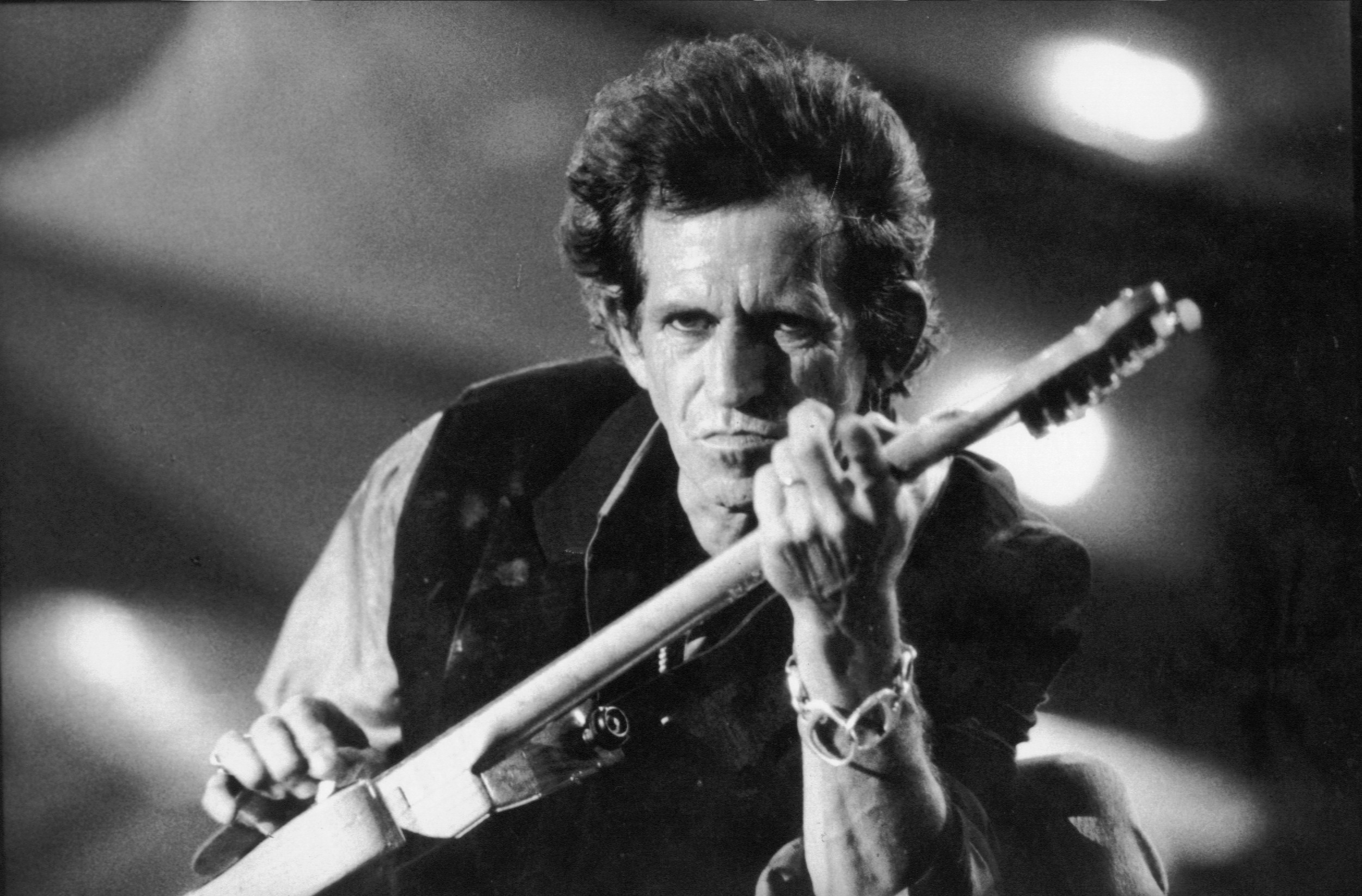
You don’t have to, like, stretch your brain or anything to rattle off a list of Keith Richards’ influences. If you’ve ever heard a Rolling Stones song, you’ve heard him pull out his Muddy Waters and Chuck Berry riffs, and he’s never been shy about supporting and naming his idols. He’s played with Waters, Berry, and many more blues and early rock and roll greats, and after borrowing heavily from them, the Stones gave back by promoting and touring with the artists who provided the raw material for their sound.
Then there’s the 2002 compilation The Devil’s Music, culled from Richards’ personal favorite collection of blues, soul, and R&B classics, and featuring big names like Robert Johnson, Little Richard, Bob Marley, Albert King, and Lead Belly, and more obscure artists like Amos Milburn, and Jackie Brenston. You may also recall last year’s Under the Influence, a Netflix documentary by 20 Feet From Stardom director Morgan Neville, in which Richards namechecks dozens of influential musicians—from his mum’s love of Sarah Vaughan, Ella Fitzgerald, and Billie Holiday, to his and Jagger’s youthful adoration of Waters and Berry, to his rock star hangouts with Willie Dixon and Howlin’ Wolf.
Point is, Keith Richards loves to talk about the music he loves. A big part of the Stones’ appeal—at least in their 60s/early 70s prime—was that they were such eager fans of the musicians they emulated. Yes, Jagger’s phony country drawls and blues howls could be a little embarrassing, his chicken dance a little less than soulful. But the earnestness with which the young Englishmen pursued their Americana ideals is infectious, and Richards has spread his love of U.S. roots music through every medium, including his 2010 memoir Life, a wickedly ironic title—given Richards’ No. 1 position on the “rock stars most-likely-to-die list,” writes Michiko Kakutani, “and the one life form (besides the cockroach) capable of surviving nuclear war.”
It’s also a very poignant title, given Richards’ single-minded pursuit of a life governed by music he’s loved as passionately, or more so, as the women in his life. Richards, Kakutani writes, dedicated himself “like a monk to mastering the blues.” Of this calling, he writes, “you were supposed to spend all your waking hours studying Jimmy Reed, Muddy Waters, Little Walter, Howlin’ Wolf, Robert Johnson. That was your gig. Every other moment taken away from it was a sin.” In the course of the book, Richards mentions over 200 artists, songs, and recordings that directly inspired him early or later in life, and one enterprising reader has compiled them all, in order of appearance, in the Spotify playlist above.
You’ll find here no surprises, but if you’re a Stones fan, it’s hard to imagine you wouldn’t put this one on and listen to it straight through without skipping a single track. When it comes to blues, soul, reggae, country, and rock and roll, Keith Richards has impeccable taste. Scattered amidst the Aaron Neville, Etta James, Gram Parsons, Elvis, Wilson Pickett, etc. are plenty of classic Stones recordings that feel right at home next to their influences and peers.
With the exception of reggae artists like Jimmy Cliff and Sly & Robbie, most of the tracks are from U.S. or U.S.-inspired artists (Tom Jones, Cliff Richard). Again, no surprises. Not everyone Richards appropriated has appreciated the homage (Chuck Berry long held a grudge), but were it not for his fandom and apprenticeship, it’s possible a great many blues records would have gone unsold, and some artists may have faded into obscurity. Thanks to playlists like these, they can live on in a digital age that doesn’t always do so well at acknowledging or remembering its history.
We're hoping to rely on loyal readers, rather than erratic ads. Please click the Donate button and support Open Culture. You can use Paypal, Venmo, Patreon, even Crypto! We thank you!
Open Culture scours the web for the best educational media. We find the free courses and audio books you need, the language lessons & educational videos you want, and plenty of enlightenment in between.