Web 2.0 to Book Deal in 3 Minutes
After Seth Harwood got his MFA at the Iowa Writers’ Workshop, he began publishing in traditional magazines and journals, as most young writers do. But those publications were slow to launch his career. Things changed, however, once he started publishing online. And they really changed when he released his crime novel Jack Wakes Up as a free podcast (via iTunes, RSS Feed, & MP3) and distributed it through social networks. Web 2.0 broadened the reach of his work, attracted fans worldwide, and ultimately landed Harwood a nice book deal with Random House. (RH will be publishing Jack Wakes Up in print early next month). In the short video above, Harwood gives you a quick look inside the making of his podcast, and how it brings exposure to his work. If you’re an up-and-coming writer, there’s certainly something here to think about. You can find out more about Seth’s work at SethHarwood.com.
Read More...Watch Super Size Me and Other Feature Films on YouTube
Morgan Spurlock’s 2004 documentary, Super Size Me, is available on YouTube for all to watch. Spend 30 days eating nothing but McDonald’s fast food and what happens? It’s not pretty. But you’ll get the picture in an entertaining 100 minutes. Super Size Me was nominated for an Academy Award, and won prizes at Sundance and elsewhere. Give it a watch. And note that you can now watch other feature-length films on YouTube here. You’ll find some good ones in the documentary & biography section.
Read More...Learning Physics Through Free Courses
There’s something compelling about physics. Almost every major open courseware collection features a well-crafted physics course, and these courses consistently rank high on iTunesU and YouTube Edu. Let’s give a quick overview of the favorites.
At Stanford, we’re putting together a six course sequence called Modern Physics: The Theoretical Minimum. Taught by Leonard Susskind, one of America’s leading physics minds, this course traces the development of modern physics, moving from Newton to Einstein to Black Holes. So far, we’ve made five of the six courses available online (get them here), which amounts to 100 hours of free classroom footage. Hard to beat. (And, in case you’re wondering, the sixth course is being taped right now, and it will be coming online during the months to come.)
Another program that has received a fair amount of attention is Walter Lewin’s series of courses at MIT. As The New York Times has noted, Lewin has long had a cult following at MIT, and now, thanks to his physics courses, he’s achieved a minor degree of fame on the internet. His lectures, delivered with panache, can be found here:
- Physics I: Classical Mechanics — iTunes — Video Download — YouTube
- Physics II: Electricity and Magnetism — iTunes — Video Download — YouTube
- Physics III: Vibrations and Waves — iTunes — Video Download — YouTube
A third course to call your attention to is Richard Muller’s Physics for Future Presidents (Feed — MP3s — YouTube). The course comes out of UC Berkeley, where it’s an undergraduate favorite. (It’s also the basis of a recent book by the same name.) And the whole point here is to give citizens the scientific knowledge they need to understand critical issues facing our society.
Finally, another course worth reviewing is Fundamentals of Physics, which is taught by Ramamurti Shankar and it’s part of Yale’s Open Course initiative.
UPDATE: Since we originally created this collection, Bill Gates has posted Richard Feynman’s great lectures online. Learn more here.
All of these physics courses, and many more, can be found in our collection of Free Courses. You can also find the courses in our section called Physics: Free Courses.
Read More...Crime Fiction: Download and Listen
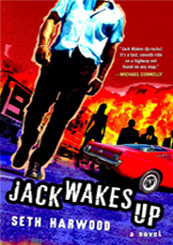 Seth Harwood is bringing crime writing into the new world of Web 2.0. Since 2006, Harwood has been podcasting his own crime fiction, including a book called Jack Wakes Up, which you can download (for free) via iTunes, RSS Feed, or MP3. (Random House will be releasing Jack Wakes Up in print next month for $10.25.) This experience got Seth thinking about the power of podcasts, and he soon took the next logical step, launching Crimewav.com, a website devoted to podcasting crime stories (not just his own) to an audience worldwide. On Crimewav, you’ll find some gems, including Dashiell Hammett’s first story (1923), “The Barber and His Wife” (mp3). Plus, you’ll stumble upon a deleted chapter from Michael Connelly’s latest NYT bestseller, The Brass Verdict, read by Connelly himself (mp3). Lots of good pieces to explore. And if this sort of fiction is your thing, then let me direct you to two other good resources. First, an archive of Agatha Christie’s radio mysteries, and then the free works of bestselling horror author, Scott Sigler. Enjoy.
A Closer Look at YouTube EDU
On Thursday, we announced the launch of YouTube EDU. Now, as promised, it’s time to give you some more details about the new university video hub.
I had a chance to chat with Obadiah Greenberg, a key Googler behind the launch. And he gave me some insight into the genesis of the project. As you can imagine, YouTube EDU wasn’t built overnight. It took about a year to move from concept to launch. The work was driven along by a team of five, and they did it using Google’s famous 20% time policy. That is, they each committed essentially one day per week to bringing this project to fruition.
What you’re seeing now is essentially version 1.0. Obadiah expects YouTube EDU to evolve over time, especially as his team gathers data and feedback that will inform future iterations. But, make no mistake, this initial product has accomplished quite a bit. It centralizes the video collections from over 100 universities/colleges. This amounts to over 20,000 individual videos and 200 complete courses. It also makes these collections much easier for new users to discover and sift through. Back in early 2007, before YouTube really started working with universities, I kvetched in a public radio interview that GooTube could do more to organize the world of intellectual video, and now I certainly have a lot less to complain about (although I do still see some important tweaks that could be made here and there).
The universities participating in YouTube EDU have also had an upbeat response. Both Scott Stocker (Director of Web Communications at Stanford) and Genevieve Haines (Director of Integrated Communications at UCLA) welcomed the idea that many new visitors will encounter their video collections. As Genevieve put it, it’s never a bad thing when the world’s top video sharing site makes a big commitment to university content. This move opens up many long range possibilities for educators and students, she says. But, over the short term, it guarantees that schools will learn more about how the wider public engages with their videos. By looking at traffic patterns and user comments left on YouTube, the university teams will find out whether there’s a real market for serious lectures and courses, or whether users prefer lighter fare, or some combination of the two. With this knowledge in hand, media strategies will be revised.
For Ben Hubbard, who manages the webcasting initiative at UC Berkeley, YouTube EDU offers another perk. He told me: “There are a lot of universities and other centers for learning engaged with their local communities on YouTube, but it hasn’t always been very easy to find them. YouTube EDU makes it much easier for us to locate our peer institutions, connect around common interests, and perhaps even engage with one another in a more meaningful and productive way to create (or make more rich) a community of best practices.”
But perhaps the biggest plus is reserved for you and me. The Google team anticipates that the visibility of this project will open the floodgates, bringing many more universities to YouTube EDU in the coming months. This means that many more free lectures and courses will be coming online. A big plus for any reader of this blog. We’ll monitor all of this, and keep you posted as things move along …
Art Inspired Poetry
An FYI for art and poetry lovers: “Each month, TATE ETC. publishes new poetry by leading poets such as John Burnside, Moniza Alvi, Adam Thorpe, Alice Oswald and David Harsent who respond to works from the Tate Collection. (Subscribe to the Poem of the Month RSS feed.) This March Roger McGough presents his poem, Cadeau, based on Man Ray’s work of the same name.” Find the art and poem here.
Introducing YouTube EDU!
Here’s a little breaking news: Today, Google has launched YouTube EDU, which centralizes the content from over 100 universities and colleges (get list here). This robust collection gives you access to lectures by professors and world-renowned thought leaders, new research and campus tours. At the moment, you can access over 200 full courses from leading universities, including MIT, Stanford, UC Berkeley, UCLA, Yale and IIT/IISc. And it’s all searchable within YouTube EDU.
I plan to follow up with a more extensive piece soon. But I just wanted to get the word out and let you start checking it out. If you have any first impressions, please let us know what you think in the comments. Nice work Youtube!
Lastly, if you want to download hundreds of free university courses (mostly in audio) to your computer or mp3 player, check out our collection of Free University Courses here.
Follow us on Twitter at @openculture or sign up for our rss feed here.
Read More...Extreme Sheepherding
File this clip (now added to our YouTube Favorites) under Random. See you next week.
via Alfred A. Knopf Twitter Feed (ours here)
Read More...Is GWB The Worst President Of The Past 50 Years?
Stay with me conservatives on this one. It’s not as bad as you think…
NPR’s Intelligence Squared (iTunes — Feed — Web Site) has a rather unique format. It brings Oxford-style debates to America, and it features leading thinkers taking different positions on hot-button issues of our day. (Get more precise details on the debate format here.) Recent debates have centered on the following questions: Is Washington or Wall Street ultimately to blame for the financial crisis? Should we legalize the market for human organs? Is the US finally winning the war in Iraq? And then, is George W. Bush the worst president of the last 50 years?
The GWB debate brings together a pretty solid panel. Arguing against the Bush legacy: Jacob Weisberg (Editor in Chief of Slate) and Simon Jenkins (columnist for the Guardian and the Sunday Times). Then, for the Bush legacy: Karl Rove (the all important Bush strategist) and Bill Kristol (editor of The Weekly Standard and former columnist for The New York Times). As you’ll see, it’s a pretty spirited conversation. Have a listen and let us know where you come down: iTunes — Feed — Stream.
As a quick note, the Intelligence Squared podcast can be permanently found in our Ideas & Culture Podcast Collection.
Read More...Stevie Wonder Performs “Sketches of a Life”
“Stevie Wonder, the awardee of the second Library of Congress Gershwin Prize for Popular Song, premieres “Sketches of a Life,” a sprawling, hybrid pop-classical concerto, written between 1976 and 1994. The work was unveiled through a commission for the Library of Congress in the Coolidge Auditorium.” The performance was recorded on February 23, and it runs 55 minutes. You can watch it here.
Via The Library of Congress Twitter Feed (Get ours here)
Read More...Support Us
We're hoping to rely on loyal readers, rather than erratic ads. Please click the Donate button and support Open Culture. You can use Paypal, Venmo, Patreon, even Crypto! We thank you!

About Us

Open Culture scours the web for the best educational media. We find the free courses and audio books you need, the language lessons & educational videos you want, and plenty of enlightenment in between.
Advertise With Us
FREE UPDATES!
GET OUR DAILY EMAIL
Get the best cultural and educational resources on the web curated for you in a daily email. We never spam. Unsubscribe at any time.
FOLLOW ON SOCIAL MEDIA
Open Culture editor Dan Colman scours the web for the best educational media. He finds the free courses and audio books you need, the language lessons & movies you want, and plenty of enlightenment in between.
Advertise With Us

