Essential Books for the Critic’s Library
The National Book Critics Circle has a blog and they’ve asked some of the country’s best literary critics to list the “five books a critic believes reviewers should have in their libraries.” The series provides a new list every week, and so far the choices are interesting not just for the books picked (and some of the overlaps in picks), but also for the explanations that the critics offer for their choices. Here’s John Updike on Eric Auerbach’s Mimesis:
Read More...a stunningly large-minded survey from Homer and the Old Testament up to Woolf and Joyce. Quoting a lengthy paragraph or two from each classic, Auerbach gives us an essential history of, as his subtitle has it, “the Representation of Reality in Western Literature.”
Debating Religion The Dawkins Way
When debating religion, you can take the low road (e.g., Ann Coulter’s recent flirtation with anti-semitism) or the high road. Here’s Richard Dawkins, an avowed atheist and evolutionary biologist at Oxford, having a high-minded conversation about the existence (or non-existence) of God with Alister McGrath, who is Professor of Historical Theology at Oxford University and also has a background in molecular biophysics. We’ve posted the videotaped debate below. (And, by the way, you can download the video to an iPod by accessing the video here, looking to the right where it says “Download to Video iPod” and following these instructions).
Read More...
More Swapping
After we mentioned Book Mooch last week, one of our faithful readers alerted us to another site — PaperBackSwap.com. PaperBackSwap is reportedly easier to use than Book Mooch, and the actual process of exchanging books runs more smoothly. Meanwhile, despite the site’s name, you can swap both paperback and hardback books there. In case you missed our last piece, the idea of these sites is simple. You can trade your old books for ones you haven’t read. The only cost is the postage for shipping. Not a bad deal. Thanks Maggie for the tip.
Got other tips? Write us any time.
Read More...500 Years of Art in Morphing Action (Excellent Video)
This video takes you on a fairly amazing tour of the great portraits of women in Western art. It moves from da Vinci to Picasso, and, along the way, the portraits seamlessly morph one into another. This morphing allows you to see how artistic styles changed over time, and also how the human face has been artistically treated during different periods. Watch the video below, which is accompanied by Bach’s Suite No. 1 performed by Yo-Yo Ma. For information on the paintings covered in the clip, click here. And also see the related video, Women in Film.
PS Thanks to BoingBoing for highlighting our interview today with Satoshi Kanazawa.

Jon Stewart’s “Daily Show” Now Online: 1999 — Present
 Listen closely. What’s that you hear? It’s the sound of American office productivity taking it on the chin.
Yesterday, “The Daily Show with Jon Stewart” put its entire video archive online (see www.thedailyshow.com). The archive goes back eight years. It’s completely free. And it’s all highly searchable. To get a feel for what this video trove offers, you can spend some time watching these classic Daily Show moments.
As you’d expect, the video archive includes no shortage of funny bits, including when Stephen Colbert announced his presidential bid earlier this week (see below), and when the show riffed on Al Gore’s Nobel Peace Prize last week. But, mixed in, you’ll also find some of the show’s more serious moments. Take, for example, when Jon Stewart asked John McCain the hard-nosed questions about the Iraq war (here and here) that most journalists won’t, and also when the show first returned to broadcasting after 9–11. It’s all here. And apparently a similar site for The Colbert Report will be launched somewhere down the line.
Note to Readers: If you want to share good cultural content (podcasts, videos, etc.) with your fellow readers, feel free to drop us a line. We’re always happy to get your suggestions, and, of course, we’ll gladly give you all the credit for them.
If you can’t hear the audio, simply slide the little bar immediately above to the right.
Read More...
Einstein and the Mind of God
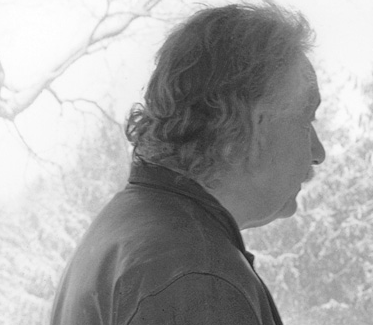 Speaking at a conference on science, religion and philosophy in 1941, Albert Einstein famously said that “science without religion is lame; religion without science is blind.” Einstein, a German-born Jew, considered himself religious. But what he meant by religion was not straightforward. The first episode of a two-part podcast called Einstein and the Mind of God (iTunes — MP3 — Web Site) tries to sort out Einstein’s religious sensibility and how it squares with his scientific thinking. For Einstein, religion consisted of a belief, not in a personal God, but a universal spirit that manifests itself in nature. And it was the task of physics to make sense of nature, of God’s universe. Or, so that is how it’s explained by Freeman Dyson, a famed theoretical physicist who appears on the show. In the second part, the podcast turns to look at Einstein’s ethics (iTunes — MP3 — Web Site). Although not without personal flaws (he often fell short in his personal/domestic life), Einstein had a strong moral sense informed by his Jewish upbringing. He saw scientists having a deep moral obligation to society; he took strong positions against war (except when Hitler came along); he opposed racial discrimination and lamented the plight of African-Americans well before the civil rights movement; and he lauded religious leaders’ efforts to use non-violent action to oppose immoral conditions. Each of these podcasts runs around 53 minutes in length, and they form part of a larger radio/podcast series called Speaking of Faith (iTunes — Feed — Web Site), which is issued by American Public Media.
Related Content:
Read More...
Religion: 5000 Years in 90 Seconds
How has the geography of religion evolved over the centuries, and where has it sparked wars? This interactive map summarizes in a brief 90 seconds the history of Christianity, Islam, Hinduism, Buddhism, and Judaism. It shows where & when each religion originated, how the religions sometimes came into conflict, and how they spread across the globe. This short history lesson is produced by a site called Maps of War, which features other interactive lessons, including The Imperial History of the Middle East and American Leadership & War. Enjoy.
Via Boing Boing
Read More...Stephen Colbert For President
In yesterday’s New York Times, Stephen Colbert took over Maureen Dowd’s regular opinion column and made a funny case for why he could be the next US president. Read it here. Also listen to his interview last week on NPR’s Fresh Air (iTunes — Feed — Web Site). These appearances all figure into a media blitz designed to boost sales of Colbert’s newly-released book I Am America (And So Can You!), which is already #4 on Amazon’s bestseller list. Not bad.
Read More...Al Gore’s “Earth in the Balance”: A Free, Environment Friendly Copy (Almost)
Since the release of An Inconvenient Truth, Al Gore has had quite a run. He first won himself an Emmy, then an Oscar, and now the Nobel Peace Prize. Although the film represents Gore’s most well known work on the environment, it’s hardly where his environmental efforts began. His campaign goes back to the late 1970s, when he held congressional hearings on climate change and greenhouse gases. And it moves through the 1980s and then the 1990s, when he occupied the Vice Presidency. In 1992, while other political leaders quibbled over the pros and cons of NAFTA, Gore put the environment on the national agenda, really for the first time, when he published Earth in the Balance: Ecology and the Human Spirit. (The Bush administration then took it off the agenda, regrettably.) Gore’s book became a national bestseller, and it has since gone through several new editions, the latest having been issued just last year. You could buy the book, but the good news is that Google serves up large portions of the book online for free. It’s at a price you can’t beat, and it goes easy on the pulp. Have a good look. And also see below Gore’s comments upon learning about the Nobel Prize.
Read More...
How Doris Lessing Reacts to Winning the Nobel Prize
The reaction is priceless (and just a tad bit different than when Halle Berry won her Oscar.)
Read More...Support Us
We're hoping to rely on loyal readers, rather than erratic ads. Please click the Donate button and support Open Culture. You can use Paypal, Venmo, Patreon, even Crypto! We thank you!

About Us

Open Culture scours the web for the best educational media. We find the free courses and audio books you need, the language lessons & educational videos you want, and plenty of enlightenment in between.
Advertise With Us

FREE UPDATES!
GET OUR DAILY EMAIL
Get the best cultural and educational resources on the web curated for you in a daily email. We never spam. Unsubscribe at any time.
FOLLOW ON SOCIAL MEDIA

Open Culture editor Dan Colman scours the web for the best educational media. He finds the free courses and audio books you need, the language lessons & movies you want, and plenty of enlightenment in between.
Advertise With Us

