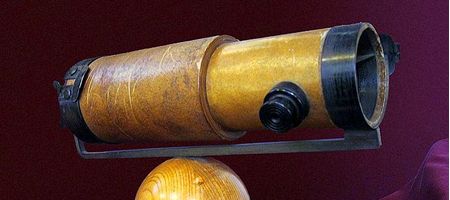
60,000 peer-reviewed papers, including the first peer-reviewed scientific research journal in the world, are now available free online. The Royal Society has opened its historical archives to the public. Among the cool stuff you’ll find here: Issac Newton’s first published research paper and Ben Franklin’s write-up about that famous kite experiment. Good luck getting anything accomplished today. Or ever again. —
Several weeks back, we featured Ladies and Gentlemen… Mr. Leonard Cohen, the 1965 film that documented the life and times of the young poet who hadn’t yet started his legendary songwriting career. Now comes a little postscript. Speaking last Friday at the Prince of Asturias Awards, Mr. Cohen recalls the defining little moment when he shifted towards music and songwriting. He calls it the moment that explains “How I Got My Song,” and it’s all bound up with Spain and tragedy. The 11-minute talk is filled with humility and gratitude in equal parts. You can find a transcript here. H/T Metafilter
Apple has posted on its web site the celebration of Steve Jobs’ life that it held last Wednesday. And, at least for me, one of the more poignant moments comes when Norah Jones takes the stage (around the 23 minute mark) and sings a moving version of Bob Dylan’s Forever Young (29 minute mark).
Jobs always had a special affection for Dylan’s songwriting. According to Walter Isaacson’s new biography, Jobs and Steve Wozniak bonded over Dylan’s music as young men. “The two of us would go tramping through San Jose and Berkeley and ask about Dylan bootlegs and collect them,” Wozniak recalled. “We’d buy brochures of Dylan lyrics and stay up late interpreting them. Dylan’s words struck chords of creative thinking.”
Later, when Jobs created the famous “Think Different” ad, he made sure that Dylan was among the 17 rebels featured in it. (Watch the never-aired commercial narrated by Jobs himself here.) Apple also helped underwrite the production of Martin Scorsese’s Bob Dylan documentary, No Direction Home. And, even down to his last days, Jobs’ personal iPod was packed with iconic music from the 60s — the Beatles, the Stones and, of course, Bob Dylan too. Enjoy, and for good measure, we’re adding a song from Coldplay’s performance, which comes later in the celebration.
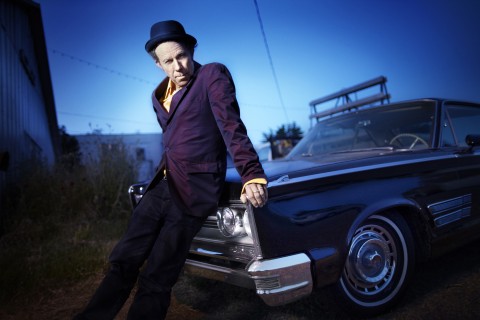
This week Tom Waits released his first studio album in seven years, and it doesn’t disappoint. Bad As Me, writes Will Hermes in a four-star Rolling Stone review, may be Waits’ most broadly emotional album to date: “Certainly it’s his most sharply focused record since the game-changing tag team Swordfishtrombones and Rain Dogs decades ago.” You can judge for yourself: For a limited time, National Public Radio is offering a sneak preview of the complete album.
Bad As Me is more accessible than many of Waits’ albums. As his long-time session guitarist Marc Ribot told The New York Times, “On this record it was less, ‘O.K. let’s be super rigorous and create music completely without precedent,’ and more just ‘Let’s rock the house.’ ” The title track is a good example. It’s a rollicking blues stomp, with Waits channeling the ghost of Screamin’ Jay Hawkins as he shouts:
You’re the head on the spear You’re the nail on the cross You’re the fly in my beer You’re the key that got lost You’re the letter from Jesus on the bathroom wall You’re mother superior in only a bra You’re the same kind of bad as me
On a more serious note, Waits sings of America’s infantile politics, its military and economic quagmires, and the general breakdown of discourse in the melancholy “Talking At The Same Time”:
A tiny boy sat and he played in the sand He made a sword from a stick And a gun from his hand Well we bailed out the millionaires They’ve got the fruit We’ve got the rind And everybody’s talking at the same time
Close the doors. Shut the blinds. Turn out the lights. Make that room dark. Get ready for Alfred Hitchcock Presents Ghost Stories for Young People. Originally recorded in 1962, the album features 11 ghost stories introduced by Hitchcock himself and then read by actor John Allen. If you were a kid during the early 60s, this may bring back some very good memories. The recording is available on YouTube and Spotify, embedded below. (Download Spotify’s software for free here.)
Here’s a playlist of the tracks:
The Haunted And The Haunters (The Pirate’s Curse)
This past weekend, Pete Seeger marched through the streets of Manhattan with the Occupy Wall Street movement. He was a spritely 92. It was the latest in a lifetime of political engagement by Seeger, dating all the way back to his youthful support of the Spanish Civil War. Today we bring you a film of Seeger when he was only 27 years old: To Hear Your Banjo Play. Released in 1946, To Hear Your Banjo Play is an engaging 16-minute introduction to American folk music, written and narrated by Alan Lomax and featuring rare performances by Woody Guthrie, Baldwin Hawes, Sonny Terry, Brownee McGhee, Texas Gladden and Margot Mayo’s American Square Dance Group. To Hear Your Banjo Play is included in our collection, 4,000+ Free Movies Online: Great Classics, Indies, Noir, Westerns, Documentaries & More.
If you would like to support the mission of Open Culture, consider making a donation to our site. It’s hard to rely 100% on ads, and your contributions will help us continue providing the best free cultural and educational materials to learners everywhere. You can contribute through PayPal, Patreon, and Venmo (@openculture). Thanks!
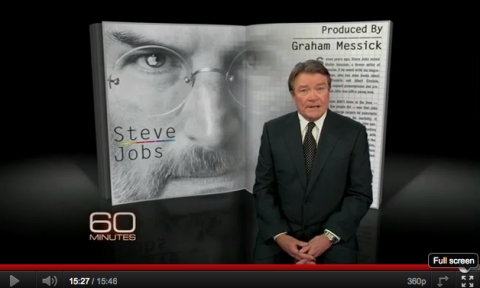
Just a few short weeks after the death of Steve Jobs comes a 627 page biography by Walter Isaacson, the former Managing Editor of TIME and CEO of CNN. Isaacson first discussed writing the book with Jobs seven years ago and has since interviewed the Apple CEO more than 40 times. Now, appearing on 60 Minutes, he talks publicly about the new book simply called Steve Jobs. It hit bookshelves yesterday and already stands atop the Amazon Bestseller list.
The 29 minute interview (Part 1 here, Part 2 here) gives you a feel for the book that’s willing to tell the good, the bad and the sometimes ugly of Jobs’ life. If you’re looking to get your hands on the biography, give this some thought: If you sign up for a 14-day free trial with Audible.com, you can download pretty much any audio book in Audible’s catalogue for free. And that catalogue now includes Isaacson’s unabridged biography. Once the trial is over, you can continue your Audible subscription (as I did), or cancel it, and still keep the free book. The choice is yours.
Note: CBS didn’t allow the 60 Minutes interview to appear on external sites like ours. Hence you will need to watch the interview on YouTube itself. We provide the links above.
The mind, they say, is a house divided: The right hemisphere of the brain is predominantly intuitive; the left, predominantly rational.
In his recent book, The Master and His Emissary: The Divided Brain and the Making of the Western World, the British psychiatrist and writer Iain McGilchrist looks at the evolution of Western Civilization through a neuropsychological prism. In McGilchrist’s view our left hemisphere has, over the past four centuries, progressively pushed aside our right hemisphere. “My belief,” McGilchrist told The Morning News last year, “is that it has now taken over our self-understanding, for a variety of reasons, and is leading us all down the road to ruin.”
McGilchrist is quick to point out that the old left-brain, right-brain clichés of the 1960s and 1970s were greatly oversimplified. Recent research has shown that both sides of the brain are deeply involved in functions such as reason and emotion. But the dichotomy is still useful, McGilchrist says, and should not be abandoned.
“The right hemisphere gives sustained, broad, open, vigilant alertness, whereas the left hemisphere gives narrow, sharply focused attention to detail,” McGilchrist says in a new RSA Animate feature (see above). “People who lose their right hemispheres have a pathological narrowing of the window of attention.” McGilchrist sees this narrowing process occurring at the societal level. The left brain, he argues, conceives of the world as a set of decontextualized, static, material, abstract things, whereas the right brain holistically embraces a world of evolving, spiritual, empathic, concrete beings.
Both hemispheres are necessary, McGilchrist says in the Morning News interview, “but one is more fundamentally important than the other, and sees more than the other, even though there are some things that it must not get involved with, if it is to maintain its broader, more complete–in essence more truthful–vision. This is the right hemisphere, which, as I demonstrate from the neuropsychological literature, literally sees more, and grounds the understanding of the left hemisphere–an understanding which must ultimately be re-integreted with the right hemisphere, if it is not to lead to error. The left hemisphere is extraordinarily valuable as an intermediate, but not as a final authority.”
McGilchrist is not without his critics. The British philosopher A.C. Grayling writes in the Literary Review, “Unfortunately, if one accepts the logic of his argument that our Western civilisation has declined from a right-hemisphere to a left-hemisphere dispensation, we do not have to imagine what the former would be like, because history itself tells us: in it most of us would be superstitious and ignorant peasants working a strip farm that we would never leave from cradle to grave, under the thumb of slightly more left-hemispheric bullies in the form of the local baron and priest.”
After The Master and His Emissary was published, McGilchrist discovered a quotation attributed to Albert Einstein that he felt neatly supported his thesis. He uses this quote at the end of his RSA talk: “The intuitive mind is a sacred gift and the rational mind is a faithful servant. We have created a society that honors the servant and has forgotten the gift.” But did Einstein actually say that? The Internet is awash with dubious Einstein quotations, and we were unable to locate the original source of this one. If any reader can verify its authenticity (by citing the original text, speech or conversation) please leave a note in our comments section. Meanwhile, you can watch McGilchrist’s entire half-hour RSA lecture here.
Tim Burton is a household name with his creepy creations and vivid symbolic imagery in film and art. Born in Burbank, California in 1958, Burton studied at the California Institute of the Arts and worked as an animator for Disney. After a time, he left to pursue an independent career, becoming famous for a wide variety of films such as The Nightmare Before Christmas, Batman, Big Fish, and most recently, Alice in Wonderland.
The video above features Burton discussing the cultivation of his signature style and the source of his unique images. The clip was shot in connection with an exhibit of Burton’s work at the Museum of Modern Art, held in New York City in 2009–2010. The exhibit has since moved to LACMA in Los Angeles, and it traces the development of Burton’s work from childhood sketches to his mature work as a filmmaker, bringing together hundreds of drawings, paintings, photographs, moving image works, concept art, storyboards, puppets, maquettes, costumes, and cinematic ephemera from his films. The show continues outside the museum with a topiary inspired by Edward Scissorhands and a rendition of Balloon Boy, a figure combining characters from Burton’s 1997 book The Melancholy Death of Oyster Boy and Other Stories. You can catch the exhibit at LACMA until October 31st — a fitting end date, to be sure.
Harking back to an earlier post, here is a sample of Burton’s early filmmaking, created not long before he set out on his own. Narrated by Vincent Price, the short film, Vincent, effectively brings together two great talents of the horror genre … and will put anyone in the spirit of Halloween if you’re not already there.
There’s something happening here
What it is ain’t exactly clear…
The intellectuals have paid a visit to Occupy Wall Street (Joseph Stiglitz, Lawrence Lessig, Slavoj Zizek, etc.). And so have some iconic cultural figures. This week, Willie Nelson and his wife wrote and read a poem supporting the surging movement.
Near 1:00 a.m., the festivities were capped off at Columbus Circle with Arlo Guthrie and friends leading a singalong to the folk classic, “This Little Light of Mine.” As more cultural figures pay a visit, we’ll post them…
In recent days we’ve brought you documentary films exploring the birthplace of the blues and the genius of Theonious Monk. Today, we feature one of the most stylish jazz films ever made: Jammin’ the Blues, directed by Life magazine photographer Gjon Mili in 1944.
Born in Albania and trained as an engineer, Mili worked closely with the famed MIT researcher and inventor Harold Edgerton to develop stop-action strobe photography. At Life, Mili used his technical wizardry to create a distinctive aesthetic style. High in contrast and razor-sharp, Mili’s pictures often reveal athletes, dancers and other performers at moments of peak action. He sometimes used a rapid series of flashes to trace the evolution of a motion or gesture. His most famous images feature brightly rim-lit subjects against a background of pure black.
In 1944, Warner Brothers commissioned Mili to bring his trademark style to the movies. Jammin’ the Blues looks as though it jumped right from the pages of Life. As the film fades in, we see only a pair of concentric circles, a pure abstraction. The camera pulls back to reveal the great tenor saxophonist Lester Young in his pork pie hat. Young is soon joined by a group of top musicians, including Red Callender, Sweets Edison, Marlowe Morris, Sidney Catlett, Barney Kessel, Marie Bryant and Joe Jones. A spirited “jam session” is on.
Despite the improvisational nature of the subject, Jammin’ the Blues was painstakingly constructed from many shots, with the performers moving in synch to a pre-recorded soundtrack. The cinematography is by Robert Burks, who went on to be the director of photography on many of Alfred Hitchcock’s films, including North by Northwest and Vertigo.
Jammin’ the Blues runs an exhilarating 10 minutes, and has been added to our archive of Free Movies.
We're hoping to rely on loyal readers, rather than erratic ads. Please click the Donate button and support Open Culture. You can use Paypal, Venmo, Patreon, even Crypto! We thank you!
Open Culture scours the web for the best educational media. We find the free courses and audio books you need, the language lessons & educational videos you want, and plenty of enlightenment in between.