A year ago, Canon launched a contest called “The Story Beyond the Still,” which encouraged photographers to become filmmakers, and help viewers see “beyond the still” image. Fast forward twelve months and we have the final result: A collaborative film, now being premiered at the Sundance Film Festival, that stitches together “chapters” (or film sequences) created by six contest-winning artists, all under the direction of Vincent Laforet. Each chapter ends with a still image that creates the jumping-off point for the next chapter, giving one artist the chance to pick up where a previous artist left off. The complete collaborative film (above) runs 37 minutes. You can find more contest-winning video on Vimeo right here.
Watch Alexander Calder Perform His “Circus,” a Toy Theatre Piece Filled With Amazing Kinetic Wire Sculptures
Alexander “Sandy” Calder (1898 – 1976) was one of America’s foremost modern artists, internationally recognized for his invention of the mobile and his large-scale sculptures. At the age of eight, he started working with wire to make kinetic sculpture (one of his first was a small duck that would rock when pushed, done at the age of 11). Although he became an engineer and worked a variety of jobs, he eventually enrolled in The Art Students League of New York. While there, he worked for the National Police Gazette, covering, among other things, the Ringling Brothers and Barnum & Bailey Circuses.
Calder had a lifelong fascination with the circus and, upon moving to Paris in 1926, he created the Cirque Calder, a collection of wire sculptures with complex mechanisms allowing them to move and do various tricks. His first showing of his circus was to family and friends, but his popularity grew and he was soon giving shows lasting two hours in Paris and New York. It was then that his artistic recognition spread, and he enjoyed a prolific career until his death in 1976. The video above comes to us via The Whitney Museum in NYC, which presented an exhibition called “Alexander Calder: The Paris Years, 1926–1933” in 2008-09. And we also recommend watching the 1961 short film, Le Cirque de Calder, where he talks about his toy-like creations.
This is the first of hopefully many guest posts by Adrienne Rumsey.
If you would like to support the mission of Open Culture, consider making a donation to our site. It’s hard to rely 100% on ads, and your contributions will help us continue providing the best free cultural and educational materials to learners everywhere. You can contribute through PayPal, Patreon, and Venmo (@openculture). Thanks!
The State of Wikipedia Animated
Amidst the celebration of Wikipedia’s 10th anniversary, Jimmy Wales has narrated an animated history of the web-based encyclopedia, and where he sees it heading in the future. One place you can expect to find Wikipedia going (something slightly hinted at here) is the classroom. In the months ahead, look for Wikipedia to develop an “open educational resource platform” that will help students make better use of Wikipedia in the classroom, if not contribute to writing stronger articles/entries. The Wired Campus has more on this new initiative coming down the pike.
Related Content:
Big Thinkers on Wikipedia’s 10th Anniversary
John Wayne: 26 Free Western Films Online
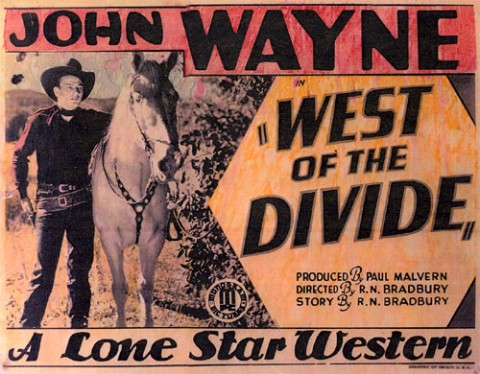
32 years after his death, John Wayne (né Marion Morrison) remains a tremendously popular movie star. According to a Harris Poll taken earlier this month (January 2011), Americans still rank The Duke as their third most favorite actor, putting him right behind Johnny Depp and Denzel Washington. No doubt about it, the legend of John Wayne continues to grow. And happily you can find a gold mine of John Wayne Western films online – all free. Today, we have pulled together a list of 25 films that span five decades of work, moving from the 1930s to the 1970s. You can find them all otherwise listed in our collection of Free Movies Online.
- Angel and the Badman - Free — A black and white Western starring John Wayne and Gail Russell. Considered a radical departure from the Western genre at the time. Find Internet Archive version here. (1947)
- Blue Steel – Free – John Wayne plays a U.S. Marshal trying to capture the Polka Dot Bandit. Some consider it the best of the John Wayne Lone Star films. (1934)
- Born to the West — Free — Can Dare Rudd prove he is responsible enough to win the heart of Judy and also outwit the crooked saloon owner? Stars John Wayne, Marsha Hunt and John Mack Brown.
- Frontier Horizon - Free — The Three Mesqueteers try to prevent wholesale slaughter in this fine Republic Western. Stars John Wayne, Ray “Crash” Corrigan, and Raymond Hatton. (1939)
- Helltown — Free — Originally called “Born to the West,” this John Wayne Western was based on a novel by Zane Grey, an important author of Western novels. (1937)
- McLintock! — Free — Comedy Western starring John Wayne and Maureen O’Hara. Loosely based on Shakespeare’s The Taming of the Shrew. (1963)
- ‘Neath the Arizona Skies — Free — John Wayne plays a cowboy protecting an oil-land heiress. (1934)
- Paradise Canyon — Free — Features Wayne as “government agent John Wyatt who searches for a counterfeit ring operating on the Mexican/Arizona border.” (1935)
- Rainbow Valley — Free — John Martin (John Wayne) is a “government agent working under cover. Leading citizen Morgan calls in gunman Butch Galt (Buffalo Bill Jr.) who blows Martin’s cover.” Find the YouTube version here. (1935)
- Randy Rides Alone – Free – Jailed for murders he didn’t commit, Randy Bowers (John Wayne) escapes only to stumble into the den of the real murderers. Entertaining early Wayne Western. (1934)
- Riders of Destiny -Free — John Wayne portrays Singin’ Sandy Saunders and has a reputation as the most notorious gunman since Billy the Kid. Wayne was the first singing cowboy, but his singing was dubbed, and it was the last time he “sang” in a Western. (1933)
- Sagebrush Trail — Free — John Wayne plays John Brant who escapes from jail after being wrongly accused of murder. Features great stagecoach chase. (1933)
- Texas Terror — Free – A young John Wayne in a romantic Western. (1935)
- The Dawn Rider - Free — John Wayne plays John Mason, a man avenging his father’s murder. A Western directed by Robert Bradbury. (1935)
- The Desert Trail - Free — Early Western with John Wayne. According to WesternClippings, not Wayne’s finest hour. (1935)
- The Lawless Frontier - Free – B Western starring John Wayne and directed by Robert Bradbury. (1934)
- The Lucky Texan – Free — Jerry Mason (played by John Wayne) and Jake Benson become partners and strike it rich with a gold mine. (1934)
- The Man From Utah - Free – The Marshal sends John Weston (John Wayne) to a “rodeo to see if he can find out who is killing the rodeo riders who are about to win prize money.” (1934)
- The Range Feud — Free — Clint Turner is arrested for the murder of his girlfriend Judy’s father, a rival rancher who was an enemy of his own father. Stars John Wayne and Buck Jones. (1931)
- The Star Packer - Free – “A gang working for ‘The Shadow’ is terrorizing the town. John Travers (John Wayne) decides to take on the job of sheriff and do something about it.” (1934)
- The Trail Beyond — Free – Western starring John Wayne, Noah Beery, Sr., and Noah Beery, Jr. (1934)
- Two Fisted Law - Free — After Rob Russell steals Tim Clark’s ranch, Clark starts prospecting for silver. Stars John Wayne and Tim McCoy. (1932)
- War of the Wildcats - Free – John Wayne stars in a Western also released under the title In Old Oklahoma. One of Wayne’s better post-Stagecoach performances. (1943)
- West of the Divide – Free – A young John Wayne in a B Western. (1934)
- Winds of the Wasteland — Free — The arrival of the telegraph put Pony Express riders like John Blair (John Wayne) and his pal Smoky (Lane Chandler) out of work they try to start a stagecoach route through a ghost town. A rival stagecoach company tries to stop them. (1936)
If you would like to support the mission of Open Culture, consider making a donation to our site. It’s hard to rely 100% on ads, and your contributions will help us continue providing the best free cultural and educational materials to learners everywhere. You can contribute through PayPal, Patreon, and Venmo (@openculture). Thanks!
The Poetry of Photographer Milton Rogovin
Before the week comes to an official close, we wanted to remember and celebrate the life of Milton Rogovin, a social documentary photographer who, in the tradition of Walker Evans, used his camera to champion the underprivileged — the working poor and the underclasses living in the United States and beyond. He died this past week at the old age of 101. The New York Times revisits his work in this obituary, and the short video above gives you a glimpse of the man and his body of work.
Sundance Film Festival 2011 on YouTube’s Screening Room
A quick note for film aficionados: The 2011 edition of the Sundance Film Festival is now underway. And over the next two weeks, The YouTube Screening Room will bring you short films from festivals past and present. Right now, you can watch four new films by up-and-coming directors – 8 Bits, Andy and Zach, The High Level Bridge, and Skateistan: To Live and Skate in Kabul (above). More new films will be added on January 27th and February 3rd. In the meantime, you can catch several other short films that originally played at Sundance, or were made by Sundance Institute alumni.
via Switched.com
Alcohol in its Microscopic Splendor

Who knew that alcohol could take on such beauty? What looks like abstract art above is actually your everyday Cosmopolitan. And, within this larger collection, you will discover the microscopic beauty of The Bloody Mary, Dry Martini, Pina Colada, Sake, Tequila, Vodka Tonic, Whiskey, and White Russian. For more micro photography, check out the winner of the 2010 Nikon International Small World Photomicrography Competition, and our post earlier this week, The First Snowflake Photos (1885).
Want more Open Culture? Follow us on Facebook and Twitter!
Stop Motion Fun in Venice
Shelley Jones and Marko Anstice “space hop” through Venice with the help of some stop motion photography. It’s a wintery Venice, very different from the city (watch video) millions come to know during the summer months.
Appreciate the tip Ellen. If you have a great piece of intelligent media to share with your fellow readers, please send it our way. They’re always welcome…
Homer’s Iliad and Odyssey: Free AudioBooks & eBooks
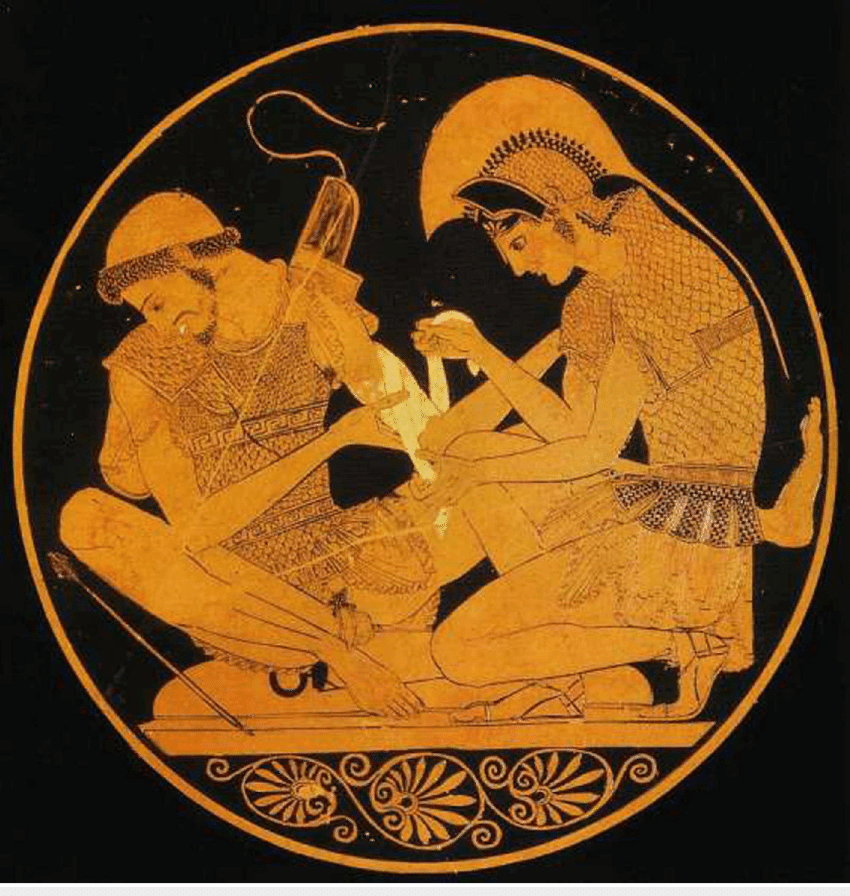
The Iliad and Odyssey — they form the bedrock of western literature and culture. And now, thanks to Ian Johnston of Vancouver Island University, you can find online numerous English translations of Homer’s great epic poems, including some by major literary heavyweights. Johnston’s list features translations of the Iliad by Thomas Hobbes (1675), George Chapman (1614), Alexander Pope (1720), William Cullen Bryant (1870), Samuel Butler (1888), and Richmond Lattimore (1951), along with accompanying versions of the Odyssey. Separately, but certainly worth noting, Librivox offers free audiobook versions of the Iliad and Odyssey, both based on the Butler translation. They’re now added to our list of Free Audio Books, and we have e‑texts within our Free eBooks collection.
Related Content:
Learning Ancient History for Free
JFK’s Inauguration: 50 Years Ago Today
We have been going a little vintage lately, and we’ll have to do it one more day. For today marks the 50th anniversary of John F. Kennedy’s inauguration, the begining of a presidency that inspired many, even though it lasted scarcely more than 1000 days. Kennedy’s inaugural speech ran 1364 words and took 14 minutes to deliver. That makes it significantly shorter than the longest inaugural address (William Henry Harrison took 8,445 words in 1841) but longer than the tersest one – George Washington spoke merely 135 words during his second address. With 50 years of hindsight, we still consider Kennedy’s speech one of the finest inaugural addresses because, as E.J. Dionne writes this week, it challenged the nation (and still does today) “to harness realism to idealism, patriotism to service, national interest to universal aspiration,” especially with the eternal line: “And so, my fellow Americans: ask not what your country can do for you — ask what you can do for your country.” You can revisit the speech in full above, and also find other great archival footage within the new YouTube Channel sponsored by the JFK Presidential Library.
The First Snowflake Photos (1885)
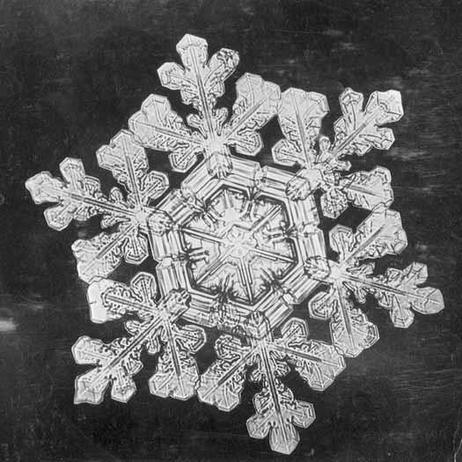
Back on a Vermont farm in 1885, Wilson A. Bentley attached a microscope to a bellows camera and became the first person to photograph an individual snowflake. Two decades later, he sent 500 prints of his snowflakes to the Smithsonian, where they still remain. (View some here.) And then, yet another two decades later, he published a book packed with 2,400 snowflake images. NPR’s web site has more of Bentley’s work on display. And, of course, you can find an entire tribute site dedicated to his wintery work…
Support Us
We're hoping to rely on loyal readers, rather than erratic ads. Please click the Donate button and support Open Culture. You can use Paypal, Venmo, Patreon, even Crypto! We thank you!

Great Lectures
About Us

Open Culture scours the web for the best educational media. We find the free courses and audio books you need, the language lessons & educational videos you want, and plenty of enlightenment in between.
Advertise With Us
Archives
- October 2026
- September 2026
- August 2026
- July 2026
- June 2026
- May 2026
- April 2026
- March 2026
- February 2026
- January 2026
- December 2025
- November 2025
- October 2025
- September 2025
- August 2025
- July 2025
- June 2025
- May 2025
- April 2025
- March 2025
- February 2025
- January 2025
- December 2024
- November 2024
- October 2024
- September 2024
- August 2024
- July 2024
- June 2024
- May 2024
- April 2024
- March 2024
- February 2024
- January 2024
- December 2023
- November 2023
- October 2023
- September 2023
- August 2023
- July 2023
- June 2023
- May 2023
- April 2023
- March 2023
- February 2023
- January 2023
- December 2022
- November 2022
- October 2022
- September 2022
- August 2022
- July 2022
- June 2022
- May 2022
- April 2022
- March 2022
- February 2022
- January 2022
- December 2021
- November 2021
- October 2021
- September 2021
- August 2021
- July 2021
- June 2021
- May 2021
- April 2021
- March 2021
- February 2021
- January 2021
- December 2020
- November 2020
- October 2020
- September 2020
- August 2020
- July 2020
- June 2020
- May 2020
- April 2020
- March 2020
- February 2020
- January 2020
- December 2019
- November 2019
- October 2019
- September 2019
- August 2019
- July 2019
- June 2019
- May 2019
- April 2019
- March 2019
- February 2019
- January 2019
- December 2018
- November 2018
- October 2018
- September 2018
- August 2018
- July 2018
- June 2018
- May 2018
- April 2018
- March 2018
- February 2018
- January 2018
- December 2017
- November 2017
- October 2017
- September 2017
- August 2017
- July 2017
- June 2017
- May 2017
- April 2017
- March 2017
- February 2017
- January 2017
- December 2016
- November 2016
- October 2016
- September 2016
- August 2016
- July 2016
- June 2016
- May 2016
- April 2016
- March 2016
- February 2016
- January 2016
- December 2015
- November 2015
- October 2015
- September 2015
- August 2015
- July 2015
- June 2015
- May 2015
- April 2015
- March 2015
- February 2015
- January 2015
- December 2014
- November 2014
- October 2014
- September 2014
- August 2014
- July 2014
- June 2014
- May 2014
- April 2014
- March 2014
- February 2014
- January 2014
- December 2013
- November 2013
- October 2013
- September 2013
- August 2013
- July 2013
- June 2013
- May 2013
- April 2013
- March 2013
- February 2013
- January 2013
- December 2012
- November 2012
- October 2012
- September 2012
- August 2012
- July 2012
- June 2012
- May 2012
- April 2012
- March 2012
- February 2012
- January 2012
- December 2011
- November 2011
- October 2011
- September 2011
- August 2011
- July 2011
- June 2011
- May 2011
- April 2011
- March 2011
- February 2011
- January 2011
- December 2010
- November 2010
- October 2010
- September 2010
- August 2010
- July 2010
- June 2010
- May 2010
- April 2010
- March 2010
- February 2010
- January 2010
- December 2009
- November 2009
- October 2009
- September 2009
- August 2009
- July 2009
- June 2009
- May 2009
- April 2009
- March 2009
- February 2009
- January 2009
- December 2008
- November 2008
- October 2008
- September 2008
- August 2008
- July 2008
- June 2008
- May 2008
- April 2008
- March 2008
- February 2008
- January 2008
- December 2007
- November 2007
- October 2007
- September 2007
- August 2007
- July 2007
- June 2007
- May 2007
- April 2007
- March 2007
- February 2007
- January 2007
- December 2006
- November 2006
- October 2006
- September 2006

