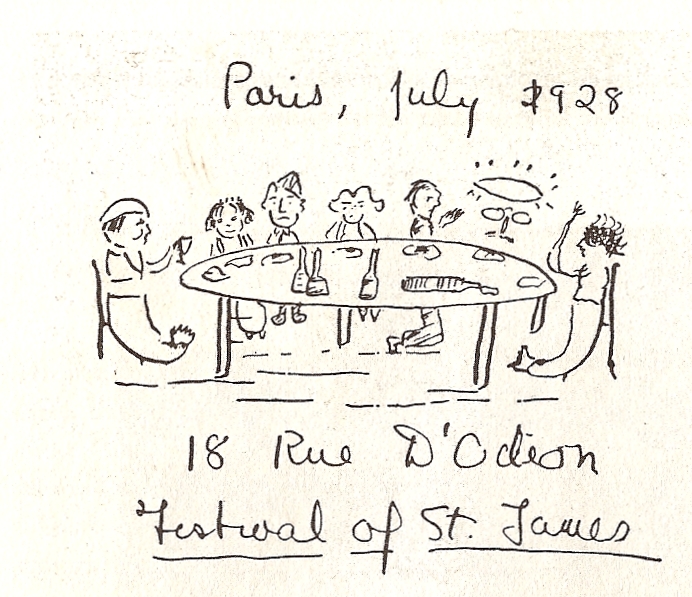
I am applying for the position of Assistant Professor in Philosophy. I am an advanced doctoral candidate in Philosophy (with minors in Urban Studies and English), and expect to defend my dissertation in May, 2015.
My dissertation, Both Sides Now applies a bilateral, hylomorphic analysis to the phenomenon that is described by the signifier “clouds.” Having been constituted in Western discourse both positively as “rows and flows of angel hair,” “ice cream castles in the air,” “feather canyons everywhere,” and negatively as objects that exist solely to obscure the sun, express rain and snow, and hinder the achievement of various goals, we can conclude that after the application of this bilateral, hylomorphic analysis that due to these contradictory “up” and “down” epistemologies of cloud tropes, the reality of clouds is somehow still understudied, having been ignored in favor of their Platonic form/sign, and that we really don’t “know” clouds at all.
You can read the rest of her “application” here and then spend the evening dreaming about taking Joni’s classes on Plato, Existentialism, and Urban Development. I know I will.
You can find more great Joni Mitchell material below.
Most film fans I know have played this game: which movie, if you called the shots over there, would you bring into the Criterion Collection? While the fun conversations that result necessarily elide all the difficulties — acquiring the rights, finding restorable materials, design, distribution — of actually getting a film onto Criterion’s roster of high-quality, feature-intensive home video releases, they do illuminate one’s own cinematic values, even if only with idle talk.
Japan-based filmmaker, artist, designer, and gallerist Robert Nishimura plays the game too, but he doesn’t do it idly. On his blog, he features the highly convincing DVD cases he’s designed for such dream Criterion releases as Kim Ki-young’sThe Housemaid, Akio Jissoji’s Life of a Court Lady, and Werner Herzog’s Fitzcarraldo. He also has a Vimeo channel called For Criterion Consideration, where he goes so far as to craft new “trailers” of the films he’d like to see in the Collection, each offering three reasons why they qualify. His pitch for Barry Sonnenfeld’s 1997 Men in Blackcites its status as a “galactically funny blockbuster,” visuals enhanced by “Rick Baker’s special FX,” and a script even more enhanced with “Ed Solomon’s one-liners.”
Evidently a lover of lesser-seen Japanese pictures and the idiosyncratic quasi-Hollywood releases of the 1970s (but then again, aren’t all cinephiles?), he’s also made videos arguing for films like Hiroshi Teshigahara’s Kobo Abe novel adaptation The Man Without a Map (the logical follow-up to Criterions’s real box set of Teshigahara-Abe collaborations) and Michael Cimino’s faintly homoerotic heist picture Thunderbolt and Lightfoot. And all the way on the other end of the spectrum from Men in Black, he advocates for the likes of Perfumed Nightmare, Kidlat Tahimik’s “playful critique of American cultural dominance,” “exercise in magical realism,” “semi-autobiographical exploration of innocence,” and cornerstone of independent Philippine cinema.
Nishimura’s output of videos and cover designs seems to have slowed in recent years, and I hope for one explanation and one explanation only: that he’s spent the time negotiating a healthy salary from people at Criterion eager to hire him.
The latest installment from PBS’ BrainCraft video series introduces us to two scientific studies that teach us a thing or two about what brings us happiness. One set of results comes from Dr. John Gottman’s Family Research Laboratory (a.k.a. the “Love Lab”); the other from the Harvard Grant Study, a 75-year study that has traced the lives and development of 268 Harvard sophomores from the classes of 1939–1944. Although the study focuses on privileged white men (the demographic that attended Harvard College during the 1930s and 40s), the Harvard Grant Study has yielded conclusions that apply to a broader population.
One of the longest-running studies of adult development, the study has found, for example, that alcoholism has some of the most ruinous effects on marriages, family finances and personal health. Likewise, it reveals that liberals have sex much further into old age than their conservative peers.
But those aren’t the big takeaways — the conclusions that talk about happiness. If you watch the interview below with George Vaillant, the longtime director of the study, you will hear him conclude that happiness isn’t about “conforming, keeping up with the Joneses. It is about playing, and working, and loving. And loving is probably the most important. Happiness is love.”
According to Vaillant, “warmth of relationships throughout life have the greatest positive impact on ‘life satisfaction.’ ” When we have warm relationships with our parents, spouses, friends and family, we experience less daily anxiety and a greater sense of overall pleasure; we have better health (including lower levels of dementia later in life); and we’re more effective at work and make more money.
Essentially The Beatles had it right, “All you need is love. Love is all you need.”
You can read more about the Harvard study over at The Atlantic.
In between clips of Curry’s Frank-n-Furter sashaying through such destined-to-become cult favorites as “Sweet Transvestite” and “The Time Warp,” in fishnets, merry widow, and maquillage designed by David Bowie’s personal makeup artist, the actor entertained questions…in luscious black and white!
Kudos to the young interviewer, Mark Caldwell, for never interrupting or trying to elbow his way into the spotlight with jokey asides or double entendres. The reward is a serious consideration of the filmmaking process and the actor’s craft.
(Bear in mind that it would be at least a year until midnight audiences at New York’s Waverly Theater started throwing toast, rice, and toilet paper at the screen, thus initiating an entire script’s worth of audience participation.)
Having originated the role on the London stage (he auditioned with Little Richard’s “Tutti Frutti”) and reprised it in L.A., Curry was clearly ready to put some space between himself and his iconic creation, announcing—correctly, as it turns out—that any sequels would have to proceed without him.
Then he clammed up for three decades, refusing to discuss his most iconic role until 2005, when he broke the silence during an interview on NPR’s Fresh Air .
It’s clear that Curry saw the making of the film as a serious business, but Rocky Horror fans will find plenty of juicy morsels to feed their obsession. Even virgins will enjoy the story of Frank’s evolving accent —from middle European to “Belgravia Hostess with the Mostest.”
Ayun Halliday is an author, illustrator, and Chief Primatologist of the East Village Inky zine. Follow her @AyunHalliday
570 millions years of evolution. That’s a lot of ground to cover. And it could be like watching paint dry. But not when it flies by in 60 seconds, with a groovy soundtrack by I‑Konic. First come the arthropods. Next some friendly fish, all followed by land plants, flying insects, amphibians, and reptiles. Way down the line, at the very end, the first humans arrive on the scene. But don’t blink, you might miss it.
George Harrison had a beloved guitar named Lucy. B.B. King has one named Lucille. Curious, that.
Above, in a new animated video by Blank on Blank, B.B. explains the story behind the naming of his legendary guitar, and then answers the big question: Do you really need to endure hard times to play the blues? No spoilers here.
The audio was recorded in September, 1985 by Warner Bros. A&R manager Joe Smith. While writing a book on the music industry, Smith taped interviews with legendary figures like Dave Brubeck, Lou Reed, Paul McCartney, Joan Baez, Herbie Hancock, David Bowie, George Harrison, Yoko Ono, James Brown, Bo Diddley, Jerry Garcia, Christine McVie, Mick Jagger, Linda Ronstadt and more. Each interview runs 30–60 good minutes. They’re fascinating to listen to, and you can find them on iTunes and the web.
If you would like to sign up for Open Culture’s free email newsletter, please find it here. It’s a great way to see our new posts, all bundled in one email, each day.
If you would like to support the mission of Open Culture, consider making a donation to our site. It’s hard to rely 100% on ads, and your contributions will help us continue providing the best free cultural and educational materials to learners everywhere. You can contribute through PayPal, Patreon, and Venmo (@openculture). Thanks!
Giving Gus Van Sant’s Drugstore Cowboy a re-watch a couple of weeks ago, I found I especially enjoyed William S. Burroughs’ appearance toward the end as — what else? — an aged but wise drug user in whose benevolent presence Matt Dillon’s protagonist comes to life-changing conclusions. That picture represented a break into the mainstream, or close to it, for Van Sant, a director previously known for Mala Noche, a stark black-and-white take on street hustlers on Portland’s Skid Row.
But Burroughs’ presence, among other things, allowedDrugstore Cowboy to keep a certain raw edge. If you really want to see Burroughs’ in a context of cinematic rawness, though, have a look at these home movies. We’ve pulled them out of the internet’s attic as a celebration of the Naked Lunch author’s 101st birthday. Only lightly and tastefully edited, these VHS gems (part one, part two) candidly depict Burroughs at home in Lawrence, Kansas in 1996, just a year before his death.
They also find him in the company of such notable friends as Patti Smith, Steve Buscemi, and Allen Ginsberg, smoking, drinking, and — in Smith’s case — busting out the guitar. Cats, as promised, roam through the frame. You might not call Burroughs himself, made somewhat less exuberant by time, the life of the party, but he does seem to have radiated a kind of askew animating spirit until the end. It certainly kept him surrounded by countercultural luminaries, all of them surely still as keen as that young pharmacy-robber to learn from him.
If you warbled “02134” without hesitation, you probably grew up watching a beloved children’s television show of the 70s.
It turns out Zoom wasn’t the only cool program WGBH hatched in 1972. On March 13, just a couple of months after Zoom’s debut, the station aired Between Time and Timbuktu, a 90-minute special inspired by the work of Kurt Vonnegut.
Vonnegut also wrote the introduction to the published script, a paperback quickie enhanced by production stills and photos taken by Vonnegut’s wife, Jill Krementz. It was as good a forum as any for him to announce his retirement from film, which he cited as a medium “too clanking and real” for his comfort.
The show itself is likely to cause nostalgia for television’s freewheeling, Monty Python era.
Though 1972 wasn’t an entirely silly period, if you’ll recall. The Vietnam War was raging, with Walter Cronkite holding down the CBS Evening News desk.
Between Time and Timbuktu capitalizes on the veteran broadcaster’s ubiquity by casting comedian Ray Goulding of Bob and Ray fame, as an appropriately grave Walter Gesundheit. Bob joined him at the news desk as a fictitious former astronaut. Vonnegut was appreciative of their efforts, stating that American comedians had probably done more to shape his thinking than any other writer.
Also look for William Hickey, who played Prizzi’s Honor’s genial, aged mafia don, in the lead role of Stony Stevenson—now there’s a period character name! If you’ll remember, Stony is also the first civilian in space, at least according to the Sirens of Titan.
If you’ve spent any time at all on a college campus, you’ve heard Bob Marley and the Wailer’s 1984 compilation album Legend wafting from dorm rooms and frat house windows. The longest charting album in the history of Billboard magazine, it contains all of the band’s top 40 hits and more or less stands as every young American’s introduction to the iconic Jamaican singer, if not to reggae music itself. Before Legend, there was Eric Clapton’s cover of Marley’s 1973 single “I Shot the Sheriff.” Clapton’s version hit number one on the Billboard Hot 100 in ’74—his only number one hit in the U.S.—and introduced American audiences to Marley’s fiery politics, if not always to Marley himself. On what would have been Marley’s 70th birthday, we bring you some early footage of the man and his band.
While many Americans may been rather late to the Bob Marley party, and to reggae, the English have long had a fascination with West Indian music. Ska pioneers like Desmond Dekker drew huge crowds in the UK while remaining much less popular stateside (though Dekker had a number one hit in the U.S. in 1969). But even some Brits didn’t quite know what to do with Marley when he and the Wailers hit English shores in the spring of 1973. Playing the Sundown Theater in the London suburb of Edmonton in support of Dekker and a host of other acts (top), Marley, writes Dangerous Minds, “was still somewhat of an enigma and the Wailers were sonically much more adventurous than some of the other acts on the bill that day…. According to reports at the time, most of the audience at this Wailers gig didn’t ‘get’ the group.”
Nevertheless, that ’73 tour changed the band’s fortunes forever. After three albums, a previous UK tour, and several attempts to break into the pop charts, the Wailer’s fourth record, major label-debut Catch a Fire, finally made them international stars, if not yet every American college freshman’s favorite band. Just above, hear an FM broadcast of another date from the UK leg of the Catch a Firetour (see the Youtube page for the full setlist). After Britain, the band played a run of shows at Paul’s Mall in Boston, then four nights at New York’s Max’s Kansas City. Just a few months later, they hit major cities all over the U.S. before returning to England in November in support of Burnin’, and the song Clapton made famous.
While we tend to associate Marley with peace, love, and patchouli—an impression furthered by Legend, which leans rather heavily on the love songs—these early albums are fierce and militant, and do not hold back from explicit calls for violent revolution and condemnation of historical oppression. It’s a somewhat neglected side of Marley’s legend, but in these concerts, we see just how multifaceted a songwriter and performer he was. Charismatic and vibrant, and flanked by the talented Peter Tosh, Marley exudes star power. Today on his 70th birthday, it’s still as good a time as any to celebrate his life and remember his strident yet soulful calls for love and justice.
Never has the work of so popular a filmmaker felt so distant from the mainstream than in the case of Stanley Kubrick. Just thinking of the man who directed movies like 2001: A Space Odyssey, The Shining,Full Metal Jacket, and Eyes Wide Shut in the same cultural context as a rom-coms and explosion-intensive blockbusters gets one chuckling. But Robert Ryang took it to the next level when he cut together the trailer above, which converts The Shining, one of the most haunting psychological horror pictures ever made, into Shining, a garden-variety feel-good dramedy.
Ryang, then a young editor, pulled off this astonishing conversion as his winning submission for an Association of Independent Creative Editors contest, which asked for new trailers for existing films that put them into different genres. The Shining trailer’s success has spawned many imitators, including quite a few based on Kubrick’s work alone. Just above, we have 2001 turned into an entirely different kind of science-fiction movie — the kind that try to overwhelm us with their sheer intensity summer after tiring summer.
This trailer produces another lighthearted Kubrick, this time out of perhaps Kubrick’s most dark-hearted piece, the unrelenting Vietnam picture Full Metal Jacket. Here it plays a lot more like Stripes without the satirical edge. Below, Kubrick’s family-unfriendly Christmas film Eyes Wide Shut becomes a family-friendly Christmas film. Ultimately, though, it speaks to the quality of the original movies that, try as they might to convert them into the blandest of standard Hollywood fare, these trailers still can’t fully conceal the presence of something cinematically intriguing indeed. I know I’d still buy a ticket.
The medieval travelogue presents present-day writers and artists with an abundance of material. Writing in an age when the boundaries between fiction and non- were not so sharply drawn, early explorers and sailors had little compunction about embellishing their tales with exaggerations and outright lies. Travelers circulated stories of giants and monsters and credulous readers back home swallowed them whole. Well, sometimes. In the case of the most famed medieval traveler, Marco Polo, scholars have debated whether Il Milione—one of the titles of a narrative based on his accounts—refers to a family nickname or to Polo’s reputation for telling “a million lies.” But whether Polo told the truth or not hardly mattered to Italo Calvino, who found in the explorer’s colorful tales just the inspiration he needed for his 1972 novel Invisible Cities.
More a series of vignettes than a narrative, the book consists of chapter after chapter of Polo describing for Kublai Khan the various cities he encountered on his travels, each one more fantastic and magical than the last. “Kublai Khan does not necessarily believe everything Marco Polo says,” Calvino tells us in his introduction, “but the emperor of the Tartars does continue listening to the young Venetian with greater attention and curiosity than he shows any other messenger or explorer of his.” As readers, we too listen with rapt attention to curious stories of cities like Olinda, which “grows in concentric circles, like tree trunks which each year add one more ring” and Eusapia, where “the inhabitants have constructed an identical copy of their city, underground,” so that the dead can “continue their former activities.”
Playing on the bizarre nature of travelers’ tales and the imaginative excesses of exotic romances, Calvino’s novel abounds in delightful architectural absurdities and puzzling allegories, almost demanding to be illuminated like a medieval manuscript. Deciding to meet the challenge, artists Matt Kish, Leighton Connor, Joe Kuth began illustrating Invisible Cities in April of 2014. Their tumblr, Seeing Calvino, updates every Wednesday with a new interpretation of the novel’s many strange cities. At the top of the post, see “Thekla,” the “city forever under construction,” by Kish. Below it, Kuth’s imagining of “Irene,” the “name for a city in the distance, and if you approach it, it changes.” And just above, Connor’s interpretation of “Beersheba,” in which it is believed that “suspended in the heavens, there exists another Beersheba … They also believe, these inhabitants, that another Beersheba exists underground.”
Seeing Calvino isn’t Kish’s first foray into literary illustration. Previously, he undertook an illustration of every page of Melville’s Moby Dick, an impressive effort we featured last week. (Above, see another of his Invisible Cities pieces, “Adelma.”) Of the new, collaborative Calvino project, Kish tells us, “the episodic structure really appealed to us and we thought it was the perfect kind of thing to build a tumblr around and share with people.”
Invisible Cities has been fascinating to create… each of us brings a very different approach to the work. Joe’s Cities tend to be far more literal, realistic and representational, which I find kind of staggering because that is so difficult to do with Calvino. My illustrations are far more abstract and conceptual, trying to show in symbolic ways the ideas behind each chapter. Leighton falls somewhere between us on that spectrum, and his work has elements of realism and abstraction. None of us even talked about this before we started, we simply began independently (after settling on a rotation) and watched each other’s work evolve.
The three artists of Seeing Calvino have to date painted 45 of the 56 cities in Calvino’s novel. Kish has also illustrated Joseph Conrad’s Heart of Darkness, and his blog features many other graphic interpretations of literary and cinematic works. The Moby Dick project saw publication as a book in 2011. We can only hope that Calvino’s publisher sees the value of an Invisible Cities edition incorporating Kish, Kuth, and Connor’s illustrations.
We're hoping to rely on loyal readers, rather than erratic ads. Please click the Donate button and support Open Culture. You can use Paypal, Venmo, Patreon, even Crypto! We thank you!
Open Culture scours the web for the best educational media. We find the free courses and audio books you need, the language lessons & educational videos you want, and plenty of enlightenment in between.