Rewind the videotape to 1968. Jack Kerouac, author of On the Road, appears (seemingly drunk) on William F. Buckley’s “Firing Line.” As you’ll see, this meeting of the Beat and the father of modern American conservatism is not exactly filled with substance. But the clip has some historical curiosity. You can find more Kerouac video and audio on the Digital Beat web site.
When Vladimir Nabokov died in 1977, he was working on a manuscript called The Original of Laura. And he asked that it remain locked in a Swiss vault and never published. His son, Dmitri, who also happens to be his translator and surviving heir, is now wondering what to do with “the most concentrated distillation of [my father’s] creativity.” To burn or not to burn? That’s Dmitri’s dilemma, and it gets explored in this piece by Slate.
He is known as the tortured genius who cut off his own ear as he struggled with mental illness after the breakdown of his friendship with a fellow artist. But a new study claims Vincent Van Gogh may have made up the story to protect painter Paul Gauguin who actually lopped it off with a sword during an argument…
Before you get dissuaded by my original comments, please see my latest update down below.
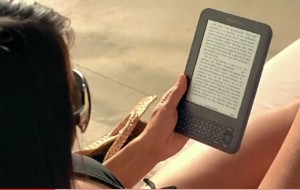
As we mentioned earlier this week, Amazon unveiled its new Kindle this morning in NYC. The Kindle DX ($489) features a large screen (9.7 inches measured diagonally) and it’s intended to make reading newspapers, college textbooks and PDFs a more user-friendly experience. Plenty of news outlets have provided coverage of the unveiling: Engadget, Gizmodo, Ars Technica, etc. And it’s mostly positive. But I’m left wondering if the Kindle DX addresses the major problem with Kindle 2 ($359). If you spend some time on Amazon’s Kindle discussion forum, you’ll see that one of the longest threads (so far containing 857 posts) is devoted to complaints about the Kindle’s light fonts and dark background — a bad combo, especially when you try to read it at night. (Others have kvetched about it here.) I bought the Kindle 2, and really loved it in many ways. But I couldn’t use it in lower light conditions. At night, the screen gets muddy, and the words don’t pop off of the page. And that’s a deal breaker for me. Meanwhile, with the same lighting, a traditional book reads perfectly well. The major problem with the Kindle gets down to this: Users can’t really customize the look & feel of the reading material. Yes, you can increase and decrease the size of the fonts. But you can’t make the fonts darker (unless you know how to hack the darn thing). Nor can you make the background lighter. This one-size-fits-all approach is what Gutenberg gave us in the 15th century. (Sorry, don’t mean to knock on Gutenberg.) It shouldn’t be what Amazon gives us for $359 in 2009. Could you imagine Apple serving this up? Hardly. And speaking of Apple, it may have its own e‑book reader coming soon. According to PC Magazine, Apple may be rolling out the iPad ($699), which could be an e‑book/internet reader and media player all rolled into one. For now, I’m waiting to see what Apple brings to market and hoping that Amazon finds religion. When they get the Kindle right, it will be great.
UPDATE: A year later, a new Kindle is out (see Wifi version here, and 3G wireless version here). The contrast is noticeably improved with this model. But, even better, Amazon now sells (separately) a case that has a built in retractable light. Taken together, you can now read the Kindle fairly well at night, under pretty much any light conditions. This Kindle I kept, and I’m a bigger fan than before.
When Israel entered Gaza earlier this year, Caryl Churchill, whom Tony Kushner calls “one of the most important and influential playwrights living,” wrote a nine minute play entitle “Seven Jewish Children: A Play for Gaza.” In February, it had a brief run at London’s Royal Court Theatre and elicited very different reactions. Some celebrated the play, calling it “dense, beautiful, elusive and intentionally indeterminate” but also appropriately “disturbing” and “provocative;” others labeled it a blood libel and essentially anti-semitic. Although controversial, the Guardian felt that it was important for people to see the play and form their own views. So they commissioned a performance and had it distributed online. You can watch it above, draw you own conclusions, and, if you want, read more about the project over at the Guardian.
As a former Sovietologist (skills that today help me understand our public broadcasting system), I read with excitement the New Yorker’s article on the grand bells of Moscow’s Danilov Monastery and their return after 70-some years from the United States to Russia.Writing in the April 27 issue, Harvard grad Elif Batuman notes how bells—not just these 18, weighing 13 to 20 tons each—have played a pivotal role in, among other things, Russian literature: pealing moments before Raskolnikov’s epiphany of guilt; ringing out in War and Peace as Napoleon’s army entered Moscow; and ever-present in Boris Godunov.Some of the Danilov bells had rung at Gogol’s burial in 1852.But after the Russian Revolution, when the Soviets shuttered the Danilov Monastery (as almost all monasteries), shot most of the priests, and destroyed many of the great Russian churches, the bells were taken down and went silent.They were preserved and brought to the United States through the magnanimous gesture of philanthropist Charles Crane—an American businessman.Installed at Harvard’s Lowell House through Crane’s connections there, they rang on Sundays and at the start of Harvard football games for several decades.
The story of the bells’ return to Moscow is best left to Batuman to tell, but I started wondering how one should think of using sound in writing published online—especially writing about, well, bells.The New Yorker’s podcast helps considerably, and a YouTube search for video and sound produces clips from Russian and American news organizations and amateur cameramen.Meanwhile, the question keeps ringing (prostitye menya!): where is the Flickr for sound?
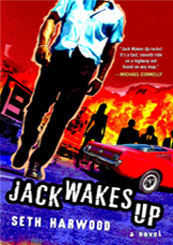
It started as an audio podcast (iTunes — RSS Feed — MP3) and now it’s being released in print by Random House today. Seth Harwood’s Jack Wakes Up is out, and you can read the first three chapters as a free pdf here. A couple of weeks back, we featured a short video showing how Harwood has used web 2.0 (podcasts, videos, etc.) to get his crime fiction in front of new audiences. If you’re a writer, no matter what your age, you’ll want to see what Seth is doing here. It’s smart and let’s you take charge of your literary career. In the meantime, you can follow his enthusiastic book launch over on Twitter: @sethharwood. And we’re at @openculture, bringing even more bits of open culture to the world.
We're hoping to rely on loyal readers, rather than erratic ads. Please click the Donate button and support Open Culture. You can use Paypal, Venmo, Patreon, even Crypto! We thank you!
Open Culture scours the web for the best educational media. We find the free courses and audio books you need, the language lessons & educational videos you want, and plenty of enlightenment in between.
 It started as an audio podcast (


