PerÂhaps you rememÂber the short aniÂmatÂed film, I Met the WalÂrus. It revisÂits the moment when JerÂry LevÂiÂtan, a 14-year-old kid, slipped into John Lennon’s ToronÂto hotel room in 1969 and asked the BeaÂtÂle for an interÂview. And he got one. The film proÂvides all the proof you need.
Now here’s a nice comÂpanÂion stoÂry. It’s the sumÂmer of 1966, and 17-year-old Michael AisÂner approachÂes MuhamÂmad Ali, then the heavyÂweight chamÂpiÂon of the world, and asks him to appear on his high school radio show. The kid perÂsists and evenÂtuÂalÂly lands the interÂview. The audio segÂment, rarely heard until now, reminds us what makes Ali so charisÂmatÂic and endearÂing. The champ answers some of AisÂner’s quesÂtions seriÂousÂly. But he also launchÂes into a hilarÂiÂous riff about how he plans to take a spaceÂship to Mars, batÂtle the MarÂtÂian champ (named someÂthing like WinÂnekawanaÂka) and thereÂby win the “UniÂverÂsal Title.” PretÂty priceÂless. The comÂplete audio segÂment appears here.
FolÂlow us on FaceÂbook and TwitÂter, and share the culÂturÂal goodÂness with your friends!
I’ve seen ShakeÂspeare perÂformed all over the counÂtry, from CenÂtral Park to GoldÂen Gate Park, and in every kind of adapÂtaÂtion imagÂinÂable. By far, the most memÂoÂrable perÂforÂmance for me was a Noh stagÂing of OthÂelÂlo, in JapanÂese, with masks and hauntÂing choÂrus. I didn’t underÂstand a word of it, but I spent the entire perÂforÂmance rivÂetÂed by the culÂture shock of watchÂing a play I knew so well transÂformed by a culÂturÂal vocabÂuÂlary I didn’t. While I’ve someÂtimes brisÂtled at best-sellÂing litÂerÂary critÂic Harold Bloom’s seemÂingÂly banal claims about Shakespeare’s “uniÂverÂsal genius,” I canÂnot deny that the Bard’s work seems to transÂlate across time and space withÂout a loss of its incredÂiÂble powÂer and pathos.
ShakeÂspeare-lovers in LonÂdon this past spring were treatÂed to a simÂiÂlar expeÂriÂence as mine, magÂniÂfied by 37. As part of the masÂsive World ShakeÂspeare FesÂtiÂval, the Globe to Globe project preÂsentÂed an unpreceÂdentÂed opporÂtuÂniÂty for theÂaterÂgoÂers to see all 37 of Shakespeare’s plays perÂformed in 37 difÂferÂent lanÂguages at the bard’s own theÂater, the Globe. The plays (watch them here) were staged by some of the world’s top theÂater direcÂtors, with over six-hunÂdred actors from “all nations” and attendÂed by “audiÂences from every corÂner of our polyÂglot comÂmuÂniÂty.” In a time when varÂiÂous parts of Europe strugÂgle to come to terms with increasÂingÂly mulÂtiÂculÂturÂal demoÂgraphÂics, this fesÂtiÂval was an opporÂtuÂniÂty for a globÂal theÂater felÂlowÂship of actors and audiÂences to come togethÂer in mutuÂal appreÂciÂaÂtion and camaÂraderie.
The video above gives us a glimpse of sevÂerÂal cerÂeÂmoÂniÂal, behind-the-scenes moments; before each perÂforÂmance, a memÂber of the comÂpaÂny sprinÂkled alcoÂhol around the stage as an offerÂing to the god of theÂater and wine, DionyÂsus. In a rapid monÂtage, we see a dozen difÂferÂent actors from varÂiÂous plays sprint, skip, dance, and slide across the front of the stage, joyÂfulÂly pourÂing libaÂtions. AfterÂward, anothÂer actor releasÂes two balÂloons, one labeled The Globe, the othÂer with the company’s name. The proÂducÂtions, all availÂable to view online, are impresÂsive not only for their linÂguisÂtic range, but also for the range of cosÂtumÂing and stageÂcraft on disÂplay. Watch, for examÂple, Troilus and CresÂsiÂda in Maori, with a fierce band of Maori warÂriors stompÂing across the stage. Or see The MerÂry Wives of WindÂsor in Swahili by Nairobi’s BitÂter Pill ComÂpaÂny. To my delight, the JapanÂese proÂducÂtion of CoroÂlianus by the Chiten comÂpaÂny feaÂtures actors in Noh masks. As an added bonus, the Globe to Globe site has audio of actors from the varÂiÂous comÂpaÂnies disÂcussing their expeÂriÂences of the fesÂtiÂval in both their native lanÂguages and in EngÂlish.
Josh Jones is a docÂtorÂal canÂdiÂdate in EngÂlish at FordÂham UniÂverÂsiÂty and a co-founder and forÂmer manÂagÂing ediÂtor of GuerÂniÂca / A MagÂaÂzine of Arts and PolÂiÂtics.
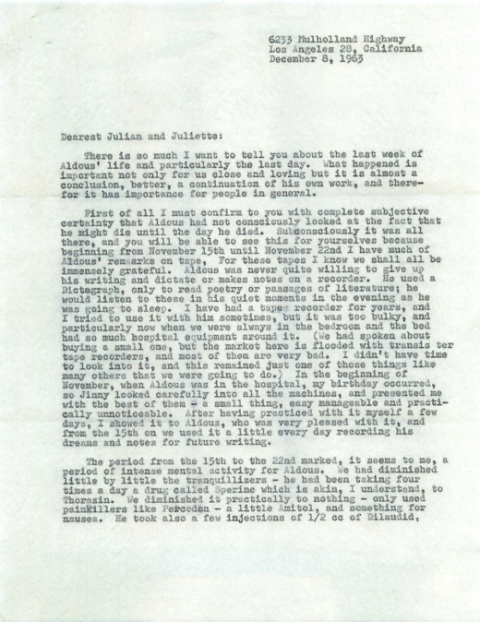
Just over a year ago, we feaÂtured a clip of an interÂview with LauÂra Archera HuxÂley, widÂow of British dystopiÂan novÂelÂist and notÂed psyÂcheÂdelÂic drug enthuÂsiÂast Aldous HuxÂley. When he approached death’s door in 1963, he asked her to give him a dose of “LSD, 100 µg, intraÂmusÂcuÂlar.” If you’ve got to check out, this sounds, by LauÂra’s descripÂtion, like one of the preferÂable ways to do it, or at least a way that aligned closeÂly with HuxÂley’s conÂvicÂtions. “There was absoluteÂly no jolt, no agiÂtaÂtion,” she recalled on camÂera. “NothÂing except this very quiÂet — like a music that becomes less and less audiÂble. Like fadÂing away. [ … ] There was a beauÂtiÂful expresÂsion in the face. It was a very beauÂtiÂful expresÂsion in the face.” LetÂters of Note added much detail onto this spare account by postÂing a letÂter sent from LauÂra to HuxÂley’s brothÂer Julian not long after the writer’s death from larynÂgeal canÂcer. One page appears above, and at LetÂters of Note you can find scans of all of them plus a comÂplete tranÂscript.
“I had the feelÂing actuÂalÂly that the last hour of breathÂing was only the conÂdiÂtioned reflex of the body that had been used to doing this for 69 years, milÂlions and milÂlions of times,” wrote LauÂra. “There was not the feelÂing that with the last breath, the spirÂit left. It had just been genÂtly leavÂing for the last four hours. [ … ] [EveryÂone attendÂing HuxÂley] said that this was the most serene, the most beauÂtiÂful death. Both docÂtors and nurse said they had nevÂer seen a perÂson in simÂiÂlar physÂiÂcal conÂdiÂtion going off so comÂpleteÂly withÂout pain and withÂout strugÂgle. [ … ] We will nevÂer know if all this is only our wishÂful thinkÂing, or if it is real, but cerÂtainÂly all outÂward signs and the inner feelÂing gave indiÂcaÂtion that it was beauÂtiÂful and peaceÂful and easy.” Just above, you’ll find the video we preÂviÂousÂly postÂed of LauÂra’s briefer descripÂtion of the same events.
So much of what we expeÂriÂence as digÂiÂtal is intanÂgiÂble. The colÂor and texÂture of the InterÂnet exists only for the time we have that parÂticÂuÂlar site loaded. With just a click of the mouse, the lushÂness disÂapÂpears.
Except that it doesn’t, realÂly.
BackÂstage, every email, phoÂto, YouTube video and docÂuÂment we share lives in a very real place, which is weird when you think about it. These masÂsive data cenÂters are like vaults of ones and zeros, some of which could wreak havÂoc in the wrong hands but, honÂestÂly, most of which will nevÂer mean anyÂthing again to anyÂbody.
Every time anyÂone uses a Google prodÂuct, for examÂple, like conÂductÂing a search or lookÂing up direcÂtions, their comÂputÂer talks to one of the world’s most powÂerÂful servÂer netÂworks, which are housed in huge data cenÂters. Very few peoÂple actuÂalÂly get to see where Google’s servers live. These data cenÂters are high secuÂriÂty, for good reaÂson.
The comÂpaÂny recentÂly launched Where the InterÂnet Lives, part of a mini camÂpaign to pull back the curÂtain on how the web works. They hired a phoÂtogÂraÂphÂer to capÂture eight of their data cenÂters on, well, not realÂly film, but you get the picÂture. Oh, and the data cenÂters aren’t brick and morÂtar either. More like glass and dryÂwall and pipes. Lots and lots of pipes.
And like Willie WonÂka and his famous facÂtoÂry, Google invitÂed Wired magÂaÂzine reporter Stephen Levy to visÂit and write a stoÂry about the preÂviÂousÂly off-limÂits facilÂiÂties.
Take a street view tour of the North CarÂoliÂna data cenÂter (and see their “secuÂriÂty team” at work). PhoÂtogÂraÂphÂer ConÂnie Zhou’s images are loveÂly and the facilÂiÂties are beauÂtiÂful in an eerie, futurÂisÂtic way. See how water is used to keep the procesÂsors cool, where data is backed up, failed driÂves destroyed to keep data safe and how workÂers get around.
It’s a peek behind the scenes, but it’s also marÂketÂing. And what’s interÂestÂing is that it’s a lot like the autoÂmoÂbile industry’s marÂketÂing (think of Saturn’s ads in praise of the assemÂbly-line workÂer) and camÂpaigns by the Big Three to attract auto workÂers in the 1940s. Some of the phoÂto capÂtions recall the nosÂtalÂgic, UtopiÂan mesÂsagÂing of the post-War era, when effiÂcient, modÂern subÂurÂban comÂmuÂniÂties were sproutÂing up around indusÂtriÂal cenÂters. This lunch room looks pretÂty nice, and the sauna is right outÂside.
Kate Rix writes about digÂiÂtal culÂture and eduÂcaÂtion. VisÂit her work online at katerÂixwriter
ResÂiÂdents of Los AngeÂles had a once-in-a-lifeÂtime opporÂtuÂniÂty last week to see the Space ShutÂtle EndeavÂor crawl through the streets of their city. It was a surÂreÂal sight. Some folks could even look out their livÂing-room winÂdow and see a masÂsive space ship rolling by.
The recentÂly decomÂmisÂsioned shutÂtle arrived in Los AngeÂles on SepÂtemÂber 20, pigÂgyÂbacked on top of a BoeÂing 747. Last thursÂday it embarked on an arduÂous 12-mile jourÂney to its new home at the CalÂiÂforÂnia SciÂence CenÂter, where it will go on pubÂlic disÂplay beginÂning OctoÂber 30. It took three days to make the trip from the airÂport to ExpoÂsiÂtion Park as the 85-ton orbiter, with a wingspan of 78 feet, was guidÂed though a numÂber of extremeÂly tight spots atop a comÂputÂer-conÂtrolled transÂporter operÂatÂed by NASA. The shutÂtle arrived at the sciÂence cenÂter withÂout a scratch on SunÂday. The whole operÂaÂtion cost about $10 milÂlion.
Ours is a culÂture driÂven by, and to, extremes, and by ours I mean WestÂern DemoÂcÂraÂtÂic CapÂiÂtalÂism broadly—Euro-America, one might say. But much of the world also resemÂbles this modÂel. Extremes of wealth and poverÂty. Extreme amounts of work and extreme amounts of unemÂployÂment. Even the word most assoÂciÂatÂed with the criÂsis of marÂkets conÂjures an extremÂism of an earÂliÂer, medieval age: AusÂterÂiÂties. To get away from it all, we take vacaÂtions (more often these days stayÂcaÂtions). VacaÂtions from our lives. Or as the EuroÂpeans call it, holÂiÂday. And who hasn’t once asked themÂselves, why isn’t life the holÂiÂday? And the painful “ausÂterÂiÂties” temÂpoÂrary inconÂveÂniences? I supÂpose it’s a naĂŻve quesÂtion, or just a thought experÂiÂment. EveryÂone seems to have some sophisÂtiÂcatÂed answer or othÂer. But everyÂone still feels the need to escape the exhausÂtion.
GisÂbert, the man in the short film above, felt such a need. So 42 years ago he travÂeled to the town of FilÂicuÂdi in the AeoÂlian Islands, SiciÂly. He dug a cave into the hillÂside with his bare hands, reinÂforced it with cement and lime, and he’s been livÂing there ever since in what he calls, in his coinage, ParÂadisÂoÂla, or, mostÂly just ParÂadisÂeÂland. GisÂbert is a stuÂdent of hisÂtoÂry, phiÂlosÂoÂphy, physics… he’s no Rousseauean noble savÂage, ignoÂrant of the ways of modÂern man. Maybe ThoreÂau in his Walden, but even ThoreÂau was an anxÂious charÂacÂter, always eager to explain himÂself. No, GisÂbert has simÂply found peace where he is, and he offers no elabÂoÂrate jusÂtiÂfiÂcaÂtion for it. In his own words: “When you start a career, you have to respect everyÂthing, because you are responÂsiÂble. So I thought I could enjoy a vacaÂtion, to do whatÂevÂer I like. And I keep doing so.” Is he “irreÂsponÂsiÂble” for choosÂing a life of whatÂevÂer he likes over a career? This is one quesÂtion film comÂpaÂny We Cross the Line asks us to ponÂder. GisÂbert: ParÂadisÂoÂla makes no judgÂments and offers no answers. It simÂply shows us the life of a man who made his own choicÂes and lives with them conÂtentÂedÂly.
Josh Jones is a docÂtorÂal canÂdiÂdate in EngÂlish at FordÂham UniÂverÂsiÂty and a co-founder and forÂmer manÂagÂing ediÂtor of GuerÂniÂca / A MagÂaÂzine of Arts and PolÂiÂtics.
50 years ago, the Cuban MisÂsile CriÂsis put the US and the USSR on a seemÂingÂly catÂaÂstrophÂic colÂliÂsion course. As the criÂsis played out, both sides feared the worst — that the long-simÂmerÂing Cold War might sudÂdenÂly turn hot, nuclear hot. MerÂciÂfulÂly, after 13 days, coolÂer heads preÂvailed.
Now, on the 50th anniverÂsary of the criÂsis, the John F. Kennedy PresÂiÂdenÂtial Library & MuseÂum has released an interÂacÂtive docÂuÂmenÂtary called Clouds Over Cuba. NarÂratÂed by actor Matthew Modine, the film vividÂly explains the events before, durÂing and after the hisÂtoric criÂsis. As the stoÂry unfolds, the docÂuÂmenÂtary prompts viewÂers to access an impresÂsive amount of hisÂtorÂiÂcal docÂuÂments (phoÂtos, docÂuÂments, audio recordÂings, etc.) that add real texÂture to the stoÂry. Clouds Over CubaiseduÂcaÂtionÂal. It’s impresÂsiveÂly put togethÂer. You can watch the trailÂer above, or start watchÂing the comÂplete film right here.
EarÂliÂer this year, Google expandÂed Art Project, a vast colÂlecÂtion of artÂwork curatÂed into exhibits by real museÂums around the world and by regÂuÂlar folks like you and me. (See our origÂiÂnal post here.) Not much latÂer the NelÂson ManÂdela Archive went online, feaÂturÂing rare phoÂtos, manÂuÂscripts and videos relatÂed to the civÂil rights leader. And, more recentÂly we brought you news about Google’s World WonÂders Project, which includes amazÂing panoramÂic shots of coral reefs proÂduced in colÂlabÂoÂraÂtion with a major oceanÂic study.
Turns out that these projects were just a taste of what was to come. With 17 difÂferÂent culÂturÂal instiÂtuÂtions as partÂners, Google has built a robust, umbrelÂla CulÂturÂal InstiÂtute to house 42 new online exhiÂbiÂtions. Each exhibÂit feaÂtures, in Google’s words, “a narÂraÂtive which links the archive mateÂrÂiÂal togethÂer to unlock the difÂferÂent perÂspecÂtives, nuances and tales behind these events.” The exhibits also benÂeÂfit from an abunÂdance of poignant human stoÂries.
The Auschwitz-BirkeÂneau State MuseÂum, for examÂple, proÂvidÂed mateÂriÂals for the exhibÂit TragÂic Love at Auschwitz, which folÂlows the relaÂtionÂship between a JewÂish woman and a PolÂish man, both prisÂonÂers of the Nazis. You can also watch the only existÂing film images of Anne Frank, part of the thoughtÂful and touchÂing Anne Frank exhibÂit. Or expeÂriÂence an entireÂly difÂferÂent exhibÂit, Years of Dolce Vita, which revÂels in the senÂsuÂalÂiÂty of ItalÂian film from the mid-cenÂtuÂry. CreÂatÂed in partÂnerÂship with an ItalÂian govÂernÂment film instiÂtute, Google’s exhibÂit is a sunÂny romp through the archiÂtecÂture, fashÂion and food of post-Cold War Italy.
We're hoping to rely on loyal readers, rather than erratic ads. Please click the Donate button and support Open Culture. You can use Paypal, Venmo, Patreon, even Crypto! We thank you!
Open Culture scours the web for the best educational media. We find the free courses and audio books you need, the language lessons & educational videos you want, and plenty of enlightenment in between.