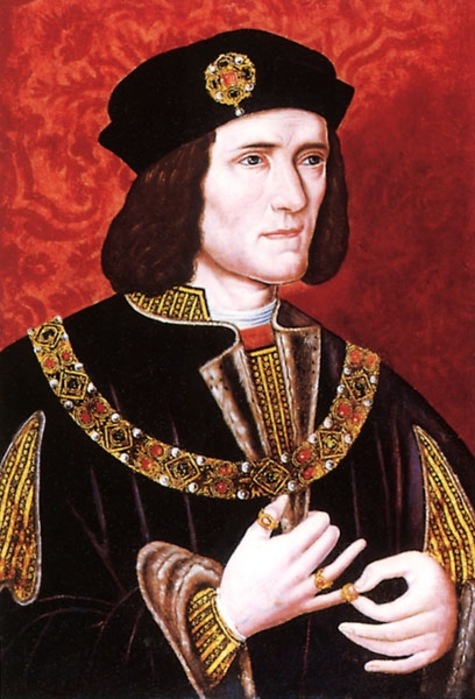
Last September, British archaeologists made a pretty startling discovery. They found, they believed, the bones of Richard III (1452–1485) in a makeshift grave under a parking lot in the city of Leicester. It sounded like a pretty ignominious but karmically justified resting place for the tyrannical medieval king portrayed so famously by William Shakespeare.
From the beginning, the archaeologists were convinced that the skeletal remains belonged to Richard (check out the photo gallery of the bones), but they still needed irrefutable proof. So they took DNA samples and matched them to DNA belonging to Richard’s living descendants. They awaited the results, and today Richard Buckley, the lead archaeologist, told reporters, “Beyond reasonable doubt, the individual exhumed … is indeed Richard III, the last Plantagenet king of England.” You can get more on the story over at The Guardian and The New York Times.
Follow us on Facebook, Twitter and Google Plus and share intelligent media with your friends! They’ll thank you for it.
The Surrealist is ready for his close up, Mr. Warhol. Are you ready for him?
As previously noted on this site, Andy Warhol filmed nearly 500 “screen tests” in the mid-60s. He wasn’t looking to discover unknown talent or cast an upcoming movie. His interest seemed to stem more from voyeurism, the collector’s impulse, and his fixation with glamour. The majority of his celebrated subjects, obeying Warhol’s instructions, refrained from hamming it up on camera.
But it was not until Salvador Dalí faced the lens that the maker met his match…twice. The Museum of Modern Art documents the Spanish artist’s flagrant disregard for Warhol’s strictures, while also speculating on Warhol’s response.
And yet, something soulful does come through in the clip above. Is Dalí emoting? Or is the shimmering background melody by Armando Dominguez the inspiration for Destino, a Dali-Disney animated joint that took 57 years in the making?
I saw a screening of Quentin Tarantino’s Django Unchained at the New Beverly Cinema, the Los Angeles theater he owns. It was preceded by a solid half-hour of trailers for the various western and exploitation pictures that inspired it, from Take a Hard Ride to Mandingo. Even if you’ve only seen two or three Quentin Tarantino movies, you know that he not only uses cinema as his medium, but as his content as well. Any interview with the man — especially his first appearance on Charlie Rose in 1994, or for that matter, his most recent appearance last December — reveals that no living director has a more enthusiastic obsession with film itself. This gets him adapting, reimagining, transposing, paying all kinds of homage, and (alas, the inevitable term) remixing whenever he gets creating.
He makes his movies, in other words, by drawing upon his vast experience of watching movies — usually lurid genre pictures, from the beloved to the obscure, the in-their-way-masterful to the borderline incompetent. What a fun lesson in film history it would make to watch a similar series of source-material trailers before every Tarantino movie.
Most fans would expect such a pre-show for Reservoir Dogs, his 1992 heist-gone-wrong debut feature, to include Ringo Lam’s City on Fire, which stars Chow Yun-fat as an undercover cop embedded in a gang of thieves. It would also have Stanley Kubrick’s The Killing, since Tarantino has said of Reservoir Dogs, “I did think of it as my Killing, my take on that kind of heist movie.” Should Phil Karlson’s Kansas City Confidential also make it in? You can watch the complete 1952 noir crime picture, now in the public domain, and decide for yourself. Following the aftermath of a gang’s armored-truck heist, the film has received attention as a possible influence on Reservoir Dogs. “Mr. Karlson’s filmmaking has few of the standard noir flourishes: the dark and brooding shadows, the bizarrely canted camera angles,” writes New York Times critic Dave Kehr. “Instead he works through gigantic close-ups and an unusually visceral treatment of bare-knuckle violence. With refinements, he would continue to pursue this theme (revenge) and this style, right up through his creative resurgence in the ’70s: Ben (1972), Walking Tall (1973) and Framed (1975).” From fifties revenge crime noir to seventies revenge exploitation: talk about Tarantino’s kind of filmmaker.
Kansas City Confidential appears in our collection of 500 Free Movies Online.
You’ll be hearing the name of Greenwich Village folk scene godfather Dave Van Ronk in the coming days, what with the Coen brothers upcoming Inside Llewyn Davis, a fictionalized take on Van Ronk’s life based on his 2005 posthumous memoir (with Elijah Wald), The Mayor of MacDougal Street. And while Van Ronk’s is a name well-known to students of the 60’s folk revival, he never achieved the fame of protégés like Bob Dylan and Joni Mitchell. But there was another singer/songwriter and future superstar breezing through Van Ronk’s Village scene. I’m talking about Bruce Springsteen who, before he became an arena rock staple, opened solo for Van Ronk on acoustic guitar at Max’s Kansas City in 1972.
In the video above, watch Springsteen play “Growin’ Up,” a song that appeared the next year on his debut album Greetings from Asbury Park, NJ. The album version of the song is the kind of rousing, anthemic fist-pumper Springsteen’s known for, but above, he strips it down to its essentials, and reveals that, like most everything he’s written, it’s a lyrical tour-de-force (which is probably why Bowie recorded a version). The 23-year-old Springsteen also shows us that, band or no band, he was always a phenomenal performer. “Growin’ Up” is still a part of Springsteen’s set, no less anthemic, although the song takes on a much more nostalgic air now that Springsteen is sixty-four. Below, watch a longer version of the clip, including MC Sam Hood’s introduction and Bruce’s opening tune, “Henry Boy.” If Van Ronk’s performance from that night made it on film, it hasn’t made it onto YouTube, but there are any number of his interpretations of old country blues online.
And make sure you always take two sharpened Number 2 pencils with you on airplanes (Margaret Atwood).
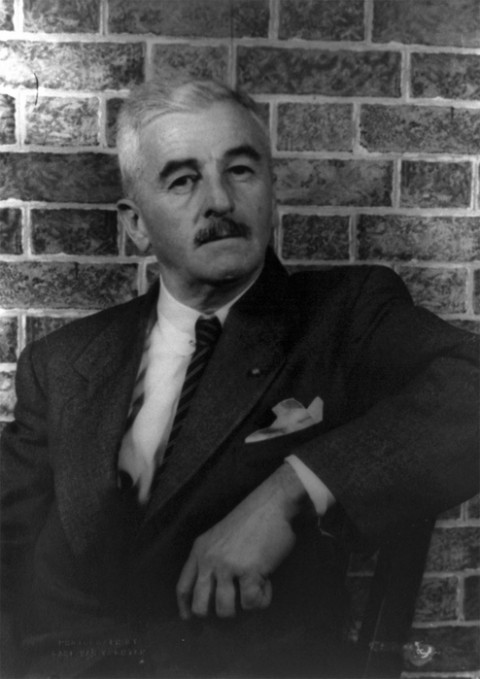
Like I said, it’s all pretty nuts-and-bolts advice. But if you’re looking for something a little more colorful and outside-the-box, then look no further than William Faulkner’s 1956 interview with the Paris Review. When asked “Is there any possible formula to follow in order to be a good novelist?,” Faulkner perhaps surprised his interviewer, Jean Stein, when he said:
An artist is a creature driven by demons… He is completely amoral in that he will rob, borrow, beg, or steal from anybody and everybody to get the work done.
Elaborating, Faulkner continued:
The writer’s only responsibility is to his art. He will be completely ruthless if he is a good one. He has a dream. It anguishes him so much he must get rid of it. He has no peace until then. Everything goes by the board: honor, pride, decency, security, happiness, all, to get the book written. If a writer has to rob his mother, he will not hesitate.…
If Stein hoped to get Faulkner back into more practical territory with her next question, she was disappointed. To the question, “Then what would be the best environment for a writer?,” Faulkner offered this:
If you mean me, the best job that was ever offered to me was to become a landlord in a brothel. In my opinion it’s the perfect milieu for an artist to work in. It gives him perfect economic freedom; he’s free of fear and hunger; he has a roof over his head and nothing whatever to do except keep a few simple accounts and to go once every month and pay off the local police. The place is quiet during the morning hours, which is the best time of the day to work. There’s enough social life in the evening, if he wishes to participate, to keep him from being bored.… My own experience has been that the tools I need for my trade are paper, tobacco, food, and a little whiskey.
If you want to translate this into practical advice, you get something like this. What should a young novelist aspire to? Basically being a Machiavellian-type in a cat house. Not a pretty idea, but that’s how one of America’s pre-eminent writers saw the literary life. And if you strip things down to their rawest essentials, you might find some wisdom there. Live for your art, and give yourself the economic freedom to write. Nothing more. Nothing less.
Welcome to the New York city apartment of Graham Hill, a Canadian-born architect committed to bringing sustainability into the mainstream. His apartment does more with less. It has a footprint of only 420 square feet. Yet it’s elegantly-designed and completely functional. What initially looks like a simple studio unfolds into much more, a Soho apartment that features no less than eight rooms — a bedroom, guest room, kitchen, office and the rest. We’ll let Graham, the founder of treehugger.com, take you on the grand tour, and we’ll leave you to wonder what a designer could do with this Parisian apartment measuring only 17 square feet.…
Five years ago, a 30-something music producer from Houston, Texas got a big idea. Why not take his two favorite things — Bob Dylan and Dr. Seuss, of course — and mash them up into one original creation. Hence came Dylan Hears a Who, a mock album that took seven Dr. Seuss classics and put them to the melodies and imitated voice of Mr. Dylan. The cuts went viral, giving Dylan-Seuss fans worldwide the chance to enjoy creative takes on Green Eggs and Ham (above); The Cat in the Hat;Oh, The Thinks You Can Think! (below); Too Many Daves; and The Zax. Soon enough, the songs faded into YouTube oblivion, awaiting the day when a digital archaeologist would come along and do an excavation. Well, today’s the day. Enjoy!
The work of artist Nina Katchadourian is highly accessible. So much so that it’s likely her fault if the line for the bathroom on your next flight stretches all the way from tail to the cockpit. Such is the power of Lavatory Self-portraits in the Flemish Style, the best known segment of her ongoing Seat Assignment project. How can passengers pass up the opportunity to recreate Katchadourian’s widely disseminated images, knowing that the originals were shot in the mirror on an iPhone, using props like disposable seat covers and an inflatable neck pillow?
Shy and/or civic-minded types who don’t relish the implications of tying up the johnny at high altitudes should have a go at restaging the other aspects to Katchadourian’s inflight work, on display above.
(Hint: book a window seat and exercise restraint when the fight attendant hands you your complimentary bag of mini pretzels.)
Honestly, much of what you’ll see, from the unnervingly named Disasters to the genius of Sweater Gorillas, can be accomplished without leaving the ground. Though it may prove more creatively rewarding to delay until the only palatable alternative is an unregulated amount of reality TV screening on the seat back ahead of you.
We're hoping to rely on loyal readers, rather than erratic ads. Please click the Donate button and support Open Culture. You can use Paypal, Venmo, Patreon, even Crypto! We thank you!
Open Culture scours the web for the best educational media. We find the free courses and audio books you need, the language lessons & educational videos you want, and plenty of enlightenment in between.
 Last September, British archaeologists made a pretty startling discovery. They found, they believed, the bones of Richard III (1452–1485) in a makeshift grave under a parking lot in the city of Leicester. It sounded like a pretty ignominious but karmically justified resting place for the tyrannical medieval king portrayed so famously by William Shakespeare.