Dylan Thomas Sketches a Caricature of a Drunken Dylan Thomas

Dylan Thomas Self-Portrait

Dylan Thomas’s drink­ing was leg­endary. Sto­ries of the debauched and disheveled Welsh poet­’s epic drink­ing binges have had a ten­den­cy to drown out seri­ous dis­cus­sion of his poet­ry.

It’s a leg­end that Thomas helped pro­mote, as this pen­cil sketch he made of him­self attests. The undat­ed self-car­i­ca­ture was pub­lished in Don­ald Fried­man’s 2007 book, The Writer’s Brush: Paint­ings, Draw­ings, and Sculp­ture by Writ­ers. It depicts a tee­ter­ing, gog­gle-eyed fig­ure with tum­bler in hand, hap­pi­ly sur­round­ed by bot­tles.

Thomas would some­times tell his friends he had cir­rho­sis of the liv­er, but his autop­sy even­tu­al­ly dis­proved this. As leg­end has it, the poet lit­er­al­ly drank him­self to death on his Amer­i­can tour in the fall of 1953, when he was 39 years old. In fact, it appears Thomas may have been a vic­tim of med­ical mal­prac­tice. He went to his doc­tor com­plain­ing of dif­fi­cul­ty breath­ing. The doc­tor was aware of the poet­’s rep­u­ta­tion as a drinker, and had been informed by Thomas’s com­pan­ion of his now-famous state­ment from the night before: “I’ve had 18 straight whiskies. I think that’s the record.”

So the doc­tor treat­ed Thomas for alco­holism and did­n’t dis­cov­er he was suf­fer­ing from pneu­mo­nia. He gave Thomas three injec­tions of mor­phine, which can slow res­pi­ra­tion. Thomas’s face turned blue and he went into a coma. He died four days lat­er. When Thomas’s friends inves­ti­gat­ed, they deter­mined he had like­ly con­sumed, at most, eight whiskies. That’s still a large amount, but the poet­’s exag­ger­a­tion appears to have led his doc­tor astray. In a sense, then, Dylan Thomas was killed not by his drink­ing, but by the leg­end of his drink­ing.

Relat­ed Con­tent:

Dylan Thomas Recites ‘Do Not Go Gen­tle into That Good Night’ and Oth­er Poems

The Art of Sylvia Plath: Revis­it Her Sketch­es, Self-Por­traits, Draw­ings & Illus­trat­ed Let­ters

A Soft Self-Por­trait of Sal­vador Dali, Nar­rat­ed by the Great Orson Welles

Ten Buildings That Changed America: Watch the Debut Episode from the New PBS Series

Every­one on the inter­net knows the bit­ter dis­ap­point­ment of click­ing on lists that sound more inter­est­ing than they turn out to be, just as enthu­si­asts of Amer­i­can his­to­ry have grown weary of hear­ing claims about what has or has­n’t “changed Amer­i­ca.” (Last year, com­e­dy writer Ali­son Agosti ele­gant­ly smacked down both trends in one tweet.) But I have a feel­ing that PBS and sta­tion WTTW’s new series Ten Build­ings that Changed Amer­i­ca can pull the com­bi­na­tion off with snap­pi­ness and insight. Host­ed by Geof­frey Baer, tele­vi­sion per­son­al­i­ty and not­ed enthu­si­ast of Chica­go (an Amer­i­can built envi­ron­ment if ever there was one), the show promis­es a look at, among oth­er archi­tec­tur­al win­dows onto the Amer­i­can spir­it, “a state capi­tol that Thomas Jef­fer­son designed to resem­ble a Roman tem­ple, the home of Hen­ry Ford’s first assem­bly line, the first indoor region­al shop­ping mall,” and “an air­port with a swoop­ing con­crete roof that seems to float on air.”

You can watch the debut episode of Ten Build­ings that Changed Amer­i­ca online. It begins the cross-coun­try archi­tec­tur­al road trip in Rich­mond, Vir­ginia, where Baer vis­its future Pres­i­dent Thomas Jef­fer­son­’s state capi­tol build­ing. “As a found­ing father of the Unit­ed States, Thomas Jef­fer­son was pas­sion­ate about America’s inde­pen­dence from Britain,” says the show’s page on the build­ing. “He was no fan of the king of Eng­land and, by exten­sion, no fan of the Geor­gian archi­tec­ture that bore the kings’ name,” an incli­na­tion which got him look­ing toward France for inspi­ra­tion. Sub­se­quent episodes will exam­ine oth­er strik­ing, inno­v­a­tive, influ­en­tial, and oft-imi­tat­ed Amer­i­can build­ings: Frank Lloyd Wright’s Robie House in Baer’s beloved Chica­go, Mies van der Rohe’s Sea­gram Build­ing in New York City, and even Frank Gehry’s Dis­ney Con­cert Hall, the still-con­tro­ver­sial new icon of the down­town Los Ange­les where I type this very post.

Relat­ed Con­tent:

The His­to­ry of West­ern Archi­tec­ture: From Ancient Greece to Roco­co (A Free Online Course)

David Byrne: How Archi­tec­ture Helped Music Evolve

An Ani­mat­ed Tour of Falling­wa­ter, One of Frank Lloyd Wright’s Finest Cre­ations

Col­in Mar­shall hosts and pro­duces Note­book on Cities and Cul­ture and writes essays on lit­er­a­ture, film, cities, Asia, and aes­thet­ics. He’s at work on a book about Los Ange­les, A Los Ange­les Primer. Fol­low him on Twit­ter at @colinmarshall.

Jimi Hendrix’s Final Interview on September 11, 1970: Listen to the Complete Audio

There’s not much left to say about Jimi Hendrix’s last days. The end­less stream of com­men­tary sur­round­ing his life and death threat­ens to bury the man and his music in music-press fetishiza­tion, urban leg­end, and fawn­ing mythol­o­gy. When I’m able to total­ly tune out the hype, Hendrix’s pol­ished work stands the time-test, and some of the more raw releases—the bootlegs and demos that appear every few years—at least doc­u­ment musi­cal roads not tak­en and pre­serve moments of stun­ning genius, if not ful­ly-real­ized com­po­si­tions.

And Hendrix’s intrigu­ing persona—revealed in casu­al inter­views and conversations—still cap­ti­vates, with his off­hand lyri­cism and frac­tal imag­i­na­tion, qual­i­ties on full dis­play in his final press inter­view, to NME’s Kei­th Altham, on Sep­tem­ber 11, 1970, just sev­en days before the artist’s death. (Lis­ten to the YouTube audio above, or Sound­cloud below.) Hen­drix is breezy, con­tem­pla­tive, a lit­tle eva­sive, reveal­ing his own sense of being between things, not sure where he’s head­ed next. As all those late-Hen­drix bootlegs and demos tes­ti­fy, he could have done any­thing and made it work with the right band and a bit more time…

But enough what-ifs. Nobody’s bet­ter on Hen­drix than Hen­drix, so lis­ten to the inter­view. You can find a full tran­script and much more Hen­drix-on-Hen­drix and music-press chat­ter in a recent (and quite inex­pen­sive) Kin­dle pub­li­ca­tion called Jimi Hen­drix: Inter­views and Reviews 1967–71. Ulti­mate Clas­sic Rock calls the final inter­view the “most inter­est­ing thing about the book from a his­tor­i­cal stand­point,” and this may be true.

Final­ly, if you don’t make it all the way to the end of the audio, Hen­drix leaves on this vivid and quite fun­ny note:

ALTHAM: Do you feel per­son­al­ly that you have enough mon­ey to live com­fort­ably with­out nec­es­sar­i­ly mak­ing more as a sort of pro­fes­sion­al enter­tain­er?

HENDRIX: Ah, I don’t think so, not the way I’d like to live, because like I want to get up in the morn­ing and just roll over in my bed into an indoor swim­ming pool and then swim to the break­fast table, come up for air and get maybe a drink of orange juice or some­thing like that. Then just flop over from the chair into the swim­ming pool, swim into the bath­room and go on and shave and what­ev­er.

ALTHAM: You don’t want to live just com­fort­ably, you wan­na live lux­u­ri­ous­ly?

HENDRIX: No! Is that lux­u­ri­ous? I was think­ing about a tent, maybe, [laughs] over­hang­ing … over­hang­ing this … a moun­tain stream! [laugh­ter].

Relat­ed Con­tent:

Watch Jimi Hendrix’s ‘Voodoo Chile’ Per­formed on a Gayageum, a Tra­di­tion­al Kore­an Instru­ment

In 1969 Telegram, Jimi Hen­drix Invites Paul McCart­ney to Join a Super Group with Miles Davis

Pre­vi­ous­ly Unre­leased Jimi Hen­drix Record­ing, “Some­where,” with Bud­dy Miles and Stephen Stills

See Jimi Hendrix’s First TV Appear­ance, and His Last as a Back­ing Musi­cian (1965)

Josh Jones is a writer and musi­cian based in Wash­ing­ton, DC. Fol­low him @jdmagness.

Ken Robinson Explains How to Escape the Death Valley of American Education

Right now, you can find 1,520 TED Talks com­piled into a neat online spread­sheet. That’s a lot of TED Talks. And the most pop­u­lar one (in case you’re won­der­ing) was deliv­ered by Sir Ken Robin­son in 2006. If you reg­u­lar­ly vis­it our site, then chances are you’re among the 20 mil­lion peo­ple who have viewed Robin­son’s talk on why Schools Kill Cre­ativ­i­ty. There’s also a good chance that you’ll want to watch his new­ly-released TED Talk, How to Escape Edu­ca­tion’s Death Val­ley. Filmed just last month, this talk takes aim at Amer­i­ca’s test-cen­tric edu­ca­tion­al sys­tem, a sys­tem that increas­ing­ly treats edu­ca­tion as an indus­tri­al process and bleeds cre­ativ­i­ty and curios­i­ty out of our class­rooms. You get that prob­lem when you put tech­nocrats and politi­cians, not teach­ers, in charge of things. And you’re only going to get more of it (sor­ry to say) as com­put­er sci­en­tists start putting their stamp on Amer­i­ca’s edu­ca­tion­al future.

Fol­low us on Face­bookTwit­ter and Google Plus and share intel­li­gent media with your friends! They’ll thank you for it.

by | Permalink | Make a Comment ( 1 ) |

Ernest Hemingway to F. Scott Fitzgerald: “Kiss My Ass”

HemingwayFitz

So every­one knows Hem­ing­way was a bruis­er. Some of the best sto­ries of his macho pos­tur­ing involve fel­low writ­ers. There was, of course, that time he and Wal­lace Stevens slugged it out in Key West. I’ve been told Stevens asked for it, drunk­en­ly telling Hemingway’s sis­ter Ursu­la that her broth­er wrote like a lit­tle boy. I don’t know whose ver­sion of the sto­ry this comes from, but by all accounts, Hem­ing­way knocked the bear of a poet down sev­er­al times. The two made up soon after. Then there’s the sto­ry of Hem­ing­way and James Joyce; the diminu­tive Irish writer appar­ent­ly hid behind his pugna­cious friend when trou­ble loomed.

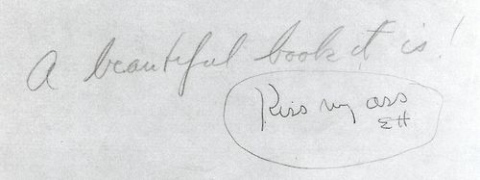
There are many oth­er such yarns, I’m sure, but one I’ve just learned of shows us a much more pas­sive-aggres­sive side of Papa H. As the John F. Kennedy Pres­i­den­tial Library blog informs us, Hem­ing­way once sent F. Scott Fitzger­ald a type­script of A Farewell to Arms. Fitzger­ald sent back ten pages of edits and com­ments, sign­ing off with “A beau­ti­ful book it is!” You can see Hemingway’s first reac­tion above (signed EH). In lat­er drafts, it seems, he took some of Fitzgerald’s advice to heart.

via @matthiasrascher

Relat­ed Con­tent:

Sev­en Tips From Ernest Hem­ing­way on How to Write Fic­tion

F. Scott Fitzger­ald in Drag (1916)

James Joyce in Paris: “Deal With Him, Hem­ing­way!”

Josh Jones is a writer and musi­cian based in Wash­ing­ton, DC. Fol­low  him @jdmagness

The Poetry of Bruce Lee: Discover the Artistic Life of the Martial Arts Icon

In the final months of his short life, Bruce Lee wrote a per­son­al essay, “In My Own Process” where he said, “Basi­cal­ly, I have always been a mar­tial artist by choice and actor by pro­fes­sion. But, above all, I am hop­ing to actu­al­ize myself to be an artist of life along the way.” If you’re famil­iar with Bruce Lee, you know that he stud­ied phi­los­o­phy at The Uni­ver­si­ty of Wash­ing­ton, and even when he audi­tioned for The Green Hor­net in 1964 (and showed off his amaz­ing kung fu moves), he took pains to explain the phi­los­o­phy under­ly­ing the mar­tial arts.

Lee was­n’t just a philoso­pher. He was also a poet and a trans­la­tor of poet­ry. In the book, Bruce Lee: Artist of Life, John Lit­tle has pub­lished 21 orig­i­nal poems found with­in Lee’s per­son­al archive. The poems, Lit­tle writes, “are, by Amer­i­can stan­dards, rather dark — reflect­ing the deep­er, less exposed recess­es of the human psy­che… Many seem to express a return­ing sen­ti­ment of the fleet­ing nature of life, love and the pas­sion of human long­ing.” Above, you can see Shan­non Lee, the daugh­ter of Bruce Lee, read a poem pub­lished in Lit­tle’s col­lec­tion. It’s called “Boat­ing on Lake Wash­ing­ton.” Imme­di­ate­ly below, she reads “IF” by Rud­yard Kipling, a poem her father loved so much that he had it engraved on a plaque and mount­ed on the wall in his home.

Final­ly, we leave you with Lee’s trans­la­tion of anoth­er favorite poem, “The Frost” by Tzu Yeh. The video fea­tures pieces of his hand­writ­ten trans­la­tion.

Relat­ed Con­tent:

Bruce Lee: The Lost TV Inter­view

Watch 10-Year-Old Bruce Lee in His First Star­ring Role (1950)

Bruce Lee Plays Ping Pong with Nunchucks

by | Permalink | Make a Comment ( 5 ) |

Henry Miller Talks Writing and the Expat Life with Anaïs Nin, Lawrence Durrell, and Others (1969)

Brook­lynites, be apprised: Big Sur Brook­lyn Bridge, Williams­burg’s week-long cel­e­bra­tion of all things Hen­ry Miller, began yes­ter­day and will run until May 19th. If you can’t make it out there, I sug­gest you instead sit down to watch The World of Hen­ry Miller: Reflec­tions on Writ­ing (part two, part three, part four). Shot in the late six­ties by the doc­u­men­tar­i­an Robert Sny­der, oth­er­wise known for his award-win­ning films on Michelan­ge­lo and the world of insects, the film fol­lows Miller, enter­ing his final decade, as he retraces his steps through the lit­er­ary places he’s known, and has rem­i­nis­cence-inten­sive con­ver­sa­tions with the lit­er­ary peo­ple he’s known, reflect­ing all the while on how both shaped his writ­ing.

Alexan­der Nazaryan’s New York­er post, “Hen­ry Miller, Brook­lyn Hater,” writ­ten for the occa­sion of Big Sur Brook­lyn Bridge, goes into some detail about the Trop­ic of Can­cer author’s loathing for his birth­place. Though he would ulti­mate­ly find a kind of peace in Big Sur, only on the move in the thirties—especially as an expa­tri­ate in France, where he worked for the Chica­go Tri­bune’s Paris edi­tion, and Greece, where he stayed with British nov­el­ist Lawrence Durrell—did his writ­ing take its true shape. Miller him­self tells it that way in Reflec­tions on Writ­ing, to friends like Dur­rell, famed diarist Anaïs Nin, and Lawrence Clark Pow­ell, the UCLA librar­i­an Miller thought “rep­re­sen­ta­tive of all that is best in the Amer­i­can tra­di­tion.” Though Sny­der also includes footage of Miller read­ing his work aloud, you can see a bit more in the clip of a Black Spring read­ing just above, and hear half an hour more of the book here.

Relat­ed Con­tent:

Writ­ing Tips by Hen­ry Miller, Elmore Leonard, Mar­garet Atwood, Neil Gaiman & George Orwell

Tom Schiller’s 1975 Jour­ney Through Hen­ry Miller’s Bath­room (NSFW)

Col­in Mar­shall hosts and pro­duces Note­book on Cities and Cul­ture and writes essays on lit­er­a­ture, film, cities, Asia, and aes­thet­ics. He’s at work on a book about Los Ange­les, A Los Ange­les Primer. Fol­low him on Twit­ter at @colinmarshall.

Frank Lloyd Wright Reflects on Creativity, Nature and Religion in Rare 1957 Audio

Frank Lloyd Wright was one of the most admired and influ­en­tial archi­tects of the 20th cen­tu­ry. He was a flam­boy­ant, unabashed­ly arro­gant man who viewed him­self from an ear­ly age as a genius. Oth­ers tend­ed to agree. In 1991, The Amer­i­can Insti­tute of Archi­tects named Wright the great­est Amer­i­can archi­tect of all time.

Wright believed that the adage “form fol­lows func­tion” was some­thing of a mis­state­ment. “Form and func­tion should be one,” he said, “joined in a spir­i­tu­al union.” A sense of spir­i­tu­al union ran all through Wright’s work. He iden­ti­fied God with Nature (which he spelled with a cap­i­tal “N”) and strove to design build­ings that were in har­mo­ny with their nat­ur­al sur­round­ings. “No house should ever be on a hill or on any­thing,” Wright wrote in his 1932 auto­bi­og­ra­phy. “It should be of the hill. Belong­ing to it. Hill and house should live togeth­er each the hap­pi­er for the oth­er.”

Wright spoke about life and the cre­ativ­i­ty of man in mys­ti­cal terms. In this rare record­ing from June 18, 1957, a 90-year-old Wright describes his phi­los­o­phy. “Man is a phase of Nature,” he says, “and only as he is relat­ed to Nature does he mat­ter, does he have any account what­ev­er above the dust.”

Relat­ed con­tent:

The Gas Sta­tion Designed by Frank Lloyd Wright

Falling­wa­ter, One of Frank Lloyd Wright’s Finest Cre­ations, Ani­mat­ed

« Go BackMore in this category... »
Quantcast