Last week, we featured three terminally ill art-lovers’ journey to the Rijksmuseum to see their Rembrandts for one last time. They saw those paintings far more vividly, no doubt, than would those of us lucky enough to have longer on this Earth. Though nothing can convey the experience of seeing anything, artwork or otherwise, for the last time, these animations will at least give you the experience of seeing Rembrandt’s work in an entirely new way.
The videos (see them all here) bring to life six of the twelve canvases from The Late Rembrandt Exhibition, the very same one to which Stichting Ambulance Wens Nederland took the three patients nearing their ends. Even if you’ve never considered yourself particularly up on the Dutch Masters, you’ll more than likely recognize most of these paintings. Just above we have, for instance, 1642’s The Night Watch(or, more properly, Militia Company of District II under the Command of Captain Frans Banninck Cocq,or The Shooting Company of Frans Banning Cocq and Willem van Ruytenburch), perhaps Rembrandt’s best-known work, and one you may remember Peter Greenaway bringing to his own brand of life in Nightwatching.
If all this strikes you as an exercise in high-tech desecration, give the animations a watch and you’ll find them more subtly and tastefully executed than you might have imagined. You can see all six at the Youtube page of CS Digital Media, who produced them for Dutch telecommunications KPN, the Rijksmuseum’s main sponsor — art having its patrons as much now as it did in Rembrandt’s day.
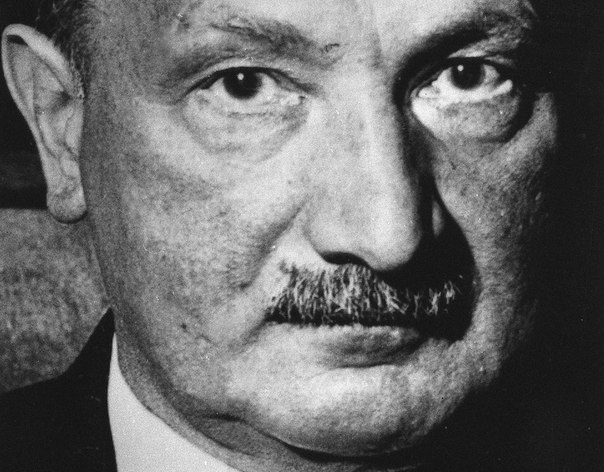
German philosopher Martin Heidegger, widely considered one of the most influential philosophers of the 20th century, was a Nazi, a fact known to most anyone with more than a passing knowledge of the subject. In a New York Review of Books essay, Harvard intellectual historian Peter E. Gordon points out that “the philosopher’s complicity with the Nazis first became a topic of controversy in the pages of Les Temps modernes shortly after the war.” The issue arose again when a former student of Heidegger published “a vigorous denunciation” in 1987. In these cases, and others—like his protégé and onetime lover Hannah Arendt’s defense of her former teacher—the scandal tends to “always end with the same unsurprising discovery that Heidegger was a Nazi.”
What stirs up controversy isn’t Heidegger’s membership in the party, but his motivations. Was he simply a shrewd, if craven, careerist, or a genuinely hateful anti-Semite, or a little from each column? Whatever the explanation, Heideggerians have been able to wall off the philosophy from supposed moral or political lapses in judgment. Arendt did so by claiming that Heidegger, and all of philosophy, was politically naïve. Recalls Adam Kirsch in the Times:
The seal was set on his absolution by Hannah Arendt, in a birthday address broadcast on West German radio. Heidegger’s Nazism, she explained, was an “escapade,” a mistake, which happened only because the thinker naïvely “succumbed to the temptation … to ‘intervene’ in the world of human affairs.” The moral to be drawn from the Heidegger case was that “the thinking ‘I’ is entirely different from the self of consciousness,” so that Heidegger’s thought cannot be contaminated by the actions of the mere man.
The publication of Heidegger’s so-called “black notebooks,” journals that he kept assiduously from 1931–1941, may change all that. They show Heidegger formulating a philosophy of anti-Semitism—using the central categories of his thought—one that operates, as Michel Foucault might say, along “the rules of exclusion.”
In published excerpts of a translation by Richard Polt, an executive member of the Heidegger Circle, Critical Theory shows how much Heidegger turned his own conceptual apparatus against Jews. At one point, he writes:
One of the most secret forms of the gigantic, and perhaps the oldest, is the tenacious skillfulness in calculating, hustling, and intermingling through which the worldlessness of Jewry is grounded.
In this short passage alone, Heidegger invokes lazy stereotypes of Jews as “calculating” and “hustling.” He also, more importantly, describes the Jewish people as “worldless.” As Critical Theory writes, “Being-in-the-world (In-der-Welt-sein) is the basic activity of human existing. To say that the Jews are ‘worldless’… is more than a confused stereotype.” It is Heidegger’s way of casting Jews out of Dasein, his most important category, a word that means something like “being-there” or “presence.” Jews, he writes, are “historyless” and “are not being, but merely ‘calculate with being.’”
Moreover, Heidegger took up the Nazi characterization of Jews as corrupt underminers of society. As representatives of modernity, and its technocratic domination of humanity, the Jews threatened “being” in another way:
What is happening now is the end of the history of the great inception of Occidental humanity, in which inception humanity was called to the guardianship of be-ing, only to transform this calling right away into the pretension to re-present beings in their machinational unessence…
The except goes on at length in this vein, with Jewish “technological machinery” posing a threat to civilization. Perhaps most shockingly, Heidegger attributed Nazi concentration camps to “self-destruction,” completely absolving by omission, and minimizing and excusing, the crimes of his party. An article in Italian newspaper Corriere Della Sera documents Heidegger’s defense of Nazism and his claim in 1942 that “the community of Jews” is “the principle of destruction” and that the camps were only a logical outcome of this principle, the “supreme fulfillment of technology,” “corpse factories.” The real victims, of course, are the Germans, and the Allies are guilty of ”repressing our will for the world.”
Heidegger intended the “black notebooks,” so damning that several scholars of Heidegger fought their publication, to be released after all of his work was published. As with all of the philosopher’s difficult work, the notebooks are often obscure; it is not always clear what he means to say. But major Heidegger scholars have responded in a variety of ways—including resigning a chairship of the Martin Heidegger Society—that suggest the worst. According to Daily Nous, a website about the philosophy profession, when Günter Figal resigned his position in January as chair of the Martin Heidegger Society, he said:
As chairman of a society, which is named after a person, one is in certain way a representative of that person. After reading the Schwarze Hefte [Black Notebooks], especially the antisemitic passages, I do not wish to be such a representative any longer. These statements have not only shocked me, but have turned me around to such an extent that it has become difficult to be a co-representative of this.
Whether or not this new evidence will cause more of his adherents to renounce his work remains to be seen, but the notebooks, writes Peter Gordon, will surely “cast a dark shadow over Heidegger’s legacy.” A very dark shadow.
Most of Ray Bradbury’s fans think of him first as a science-fiction writer, but I think of him as a fellow Angeleno. Though born in Waukegan, Illinois, the man who would write The Martian Chroniclesand Fahrenheit 451 moved with his family to Los Angeles as a teenager in 1934. Just as he used his imagination to envision the futures in which he set many of his stories, he also used it to envision the future of his adopted hometown.
“Gathering and staring is one of the great pastimes in the countries of the world,” Bradbury wrote in a 1970 article called “The Small-Town Plaza: What Life Is All About.” “But not in Los Angeles. We have forgotten how to gather. So we have forgotten how to stare. And we forgot not because we wanted to, but because, by fluke or plan, we were pushed off the familiar sidewalks or banned from the old places. Change crept up on us as we slept. We are lemmings in slow motion now, with nowhere to go.”
He lamented the fact that Los Angeles, along with most other American cities, had sacrificed its most vital gathering spaces — especially “the theater, the sweet shop, the drugstore fountain” of his childhood, and of his nostalgic novel Dandelion Wine — on the altar of the automobile. “We climb in our cars. We drive… and drive… and drive… and come home blind with exhaustion. We have seen nothing, nor have we been seen.”
Bradbury approached this grand urban planning problem, which hit its nadir in the 70s, from his then-unusual perspective of the non-driving Angeleno. Having thus never forgotten the value of the old ways, he proposes a return in the form of “a vast, dramatically planned city block” offering “a gathering place for each population nucleus” where “people would be tempted to linger, loiter, stay, rather than fly off in their chairs to already overcrowded places.”
The block would feature “a round bandstand or stage,” “a huge conversation pit [ … ] so that four hundred people can sit out under the stars drinking coffee or Cokes,” “a huge plaza walk where more hundreds might stroll at their leisure to see and be seen,” an “immense quadrangle of three dozen shops and stores,” theaters for films new and old as well as live drama and lectures, and “a coffee house for rock-folk groups.”
He described this tantalizing urban space as a proof of concept, “one to start with. Later on, one or more for each of the 80 towns in L.A.” But how to get between them? Bradbury had something of a side career advocating for a monorail system, which he summed up in a 2006 Los Angeles Times essay:
More than 40 years ago, in 1963, I attended a meeting of the L.A. County Board of Supervisors at which the Alweg Monorail company outlined a plan to construct one or more monorails crossing L.A. north, south, east and west. The company said that if it were allowed to build the system, it would give the monorails to us for free — absolutely gratis. The company would operate the system and collect the fare revenues.
It seemed a reasonable bargain to me. But at the end of a long day of discussion, the Board of Supervisors rejected Alweg Monorail.
I was stunned. I dimly saw, even at that time, the future of freeways, which would, in the end, go nowhere.
While not a single monorail line ever appeared Bradbury’s city, one did appear, three years after that faithful Board of Supervisors meeting, in François Truffaut’s adaptation of Bradbury’s Fahrenheit 451. You can see it in the clip at the top of the post. Notice that it seems to drop Oskar Werner and Julie Christie off in the middle of nowhere; hardly an ideal placement for a rapid-transit station, but then, the monorail itself was just a prototype, running on a test track put up at Châteauneuf-sur-Loire by its developer, the consortium SAFEGE (French Limited Company for the Study of Management and Business).
General Electric licensed SAFEGE’s monorail technology in the United States, and to promote it produced this delightfully midcentury (and no doubt Bradbury-approved) 1967 film just above. Alas, it didn’t take anywhere in the country, but you can find two still futuristic-looking SAFEGE monorails still operating in — where else? — that futuristic land known as Japan, specifically in Chiba and Fujisawa.
Los Angeles may have rejected the monorail, and it certainly has a long way to go before it matches the development of any major city in Japan, but this town has, in many ways and in many places, realized the writer’s vision of an ideal urban life. America’s 21st-century revival of city centers has begun to make theater- and coffee shop-goers, gatherers and starers, and transit-riders of us again. And not owning a car has, in Los Angeles, become almost fashionable — an idea even an imagination as capacious as Ray Bradbury’s may once have never dared to contemplate.
“Why did superheroes first arise in 1938 and experience what we refer to as their ‘Golden Age’ during World War II?” “How have comic books, published weekly since the mid-1930’s, mirrored a changing American society, reflecting our mores, slang, fads, biases and prejudices?” “Why was the comic book industry nearly shut down in the McCarthy Era of the 1950’s?” And “When and how did comic book artwork become accepted as a true American art form as indigenous to this country as jazz?”
All of these questions … and more … will be explored in an upcoming MOOC (Massive Open Online Course) co-taught by the legendary comic book artist, Stan Lee. He will be joined by experts from the Smithsonian, and Michael Uslan, the producer of the Batman movies who’s also considered the first instructor to have taught an accredited course on comic book folklore at any university.
If you would like to support the mission of Open Culture, consider making a donation to our site. It’s hard to rely 100% on ads, and your contributions will help us continue providing the best free cultural and educational materials to learners everywhere. You can contribute through PayPal, Patreon, and Venmo (@openculture). Thanks!
Since Charles Burns’ ‘70s-set sex-horror graphic novel Black Hole won a Harvey, Eisner, and an Ignatz Award in 2006, Hollywood has been toying with bringing the cartoonist’s dark visions to the screen. David Fincher was rumored to be developing Black Hole, until he picked up a copy of The Girl with the Dragon Tattoo instead.
But why wait to see Burns turned into a live-action film when the comic artist himself wrote and directed a segment for an animated French horror anthology called Peur(s) du noir/Fear(s) of the Dark in 2007.
The film never received American distribution, which is a shame, because this CG-animation brings Burns’ beautiful black and white brushwork to life, with a story of a college romance gone horribly, obsessively wrong. It’s close in subject matter to the “bug” at the center of Black Hole, but (maybe it’s the French dialog) with a nouvelle vague twist. There are creepy insects aplenty, too.
The film also contains animated horror tales directed by other cartoonists who might not be as familiar to American audiences: Blutch, Marie Caillou, Pierre di Sciullo, Lorenzo Mattotti, and Richard McGuire. Having seen the whole film, despite being hit-and-miss like all anthology features, it makes one wish there was more opportunities for comic artists to venture into film without having to compromise for live action, or exhaust an idea for a big budget.
Ted Mills is a freelance writer on the arts who currently hosts the FunkZone Podcast. You can also follow him on Twitter at @tedmills and/or watch his films here.
Josh Weltman, a 25 year veteran of the advertising business, has been a part of Mad Men since the show’s first season. He has worked closely, he tells us on his web site, “with Matthew Weiner and the show’s writers and producers to help ensure that Mad Men accurately depicts the process of creating ads and servicing clients, and that the show’s advertising and business stories play true to life, true to character and true to period. He also creates most of the original ads seen on the show.”
On his Vimeo channel, you can find just one video. But it’s an essential one — a short quick primer on how to draw Don Draper. Start practicing. The final season of Mad Men kicks off on Sunday, April 5, at 10 p.m. on AMC.
Follow us on Facebook, Twitter and Google Plus and share intelligent media with your friends. Or better yet, sign up for our daily email and get a daily dose of Open Culture in your inbox. Also, if you know of any great media we should share with your fellow readers, please send it our way.
(Note: The clip above is the first of six parts. Hear the remaining parts here: 2, 3, 4, 5, 6)
John Lennon’s last days were filled with professional and domestic routines characteristic of both a typical wealthy New Yorker and a legendary rock star and activist: making breakfast and watching Sesame Street with his son Sean, going on epic shopping sprees, spending late nights in the studio, staging demonstrations, arguing with his retinue of servants and hangers-on. After five years in semi-retirement, or “siegelike retreat,” spent raising Sean, John Lennon seemed ready to emerge from seclusion and renew his career. On his final day, December 8, 1980, he was feeling hopeful about his creative future. He had just learned that his album with Yoko, Double Fantasy, had gone gold, and he and Yoko were engaged in promotion, and were looking forward to their next musical endeavor.
That morning, Annie Leibovitz and her assistant came to the Lennon’s apartment building, The Dakota, to shoot those now iconic photographs for Rolling Stone of the Lennons in bed. Meanwhile, a devoted fan named Paul Goresh, and Lennon’s murderer Mark David Chapman, started to hang around outside the building. Less than two hours later, a crew from San Francisco’s RKO radio arrived at The Dakota to interview John and Yoko. Interviewer Dave Sholin remembers meeting Lennon, who was getting dressed after the nude photo shoot: “the door opens and John jumps in with his arms extended, like ‘here I am folks!’ We were meeting John Lennon and we were all maybe a little nervous but that just put us right at ease in probably less than a minute.” “He was a regular guy, very, very sharp and extremely quick witted,” Sholin continued. “And he connected with all of us. He had been out of the public eye for five years and he was open to speaking about anything. He did not hold back.”
You can hear that interview, in six parts, above, and read a transcript here at Beatles Archive. John and Yoko talk in great detail about Double Fantasy, about parenting, about meeting, falling in love, and working together. Lennon also talks about his social vision and the need for “holistic” solutions to “stop this paranoia of 90-year old men playing macho games with the world and possibly the galaxy.” Notably, he offers his assessment of the cultural shifts from the sixties through the seventies.
The bit about the sixties we were all full of hope and then everybody got depressed and the seventies were terrible – that attitude that everybody has; that the sixties was therefore negated for being naïve and dumb. And the seventies is really where it’s at, which means, you know, putting makeup on and dancing in the disco – which was fine for the seventies – but I don’t negate the sixties. I don’t negate the seventies. The … the seeds that were planted in the sixties – and possibly they were planted generations before – but the seed… whatever happened in the sixties the… the flowering of that is in the feminist, feminization of society. The meditation, the positive learning that people are doing in all walks of life. That is a direct result of the opening up of the sixties. Now, maybe in the sixties we were naïve and like children everybody went back to their room and said, ‘Well, we didn’t get a wonderful world of just flowers and peace and happy chocolate and, and, and it wasn’t just pretty and beautiful all the time’ and that’s what everybody did, ‘we didn’t get everything we wanted’ just like babies and everybody went back to their rooms and sulked. And we’re just gonna play rock and roll and not do anything else . We’re gonna stay in our rooms and the world is a nasty, horrible place ’cause it didn’t give us everything we cried for’, right? Cryin’ for it wasn’t enough. The thing the sixties did was show us the possibility and the responsibility that we all had. It wasn’t the answer. It just gave us a glimpse of the possibility, and the seventies everybody gone ‘Nya, nya, nya, nya’. And possibly in the eighties everybody’ll say, ‘Well, ok, let’s project the positive side of life again’, you know? The world’s been goin’ on a long time, right? It’s probably gonna go on a long time… ”
After the interview, Sholin boarded a plane back to San Francisco, and John and Yoko went back to work, meeting with producer Jack Douglas. When they returned home that night, they found Mark David Chapman still waiting outside The Dakota with his .38. At 11:15 that night, Lennon was pronounced dead at Roosevelt Hospital. Sholin tells the story in a lengthy intro to the interview above. You can also listen to a streamlined version of the interview without the intro below.
As we’ve previously noted, Jimi Hendrix spent several years as a journeyman guitarist, playing the early rock ‘n’ roll circuit with stars like Wilson Pickett and Little Richard, before he finally came into his own. One point in his career, writes the Daily Beast, found him “on the bad side of a horrible recording contract” with “notoriously shady label owner and producer” Ed Chalpin of RSVP Records. This was during his tenure with a group called Curtis Knight & The Squires, many of whose recordings ended up “locked in litigation for years, a period that stretched to decades.”
Now that these tracks have been acquired by the Hendrix-family run company Experience Hendrix, they can finally be heard for the first time. Soon to be released as part of the compilation You Can’t Use My Name: Curtis Knight & The Squires (Featuring Jimi Hendrix), the instrumental above, “Station Break”—unlike so many other supposedly “new” Hendrix releases—has never appeared before in any other version. It’s not a Hendrix composition, but it’s his guitar, restrained in some fairly standard R&B licks.
“What makes [the recordings] so special” on the new compilation album, says Hendrix’s sister Janie, “is that they provide an honest look at a great artist during a pivotal time when he was on the cusp of his breakthrough.” Though Hendrix may seem to have descended from outer space, he actually honed his skills in groups like the Squires, before Animals bassist Chas Chandler discovered him and brought him to the UK. These early R&B releases “represent a significant segment in the timeline of Jimi’s musical existence.” They may not be as mind-blowing as, say, the psychedelic riffs in “Third Stone From the Sun,” but they show us an incredibly talented guitarist at work, straining to break free of a pop template and venture into musical realms uncharted.
We're hoping to rely on loyal readers, rather than erratic ads. Please click the Donate button and support Open Culture. You can use Paypal, Venmo, Patreon, even Crypto! We thank you!
Open Culture scours the web for the best educational media. We find the free courses and audio books you need, the language lessons & educational videos you want, and plenty of enlightenment in between.