One of the last great Mississippi bluesmen, Riley B. King, is gone, passed away last night at the age of 89. King made perhaps the most successful crossover of any blues artist into mainstream rock and roll, recording with Clapton and playing for rock audiences for decades. But his sound remained rooted firmly in the very blues he cut his teeth on in the fields of the Mississippi Delta and in Memphis, where he hitchhiked at 22, with $3 in his pocket, and quickly became a hit as a songwriter and D.J. called the Beale Street Blues Boy—B.B. for short. He “was paid four cents,” writes Buzzfeed, “for every album he made.”
“By his 80th birthday,” writes The New York Times, “he was a millionaire many times over. He owned a mansion in Las Vegas, a closet full of embroidered tuxedoes and smoking jackets, a chain of nightclubs…and the personal and professional satisfaction of having endured.” King’s signature guitars, customized Gibson 355s he named Lucille, are as elegant and stylish as the man himself. I once stood in front of one of them in a glass case at the Stax museum in Memphis, staring in awe, examining the places where his hands had worn into the wood, trying to absorb a little of the magic. King’s story is one of success far beyond what most of his peers could imagine. But it is also one of profound dedication to the blues, and of overcoming racism, poverty, and pain—suffering he channeled into his music and never lost sight of through the wealth and fame.
Well-deserved tributes from fans and fellow musicians are everywhere today—to King’s personal warmth and charm, to his impassioned singing, and, of course, his incredibly expressive vibrato guitar playing. “The tone he got out of that guitar, the way he shook his left wrist, the way he squeezed the strings,” says guitarist Buddy Guy, “… man, he came out with that and it was all new to the whole guitar playin’ world. The way BB did it is the way we all do it now. He was my friend and father to us all.” See and hear B.B. do it above in live performances of “The Thrill is Gone” and “Blues Boys Tune.” And just above, see him play and tell his story in a short 1972 documentary called “Sounding Out.” It may be too late now to see the great man perform live, but it’s never to late to learn about his legacy as the undisputed “king of the blues.”
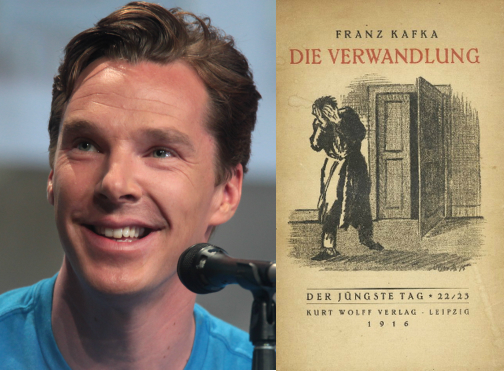
If, on the 100th anniversary of its publication, you want to do a radio broadcast of a novella famously appreciated for its surface weirdness and more rarely appreciated for its sharp sense of humor, it only stands to reason that you’d hire a famous reader with famously appreciated surface oddness and more rarely appreciated sharp sense of humor of his own. I can only assume BBC Radio 4 followed a similar line of thinking when, to record Franz Kafka’s The Metamorphosis (find the text in our collection of Free eBooks), they brought in Sherlock and The Imitation Game star Benedict Cumberbatch.
They’ll air the reading in four parts. The first and second episodes, in which luckless salesman Gregor Samsa inexplicably wakes up as an insect and faces the wrath and fear of his family, have already come available online for your listening pleasure; the next two episodes, when the insectified Samsa grows accustomed to his new form only to come into mortal conflict with his father and the newly dire financial straits of his household, will appear over the next two weeks on the production’s episode guide.
And if the idea of this mundane and monstrous tale told in the voice of Benedict Cumberbatch appeals to you, don’t delay. The BBC’s site will only let you stream it until June 10th (though currently you can find it online here.)
If you still have doubts, see also “Why Benedict Cumberbatch Is the Perfect Actor to Read Kafka’s Metamorphosis” by Slate’s Rebecca Schuman. “Cumberbatch’s trademark style is a withering, perfectly enunciated deadpan whose inflections somehow betray, three-fourths of the way through any sentence, sincere doubts that everyone will be in on the joke,” she writes. “Even better, this is poker face the way Kafka wrote it: tinged with at least some amount of creepiness, thanks to Cumberbatch’s unique ability to both look and sound like a very genteel sociopath.”
For less Cumberbatch-inclined Kafka enthusiasts, we also have this free audiobook of The Metamorphosis, which should remain available indefinitely. It’s recorded by Librivox.
If you would like to support the mission of Open Culture, consider making a donation to our site. It’s hard to rely 100% on ads, and your contributions will help us continue providing the best free cultural and educational materials to learners everywhere. You can contribute through PayPal, Patreon, and Venmo (@openculture). Thanks!
Origin stories are all the rage these days given the ubiquity of superhero films and television series. But for all their smash-em-up spectacle and breakneck pacing, they generally feel overstuffed and disposable. As with the Age of Ultron, there is an age, every summer, of some Marvel or DC hero or other. Or all of them at once, at this point, in a perpetual onslaught. On the other hand, we still have the quietly ominous, thoughtful science fiction film, the offspring of Nicolas Roeg and Andrei Tarkovsky, in movies like Ex Machina. These come and go, some better than others, but also always with us. Different as these two types of films can be, in style and tone, neither would likely look and feel the way they do without Stanley Kubrick’s intensely introspective and profoundly epic 2001: A Space Odyssey.
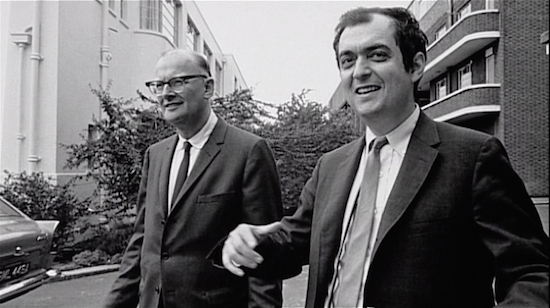
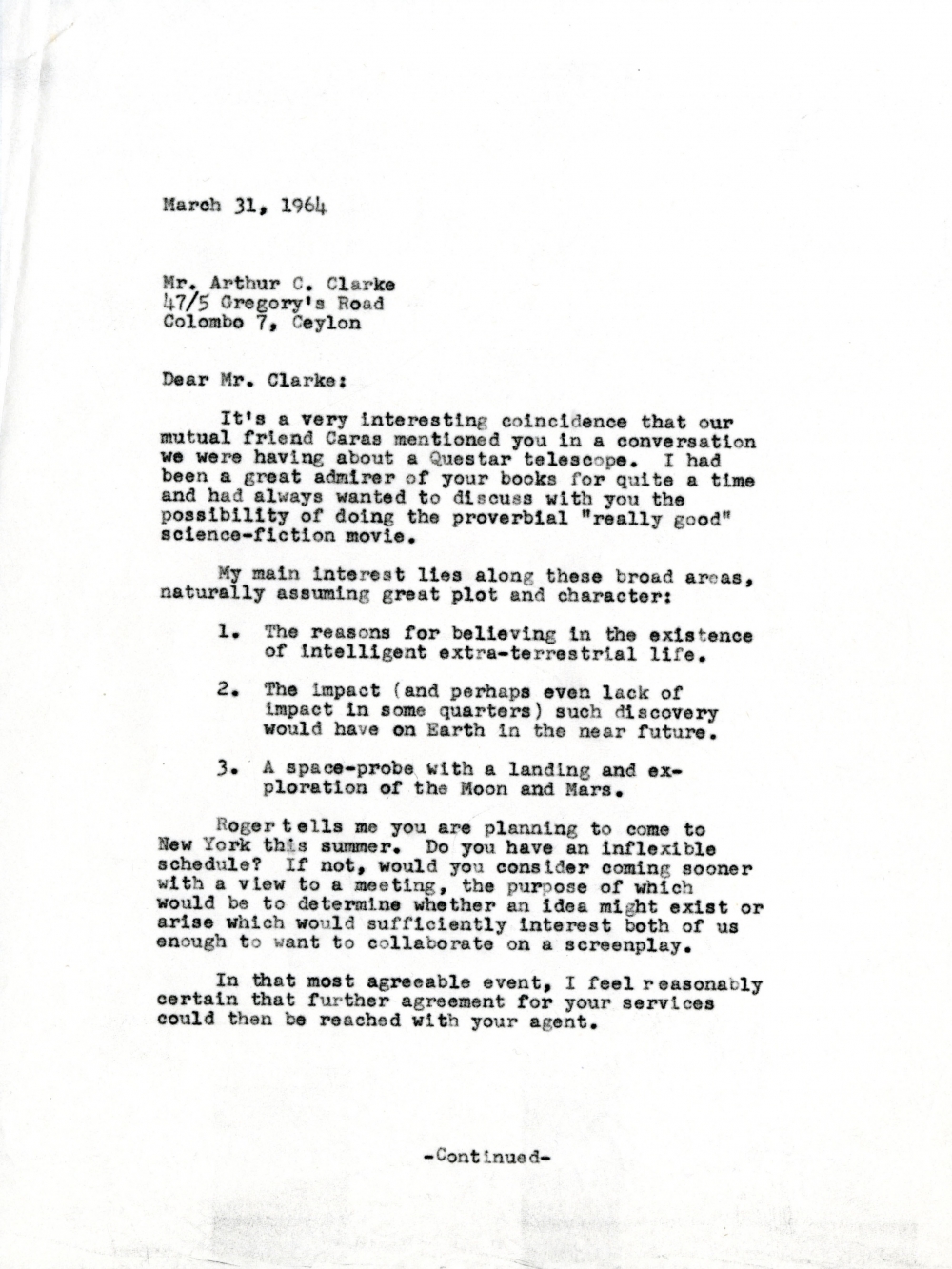
The origin story of this incredible 1968 film begins on March 31, 1964 when Kubrick wrote the letter below to Arthur C. Clarke, proposing that the two collaborate on “the proverbial ‘really good’ science fiction film.” “I had been a great admirer of your books for quite a time,” writes Kubrick, and gives Clarke three “broad areas” of interest, “naturally assuming great plot and character.” Naturally.
“Clarke’s response,” writes BFI, “was immediately enthusiastic, expressing a mutual admiration.” Kubrick, Clarke told their mutual friend Roger Caras, “is obviously an astonishing man.” In his response to the director himself, Clarke wrote on April 8, ““For my part, I am absolutely dying to see Dr. Strangelove; Lolita is one of the few films I have seen twice – the first time to enjoy it, the second time to see how it was done.” The two met in New York and talked for hours, and from Clarke’s short story “The Sentinel of Eternity” was born perhaps the best “really good” science fiction film ever made.
Clarke would compare the differences between the story and the film to those between an acorn and an oak tree, according to Italian Kubrick site 2001Italia. After that meeting, the two would spend almost four years writing the screenplay together and envisioning the harrowing voyage to Jupiter that ends so tragically—and strangely—for the two astronauts left to experience it. It’s a collaborative success Kubrick clearly foresaw when he approached Clarke, but in his letter, above, with transcript below—courtesy of Letters of Note—he plays it cool, using the pretext of a telescope Clarke owned to slip in discussion about the film project. We are almost led to believe,” writes 2001Italia, “that the movie was an excuse” to discuss the gadget. But of course we know better.
Dear Mr Clarke:
It’s a very interesting coincidence that our mutual friend Caras mentioned you in a conversation we were having about a Questar telescope. I had been a great admirer of your books for quite a time and had always wanted to discuss with you the possibility of doing the proverbial “really good” science-fiction movie.
My main interest lies along these broad areas, naturally assuming great plot and character:
The reasons for believing in the existence of intelligent extra-terrestrial life.
The impact (and perhaps even lack of impact in some quarters) such discovery would have on Earth in the near future.
A space probe with a landing and exploration of the Moon and Mars.
Roger [Caras ]tells me you are planning to come to New York this summer. Do you have an inflexible schedule? If not, would you consider coming sooner with a view to a meeting, the purpose of which would be to determine whether an idea might exist or arise which could sufficiently interest both of us enough to want to collaborate on a screenplay?
Incidentally, “Sky & Telescope” advertise a number of scopes. If one has the room for a medium size scope on a pedestal, say the size of a camera tripod, is there any particular model in a class by itself, as the Questar is for small portable scopes?
Best regards,
Kubrick pursued his projects very deliberately and passionately, motivated by great personal interest. Though his films can feel detached and cold, and he himself seems like a very aloof character, the opposite was true, according to those who knew him best. Below, see a short video from The University of the Arts London’s Stanley Kubrick Archive profiling the way Kubrick went about choosing his films, best summed up by Jan Harlon, Kubrick’s brother-in-law and producer: “No love, no quality, and in Stanley’s case, no love, no film.”
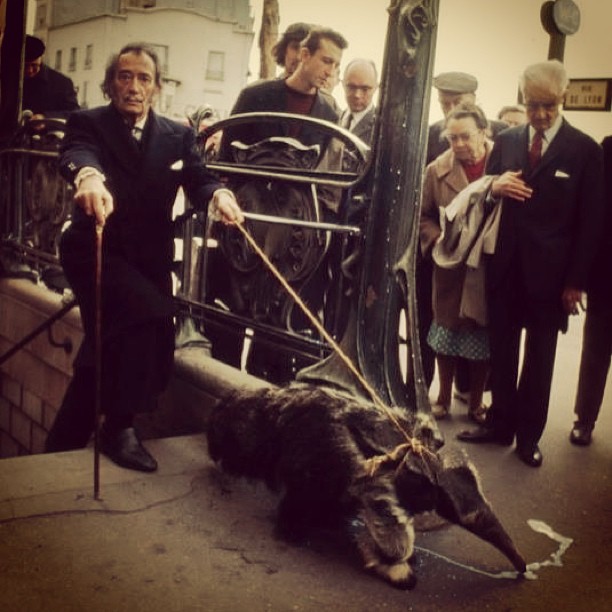
Salvador Dalí had a thing for anteaters. They made for good schtick, especially in Europe, and Dalí never saw schtick that he didn’t like.
And yet maybe there’s something a little more to this picture taken in Paris, in 1969. Maybe there’s some kind of symbolism, or even a playful tribute, taking place in the photo above.
Surrealism officially came into being in 1924, when André Breton wrote Le Manifeste du Surréalisme (read an English translation here). First a literary movement, Surrealism later embraced painters, including figures like Dalí.
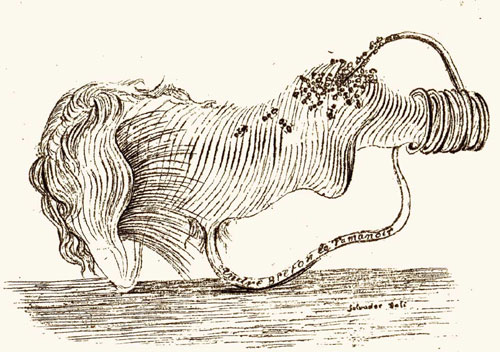
In 1930, Dalí created a bookplate for Breton called, “André Breton le tamanoir.” That translates to “André Breton the Anteater,” the nickname given to Breton by his fellow surrealists. Now consider the fact that the 1969 photo was taken three short years after Breton’s death, and perhaps we can read an homage into it.
What nickname did Breton give to Dalí, you might ask? “Avida Dollars.” An anagram for “Salvador Dalí,” “Avida Dollars” translates to “eager for dollars.” Pretty apt.
Chris Burden got shot with a rifle, closed up in a locker for five days, made to crawl across fifty feet of broken glass, crucified on a Volkswagen Beetle, and wedged for an extended period under a large piece of non-broken glass. But he did it all voluntarily, surviving these and other threats to life and limb, all undertaken in the name of art, only dying this past Sunday. That concluded a long and astonishingly varied career in which Burden produced work not just of the grim trapped-in-a-box and bullet-in-the-arm variety, but elaborate, even whimsical sculptures, models, and machines that captivate their viewers to this day.
Burden also, between the years of 1973 and 1977 (a period after the shooting and the locker entrapment), worked in the medium of television commercials, producing work that, aired late at night, surely captivated their own viewers (who, given the era, may have already entered their own states of altered consciousness). At the top of the post, you can watch all of them in a row, a program accompanied by textual commentary from Burden himself which details the nature of his self-assigned mission “to break the omnipotent stranglehold of the airwaves that broadcast television held.”
The 2013 video from the Museum of Contemporary Art just above features Burden remembering this daring project of buying and artistically repurposing Los Angeles commercial airtime. But Burden’s interest in television didn’t stop, or indeed start, with these commercials. At East of Borneo, Nick Stillman has an essay putting all the artist’s TV-related work in context. “By situating the television set and by using the commercial form as implicit vessels of authority,” Stillman writes, “Burden’s work about how television influences behavior asked the most penetrating and ethical question of any artist I can think of who used the medium: Do you believe in television?”
Though Burden’s commercials haven’t seen regular broadcast in nearly forty years, his spirit nevertheless enjoys strong prospects of living on through his later work, which reflects and inhabits not the mediated world around us, but the concrete one. In 2011, we featured his Metropolis II, a kinetic sculpture modeling the city of the future in swooping ramps, architecturally fantastical towers, and countless toy cars on display at the Los Angeles County Museum of Art.
And if you so much as pass by the museum on Wilshire Boulevard, you’ll see his installation of vintage lampposts known as Urban Light. Odds are you’ll also take a picture with it; from what I’ve seen, it has to rank has the most photographed place in the city. “Heat is life,” Burden blankly intoned in his 1975 commercial Poem for L.A. — but light seems to have a pretty fair claim as well.
Sometimes it can seem as though the more we think we know a historical figure, the less we actually do. Helen Keller? We’ve all seen (or think we’ve seen) some version of The Miracle Worker, right?—even if we haven’t actually read Keller’s autobiography. And Mark Twain? He can seem like an old family friend. But I find people are often surprised to learn that Keller was a radical socialist firebrand, in sympathy with workers’ movements worldwide. In a short article in praise of Lenin, for example, Keller once wrote, “I cry out against people who uphold the empire of gold…. I am perfectly sure that love will bring everything right in the end, but I cannot help sympathizing with the oppressed who feel driven to use force to gain the rights that belong to them.”
Twain took a more pessimistic, ironic approach, yet he thoroughly opposed religious dogma, slavery, and imperialism. “I am always on the side of the revolutionists,” he wrote, “because there never was a revolution unless there were some oppressive and intolerable conditions against which to revolute.” While a great many people grow more conservative with age, Twain and Keller both grew more radical, which in part accounts for another little-known fact about these two nineteenth century American celebrities: they formed a very close and lasting friendship that, at least in Keller’s case, may have been one of the most important relationships in either figure’s life.
Twain’s importance to Keller, and hers to him, begins in 1895, when the two met at a lunch held for Keller in New York. According to the Mark Twain Library’s extensive documentary exhibit, Keller “seemed to feel more at ease with Twain than with any of the other guests.” She would later write, “He treated me not as a freak, but as a handicapped woman seeking a way to circumvent extraordinary difficulties.”Twain was taken as well, surprised by “her quickness and intelligence.” After the meeting, he wrote to his benefactor Henry H. Rogers, asking Rogers to fund Keller’s education. Rogers, the Mark Twain Library tells us, “personally took charge of Helen Keller’s fortunes, and out of his own means made it possible for her to continue her education and to achieve for herself the enduring fame which Mark Twain had foreseen.”
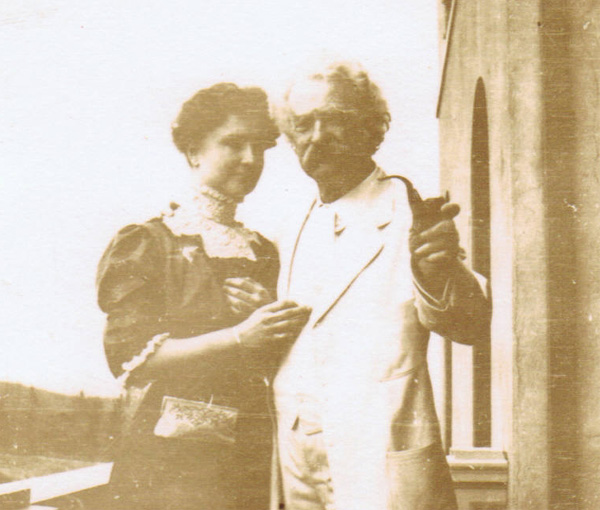
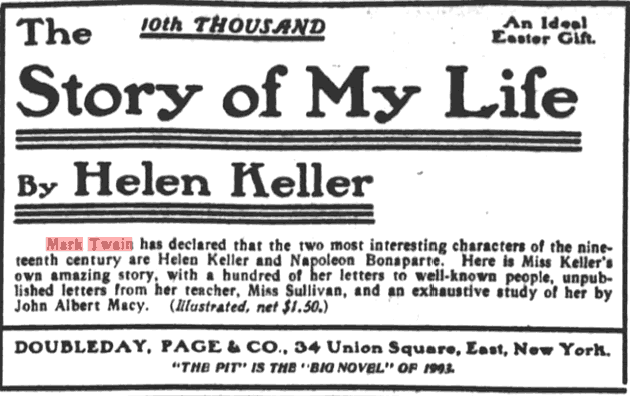
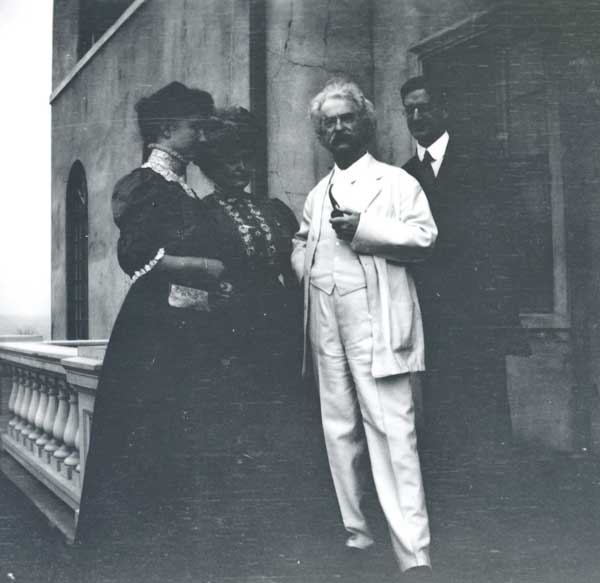
Twain wrote to his wealthy friend, “It won’t do for America to allow this marvelous child to retire from her studies because of poverty. If she can go on with them she will make a fame that will endure in history for centuries.” Thereafter, the two would maintain a “special friendship,” sustained not only by their political sentiments, but also by a love of animals, travel, and other personal similarities. Both writers came to live in Fairfield County, Connecticut at the end of their lives, and she visited him at his Redding home, Stormfield, in 1909, the year before his death (see them there at the top of the post, and more photos here). Twain was especially impressed by Keller’s autobiography, writing to her, “I am charmed with your book—enchanted.” (See his endorsement in a 1903 advertisement, below.)
Twain also came to Keller’s defense, ten years later, after reading in her book about a plagiarism scandal that occurred in 1892 when, at only twelve years old, she was accused of lifting her short story “The Frost King” from Margaret Canby’s “Frost Fairies.” Though a tribunal acquitted Keller of the charges, the incident still piqued Twain, who called it “unspeakably funny and owlishly idiotic and grotesque” in a 1903 letter in which he also declared: “The kernel, the soul—let us go further and say the substance, the bulk, the actual and valuable material of all human utterance—is plagiarism.” What differs from work to work, he contends is “the phrasing of a story”; Keller’s accusers, he writes protectively, were “solemn donkeys breaking a little child’s heart.” (The exquisitely-worded letter is well worth reading in full at Letters of Note).
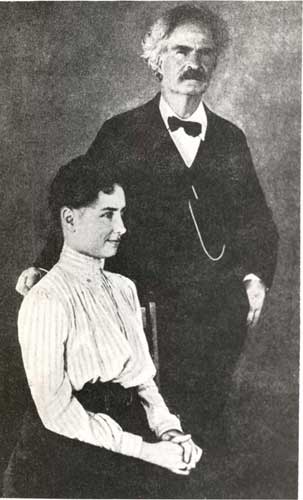
We also have Twain—not playwright William Gibson—to thank for the “miracle worker” title given to Keller’s teacher, Anne Sullivan. (See Keller, Sullivan, Twain, and Sullivan’s husband John Macy above at Twain’s home). As a tribute to Sullivan for her tireless work with Keller, he presented her with a postcard that read, “To Mrs. John Sullivan Macy with warm regard & with limitless admiration of the wonders she has performed as a ‘miracle-worker.’” In his 1903 letter to Keller, he called Sullivan “your other half… for it took the pair of you to make complete and perfect whole.”
Twain praised Sullivan effusively for “her brilliancy, penetration, originality, wisdom, character, and the fine literary competencies of her pen.” But he reserved his highest praise for Keller herself. “You are a wonderful creature,” he wrote, “The most wonderful in the world.” Keller’s praise of her friend Twain was no less lofty. “I have been in Eden three days and I saw a King,” she wrote in his guestbook during her visit to Stormfield, “I knew he was a King the minute I touched him though I had never touched a King before.” The last words in Twain’s autobiography, the first volume anyway—which he only allowed to be published in 2010—are Keller’s; “You once told me you were a pessimist, Mr. Clemons,” he quotes her as saying, “but great men are usually mistaken about themselves. You are an optimist.”
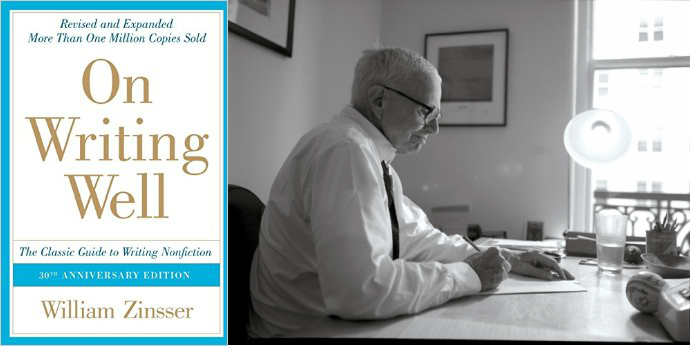
Image used with permission by Mark Ostow/Yale Alumni Magazine
Author William Zinsser died at his Manhattan home on Tuesday, May 12, 2015. The 92-year-old left behind one of the classics of writing instruction manuals as his legacy, On Writing Well. Since its first printing in 1976, the book has sold 1.5 million copies, and Zinsser made sure to update the book often. He loved the revolution in writing that computers brought, calling it a miracle.
Never have so many Americans written so profusely and with so few inhibitions. Which means that it wasn’t a cognitive problem after all. It was a cultural problem, rooted in that old bugaboo of American education: fear.
Zinsser stressed simplicity and efficiency, but also style and enthusiasm. Here are 10 of his many tips for improving your writing.
1. Don’t make lazy word choices: “You’ll never make your mark as a writer unless you develop a respect for words and a curiosity about their shades of meaning that is almost obsessive. The English language is rich in strong and supple words. Take the time to root around and find the ones you want.”
2. On the other hand, avoid jargon and big words: “Clear thinking becomes clear writing; one can’t exist without the other. It’s impossible for a muddy thinker to write good English.”
3. Writing is hard work: “A clear sentence is no accident. Very few sentences come out right the first time, or even the third time. Remember this in moments of despair. If you find that writing is hard, it’s because it is hard.”
4. Write in the first person: “Writing is an intimate transaction between two people, conducted on paper, and it will go well to the extent that it retains its humanity.”
5. And the more you keep in first person and true to yourself, the sooner you will find your style: “Sell yourself, and your subject will exert its own appeal. Believe in your own identity and your own opinions. Writing is an act of ego, and you might as well admit it.
6. Don’t ask who your audience is…you are the audience: “You are writing primarily to please yourself, and if you go about it with enjoyment you will also entertain the readers who are worth writing for.”
7. Study the masters but also your contemporaries: “Writing is learned by imitation. If anyone asked me how I learned to write, I’d say I learned by reading the men and women who were doing the kind of writing I wanted to do and trying to figure out how they did it.”
8. Yes, the thesaurus is your friend: “The Thesaurus is to the writer what a rhyming dictionary is to the songwriter–a reminder of all the choices–and you should use it with gratitude. If, having found the scalawag and the scapegrace, you want to know how they differ, then go to the dictionary.”
9. Read everything you write out loud for rhythm and sound: “Good writers of prose must be part poet, always listening to what they write.”
10. And don’t ever believe you are going to write anything definitive: “Decide what corner of your subject you’re going to bite off, and be content to cover it well and stop.”
Zinsser follows his own advice, in that this book (pick up a copy here) is a joy to read, with a rollicking humor and an infectious enthusiasm. May he rest in peace!
Finally, as someone who can’t stand to hear the word ‘unique’ modified, Zinsser has this to say: “…being ‘rather unique’ is no more possible than being rather pregnant.’”
Ted Mills is a freelance writer on the arts who currently hosts the FunkZone Podcast. You can also follow him on Twitter at @tedmills, read his other arts writing at tedmills.com and/or watch his films here.
Charles Guiteau, the man who assassinated James Garfield, tried to argue in court that he just shot the president — the doctors actually killed him. Though Guiteau was ultimately hanged for his crime in 1882, he did have a point. Garfield’s doctor, William Bliss, jammed his unsterilized fingers in the presidential wound in an attempt to pull out the bullet. So did a host of other specialists. President Garfield died 80 days later of, among other things, sepsis. It was later concluded that the president would have likely survived if the doctors had kept their hands to themselves.
Garfield’s death was one of the catalysts that helped popularize Joseph Lister’s ideas about bacteria, a concept that vastly improved the quality of medical care. A hundred years later, for example, Ronald Reagan suffered from almost an identical bullet wound and was back to work within weeks.
In the 19th century and centuries before, diseases weren’t well understood and death was mysterious and divine. In the evangelical revivals of the mid-19th century, the end of life was seen as something to embrace. After all, God was calling his believers back home. Then with a growing understanding of germs, that sense of wonder with our mortality changed. “God hadn’t called the individual to him,” writes Deborah Lutz, scholar of Victorian culture, in TheNew York Times this week. “Rather, a malady had overtaken the body. Rather than dying at home, the sick were carted off to hospitals.” Death, in other words, became divorced from everyday life.
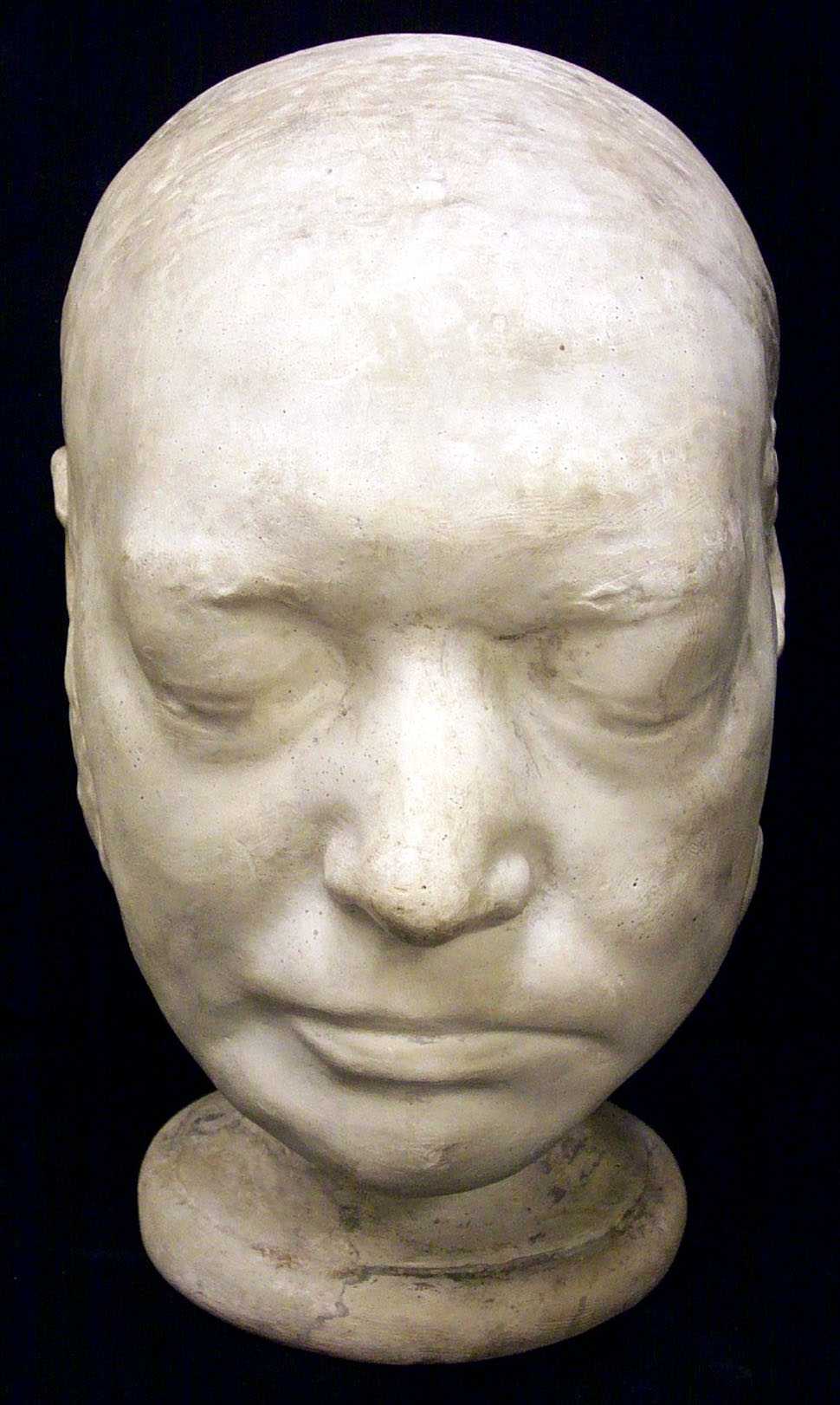
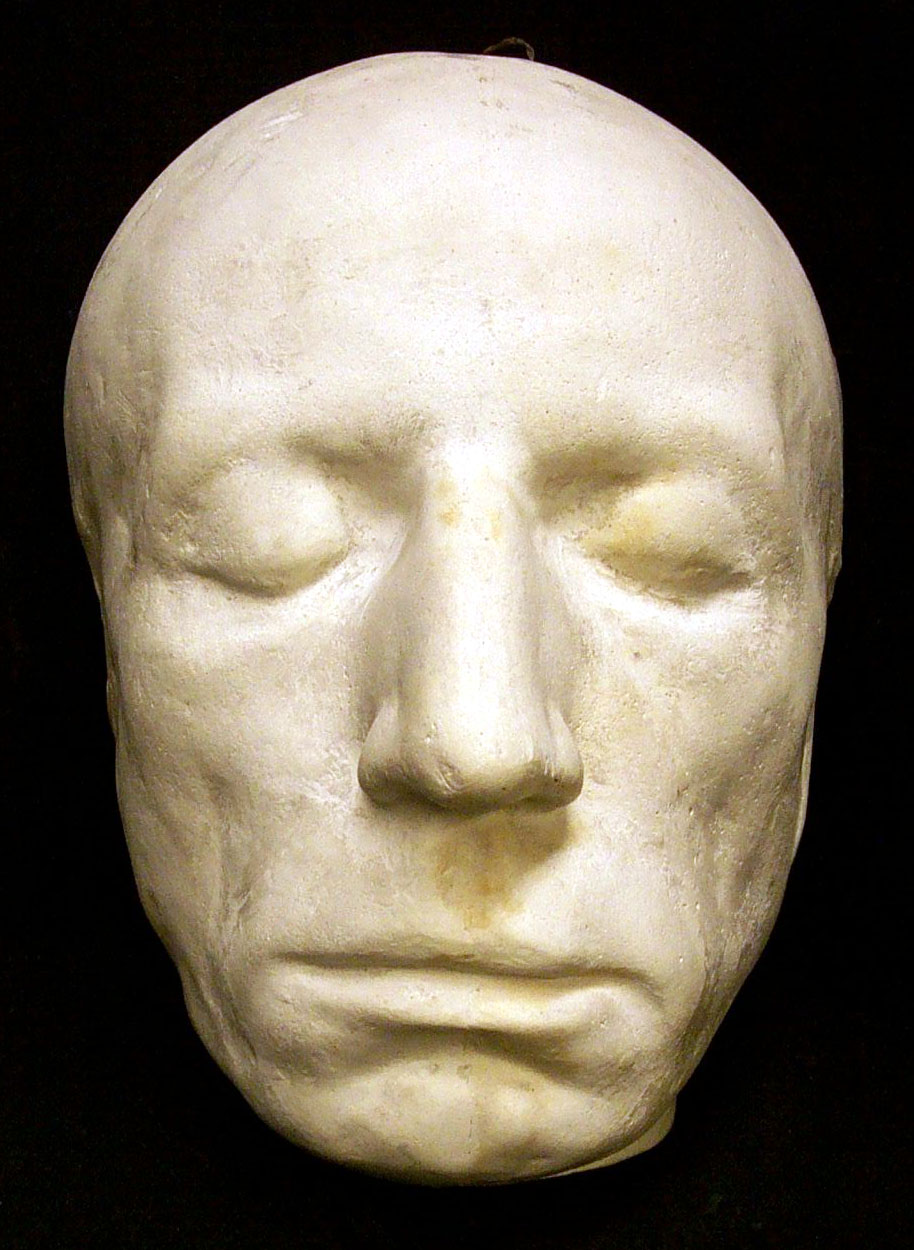
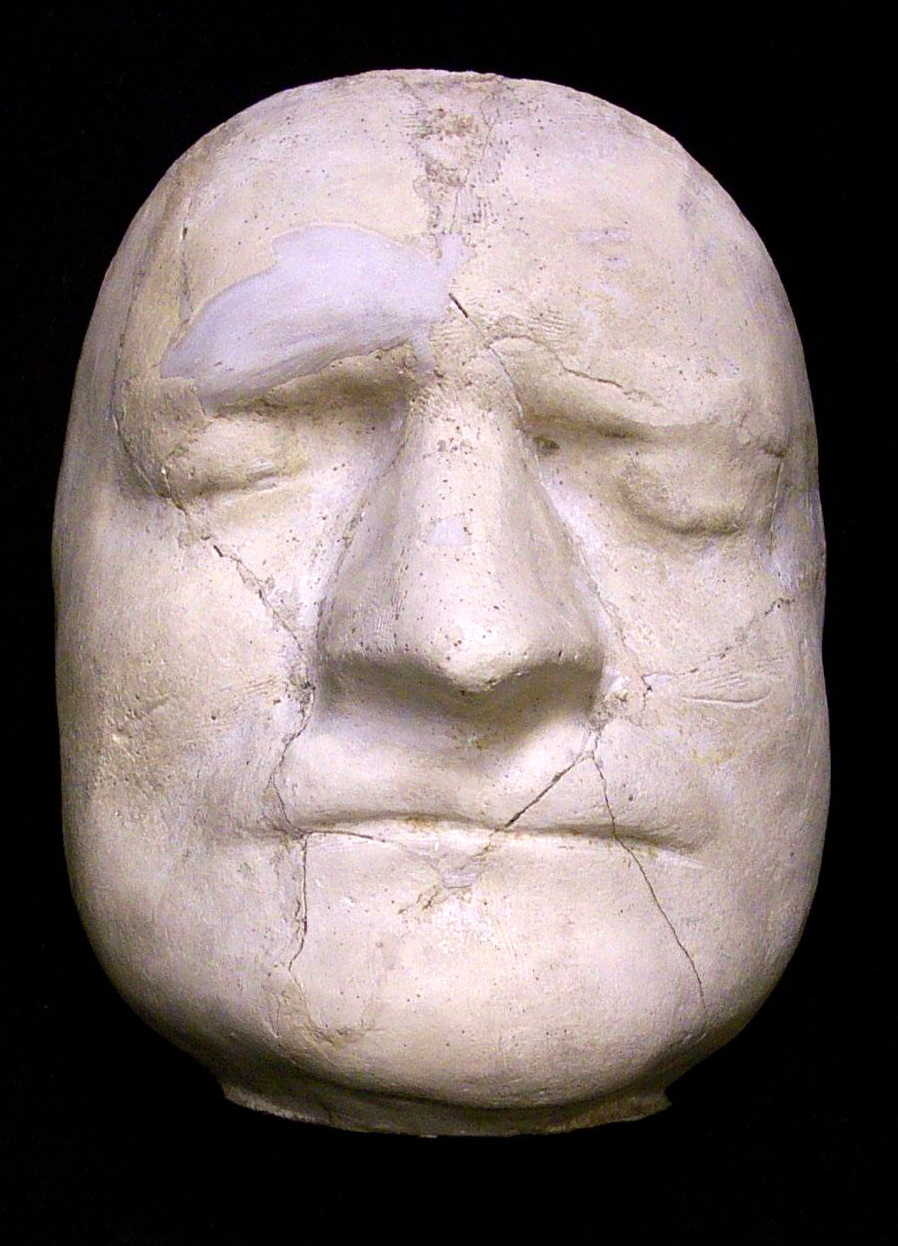
So from our 21st century viewpoint, the Victorians’ (and their predecessors’) tendency to collect mementos of the dead, like death masks, might seem gruesome. But from their point of view, our panicked denial of death would probably seem foolish and perverse. Mortality, after all, is a fact of life.
Princeton University’s Laurence Hutton Collection has dozens of death masks of famous politicians, philosophers and authors. People like Isaac Newton, Abraham Lincoln and Leo Tolstoy. There’s something humbling about seeing these titans of Western culture captured at such an intimate moment. Stripped of all the markers of class and rank, they look like people you might see on the street.
Aside from a rather unconvincing effigy of Queen Elizabeth, the collection features few masks of great women. No Jane Austens or Emily Dickinsons here. The collection also, sadly, lacks a mask of James Garfield.
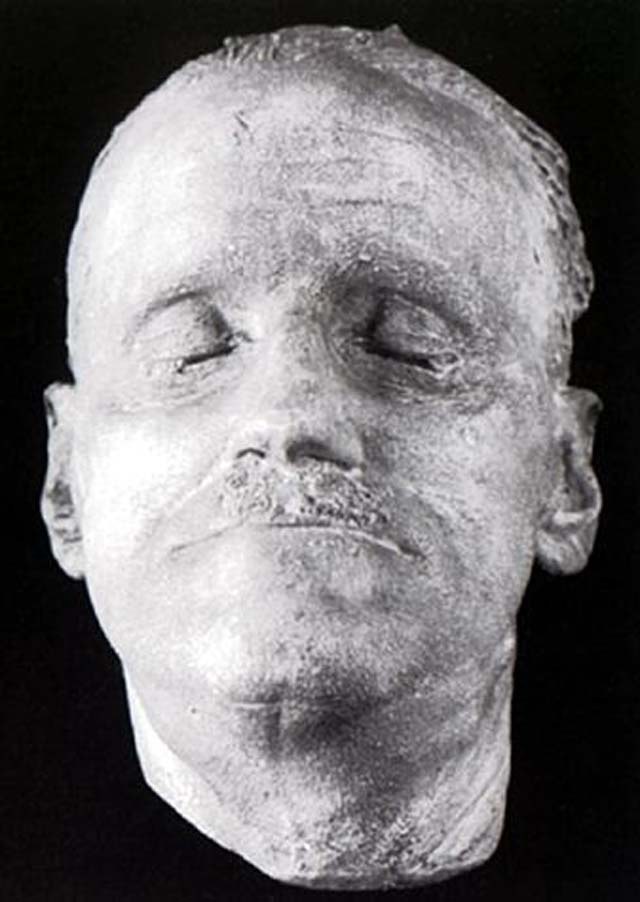
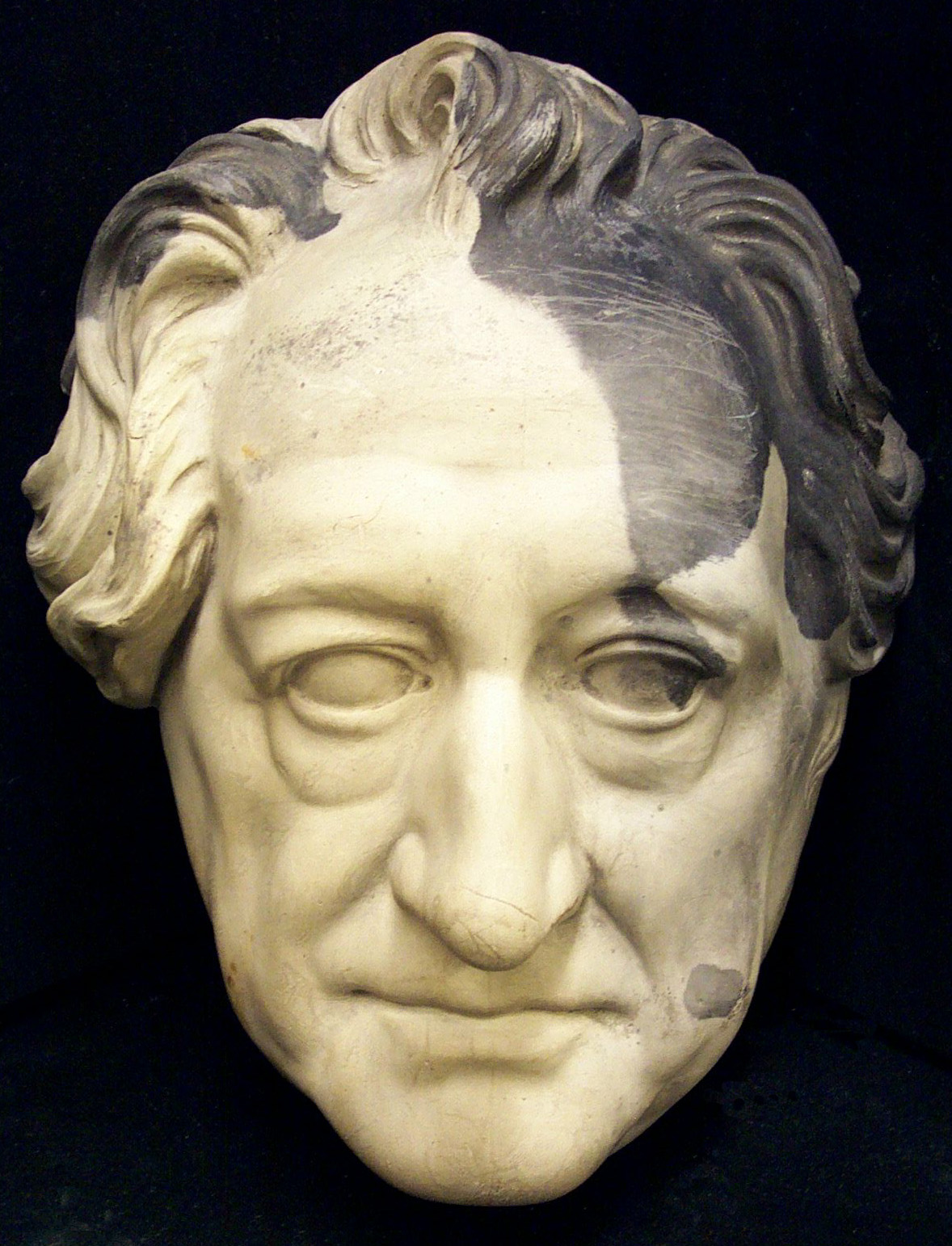
Above you can find death masks of literary figures from the 14th to early 20th centuries. From top to bottom, you will see James Joyce, Goethe, Leo Tolstoy, Samuel Taylor Coleridge, Dante and William Wordsworth.
Jonathan Crow is a Los Angeles-based writer and filmmaker whose work has appeared in Yahoo!, The Hollywood Reporter, and other publications. You can follow him at @jonccrow. And check out his blog Veeptopus, featuring lots of pictures of vice presidents with octopuses on their heads.
We're hoping to rely on loyal readers, rather than erratic ads. Please click the Donate button and support Open Culture. You can use Paypal, Venmo, Patreon, even Crypto! We thank you!
Open Culture scours the web for the best educational media. We find the free courses and audio books you need, the language lessons & educational videos you want, and plenty of enlightenment in between.