All of Bach is Putting Bach’s Complete Works Online: 253 Done, 827 to Come

Mem­o­rably syn­the­sized by Wendy Car­los (and mem­o­rably beloved by A Clock­work Orange’s Alex DeLarge), J.S. Bach’s Bran­den­burg Con­cer­tos epit­o­mize the play­ful verve of so much Baroque music. The Con­cer­tos “dis­play the lighter side of Bach’s imper­ish­able genius,” writes NPR; “few musi­cal works are as loved—and as often per­formed” as the six spright­ly instru­men­tal pieces. And of those six works, the fourth, Con­cer­to in G major, is per­haps the most beloved, and most rec­og­niz­able, of all. Thus it makes a fit­ting ear­ly entry in the expand­ing archive that is (or will be) All of Bach, a site intend­ing to fea­ture live per­for­mances of all 1080 of Johann Sebas­t­ian Bach’s works, per­formed by the Nether­lands Bach Soci­ety. We’ve drawn your atten­tion to the admirable effort before, and we hap­pi­ly do so again to cel­e­brate their 150th offer­ing, a per­for­mance of Was Gott tut, das ist wohlge­tan (see a short, cel­e­bra­to­ry video announce­ment below).

The last time we checked in with All of Bach back in April, the site had uploaded only 53 per­for­mances. Since that time, they’ve added oth­er pop­u­lar favorites like The Well-Tem­pered Clavier (a “mael­strom in a minor key”—also beau­ti­ful­ly adapt­ed to the Moog by Wendy Car­los), and the glo­ri­ous Mag­ni­fi­cat, Bach’s first large choral work after his 1723 appoint­ment in Leipzig (hear “Depo­suit” below).

The Con­cer­to in G major, which you can see and hear per­formed at the top of the post, shows us the com­pos­er “con­tin­u­al­ly mis­lead­ing us” as to “which instru­ments are the real soloists.” Two recorders ini­tial­ly take the lead, then a vio­lin, then the recorders again until “they are soon trumped by the vio­lin, which steals the show in a whirl­wind of dizzy­ing notes…. The roles are always ambigu­ous,” and our atten­tion always riv­et­ed on the vir­tu­oso inter­play. “Bach delib­er­ate­ly obscures the usu­al­ly clear con­trast between soloists and ensem­ble,” All of Bach observes, and “his play on the char­ac­ter­is­tic ele­ments of the con­cer­to form draws to a close in a suit­ably sub­ver­sive and bound­ary-blur­ring way.”

The site also fea­tures extras such as inter­views with musi­cians. (See Harp­si­chordist Fred­er­ick Haas dis­cuss The Well-Tem­pered Clavier here, or watch vio­lin­ist Shunske Sato and recorder play­er Heiko ter Shegget talk about the Con­cer­to in G major’s com­plex­i­ty here.) You’ll also find plen­ty of his­tor­i­cal and musi­co­log­i­cal con­text for each piece. New per­for­mances are uploaded to the site every Fri­day. To keep up with All of Bach, fol­low them on Face­book or Twit­ter, or sign up for email updates on their site. Or just vis­it their web site.

Relat­ed Con­tent:

All of Bach Is Putting Videos of 1,080 Bach Per­for­mances Online: Watch the First 53 Record­ings and the St. Matthew Pas­sion

Down­load the Com­plete Organ Works of J.S. Bach for Free

JS Bach’s The Well-Tem­pered Clavier Artis­ti­cal­ly Ani­mat­ed with Puls­ing Neon Lights

Josh Jones is a writer and musi­cian based in Durham, NC. Fol­low him at @jdmagness

David Bowie Gives Graduation Speech At Berklee College of Music: “Music Has Been My Doorway of Perception” (1999)

I have lit­tle to add to the tidal wave of remem­brances and trib­utes in the wake of David Bowie’s death. Seems near­ly every­one has a sto­ry about how his music, his per­sis­tence, his gen­eros­i­ty, his genius, his unabashed weird­ness changed their lives. What he taught me as a young teenag­er was that the phrase “just be your­self” can just as well mean “be who­ev­er you can dream up,” and damn the pre­de­ter­mined roles and mean­ing­less stig­ma. Hard­er than it sounds, but Bowie pulled it off like no one before or since.

Bowie was, writes Sara Ben­in­casa, the “patron saint of… weirdos of all stripes, and that most dan­ger­ous crea­ture of all: the artist.” He did not shy away from pre­tense; he embraced it as his spe­cial méti­er. In 1999, Bowie deliv­ered the com­mence­ment address at Boston’s Berklee Col­lege of Music, where he received an hon­orary doc­tor­ate along with Wayne Short­er. In his speech, he says, he learned ear­ly on that “authen­tic­i­ty and the nat­ur­al form of expres­sion wasn’t going to be my forte.”

In fact, what I found that I was good at doing, and what I real­ly enjoyed the most, was the game of “what if?” What if you com­bined Brecht-Weill musi­cal dra­ma with rhythm and blues? What hap­pens if you trans­plant the French chan­son with the Philly sound? Will Schoen­berg lie com­fort­ably with Lit­tle Richard? Can you put hag­gis and snails on the same plate? Well, no, but some of the ideas did work out very well.

Thus began his exper­i­ments with iden­ti­ty that first took shape in the fan­tas­tic crea­ture, Zig­gy Star­dust, his “cru­sade,” as he calls it, “to change the kind of infor­ma­tion that rock music con­tained.” Speak­ing of Zig­gy, Bowie tells a sto­ry about play­ing “grot­ty… workingman’s clubs” in “full, bat­tle fin­ery of Tokyo-space­boy and a pair of shoes high enough that it induced nose bleeds.”

Informed by the pro­mot­er at one such bar that the only bath­room was a filthy sink at the end of the hall, Bowie balked. “Lis­ten son,” said the pro­mot­er, “If its good enough for Shirley Bassey, it’s good enough for you.” From this expe­ri­ence, he says, he learned that “mix­ing ele­ments of bad taste with good would often pro­duce the most inter­est­ing results.”

The speech is packed with wit­ty anec­dotes like this and self-dep­re­cat­ing asides. Most of the sto­ries, as you can hear in the video excerpt at the top of the post, are about Bowie’s “great­est men­tor,” John Lennon. Lennon, says Bowie, “defined for me, at any rate, how one could twist and turn the fab­ric of pop and imbue it with ele­ments from oth­er art­forms, often pro­duc­ing some­thing extreme­ly beau­ti­ful, very pow­er­ful and imbued with strange­ness.” Indulging his love for high and low cul­ture, Bowie under­cuts his ele­vat­ed talk of art-pop by describ­ing his and Lennon’s con­ver­sa­tions as “Beav­is and Butthead on ‘Cross­fire.’”

Bowie ends his speech with a heart­felt, and dare I say, authen­tic sum­ma­ry of his life in music. His only piece of advice, writes Boston.com: he urges the Berklee grad­u­ates to “pur­sue their musi­cal pas­sion as if it were a sick­ness.”

Music has giv­en me over 40 years of extra­or­di­nary expe­ri­ences. I can’t say that life’s pains or more trag­ic episodes have been dimin­ished because of it. But it’s allowed me so many moments of com­pan­ion­ship when I’ve been lone­ly and a sub­lime means of com­mu­ni­ca­tion when I want­ed to touch peo­ple. It’s been both my door­way of per­cep­tion and the house that I live in.

I only hope that it embraces you with the same lusty life force that it gra­cious­ly offered me. Thank you very much and remem­ber, if it itch­es, play it.

Read the full tran­script of the speech here, or below the jump:

(more…)

David Bowie as Tilda Swinton, and Vice Versa

Just a great pho­to on Twit­ter via @ThatEricAlper and had to share :)

If you would like to sign up for Open Culture’s free email newslet­ter, please find it here. It’s a great way to see our new posts, all bun­dled in one email, each day.

If you would like to sup­port the mis­sion of Open Cul­ture, con­sid­er mak­ing a dona­tion to our site. It’s hard to rely 100% on ads, and your con­tri­bu­tions will help us con­tin­ue pro­vid­ing the best free cul­tur­al and edu­ca­tion­al mate­ri­als to learn­ers every­where. You can con­tribute through Pay­Pal, Patre­on, and Ven­mo (@openculture). Thanks!

by | Permalink | Make a Comment ( 1 ) |

William S. Burroughs Reads & Sings His Experimental Prose in a Big, Free 7‑Hour Playlist

william_s_burroughs

Image by Chris­ti­aan Ton­nis, via Wiki­me­dia Com­mons

I don’t have any data, but I think it’s close enough to fact to say that expo­nen­tial­ly more peo­ple have heard of William S. Bur­roughs—have even come to revere Burroughs—than have read Bur­roughs. The phe­nom­e­non is unavoid­able with a fig­ure as huge­ly influ­en­tial through­out the last half of 20th cen­tu­ry coun­ter­cul­ture. His close asso­ci­a­tion with the Beats; his influ­ence on the 60s through Frank Zap­pa, The Bea­t­les, and more; his pop­u­lar­i­ty among punks and 70s art rock­ers and exper­i­men­tal­ists; his close affin­i­ty with 90s “alter­na­tive” bands, Queer writ­ers, and post­mod­ernists; his impor­tance to the drug­gy rave sub­cul­tures of the 90s and oughties…. In almost any cre­ative coun­ter­cul­ture you wish to name from the 50s to today, you will find enshrined the name of Bur­roughs. He was “indeed a man of the 20th Cen­tu­ry,” writes Chal Ravens at The Qui­etus, “he was alive for most of it, after all—and his life and works form the very fab­ric of the coun­ter­cul­ture, seep­ing into lit­er­a­ture, paint­ing, film, the­atre and most of all music like a drop of acid on a sug­ar cube.”

In Bur­roughs’ case, the life and work are insep­a­ra­ble. His “quixot­ic and shock­ing life sto­ry should not be dis­missed when assess­ing his lega­cy,” writes Beard­ed mag­a­zine. That strange life, which did not include writ­ing until he turned 40, “defined him to such a degree that it was many decades before his lit­er­ary achieve­ments were tak­en seri­ous­ly” by the estab­lish­ment. Nonethe­less, in the 50s, “Bur­roughs opened the doors for sex, drugs, alter­na­tive lifestyles and rad­i­cal pol­i­tics to be palat­able con­cerns in main­stream cul­ture.” While such themes became palat­able through the artists Bur­roughs influ­enced, his own writ­ing con­tin­ues to shock and sur­prise.  Bur­roughs may have moved in and through so many of the cul­tures named above, but he was not of them.

He appeared even to the Beats as a men­tor, an “out­law guru,” and he wrote like a man pos­sessed. Bur­roughs, The New York­er remarks, wrote in the “voice of an out­law rev­el­ing in wicked­ness,” a voice that “bragged of occult pow­er….. He always wrote in tones of spooky authority—a com­ic effect, giv­en that most of his char­ac­ters are, in addi­tion to being gaudi­ly depraved, more or less con­spic­u­ous­ly insane.” Bur­roughs in fact described his impulse to write as a kind of insan­i­ty or pos­ses­sion. The most out­ra­geous sto­ry about him—that he shot his wife Joan Vollmer in Mex­i­co in a sup­posed William Tell-like stunt—is true. In the intro­duc­tion to 1985’s Queer, Bur­roughs con­fessed:

I am forced to the appalling con­clu­sion that I would nev­er have become a writer but for Joan’s death, and to a real­iza­tion of the extent to which this event has moti­vat­ed and for­mu­lat­ed my writ­ing. I live with the con­stant threat of pos­ses­sion, and a con­stant need to escape from pos­ses­sion, from con­trol. So the death of Joan brought me in con­tact with the invad­er, the Ugly Spir­it, and maneu­vered me into a life long strug­gle, in which I have had no choice except to write my way out.

Per­son­al obses­sions with death, addic­tion, legal and social con­trol, the occult, and his trou­bled sex­u­al­i­ty drove all of Bur­roughs’ work—and drove the themes of 20th Cen­tu­ry cul­tur­al revolt against con­for­mi­ty and con­ser­vatism. But though he may have been “a man of the 20th Cen­tu­ry,” Bur­roughs’ most imme­di­ate pre­de­ces­sors come large­ly from the 19th: in deca­dent poets like Arthur Rim­baud, trou­bled adven­tur­ers like Joseph Con­rad, fear­less satirists like Ambrose Bierce, and gen­uine out­laws like Jack Black (who wrote in the 20s of his crim­i­nal exploits in the 1880s and 90s). It is in part, per­haps, his trans­mis­sion of these voic­es to post­war artists and writ­ers and beyond that grant­ed him such author­i­ty. Bur­roughs’ writ­ing always car­ried with it the voic­es of the dead.

Bur­roughs was obsessed with voices—recorded, cut-up, rearranged; he believed in their pow­er to dis­rupt, influ­ence, and cor­rupt. Fit­ting­ly, he left us acres of tape of his own omi­nous monot­o­ne: read­ing his work, offer­ing com­men­tary on tech­nique, spin­ning bizarre, half-seri­ous con­spir­a­cy the­o­ries, and dis­tort­ing lit­er­a­ture beyond all recog­ni­tion through his cut-up tech­nique. Though we all know Bur­roughs’ name, we can now—no mat­ter our lev­el of famil­iar­i­ty with his writing—become equal­ly famil­iar with his voice in the playlist above, fea­tur­ing sev­en hours of Bur­roughs record­ings from five spo­ken word albums avail­able on Spo­ti­fy: The Best of William Bur­roughs, Spare Ass Annie and Oth­er Tales, Dead City Radio, Break Through in Grey Room, and Call Me Bur­roughs. (If you don’t already have it, down­load Spo­ti­fy here to lis­ten to the playlist.)

Though “we should not under­es­ti­mate the direct influ­ence of his writ­ing” on counter- and pop cul­ture, Beard­ed mag­a­zine points out (see this list for exam­ple), we should also not dis­count the spooky influ­ence of Bur­roughs’ haunt­ing record­ed voice.

Relat­ed Con­tent:

How William S. Bur­roughs Used the Cut-Up Tech­nique to Shut Down London’s First Espres­so Bar (1972)

William S. Bur­roughs Reads Naked Lunch, His Con­tro­ver­sial 1959 Nov­el

William S. Bur­roughs Teach­es a Free Course on Cre­ative Read­ing and Writ­ing (1979)

How David Bowie, Kurt Cobain & Thom Yorke Write Songs With William Bur­roughs’ Cut-Up Tech­nique

Josh Jones is a writer and musi­cian based in Durham, NC. Fol­low him at @jdmagness

Björk Takes Us Inside Her Creative Process and Explains How She Writes a Song

Some songs are so straight­for­ward there’s no need to debate their mean­ings with friends and Red­dit users. Oth­ers remain opaque, despite fans’ best attempts to crack lyri­cal codes.

“Stone­milk­er,” the first track on Björk’s self-described “com­plete heart­break album” Vul­ni­cu­ra, seems to fall into the for­mer cat­e­go­ry:

Show me emo­tion­al respect, oh respect, oh respect

And I have emo­tion­al needs, oh needs, oh ooh

I wish to syn­chro­nize our feel­ings, our feel­ings, oh ooh

“Prob­a­bly the most obvi­ous lyrics I’ve ever writ­ten” she remarks in her above appear­ance on Hrishikesh Hir­way’s Song Exploder, a pod­cast where­in musi­cians decon­struct a song’s mean­ing, ori­gin, and record­ing process.

Björk was walk­ing on a beach when the sim­ple lyrics of “Stone­milk­er” popped into her head. She quick­ly real­ized that she should steer clear of the impulse to make them more clever, and chose the pri­mal over the poet­ic.

As to its inspi­ra­tion, she diplo­mat­i­cal­ly refrains from nam­ing her ex-hus­band, film­mak­er Matthew Bar­ney, on the pod­cast, say­ing only that “Stonemilker”’s nar­ra­tor has achieved emo­tion­al clar­i­ty, unlike “the per­son” to whom she is singing, some­one who prefers for things to stay fog­gy and com­plex.

She strove for arrange­ments that would sup­port that feel­ing of clar­i­ty, wait­ing for the right micro­phone, ham­mer­ing out every beat with pro­duc­er Ale­jan­dro “Arca” Gher­si, and releas­ing a sec­ond, strings only ver­sion.

“I decid­ed to become a vio­lin nerd,” she told Pitch­fork:

 I had like twen­ty tech­no­log­i­cal threads of things I could have done, but the album couldn’t be futur­is­tic. It had to be singer/songwriter. Old-school. It had to be blunt. I was sort of going into the Bergman movies with Liv Ull­mann when it gets real­ly self-pity­ing and psy­cho­log­i­cal, where you’re kind of per­form­ing surgery on your­self, like, What went wrong? 

The accom­pa­ny­ing 360-degree vir­tu­al real­i­ty music video, above, can now be viewed online as well as with Ocu­lus Rift. Every instru­ment was miked and if you can’t get clear on an Ice­landic beach, well then…

As for those plain­tive, crys­talline vocals, Björk inten­tion­al­ly held off, wait­ing for the sort of day when impul­sive­ness reigns. (I know she’s a clas­si­cal­ly trained musi­cian, but isn’t that pret­ty much every day when you’re Björk?)

Hav­ing some insights into what the artist was aim­ing for can guide lis­ten­ers toward deep­er appre­ci­a­tion. Björk oblig­ing­ly offers Song Exploder lis­ten­ers a vast buf­fet. Sure­ly some­thing will res­onate:

A tow­er of equi­lib­ri­um…

Smooth cream-like per­fec­tion…

A net…

A cra­dle…

Com­pare those sim­ple goals to Fla­vor­wires Moze Halperin’s analy­sis of  what he calls “Vulnicura’s most trag­ic track — and per­haps the sad­dest Björk has ever writ­ten”:

“Stone­milk­er” has the grandiose sound of hav­ing been sung in a cathe­dral, but like one tiny per­son con­front­ed by the large­ness of ideas of God or the archi­tec­tur­al com­plex­i­ty of one such struc­ture, Björk’s voice sounds dis­tant, echo­ing, fight­ing not to get sucked in by the threat of a vast abyss. When, in the com­ing songs, she actu­al­ly con­fronts the abyss, her voice becomes stronger. The crush­ing sad­ness of this song is that it’s the begin­ning of the end, and in lis­ten­ing to it, we feel at once clos­est to the love that was recent­ly lost, while also being aware of the tur­moil ahead.

The song’s near-non­cha­lant melan­choly — its false impres­sion that it can afford non­cha­lance because the lovers’ dis­con­nect is just a bump in the road — makes it more unbear­ably sad than the rest of the album. In this song, she car­ries all of her pre­vi­ous work on her back like arrows in a quiver, pulling ref­er­ences out one by one and shoot­ing them at lis­ten­ers to remind them of the man­i­fold ways she once doc­u­ment­ed the com­plex­i­ties of her love. For now, she’s about to doc­u­ment the com­plex­i­ties of its dis­ap­pear­ance. 

Basi­cal­ly, if you wind up feel­ing like you’re “lying at home in the moss look­ing at the sky,” Björk’s mis­sion has been accom­plished.

Want more? You can unpack oth­er artists’ defin­i­tive mean­ings and song mid­wifery by sub­scrib­ing to Song Exploder.

Relat­ed Con­tent:

Hear the Album Björk Record­ed as an 11-Year-Old: Fea­tures Cov­er Art Pro­vid­ed By Her Mom (1977)

A Young Björk Decon­structs (Phys­i­cal­ly & The­o­ret­i­cal­ly) a Tele­vi­sion in a Delight­ful Retro Video

Watch Björk’s 6 Favorite TED Talks, From the Mush­room Death Suit to the Vir­tu­al Choir

Ayun Hal­l­i­day is an author, illus­tra­tor, and Chief Pri­ma­tol­o­gist of the East Vil­lage Inky zine. Fol­low her @AyunHalliday

103 Essential Films By Female Filmmakers: Clueless, Lost In Translation, Ishtar and More

A great film, as we all know, is a great film, no mat­ter the age, nation­al­i­ty, or sex of its direc­tor. But as human beings, we also all know how much fun we get out of cat­e­go­riz­ing and list­mak­ing, espe­cial­ly when it comes to works of art and those who make them. And so today we give you Cin­e­ma Fanat­ic’s A Year with Women: 103 Essen­tial Films by Female Film­mak­ers, proof that, though the world of film may have pro­duced few­er female film­mak­ers than male film­mak­ers so far, their films, tak­en indi­vid­u­al­ly, hard­ly com­mand less of our inter­est.

“In an attempt to cre­ate a bet­ter, more inclu­sive list of great films by women,” writes the site’s author Marya E. Gates. “I polled over 500 crit­ics, film­mak­ers, blog­gers, his­to­ri­ans, pro­fes­sors and casu­al film view­ers, ask­ing them to tell me what films direct­ed (or co-direct­ed) by women are essen­tial view­ing. Some peo­ple only respond­ed with as lit­tle as five votes, oth­ers sub­mit­ted hun­dreds of films. In the end, I received over 7,000 votes for 1,100+ dif­fer­ent films. After tal­ly­ing up this data, with ties fac­tored in, I then had a list of 103 essen­tial films direct­ed by women.”

Gates presents her list in reverse order of votes earned, each with a still frame, a scrolling expe­ri­ence cer­tain­ly worth enjoy­ing in its entire­ty. But if you’d like to take a glance first at what end­ed up on the top ten, here you have it:

  1. Clue­less, 1995 (dir. Amy Heck­er­ling) – 147 votes
  2. Lost in Trans­la­tion, 2003 (dir. Sofia Cop­po­la) – 144 votes
  3. The Piano, 1993 (dir. Jane Cam­pi­on) – 120 votes
  4. Sel­ma, 2014 (dir. Ava DuVer­nay) – 118 votes
  5. Amer­i­can Psy­cho, 2000 (dir. Mary Har­ron) – 110 votes
  6. Cléo from 5 to 7, 1962 (dir. Agnès Var­da) – 93 votes
  7. The Hurt Lock­er, 2009 (dir. Kathryn Bigelow) – 92 votes
  8. Fish Tank, 2009 (dir. Andrea Arnold) – 84 votes
  9. The Vir­gin Sui­cides, 1999 (dir. Sofia Cop­po­la) – 84 votes
  10. Winter’s Bone, 2010 (dir. Debra Granik) – 75 votes

In the inter­view at the top of the post, Amy Heck­er­ling, direc­tor of Clue­less, the cham­pi­on of the list, talks about her career in Hol­ly­wood as the direc­tor of not just that epochal Bev­er­ly Hills teen com­e­dy but of the likes of Fast Times at Ridge­mont High and, more recent­ly, Vamps. In the clip below that, Sofia Cop­po­la and star Bill Mur­ray talk about their time mak­ing the close run­ner-up Lost in Trans­la­tion.

All these films could, of course, eas­i­ly appear on any crit­ic’s top-ten list, with or with­out a delib­er­ate focus on woman direc­tors — and most of them, in fact, won very lit­tle of their con­sid­er­able fame sim­ply by being woman-direct­ed. Chan­tal Aker­man’s Jeanne Diel­man, 23 Quai du Com­merce, 1080 Brux­elles would cer­tain­ly appear on mine, though the 103 Essen­tial Films by Female Film­mak­ers poll places it just below, at num­ber 11. And sure­ly the vig­or­ous piece of Hol­ly­wood cyber­punk Strange Days, which comes in last among the works of Kathryn Bigelow scat­tered across the list, mer­its a high­er rank­ing.

Kel­ly Reichardt’s Meek’s Cut­off and Wendy and Lucy make the list, but what of her Old Joy, sure­ly the most absorb­ing cin­e­mat­ic tale ever told of two semi-estranged bud­dies hik­ing in the woods, let alone told by a woman? And has­n’t the world come around on Elaine May’s Ishtar, which places a mere #102 but whose sta­tus as a mas­ter­work Richard Brody clar­i­fies in The New York­er video above? Then again, we don’t make these lists to agree, or even to con­vince; we make them to argue the movies, a pur­suit — to every cin­e­ma-lov­ing man, woman, and child — almost as fun as watch­ing them.

via Cri­te­ri­on Col­lec­tion

Relat­ed Con­tent:

The Ground­break­ing Sil­hou­ette Ani­ma­tions of Lotte Reiniger: Cin­derel­la, Hansel and Gre­tel, and More

Alice Guy-Blaché: The First Female Direc­tor & the Cin­e­mat­ic Trail­blaz­er You Like­ly Nev­er Heard Of

No Women Need Apply: A Dis­heart­en­ing 1938 Rejec­tion Let­ter from Dis­ney Ani­ma­tion

Watch The Hitch-Hik­er by Ida Lupino (the Only Female Direc­tor of a 1950s Noir Film)

The First Fem­i­nist Film, Ger­maine Dulac’s The Smil­ing Madame Beudet (1922)

Based in Seoul, Col­in Mar­shall writes and broad­casts on cities and cul­ture. He’s at work on a book about Los Ange­les, A Los Ange­les Primer, the video series The City in Cin­e­ma, the crowd­fund­ed jour­nal­ism project Where Is the City of the Future?, and the Los Ange­les Review of Books’ Korea Blog. Fol­low him on Twit­ter at @colinmarshall or on Face­book.

David Bowie Sings “Changes” in His Last Live Performance, 2006

Note: This post was pub­lished on our site less than two weeks ago–December 29, 2015–when we had no idea that David Bowie was in the final days of an 18 month bat­tle with can­cer. In the post, Josh Jones won­dered whether the video fea­tured above would be Bowie’s last live per­for­mance. And, alas, tonight we dis­cov­er that it’s appar­ent­ly so. David Bowie’s offi­cial Twit­ter and Face­book accounts, not to men­tion major news­pa­pers, have just report­ed that David Bowie has died, only two days after his 69th birth­day and the release of his new album Black­star. We’ll have more to say about Bowie, a hero of ours, in the com­ing days. But, for now, we leave you with the sad news and this now his­toric per­for­mance caught on lam­en­ta­bly grainy video. –D.C

The man of a thou­sand hair­cuts, David Bowie has been the van­guard for cre­ative rein­ven­tion for longer than many of his fans have been alive. As soon as he’s made us think he’s exhaust­ed his imag­i­na­tion, he reap­pears with yet anoth­er album, anoth­er look, anoth­er the­atri­cal tour. Except that last bit isn’t like­ly to hap­pen again. We may have seen the end of Bowie the per­former some time ago, accord­ing to such sources as long­time Bowie pro­duc­er Tony Vis­con­ti (who worked with him on 2013’s The Next Day) and British con­cert pro­mot­er John Gid­dings.

“David is one of the best artists I’ve ever worked with,” said Gid­dings in Octo­ber, ”but every time I see him now, before I even speak to him, he goes, ‘I’m not tour­ing.’” Does this rule out the odd one-off appear­ance? Who knows. Noth­ing is for cer­tain with Bowie. But it may well be that the per­for­mance above, a duet of “Changes” with Ali­cia Keys from 2006, rep­re­sents the leg­endary shape shifter’s last gig. (And if so, we hope some bet­ter-qual­i­ty video of it sur­faces.)

Bowie appeared with Keys, Dami­an Mar­ley, and come­di­an Wan­da Sykes at New York’s Ham­mer­stein Ball­room for a fundrais­er and sang Sta­tion to Sta­tion’s “Wild is the Wind” and Lodger’s “Fan­tas­tic Voy­age” in addi­tion to “Changes,” all fit­ting notes to end on, if this is indeed the end of his live per­form­ing career. He had rarely tak­en the stage since his 2004 heart attack dur­ing the Real­i­ty tour, but, Rolling Stone points out, “that didn’t stop him from play­ing with Arcade Fire twice in 2005 and David Gilmour the fol­low­ing year.”

But that was ten years ago. Dur­ing the record­ing of The Next Day, Vis­con­ti report­ed that Bowie insist­ed there would be no live shows, and there weren’t. Now, Bowie’s sur­prised us again with a new album, Black­star, and a ten-minute video, above, that looks like all the para­noid dystopi­an visions in 90s albums like Out­side, Earth­ling, and Hea­then come ter­ri­fy­ing­ly true. I can imag­ine this most recent, per­haps final, entry in the Bowie canon would make for a hell of a stage show, but it looks like he will pass that torch to the younger artists who con­tin­ue to inspire him as he ages grace­ful­ly. Black­star will be released on Jan­u­ary 8th, Bowie’s 69th birth­day.

Relat­ed Con­tent:

Lis­ten to Fred­die Mer­cury and David Bowie on the Iso­lat­ed Vocal Track for the Queen Hit ‘Under Pres­sure,’ 1981

50 Years of Chang­ing David Bowie Hair Styles in One Ani­mat­ed GIF

David Bowie’s Top 100 Books

David Bowie Becomes a DJ on BBC Radio in 1979; Intro­duces Lis­ten­ers to The Vel­vet Under­ground, Talk­ing Heads, Blondie & More

A 17-Year-Old David Bowie Defends “Long-Haired Men” in His First TV Inter­view (1964)

David Bowie and Cher Sing Duet of “Young Amer­i­cans” and Oth­er Songs on 1975 Vari­ety Show

David Bowie Sings ‘I Got You Babe’ with Mar­i­anne Faith­full in His Last Per­for­mance As Zig­gy Star­dust

Ricky Ger­vais Cre­ates Out­landish Com­e­dy with David Bowie

Josh Jones is a writer and musi­cian based in Durham, NC. Fol­low him at @jdmagness

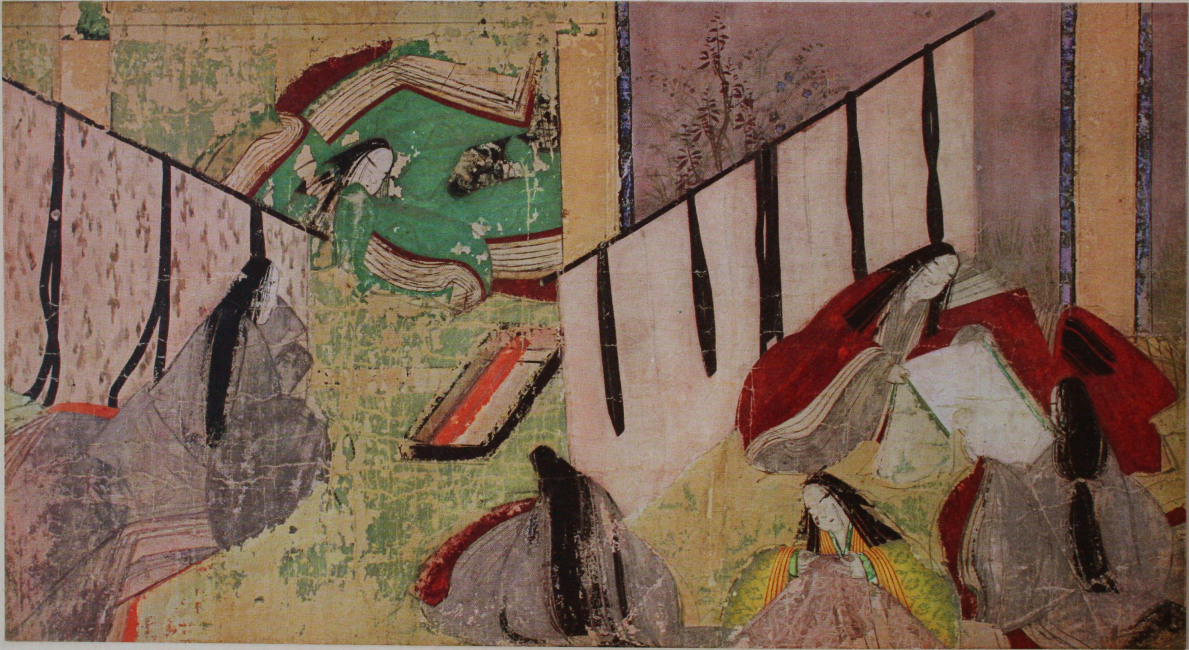
Splendid Hand-Scroll Illustrations of The Tale of the Genjii, The First Novel Ever Written (Circa 1120)

Genji Scroll 1

Ah, The Tale of Gen­ji — a ver­i­ta­ble Mount Ever­est for stu­dents of the Japan­ese lan­guage, and a fix­ture on so many read­ing lists drawn up by fans of world lit­er­a­ture in trans­la­tion as well. This for­mi­da­ble sto­ry of an emper­or’s son turned com­mon­er, writ­ten most­ly or entire­ly by Heian-peri­od noble­woman Murasa­ki Shik­ibu (also known as Lady Murasa­ki) in the ear­ly 11th cen­tu­ry, makes a cred­i­ble claim to the sta­tus of the very first nov­el (or, as more timid boost­ers might claim for it, the first psy­cho­log­i­cal nov­el, or the first “clas­sic” nov­el).

1200px-Genji_emaki_Yadorigi

It has thus had plen­ty of time to get adapt­ed into oth­er forms: trans­la­tions into mod­ern Japan­ese and oth­er cur­rent­ly under­stand­able lan­guages, anno­tat­ed ver­sions by lat­er gen­er­a­tions of writ­ers, live-action movies, and ani­ma­tion and com­ic books — ani­me and man­ga.

Genji Scroll 2

Many of those Gen­jis appeared in the past hun­dred years. Much clos­er to Murasak­i’s own time is the Gen­ji Mono­gatari Ema­ki, com­mon­ly called the Tale of Gen­ji Scroll, cre­at­ed about a cen­tu­ry after the Gen­ji itself, some­time around 1120 to 1140. Here you see pieces of the scrol­l’s sur­viv­ing sec­tions, thought to con­sti­tute only a small por­tion of the orig­i­nal work meant to depict and explain some of the events of the nov­el. Art his­to­ri­ans haven’t pinned down the iden­ti­ty of the artist, but they do know that the style of these images, cre­at­ed with the female-dom­i­nat­ed tsukuri‑e (or “man­u­fac­tured paint­ing” process), which involves lay­er­ing a draw­ing over pig­ment itself paint­ed over a first draw­ing, strong­ly sug­gests a woman artist.

Genji Scroll 3

The Gen­ji Mono­gatari Ema­ki fits into the longer Japan­ese tra­di­tion of pic­ture scrolls, which first com­bined images and text in a ground­break­ing way in the ninth or tenth cen­tu­ry and, one could argue, con­tin­ue to influ­ence Japan­ese art today.

tale of the genji--cap-39--12--secolo

That goes espe­cial­ly for pop­u­lar Japan­ese art: in Japan, where you can see thou­sands of com­ic book-read­ers of all ages on the trains each and every day, peo­ple take the union of words and images more seri­ous­ly than they do in the West — or at least West­ern com­ic art enthu­si­asts see it that way. So if these evoca­tive images from the Gen­ji Scroll make you want to pick up the nov­el, but you still don’t know if you can han­dle it straight, start with one of the man­ga adap­ta­tions, which, as you can see, have more his­tor­i­cal legit­i­ma­cy than we might have assumed.

Genji Scroll 4

It’s worth not­ing that Oxford has a site where you can down­load a com­plete Eng­lish trans­la­tion of The Tale of the Gen­jiA new trans­la­tion by Den­nis Wash­burn also came out in the last six months.

Relat­ed Con­tent:

The Poet­ry of the Cher­ry Blos­soms Comes to Life in a One Minute Time Lapse Video

Hand-Col­ored Pho­tographs of 19th Cen­tu­ry Japan

Hand-Col­ored 1860s Pho­tographs Reveal the Last Days of Samu­rai Japan

The (F)Art of War: Bawdy Japan­ese Art Scroll Depicts Wrench­ing Changes in 19th Cen­tu­ry Japan

Based in Seoul, Col­in Mar­shall writes and broad­casts on cities and cul­ture. He’s at work on a book about Los Ange­les, A Los Ange­les Primer, the video series The City in Cin­e­ma, the crowd­fund­ed jour­nal­ism project Where Is the City of the Future?, and the Los Ange­les Review of Books’ Korea Blog. Fol­low him on Twit­ter at @colinmarshall or on Face­book.

« Go BackMore in this category... »
Quantcast