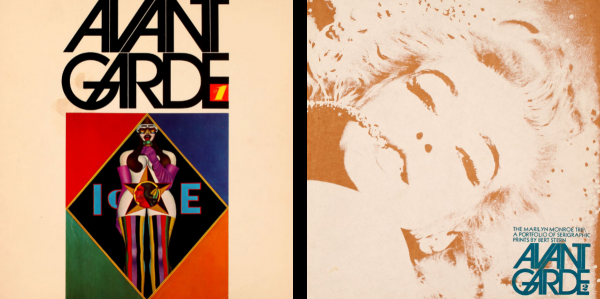
Briefly noted: Avant Garde magazine had a relatively short run. It produced only 16 issues between January 1968 and July 1971. But it left its mark, influencing tastemakers within the arts world, and it’s now been properly digitized for posterity.
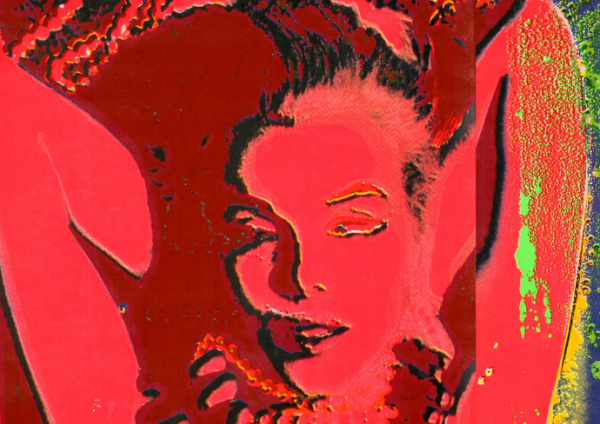
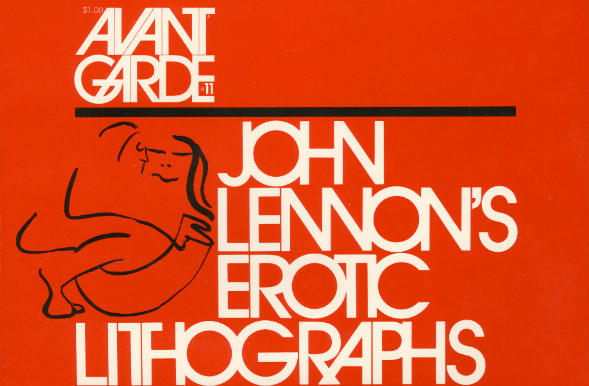
A collaboration between Ralph Ginzburg (editor) and Herb Lubalin (art director), Avant Garde is partly remembered for its radical politics and embrace of erotic content. (Issue #5 launched a “No More War” poster competition; Issue #11 featured John Lennon and Yoko Ono’s erotic lithographs; Issue #2 presented phantasmagoric versions of Bert Stern’s semi-nude photos of Marilyn Monroe.)
All 16 issues were scanned by the Internet Archive, and put online by Mindy Seu. You can read Avant Garde in all of its digital glory here.
If you would like to sign up for Open Culture’s free email newsletter, please find it here. It’s a great way to see our new posts, all bundled in one email, each day.
If you would like to support the mission of Open Culture, consider making a donation to our site. It’s hard to rely 100% on ads, and your contributions will help us continue providing the best free cultural and educational materials to learners everywhere. You can contribute through PayPal, Patreon, and Venmo (@openculture). Thanks!
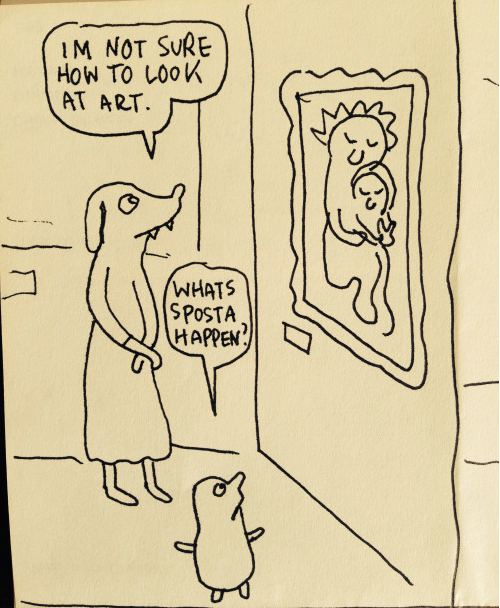
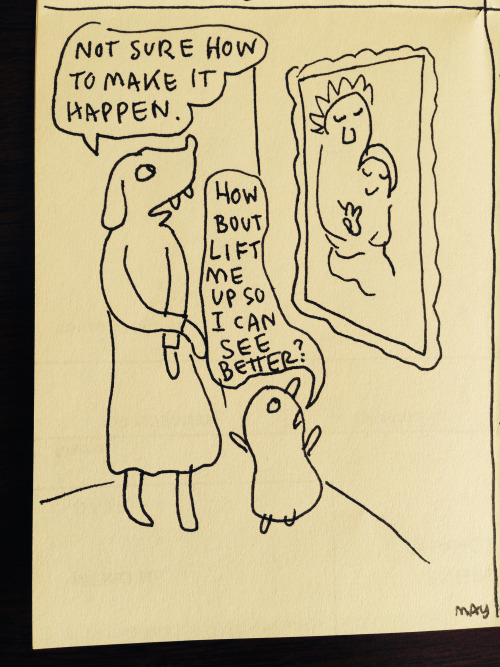
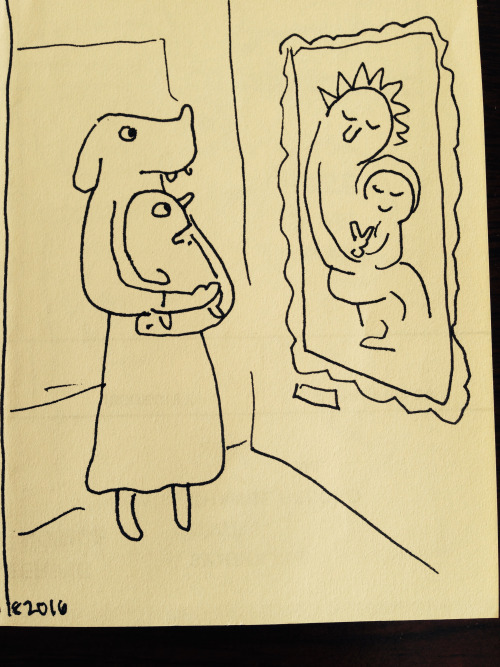
Despite the small, narrative doodle posted to her Tumblr a couple of weeks back, inspirational teacher and cartoonist Lynda Barry clearly has no shortage of strategies for viewing art in a meaningful way.
She takes a Socratic approach with students and readers eager to forge a deeper personal connection to images.
She traces this tendency back forty years, to when she studied with Marilyn Frasca at Evergreen State College. Could Frasca have anticipated what she wrought when she asked the young Barry, “What is an image?”
For Barry, who claims to have spent over forty years trying to answer the above question, there will almost always be an emotional component. In a 2010 interview with The Paris Review, she addressed the ways in which art, visual and otherwise, can fill certain crucial holes:
In the course of human life we have a million phantom-limb pains—losing a parent when you’re little, being in a war, even something as dumb as having a mean teacher—and seeing it somehow reflected, whether it’s in our own work or listening to a song, is a way to deal with it.
The Greeks knew about it. They called it catharsis, right? And without it we’re fucked. I think this is the thing that keeps our mental health or emotional health in balance, and we’re born with an impulse toward it.
No wonder the snaggle-toothed dog woman on Barry’s Tumblr looks so anxious. She craves that elusive something that never much troubled Helen Hockinson’s museum-going comic matrons.
(Had revelation been on the menu, those ladies would have dutifully paged through the most highly recommended guidebook of the day, confident they’d find it within those pages.)
These days, the internet abounds with pointers on how to get the most from art.
Another critic, New York magazine’s firebrand, Jerry Saltz, recommends an aggressively tactile approach for those who would look at art like an artist. Get up close. Cop a feel. Try to see how any given piece is made. (He himself is given to contemplating art with his hips thrust forward and head tilted back as far as it will go, in duplication of Jasper Johns’ stance.)
Of course, some of us don’t mind a hint or two to help us feel we’re on the right track. Those in that camp might enjoy the Metropolitan Museum of Art’s 82nd and 5th series, in which expert curators wax rhapsodic about their love of particular works in the collection.
You understand that this is just the tip of the proverbial ‘berg…
Readers, if you have any tips for achieving revelation through art, please share them by leaving a comment below.
And don’t forget to lift your shorter companion up so he can see better.
The feminism we associate with the mythically bra-burning sixties and seventies—with Betty Friedan and Gloria Steinem—falls under the so-called Second Wave of the movement. And it has sometimes been cast by its critics and successors since the 1980s as overwhelmingly white and middle class, excluding from its canons working class women, women of color, and the LGBTQ community.
Advocates of intersectionality—the term coined by law professor Kimberlé Crenshaw in the 80s to describe, writes the New Statesman, “how different power structures interact in the lives of minorities”—have made concerted efforts to broaden and diversify the movement. But as Crenshaw herself admits, the concept is not a new one. Its antecedents are “as old as Anna Julia Cooper, and Maria Stewart in the 19th century in the US, all the way through Angela Davis and Deborah King.”
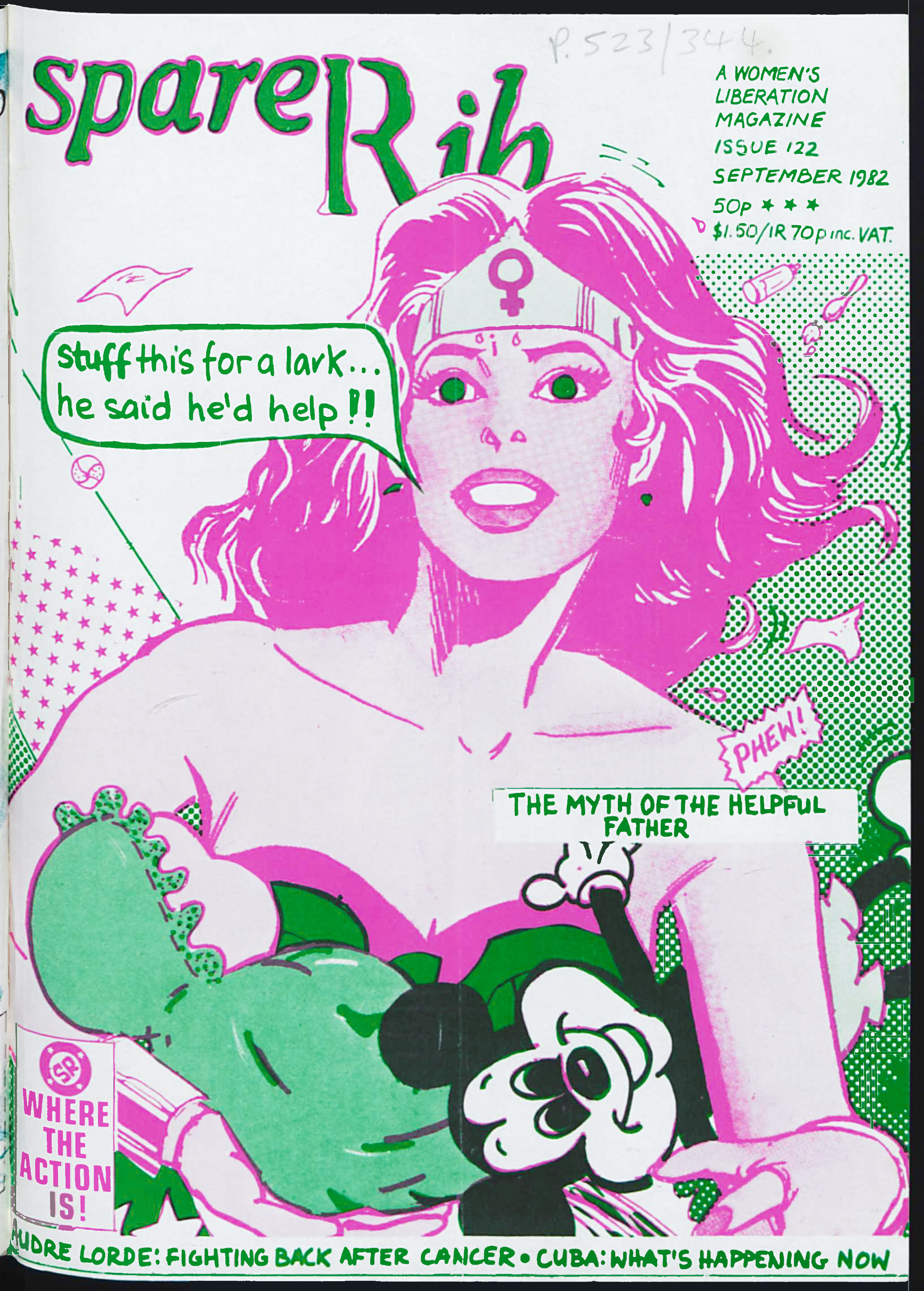
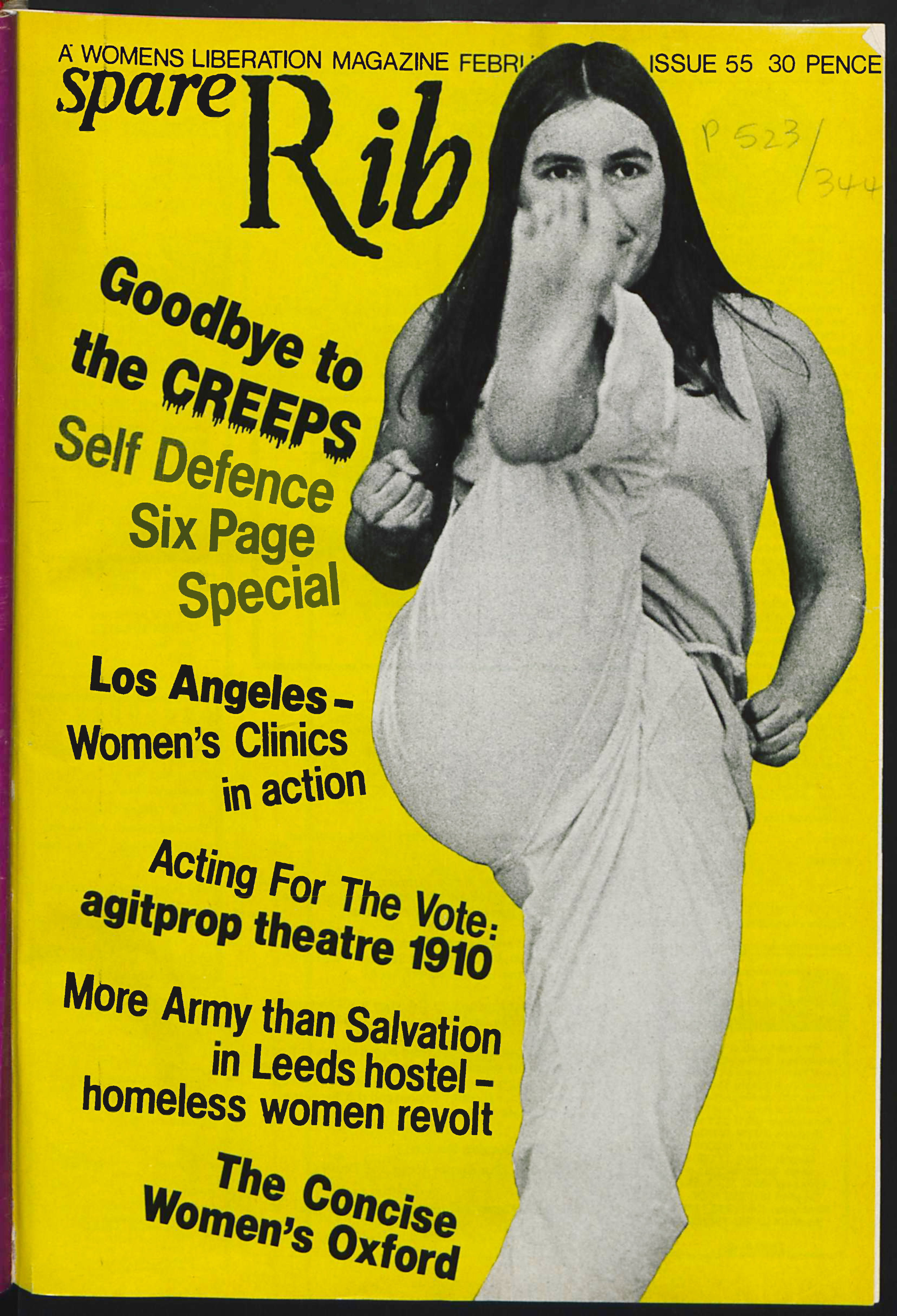
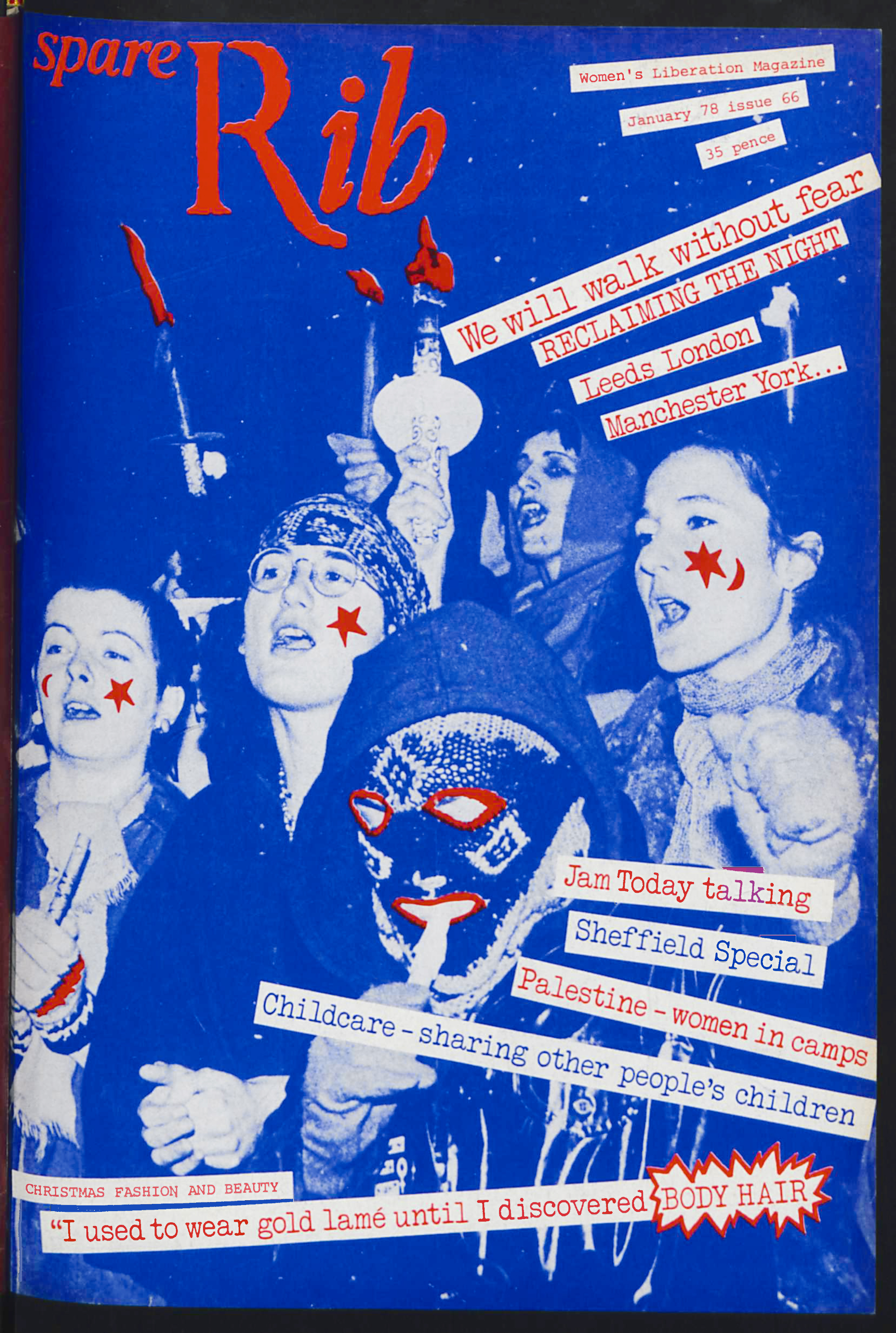
We can see many of these discussions and debates around intersectionality in Second Wave feminism and beyond firsthand in British feminist magazine Spare Rib, which is now available online. The Guardian offers a concise summary of the magazine’s attempts to “provide an alternative to traditional gender roles” by covering
…subjects such as “liberating orgasm,” “kitchen sink racism,” anorexia and the practice of “cliterectomy,” now called female genital mutilation. Cover headlines included “Doctor’s Needles Not Knitting Needles” and “Cellulie—the slimming fraud” and articles featured women such as country and western singer Tammy Wynette and US political activist Angela Davis.
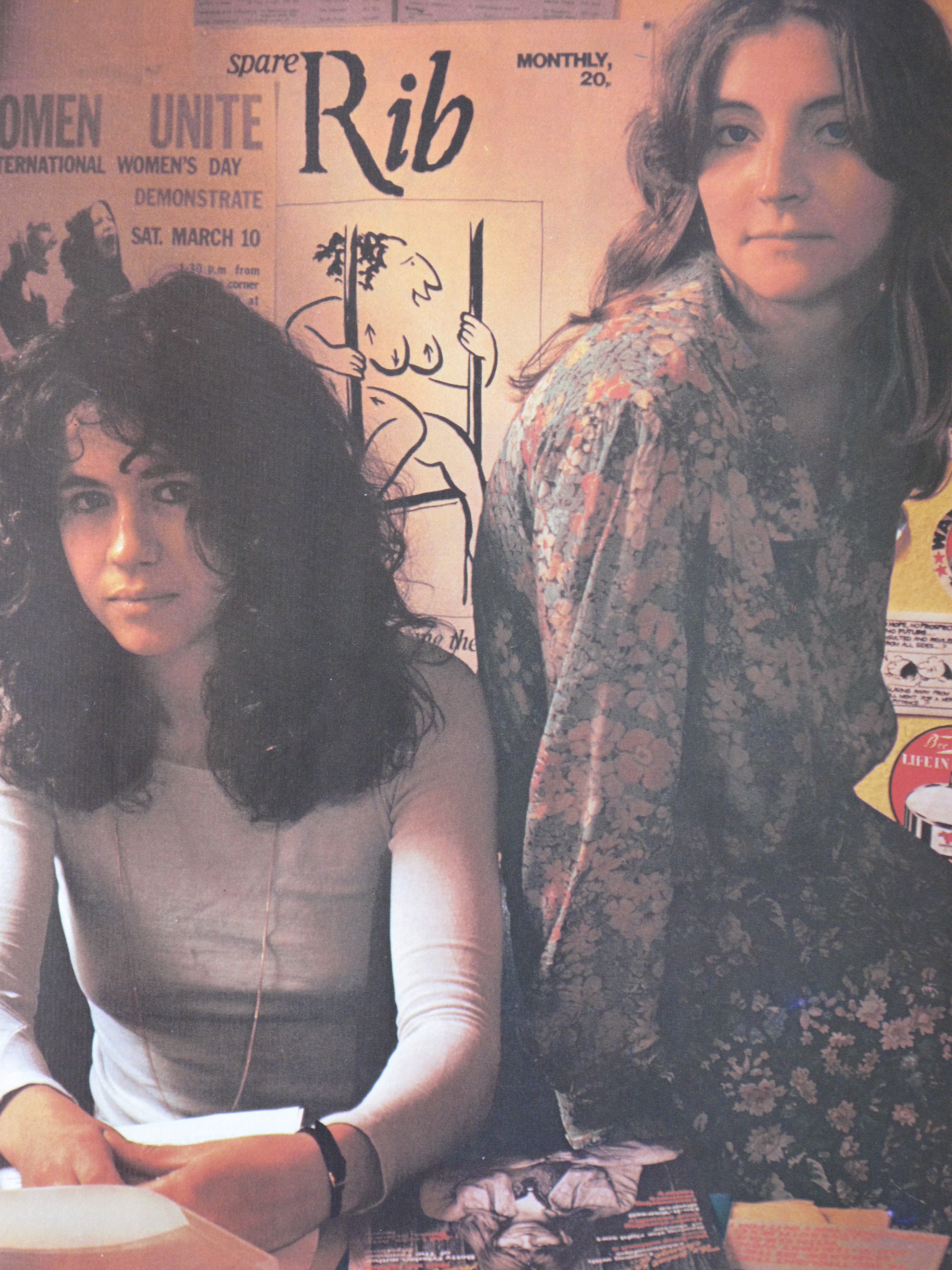
Founded in ’72 by Marsha Rowe and Rosie Boycott (pictured below), and run as a collective, the magazine featured a “breadth of voices.” Early issues “involved big-name contributors including Betty Friedan, Germaine Greer, Margaret Drabble and Alice Walker, but alongside these were the voices of ordinary women telling their stories.” As we see in hundreds of pages of Spare Rib, the often very heated arguments around issues of race, class, and sexuality in the feminist community were no less heated in the past than today.
One woman who helped push the boundaries of the conversation before Spare Rib’s “conscious effort to diversify the collective membership” was Roisin Boyd, an Irish broadcaster and writer who joined in 1980. Boyd describes some of the magazine’s challenges in a British Library retrospective essay, “Race, place and class: who’s speaking for who?” “Over the three years I worked on the collective,” she writes, “I was often puzzled by the fact that although we were all women and all feminists, how difficult it was for us to negotiate our differences, let alone recognise them.”
Boyd found that “some collective members were upper class and wealthy” and “distanced from the reality of post colonialism.” Likewise, The Guardian describes many of the debates in the magazine as “acrimonious,” given its representation of “so many different threads of feminism.” Spare Rib “reflected the sometimes ‘painful’ discussions between the collective on how best to tackle issues such as sexuality and racism.”
In spite of, or perhaps because of, these disagreements, the magazine “was a highly visible part of the Women’s Liberation movement,” says former collective member Sue O’Sullivan, “and a tool for reaching thousands of women every single month for over 20 years.” Now with the digitization of its catalog, it can be “a wonderful resource for younger historians and feminist activists, researchers and all the women (and men) who wonder what their mothers, aunts, grannies and older friends got up to all those years ago.” Known for its irreverent humor, intelligence, and eye-catching covers, Spare Rib preserves a record of the many ways feminist issues and debates have changed over the decades—as well as the many ways they haven’t.
Tonight, we pass along the sad news that Muhammad Ali, one of the great athletes and personalities of our time, has passed away at the age of 74. Having battled Parkinson’s Disease for decades, his passing doesn’t come as a complete surprise. But, for anyone who remembers Ali in his prime, this news will certainly come as a blow. There is perhaps not a better way to remember Ali’s life and times than to watch the 1978 episode of This Is Your Life, the long-running TV show that followed this format:
Each week, an unsuspecting celebrity would be lured by some ruse to a location near the studio. The celebrity would then be surprised with the news that they are to be the featured guest. Next, the celebrity was escorted into the studio, and one by one, people who were significant in the guest’s life would be brought out to offer anecdotes. At the end of the show, family members and friends would surround the guest, who would then be presented with gifts.
This show (recorded in England in this case) is an endearing tribute to the champ, all the more moving to watch now because Ali is gone. The highlight comes around the 38 minute mark, when Smokin Joe Frazier, Ali’s great rival, pays a surprising visit.
Muhammad you will be missed.
If you would like to sign up for Open Culture’s free email newsletter, please find it here. It’s a great way to see our new posts, all bundled in one email, each day.
If you would like to support the mission of Open Culture, consider making a donation to our site. It’s hard to rely 100% on ads, and your contributions will help us continue providing the best free cultural and educational materials to learners everywhere. You can contribute through PayPal, Patreon, and Venmo (@openculture). Thanks!
What do we do with all the dead malls? Anyone with an eye on the years-long spate of unambiguous headlines — “The Death of the American Mall,”“The Economics (and Nostalgia) of Dead Malls,”“America’s Shopping Malls Are Dying A Slow, Ugly Death” — knows that the question has begun to vex American cities, and more so American suburbs. But just twenty years ago (which I remember as the time of my own if not mall-centric then often mall-oriented adolescence), nobody could have foreseen the end of the large, enclosed shopping mall as an American institution — nobody except Douglas Coupland.
“On August 11 1992 I was in Bloomington, Minnesota, close to Minneapolis,” remembers the Generation X author in a recent Financial Times column. “I was on a book tour and it was the grand opening day of Mall of America, the biggest mall in the US.” He took the stage to give a live radio interview and the host said, “I guess you must think this whole mall is kind of hokey and trashy.” No such thing, replied Coupland: “I feel like I’m in another era that we thought had vanished, but it really hasn’t, not yet. I think we might one day look back on photos of today and think to ourselves, ‘You know, those people were living in golden times and they didn’t even know it.’”
Golden times or not, they now look unquestionably like the high watermark of the era when “malls used to be cool.” Coupland describes the shopping mall as “the internet shopping of 1968,” but they go back a bit farther: 1956, to be precise, the year the Southdale Center, the very first enclosed, department store-anchored mall of the form that would spread across America and elsewhere over the next forty years, opened in Edina, Minnesota. You can see vintage color footage of the Southdale Center in all its midcentury glory — its auto showroom, its playground, its full-service Red Owl grocery, its umbrella-tabled cafés under a vast atrium, and outside, of course, its even vaster parking lot — at the top of the post.
“You have no idea what an innovation this was in the 1950s,” says writer and midcentury Minnesota enthusiast James Lileks. “There wasn’t any place where you could sit ‘outside’ in your shirt-sleeves in January.” I used that quote when I wrote a piece for the Guardian on the Southdale Center, an institution easily important enough for their History of Cities in 50 Buildings (as well as PBS’ television series Ten Buildings that Changed America), whether you love them or hate them. The Austrian architect Victor Gruen, who came to America in flight from the Nazis, hated them, but he also created them; or rather, he envisioned the oases of rich Viennese urbanity for his new country that would, corrupted by American reality, quickly become shorthand for “consumerist” suburban life at its blandest.
Malcolm Gladwell tells that story in full in his New Yorker profile of Gruen and the creation he disowned: “He revisited one of his old shopping centers, and saw all the sprawling development around it, and pronounced himself in ‘severe emotional shock.’ Malls, he said, had been disfigured by ‘the ugliness and discomfort of the land-wasting seas of parking’ around them.” Given Gruen’s final pronouncement on the matter — “I refuse to pay alimony for those bastard developments” — one imagines he would applaud the shopping mall’s present day devolution.
“Where is the gracious Muzak’ed trance of yore?” asks Coupland as he surveys America’s blighted mallscape today. “Where is the civility? The calm covered with plywood sheeting and graffiti, and filled with dead tropical plants and shopping carts missing wheels, they’ve basically entered the realm of backdrops for science fiction novels and movies and I’m OK with that. Change happens.” Change, in the form of thorough remodeling and modernization, has also happened to the Southdale Center, but the mall that started it all remains in business today, all rumors of its own imminent demise seemingly exaggerated.
Must we ever see another portly, bespectacled re-enactor dragging a kite with key attached to represent the ingenuity of rakish founding father and avatar of cash wealth, Benjamin Franklin? Why, when he invented so many wondrous things—including those bifocal specs—should we only memorialize him for this silly (but very scientific) stunt? Though it may be a true story, unlike Washington and his cherry tree, the familiarity of the image breeds a certain indifference to the man behind it. I’m not suggesting that we remember him for, say, his invention of the catheter, though that’s quite a useful thing. Or for his invention, according to How Stuff Works, of “American Celebrity”—surely no friend to humanity these two hundred-plus years hence.
But maybe swim fins, eh? That’s a pretty neat invention. Imagine your fifth-grader in bald cap and ruffled shirt, plodding across the school stage in a pair of flippers. Or maybe the odometer? Or those reachy, grabby things at the grocery store that pull items down from high shelves? Boring. How about the Glass Armonica? The what? The glass armonica, I say, or—as Franklin originally called it—the “glassychord.” What is it? Well, Franklin, inspired by a concert by Royal Academy colleague Edmund Delaval on a set of water tuned wineglasses, decided to improve upon the instrument. An amateur musician himself, writes William Zeitler as Glassarmonica.com, Franklin left the concert “determined to invent and build ‘a more convenient’ arrangement.”
Thus, after two years of experimentation, “Franklin debuted his glass armonica,” which How Stuff Works describes as “a collection of different-sized glass bowls arranged on a rotating shaft. By spinning the shaft with a foot pedal and running wetted fingers over the rotating bowls, Franklin found he could coax out chords and melodies that Delaval could only dream of.” You needn’t use your imagination. Just watch the video above to see a Franklin re-enactor play a beauteous rendition of Tchaikovsky’s “Dance of the Sugar Plum Fairy” on a glass armonica. Lovely, no? Surely we wouldn’t expect children to pull this off in the school play, but they could mime along to a recording. (Don’t start yelling about revisionist history just yet. We can still tell the kite and key story, too. Just watch these adorable children tell it in this video.)
Franklin premiered the invention in 1762, though he didn’t play it himself but enlisted London musician Marianne Davis. It was an instant hit, “particularly in Germany,” Zeitler writes, where “Mozart was introduced to it by Dr. Franz Mesmer, who used it to ‘mesmerize’ his patients, and later Mozart wrote two works for it (a solo armonica piece, and a larger quintet for armonica, flute, oboe, viola and cello).” Above, hear Mozart’s Rondo for Glass Armonica and Quartet, performed by Thomas Bloch. Impressed? It gets better: “Beethoven also wrote a little piece for armonica and narrator (!), and many of their colleagues of the day composed for it as well—some 200 pieces for armonica… survive from that era.”
What happened? Tastes changed, put simply, and the glass armonica fell out of fashion. That, and the lack of amplification meant it was drowned out in increasingly larger ensembles. I propose we bring it back, maybe in a hip Ben Franklin Broadway musical. Who’s with me?
Learn much more about this fascinating instrument, and see several more video demonstrations, at Glassarmonica.com.
Dearly beloved, we are gathered here today to get through this thing called life…
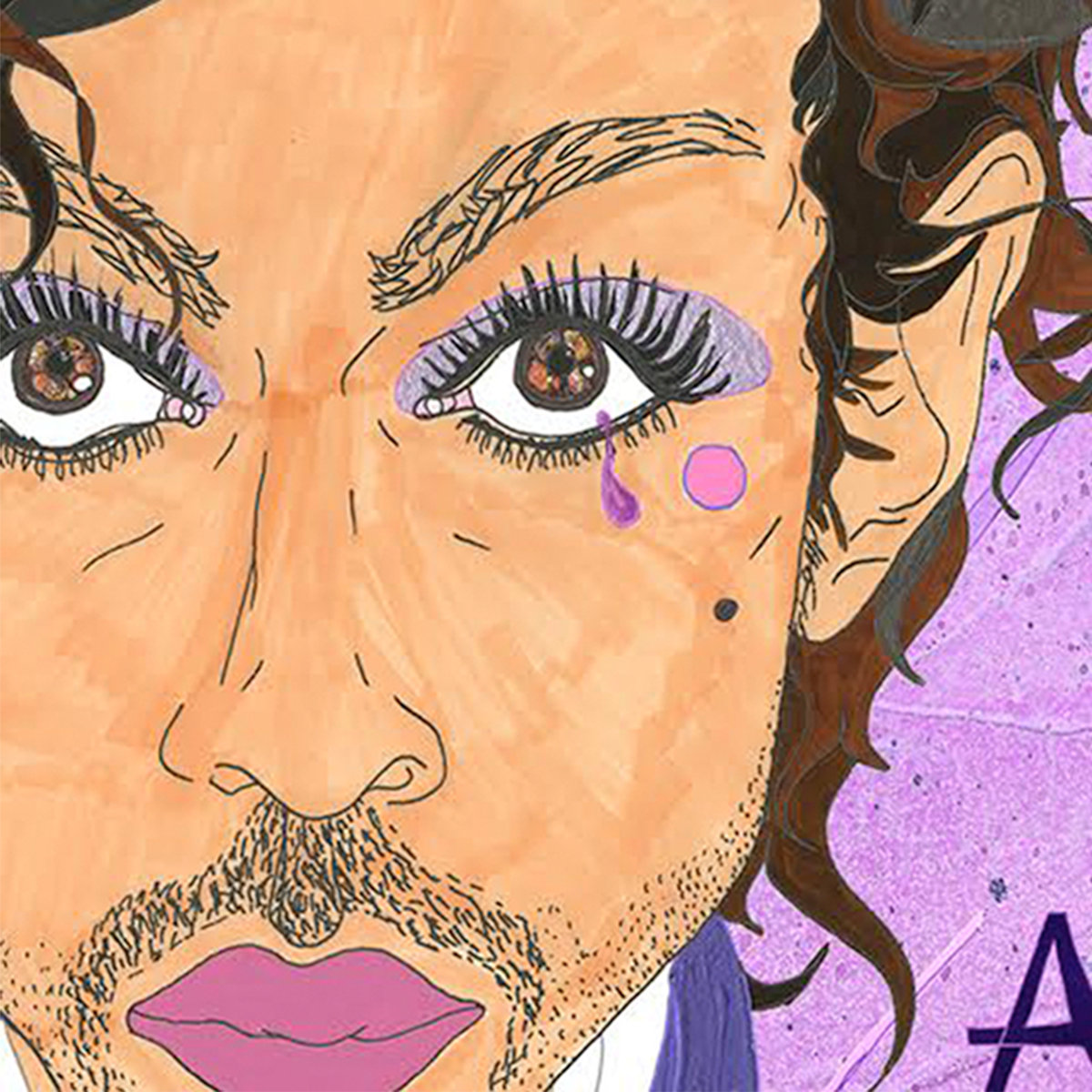
It must have crossed Prince’s mind that the day would surely come when fans would mine his eternally memorable opener to 1984’s “Let’s Go Crazy” to eulogize him.
But could he have anticipated the heights to which fellow singer-songwriter Amanda Palmer would take this most understandable of impulses?
As with Strung Out In Heaven, her five-track tribute to the recently deceased David Bowie, Palmer teamed with a string quartet and pop polymath producer Jherek Bischoff. The quick turnaround result is both lush and heartfelt.
With no disrespect, hopefully Palmer’s exquisite string elegies will not become a thing.
In other words, we all have rock stars whose passing we dread as an indicator of our own mortality.…
It’s easy to think of Expressionism—the art form that flourished in Germany during the early decades of the 20th century—as a kind of inchoate release of emotion onto the canvas. The name itself suggests the common idea of art as a means of “expressing oneself.” Often intensely childlike, such as the work of Paul Klee, or completely abstract, such as Wassily Kandinsky’s many geometric compositions, expressionist styles influenced artists throughout the century whom we tend to associate with emotion over reason, passion over restraint: Willem de Kooning and Jackson Pollack, Jean-Michel Basquiat and Francis Bacon.
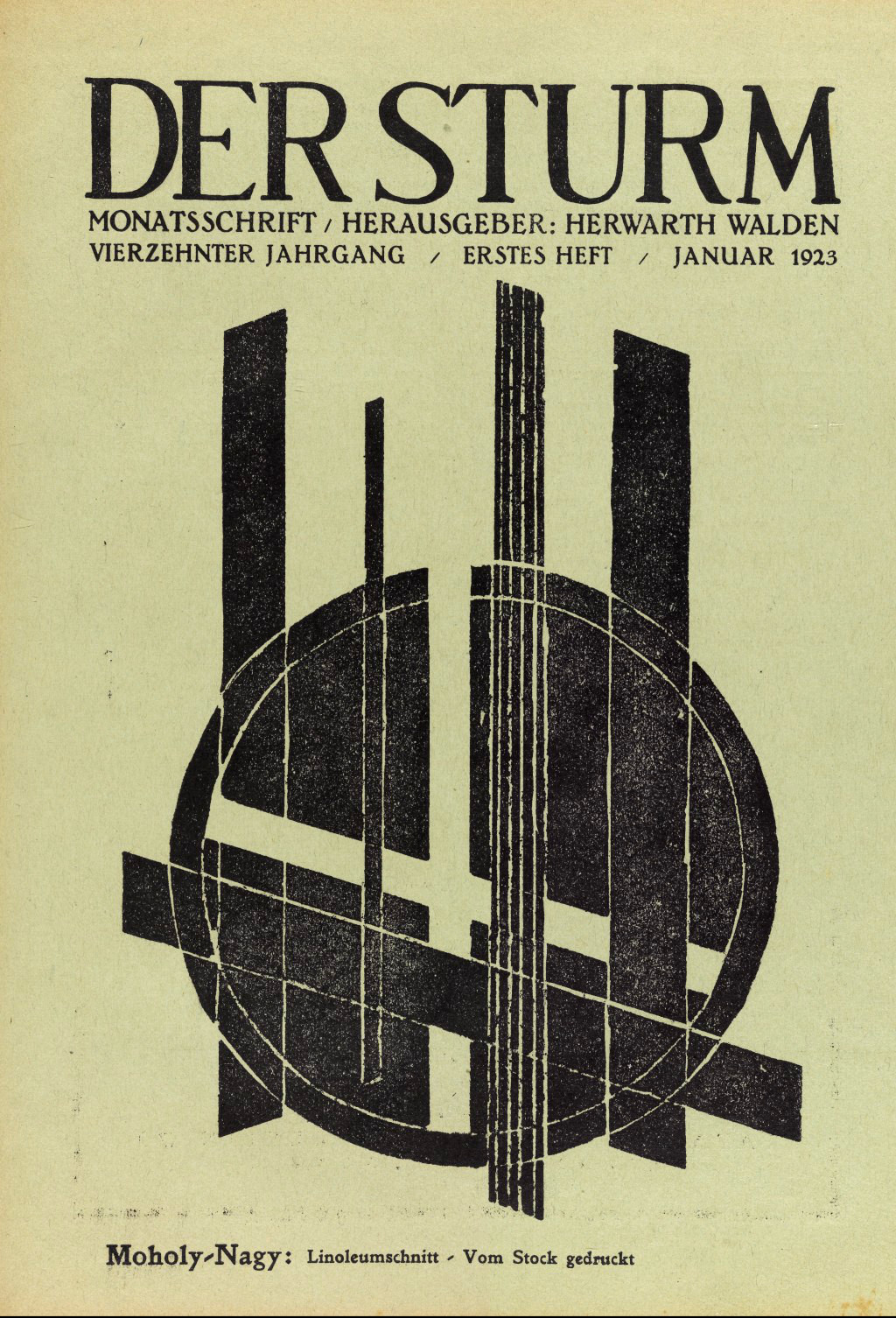
But let us return to the movement’s roots and we see from its very beginnings that Expressionism was highly theoretical in its emotionalism. Its high priest, Kandinsky, pioneered non-representational painting, and explained his method in coolly analytical terms in his treatise Concerning the Spiritual in Art. Expressionism—not only in painting, but in drama, sculpture, dance, film, and literature—early on communicated its ideas in a weekly magazine, Der Sturm (The Storm), founded in 1910 by artist and critic Herwarth Walden and running weekly until 1914, then quarterly from 1924 to 1932. In that time, the publication amassed quite a few issues, and you can read (in German) and download all 336 of them here.
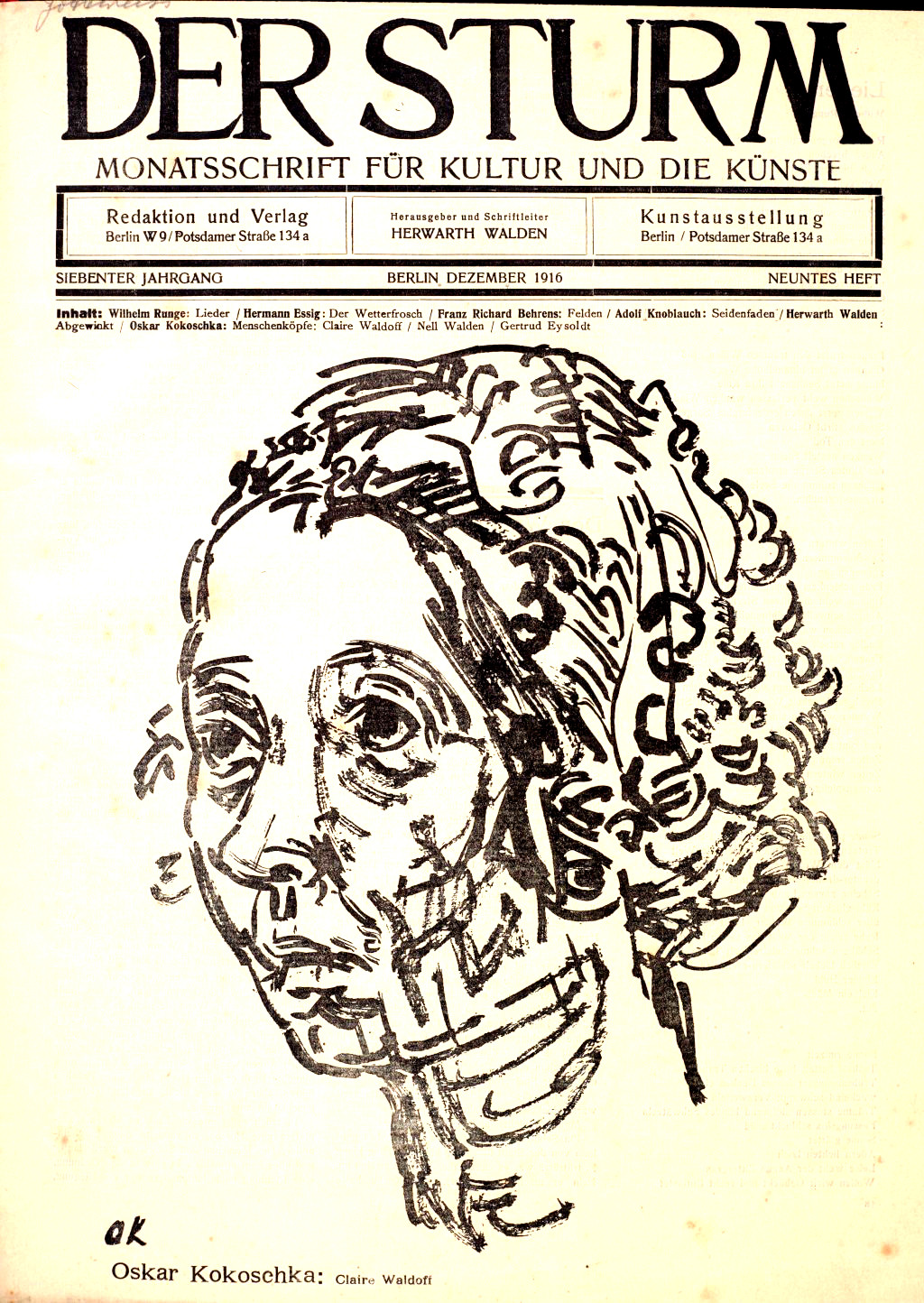
You can also see some of the inspired cover designs Der Sturm used over its decades of publication. “The magazine became well known for the inclusion of woodcuts and linocuts,” writes the Guggenheim, “including works by Guggenheim collection artists Marc Chagall,Vasily Kandinsky, Paul Klee, Oscar Kokoschka, Franz Marc, László Moholy-Nagy, and others.” The museum site features several of Der Sturm’s graphic designs by Moholy-Nagy, such as the cover above, and Monoskop adds the covers further up and at the top of the post, by Oscar Nerlinger and Oskar Kokoschka, respectively. Monoskop also provides a good deal of historical context for the magazine and the gallery it fostered, Galerie Der Sturm, “started by Walden to celebrate its 100th edition, in 1912.”
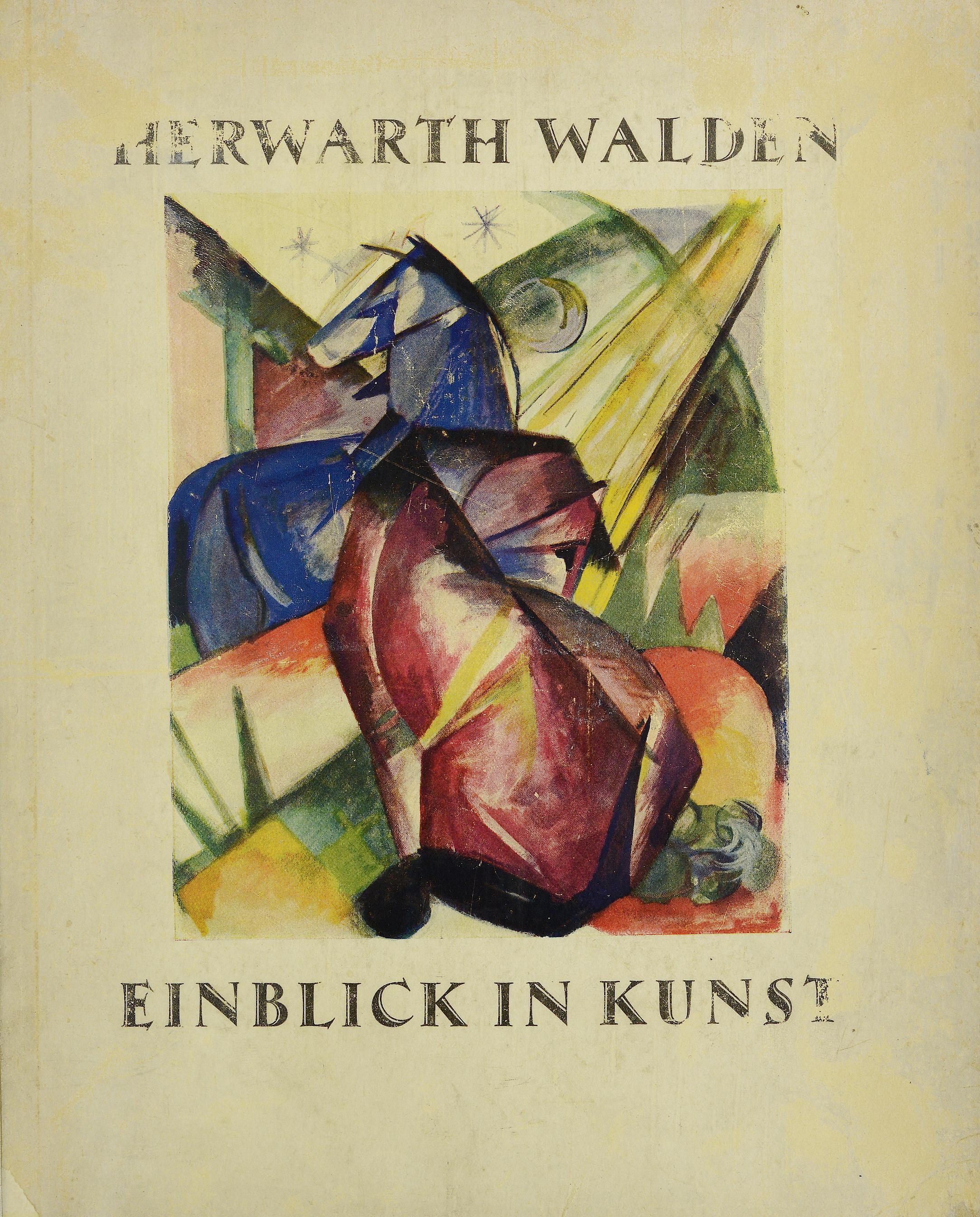
The gallery’s many exhibitions demonstrate how much Expressionism overlapped with a host of other modernist –isms of the period. It started “with an exhibition of Fauves and Der Blaue Reiter [a group including Kandinsky and Paul Klee that formed the core of first Expressionist painters], followed by the introduction in Germany of the Italian Futurists, Cubists and Orphists.” Edvard Munch exhibited there, as did Georges Braque and Pablo Picasso. Walden expanded the gallery’s activities after WWI to include lectures and a theater, and he began publishing books and portfolios by Expressionist artists. Just above see the cover of Walden’s own book Einblick in Kunst, and see several more book covers and a bibliography at Monoskop.
A product of the Weimar Republic’s high culture, the German Expressionist movement largely came to an end, along with Der Sturm and its associated work, as the Nazis came to power. But the current of Expressionism moved powerfully through the century, inspiring among others the mid-century American Abstract Expressionists, who often broke away from detached, theoretical understandings of art and engaged in direct and sometimes brutal ways with paint and canvas. But one can’t imagine these later painters taking the subjective license they did without the groundwork laid by the tireless Kandinsky and his contemporaries or Walden’s expansive Der Sturm movement.
You can peruse the entire collection of Der Sturmhere.
We're hoping to rely on loyal readers, rather than erratic ads. Please click the Donate button and support Open Culture. You can use Paypal, Venmo, Patreon, even Crypto! We thank you!
Open Culture scours the web for the best educational media. We find the free courses and audio books you need, the language lessons & educational videos you want, and plenty of enlightenment in between.






#/media/File:Avantgardelogo.jpg)