A while ago we brought you a hilarious series of recordings of the British comedic actor Peter Sellers reading The Beatles’ “She Loves You” in four different accents. Today we have a brief clip from a telephone call by Sellers on the set of Stanley Kubrick’s 1964 film Dr. Strangelove or: How I Learned to Stop Worrying and Love the Bomb (in which Sellers played three different roles). Here he demonstrates the nuances of a few of the many accents around Great Britain. From cockney to upper class and from London to Edinburgh, it’s classic Sellers all the way.
If this whets your appetite, don’t miss the items in the Relateds below.
If you would like to support the mission of Open Culture, consider making a donation to our site. It’s hard to rely 100% on ads, and your contributions will help us continue providing the best free cultural and educational materials to learners everywhere. You can contribute through PayPal, Patreon, and Venmo (@openculture). Thanks!
But we aren’t talking Disney here, but hard-boiled pulp fiction, a genre I think Chesterton would have liked. Chesterton’s work “was entirely popular in nature,” notes Graydanus. He was “a great defender of popular and even ‘vulgar’ culture.” Take his essay “A Defense of Penny Dreadfuls,” which begins:
One of the strangest examples of the degree to which ordinary life is undervalued is the example of popular literature, the vast mass of which we contentedly describe as vulgar. The boy’s novelette may be ignorant in a literary sense, which is only like saying that modern novel is ignorant in the chemical sense, or the economic sense, or the astronomical sense; but it is not vulgar intrinsically–it is the actual centre of a million flaming imaginations.
Sentiments like these inspired admirers of Chesterton like Marshall McLuhan and Jorge Luis Borges to take seriously the mass entertainments of their respective cultures.
We might apply a Chestertonian appreciation to the book covers here, illustrating detective fiction by such notables as Dashiell Hammett, Arthur Conan Doyle, Agatha Christie, and Raymond Chandler.
Despite the cultural cachet these names bear, they are also writers whose work thrived in the “pulps,” a term denoting, Rebecca Romney writes at Crime Reads, “a wide category that bounds across genres.” Famed detective writers were as likely to be printed in “pulp fiction” magazines and cheap paperback editions as were acclaimed authors like Jules Verne, H.G. Wells, and Edgar Allan Poe. In addition to a number of genre conventions, the “common traits” of pulp fiction “are cheapness, portability, and popularity.”
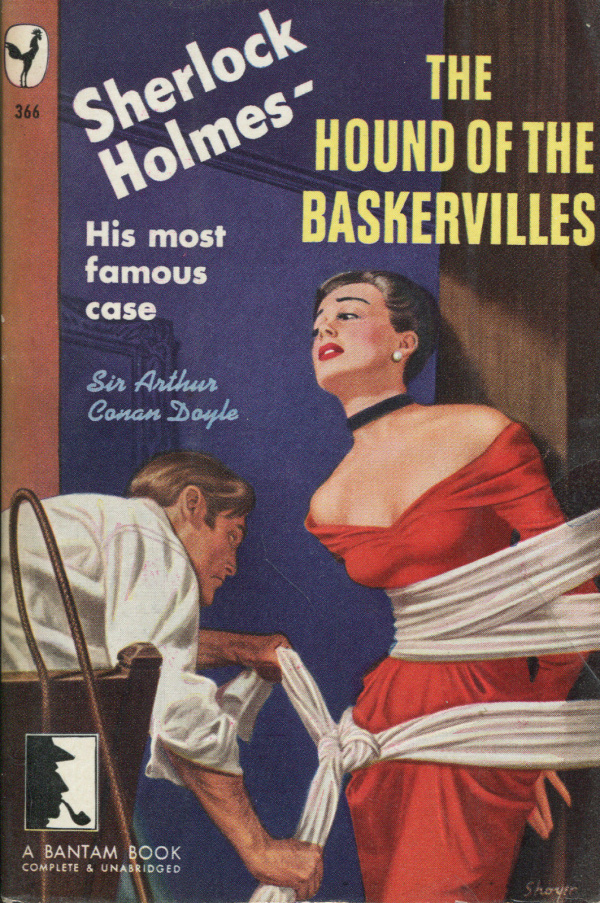
Detective fiction, whether “literary” or wildly sensational, has always been a popular entertainment, close kin to the “Penny Dreadful,” those cheaply-produced 19th century British novels of adventure and sensation. “Twentieth-century detective novels are intimately tied to the history of the pulps,” writes Romney, which “rely on the erotic for their appeal.” Pulp publications sensationalize in images what may be far more chaste in the text. These “ridiculously sexified” book covers do not bother with coy symbolism or minimalist allusion. They take aim directly at the libido, or, to take Chesterton’s phrase, “the actual centre of a million flaming imaginations.”
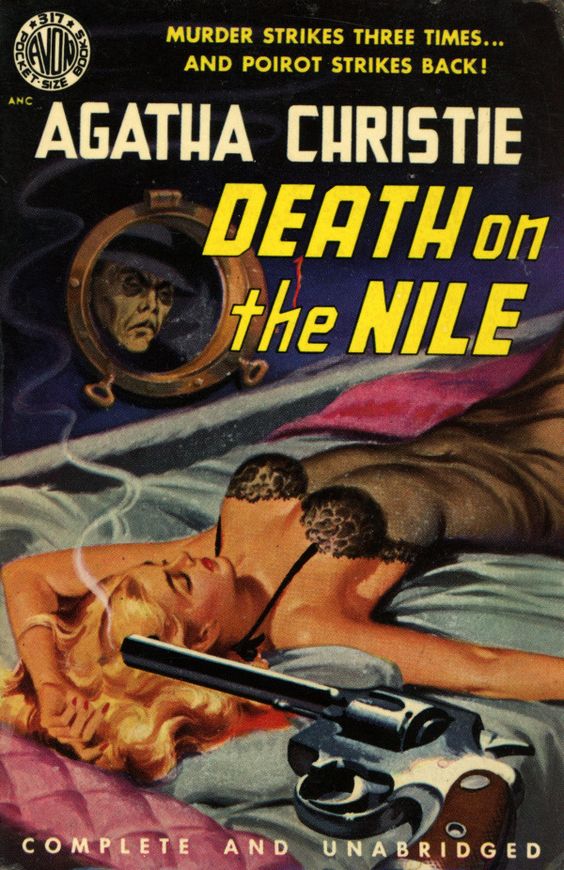
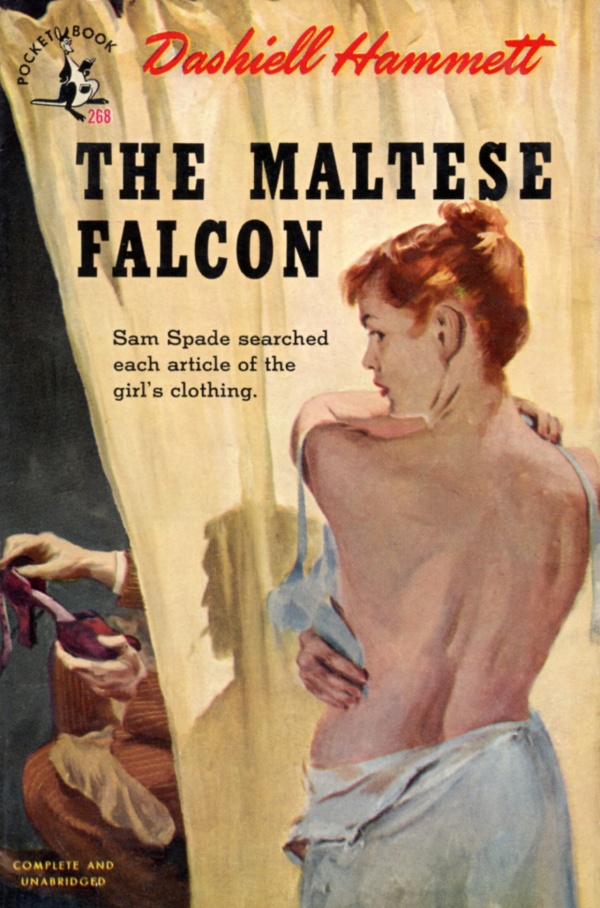
The cover of The Maltese Falcon at the top goes out of its way to illustrate “the only sexually scandalous scene of the book, as if it were the single most crucial moment of the entire story.” The cover is pure objectification, and on such grounds we might reasonably object. To do so is to critique an entire mid-twentieth century aesthetic of “exploitation,” a campy style that gleefully titillated audiences who gleefully desired titillation.
The covers date from the mid-thirties to early fifties. All of the typical visual pulp themes are here, which are also typical of detective fiction and noir: the femme fatale (called “a luscious mantrap” on the cover of Raymond Chandler’s The Big Sleep below), in various seductive states of undress; the unsubtle hints of violence and sadomasochism. Such themes in the novels can be overt, implicit, or fully submerged. The focus of these covers turns the tropes into cheap come-ons. In this, perhaps, they do their authors an injustice, but their naked intention is solely to make the sale. What readers do with the books afterward is their own affair.
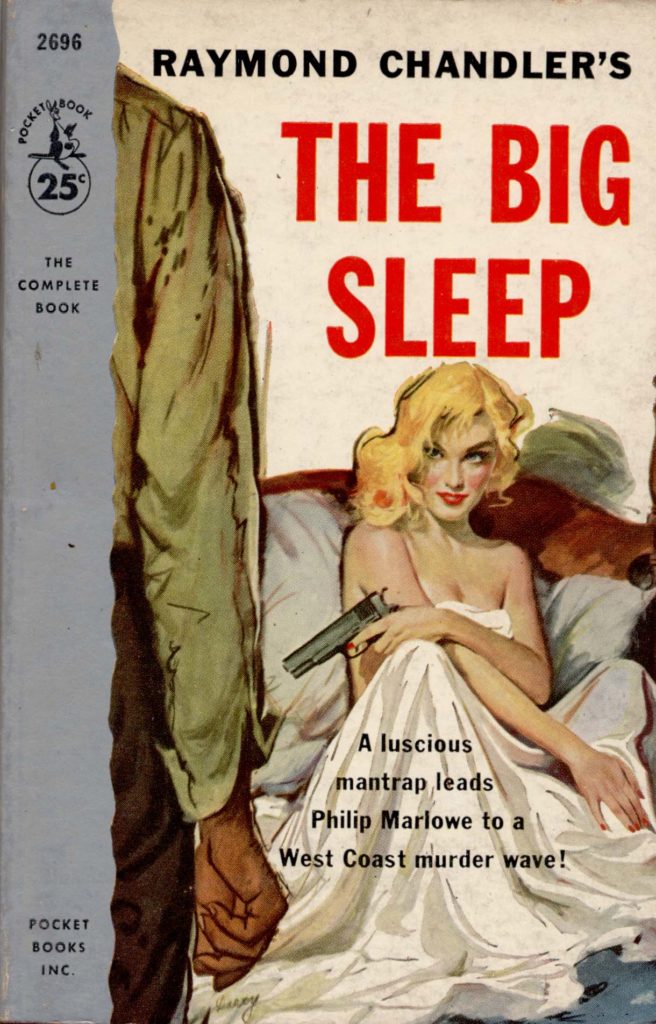
“These absurd covers,” Romney writes, “speak to the detective novel’s unavoidably shared heritage with other sensational pulp genres, much like the ever-present creepy uncle at Thanksgiving.” As much as quality detective fiction, sci-fi, fantasy, and horror might receive critical praise as high art, they will always be inextricably related to the “vulgar” pleasures of the pulps. To speak of such entertainments as the domain of the lowbrow, the magnanimous Chesterton might say, is only to “mean humanity minus ourselves.” Still, I wonder what Chesterton would have said had his collected Father Brown stories appeared in a pulp version with a nonsensically sexy cover?
Visit Crime Reads to see these covers compared with those of more subtle, and arguably more tasteful, editions.
Through the magic of black and white video, this rare gig of Bon Scott-led AC/DC has been unearthed. The sound is poor, the lighting sometimes non-existent, but who cares? Just look at the faces of the 16-year-old girls in the front row as one of the hardest rocking bands plays (checks notes) the St. Albans High School gymnasium in 1976! It’s absolute madness. Who knew at that time that AC/DC were going to hit big, like stadium big, like essential hard rock band of all time big? To some it was probably a fun night out and isn’t it funny that the lead singer likes to rock a set of bagpipes?
In this key bit of investigation by Dangerous Minds, writer Cherrybomb wonders whether Bon Scott–a transplant from Scotland to Australia when he was six–actually could play the pipes at all. I mean, yes, one might *assume* that being Scottish means you’re half-way there, but in fact, according to a piper called Kevin Conlon, Scott only got an interest in the instrument during the recording of 1975’s T.N.T. :
I got a call from Bon, and he didn’t know who I was and I didn’t know who he was. He wanted to buy a set of bagpipes and have a few lessons. I told him they would cost over $1000 and it would take 12 months or more of lessons to learn how to play a tune. He said that was fine and came down for a few lessons, but as we were only going to be miming, he just had to look like he was playing.
Cherrybomb concludes that maybe, just maybe, Scott is playing the pipes during this number, instead of miming to a pre-recorded track over the P.A. But later the pipes got smashed up, and the number got dumped from the act. And reportedly the rest of the band was furious over their limited funds being spent on an instrument Scott couldn’t really play. The whole story has a tinge of Spinal Tap excess to it, but hey, you wouldn’t want it any other way, right?
Ted Mills is a freelance writer on the arts who currently hosts the artist interview-based FunkZone Podcast and is the producer of KCRW’s Curious Coast. You can also follow him on Twitter at @tedmills, read his other arts writing at tedmills.com and/or watch his films here.
As deep as we get into the 21st century, many of us still can’t stop talking about the 20th. That goes especially for those of us from the West, and specifically those of us from America and Britain, places that experienced not just an eventful 20th century but a triumphant one: hence, in the case of the former, the designation “the American Century.” And even though that period came after the end of Britain’s supposed glory days, the “Imperial Century” of 1815–1914, the United Kingdom changed so much from the First World War to the end of the millennium — not just in terms of what lands it comprised, but what was appearing and happening on them — that words can’t quite suffice to tell the story.
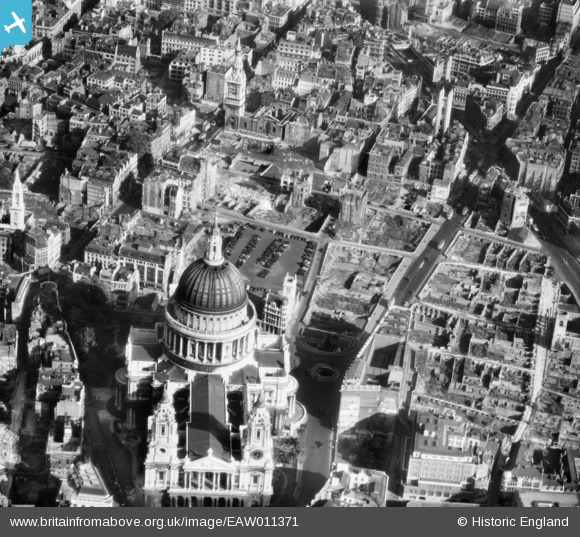
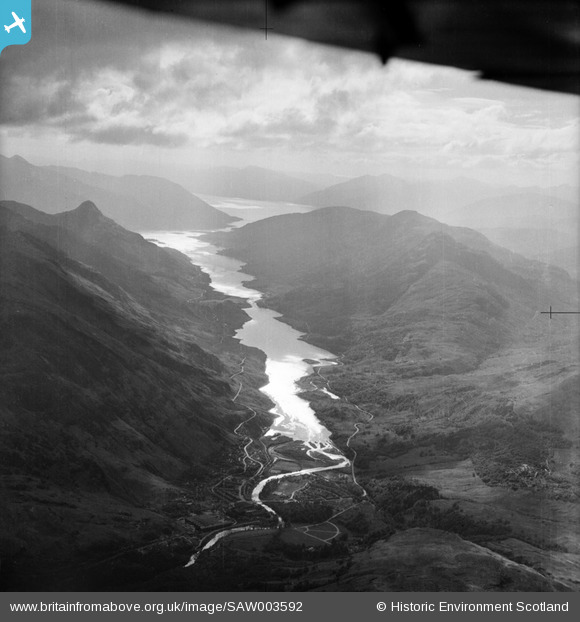
Enter Britain from Above, an archive of over 95,000 pieces of aerial photography of Britain taken not just from the air but from the sweep of history between 1919 and 2006. Its pictures, says its about page, come from “the Aerofilms collection, a unique aerial photographic archive of international importance.
The collection includes 1.26 million negatives and more than 2000 photograph albums.” Originally created by Aerofilms Ltd, an air survey set up by a couple veterans of World War I and later expanded to include smaller collections from the archives of two other companies, it “presents an unparalleled picture of the changing face of Britain in the 20th century” and “includes the largest and most significant number of air photographs of Britain taken before 1939.”
Attaining a firm grasp of a place’s history often requires what we metaphorically call a “view from 30,000 feet,” but in the case of one of the leading parts of the world in as technologically and developmentally heady a time as the 20th century, we mean it literally. Enter the Britain from Above photo archive here.
Based in Seoul, Colin Marshall writes and broadcasts on cities and culture. His projects include the book The Stateless City: a Walk through 21st-Century Los Angeles and the video series The City in Cinema. Follow him on Twitter at @colinmarshall or on Facebook.
Wired magazine has entered the video explainer game with a novel series that takes concepts from kindergarten to graduate school and beyond in under twenty minutes. Their “5 Levels of Difficulty” videos have it all: hip 21st century ideas like blockchain, cute kids saying smart things, a celebration of expertise and the communication skills today’s experts need to present their work to a diverse, international public of all ages and education levels. This is no gimmick—it’s entertaining and accessible, while still informative for even the best informed.
Take the video above, in which 23-year-old composer and musician Jacob Collier explains the concept of musical harmony. His students include a child, a teen, a college student, a professional, and… Herbie Hancock. “I’m positive,” he says, “that everyone can leave this video with some understanding, at some level.” At level 1, we understand harmony as an expression of mood or feeling, produced by adding “more notes” to a melody. A simple but effective definition.
Level 2 introduces basic theory—using chords, or triads, to explain how harmony can produce different emotions, modulating from major to minor, and creating “narratives” within a song. In Level 3, harmony becomes a language, and the vocabulary of the circle of fifths comes in. Collier’s college student companion also plays guitar, and the two jam through a few chord voicings to give his example song, “Amazing Grace,” a smooth and jazzy feel. At Level 4, a professional pianist learns a few things about overtones and undertones, compositional arranging, and “negative harmony.”
Then, at 8:30, we get to the main attraction, and, as tends to happen in these videos at the final stage, student and teacher roles reverse. Collier essentially interviews Hancock on harmony, both perched behind keyboards and speaking the language of music fluently. Non-professionals won’t have had nearly enough preparation in 8 minutes to grasp what’s going on. It’s high level stuff, but even if you’re mystified by the theory, stick around for the stories—and learn what Miles Davis meant when he told Hancock, “don’t play the butter notes,” advice on playing harmony that changed everything for him.
When you watch an animated film, you visit a world. That holds true, to an extent, for live-action movies as well, but much more so for those cinematic experiences whose audiovisual details all come, of necessity, crafted from scratch. Walt Disney understood that better than anyone else in the motion-picture industry, and none could argue that he didn’t capitalize on it. When they founded Studio Ghibli, Hayao Miyazaki and the late Isao Takahata — in the fine 20th-century Japanese tradition of borrowing Western ideas and then refining them nearly beyond recognition — took Disney’s deliberate world-building a step further, painstakingly crafting a look and feel for their productions that amounts to a separate reality: rich, coherent, and, for the millions of die-hard Ghibli fans all around the world, immensely appealing.
In a few years, those fans will get the chance to enter Ghibli’s world in a much more concrete sense. Disney’s insight that his audience would beat a path to an amusement park based on his studio’s movies led to Disneyland, Disney World, and their global successors, two of which, Tokyo Disneyland and Tokyo Disney Sea, now rank among the five most visited theme parks in the world.
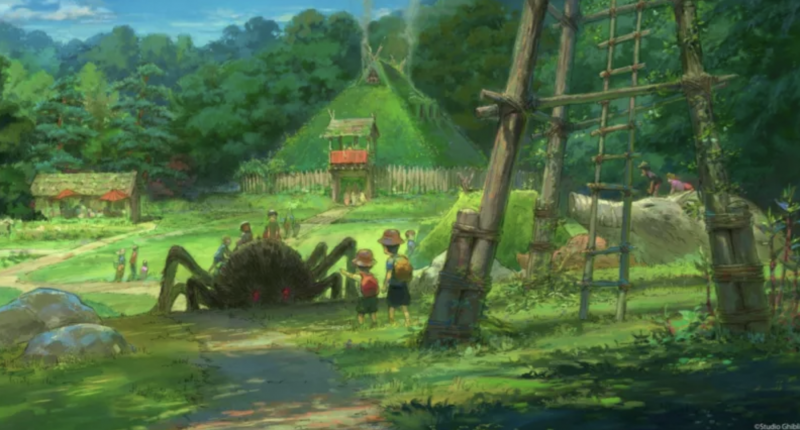
The area of the Japanese capital already offers an acclaimed Ghibli experience in the form of the Ghibli Museum, but in just a few years the city of Nagakute, a suburb of Nagoya, will see the opening of Ghibli’s own version of Disneyland, a theme park filled with attractions based on the studios beloved films.
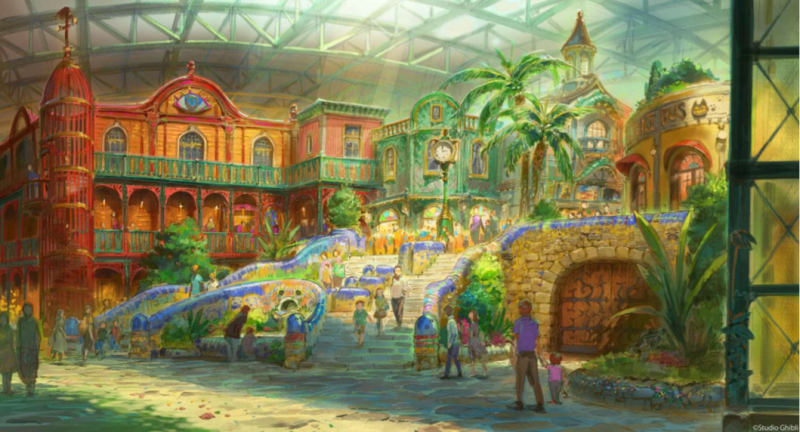
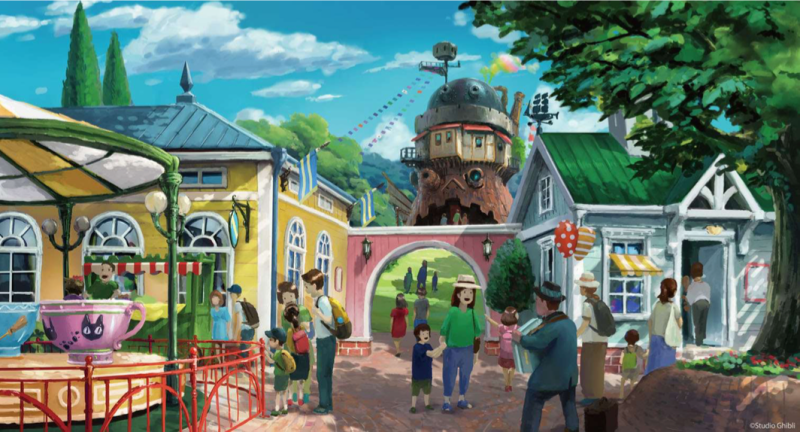
Scheduled to open in 2022 on the same plot of land used for the 2005 World’s Fair (where the house from My Neighbor Totoro was then built and still stands today), Ghibli’s theme park will greet visitors with a main gate reminiscent, writes Kotaku’s Brian Ashcraft, of “19th-century structures out of Howl’s Moving Castle as well as a recreation of Whisper of the Heart’s antique shop.”
It also includes “the Big Ghibli Warehouse, which is filled with all sorts of Ghibli themed play areas as well as exhibition areas and small cinemas,” a Princess Mononoke village, a combined area for Howl’s Moving Castle and Kiki’s Delivery Service called Witch Valley, and the Totoro-themed Dondoko Forest. Will Studio Ghibli’s theme park rise into the ranks of the world’s most visited? Nobody who has yet visited their world, in any of its manifestations thus far, would put it past them.
Studio Ghibli has released some basic concept for the new theme park. You can get a few glimpses of what they have in mind on this page.
Based in Seoul, Colin Marshall writes and broadcasts on cities and culture. His projects include the book The Stateless City: a Walk through 21st-Century Los Angeles and the video series The City in Cinema. Follow him on Twitter at @colinmarshall or on Facebook.
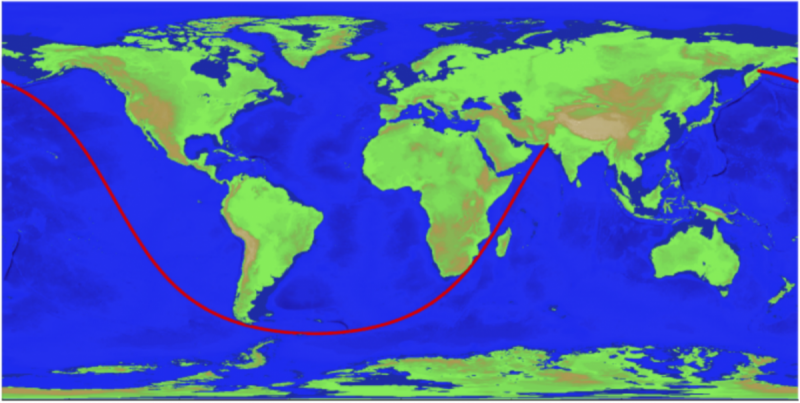
Back in 2012, a redditor by the name of “Kepleronlyknows” wondered what’s the longest distance you could travel by sea without hitting land. And then s/he hazarded an educated guess: “you can sail almost 20,000 miles in a straight line from Pakistan to the Kamchatka Peninsula, Russia.”
Six years later, two computer scientists–Rohan Chabukswar (United Technologies Research Center in Ireland) and Kushal Mukherjee (IBM Research in India)–have developed an algorithm that offers a more definitive answer. According to their computations, “Kepleronlyknows was entirely correct,” notes the MIT Technology Review.
The longest path over water “begins in Sonmiani, Balochistan, Pakistan, passes between Africa and Madagascar and then between Antarctica and Tierra del Fuego in South America, and ends in the Karaginsky District, Kamchatka Krai, in Russia. It is 32,089.7 kilometers long.” Or 19,939 miles.
While they were at it, Chabukswar and Mukherjee also determined the longest land journey you could take without hitting the sea. That path, again notes the MIT Technology Review, “runs from near Jinjiang, Fujian, in China, weaves through Mongolia Kazakhstan and Russia, and finally reaches Europe to finish near Sagres in Portugal. In total the route passes through 15 countries over 11,241.1 kilometers.” Or 6,984 miles. You can read Chabukswar and Mukherjee’s research report here.
Disasters both natural and man-made—or in the case of climate change, some measure of both—can reduce built environments to ash and rubble with little warning. In cases like the Lisbon earthquake, the Great Fire of London, or the bombing of Dresden, cities have been completely rebuilt. In others, like the utterly destroyed Pompeii, they lay in ruins forever, or like Chernobyl, become irradiated ghost towns. Such events stand as singular moments in history, like ruptures in time, shaking faith in religion, science, and government.
In the case of the Great 1906 San Francisco Earthquake, which destroyed 80% of the city with its estimated magnitude of 7.9, the disaster also serves as a dire historical warning for what might happen again if seismologists’ current grim prognostications prove correct. In the film above, “A Trip Down Market Street” by the Miles brothers, we see the bustling city just four days before the quake. Film historian David Kiehn has dated this footage to April 14th, 1906. The very convincing sound design has been added by Mike Upchurch.
The film shows Market Street in full swing, Model T’s jostling with horsedrawn carriages over streetcar tracks, while pedestrians weave in and out of the traffic. The four Miles brothers, Harry, Herbert, Earle, and Joe, left for New York shortly after shooting in San Francisco and just missed the quake. They had sent the negatives ahead, barely saving this valuable footage. They returned to find their studios, and their city, destroyed by the quake and the nearly four days of fires that followed it. They did what any filmmaker would—started filming.
Their footage of the devastation was long thought lost until it was re-discovered at a flea market. Kiehn digitized the film and it was recently screened at the Bay Area Edison Theater while on its way to the Library of Congress, just before the 112th anniversary of the quake. The Miles brothers, says Kiehn, “shot almost two hours of film after the earthquake and very little of it survives. I think this is one of the longest surviving pieces.” It begins with a harrowing trip down Market Street, reduced from bustling city center to wasteland.
The quake, writes Bill Van Niekerken at the San Francisco Chronicle, caused “unfathomable devastation… At least 700 are thought to have perished, with some estimates at more than 3,000…. 490 city blocks were leveled, with 28,188 buildings destroyed. More than 200,000 people were left homeless.” From this horror, Niekerkan draws inspiration. “San Francisco, however, rose from the ashes, rebuilt and became a greater city, a shining symbol of the West.”
We're hoping to rely on loyal readers, rather than erratic ads. Please click the Donate button and support Open Culture. You can use Paypal, Venmo, Patreon, even Crypto! We thank you!
Open Culture scours the web for the best educational media. We find the free courses and audio books you need, the language lessons & educational videos you want, and plenty of enlightenment in between.