Segregated By Design: An Animated Look at How African-American Enclaves in U.S. Cities Is Hardly an Accident

From his­to­ri­an Richard Roth­stein comes a sober­ing ani­mat­ed video called “Seg­re­gat­ed by Design.”  Author of the 2017 book The Col­or of Law: A For­got­ten His­to­ry of How Our Gov­ern­ment Seg­re­gat­ed Amer­i­ca, Roth­stein has cre­at­ed a video that’s as infor­ma­tive as it is visu­al­ly cap­ti­vat­ing. Here’s what ground it cov­ers:

Exam­ine the for­got­ten his­to­ry of how our fed­er­al, state and local gov­ern­ments uncon­sti­tu­tion­al­ly seg­re­gat­ed every major met­ro­pol­i­tan area in Amer­i­ca through law and pol­i­cy.

‘Seg­re­gat­ed By Design’ exam­ines the for­got­ten his­to­ry of how our fed­er­al, state and local gov­ern­ments uncon­sti­tu­tion­al­ly seg­re­gat­ed every major met­ro­pol­i­tan area in Amer­i­ca through law and pol­i­cy.

Prej­u­dice can be birthed from a lack of under­stand­ing the his­tor­i­cal­ly accu­rate details of the past. With­out being aware of the uncon­sti­tu­tion­al res­i­den­tial poli­cies the Unit­ed States gov­ern­ment enact­ed dur­ing the mid­dle of the twen­ti­eth cen­tu­ry, one might have a neg­a­tive view today of neigh­bor­hoods where African Amer­i­cans live or even of African Amer­i­cans them­selves.

We can com­pen­sate for this unlaw­ful seg­re­ga­tion through a nation­al polit­i­cal con­sen­sus that leads to leg­is­la­tion. And this will only hap­pen if the major­i­ty of Amer­i­cans under­stand how we got here. Like Jay‑Z said in a recent New York Times inter­view, “you can’t have a solu­tion until you start deal­ing with the prob­lem: What you reveal, you heal.” This is the major chal­lenge at hand: to edu­cate fel­low cit­i­zens of the uncon­sti­tu­tion­al inequal­i­ty that we’ve woven and, on behalf of our gov­ern­ment, accept respon­si­bil­i­ty to fix it.

Learn more about the film at the web­site, Seg­re­gat­ed by Design. And find it added to our list of Free Ani­ma­tions, a sub­set of our col­lec­tion, 4,000+ Free Movies Online: Great Clas­sics, Indies, Noir, West­erns, Doc­u­men­taries & More.

If you would like to sign up for Open Culture’s free email newslet­ter, please find it here. It’s a great way to see our new posts, all bun­dled in one email, each day.

If you would like to sup­port the mis­sion of Open Cul­ture, con­sid­er mak­ing a dona­tion to our site. It’s hard to rely 100% on ads, and your con­tri­bu­tions will help us con­tin­ue pro­vid­ing the best free cul­tur­al and edu­ca­tion­al mate­ri­als to learn­ers every­where. You can con­tribute through Pay­Pal, Patre­on, and Ven­mo (@openculture). Thanks!

via Aeon

Relat­ed Con­tent:

How Mar­tin Luther King, Jr. Used Niet­zsche, Hegel & Kant to Over­turn Seg­re­ga­tion in Amer­i­ca 

How Zora Neale Hurston & Eleanor Roo­sevelt Helped Cre­ate the First Real­is­tic African Amer­i­can Baby Doll (1951)

The Negro Trav­el­ers’ Green Book, the Pre-Civ­il Rights Guide to Trav­el­ing Safe­ly in the U.S. (1936–66)

Watch The Velvet Underground Perform in Rare Color Footage: Scenes from a Vietnam War Protest Concert (1969)

There are many rea­sons to think of The Vel­vet Under­ground for­ev­er in black and white: Nico’s Nordic monot­o­ne; John Cale and Moe Tucker’s mono­chro­mat­ic drones; Lou Reed’s per­pet­u­al invo­ca­tion of rock and roll’s black and white 50s ori­gins. White Light/White Heat and its stark black-and-white cov­er; “The Black Angel’s Death Song,” from their debut; pal­lid, sun-starved faces and a pen­chant for black sun­glass­es; an indeli­ble asso­ci­a­tion with Warhol’s black and white Fac­to­ry scene….

Then there’s lit­er­al­ly the fact that we’ve almost aways seen the band filmed and pho­tographed in black and white, until now. “Yes, you read that right,” announces Dan­ger­ous Minds, “pre­vi­ous­ly unseen col­or film of the Vel­vet Under­ground has been dis­cov­ered!” and boy is it groovy.

Always walk­ing an avant-garde line between pro­to-punk and psy­che­del­ic folk/rock, this footage from 1969 seems to catch the band lean­ing in the lat­ter direc­tion for Dal­las Peace Day, a Viet­nam War Protest held on the grounds of the Win­frey Point build­ing over­look­ing White Rock Lake.

“There were like­ly between 600 and 3,000 peo­ple in atten­dance,” and the per­form­ers that day includ­ed Lou Rawls and groups like Vel­vet Dream, Stone Creek, and Bradley & David. “The VU were in town for a week of shows at a Dal­las club.… These were the first con­certs they ever played in the south. It’s unknown how the group became involved with Dal­las Peace Day.” They were a band in tran­si­tion. Bassist Doug Yule had recent­ly tak­en over for the depart­ed John Cale. They were leav­ing behind their Warhol/Nico/Factory days.

The unearthed film here includes some per­for­mance footage, at the top. The band plays “I’m Wat­ing for the Man,” “Begin­ning to the See the Light,” and “I’m Set Free.” There’s also an inter­view with Ster­ling Mor­ri­son, who talks about the “tone of anar­chy” at New York anti-war ral­lies and the vio­lence in Chica­go the pre­vi­ous year. Above, see some silent B‑roll and below, a lit­tle more footage, with some unre­lat­ed, over­dubbed music. All of this film comes cour­tesy of the G. William Jones Film & Video Col­lec­tion.

The footage “was uncov­ered only by chance and the archive doesn’t know the orig­i­nal motives for record­ing it, or even know how they came to obtain the film.” It’s a side of the band we don’t often see. While hard­core fans may be famil­iar with the post-John Cale—and post-Lou Reed—years, most peo­ple tend to asso­ciate The Vel­vet Under­ground with black leather and white… um… sub­stances… not pais­ley and peace ral­lies.

via Dan­ger­ous Minds

Relat­ed Con­tent:

Andy Warhol Explains Why He Decid­ed to Give Up Paint­ing & Man­age the Vel­vet Under­ground Instead (1966)

Watch Footage of the Vel­vet Under­ground Com­pos­ing “Sun­day Morn­ing,” the First Track on Their Sem­i­nal Debut Album The Vel­vet Under­ground & Nico (1966)

Hear Lost Acetate Ver­sions of Songs from The Vel­vet Under­ground & Nico (1966)

Josh Jones is a writer and musi­cian based in Durham, NC. Fol­low him at @jdmagness

The First Museum Dedicated Exclusively to Poster Art Opens Its Doors in the U.S.: Enter the Poster House

How times have changed since our late 80s col­lege days. Under­grads do research online, upload assign­ments to a serv­er, stream music, down­load affir­ma­tive sex­u­al con­sent con­tracts, and turn to Face­book when it’s time to find a ride home for the hol­i­days.

But one aspect of the col­le­giate lifestyle remains unchanged.

They still fes­toon their dorm rooms with posters—the actu­al paper arti­cle, affixed to the walls with blue put­ty, a care­ful­ly curat­ed col­lec­tion of taste and aspi­ra­tion.

As Cait Munro writes in Refin­ery 29:

Fresh­man, already scram­bling to find and loud­ly artic­u­late an iden­ti­ty, can leave the poster sale with two or three plas­tic tubes hous­ing scrolls that rep­re­sent the very essence of their new, par­ent-free, on-cam­pus selves. Posters become an afford­able, demon­stra­ble expres­sion of who they are as a per­son — or, in the tra­di­tion of peo­ple eager to leave behind their home­town selves, who they want to be.

Legions of style blogs have decreed that these posters should be giv­en the heave-ho along with the plas­tic milk crate shelv­ing, come grad­u­a­tion.

Per­son­al­ly, I would rather gaze upon the tat­tered repro­duc­tion of the first paint­ing that spoke to me at the Art Insti­tute of Chica­go than any­thing the design experts float as an accept­ably grown up alter­na­tive.

Is Alphonse Mucha’s Byzan­tine 1896 ad for Job rolling papers some­how unwor­thy because legions of dewy eyed under­grads have giv­en it a peren­ni­al place of unframed hon­or?

The dri­ving forces behind the new­ly opened Poster House in New York City would say no. The first Amer­i­can muse­um ded­i­cat­ed exclu­sive­ly to poster art, its cura­tors cast a wide net through the form’s 160 year his­to­ry, whether the end goal of the work was war bond sales, pub­lic health edu­ca­tion, or straight-up box office sales. As the Poster House writes:

For a poster to suc­ceed, it must com­mu­ni­cate. By com­bin­ing the pow­er of images and words, posters speak to audi­ences quick­ly and per­sua­sive­ly. Blend­ing design, adver­tis­ing, and art, posters clear­ly reflect the place and time in which they were made.

What did the best-sell­ing poster of actress Far­rah Faw­cett in a red tank suit say to—and about—teenage boys in 1976? What did it say about Amer­i­can val­ues and gen­der norms in that Bicen­ten­ni­al year? Why no posters of Bet­sy Ross?

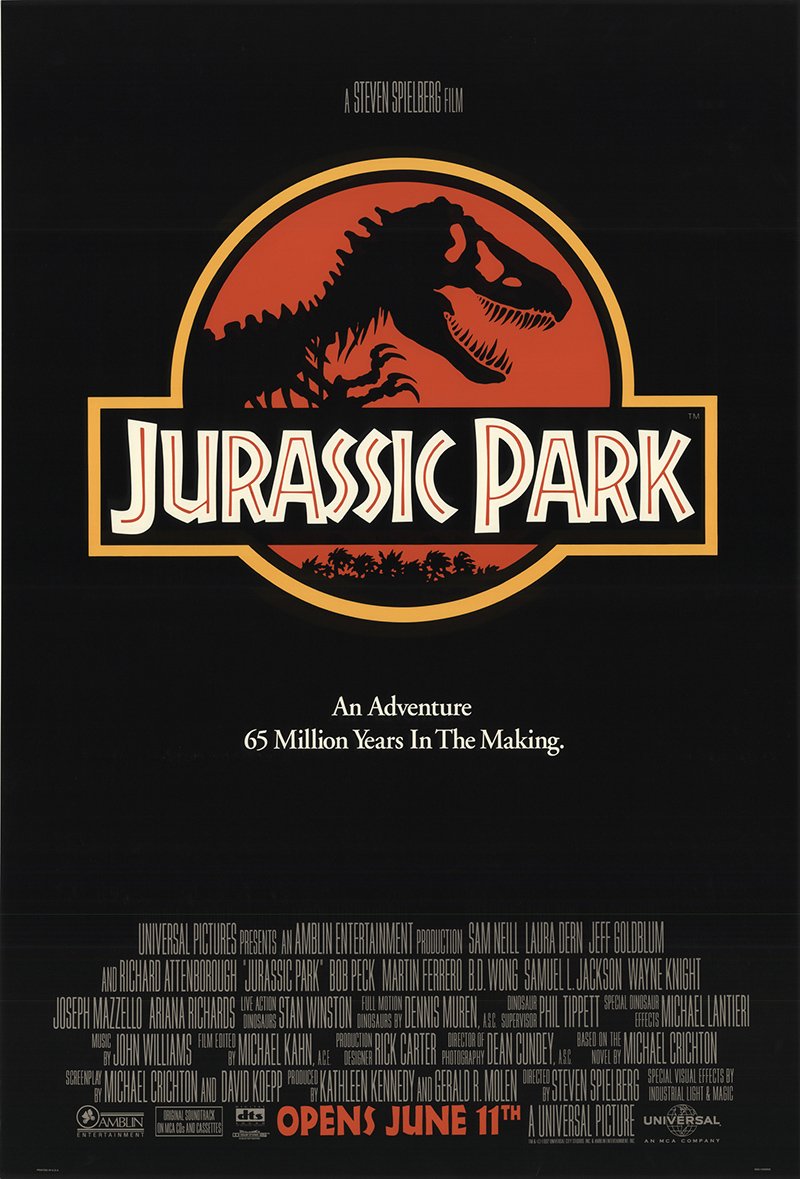
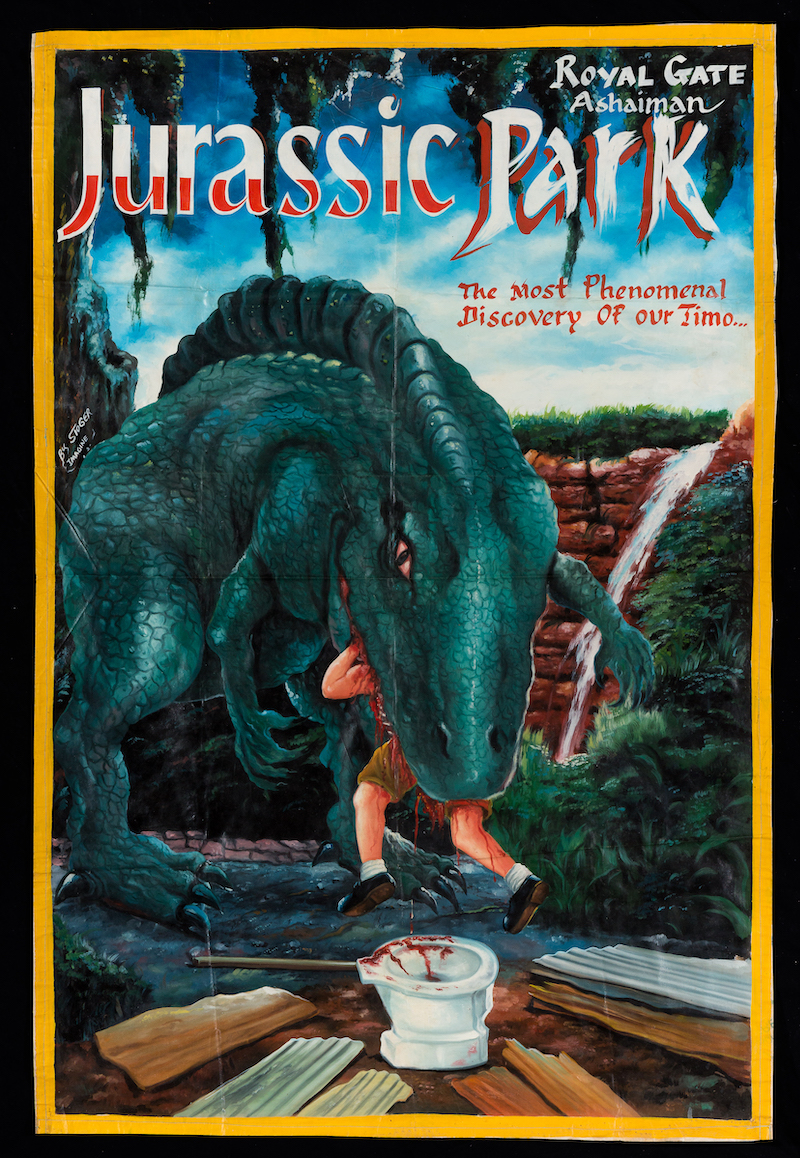
How does the offi­cial poster for Juras­sic Park, above, com­pare to the hand-paint­ed, pre­sum­ably unau­tho­rized image used to mar­ket it to audi­ences in Ghana?

(End­less grat­i­tude to illus­tra­tor and mon­ster movie fan Aeron Alfrey for bring­ing this and oth­er Ghan­ian spins on Amer­i­can film releas­es to our atten­tion.)

Some posters have remark­able stay­ing pow­er, reap­pear­ing in a num­ber of guis­es. Wit­ness Rosie the Riv­et­er and James Mont­gomery Flagg’s Uncle Sam-themed WWI recruit­ment poster, to say noth­ing of the Barack Oba­ma “Hope” poster by Shep­ard Fairey, the poster that launched a thou­sand par­o­dies, most­ly dig­i­tal, but even so.

To learn more about vis­it­ing Poster House, its inau­gur­al Alphonse Mucha exhib­it and upcom­ing events such as Drink and Draw, click here.

via Hyper­al­ler­gic

Relat­ed Con­tent:

The Film Posters of the Russ­ian Avant-Garde

10,000 Clas­sic Movie Posters Get­ting Dig­i­tized & Put Online by the Har­ry Ran­som Cen­ter at UT-Austin: Free to Browse & Down­load

Chill­ing and Sur­re­al Pro­pa­gan­da Posters from the NSA Are Now Declas­si­fied and Put Online

40,000 Film Posters in a Won­der­ful­ly Eclec­tic Archive: Ital­ian Tarkovsky Posters, Japan­ese Orson Welles, Czech Woody Allen & Much More

The Library of Con­gress Makes Thou­sands of Fab­u­lous Pho­tos, Posters & Images Free to Use & Reuse

Vin­tage 1930s Japan­ese Posters Artis­ti­cal­ly Mar­ket the Won­ders of Trav­el

100 Great­est Posters of Film Noir

Ayun Hal­l­i­day is an author, illus­tra­tor, the­ater mak­er and Chief Pri­ma­tol­o­gist of the East Vil­lage Inkyzine.  Fol­low her @AyunHalliday.


Watch a Star-Studded Cast Read The Mueller Report: John Lithgow, Kevin Kline, Sigourney Weaver, Annette Bening & More

Laugh­ter is good med­i­cine, but I’ve found lit­tle gen­uine humor in satire of the 2016 elec­tion and sub­se­quent events. Polit­i­cal real­i­ty defies par­o­dy. So, I guess I wasn’t par­tic­u­lar­ly amused by the idea of a com­ic stag­ing of the Mueller Report. But aside from whether or not the report has com­ic poten­tial, the exer­cise rais­es a more seri­ous ques­tion: Should ordi­nary cit­i­zens read the report?

Giv­en the snowjob sum­ma­ry offered by the Attor­ney General—and cer­tain press out­fits who repeat­ed claims that it exon­er­at­ed the president—probably. Espe­cial­ly (good luck) if they can score an unredact­ed copy. Yet, this rais­es yet anoth­er ques­tion: Does any­one actu­al­ly want to read it? The answer appears to be a resound­ing yes. Even though it’s free, the [redact­ed] report is a best­seller.

And yet, “the pub­lished ver­sion is as dry as a [redact­ed] saltine,” writes James Poniewozik at The New York Times. “Robert Mueller him­self has the sto­ic G‑man bear­ing of some­one who would laugh by writ­ing ‘ha ha’ on a memo pad.” (Now that’s a fun­ny image.) One won­ders how many peo­ple duti­ful­ly down­load­ing it have stayed up late by the light of their tablets com­pelled to read it all.

But of course, one does not approach any gov­ern­ment doc­u­ment with the hopes of being enter­tained, though unin­ten­tion­al hilar­i­ty can leap from the page at any time. How should we approach The Inves­ti­ga­tion: A Search for the Truth in 10 Acts? Script­ed by Pulitzer Prize-win­ning  play­wright Robert Schenkkan from the Mueller Report’s tran­scripts, the pro­duc­tion is “part old-time pub­lic recita­tion,” writes Ponei­wozik, and “part Hol­ly­wood table read.”

The stag­ing above at New York’s River­side Church was host­ed by Law Works and per­formed live by a cast includ­ing Annette Ben­ing, Kevin Kline, John Lith­gow (as “Indi­vid­ual 1” him­self), Michael Shan­non, Justin Long, Jason Alexan­der, Wil­son Cruz, Joel Gray, Kyra Sedg­wick, Alfre Woodard, Zachary Quin­to, Mark Ruf­fa­lo, Bob Bal­a­ban, Alyssa Milano, Sigour­ney Weaver, Julia Louis-Drey­fus, Mark Hamill, and more. Bill Moy­ers serves as emcee.

Can this dark­ly com­ic pro­duc­tion deliv­er some com­ic balm for hav­ing lived through the sor­did real­i­ty of the events in ques­tion? It has its moments. Can it offer us some­thing resem­bling truth? You be the judge. Or you be the pro­duc­er, direc­tor, actor, etcetera. If you find value—civic, enter­tain­ment, or otherwise—in the exer­cise, Schenkkan encour­ages you to put on your own ver­sion of The Inves­ti­ga­tion. “Your pro­duc­tion can be as mod­est or extrav­a­gant as you like,” he writes at Law Works, fol­lowed by a list of fur­ther instruc­tions for a pos­si­ble stag­ing.

If, like maybe mil­lions of oth­er peo­ple, you’ve got an unread copy of the Mueller Report on your night­stand, maybe watching—or per­form­ing—The Inves­ti­ga­tion is the best way to get your­self to final­ly read it. Or the most grim­ly humor­ous, moron­ic, pathet­ic, and sur­re­al parts of it, any­way.

Relat­ed Con­tent:

The Mueller Report Released as a Free Well-For­mat­ted eBook (by The Dig­i­tal Pub­lic Library of Amer­i­ca)

Sat­ur­day Night Live: Putin Mocks Trump’s Poor­ly Attend­ed Inau­gu­ra­tion 

The Mueller Report Is #1, #2 and #3 on the Ama­zon Best­seller List: You Can Get It Free Online

Josh Jones is a writer and musi­cian based in Durham, NC. Fol­low him at @jdmagness

Queen Guitarist Brian May Is Also an Astrophysicist: Read His PhD Thesis Online

Pho­to by ESO/G. Huede­pohl, via Wiki­me­dia Com­mons

Queen could­n’t pos­si­bly have been Queen with­out Fred­die Mer­cury, nor could it have been Queen with­out Bri­an May. Thanks not least to the recent biopic, Bohemi­an Rhap­sody, the band’s already larg­er-than-life lead singer has become even larg­er still. But its gui­tarist, despite the film’s sur­face treat­ment of his char­ac­ter, is in his own way an equal­ly implau­si­ble fig­ure. Not only did he show musi­cal promise ear­ly, form­ing his first group while still at school, he also got his A Lev­els in physics, math­e­mat­ics, and applied math­e­mat­ics, going on to earn a Bach­e­lor of Sci­ence in Physics with hon­ors at Impe­r­i­al Col­lege Lon­don.

Nat­u­ral­ly, May then went for his PhD, con­tin­u­ing at Impe­r­i­al Col­lege where he stud­ied the veloc­i­ty of, and light reflect­ed by, inter­plan­e­tary dust in the Solar Sys­tem. He began the pro­gram in 1970, but “in 1974, when Queen was but a princess in its infan­cy, May chose to aban­don his doc­tor­ate stud­ies to focus on the band in their quest to con­quer the world.” So wrote The Tele­graph’s Felix Lowe in 2007, the year the by-then 60-year-old (and long world-famous) rock­er final­ly hand­ed in his the­sis. “The 48,000-word tome, Radi­al Veloc­i­ties in the Zodi­a­cal Dust Cloud, which sounds sus­pi­cious­ly like a Spinal Tap LP, was stored in the loft of his home in Sur­rey.” You can read it online here.

Accord­ing to its abstract, May’s the­sis “doc­u­ments the build­ing of a pres­sure-scanned Fab­ry-Per­ot Spec­trom­e­ter, equipped with a pho­to­mul­ti­pli­er and pulse-count­ing elec­tron­ics, and its deploy­ment at the Obser­va­to­rio del Tei­de at Iza­ña in Tener­ife, at an alti­tude of 7,700 feet (2567 m), for the pur­pose of record­ing high-res­o­lu­tion spec­tra of the Zodi­a­cal Light.” Space.com describes the Zodia­cial Light as “a misty dif­fuse cone of light that appears in the west­ern sky after sun­set and in the east­ern sky before sun­rise,” one that has long tricked casu­al observers into “see­ing it as the first sign of morn­ing twi­light.” Astronomers now rec­og­nize it as “reflect­ed sun­light shin­ing on scat­tered space debris clus­tered most dense­ly near the sun.”

In his abstract, May also notes the unusu­al­ly long peri­od of study as 1970–2007, made pos­si­ble in part by the fact that lit­tle oth­er research had been done in this par­tic­u­lar sub­ject area dur­ing Queen’s reign on the charts and there­after. Still, he had catch­ing up to do, includ­ing obser­va­tion­al work in Tener­ife (as much of a hard­ship post­ing as that isn’t). Since being award­ed his doc­tor­ate, May’s sci­en­tif­ic activ­i­ties have con­tin­ued, as have his musi­cal ones and oth­er pur­suits besides, such as ani­mal-rights activism and stere­og­ra­phy. (Some­times these inter­sect: the 2017 pho­to­book Queen in 3‑D, for exam­ple, uses a VR view­ing device of May’s own design.) The next time you meet a young­ster dither­ing over whether to go into astro­physics or found one of the most suc­cess­ful rock bands of all time, point them to May’s exam­ple and let them know doing both isn’t with­out prece­dent.

Relat­ed Con­tent:

Gui­tarist Bri­an May Explains the Mak­ing of Queen’s Clas­sic Song, ‘Bohemi­an Rhap­sody’

Bri­an May’s Home­made Gui­tar, Made From Old Tables, Bike and Motor­cy­cle Parts & More

Stephen Hawking’s Ph.D. The­sis, “Prop­er­ties of Expand­ing Uni­vers­es,” Now Free to Read/Download Online

Watch 94 Free Lec­tures From the Great Cours­es: Dystopi­an Fic­tion, Astro­physics, Gui­tar Play­ing & Much More

Based in Seoul, Col­in Mar­shall writes and broad­casts on cities, lan­guage, and cul­ture. His projects include the book The State­less City: a Walk through 21st-Cen­tu­ry Los Ange­les and the video series The City in Cin­e­ma. Fol­low him on Twit­ter at @colinmarshall, on Face­book, or on Insta­gram.

« Go Back
Quantcast