An Artist Crochets a Life-Size, Anatomically-Correct Skeleton, Complete with Organs

How to make a life-sized fac­sim­i­le of a human skele­ton:

  1. Down­load files pub­lished under a Cre­ative Com­mons license, and arrange to have them 3‑D print­ed.

or

  1. Do as artist Shanell Papp did, above, and cro­chet one.

The lat­ter will take con­sid­er­ably more time and atten­tion on your part. Papp gave up all extracur­ric­u­lar activ­i­ties for four months to hook the woolen skele­ton around her work and school sched­ule. Equip­ping it with inter­nal organs ate up anoth­er four.

To ensure accu­ra­cy, Papp armed her­self with anatom­i­cal text­books and an actu­al human skele­ton on loan from the Uni­ver­si­ty of Leth­bridge, where she was an under­grad. The brain has gray and white mat­ter, there’s mar­row in the bones, the stom­ach con­tains half-digest­ed wool food, and the intestines can be unspooled to a real­is­tic length.

The gru­el­ing 2006 project did not exhaust her fas­ci­na­tion for the intri­ca­cies of human anato­my. The Uni­ver­si­ty of Saskatchewan grant­ed her open access to draw in the gross anato­my lab while she pur­sued her MFA.


As she told MICE mag­a­zine:

I want­ed this work to illus­trate all of the organs and bones every­one shares and to not high­light dif­fer­ences. Much of anatom­i­cal his­to­ry is about defin­ing dif­fer­ence, by com­par­a­tive analy­sis. This can set up strange tax­onomies and hier­ar­chies. I was­n’t inter­est­ed in par­tic­i­pat­ing in that; I want­ed to expose the frag­ile, com­mon, and unseen things in all of us.  

The fin­ished piece, which is dis­played supine on a gur­ney she nabbed for free dur­ing a mor­tu­ary ren­o­va­tion, incor­po­rates many of Papp’s oth­er abid­ing inter­ests: hor­ror, med­ical his­to­ry, Franken­stein, crime inves­ti­ga­tion, and mor­tu­ary prac­tices.

Papp, who taught her­self how to cro­chet from books as a child, using what­ev­er yarn found its way to her grandma’s junk shop, appre­ci­ates how her cho­sen medi­um adds a lay­er of homey soft­ness and famil­iar­i­ty to the macabre.

It’s also not lost on her that fiber arts, often dis­missed as too “crafty” by the estab­lish­ment, were an impor­tant com­po­nent of 70s-era fem­i­nist art, though in her view, her work is more of a state­ment on the his­to­ry of tex­tile man­u­fac­tur­ing, which is to say the his­to­ry of labor and class strug­gle.

See more of Shanell Papp’s work here.

All images in this post by Shanell Papp.

via design­boom/Mymod­ern­met

Relat­ed Con­tent:

Behold an Anatom­i­cal­ly Cor­rect Repli­ca of the Human Brain, Knit­ted by a Psy­chi­a­trist

The BBC Cre­ates Step-by-Step Instruc­tions for Knit­ting the Icon­ic Dr. Who Scarf: A Doc­u­ment from the Ear­ly 1980s

The Beau­ti­ful Math of Coral & Cro­chet

Ayun Hal­l­i­day is an author, illus­tra­tor, the­ater mak­er and Chief Pri­ma­tol­o­gist of the East Vil­lage Inkyzine.  Join her in NYC on Mon­day, Sep­tem­ber 9 for anoth­er sea­son of her book-based vari­ety show, Necro­mancers of the Pub­lic Domain. Fol­low her @AyunHalliday.

Why a Cat Always Lands on Its Feet: How a French Scientist Used Photography to Solve the Problem in 1894

In the era of the CATS trail­er and #cat­sofin­sta­gram, it’s easy to for­get that sci­en­tif­ic research is what orig­i­nal­ly con­vinced our feline friends to allow their images to be cap­tured and dis­sem­i­nat­ed.

An anony­mous white French pussy took one for the team in 1894, when scientist/inventor Éti­enne-Jules Marey dropped it from an unspec­i­fied height in the Bois de Boulogne, film­ing its descent at 12 frames per sec­ond.

Ulti­mate­ly, this brave and like­ly unsus­pect­ing spec­i­men fur­thered the cause of space explo­ration, though it took over 50 years for NASA-backed researchers T.R. Kane and M.P. Sch­er to pub­lish their find­ings in a paper titled “A Dynam­i­cal Expla­na­tion of the Falling Cat Phe­nom­e­non.”

As the Vox Dark­room episode above makes clear, Marey’s obses­sion was lofti­er than a fond­ness for Stu­pid Pet Tricks and the mis­chie­vous impulse to drop things off of tall build­ings that moti­vat­ed TV host David Let­ter­man once upon a time.

Marey’s pre­oc­cu­pa­tion with the mechan­ics of organ­ic loco­mo­tion extend­ed to hors­es and humans. It prompt­ed him to invent pho­to­graph­ic tech­niques that pre­fig­ured cin­e­matog­ra­phy, and, more dark­ly, to sub­ject oth­er, less-cat­like crea­tures to dead­falls from sim­i­lar heights.

(Chil­dren and ani­mal rights activists, con­sid­er this your trig­ger warn­ing.)

The white cat sur­vived its ordeal by arch­ing its back mid-air, effec­tive­ly split­ting its body in two to har­ness the iner­tia of its body weight, much like a fig­ure skater con­trol­ling the veloc­i­ty of her spin by the posi­tion of her arms.

Why waste a sin­gle one of your nine lives? Physics is your friend, espe­cial­ly when falling from a great height.

See one of Marey’s pio­neer­ing falling cat chronopho­tographs below.

Relat­ed Con­tent:

Thomas Edison’s Box­ing Cats (1894), or Where the LOL­Cats All Began

An Ani­mat­ed His­to­ry of Cats: How Over 10,000 Years the Cat Went from Wild Preda­tor to Sofa Side­kick

Explo­sive Cats Imag­ined in a Strange, 16th Cen­tu­ry Mil­i­tary Man­u­al

Ayun Hal­l­i­day is an author, illus­tra­tor, the­ater mak­er and Chief Pri­ma­tol­o­gist of the East Vil­lage Inkyzine.  Join her in NYC on Mon­day, Sep­tem­ber 9 for anoth­er sea­son of her book-based vari­ety show, Necro­mancers of the Pub­lic Domain. Fol­low her @AyunHalliday.

The Library of Congress Digitizes Over 16,000 Pages of Letters & Speeches from the Women’s Suffrage Movement, and You Can Help Transcribe Them

“Democ­ra­cy may not exist,” Astra Tay­lor declares in the title of her new book, “but we’ll miss it when it’s gone.” This inher­ent para­dox, she argues, is not fatal, but a ten­sion with which each era’s demo­c­ra­t­ic move­ments must wres­tle, in messy strug­gles against inevitable oppo­si­tion. “Per­fect democ­ra­cy… may not in fact exist and nev­er will, but that doesn’t mean we can’t make progress toward it, or that what there is of it can’t dis­ap­pear.”

Tay­lor is upfront about “democracy’s dark his­to­ry, from slav­ery and colo­nial­ism to facil­i­tat­ing the emer­gence of fas­cism.” But she is equal­ly cel­e­bra­to­ry of its successes—moments when those who were denied rights mar­shaled every means at their dis­pos­al, from lob­by­ing cam­paigns to con­fronta­tion­al direct action, to win the vote and bet­ter the lives of mil­lions. For all its imper­fec­tions, the women’s suf­frage move­ment of the 19th and ear­ly 20th cen­tu­ry did just that.

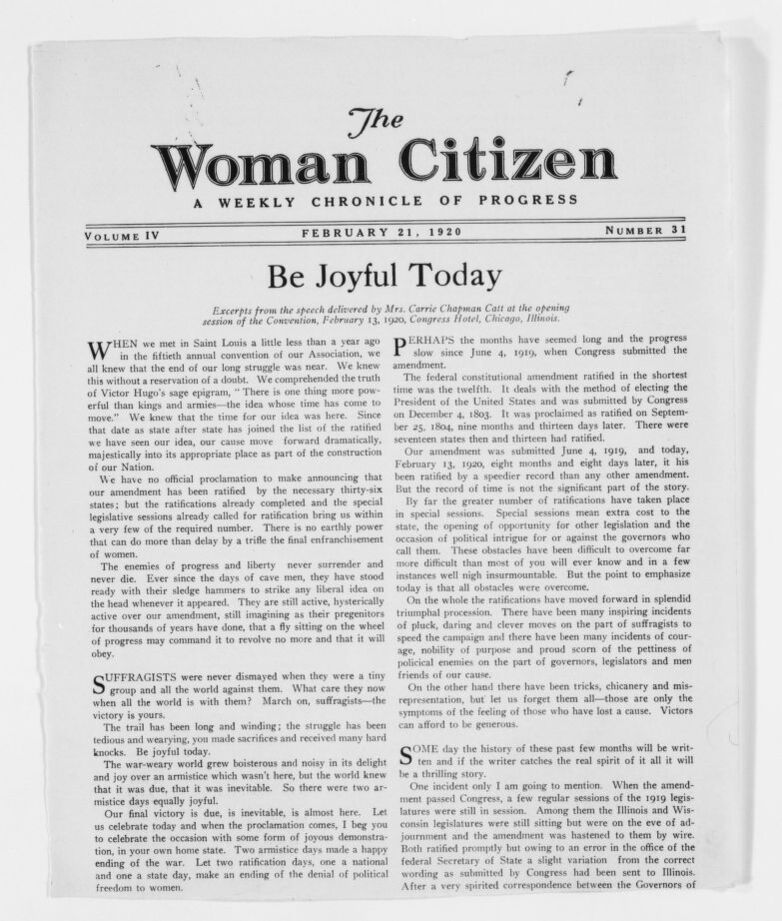
It did so—even before elec­tron­ic mass com­mu­ni­ca­tion systems—by build­ing inter­na­tion­al activist net­works and form­ing nation­al asso­ci­a­tions that took high­ly-vis­i­ble action for decades until the 19th Amend­ment passed in 1920. We can learn how this all came about from the sources them­selves, through the “let­ters, speech­es, news­pa­per arti­cles, per­son­al diaries, and oth­er mate­ri­als from famed suf­frag­ists like Susan B. Antho­ny and Eliz­a­beth Cady Stan­ton.”

So reports Men­tal Floss, describ­ing the Library of Con­gress’ dig­i­tal col­lec­tion of suf­frag­ist papers, which includes dozens of famous and less famous activist voic­es. In one exam­ple of both inter­na­tion­al coop­er­a­tion and inter­na­tion­al ten­sion, Car­rie Chap­man Catt, Anthony’s suc­ces­sor (see a pub­lished excerpt of one of her speech­es below), describes her expe­ri­ence at the Con­gress of the Inter­na­tion­al Woman Suf­frage Alliance in Rome. “A more unpromis­ing place for a Con­gress I nev­er saw,” she wrote, dis­mayed. Maybe despite her­self she reveals that the dif­fer­ences might have been cul­tur­al: “The Ital­ian women could not com­pre­hend our dis­ap­proval.”

The frac­tious, often dis­ap­point­ing, rela­tion­ships between the larg­er inter­na­tion­al women’s suf­frage move­ment, the African Amer­i­can women’s suf­frage move­ment, and most­ly male Civ­il Rights lead­ers in the U.S. are rep­re­sent­ed by the diaries. let­ters, note­books, and speech­es of Mary Church Ter­rell, “a founder of the Nation­al Asso­ci­a­tion of Col­ored Women. These doc­u­ments shed light on minori­ties’ labo­ri­ous suf­frage strug­gles and her own deal­ings with Civ­il Rights fig­ures like W.E.B. Du Bois.” (Ter­rell became an activist in 1892 and lived to fight against Jim Crow seg­re­ga­tion in the ear­ly 1950s.)

The col­lec­tion includes “some 16,000 his­toric papers relat­ed to the women’s rights move­ment alone.” All of them have been dig­i­tal­ly scanned, and if you’re eager to dig into this for­mi­da­ble archive, you’re in luck. The Library of Con­gress is ask­ing for help tran­scrib­ing so that every­one can read these pri­ma­ry sources of demo­c­ra­t­ic his­to­ry. So far, reports Smith­son­ian, over 4200 doc­u­ments have been tran­scribed, as part of a larg­er, crowd­sourced project called By the Peo­ple, which has pre­vi­ous­ly tran­scribed papers from Abra­ham Lin­coln, Clara Bar­ton, Walt Whit­man, and oth­ers.

Rather than focus­ing on an indi­vid­ual, this project is inclu­sive of what is arguably the main engine of democ­ra­cy: large-scale social movements—paradoxically the most demo­c­ra­t­ic means of claim­ing indi­vid­ual rights. Enter the impres­sive dig­i­tal col­lec­tion “Suf­frage: Women Fight for the Vote” here, and, if you’re moved by civic duty or schol­ar­ly curios­i­ty, sign up to tran­scribe.

via Men­tal Floss

Relat­ed Con­tent:  

The Women’s Suf­frage March of 1913: The Parade That Over­shad­owed Anoth­er Pres­i­den­tial Inau­gu­ra­tion a Cen­tu­ry Ago

Odd Vin­tage Post­cards Doc­u­ment the Pro­pa­gan­da Against Women’s Rights 100 Years Ago

The Library of Con­gress Makes Thou­sands of Fab­u­lous Pho­tos, Posters & Images Free to Use & Reuse

Josh Jones is a writer and musi­cian based in Durham, NC. Fol­low him at @jdmagness.

The Unexpected Ways Eastern Philosophy Can Make Us Wiser, More Compassionate & Better Able to Appreciate Our Lives

I feel com­pelled to start this post with a dis­claimer: do not take the eight-and-a-half-minute video above, “Six Ideas from East­ern Phi­los­o­phy” from Alain de Botton’s School of Life series, as an author­i­ta­tive state­ment on East­ern Phi­los­o­phy.

Not that you would, or that de Bot­ton makes such a claim, but in an age of uncrit­i­cal over­con­sump­tion, infi­nite scrolling, and indi­vid­u­al­ly-wrapped explain­ers, it seems worth the reminder. No tradition—and cer­tain­ly not one as incal­cu­la­bly rich, deep, and ancient as the schools of thought summed up as “East­ern Philosophy”—can be para­phrased in an ani­mat­ed list.

Think of “Six Ideas from East­ern Phi­los­o­phy” as a teas­er. If you’ve resigned your­self to the fact that suf­fer­ing is ever-present and universal—the first idea on de Botton’s list and the Buddha’s first Noble Truth—you might love… or make a good faith effort to appre­ci­ate… The Mid­dle Length Dis­cours­es, the Shobo­gen­zo, the poet­ry and songs of Han Shan and Milarepa, or the thou­sands of trans­la­tions, com­men­taries, adap­ta­tions, and etcetera about them.

But the video isn’t about famous texts. The logo­cen­tric char­ac­ter­i­za­tion of phi­los­o­phy as only writ­ing per­sists, despite its seri­ous lim­i­ta­tions. In many East­ern tra­di­tions, writ­ing and study are only one part of com­plex reli­gious prac­tices. The first two ideas on de Botton’s list come from ear­ly Indi­an Bud­dhism; the third from Chi­nese Chan Bud­dhism, the fourth and fifth are Daoist con­cepts; and the sixth, kintsu­gi, comes from Japan­ese Zen.

De Botton’s title is mis­lead­ing. As he goes on to show, in brief, but with vivid exam­ples and com­par­isons, these are not “ideas” in the broad­ly Pla­ton­ic sense of pure abstrac­tions but for­mal­ized ways of being with oth­ers and being alone, of being with objects and nat­ur­al for­ma­tions that embody eth­i­cal ideals of bal­ance, equa­nim­i­ty, con­tent­ment, kind­ness, care, and deep appre­ci­a­tion for art and nature, with all their imper­fec­tions and dis­ap­point­ments.

Can we make much sense of the ado­ra­tion of the bod­hisatt­va Guanyin (whom de Bot­ton com­pares to the Vir­gin Mary) if we nev­er vis­it one of her tem­ples or call for her com­pas­sion­ate aid? Can we study the sub­tleties of bam­boo with­out bam­boo? Can we grasp the Four Noble Truths if we can’t sit still long enough for seri­ous self-reflec­tion? Some­times the prac­tices, land­scapes, and icono­gra­phies of East­ern phi­los­o­phy do not seem sep­a­ra­ble from ideas about them.

If there’s a bow to tie on de Botton’s sum­ma­ry, maybe it’s this: from these Bud­dhist and Daoist per­spec­tives, the end­less bifur­ca­tions of West­ern thought are illu­so­ry. Pain, imper­fec­tion, and uncer­tain­ly are inevitable and not to be feared but com­pas­sion­ate­ly accept­ed. And phi­los­o­phy is some­thing that hap­pens in the body and mind togeth­er, an idea cer­tain­ly not alien to the walk­ing thinkers of the West.

Relat­ed Con­tent:  

East­ern Phi­los­o­phy Explained with Three Ani­mat­ed Videos by Alain de Botton’s School of Life

Alan Watts Intro­duces Amer­i­ca to Med­i­ta­tion & East­ern Phi­los­o­phy: Watch the 1960 TV Show, East­ern Wis­dom and Mod­ern Life

What Is a Zen Koan? An Ani­mat­ed Intro­duc­tion to East­ern Philo­soph­i­cal Thought Exper­i­ments

Josh Jones is a writer and musi­cian based in Durham, NC. Fol­low him

Metallica’s “Enter Sandman” Sung in the Style of David Bowie

If you like what Antho­ny Vin­cent has to offer here, there’s more where that came from. Don’t miss his oth­er viral video, “Enter Sand­man in 20 Styles,” which fea­tures Metal­li­ca’s 1998 hit sung in the style of Ste­vie Won­der, The Police, The Doors and much more.

If you would like to sign up for Open Culture’s free email newslet­ter, please find it here. It’s a great way to see our new posts, all bun­dled in one email, each day.

If you would like to sup­port the mis­sion of Open Cul­ture, con­sid­er mak­ing a dona­tion to our site. It’s hard to rely 100% on ads, and your con­tri­bu­tions will help us con­tin­ue pro­vid­ing the best free cul­tur­al and edu­ca­tion­al mate­ri­als to learn­ers every­where. You can con­tribute through Pay­Pal, Patre­on, and Ven­mo (@openculture). Thanks!

Pretty Much Pop: A Culture Podcast #4 — HBO’s “Chernobyl”: Why Do We Enjoy Watching Suffering?

On the HBO mini-series Cher­nobyl. Mark Lin­sen­may­er, Eri­ca Spyres, and Bri­an Hirt first get into the var­i­ous degrees of loose­ness in something’s being “based on a true sto­ry.” Does it mat­ter if it’s been changed to be more dra­mat­ic? We then con­sid­er the show as enter­tain­ment: Why do peo­ple enjoy wit­ness­ing suf­fer­ing? Why might a dra­ma work (or not) for you?

We also touch on Game of ThronesThe KillingGod Is DeadIt’s Always Sun­ny in Philadel­phiaBig Lit­tle LiesSchindler’s List, Vice, Ip Man, and more.

Some of the arti­cles we looked at to pre­pare:

Our Lucy Law­less inter­view will be out next week! Pret­ty Much Pop: A Cul­ture Pod­cast is a mem­ber of the The Par­tial­ly Exam­ined Life Pod­cast Net­work.

Get more at prettymuchpop.com. Sub­scribe on Apple Pod­casts, Stitch­er, or Google Play. Pret­ty Much Pop: A Cul­ture Pod­cast is pro­duced by the Par­tial­ly Exam­ined Life Pod­cast Net­work. This episode includes bonus con­tent that you can only hear by sup­port­ing the pod­cast at patreon.com/prettymuchpop.

The Authentic Pachelbel’s Canon: Watch a Performance Based on the Original Manuscript & Played with Original 17th-Century Instruments

Even if we don’t know its name, we’ve all heard Johann Pachel­bel’s Canon in D, bet­ter known sim­ply as Pachel­bel’s Canon — and prob­a­bly more than once at a wed­ding. But though Pachel­bel com­posed the piece in the late 17th or ear­ly 18th cen­tu­ry, it has­n’t enjoyed a con­sis­tent pres­ence in the world of music: the ear­li­est man­u­scripts we know date from the 19th cen­tu­ry, and its lat­est peri­od of pop­u­lar­i­ty began just over fifty years ago, with an arrange­ment and record­ing by the Jean-François Pail­lard cham­ber orches­tra.

And so, no mat­ter how many times we’ve heard Pachel­bel’s Canon, and no mat­ter how many ver­sions we’ve heard, we might well ask our­selves: have we real­ly heard Pachel­bel’s Canon? In the video above, San Fran­cis­co ear­ly-music ensem­ble Voic­es of Music — here Kather­ine Kyme, Car­la Moore, and Cyn­thia Freivo­gel on vio­lin, Tanya Tomkins on cel­lo, Han­neke van Proos­dij on baroque organ, and David Tayler on the the­o­r­bo — per­form what many enthu­si­asts would con­sid­er a defin­i­tive Pachel­bel’s Canon. Not only do they play that ear­li­est of its known man­u­scripts, they play it using instru­ments from the time of Pachel­bel, and with the kind of play­ing tech­niques pop­u­lar back then.

“The string instru­ments are not only baroque, but they are in baroque set­up,” notes the video’s descrip­tion. “This means that the strings, fin­ger­board, bridge and oth­er parts of the vio­lin appear just as they did in Pachel­bel’s time.” The video shows that “no met­al hard­ware such as chin­rests, clamps or fine tuners are used on the vio­lins, allow­ing the vio­lins to vibrate freely.” As for the organ, it’s “made entire­ly of wood, based on Ger­man baroque instru­ments, and the pipes are voiced to pro­vide a smooth accom­pa­ni­ment to the strings, instead of a more solois­tic sound.”

Just as van Proos­di­j’s tech­nique might look slight­ly unfa­mil­iar to a mod­ern organ­ist, so might Kyme, Moore and Freivo­gel’s to a mod­ern vio­lin­ist: “All three are play­ing baroque vio­lins with baroque bows, yet each per­son has her own dis­tinct sound and bow­ing style — each bow has a dif­fer­ent shape and bal­ance.” Their play­ing dif­fers in the way, the notes add, that musi­cians’ play­ing appears to dif­fer in paint­ings from the 17th cen­tu­ry, a time when “indi­vid­u­al­i­ty of sound and tech­nique was high­ly val­ued,” and none of it was over­seen by that most 19th-cen­tu­ry of musi­cal fig­ures, the con­duc­tor. How many his­tor­i­cal­ly-aware brides and grooms — with the means, of course, to hire not­ed ear­ly-music ensem­bles — will it take to bring those val­ues back into the main­stream?

Relat­ed Con­tent:

Hear the Sounds of the Actu­al Instru­ments for Which Mozart, Beethoven, Haydn, and Han­del Orig­i­nal­ly Com­posed Their Music

See Mozart Played on Mozart’s Own Fortepi­ano, the Instru­ment That Most Authen­ti­cal­ly Cap­tures the Sound of His Music

How the Clavi­chord & Harp­si­chord Became the Mod­ern Piano: The Evo­lu­tion of Key­board Instru­ments, Explained

Mashup Weaves Togeth­er 57 Famous Clas­si­cal Pieces by 33 Com­posers: From Bach to Wag­n­er

Pachelbel’s Music Box Canon

Pachelbel’s Chick­en: Your Favorite Clas­si­cal Pieces Played Mas­ter­ful­ly on a Rub­ber Chick­en

Based in Seoul, Col­in Mar­shall writes and broad­casts on cities, lan­guage, and cul­ture. His projects include the book The State­less City: a Walk through 21st-Cen­tu­ry Los Ange­les and the video series The City in Cin­e­ma. Fol­low him on Twit­ter at @colinmarshall, on Face­book, or on Insta­gram.

Mont Saint-Michel Beautifully Viewed from a Drone

This short film was an award win­ner at the 2015 Drone Film fes­ti­val held in Cabourg, France. Enjoy the ride.

If you would like to sign up for Open Culture’s free email newslet­ter, please find it here. It’s a great way to see our new posts, all bun­dled in one email, each day.

If you would like to sup­port the mis­sion of Open Cul­ture, con­sid­er mak­ing a dona­tion to our site. It’s hard to rely 100% on ads, and your con­tri­bu­tions will help us con­tin­ue pro­vid­ing the best free cul­tur­al and edu­ca­tion­al mate­ri­als to learn­ers every­where. You can con­tribute through Pay­Pal, Patre­on, and Ven­mo (@openculture). Thanks!

« Go BackMore in this category... »
Quantcast