The Aesthetic of Anime: A New Video Essay Explores a Rich Tradition of Japanese Animation

Giant robots, super­pow­ered school­girls, berz­erk­er mar­tial artists: we all know the sort of fig­ures that rep­re­sent ani­me. Though clichĂ©d, the wide­spread nature of these per­cep­tions actu­al­ly shows how far Japan­ese ani­ma­tion has come over the past few decades. Not so long ago, the aver­age West­ern­er did­n’t know the mean­ing of the world ani­me, let alone its ori­gin. Today, thanks not least to the films of Hayao Miyaza­ki’s Stu­dio Ghi­b­li, the aver­age West­ern­er has like­ly already been exposed to one or two mas­ter­works of the form. This view­ing expe­ri­ence pro­vides a sense of why Japan­ese ani­ma­tion, far from sim­ply ani­ma­tion that hap­pens to be Japan­ese, mer­its a term of its own: any of us, no mat­ter how inex­pe­ri­enced, can sense “The Aes­thet­ic of Ani­me.”

Tak­ing that con­cept as the title of their lat­est video essay, Lewis and Luiza Liz Bond of The Cin­e­ma Car­tog­ra­phy show us a range of cin­e­mat­ic pos­si­bil­i­ties that ani­me has opened up since the 1980s. I recall, long ago, stay­ing up late to tune in to the Sci-Fi Chan­nel’s “Sat­ur­day Night Ani­me” block to catch such clas­sics from that decade as Venus Wars and Project A‑Ko.

While Japan­ese ani­ma­tion in all its forms has gone much more main­stream around the world since then, it has­n’t result­ed in a loss of artis­tic, nar­ra­tive, and the­mat­ic inven­tive­ness. On the con­trary, Bond argues: over the past quar­ter-cen­tu­ry, series like Neon Gen­e­sis Evan­ge­lionSer­i­al Exper­i­ments Lain, and Death Note have not only pushed the bound­aries of ani­me, but demon­strat­ed a pow­er to “re-sig­ni­fy sto­ry­telling con­ven­tions that go beyond the ani­me form itself.”

In the effort to reveal the true nature of “the mis­un­der­stood and often dis­re­gard­ed world of ani­me,” this video essay ref­er­ences and visu­al­ly quotes dozens of dif­fer­ent shows. (It stops short of the also-vast realm of fea­ture films, such as Ghost in the Shell or the work of Satoshi Kon.) Its range includes the “exis­ten­tial med­i­ta­tion on lone­li­ness” that is Cow­boy Bebop, sub­ject of anoth­er Bond exe­ge­sis pre­vi­ous­ly fea­tured here on Open Cul­ture, and “city pop-fueled Superdi­men­sion­al Fortress Macross,” which did so much back in the 80s to define not just giant-robot ani­me but ani­me itself. Trope-heavy, over-the-top, and “unapolo­get­i­cal­ly weird” though it may seem (but usu­al­ly not, as Bond implies, with­out self-aware­ness), ani­me con­tin­ues to real­ize visions not avail­able — nor even con­ceiv­able — to any oth­er art form.

Relat­ed Con­tent:

The Exis­ten­tial Phi­los­o­phy of Cow­boy Bebop, the Cult Japan­ese Ani­me Series, Explored in a Thought­ful Video Essay

The Ani­ma­tions That Changed Cin­e­ma: The Ground­break­ing Lega­cies of Prince Achmed, Aki­ra, The Iron Giant & More

The Phi­los­o­phy, Sto­ry­telling & Visu­al Cre­ativ­i­ty of Ghost in the Shell, the Acclaimed Ani­me Film, Explained in Video Essays

How Mas­ter Japan­ese Ani­ma­tor Satoshi Kon Pushed the Bound­aries of Mak­ing Ani­me: A Video Essay

The Phi­los­o­phy of Hayao Miyaza­ki: A Video Essay on How the Tra­di­tion­al Japan­ese Reli­gion Shin­to Suf­fus­es Miyazaki’s Films

The Ori­gins of Ani­me: Watch Free Online 64 Ani­ma­tions That Launched the Japan­ese Ani­me Tra­di­tion

Based in Seoul, Col­in Mar­shall writes and broad­casts on cities, lan­guage, and cul­ture. His projects include the Sub­stack newslet­ter Books on Cities, the book The State­less City: a Walk through 21st-Cen­tu­ry Los Ange­les and the video series The City in Cin­e­ma. Fol­low him on Twit­ter at @colinmarshall or on Face­book.

Three Leonard Cohen Animations

Leonard Cohen, High Priest Of Pathos…

     Lord Byron of Rock and Roll…

          Gen­tle­man Zen

                Mas­ter Of Misery…Morbidity… Erot­ic Despair…

                    Prince of Pessimism…Pain…

                         Trou­ba­dour For Trou­bled Souls…

The grav­el-voiced singer-song­writer accu­mu­lat­ed hun­dreds of nick­names over a career span­ning more than half a cen­tu­ry. He wasn’t thrilled by some of them, remark­ing to the BBC, “You get tired, over the years, hear­ing that you’re the cham­pi­on of gloom.”

Tak­en all togeth­er, how­ev­er, they make for a decent com­pos­ite por­trait of a pro­lif­ic artist whose sen­su­al­i­ty, mor­dant wit, and obses­sion with love, loss, and redemp­tion nev­er wavered.

He took some hia­tus­es, includ­ing a 5‑year stint as a monk in California’s Mount Baldy monastery, but nev­er retired.

His final stu­dio album, You Want It Dark­er, was released mere weeks before his death.

Jour­nal­ist Rob Sheffield artic­u­lat­ed the Cohen mys­tique in a Rolling Stone eulo­gy:

This man was both the crack in every­thing and the light that gets in. Nobody wrote such mag­nif­i­cent­ly bleak bal­lads for brood­ing alone in the dark, star­ing at a win­dow or wall – “Joan of Arc,” “Chelsea Hotel,” “Tow­er of Song,” “Famous Blue Rain­coat,” “Clos­ing Time.” He was music’s top Jew­ish Cana­di­an ladies’ man before Drake was born, run­ning for the mon­ey and the flesh. Like Bowie and Prince, he tapped into his own realm of spir­i­tu­al and sex­u­al gno­sis, and like them, he went out at the peak of his musi­cal pow­ers. No song­writer ever adapt­ed to old age with more cun­ning or gus­to. 

Cohen also excelled at inter­views, leav­ing behind a wealth of gen­er­ous, free­wheel­ing record­ings, at least three of which have become fod­der for ani­ma­tors.

The ani­ma­tion at the top of the page is drawn from Cohen’s 1966 inter­view with the Cana­di­an Broad­cast­ing Corporation’s Adri­enne Clark­son, short­ly after the release of his exper­i­men­tal nov­el, Beau­ti­ful Losers. (His debut album was still a year and a half away.)

Ear­li­er in the inter­view, Cohen men­tions the “hap­py rev­o­lu­tion” he encoun­tered in Toron­to after an extend­ed peri­od on the Greek island of Hydra:

I was walk­ing on Yorkville Street and it was jammed with beau­ti­ful, beau­ti­ful peo­ple last night. I thought maybe it could spread to the [oth­er] streets and maybe even … where’s the mon­ey dis­trict? Bay Street?… I thought maybe they could take that over soon, too.

How to tap into the source of all this hap­pi­ness?

The future Zen monk Cohen was pret­ty con­vinced it could be locat­ed by sit­ting qui­et­ly, though he doesn’t con­demn those using drugs or alco­hol as an assist, explain­ing that his fel­low Cana­di­an, abstract expres­sion­ist Harold Town, â€śgets beau­ti­ful under alco­hol. I get stu­pid and gen­er­al­ly throw up.”

8 years lat­er, WBAI’s Kath­leen Kendel came armed with a poem for Cohen to read on air, and also plumbed him as to the ori­gins of “Sis­ters of Mer­cy,” one of his best known songs, and the only one that did­n’t require him to “sweat over every word.” (Pos­si­bly the con­so­la­tion prize for his dashed hopes of erot­ic adven­ture with the song’s pro­tag­o­nists.)

(The ani­ma­tion here is by Patrick Smith for PBS’ Blank on Blank series.)

Ani­ma­tor Joe Don­ald­son riffs on an excerpt from Cohen’s final major inter­view, with The New York­er’s edi­tor-in-chief, David Rem­nick, above.

Rem­nick recalled that his sub­ject, who died a few days lat­er, was “in an ebul­lient mood for a man… who knew exact­ly where he was going, and he was head­ed there in a hur­ry. And at the same time, he was incred­i­bly gra­cious.”

The 82-year-old Cohen spoke enthu­si­as­ti­cal­ly if some­what pes­simisti­cal­ly about hav­ing a lot of new mate­r­i­al to get through, “to put (his) house in order,” but also admit­ted, “some­times I just need to lie down.”

Relat­ed Con­tent:

Hear Leonard Cohen’s Final Inter­view: Record­ed by David Rem­nick of The New York­er

Ladies and Gen­tle­men… Mr. Leonard Cohen: The Poet-Musi­cian Fea­tured in a 1965 Doc­u­men­tary

Leonard Cohen Plays a Spell­bind­ing Set at the 1970 Isle of Wight Fes­ti­val

Ayun Hal­l­i­day is an author, illus­tra­tor, the­ater mak­er and Chief Pri­ma­tol­o­gist of the East Vil­lage Inky zine. Fol­low her @AyunHalliday.

A Finnish Astrophotographer Spent 12 Years Creating a 1.7 Gigapixel Panoramic Photo of the Entire Milky Way

In the final, cli­mac­tic scene of Japan­ese nov­el­ist Yasunari Kawabata’s Snow Coun­try, the Milky Way engulfs the pro­tag­o­nist — an aes­thete who keeps him­self detached from the world, a uni­ver­sal per­spec­tive over­tak­ing an insignif­i­cant indi­vid­ual.

We now know the Milky Way itself to be a minus­cule part of the whole, just one of 100 to 200 bil­lion galax­ies. But until Edwin Hub­ble’s obser­va­tions in 1924, it was thought to con­tain all the stars in exis­tence.

The Milky Way-as-uni­verse is a pow­er­ful image, and cer­tain­ly more com­pre­hen­si­ble than the uni­verse as astronomers cur­rent­ly under­stand it. Its vast­ness can’t be com­pressed into a sym­bol­ic form like the via lactea, “Milky Way,” or as the Greeks called it, galak­tikos kĂ˝k­los, “milky cir­cle.” Andy Brig­gs sum­ma­rizes just a few of the ancient myths and leg­ends:

To the ancient Arme­ni­ans, it was straw strewn across the sky by the god Vahagn. In east­ern Asia, it was the Sil­very Riv­er of Heav­en. The Finns and Esto­ni­ans saw it as the Path­way of the Birds.… Both the Greeks and the Romans saw the star­ry band as a riv­er of milk. The Greek myth said it was milk from the breast of the god­dess Hera, divine wife of Zeus. The Romans saw the riv­er of light as milk from their god­dess Ops.

A barred spi­ral galaxy spin­ning around a “galac­tic bulge” with an emp­ty cen­ter, a “mon­strous black hole,” notes Space.com, “bil­lions of times as mas­sive as the sun”… the Milky Way remains an awe­some sym­bol for a uni­verse too vast for us to hold in our minds.

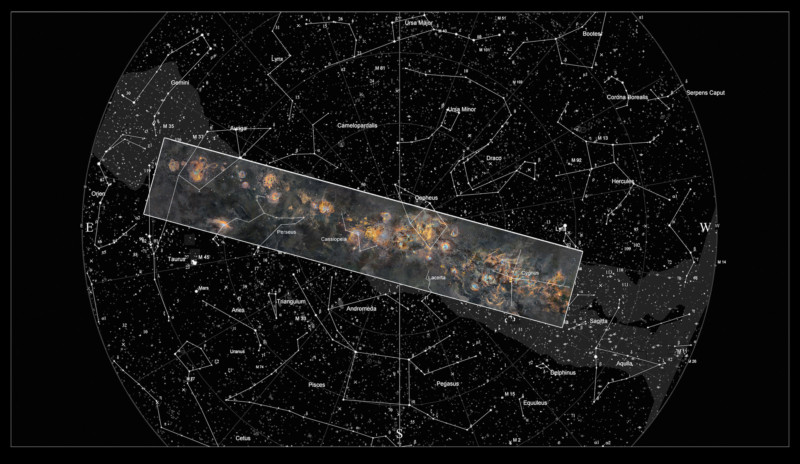
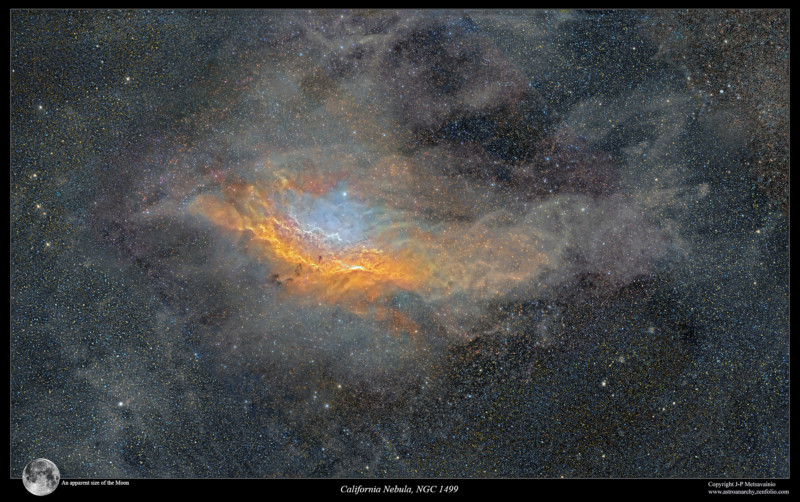
Wit­ness, for exam­ple, the just-released image fur­ther up, a 1.7 gigapix­el panoram­ic pho­to of the Milky Way, from Tau­rus to Cygnus, 100,000 pix­els wide, pieced togeth­er from 234 pan­els by Finnish astropho­tog­ra­ph­er J‑P Met­savainio, who began the project all the way back in 2009. “I can hear music in this com­po­si­tion,” he writes at his site, “from high sparks and bub­bles at left to deep and mas­sive sounds at right.”

Over 12 years, and around 1250 hours of expo­sure, Michael Zhang writes at Petapix­el, Met­savainio “focused on dif­fer­ent areas and objects in the Milky Way, shoot­ing stitched mosaics of them as indi­vid­ual art­works.” As he began to knit the galac­tic clouds of stars and gasses togeth­er into a Pho­to­shop panora­ma, he dis­cov­ered a “com­plex image set which is part­ly over­lap­ping with lots of unim­aged areas between and around frames.” Over the years, he filled in the gaps, shoot­ing the “miss­ing data.” He describes his equip­ment and process in detail, for those flu­ent in the tech­ni­cal jar­gon. The rest of us can stare in silent won­der at more of Metsavainio’s work on his web­site (where you can also pur­chase prints) and Face­book, and let our­selves be over­tak­en by awe.

via Petapix­el and Kot­tke

Relat­ed Con­tent: 

NASA Releas­es a Mas­sive Online Archive: 140,000 Pho­tos, Videos & Audio Files Free to Search and Down­load

How Sci­en­tists Col­orize Those Beau­ti­ful Space Pho­tos Tak­en By the Hub­ble Space Tele­scope

Earth­rise, Apol­lo 8’s Pho­to of Earth from Space, Turns 50: Down­load the Icon­ic Pho­to­graph from NASA

Josh Jones is a writer and musi­cian based in Durham, NC. Fol­low him at @jdmagness

Quantcast