In July 1963, Bob Dylan made his first appearance at the Newport Folk Festival. On opening night, he captivated a crowd of 13,000 with a performance of “Blowin’ in the Wind,” accompanied by Joan Baez, Pete Seeger, and Peter, Paul, and Mary. Then, the following day, Dylan delivered a rendition of “With God On Our Side” (a duet with Joan Baez) and performed “North Country Blues” solo, a song that would later appear on The Times They Are a‑Changin’ in 1964. You can watch these historic performances in original black-and-white footage. (Simply click the links in the text.) Or, thanks to the YouTube channel Toca o Disco, you can experience the moment in color. As a 22-year-old Bob Dylan sings, the audience listens in rapt attention, taking in his powerful folk song about the harsh realities of mining and industrialization. Take note above.
Despite its status as one of the most widely known and studied epic poems of all time, Homer’s Iliad has proven surprisingly resistant to adaptation. However much inspiration it has provided to modern-day novelists working in a variety of different traditions, it’s translated somewhat less powerfully to visual media. Perhaps people still watch Wolfgang Petersen’s Troy, the very loose, Brad Pitt-starring cinematic Iliad adaptation from 2004. But chances are, a century or two from now, humanity on the whole will still be more impressed by the 52 illustrations of the Ambrosian Iliad, which was made in Constantinople or Alexandria around the turn of the sixth century.
As noted at HistoryofInformation.com, “along with the Vergilius Vaticanus [previously featured on Open Culture] and the Vergilius Romanus, [the Ambrosian Iliad] is one of only three illustrated manuscripts of classical literature that survived from antiquity.” It’s also the only ancient manuscript that depicts scenes from the Iliad. Its illustrations, which “show the names of places and characters,” offer “an insight into early manuscript illumination.” They “show a considerable diversity of compositional schemes, from single combat to complex battle scenes,” as Kurt Weitzmann writes in Late Antique and Early Christian Book Illumination. “This indicates that, by that time, Iliad illustration had passed through various stages of development and thus had a long history behind it.”
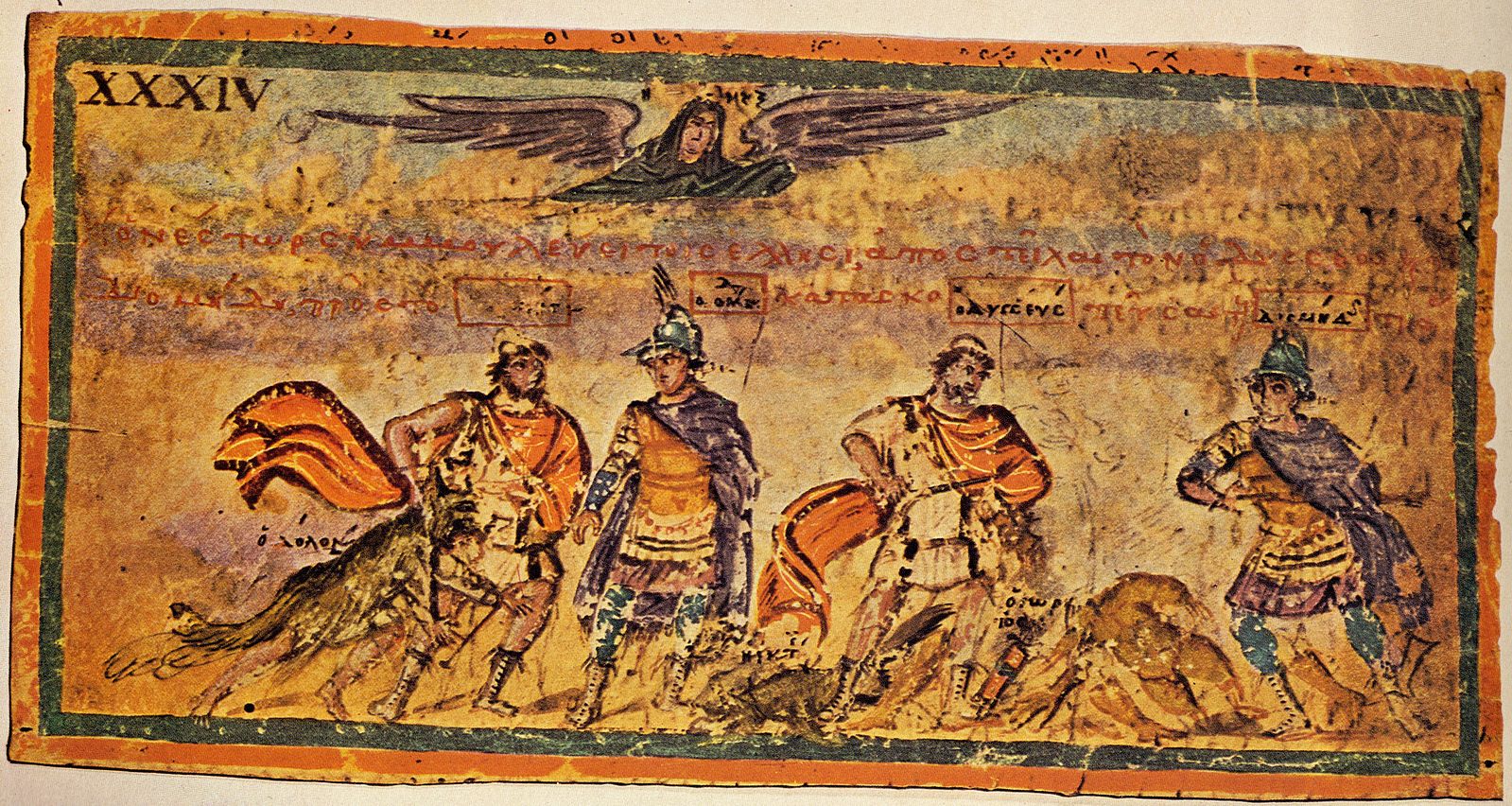
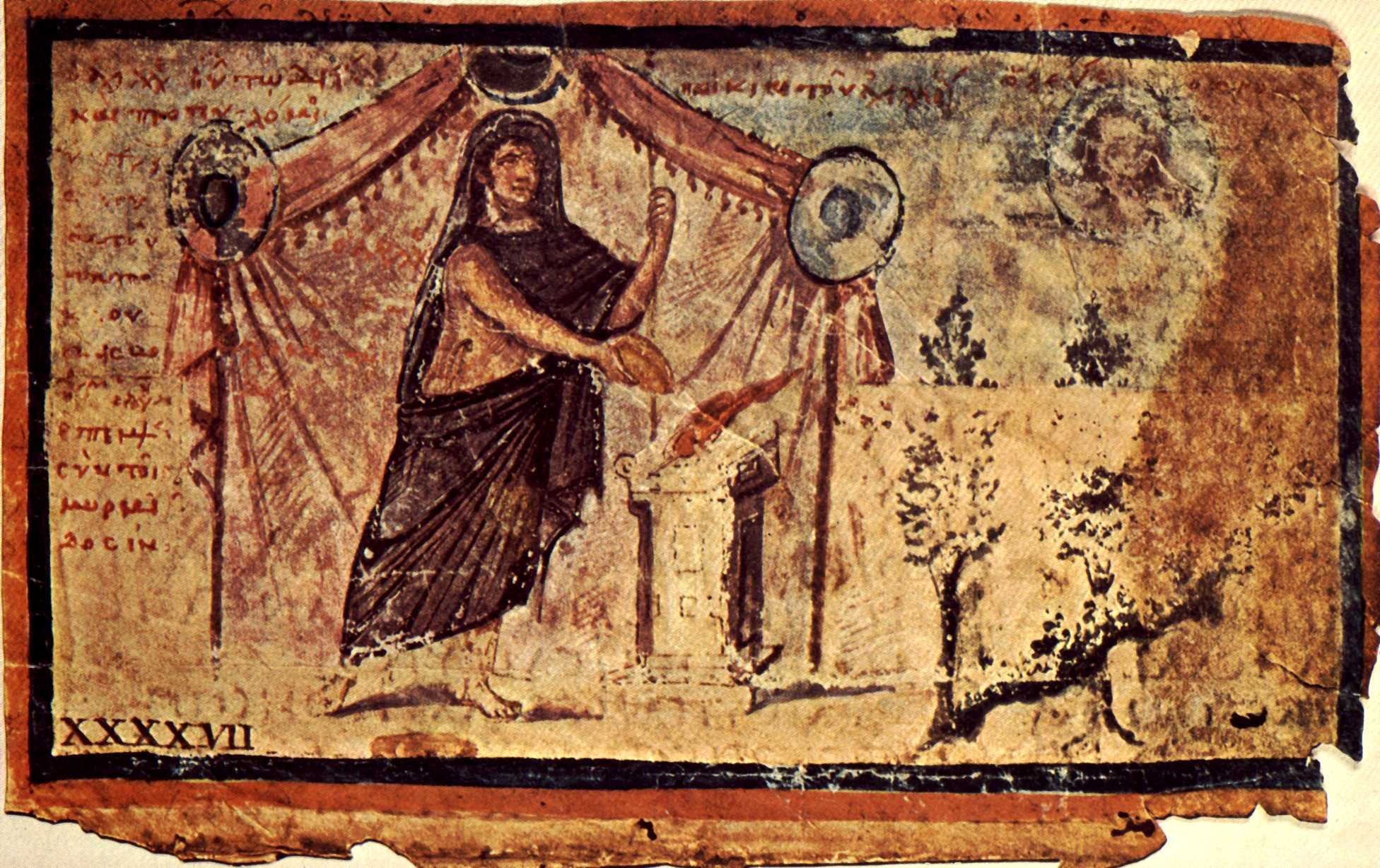
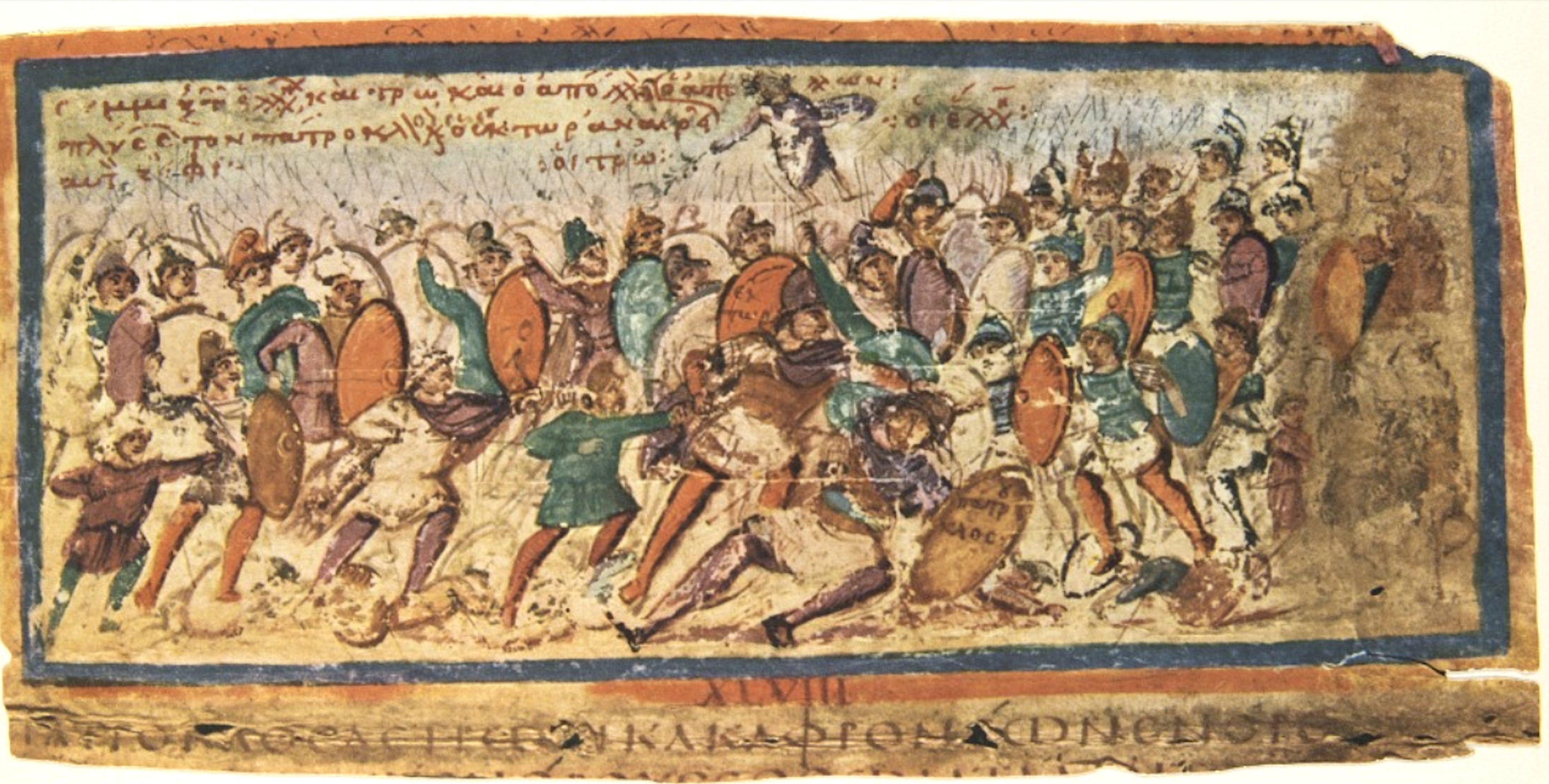
Above, you can see the Ambrosian Iliad’s illustrations of the capture of Dolon (top), Achilles sacrificing to Zeus for Patroclus’ safe return (middle), and Hector killing Patroclus as Automedon escapes (bottom). You can find more scans at the Warburg Institute Iconographic Database, along with other Iliad-related artifacts. Some of the later artistic renditions of Homer in that collection date from the fifteenth, seventeenth, eighteenth, and even the nineteenth centuries, each interpreting these age-old poems for their own time. Indeed, the Iliad and Odyssey have proven enduringly resonant for the better part of three millennia, and there’s no reason to believe that they won’t continue to find new artistic forms for just as long to come. But there’s something especially powerful about seeing Homer rendered by artists who, though they may have come centuries and centuries after the blind poet himself, knew full well what it was to live in antiquity.
Based in Seoul, Colin Marshall writes and broadcasts on cities, language, and culture. His projects include the Substack newsletterBooks on Cities and the book The Stateless City: a Walk through 21st-Century Los Angeles. Follow him on the social network formerly known as Twitter at @colinmarshall.
April 10th will mark the 100th anniversary of F. Scott Fitzgerald’s classic American novel, The Great Gatsby. As A.O. Scott notes in a recent tribute, when first published, The Great Gatsby got off to a slow start. Initially, “Reviewers shrugged. Sales were sluggish. The novel and its author slid toward obscurity.”
It wasn’t until the 1940s that Gatsby underwent a revival. Critics began to re-evaluate Fitzgerald’s novel, and the U.S. military “distributed more than 150,000 copies of ‘Gatsby’to American servicemen during World War II,” all to help bored soldiers kill time. From there, Gatsby’s “cultural footprint expanded. Paperback editions proliferated, and the novel was name-checked by younger authors, including J.D. Salinger.” Today, with some 30 million copies sold worldwide and at least five film adaptations to its name, The Great Gatsby has established itself as an enduring American classic.
In January 2021, The Great Gatsby finally entered the public domain, allowing creators to make use of the literary work in different ways. As our writer Colin Marshall noted, “Already you can find The Gay Gatsby, B.A. Baker’s slash fiction reinterpretation of all the suppressed longing in the original novel; The Great Gatsby Undead, a zombie version; and Michael Farris Smith’s Nick, a prequel that follows Nick Carraway through World War I and out the other side.” And then there are more straightforward projects–like Project Gutenberg’s e‑book of the original text, or this free audio book version of The Great Gatsby. This five hour recording comes courtesy of Nolan Hennelly, and you can stream it above.
We're hoping to rely on loyal readers, rather than erratic ads. Please click the Donate button and support Open Culture. You can use Paypal, Venmo, Patreon, even Crypto! We thank you!
Open Culture scours the web for the best educational media. We find the free courses and audio books you need, the language lessons & educational videos you want, and plenty of enlightenment in between.