Teaching child visitors how to write their names using an unfamiliar or antique alphabet is a favorite activity of museum educators, but Dr. Irving Finkel, a cuneiform expert who specializes in ancient Mesopotamian medicine and magic, has grander designs.
His employer, the British Museum, has over 130,000 tablets spanning Mesopotamia’s Early Dynastic period to the Neo-Babylonian Empire “just waiting for young scholars to come devote themselves to (the) monkish work” of deciphering them.
Writing one’s name might well prove to be a gateway, and Dr. Finkel has a vested interest in lining up some new recruits.
The museum’s Department of the Middle East has an open access policy, with a study room where researchers can get up close and personal with a vast collection of cuneiform tablets from Mesopotamia and surrounding regions.
But let’s not put the ox before the cart.
As the extremely personable Dr. Finkel shows Matt Gray and Tom Scott of Matt and Tom’s Park Bench, above, cuneiform consists of three components—upright, horizontal and diagonal—made by pressing the edge of a reed stylus, or popsicle stick if you prefer, into a clay tablet.
The mechanical process seems fairly easy to get the hang of, but mastering the oldest writing system in the world will take you around six years of dedicated study. Like Japan’s kanji alphabet, the oldest writing system in the world is syllabic. Properly written out, these syllables join up into a flowing calligraphy that your average, educated Babylonian would be able to read at a glance.
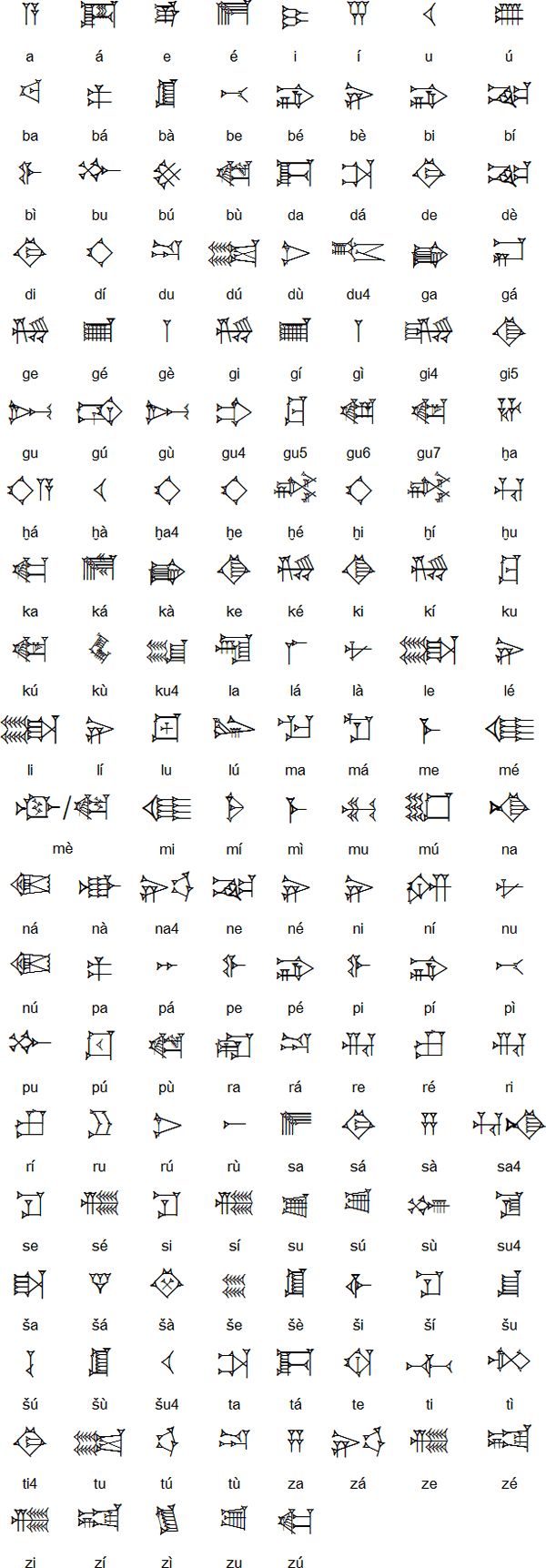
Even if you have no plans to rustle up a popsicle stick and some Play-Doh, it’s worth sticking with the video to the end to hear Dr. Finkel tell how a chance encounter with some naturally occurring cuneiform inspired him to write a horror novel, which is now available for purchase, following a successful Kickstarter campaign.
Begin your cuneiform studies with Irving Finkel’s Cuneiform: Ancient Scripts.
Note: An earlier version of this post appeared on our site in 2018.
Related Content:
Hear The Epic of Gilgamesh Read in its Original Ancient Language, Akkadian
Learn Ancient Greek in 64 Free Lessons: A Free Online Course from Brandeis & Harvard
Ayun Halliday is an author, illustrator, theater maker and Chief Primatologist in NYC.




Please note that Japanese kanji is not syllabic has mentioned in this article, only hiragana and katakana are.
When a website runs out of subjects for articles to write they start writing articles about YouTube videos. There are so many websites doing this now.
I could’a sworn I saw on Google this year that they were barely finding out that cuneiform exist and they were trying to get AI to decide it and now suddenly they’re giving out courses for it?: Something’s up.
I am highly interested in this study. I would like to learn the cuneiform. How do I get on board?