A Creepy Cut Out Animation of Samuel Beckett’s 1953 Novel, The Unnamable

Morn­ing, friend! Ready to kick off your week with a Beck­et­t­ian night­mare vision?

Samuel Beck­ett schol­ar Jen­ny Trig­gs was earn­ing a mas­ters in Visu­al Com­mu­ni­ca­tions at the Edin­burgh Col­lege of Art when she cre­at­ed the unset­tling, cut out ani­ma­tion for his 1953 nov­el, The Unnam­able, above. (Her PhD exhi­bi­tion, a decade lat­er, was a mul­ti-screen video response to Beckett’s short sto­ry, Ping.)

The wretched crea­tures haunt­ing the film con­jure Bosch and Gilliam, in addi­tion to Ire­land’s best known avant-garde play­wright.

Trig­gs seem to have drawn inspi­ra­tion from the name­less narrator’s phys­i­cal self-assess­ment:

I of whom I know noth­ing, I know my eyes are open because of the tears that pour from them unceas­ing­ly. I know I am seat­ed, my hands on my knees, because of the pres­sure against my rump, against the soles of my feet? I don’t know. My spine is not sup­port­ed. I men­tion these details to make sure I am not lying on my back, my legs raised and bent, my eyes closed.

Despite the narrator’s effort to keep track of his parts, Trig­gs ensures that some­thing will always be miss­ing. Her char­ac­ters make do with rods, bits of chess pieces or noth­ing at all in places where limbs should be.

Are these birth defects or some sort of wartime dis­abil­i­ty that pre­cludes pros­thet­ics?

One char­ac­ter is described as “noth­ing but a shape­less heap… with a wild equine eye.”

The nar­ra­tor steels him­self “to invent anoth­er fairy tale with heads, trunks, arms, legs and all that fol­lows.” Mean­while, he’s tor­ment­ed by a spir­i­tu­al push-me-pull-you that feels very like the one afflict­ing Vladimir and Estragon in Wait­ing for Godot:

Where I am, I don’t know, I’ll nev­er know, in the silence you don’t know, you must go on, I can’t go on, I’ll go on.

Trig­gs describes The Unnam­able as a book that begs to be read aloud, and her nar­ra­tors Louise Milne and Chris Noon are deserv­ing of praise for pars­ing the mean­der­ing text in such a way that it makes sense, at least atmos­pher­i­cal­ly.

To go on means going from here, means find­ing me, los­ing me, van­ish­ing and begin­ning again, a stranger first, then lit­tle by lit­tle the same as always, in anoth­er place, where I shall say I have always been, of which I shall know noth­ing, being inca­pable of see­ing, mov­ing, think­ing, speak­ing, but of which lit­tle by lit­tle, in spite of these hand­i­caps, I shall begin to know some­thing, just enough for it to turn out to be the same place as always, the same which seems made for me and does not want me, which I seem to want and do not want, take your choice, which spews me out or swal­lows me up, I’ll nev­er know, which is per­haps mere­ly the inside of my dis­tant skull where once I wan­dered, now am fixed, lost for tini­ness, or strain­ing against the walls, with my head, my hands, my feet, my back, and ever mur­mur­ing my old sto­ries, my old sto­ry, as if it were the first time.

Relat­ed Con­tent:

Rare Audio: Samuel Beck­ett Reads From His Nov­el Watt

Take a “Breath” and Watch Samuel Beckett’s One-Minute Play

Hear Samuel Beckett’s Avant-Garde Radio Plays: All That Fall, Embers, and More

Ayun Hal­l­i­day is an author, illus­tra­tor, and Chief Pri­ma­tol­o­gist of the East Vil­lage Inky zine. Fol­low her @AyunHalliday

Hayao Miyazaki’s Beloved Characters Reimagined in the Style of 19th-Century Woodblock Prints

Spirited_Away1

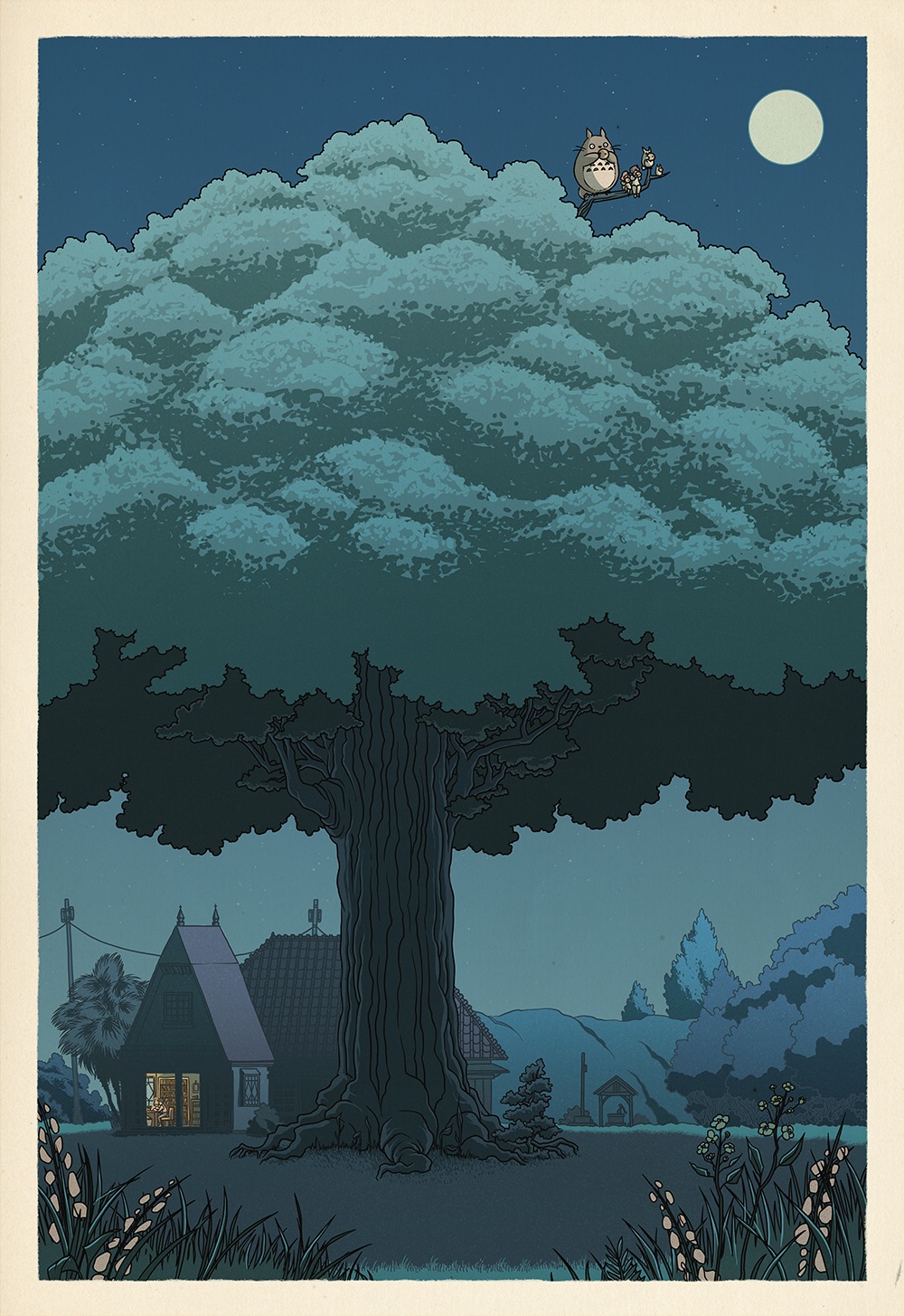
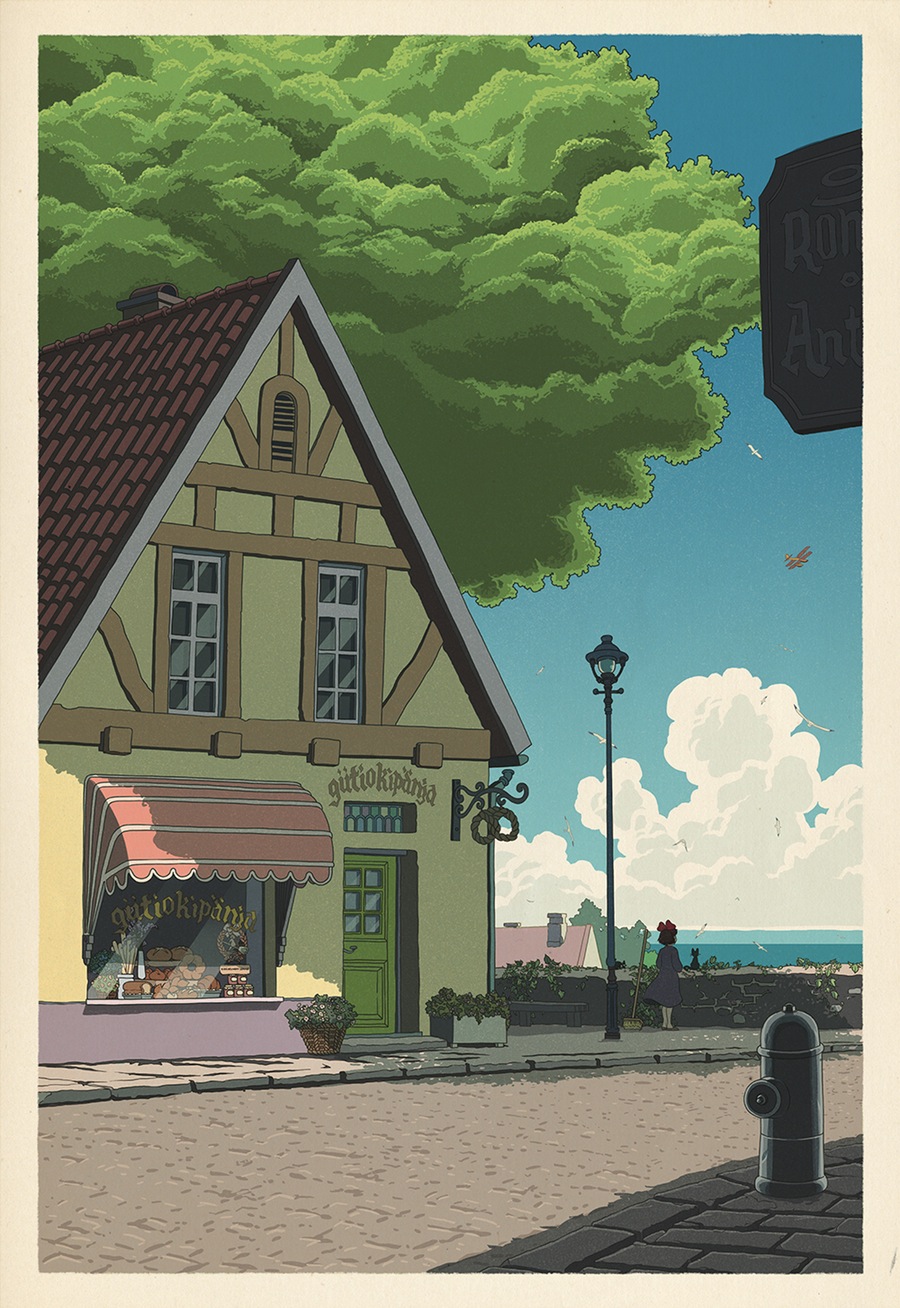
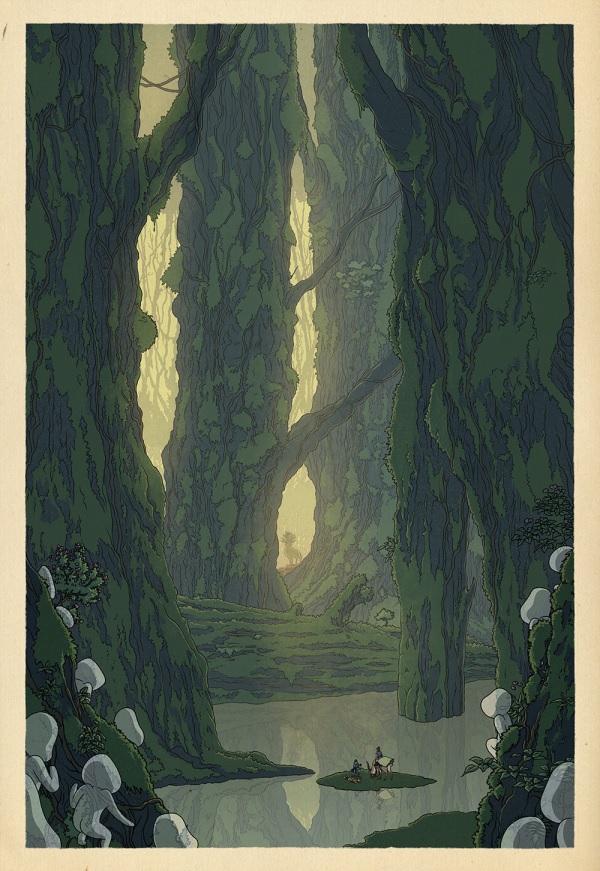
Like illus­tra­tor Bill Mudron, I’m drawn to the back­grounds of direc­tor Hayao Miyaza­ki’s ani­mat­ed fea­tures. The shad­owy land­scapes and tra­di­tion­al wood­en hous­es exert a ton­ic effect, even as giant many-eyed insects roam free and curs­es turn par­ents into pigs. The char­ac­ters can become a bit cloy­ing (espe­cial­ly when dubbed for Eng­lish-speak­ing audi­ences), but I’ll nev­er tire of watch­ing that cat bus charg­ing through the Japan­ese coun­try­side.

Mudron’s take on six of Miyaza­k­i’s most fer­tile land­scapes, includ­ing Spir­it­ed Away’s bath­house, above, were ren­dered entire­ly in Pho­to­shop, but aes­thet­i­cal­ly, they’re of a piece with artist Kawase Hasui’s late-19th and ear­ly-20th cen­tu­ry wood­block prints. (You can pur­chase Mudron’s prints and sup­port his work here.)

Mudron told The Cre­ators Project that his project was born of read­ing a two-vol­ume book on Hasui, right after see­ing The King­dom of Dreams and Mad­ness, Mami Sunada’s doc­u­men­tary about Miyaza­k­i’s Stu­dio Ghi­b­li.

Tak­ing his lead from the fig­ures in Hasui’s shin-hanga (“new prints”), Mudron makes Miyazaki’s char­ac­ters whol­ly sub­or­di­nate to their set­ting. It’s pret­ty hard to ignore the weird spir­its throng­ing the bridge that leads to the bath­house when watch­ing the film of Spir­it­ed Away, but Mudron suc­ceeds by pin­ning them to a sin­gle moment in time and shift­ing the focus to their des­ti­na­tion.

Spirited_Away2

Study the above detail from “Night Falls on the Spir­it Realm.” There’s still a lot going on on that bridge, but rel­a­tive to the big pic­ture at the top of the page, these spir­its are as anony­mous as the umbrel­la tot­ing fig­ures in Hasui’s “Snow at Heian Shrine, Kyoto,” below.

Hasui

Scroll down for Muldron’s view of icon­ic loca­tions from My Neigh­bor Totoro, Kiki’s Deliv­ery Ser­vice, and Princess Mononoke.

Totoro1

Kiki1

Woodcarving-Mononoke

via The Cre­ators Project

Relat­ed Con­tent:

French Stu­dent Sets Inter­net on Fire with Ani­ma­tion Inspired by Moe­bius, Syd Mead & Hayao Miyaza­ki

Hayao Miyazaki’s Mag­i­cal Ani­mat­ed Music Video for the Japan­ese Pop Song, “On Your Mark”

Watch Sher­lock Hound: Hayao Miyazaki’s Ani­mat­ed, Steam­punk Take on Sher­lock Holmes

Ayun Hal­l­i­day is an author, illus­tra­tor, and Chief Pri­ma­tol­o­gist of the East Vil­lage Inky zine. Fol­low her @AyunHalliday

The Staggering Human Cost of World War II Visualized in a Creative, New Animated Documentary

“More peo­ple died in World War II than any oth­er war in his­to­ry,” explains Neil Hal­lo­ran in The Fall­en of World War II. In his 15-minute film, Hal­lo­ran uses inno­v­a­tive data visu­al­iza­tion tech­niques to put the human cost of WW II into per­spec­tive, show­ing how some 70 mil­lion lives were lost with­in civil­ian and mil­i­tary pop­u­la­tions across Europe and Asia, from 1939 to 1945. As one com­menter put it, “One mil­lion, six mil­lion, sev­en­ty mil­lion. Spo­ken or writ­ten, these num­bers become … incom­pre­hen­si­ble. Pre­sent­ed graph­i­cal­ly, they hit clos­er to the heart. As the Sovi­et loss­es climbed, I thought my brows­er had become frozen. Sure­ly the top of the col­umn must have been reached by now, I thought.” He’s refer­ring to the stag­ger­ing num­ber of Sovi­ets who died fight­ing the Nazis. If you fast for­ward to the 6‑minute mark above, you can see what he means.

The video comes accom­pa­nied by an inter­ac­tive web­site, where users can “pause dur­ing key moments to inter­act with the charts and dig deep­er into the num­bers.” To use this inter­ac­tive web­site, you will need a fair­ly new com­put­er and a mod­ern brows­er.

You can con­tribute mon­ey and sup­port the ongo­ing Fall­en of World War II project here.

If you would like to sign up for Open Culture’s free email newslet­ter, please find it here. It’s a great way to see our new posts, all bun­dled in one email, each day.

If you would like to sup­port the mis­sion of Open Cul­ture, con­sid­er mak­ing a dona­tion to our site. It’s hard to rely 100% on ads, and your con­tri­bu­tions will help us con­tin­ue pro­vid­ing the best free cul­tur­al and edu­ca­tion­al mate­ri­als to learn­ers every­where. You can con­tribute through Pay­Pal, Patre­on, and Ven­mo (@openculture). Thanks!

Relat­ed Con­tent:

Free Online His­to­ry Cours­es

Watch World War II Rage Across Europe in a 7 Minute Time-Lapse Film: Every Day From 1939 to 1945

31 Rolls of Film Tak­en by a World War II Sol­dier Get Dis­cov­ered & Devel­oped Before Your Eyes

Dra­mat­ic Col­or Footage Shows a Bombed-Out Berlin a Month After Germany’s WWII Defeat (1945)

by | Permalink | Make a Comment ( 24 ) |

JS Bach’s The Well-Tempered Clavier Artistically Animated with Pulsing Neon Lights

The Well-Tem­pered Clavier, com­posed by JS Bach between 1722 and 1742, remains one of the most inno­v­a­tive and influ­en­tial works in the his­to­ry of West­ern clas­si­cal music. A web­site from North­ern Ari­zona State U. sums up what essen­tial­ly made Bach’s com­po­si­tion — a col­lec­tion of 48 pre­ludes and fugues spread across two vol­umes — so inno­v­a­tive, so influ­en­tial.

One of Bach’s pri­ma­ry pur­pos­es in com­pos­ing these cycles was to demon­strate the fea­si­bil­i­ty of the “well tem­pered” tun­ing sys­tem that would allow for com­po­si­tion in every key.

Anoth­er pur­pose of the Well-Tem­pered Clavier was to reveal how mod­ern and pro­gres­sive com­po­si­tion could be informed by con­ser­v­a­tive ideas. The Well-Tem­pered Clavier is an ency­clo­pe­dia of nation­al and his­tor­i­cal styles and idioms. Its influ­ences range from the white-note style of the Renais­sance motet to the French manier. Iron­i­cal­ly, half of this styl­is­tic smor­gas­bord is expressed in fugue, a form that was out of date upon the cycle’s com­ple­tion. Bach was of course aware of this. His hope was to defend the ven­er­a­ble form by demon­strat­ing how it could absorb con­tem­po­rary fla­vors.

If you’ve nev­er expe­ri­enced Bach’s piece, then I’d encour­age you to lis­ten to the 1960s record­ing by Glenn Gould. Or watch a sec­tion of the piece being per­formed on the All of Bach web­site — a site that will even­tu­al­ly put 1080 Bach per­for­mances online, for free.

Above, we have some­thing a lit­tle dif­fer­ent. Cre­at­ed by direc­tor and visu­al artist Alan War­bur­ton, this new­ly-released video takes a famous sec­tion of Bach’s com­po­si­tion and ani­mates it with puls­ing neon lights. Describ­ing what went into mak­ing this video, the Sin­fi­ni Music web­site writes:

Alan’s incred­i­ble design incor­po­rat­ed many thou­sands of sep­a­rate CGI lights, every one of which had to be tai­lored to the pre­cise dura­tion of Pierre-Lau­rent Aimard’s note strikes. ‘I need­ed to find a way of automat­ing the process of these turn­ing on and off in time with the music,’ says Alan. With no midi file of the per­for­mance avail­able, he was faced with the seem­ing­ly impos­si­ble task of match­ing every note of a stand-in midi file to the record­ing, by ear alone…

Then it was a ques­tion of ren­der­ing the ani­mat­ed data in CGI with­in the vir­tu­al space cre­at­ed espe­cial­ly for the ani­ma­tion. This too, was no mean feat, even for the army of cloud-based com­put­ers that had a hand in the task. Each frame took 15 min­utes to ren­der because of the thou­sands of cal­cu­la­tions involved in acti­vat­ing each light as well as the shad­ows, glows and reflec­tions required to make the scene look tru­ly life-like.

Sin­fi­ni Music, which com­mis­sioned this project, has more on War­bur­ton’s cre­ation here.

Hope this gets your week­end start­ed on the right, er, note.

via The Kids Should See This

Relat­ed Con­tent:

All of Bach Is Putting Videos of 1,080 Bach Per­for­mances Online

A Big Bach Down­load: All of Bach’s Organ Works for Free

The Genius of J.S. Bach’s “Crab Canon” Visu­al­ized on a Möbius Strip

Hayao Miyazaki’s Magical Animated Music Video for the Japanese Pop Song, “On Your Mark”

On this site, we’ve fea­tured music videos by such acclaimed film­mak­ers as David Lynch, David Finch­er, Jim Jar­musch and even Andy Warhol. Now add to this list the leg­endary Japan­ese ani­ma­tor Hayao Miyaza­ki.

Back in 1994, Miyaza­ki was stuck on the script for his next fea­ture Princess Mononoke. So he decid­ed to do a video for the song “On Your Mark” by Japan­ese pop duo Chage & Aska. The result­ing piece is a gor­geous, dense, enig­mat­ic work that not only recalls Miyazaki’s ear­li­est works like Nau­si­caa of the Val­ley of the Wind, but also the edgi­er visions of the future seen in films like Aki­ra or Ghost in the Shell. In fact, the short is such a mag­i­cal, mem­o­rable piece of film­mak­ing that it over­whelms the song.

The video unfolds in a non-lin­ear fash­ion, jump­ing for­ward and back, fork­ing into mul­ti­ple ver­sions of the same scene. Miyaza­ki isn’t con­cerned about you not get­ting the sto­ry. As he said in a 1995 inter­view, you can “inter­pret [the film] any­way you want.”

The piece opens with a giant struc­ture that looms over an oth­er­wise beau­ti­ful, bucol­ic land­scape. Miyaza­ki, who is nev­er espe­cial­ly forth­com­ing when talk­ing about his work, describes the world of “On Your Mark” like this: “There is so much radi­a­tion on the Earth­’s sur­face, humans can no longer live there. But, there is flo­ra, just like there is one around Cher­nobyl. It became a sanc­tu­ary for nature, with the humans liv­ing in the under­ground city.”

The video then shifts abrupt­ly to a scene straight out of Aki­ra. Down in that under­ground city, the police attack the high­rise head­quar­ters of a spooky reli­gious cult and res­cue a young girl with broad, feath­ered wings. An angel? Who knows. A lot of view­ers have not­ed the cult echoes that of Aum Shin­rikyo, the dooms­day cult that released Sarin gas into the sub­ways of Tokyo in March 1995. Of course, the video was made before the attack. Mamoru Oshii’s 1993 ani­mat­ed fea­ture Pat­la­bor 2 also had eerie sim­i­lar­i­ties to Aum, so much so that it was fea­tured in the 1995 Yam­a­ga­ta Doc­u­men­tary Film Fes­ti­val. Both film­mak­ers, it seems, tapped into that ugly under­cur­rent in the zeit­geist of Japan­ese cul­ture at that time.

As Miyazaki’s short pro­gress­es, it shows two cops who decide to do the right thing and break the girl out of the lab­o­ra­to­ry where she is being held. The first time they try, the cops (and pre­sum­ably the angel) plunge to their deaths. The sec­ond time they try – and it’s not real­ly clear how they get this do-over – they man­age to escape. The cops dri­ve to the irra­di­at­ed sur­face of the earth and watch in awe as the angel flies way.

In Miyazaki’s mind, the winged girl rep­re­sents hope:

If you don’t com­plete­ly give up on the sit­u­a­tion and you keep your hope, not let­ting any­one touch it, and then you have to let it go, you let it go where no one can touch it. It’s just that. Maybe there was a bit of exchange in the moment of let­ting her
go. That’s fine, that’s enough. …Prob­a­bly they’ll go back to being the police­men. I don’t know if they could go back, though. [laughs]

Relat­ed Con­tent: 

How to Make Instant Ramen Com­pli­ments of Japan­ese Ani­ma­tion Direc­tor Hayao Miyaza­ki

French Stu­dent Sets Inter­net on Fire with Ani­ma­tion Inspired by Moe­bius, Syd Mead & Hayao Miyaza­ki

Japan­ese Car­toons from the 1920s and 30s Reveal the Styl­is­tic Roots of Ani­me

Watch Sher­lock Hound: Hayao Miyazaki’s Ani­mat­ed, Steam­punk Take on Sher­lock Holmes

Jonathan Crow is a Los Ange­les-based writer and film­mak­er whose work has appeared in Yahoo!, The Hol­ly­wood Reporter, and oth­er pub­li­ca­tions. You can fol­low him at @jonccrow. And check out his blog Veep­to­pus, fea­tur­ing pic­tures of vice pres­i­dents with octo­pus­es on their heads.  The Veep­to­pus store is here.

3D Printed Zoetrope Animates Rubens’ Famous Painting, “The Massacre of the Innocents”

In the 17th cen­tu­ry, the Flem­ish Baroque painter Peter Paul Rubens paint­ed “The Mas­sacre of the Inno­cents” (see below), an artis­tic depic­tion of a very brief Bib­li­cal pas­sage in The Gospel of Matthew. The pas­sage recounts the sto­ry of how Herod the Great, a Roman client king of Judea, ordered the exe­cu­tion of young male chil­dren in Beth­le­hem, hop­ing to avoid los­ing his throne to a new­ly-born King of the Jews. And it reads like this:

Then Herod, when he saw that he was deceived by the wise men, was exceed­ing­ly angry; and he sent forth and put to death all the male chil­dren who were in Beth­le­hem and in all its dis­tricts, from two years old and under, accord­ing to the time which he had deter­mined from the wise men. Then was ful­filled what was spo­ken by Jere­mi­ah the prophet, say­ing:

“A voice was heard in Ramah,
Lamen­ta­tion, weep­ing, and great mourn­ing,
Rachel weep­ing for her chil­dren,
Refus­ing to be com­fort­ed,
Because they are no more.”

In the 21st cen­tu­ry, Sebas­t­ian Bur­don and Mat Coll­ishaw have now come along and cre­at­ed “All Things Fall,” a 3d zoetrope that brings the “Mas­sacre of the Inno­cents” to life. Using a 19th cen­tu­ry opti­cal tech­nique that pro­duces the illu­sion of motion, the zoetrope vir­tu­al­ly ani­mates the grue­some Bib­li­cal scene. You can watch it play out, eeri­ly, above.

Accord­ing to Bur­don, it took “6 months to do all the 3d mod­el­ing and ani­ma­tions” and involved “cre­at­ing over 350 char­ac­ter fig­ures, envi­ron­ment ele­ments and archi­tec­ture. A pret­ty stun­ning effort.

Peter_Paul_Rubens_-_Massacre_of_the_Innocents_-_WGA20259

Relat­ed Con­tent:

Down­load Over 250 Free Art Books From the Get­ty Muse­um

Watch Art on Ancient Greek Vas­es Come to Life with 21st Cen­tu­ry Ani­ma­tion

5‑Minute Ani­ma­tion Maps 2,600 Years of West­ern Cul­tur­al His­to­ry

by | Permalink | Make a Comment ( 1 ) |

French Student Sets Internet on Fire with Animation Inspired by Moebius, Syd Mead & Hayao Miyazaki

The inter­net over in Japan was lit ablaze last month by a stu­dent film. Titled “Celles et Ceux des Cimes et Cieux” (“Girls and Guys from the Sum­mits and the Skies”), the short is a gor­geous­ly ani­mat­ed trail­er for what looks like an amaz­ing yet-to-be-made fea­ture film. Cre­at­ed by Gwenn Ger­main, who is study­ing at the French art school Créa­pole, the ani­ma­tion is also a love let­ter to leg­endary film­mak­er Hayao Miyaza­ki. You can watch it above.

“I’ve been told by a friend of mine that all the movies that I’ve made are essen­tial­ly the same!” That’s what Miyaza­ki said to me dur­ing a round­table for his children’s movie Ponyo. Though the sto­ries vary from movie to movie, his world is imme­di­ate­ly rec­og­niz­able and remark­ably con­sis­tent. He cre­ates uni­vers­es that are won­drous and mys­ti­cal.

He has an almost shaman­is­tic rev­er­ence for nature; rocks, trees, rivers, and oceans all seem to be alive and aware. And he pop­u­lates his world with shape-shift­ing crea­tures like the rav­en­ous masked blob No-Face in Spir­it­ed Away; the Great For­est Spir­it in Princess Mononoke, which looks like it was yanked straight out of Japan­ese mythol­o­gy; and per­haps his most delight­ful cre­ation, the Cat Bus from My Neigh­bor Totoro, com­plete with head­light eyes, a Cheshire grin and a warm, womb-like inte­ri­or. It was this whim­si­cal cre­ation that report­ed­ly impressed The Emper­or him­self – Aki­ra Kuro­sawa.

It’s no won­der why Japan­ese neti­zens went crazy for “Celles et Ceux des Cimes et Cieux.” Germain’s short seems sprung from the same world as Miyaza­ki. The giant bugs look like some­thing out of Nau­si­caa of the Val­ley of the Wind. The ambigu­ous­ly Euro­pean archi­tec­ture looks like some­thing from Kiki’s Deliv­ery Ser­vice and those pur­ple amor­phous worms look like some­thing from Spir­it­ed Away.  Heck, Miyaza­ki him­self even seems to be in Ger­main’s short – that beard­ed old guy at the end of the movie is a spit­ting image of the famed ani­ma­tor.

Ger­main cred­its oth­er influ­ences aside from Miyaza­ki: Syd Mead, the con­cept artist who cre­at­ed those fly­ing cars in Blade Run­ner and the city of the future in the upcom­ing Tomor­row­land, and par­tic­u­lar­ly the bound­less­ly imag­i­na­tive French illus­tra­tor Moe­bius. Their influ­ence might not be as obvi­ous as Miyaza­k­i’s, how­ev­er.

In any case, I am seri­ous­ly look­ing for­ward to see­ing a fea­ture length ver­sion of “Celles et Ceux des Cimes et Cieux.”

Relat­ed Con­tent: 

How to Make Instant Ramen Com­pli­ments of Japan­ese Ani­ma­tion Direc­tor Hayao Miyaza­ki

Moe­bius Gives 18 Wis­dom-Filled Tips to Aspir­ing Artists (1996)

Moe­bius’ Sto­ry­boards & Con­cept Art for Jodorowsky’s Dune

Japan­ese Car­toons from the 1920s and 30s Reveal the Styl­is­tic Roots of Ani­me

Jonathan Crow is a Los Ange­les-based writer and film­mak­er whose work has appeared in Yahoo!, The Hol­ly­wood Reporter, and oth­er pub­li­ca­tions. You can fol­low him at @jonccrow. And check out his blog Veep­to­pus, fea­tur­ing pic­tures of vice pres­i­dents with octo­pus­es on their heads.  The Veep­to­pus store is here.

Watch Sherlock Hound: Hayao Miyazaki’s Animated, Steampunk Take on Sherlock Holmes

With such majes­tic, painstak­ing­ly craft­ed films as Nau­si­caä of the Val­ley of the Wind, My Neigh­bor Totoro, and Princess Mononoke, Hayao Miyaza­ki has made his name as Japan­ese ani­ma­tion’s pre­em­i­nent artis­tic vision­ary — and quite pos­si­bly ani­ma­tion’s pre­em­i­nent artis­tic vision­ary as well. But before he co-found­ed Stu­dio Ghi­b­li, the house that has become syn­ony­mous with Miyaza­k­i’s kind of lush, uni­ver­sal­ly appeal­ing, and award-win­ning films, he worked on var­i­ous kinds of ani­ma­tion, for dif­fer­ent media and pitched at dif­fer­ent lev­els of seri­ous­ness. One of the most notable projects of the end of that chap­ter of his career trans­posed the adven­tures of Sher­lock Holmes into a world of anthro­po­mor­phic dogs.

The Ital­ian-Japan­ese co-pro­duc­tion Sher­lock Hound aired as a tele­vi­sion series between 1984 and 1985. Of its 26 episodes, which sent the cor­gi Sher­lock Hound and ter­ri­er Doc­tor Wat­son after a vari­ety of thieves and on all sorts of adven­tures across a steam­punk Lon­don, Miyaza­ki direct­ed six.

In the Miyaza­ki-direct­ed episode “Trea­sure Under the Sea” at the top of the post, for instance, the detect­ing duo go after a sub­ma­rine pur­loined by recur­ring antag­o­nist of both Holmes and Hound, Pro­fes­sor Mori­ar­ty, who here takes the form of a wolf.

“The Sov­er­eign Gold Coins” finds Hound and Wat­son in pur­suit of that seem­ing­ly more tra­di­tion­al stripe of crim­i­nal known as a safe­crack­er, and in “Mrs. Hud­son is Tak­en Hostage,” their land­la­dy (who seems con­sid­er­ably more youth­ful in Miyaza­k­i’s vision than the matron in Sir Arthur Conan Doyle’s) goes miss­ing, though her kid­nap­per bad­ly under­es­ti­mates the dif­fi­cul­ty of pulling off his plan under Hound’s watch. Miyaza­ki would direct three more episodes (“The Stormy Get­away,” “The Crown of Maza­lin,” and “The Four Sig­na­tures”) before a rights dis­pute with Conan Doyle’s estate threw a wrench into pro­duc­tion. The show lat­er went on under oth­er cre­ators, and U.S. view­ers can see the whole, still-delight­ful run on Hulu, but Miyaza­ki did­n’t look back — and see­ing as Nau­si­caä had come out that same year, he did­n’t need to.

Relat­ed Con­tent:

Watch John Cleese as Sher­lock Holmes in The Strange Case of the End of Civ­i­liza­tion as We Know It

Down­load the Com­plete Sher­lock Holmes, Arthur Conan Doyle’s Mas­ter­piece

Arthur Conan Doyle Dis­cuss­es Sher­lock Holmes and Psy­chics in a Rare Filmed Inter­view (1927)

Hear the Voice of Arthur Conan Doyle After His Death

Col­in Mar­shall writes on cities, lan­guage, Asia, and men’s style. He’s at work on a book about Los Ange­les, A Los Ange­les Primer, and the video series The City in Cin­e­maFol­low him on Twit­ter at @colinmarshall or on Face­book.

« Go BackMore in this category... »
Quantcast