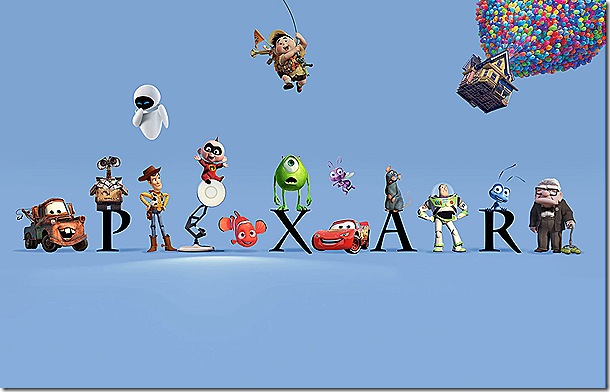
Pixar’s 22 Rules of Storytelling

Every­one from Kurt Von­negut to Ernest Hem­ing­way has shared his ideas on craft­ing sol­id nar­ra­tive writ­ing. One of the most recent sages to join the canon is Emma Coates, Pixar’s for­mer sto­ry artist. Her list of the 22 Rules of Good Sto­ry­telling gleaned on the job has been gain­ing Inter­net trac­tion since it was pub­lished last June.

Twen­ty two? That’s twen­ty more than Tol­stoy. I know some peo­ple enjoy a lot of direc­tion, but those of us who rel­ish bush­whack­ing start to chafe when the road is that heav­i­ly sign­post­ed.

By all means, sam­ple Coates’ Pixar 22 (see them all below). Apply any and all that work for you, though don’t get your hopes up if your ulti­mate goal is to sell a sto­ry to Dream­works or Dis­ney. They’ve got for­mu­las of their own.

As for myself, I am repur­pos­ing #4 — the only rule that does­n’t con­tain an implied order or some deriv­a­tive of “you” — as an extreme­ly jol­ly par­lor game.

Here it is in its orig­i­nal form:

Once upon a time there was ___. Every day, ___. One day ___. Because of that, ___. Because of that, ___. Until final­ly ___.

While it’s entire­ly pos­si­ble to fill in those blanks with the fruits of your own imag­i­na­tion, it’s a true joy to sub­ject one’s most cher­ished lit­er­ary, cin­e­mat­ic, and dra­mat­ic works to this retroac­tive Mad Lib. (It works pret­ty well with estab­lished reli­gions too, but I’m not here to tread on the faith­ful’s toes.)

Warn­ing: there are some major spoil­ers below. Now that that’s out of the way, let the guess­ing begin!

Once upon a time there was a poor fam­i­ly in Okla­homa. Every day, they tried to make it work on their hard­scrab­ble farm. One day their last speck of top soil blew away. Because of that, they decid­ed to seek a bet­ter life in Cal­i­for­nia. Because of that, every able bod­ied young male left the fam­i­ly. Until final­ly their old­est daugh­ter ends up breast­feed­ing a starv­ing stranger.

How about this?

Once upon a time there was a poor young sol­dier. Every day, he dreamed of ris­ing above his sta­tion. One day he met a beau­ti­ful rich girl named Daisy. Because of that, he bought a man­sion where he threw enor­mous par­ties. Because of that, he hooked back up with Daisy. Until final­ly, he gets shot to death in his pool.

There’s no deny­ing that it fits this one like a glove:

Once upon a time there was a kid. Every day, he played with his cow­boy doll. One day he got a space­man doll. Because of that, his inter­est in the cow­boy took a seri­ous nose­dive. Because of that, the cow­boy and the space­man each swore vengeance upon the oth­er’s house. Until final­ly there’s a blood­bath from which no one emerges unscathed.

I could keep go on for­ev­er, but I don’t want to come off as a toy hog. Instead, I invite you to share your filled out Num­ber Fours in the com­ments section…or tell us which of the oth­er twen­ty-one seem most suit­ed to its intend­ed pur­pose.

Pixar’s 22 Rules for Sto­ry­telling

#1: You admire a char­ac­ter for try­ing more than for their suc­cess­es.

#2: You got­ta keep in mind what’s inter­est­ing to you as an audi­ence, not what’s fun to do as a writer. They can be v. dif­fer­ent.

#3: Try­ing for theme is impor­tant, but you won’t see what the sto­ry is actu­al­ly about til you’re at the end of it. Now rewrite.

#4: Once upon a time there was ___. Every day, ___. One day ___. Because of that, ___. Because of that, ___. Until final­ly ___.

#5: Sim­pli­fy. Focus. Com­bine char­ac­ters. Hop over detours. You’ll feel like you’re los­ing valu­able stuff but it sets you free.

#6: What is your char­ac­ter good at, com­fort­able with? Throw the polar oppo­site at them. Chal­lenge them. How do they deal?

#7: Come up with your end­ing before you fig­ure out your mid­dle. Seri­ous­ly. End­ings are hard, get yours work­ing up front.

#8: Fin­ish your sto­ry, let go even if it’s not per­fect. In an ide­al world you have both, but move on. Do bet­ter next time.

#9: When you’re stuck, make a list of what WOULDN’T hap­pen next. Lots of times the mate­r­i­al to get you unstuck will show up.

#10: Pull apart the sto­ries you like. What you like in them is a part of you; you’ve got to rec­og­nize it before you can use it.

#11: Putting it on paper lets you start fix­ing it. If it stays in your head, a per­fect idea, you’ll nev­er share it with any­one.

#12: Dis­count the 1st thing that comes to mind. And the 2nd, 3rd, 4th, 5th – get the obvi­ous out of the way. Sur­prise your­self.

#13: Give your char­ac­ters opin­ions. Passive/malleable might seem lik­able to you as you write, but it’s poi­son to the audi­ence.

#14: Why must you tell THIS sto­ry? What’s the belief burn­ing with­in you that your sto­ry feeds off of? That’s the heart of it.

#15: If you were your char­ac­ter, in this sit­u­a­tion, how would you feel? Hon­esty lends cred­i­bil­i­ty to unbe­liev­able sit­u­a­tions.

#16: What are the stakes? Give us rea­son to root for the char­ac­ter. What hap­pens if they don’t suc­ceed? Stack the odds against.

#17: No work is ever wast­ed. If it’s not work­ing, let go and move on — it’ll come back around to be use­ful lat­er.

#18: You have to know your­self: the dif­fer­ence between doing your best & fuss­ing. Sto­ry is test­ing, not refin­ing.

#19: Coin­ci­dences to get char­ac­ters into trou­ble are great; coin­ci­dences to get them out of it are cheat­ing.

#20: Exer­cise: take the build­ing blocks of a movie you dis­like. How d’you rearrange them into what you DO like?

#21: You got­ta iden­ti­fy with your situation/characters, can’t just write ‘cool’. What would make YOU act that way?

#22: What’s the essence of your sto­ry? Most eco­nom­i­cal telling of it? If you know that, you can build out from there.

via Boing­Bo­ing

- Ayun Hal­l­i­day was not raised to ques­tion author­i­ty.

Can’t Get That Song Out of My Head: An Animation of a Psychological Phenomenon We All Know

You know what it feels like when, no mat­ter how hard you try to shake it, you can’t get that song out of your head. Psy­chol­o­gists have a tech­ni­cal name for this phe­nom­e­non. They call it an “ear­worm,” refer­ring to those songs that “arrive with­out per­mis­sion and refuse to leave when we tell them to.” In the video above, the Dan­ish design agency Ben­ny Box has cre­at­ed a short ani­mat­ed film — called Jazz that nobody asked for — that serves as an “ode to all those unwant­ed songs out there, that have nowhere to go.” The music taunt­ing the main char­ac­ter is “Quak­er City Jazz” (1937) by Jan Savitt and His Top Hat­ters Orches­tra. If you’ve had your own ear­worm — your own mad­den­ing sound­track for this film — let us know in the com­ments sec­tion below.

Relat­ed Con­tent:

Clas­sic Jazz Album Cov­ers Ani­mat­ed, or the Re-Birth of Cool

Ker­mit the Frog Learns to Love Jazz Through “Visu­al Think­ing” (1959)

Jazz Toons: Allen Mezquida’s Jour­ney from Bebop to Smigly

by | Permalink | Make a Comment ( 12 ) |

“The Me Bird” by Pablo Neruda: An Animated Interpretation

From 18bis, a Brazil­ian design & motion graph­ics stu­dio, comes this: a free inter­pre­ta­tion of “The Me Bird,” a poem by the Nobel Prize-win­ning poet Pablo Neru­da. Writes 18bis, “The inspi­ra­tion in the stra­ta sten­cil tech­nique helps con­cep­tu­al­ize the rep­e­ti­tion of lay­ers as the past of our move­ments and actions. The frames depict­ed as jail and the past as a bur­den serve as the back­ground for the sto­ry of a bal­le­ri­na on a jour­ney towards free­dom. A diver­si­fied artis­tic exper­i­men­ta­tion recre­ates the tem­pest that con­nects bird and dancer.” It’s all pret­ty won­der­ful.

Bonus mate­r­i­al: You can watch The Mak­ing of The Me Bird here. And find the orig­i­nal text of the Neru­da poem here. We have more poet­ry put to ani­ma­tion below.

via Andrew Sul­li­van

Relat­ed Con­tent:

Poems as Short Films: Langston Hugh­es, Pablo Neru­da and More

James Fran­co Reads a Dream­i­ly Ani­mat­ed Ver­sion of Allen Ginsberg’s Epic Poem ‘Howl’

Watch an Ani­mat­ed Film of Emi­ly Dickinson’s Poem ‘I Start­ed Early–Took My Dog’

The Ani­ma­tion of Bil­ly Collins’ Poet­ry: Every­day Moments in Motion

by | Permalink | Make a Comment ( 1 ) |

Destination Earth: The Greatness of American Civilization Revealed in 1950s Sci-Fi Cartoon

Many sci-fi tales go some­thing like this: The human race trav­els into the great unknown, deep out­er space, and encoun­ters beings with forces greater than its own. Greater fire pow­er. Greater intel­li­gence. Greater tech­no­log­i­cal abil­i­ty. But, in Des­ti­na­tion Earth, the stan­dard nar­ra­tive gets flipped on its head. Here, Mar­tians come to Earth — the Unit­ed States actu­al­ly — and dis­cov­er a vast­ly supe­ri­or civ­i­liza­tion. A civ­i­liza­tion supe­ri­or because it enjoys an end­less sup­ply of petro­le­um (used to make gas, tires, tooth­brush­es, cos­met­ics and insec­ti­cides) and the cap­i­tal­ist spirt of com­pe­ti­tion. Now, Sher­lock, if you’re think­ing this isn’t your aver­age Sat­ur­day morn­ing car­toon, I’d say you’re onto some­thing. Des­ti­na­tion Earth was the cre­ation of The Amer­i­can Petro­le­um Insti­tute, still the biggest lob­by for the U.S. oil and gas indus­try. And the film was shot in 1956, smack dab in the mid­dle of the Cold War. If you think Mars, the red plan­et, might be a proxy for the Sovi­et Union (and Ogg looks like Stal­in), you might be the new James Bond.

Des­ti­na­tion Earth appears in the Ani­ma­tion sec­tion of our col­lec­tion of 500 Free Movies Online. For more vin­tage pro­pa­gan­da car­toons, check out: Don­ald Duck’s Bad Nazi Dream and Four Oth­er Dis­ney Pro­pa­gan­da Car­toons from World War II.

by | Permalink | Make a Comment ( 2 ) |

Watch Paperman, A CGI Short from Disney that Looks and Feels Like Classic Handmade Animation

I missed Dis­ney’s Wreck-It Ralph in its main the­atri­cal run. I now con­sid­er that a shame, as friends have since since informed me that the movie press­es all the right cul­tur­al but­tons for a twen­tysome­thing Amer­i­can male who, like me, grew up play­ing and lov­ing video games. I feel dou­bly sor­ry not to have seen it now that Paper­man has come avail­able on the net. Push­ing anoth­er, more dis­tant cul­tur­al but­ton by pre­ced­ing a fea­ture with a short, Wreck-It Ralph’s screen­ings opened with this six-minute tale by Dis­ney Ani­ma­tion of a seem­ing­ly frus­trat­ed romance con­duct­ed by paper air­plane between two office tow­ers. The place looks to be a major city rum­bling with Amer­i­can com­mer­cial ener­gy, and the time looks to be the black-and-white mid­dle of the twen­ti­eth cen­tu­ry — a cul­tur­al moment, in oth­er words, that pro­duced some ani­ma­tion enthu­si­asts’ very favorite work. Look at almost any of Paper­man’s indi­vid­ual frames, in fact, and you could mis­take it for a pro­duc­tion of that gold­en era.

But in motion, some­thing feels very dif­fer­ent indeed. We’ve grown used to Pixar-style com­put­er gen­er­at­ed imagery mak­ing up our ani­mat­ed movies, and while Paper­man looks much more like a clas­sic hand-drawn Dis­ney pic­ture, it actu­al­ly comes as a prod­uct of the sort of tech­nol­o­gy that dri­ves the likes of Wreck-It Ralph. But it ben­e­fits from inno­va­tion that enables the kind of weight, smooth­ness, and phys­i­cal­i­ty of which the hand ani­ma­tors of yore could only dream. Wired’s Graeme McMil­lan reports that “Paper­man‘s seem­ing­ly seam­less way of blend­ing the per­son­al­i­ty of hand-drawn ani­ma­tion with CGI in the phys­i­cal space of the sto­ry is the result of new in-house soft­ware called Mean­der, a vec­tor-based draw­ing pro­gram that allows for manip­u­la­tion of the line after the fact — some­thing that [direc­tor John] Kahrs described as ‘just like paint­ing on the sur­face of the CG.’ ” Does that way lay the future of ani­ma­tion? Per­haps it depends on how well Paper­man per­forms at this year’s Acad­e­my Awards. Keep your eye on the Best Ani­mat­ed Short Film cat­e­go­ry, car­toon buffs — even more than you usu­al­ly do.

You will find Paper­man in the Ani­ma­tion sec­tion of our col­lec­tion 500 Free Movies Online.

Relat­ed con­tent:

How Walt Dis­ney Car­toons Are Made

Des­ti­no: The Sal­vador Dalí – Dis­ney Col­lab­o­ra­tion 57 Years in the Mak­ing

Walt Dis­ney Presents the Super Car­toon Cam­era


Col­in Mar­shall hosts and pro­duces Note­book on Cities and Cul­ture and writes essays on lit­er­a­ture, film, cities, Asia, and aes­thet­ics. He’s at work on a book about Los Ange­les, A Los Ange­les Primer. Fol­low him on Twit­ter at @colinmarshall.


An Animated Interpretation of Billy Collins’ Poem, “Forgetfulness”

Some twen­ty-five years ago, my act­ing class spent an entire semes­ter on the plays of Anton Chekhov. At the time, it felt very vital, but like so much else I stud­ied in col­lege, what I wound up retain­ing is sad­ly piece­meal. One thing I do remem­ber is the youngest of the Three Sis­ters break­down upon real­iz­ing that they’ll nev­er make it to Moscow. At the heart of this freak-out is her despair that she, and every­one who mat­ters to her, is aging, a con­di­tion she defines as dimin­ish­ment. It seemed a bit over-the-top to me at the time. For god’s sake, she’s only 24. So what if she can’t remem­ber a few words of school­girl Ital­ian? Two and a half decades out, I was mis­re­mem­ber­ing her name as Anya, a momen­tary con­fu­sion eas­i­ly right­ed on my third Google search.

(IRINA. (Sob­bing.) Where? Where has it all gone? Where is it? Oh my God, my God! I have for­got­ten every­thing, for­got­ten every­thing… Every­thing is con­fused in my head… I can’t remem­ber what is the word for win­dow in Ital­ian, or for ceil­ing… I am for­get­ting every­thing, I for­get more every day, and life flies past and nev­er returns, nev­er, and we will nev­er go to Moscow… I see now that we will nev­er go…)

I flashed on this long ago melt­down while watch­ing “For­get­ful­ness,” the love­ly ani­ma­tion of the Bil­ly Collins poem, above. As Collins lists the seem­ing­ly incon­se­quen­tial things lost, it occurred to me that the cen­tral “you” could stand for any­body: you, me, an elder­ly rel­a­tive, Chekhov’s Iri­na. (Not Anya. If we’re to make it to Moscow, we bet­ter get crack­ing.)

We’re lucky to have artists like Chekhov, Collins, and by exten­sion, ani­ma­tor Julian Grey, all pos­sessed of the abil­i­ty to imbue one of mankind’s most depress­ing and time­ly real­i­ties with ten­der­ness and lyri­cism. Per­haps you’ll remem­ber some­one with whom to share “For­get­ful­ness”.

Relat­ed Con­tent:

Bil­ly Collins Poet­ry to Ani­mat­ed Life

The Ani­ma­tion of Bil­ly Collins’ Poet­ry

Ayun Hal­l­i­day describes some of the places she has been (not Moscow) in No Touch Mon­key! And Oth­er Trav­el Lessons Learned Too Late.

Harder Than It Looks: How to Make a Great Stop Motion Animation

Ever find your­self watch­ing a great lit­tle stop motion ani­ma­tion and think­ing, “Hey, I could do that?”  What’s that? You made one with some friends in mid­dle school? Great! Maybe you should bang one out tomor­row morn­ing, slap it up on YouTube, and brace your­self for the onslaught of pub­lic ado­ra­tion that’s so damnably dif­fi­cult to avoid when one’s cre­ation becomes a viral sen­sa­tion overnight.

Hold your hors­es, Gum­by. Film­mak­ing has grown increas­ing­ly demo­c­ra­t­ic in the dig­i­tal age, but a real­ly elab­o­rate stop motion ani­ma­tion is still a ton of work. Care to con­sid­er all that goes into one?

Try 382 Mole­sk­ine note­books; days of painstak­ing, no doubt bor­ing, labor; a cam­era dol­ly, a green screen, and a live, albeit less-than-pro­fes­sion­al, cat and mouse team. These are the pri­ma­ry ele­ments of Dutch “graph­ic motion design­er” Rogi­er Wieland’s “A Year in Full Colour,” a cun­ning salute to old-school dai­ly plan­ners. Unsur­pris­ing­ly, this flight of fan­cy was com­mis­sioned by Mole­sk­ine, a brand whose inroads into the iPad cov­er mar­ket would like­ly not be enough to keep things in the black should jot­ting things on paper go the way of the dodo.  Per­haps instead of mak­ing a stop motion of your own, you could pour your cre­ative efforts into record­ing your upcom­ing appoint­ments in a Mole­sk­ine clas­sic.

As to which you should view first—the fin­ished prod­uct (above) or the equal­ly brief, but high­ly illu­mi­nat­ing Mak­ing Of  (below)–we leave that in your capa­ble hands.

Relat­ed Con­tent

Spike Jonze Presents a Stop Motion Film for Book Lovers

Going West: A Stop Motion Nov­el

Ayun Hal­l­i­day’s plan­ner of choice is the Sling­shot Orga­niz­er  Fol­low her @AyunHalliday

Lux Aeterna: A Journey of Light, From Distant Galaxies to Small Drops of Water

In years past, we’ve shared with you two ani­ma­tions by Cristóbal Vila — first Nature by Num­bers, which cap­tured the ways in which math­e­mat­i­cal con­cepts (Fibonac­ci Sequence, Gold­en Num­ber, etc.) reveal them­selves in nature. And then Inspi­ra­tions, a short film cel­e­brat­ing the math­e­mat­i­cal art of M.C. Esch­er. Now Vila returns with Lux Aeter­na, a 3D study of light. On his web site, Vila describes the essence of the film.

[It’s] a look at light from sev­er­al points of view. On one side it’s a pow­er­ful radi­a­tion emit­ted by the most dis­tant stars in the uni­verse, and also by our Sun; light floods every­where in nature, from the largest things to the small­est, cre­at­ing inter­est­ing and beau­ti­ful effects; humans always used light as a sym­bol­ic and spir­i­tu­al ele­ment; and it’s an intrigu­ing phys­i­cal phe­nom­e­non deeply stud­ied by sci­ence too.

Vila’s site also hosts a series of screen­shots that take you into the mak­ing of the film. Down the line, the Span­ish artist plans to record a series of video tuto­ri­als in Span­ish ful­ly demon­strat­ing the cre­ative process. If you fol­low him on Twit­ter or Face­book, he’ll let you know when they’re ready for view­ing. Inci­den­tal­ly, you can catch Open Cul­ture on Twit­ter and Face­book too. Hope to see you there.

« Go BackMore in this category... »
Quantcast