The Prince Online Museum Archives 16 of Prince’s Official Web Sites, Spanning 20 Years

PrinceOnline Lotusflow3r

In March of 2015, The Guardian pub­lished a piece on Prince’s vault, begun by his for­mer sound engi­neer Susan Rogers before his Pur­ple Rain super­star­dom: “It’s an actu­al bank vault, with a thick door,” she said, “in the base­ment of Pais­ley Park. When I left in 87, it was near­ly full.” That was 30 years ago. Com­pos­er and Prince orches­tra­tor Brent Fis­ch­er spec­u­lat­ed that “over 70% of the music we’ve worked on for Prince is yet to come out.” Already able to release “in a decade what most musi­cians couldn’t put out in a life­time,” Prince stored in his vaults enough to reveal him as thrice the pro­lif­ic genius we knew in life.

PrinceOnline TheDawn

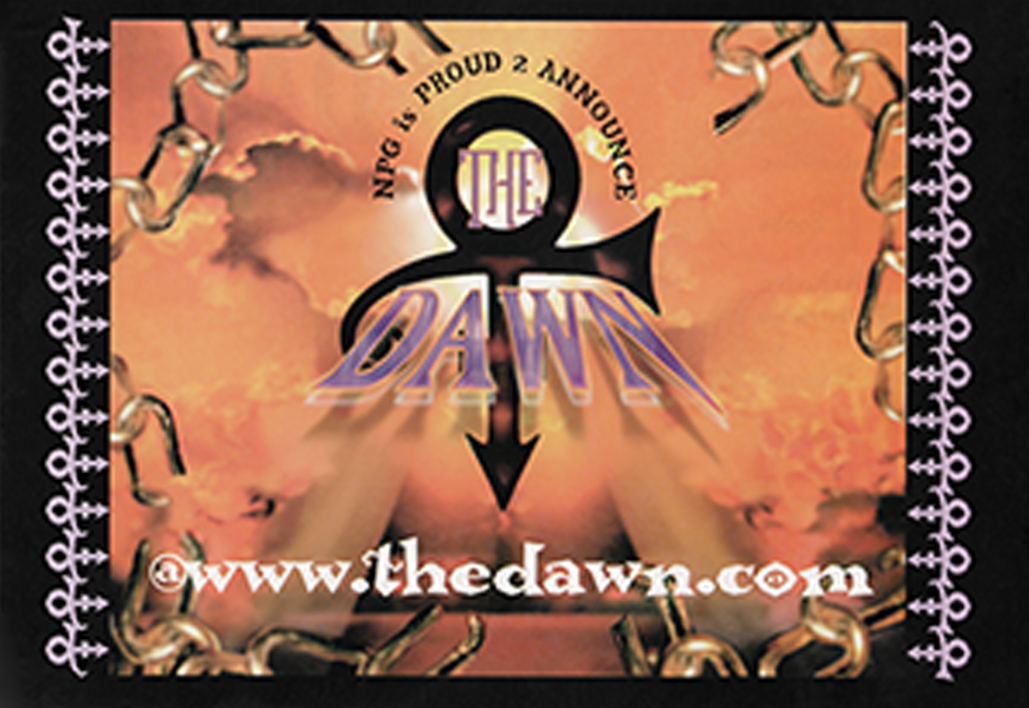
Now that Prince has depart­ed, the vault has been final­ly been opened. What’s in it? Spec­u­la­tion, rumor, and hoax­es abound; we could see a posthu­mous album a year for the next cen­tu­ry. As they trick­le out we’ll like­ly see more con­ven­tion­al, less Prince-like releas­ing strate­gies, now that he is no longer per­son­al­ly in con­trol of his out­put. This will sure­ly make it eas­i­er on his fans, but will also strip the music of much of its curi­ous mys­tique. “A stream­ing skep­tic before it was fash­ion­able,” writes August Brown at the L.A. Times, and “a born futur­ist,” Prince excelled at “cre­at­ing new dis­tri­b­u­tion sys­tems under his purview.” As an ear­ly adopter of web tech­nol­o­gy, he began giv­ing away and sell­ing his music and mer­chan­dise online as ear­ly as 1996, when he cre­at­ed his first offi­cial web­site, “The Dawn” (above).

PrinceOnline NPG2003

Prince’s web debut hap­pened in the midst of his pitched bat­tle with Warn­er Broth­ers, and three years after he changed his name to the “Love Sym­bol.” Brows­ing through the his­to­ry of his inter­net strate­gies allows us to see how his per­son­al­ized dis­tri­b­u­tion approach­es and online iden­ti­ties evolved over the next two decades as he regained full cre­ative inde­pen­dence. We can eas­i­ly sur­vey that his­to­ry all in one place now, thanks to the Prince Online Muse­um, an archive of 16 of Prince’s var­i­ous web­sites, each one with its own pro­file writ­ten in Prince’s dis­tinc­tive idiom, with “tes­ti­mo­ni­als from the peo­ple who were involved in cre­at­ing and run­ning them for Prince,” writes The New York Times, and “links as well as screen shots and videos” of each site, none of them cur­rent­ly active.

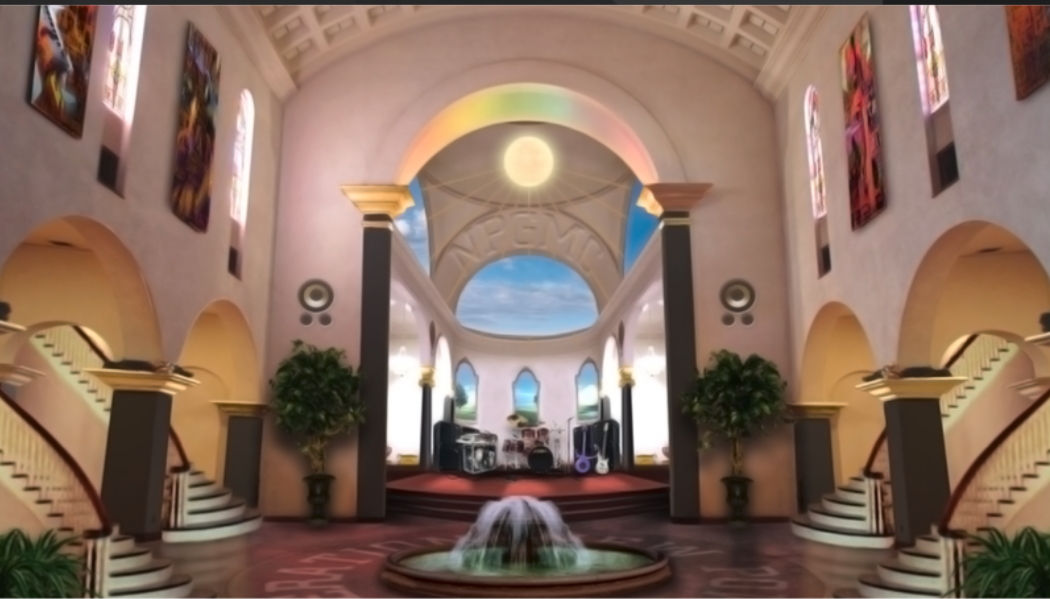
There’s even a pre­cur­sor to Prince’s online world, Prince Inter­ac­tive, a 1994 CD-Rom “cou­pled with Prince’s under­ground film, The Beau­ti­ful Expe­ri­ence.” This ear­ly attempt makes clear that “Prince was fas­ci­nat­ed and excit­ed by the pos­si­bil­i­ties of con­nect­ing direct­ly 2 his audi­ence through their com­put­ers. It would be sev­er­al years until that became a real­i­ty 4 him, but the idea start­ed here.” (See a slow video walk-through of the CD-Rom above). After 1996’s “The Dawn” came the first offi­cial online retail store, “1–800-NewFunk,” and an online lyric book, “Crys­tal Ball Online.” Suc­ces­sive sites each had a dis­tinc­tive focus: on Prince’s char­i­ta­ble foun­da­tion with “Love 4 One Anoth­er”; on var­i­ous iter­a­tions of his “NPG Music Club,” an “online dis­tri­b­u­tion hub”—including the “vir­tu­al estate” of the 2003 iter­a­tion (see pic­ture fur­ther up); and on rebrand­ing efforts like “3121.com.”

PrinceOnline 3rdEyeGirl

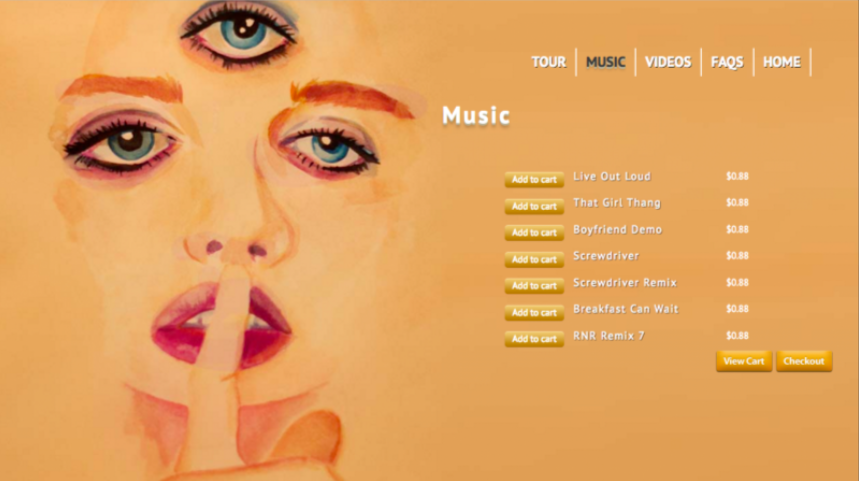
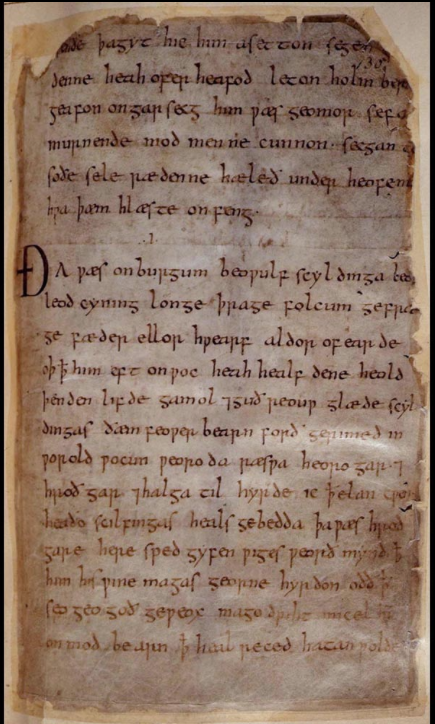
One of the most strik­ing of all of the var­i­ous sites, “Lotusflow3r” (top) con­tained “vibrant 3D imagery and ani­ma­tion con­nect­ed 2 the music” and design of the 3‑CD album set of the same name from 2009. The last entry in the archive, the “3rdEyeGirl” site from 2013, was cre­at­ed for Prince’s new band and “was anoth­er exam­ple of choos­ing 2 bypass tra­di­tion­al chan­nels and go his own way.” Each of these site pro­files act as “snap­shots in time to expe­ri­ence the Web sites just like when they were active,” writes Prince Online Muse­um direc­tor Sam Jen­nings. They also show­case “his fierce inde­pen­dence” and desire “to con­nect direct­ly with his audi­ence with­out any mid­dle­man.”

You can explore the Prince Online Muse­um here.

Relat­ed Con­tent:

The Life of Prince in a 24-Page Com­ic Book: A New Release

See Prince (RIP) Play Mind-Blow­ing Gui­tar Solos On “While My Gui­tar Gen­tly Weeps” and “Amer­i­can Woman”

Prince Plays Unplugged and Wraps the Crowd Around His Lit­tle Fin­ger (2004)

Josh Jones is a writer and musi­cian based in Durham, NC. Fol­low him at @jdmagness
1,000-Year-Old Manuscript of Beowulf Digitized and Now Online

Beowulf

One out­come of the upcom­ing “Brex­it” vote, we’re told, might free the UK to pur­sue its own unfet­tered des­tiny, or might plunge it into iso­la­tion­ist decline. The eco­nom­ic issues are beyond my ken, but as a read­er and stu­dent of Eng­lish lit­er­a­ture, I’ve always been struck by the fact that the old­est poem in Eng­lish, Beowulf, shows us an already inter­na­tion­al­ized Britain absorb­ing all sorts of Euro­pean influ­ences. From the Ger­man­ic roots of the poem’s Anglo-Sax­on lan­guage to the Scan­di­na­vian roots of its nar­ra­tive, the ancient epic reflects a Britain tied to the con­ti­nent. With pagan, native tra­di­tions min­gled with lat­er Chris­t­ian echoes, and local leg­ends with those of the Danes and Swedes, Beowulf pre­serves many of the island nation’s poly­glot, mul­ti-nation­al ori­gins.

Irish poet Sea­mus Heaney—whose work engaged with the ironies and com­pli­ca­tions of trib­al­ism and nationalism—had a deep respect for Beowulf; in the intro­duc­tion to his trans­la­tion of the poem, Heaney describes it as a tale “as elab­o­rate as the beau­ti­ful con­trivances of its lan­guage. Its nar­ra­tive ele­ments may belong to a pre­vi­ous age but as a work of art it lives in its own con­tin­u­ous present, equal to our knowl­edge of real­i­ty in the present time.” Though we’ve come to think of it as an essen­tial work of Eng­lish lit­er­a­ture, Beowulf might have dis­ap­peared into the mists of his­to­ry had not the only man­u­script of the poem sur­vived “more or less by chance.” The “unique copy,” writes Heaney, “(now in the British Library) bare­ly sur­vived a fire in the eigh­teenth cen­tu­ry and was then tran­scribed and titled, retran­scribed and edit­ed, trans­lat­ed and adapt­ed, inter­pret­ed and taught, until it has become an acknowl­edged clas­sic.”

Now, the British Library’s dig­i­ti­za­tion of that sole man­u­script allows us to peel back the lay­ers of can­on­iza­tion and see how the poem first entered a lit­er­ary tra­di­tion. Orig­i­nal­ly “passed down oral­ly over many gen­er­a­tions, and mod­i­fied by each suc­ces­sive bard,” writes the British Library, Beowulf took this fixed form when “the exist­ing copy was made at an unknown loca­tion in Anglo-Sax­on Eng­land.” Not only is the loca­tion unknown, but the date as well: “its age has to be cal­cu­lat­ed by ana­lyz­ing the scribes’ hand­writ­ing. Some schol­ars have sug­gest­ed that the man­u­script was made at the end of the 10th cen­tu­ry, oth­ers in the ear­ly decades of the 11th, per­haps as late as the reign of King Cnut, who ruled Eng­land from 1016 until 1035.”

These schol­ar­ly debates may not inter­est the aver­age read­er much. The poem sur­vived long enough to be writ­ten down, then became known as great lit­er­a­ture these many cen­turies lat­er, because the rich poet­ic lan­guage and the com­pelling sto­ry it tells cap­ti­vate us still. Nonethe­less, though we may all know the gen­er­al out­lines of its hero’s con­test with the mon­ster Gren­del and his moth­er, many of the cul­tur­al con­cepts from the world of Beowulf strike mod­ern read­ers as total­ly alien. Like­wise the poem’s lan­guage, Old Eng­lish, resem­bles no form of Eng­lish we’ve encoun­tered before. Schol­ars like J.R.R. Tolkien and poets like Heaney have done much to shape our appre­ci­a­tion for the ancient work, and we might say that with­out their inter­ven­tions, it would not live, as Heaney writes, “in its own con­tin­u­ous present” but in a dis­tant, unrec­og­niz­able past.

You can hear Heaney read his trans­la­tion of the poem on Youtube. Read Tolkien’s famous essay on the poem here, and hear it read in its orig­i­nal lan­guage at our pre­vi­ous post. Learn more about the sin­gle man­u­script that pre­served the epic poem for pos­ter­i­ty at the British Library’s web­site.

Find Beowulf list­ed in our col­lec­tion, 800 Free eBooks for iPad, Kin­dle & Oth­er Devices.

Relat­ed Con­tent:

Sea­mus Heaney Reads His Exquis­ite Trans­la­tion of Beowulf and His Mem­o­rable 1995 Nobel Lec­ture

Hear Beowulf Read In the Orig­i­nal Old Eng­lish: How Many Words Do You Rec­og­nize?

Dante’s Divine Com­e­dy Illus­trat­ed in a Remark­able Illu­mi­nat­ed Medieval Man­u­script (c. 1450)

Josh Jones is a writer and musi­cian based in Durham, NC. Fol­low him at @jdmagness
Download Issues of Landmark UK Feminist Magazine Spare Rib Free Online

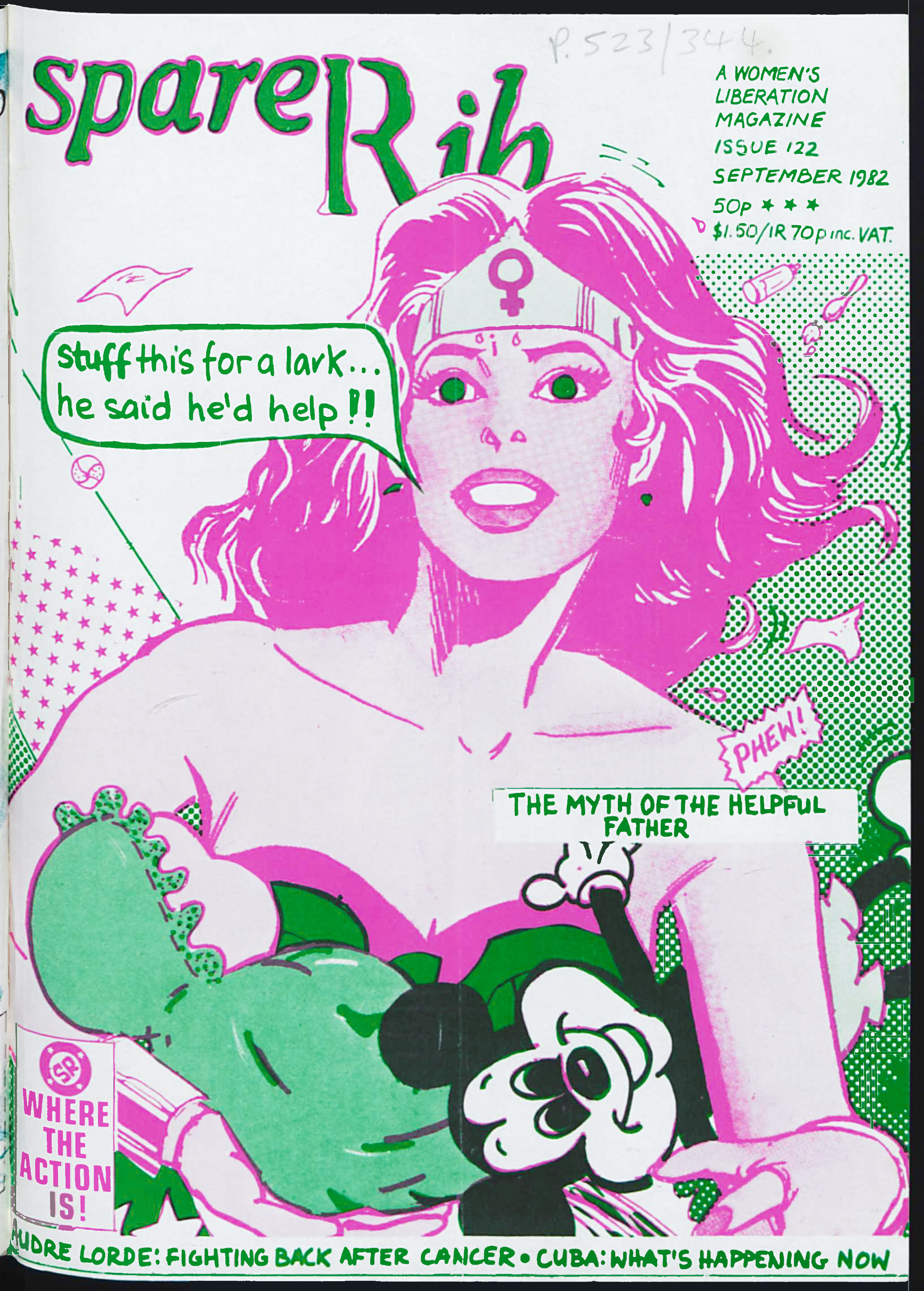
spare-rib-front-cover -Issue122-0001

The fem­i­nism we asso­ciate with the myth­i­cal­ly bra-burn­ing six­ties and seventies—with Bet­ty Friedan and Glo­ria Steinem—falls under the so-called Sec­ond Wave of the move­ment. And it has some­times been cast by its crit­ics and suc­ces­sors since the 1980s as over­whelm­ing­ly white and mid­dle class, exclud­ing from its canons work­ing class women, women of col­or, and the LGBTQ com­mu­ni­ty.

Advo­cates of intersectionality—the term coined by law pro­fes­sor Kim­ber­lé Cren­shaw in the 80s to describe, writes the New States­man, “how dif­fer­ent pow­er struc­tures inter­act in the lives of minorities”—have made con­cert­ed efforts to broad­en and diver­si­fy the move­ment. But as Cren­shaw her­self admits, the con­cept is not a new one. Its antecedents are “as old as Anna Julia Coop­er, and Maria Stew­art in the 19th cen­tu­ry in the US, all the way through Angela Davis and Deb­o­rah King.”

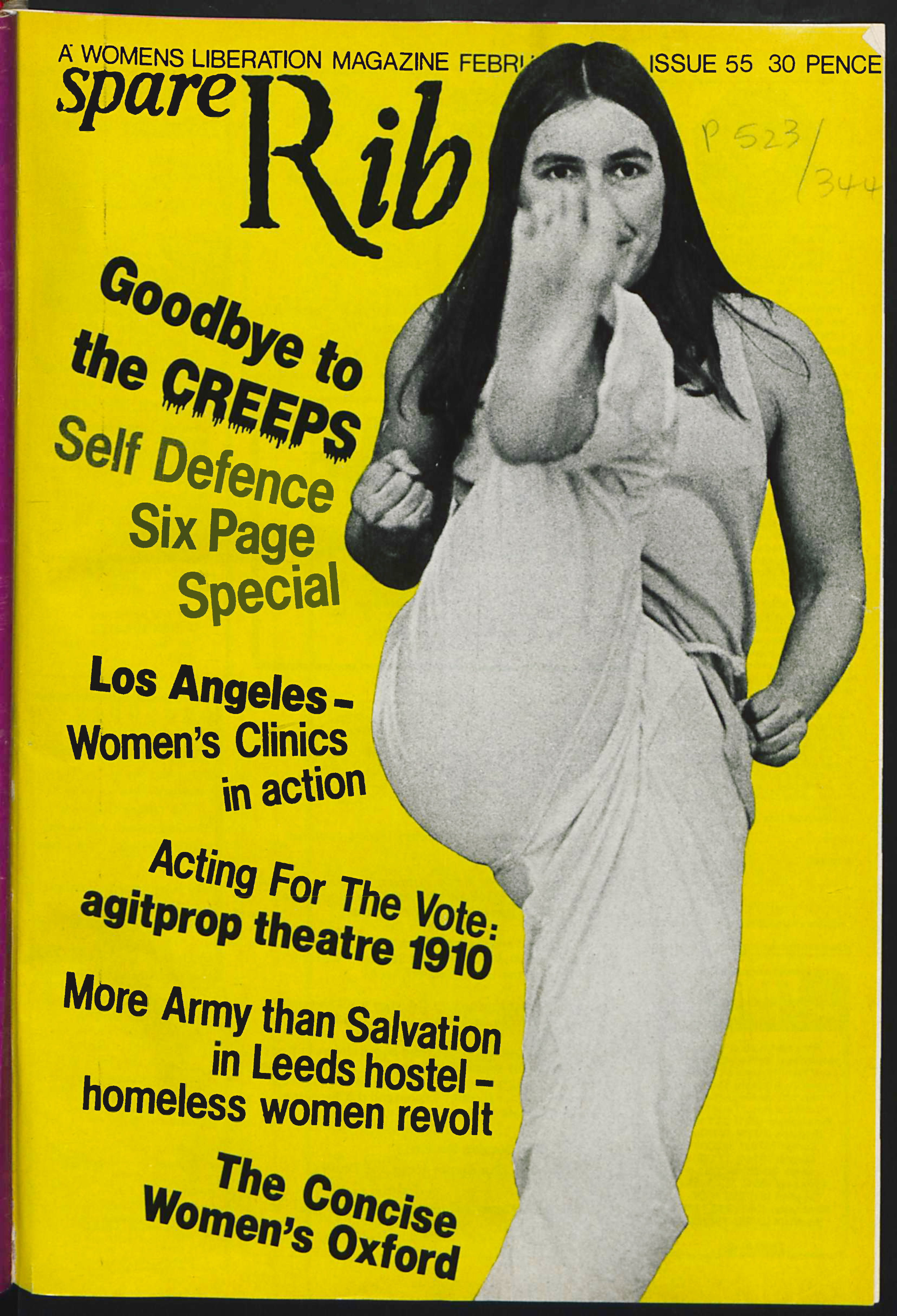
spare-rib-front-cover -Issue55-0001

We can see many of these dis­cus­sions and debates around inter­sec­tion­al­i­ty in Sec­ond Wave fem­i­nism and beyond first­hand in British fem­i­nist mag­a­zine Spare Rib, which is now avail­able online. The Guardian offers a con­cise sum­ma­ry of the magazine’s attempts to “pro­vide an alter­na­tive to tra­di­tion­al gen­der roles” by cov­er­ing

…sub­jects such as “lib­er­at­ing orgasm,” “kitchen sink racism,” anorex­ia and the prac­tice of “cliterec­to­my,” now called female gen­i­tal muti­la­tion. Cov­er head­lines includ­ed “Doctor’s Nee­dles Not Knit­ting Nee­dles” and “Cellulie—the slim­ming fraud” and arti­cles fea­tured women such as coun­try and west­ern singer Tam­my Wynette and US polit­i­cal activist Angela Davis.

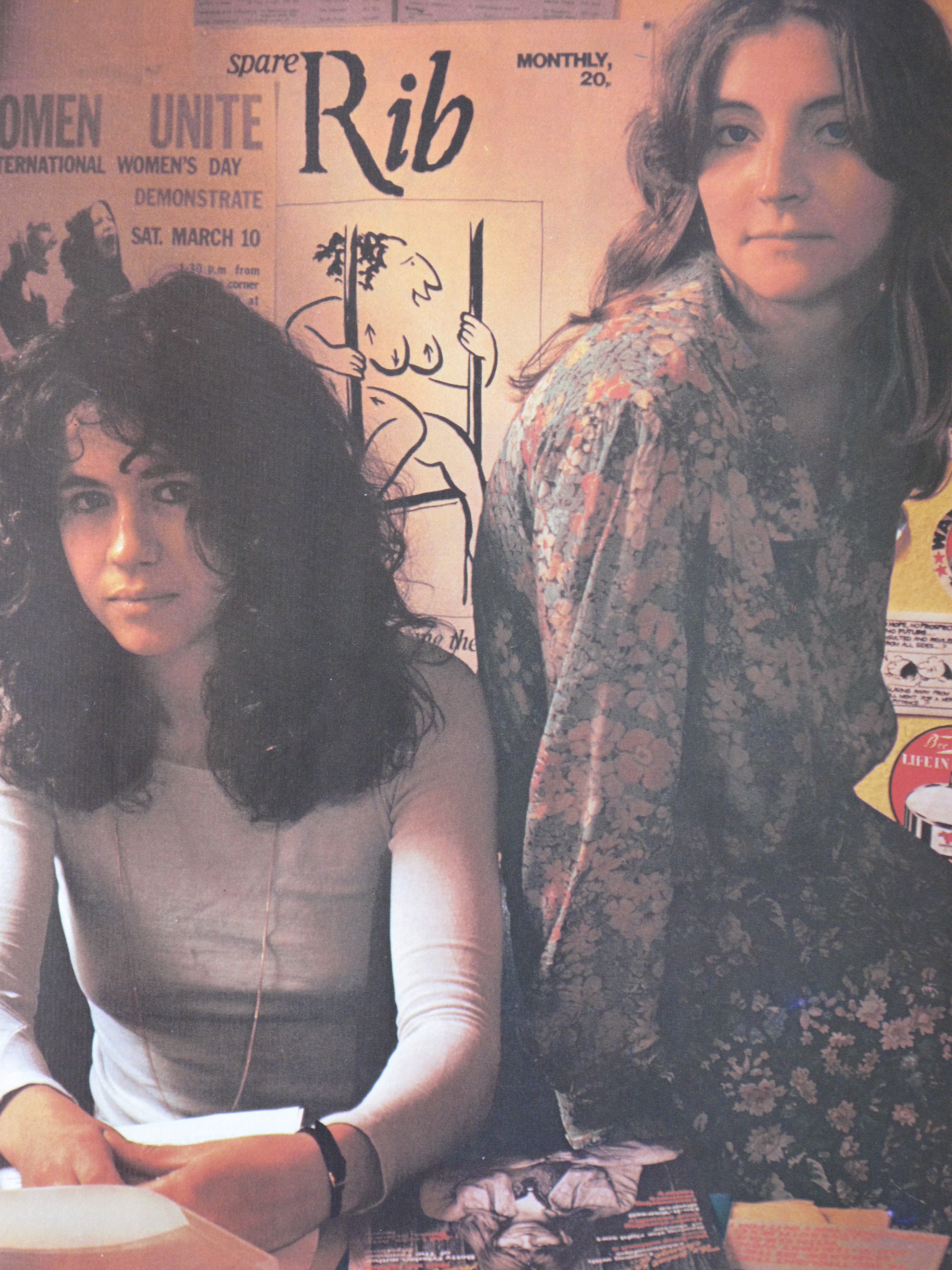
Found­ed in ’72 by Mar­sha Rowe and Rosie Boy­cott (pic­tured below), and run as a col­lec­tive, the mag­a­zine fea­tured a “breadth of voic­es.” Ear­ly issues “involved big-name con­trib­u­tors includ­ing Bet­ty Friedan, Ger­maine Greer, Mar­garet Drab­ble and Alice Walk­er, but along­side these were the voic­es of ordi­nary women telling their sto­ries.” As we see in hun­dreds of pages of Spare Rib, the often very heat­ed argu­ments around issues of race, class, and sex­u­al­i­ty in the fem­i­nist com­mu­ni­ty were no less heat­ed in the past than today.

Marsha-Rowe-and-Rosie-Boycott-in-the-Spare-Rib-offices-1972-Photograph-by-David Wilkerson

One woman who helped push the bound­aries of the con­ver­sa­tion before Spare Rib’s “con­scious effort to diver­si­fy the col­lec­tive mem­ber­ship” was Roisin Boyd, an Irish broad­cast­er and writer who joined in 1980. Boyd describes some of the magazine’s chal­lenges in a British Library ret­ro­spec­tive essay, “Race, place and class: who’s speak­ing for who?” “Over the three years I worked on the col­lec­tive,” she writes, “I was often puz­zled by the fact that although we were all women and all fem­i­nists, how dif­fi­cult it was for us to nego­ti­ate our dif­fer­ences, let alone recog­nise them.”

Boyd found that “some col­lec­tive mem­bers were upper class and wealthy” and “dis­tanced from the real­i­ty of post colo­nial­ism.” Like­wise, The Guardian describes many of the debates in the mag­a­zine as “acri­mo­nious,” giv­en its rep­re­sen­ta­tion of “so many dif­fer­ent threads of fem­i­nism.” Spare Rib “reflect­ed the some­times ‘painful’ dis­cus­sions between the col­lec­tive on how best to tack­le issues such as sex­u­al­i­ty and racism.”

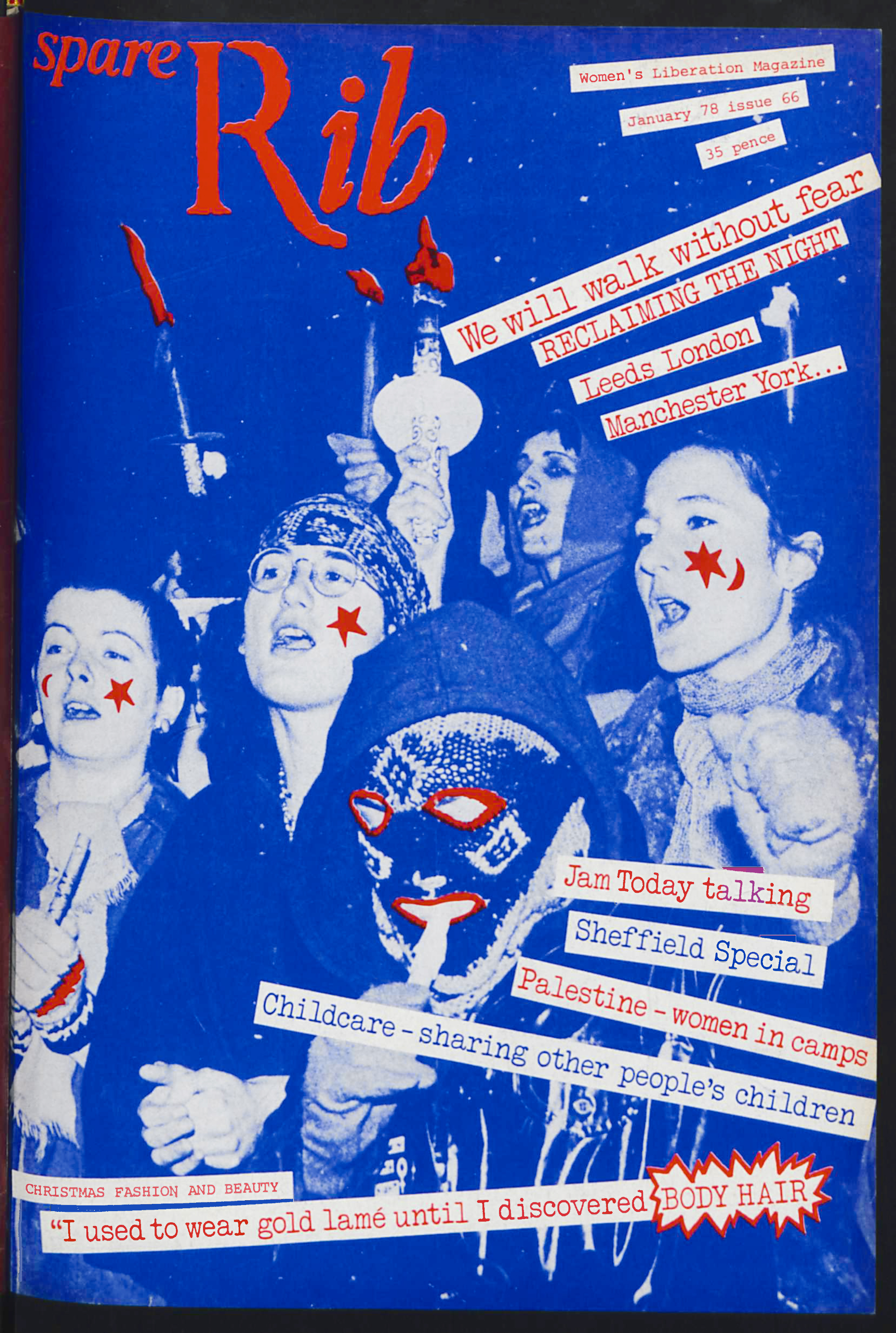
spare-rib-front-cover -Issue66-0001

In spite of, or per­haps because of, these dis­agree­ments, the mag­a­zine “was a high­ly vis­i­ble part of the Women’s Lib­er­a­tion move­ment,” says for­mer col­lec­tive mem­ber Sue O’Sullivan, “and a tool for reach­ing thou­sands of women every sin­gle month for over 20 years.” Now with the dig­i­ti­za­tion of its cat­a­log, it can be “a won­der­ful resource for younger his­to­ri­ans and fem­i­nist activists, researchers and all the women (and men) who won­der what their moth­ers, aunts, grannies and old­er friends got up to all those years ago.” Known for its irrev­er­ent humor, intel­li­gence, and eye-catch­ing cov­ers, Spare Rib pre­serves a record of the many ways fem­i­nist issues and debates have changed over the decades—as well as the many ways they haven’t.

Relat­ed Con­tent:

11 Essen­tial Fem­i­nist Books: A New Read­ing List by The New York Pub­lic Library

Simone de Beau­voir Tells Studs Terkel How She Became an Intel­lec­tu­al and Fem­i­nist (1960)

The First Fem­i­nist Film, Ger­maine Dulac’s The Smil­ing Madame Beudet (1922)

Josh Jones is a writer and musi­cian based in Durham, NC. Fol­low him at @jdmagness
Free: Download 5.3 Million Images from Books Published Over Last 500 Years

Dance Records of the Month 1917

Back in 2014, we brought to your atten­tion an image archive rival­ing the largest of its kind on the web: the Inter­net Archive Book Images col­lec­tion at Flickr. There, you’ll find mil­lions of “pub­lic domain images, all extract­ed from books, mag­a­zines and news­pa­pers pub­lished over a 500 year peri­od.”

At the time, the col­lec­tion con­tained 2.6 mil­lion pub­lic domain images, but “even­tu­al­ly,” we not­ed in a pre­vi­ous post, “this archive will grow to 14.6 mil­lion images.” Well, it has almost dou­bled in size since our first post, and it now fea­tures over 5.3 mil­lion images, thanks again to Kalev Lee­taru, who head­ed the dig­i­ti­za­tion project while on a Yahoo-spon­sored fel­low­ship at George­town Uni­ver­si­ty.

Records of Big Game 1910

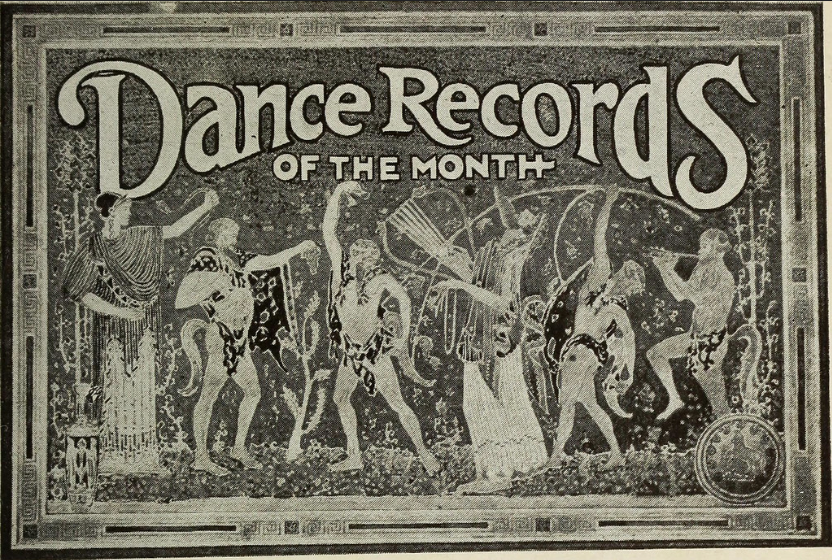
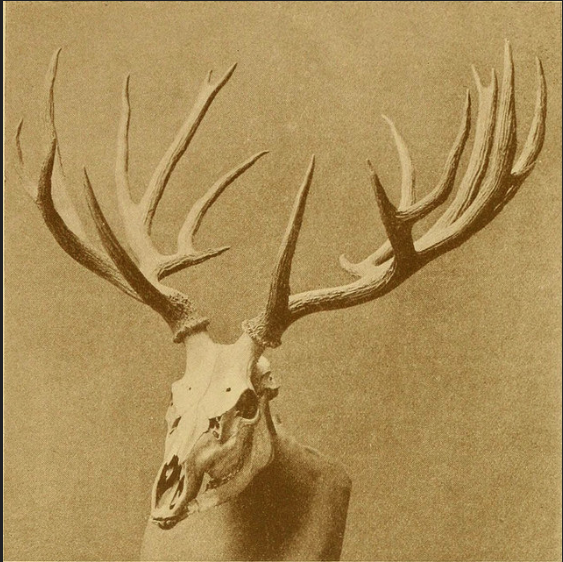
Rather than using opti­cal char­ac­ter recog­ni­tion (OCR), as most dig­i­ti­za­tion soft­ware does to scan only the text of books, Leetaru’s code reversed the process, extract­ing the images the Inter­net Archive’s OCR typ­i­cal­ly ignores. Thou­sands of graph­ic illus­tra­tions and pho­tographs await your dis­cov­ery in the search­able data­base. Type in “records,” for exam­ple, and you’ll run into the 1917 ad in “Colom­bia Records for June” (top) or the creepy 1910 pho­to­graph above from “Records of big game: with their dis­tri­b­u­tion, char­ac­ter­is­tics, dimen­sions, weights, and horn & tusk mea­sure­ments.” Two of many gems amidst util­i­tar­i­an images from dull cor­po­rate and gov­ern­ment record books.

1912 Book of Home Building

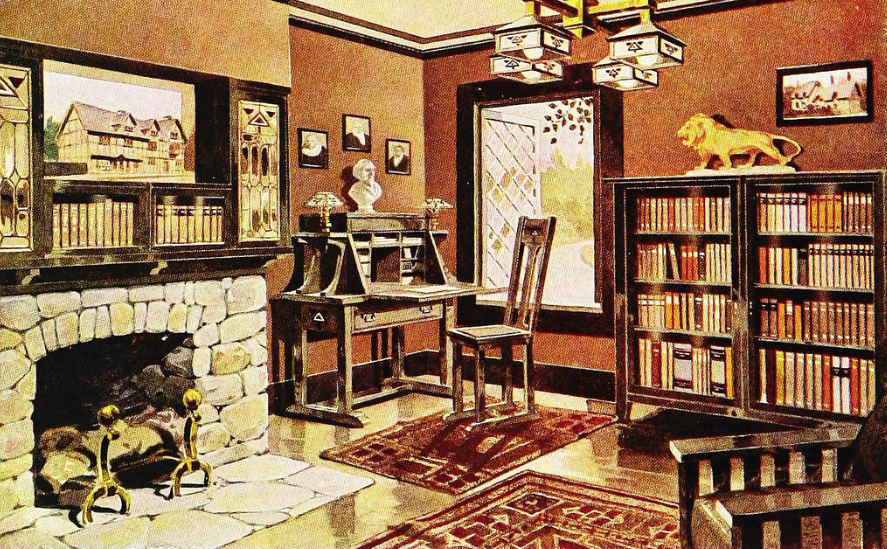
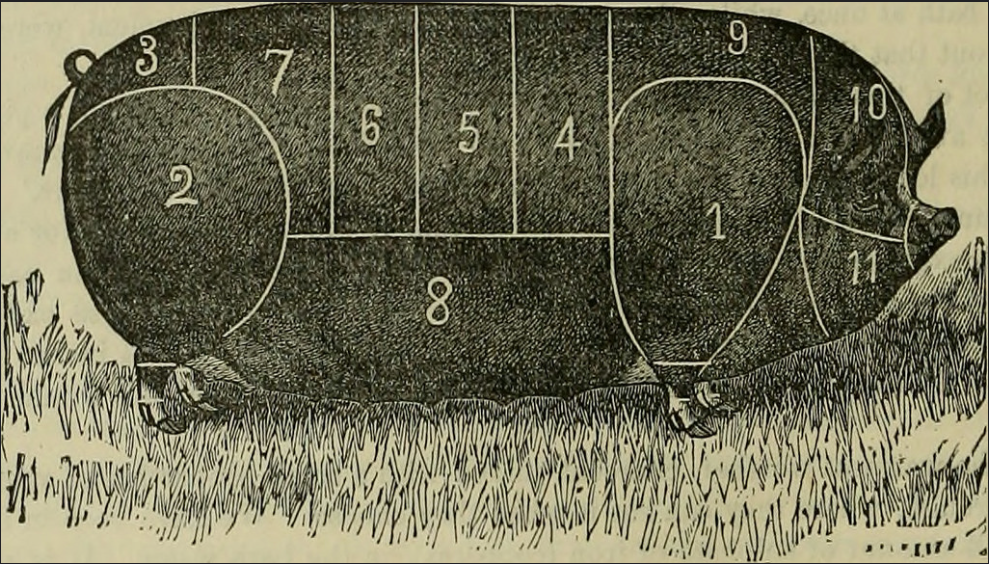
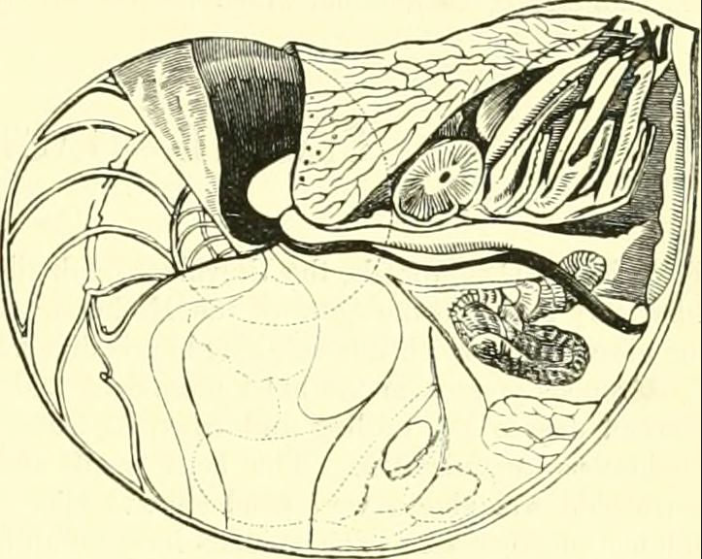
Search “library” and you’ll arrive at a fas­ci­nat­ing assem­blage, from the fash­ion­able room above from 1912’s “Book of Home Build­ing and Dec­o­ra­tion,” to the rotund, mourn­ful, soon-to-be carved pig below from 1882’s “The Amer­i­can Farmer: A Com­plete Agri­cul­tur­al Library,” to the nifty Nau­tilus draw­ing fur­ther down from an 1869 British Muse­um of Nat­ur­al His­to­ry pub­li­ca­tion. To see more images from any of the sources, sim­ply click on the title of the book that appears in the search results. The orga­ni­za­tion of the archive could use some improve­ment: as yet mil­lions of images have not been orga­nized into the­mat­ic albums, which would great­ly stream­line brows­ing through them. But it’s a minor gripe giv­en the num­ber and vari­ety of free, pub­lic domain images avail­able for any kind of use.

American Farmer Library 1882

More­over, Lee­taru has planned to offer his code to insti­tu­tions, telling the BBC, “Any library could repeat this process. That’s actu­al­ly my hope, that libraries around the world run this same process of their dig­i­tized books to con­stant­ly expand this uni­verse of images.” Schol­ars and archivists of book and art his­to­ry and visu­al cul­ture will find such a “uni­verse of images” invalu­able, as will edi­tors of Wikipedia. “What I want to see,” Lee­taru also said, “is… Wikipedia have a nation­al day of going through this [col­lec­tion] to illus­trate Wikipedia arti­cles.”

Museum of Natural History 1869

Short of that, indi­vid­ual edi­tors and users can sort through images of all kinds when they can’t find freely avail­able pic­tures of their sub­ject. And, of course, sites like Open Culture—which rely main­ly on pub­lic domain and cre­ative com­mons images—benefit great­ly as well. So, thanks, Inter­net Archive Book Images Col­lec­tion! We’ll check back lat­er and let you know when they’ve grown even more.

Relat­ed Con­tent:

Down­load for Free 2.6 Mil­lion Images from Books Pub­lished Over Last 500 Years on Flickr

Old Book Illus­tra­tions: Free Archive Lets You Down­load Beau­ti­ful Images From the Gold­en Age of Book Illus­tra­tion

The British Library Puts 1,000,000 Images into the Pub­lic Domain, Mak­ing Them Free to Reuse & Remix

The Get­ty Adds Anoth­er 77,000 Images to its Open Con­tent Archive

Josh Jones is a writer and musi­cian based in Durham, NC. Fol­low him at @jdmagness
The British Library’s “Sounds” Archive Presents 80,000 Free Audio Recordings: World & Classical Music, Interviews, Nature Sounds & More

Online archives, gal­leries, and libraries offer Vegas-sized buf­fets for the sens­es (well two of them, any­way). All the art and pho­tog­ra­phy your eyes can take in, all the music and spo­ken word record­ings your ears can han­dle. But per­haps you’re still miss­ing some­thing? “Geordies bang­ing spoons” maybe? Or “Tawang lamas blow­ing conch shell trum­pets… Ton­gan tribes­men play­ing nose flutes…,” the sound of “the Assamese wood­worm feast­ing on a win­dow frame in the dead of night”?

No wor­ries, the British Library’s got you cov­ered and then some. In 2009, it “made its vast archive of world and tra­di­tion­al music avail­able to every­one, free of charge, on the inter­net,” amount­ing to rough­ly 28,000 record­ings and, The Guardian esti­mates “about 2,000 hours of singing, speak­ing, yelling, chant­i­ng, blow­ing, bang­ing, tin­kling and many oth­er verbs asso­ci­at­ed with what is a unique­ly rich sound archive.”

But that’s not all, oh no! The com­plete archive, titled sim­ply and author­i­ta­tive­ly “Sounds,” also hous­es record­ings of accents and dialects, envi­ron­ment and nature, pop music, “sound maps,” oral his­to­ry, clas­si­cal music, sound record­ing his­to­ry, and arts, lit­er­a­ture, and per­for­mance (such as J.R.R. Tolkien’s short dis­course on “Wire­less,” ani­mat­ed in the video below).

The 80,000 record­ings avail­able to stream online rep­re­sent just a selec­tion of the British Library’s “exten­sive col­lec­tions of unique sound record­ings,” but what a selec­tion it is. In the short video at the top of the post, The Wire Mag­a­zine takes us on a mini-tour of the phys­i­cal archive’s metic­u­lous dig­i­ti­za­tion meth­ods. As with all such wide-rang­ing col­lec­tions, it’s dif­fi­cult to know where to begin.

One might browse the range of unusu­al folk sounds on aur­al dis­play in the World & Tra­di­tion­al music sec­tion, cov­er­ing every con­ti­nent and a daunt­ing meta­cat­e­go­ry called “World­wide.” For a more spe­cif­ic entry point, Elec­tron­ic Beats rec­om­mends a col­lec­tion of “around 8,000 Afropop tracks” from Guinea, record­ed on “the state-sup­port­ed Syli­phone label” and “released between 1958 and 1984.”

Edison Disc Phonograph

Oth­er high­lights include “Between Two Worlds: Poet­ry & Trans­la­tion,” an ongo­ing project begun in 2008 that fea­tures read­ings and inter­views with “poets who are bilin­gual or have Eng­lish as a sec­ond lan­guage, or who oth­er­wise reflect the project’s theme of dual cul­tures.” Or you may enjoy the exten­sive col­lec­tion of clas­si­cal music record­ings, includ­ing “Hugh Davies exper­i­men­tal music,” or the “Oral His­to­ry of Jazz in Britain.”

The cat­e­go­ry called “Sound Maps” orga­nizes a diver­si­ty of recordings—including region­al accents, inter­views with Holo­caust sur­vivors, wildlife sounds, and Ugan­dan folk music—by ref­er­ence to their loca­tions on Google maps.

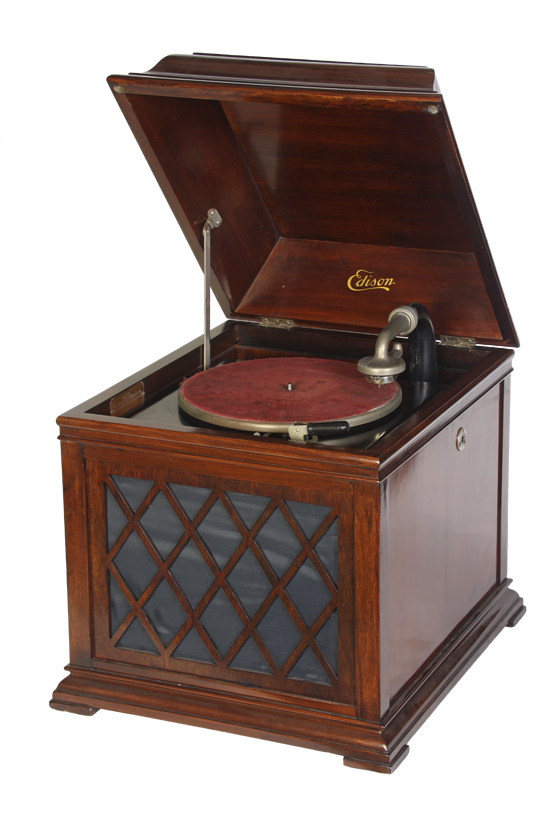
Not all of the mate­r­i­al in “Sounds” is sound-based. Record­ing and audio geeks and his­to­ri­ans will appre­ci­ate the large col­lec­tion of “Play­back & Record­ing Equip­ment” pho­tographs (such as the 1912 Edi­son Disc Phono­graph, above ), span­ning the years 1877 to 1992. Also, many of the recordings—such as the won­der­ful first ver­sion of “Dirty Old Town” by Alan Lomax and the Ram­blers, with Ewan Mac­Coll and Peg­gy Seeger (below)—feature album cov­ers, front and back, as well as disc labels.

The record­ings in the Archive are unfor­tu­nate­ly not down­load­able (unless you are a licensed mem­ber of a UK HE/FE insti­tu­tion), but you can stream them all online and share any of them on your favorite social media plat­form. Per­haps the British Library will extend down­load priv­i­leges to all users in the future. For now, brows­ing through the sheer vol­ume and vari­ety of sounds in the archive should be enough to keep you busy.

Relat­ed Con­tent:

The Alan Lomax Sound Archive Now Online: Fea­tures 17,000 Blues & Folk Record­ings

Cor­nell Launch­es Archive of 150,000 Bird Calls and Ani­mal Sounds, with Record­ings Going Back to 1929

1,000 Record­ings to Hear Before You Die: Stream a Huge Playlist of Songs Based on the Best­selling Book

Josh Jones is a writer and musi­cian based in Durham, NC. Fol­low him at @jdmagness
Crowdsourced Database Will Locate the Burial Sites of Forgotten US Slaves

slave grave database

Image cour­tesy of Nation­al Bur­ial Data­base of Enslaved Amer­i­cans

The sto­ries are infre­quent but deeply com­pelling: one recent news item in the AP’s The Big Sto­ry describes the bones of 14 peo­ple from the 18th or ear­ly 19th cen­tu­ry, dis­cov­ered in Albany, NY, “wrapped in shrouds, buried in pine box­es and—over centuries—forgotten.” Sev­en adults, five infants, and two chil­dren, soon to be “pub­li­cal­ly memo­ri­al­ized and [re]buried in per­son­al­ized box­es beside promi­nent fam­i­lies in old Albany.”

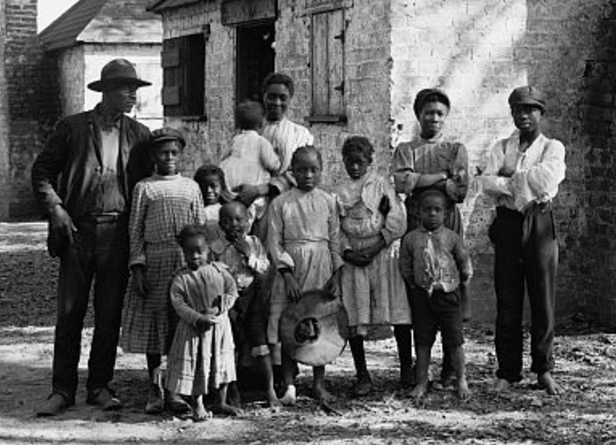
Over the 11 years since the bones’ dis­cov­ery by con­struc­tion work­ers, sci­en­tists have been able to piece togeth­er clues about what these lives were like: marked by con­stant toil and phys­i­cal hard­ship. Genet­ic mark­ers, and bro­ken bones, notched and miss­ing teeth, and arthrit­ic joints offer the only means of iden­ti­fy­ing the remains. A gran­ite head­stone donat­ed to the new gravesite will read, “Here lies the remains of 14 souls known only to God. Enslaved in life, they are slaves no more.”

In 1991, many miles south in low­er Man­hat­tan, a find of the remains of 419 peo­ple even­tu­al­ly gave rise to an even more impres­sive memo­r­i­al and muse­um, the African Bur­ial Ground Nation­al Mon­u­ment, a reminder of not only the slave labor that built New York City, but also of the peo­ple bought and sold in the once bustling slave mar­ket at what is now Wall Street.

Elmwood

Cre­ative Com­mons pho­to by Bruce Guthrie

Memo­ri­als like this one and the recent Albany bur­ial site do not change the facts or right the wrongs of his­to­ry, but they do make vis­i­ble lives and his­to­ries long buried and for­got­ten. “Among the scars left by the her­itage of slav­ery,” writes Edward Roth­stein at The New York Times, “one of the great­est is an absence: where are the memo­ri­als, ceme­ter­ies, archi­tec­tur­al struc­tures or stur­dy sanc­tu­ar­ies that typ­i­cal­ly pro­vide the ground for a people’s mem­o­ry?” This is pre­cise­ly the ques­tion San­dra Arnold is now ask­ing, in a very lit­er­al sense, for a project called The Nation­al Bur­ial Data­base of Enslaved Amer­i­cans (NBDEA).

A Grad­u­ate Fel­low at Brown Uni­ver­si­ty, Arnold found­ed the Peri­win­kle Ini­tia­tive, “a pub­lic human­i­ties and edu­ca­tion ini­tia­tive ded­i­cat­ed to pre­serv­ing cul­tur­al her­itage asso­ci­at­ed with enslaved Amer­i­cans.” The NBDEA—Periwinkle’s core project in col­lab­o­ra­tion with Ford­ham Uni­ver­si­ty, the Nation­al Endow­ment for the Human­i­ties, and the 1772 Foun­da­tion—aims, writes Arnold at The New York Times, to “be the first nation­al repos­i­to­ry of infor­ma­tion on the grave sites of indi­vid­u­als who died while enslaved or after they were eman­ci­pat­ed.”

The grave sites The NBDEA com­piles will depend in some part on the pub­lic: “Any­one who comes to the web­site will even­tu­al­ly be able to sub­mit infor­ma­tion about these places and con­duct search­es.” Cur­rent­ly, the site remains in devel­op­ment, unavail­able for pub­lic search­es, but users can make pre­lim­i­nary sub­mis­sions. Arnold describes the process of sift­ing through the sub­mis­sions she has received as “painful.”

Bur­ial grounds that should be revered spaces… instead are cov­ered by play­grounds and apart­ment com­plex­es. I have learned that many grave sites of for­mer­ly enslaved Amer­i­cans are aban­doned, undoc­u­ment­ed, des­e­crat­ed by the asphalt of “devel­op­ment,” and lack any type of memo­ri­al­iza­tion or recog­ni­tion. The bur­ial grounds are often found inci­den­tal­ly by devel­op­ers under parks and office build­ings, and for many of the sites, oral his­to­ry is their only source of doc­u­men­ta­tion.

Just such an oral his­to­ry pre­served the unmarked gravesite of one of Arnold’s ances­tors in her home­town in West Ten­nessee. Alli­son Meier at Hyper­al­ler­gic points to some specif­i­cal­ly trou­bled sites like those Arnold describes, includ­ing “a slave ceme­tery… bull­dozed in Hous­ton,” anoth­er “cov­ered with asphalt in Atlanta,” and a third “found below a Harlem bus depot.”

Arnold hopes that record­ing and memo­ri­al­iz­ing these “sacred spaces… can con­tribute to heal­ing, under­stand­ing and poten­tial­ly even rec­on­cil­i­a­tion.” Addi­tion­al­ly, she cites a “prag­mat­ic” ratio­nale for the project, since “bur­ial grounds are valu­able resources for schol­ars and his­to­ri­ans, serv­ing as road maps for genealog­i­cal and his­tor­i­cal research.”

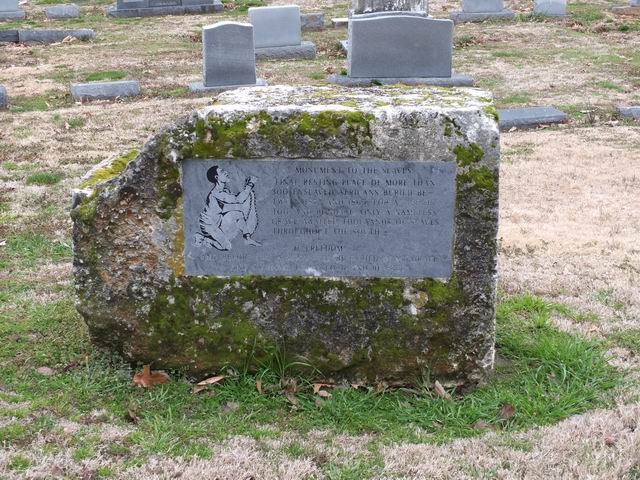
The project presents a tremen­dous oppor­tu­ni­ty for the many thou­sands of cit­i­zen his­to­ri­ans scat­tered across the coun­try to come togeth­er and fill in the absences in our his­tor­i­cal mem­o­ry; and the cen­tral­ized data­base will also draw more atten­tion to the few memo­ri­als that do exist, many of which, writes Meier, “are often stag­ger­ing­ly small in rela­tion to the num­ber of lives they remem­ber.” She refers to the exam­ple of a “minia­ture mass grave mon­u­ment” in Mem­phis’ Elm­wood Cemetary (above), a “sin­gle stone [that] memo­ri­al­izes over 300 slaves who died between 1852 and 1865.”

Like The Freedman’s Bureau Project, a recent online data­base of 1.5 mil­lion his­tor­i­cal doc­u­ments relat­ed to slav­ery, The NBDEA will fur­ther his­tori­cize and human­ize “over­looked lives,” writes Arnold, that “are an inex­tri­ca­ble part of the his­tor­i­cal nar­ra­tive of our coun­try.”

Can can vis­it The Nation­al Bur­ial Data­base of Enslaved Amer­i­cans here.

via Hyper­al­ler­gic

Relat­ed Con­tent:

1.5 Mil­lion Slav­ery Era Doc­u­ments Will Be Dig­i­tized, Help­ing African Amer­i­cans to Learn About Their Lost Ances­tors

Freed Slave Writes Let­ter to For­mer Mas­ter: You Owe Us $11,680 for 52 Years of Unpaid Labor (1865)

The Anti-Slav­ery Alpha­bet: 1846 Book Teach­es Kids the ABCs of Slavery’s Evils

Visu­al­iz­ing Slav­ery: The Map Abra­ham Lin­coln Spent Hours Study­ing Dur­ing the Civ­il War

Josh Jones is a writer and musi­cian based in Durham, NC. Fol­low him at @jdmagness

New Rosa Parks Archive is Now Online: Features 7,500 Manuscripts & 2,500 Photographs, Courtesy of the Library of Congress

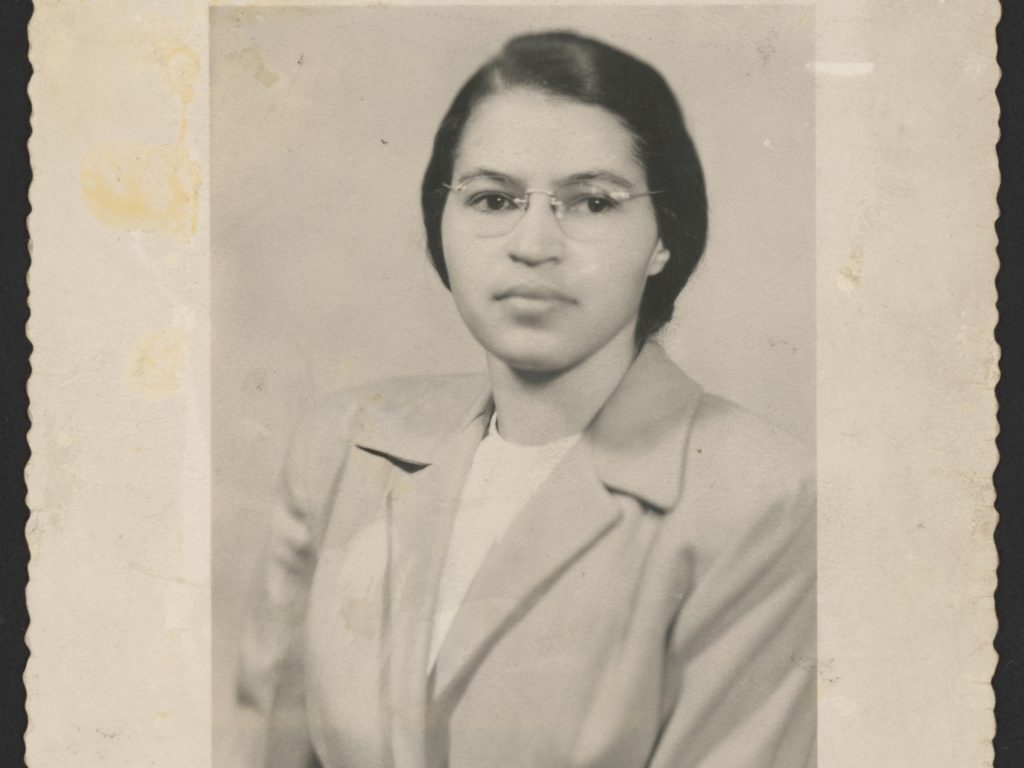
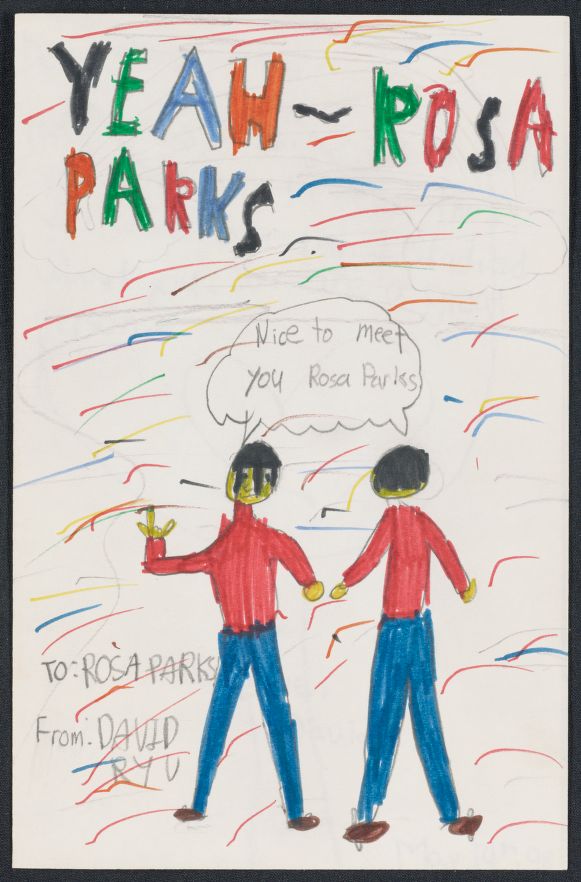
It’s telling that the Library of Con­gress, in dig­i­tiz­ing its vast Rosa Parks Col­lec­tion in close to its entire­ty, had to resort to a “rep­re­sen­ta­tive sam­ple” of chil­dren’s greet­ing cards. The lady had no short­age of admir­ers at the ele­men­tary school lev­el.

Parks Kids Card

It’s not sur­pris­ing that Parks’ refusal to yield her bus seat to a white pas­sen­ger in Mont­gomery, Alaba­ma in 1955 res­onates with chil­dren. The sto­ry has the sim­plic­i­ty of a fable, and Parks’ pluck is irre­sistible. It’s as if she took a sling­shot and aimed it right between the eyes of the seg­re­gat­ed South.

It’s easy to con­vey how impor­tant her spon­ta­neous act of resis­tance was to the Civ­il Rights Move­ment. How­ev­er, those few min­utes on Bus 2857 can­not be all there is to a woman whose life spanned nine decades (1913–2005). They are just the his­tor­i­cal equiv­a­lent of a role that an actor can­not escape—great, but ulti­mate­ly lim­it­ing.

The online archive helps to flesh out this icon­ic fig­ure beyond the con­fines of a child’s cray­oned por­trait.

Among the trea­sures are:

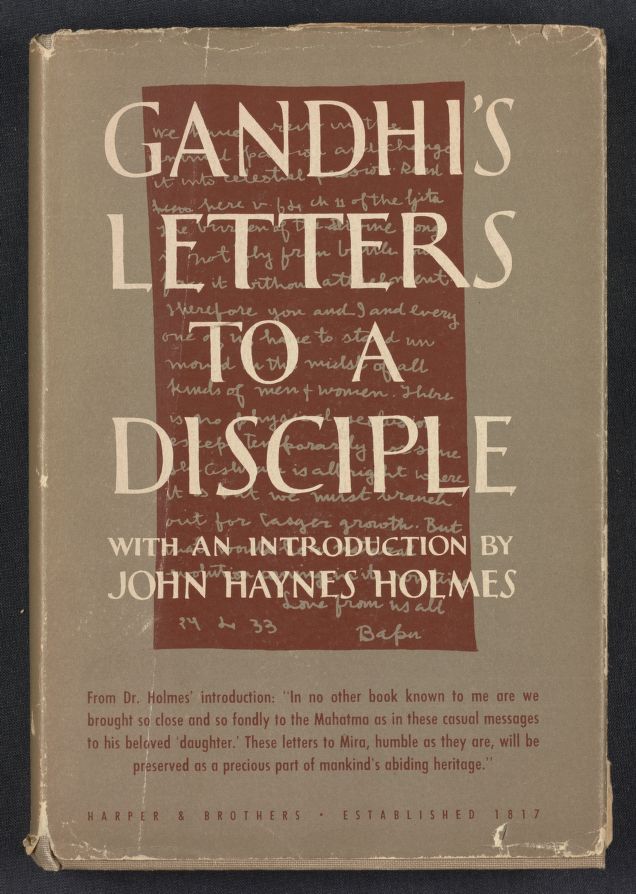
Scanned book cov­ers from her per­son­al library

Parks Gandhi
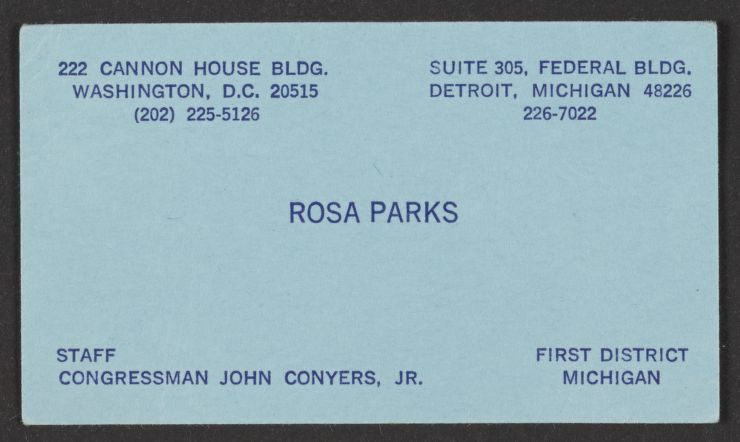
A busi­ness card from her stint as a staffer for Con­gress­man John Cony­ers of Michi­gan… (Parks moved to Detroit short­ly after the Mont­gomery Bus Boy­cott, after both she and her hus­band were dis­missed from their jobs.)

Parks Business Card

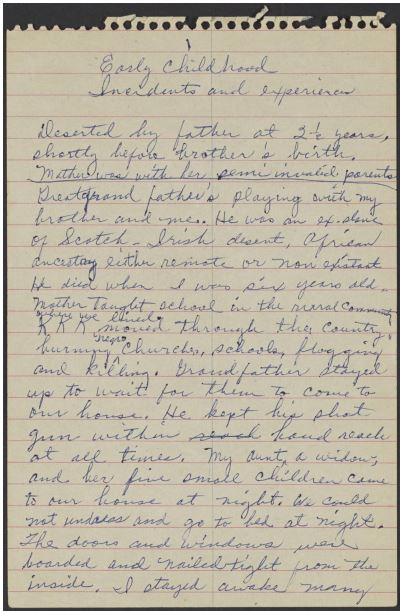
Hand­writ­ten rem­i­nis­cences about her rur­al Alaba­ma child­hood…

Parks Childhood

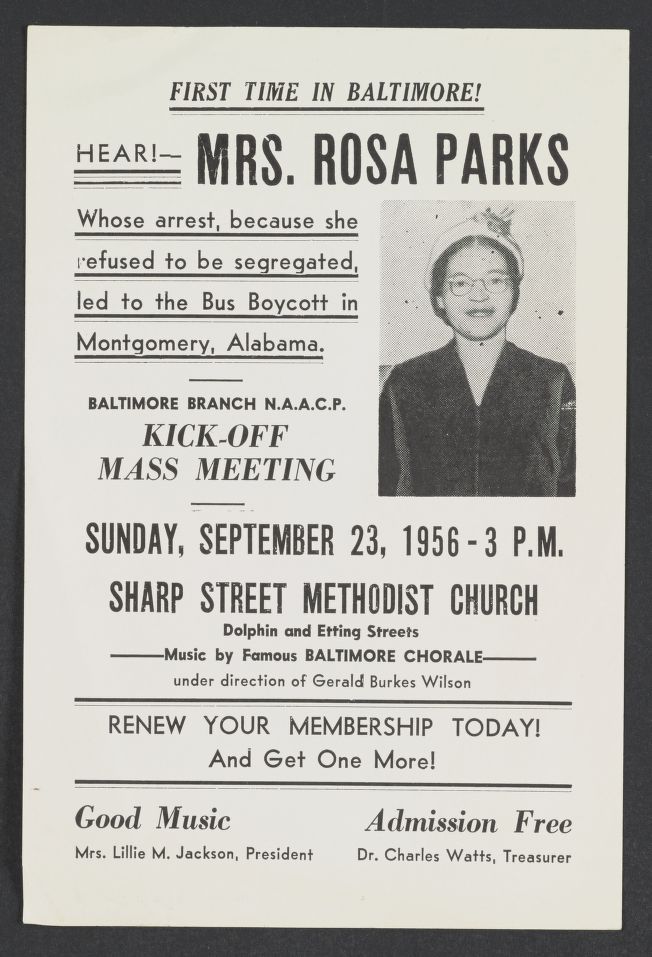
Doc­u­men­ta­tion of speak­ing engage­ments and oth­er pub­lic appear­ances…

Parks Baltimore

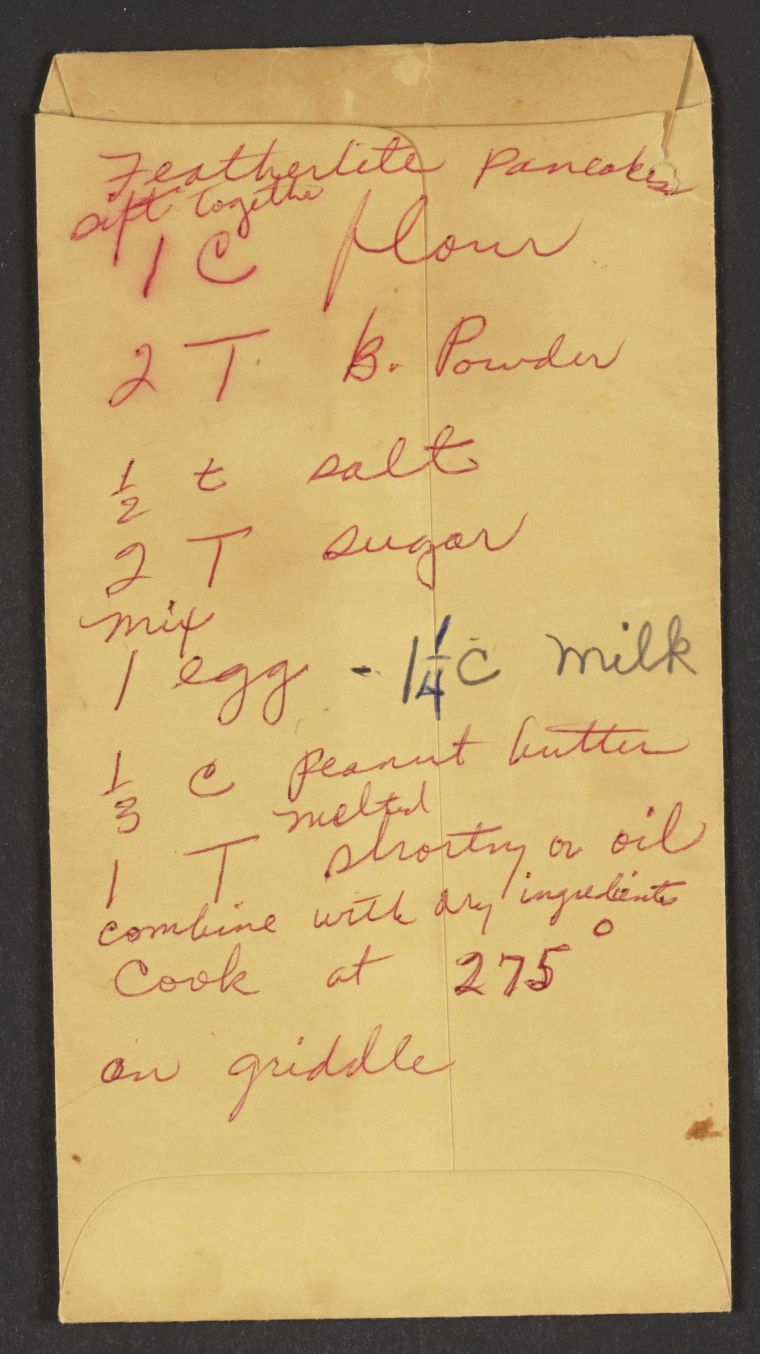
A hand­writ­ten pan­cake recipe…

Parks Pancakes

Cor­re­spon­dence from a bevy of high­ly rec­og­niz­able names

And of course, many, many reflec­tions hav­ing to do with the most pub­licly mem­o­rable day in an extreme­ly long life.

Most of the col­lec­tion can be viewed online and the Library has a teach­ing aid with sug­ges­tions on using these pri­ma­ry sources in the class­room. The video below con­tains some high­lights of the col­lec­tion, as well as tech­ni­cal infor­ma­tion on how its con­tents have been pre­served for future gen­er­a­tions.


Relat­ed Con­tent:

‘Tired of Giv­ing In’: The Arrest Report, Mug Shot and Fin­ger­prints of Rosa Parks (Decem­ber 1, 1955)

Mar­tin Luther King, Jr. Writes a List of 16 Sug­ges­tions for African-Amer­i­cans Rid­ing New­ly-Inte­grat­ed Bus­es (1956)

Read Mar­tin Luther King and The Mont­gomery Sto­ry: The Influ­en­tial 1957 Civ­il Rights Com­ic Book

Ayun Hal­l­i­day is an author, illus­tra­tor, and Chief Pri­ma­tol­o­gist of the East Vil­lage Inky zine. Fol­low her @AyunHalliday

Discover Europeana Collections, a Portal of 48 Million Free Artworks, Books, Videos, Artifacts & Sounds from Across Europe

MNAC 72

“Where is the wis­dom we have lost in knowl­edge? Where is the knowl­edge we have lost in infor­ma­tion?,” asked T.S. Eliot in lines from his play “The Rock.” His pre­scient descrip­tion of the dawn­ing infor­ma­tion age has inspired data sci­en­tists and their dis­senters for decades. Thir­ty-six years after Eliot’s prophet­ic lament over “End­less inven­tion, end­less exper­i­ment,” futur­ist Alvin Tof­fler described the effects of infor­ma­tion over­load in his book Future Shock, and though many of his pre­dic­tions haven’t aged well, his “prog­no­sis,” writes Fast Com­pa­ny, “was more accu­rate than not.” Among his many “Tof­flerisms” is one I believe Eliot would appre­ci­ate: “The illit­er­ate of the future will not be the per­son who can­not read. It will be the per­son who does not know how to learn.”

Indeed, the expo­nen­tial accu­mu­la­tion of data and infor­ma­tion, and the incred­i­ble amount of ready access would make both men’s heads spin. Inter­net archives grow vaster and vaster, their con­tents an embar­rass­ing rich­ness of the world’s trea­sures, and a per­haps even greater store of its obscu­ri­ties. Each week, it seems, we bring you news of one or two more open access data­bas­es filled with images, texts, films, record­ed music. It can indeed be dizzy­ing. And of all the archives I’ve sur­veyed, used in my own research, and pre­sent­ed to Open Cul­ture read­ers, none has seemed to me vaster than Euro­peana Col­lec­tions, a por­tal of “48,796,394 art­works, arte­facts, books, videos and sounds from across Europe,” sourced from well over 100 insti­tu­tions such as The Euro­pean Library, Europho­to, the Nation­al Library of Fin­land, Uni­ver­si­ty Col­lege Dublin, Museo Galileo, and many, many more, includ­ing con­tri­bu­tions from the pub­lic at large. Where does one begin?

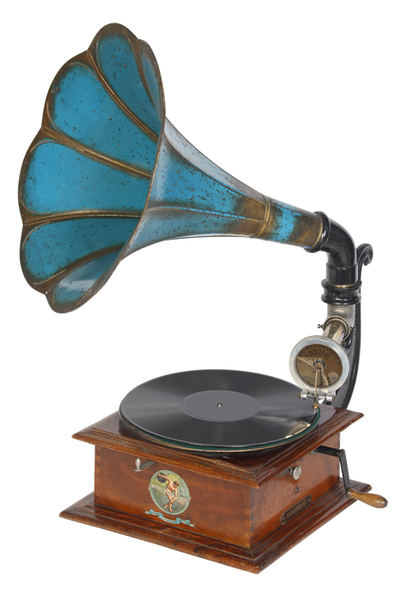
europeana grammophone

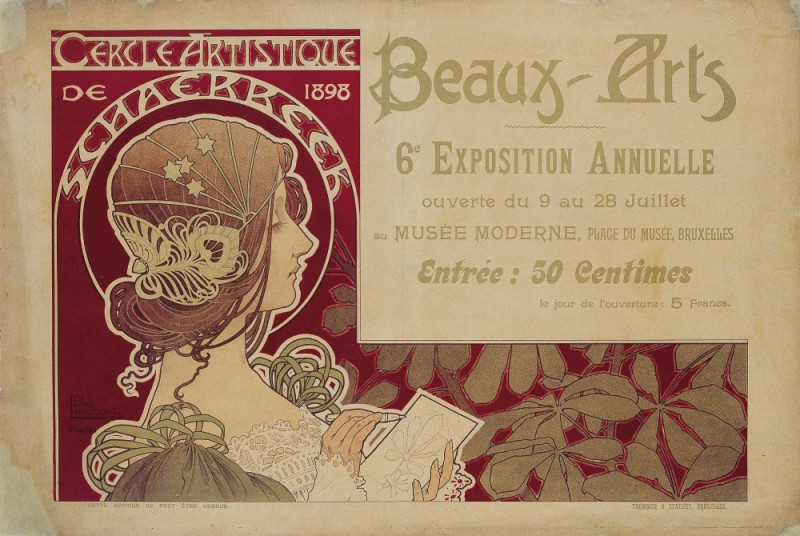
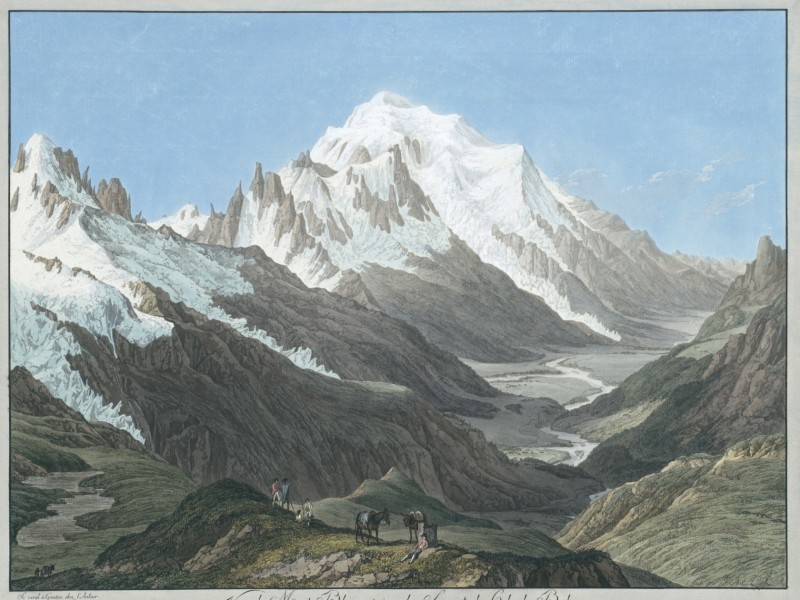
In such an enor­mous ware­house of cul­tur­al his­to­ry, one could begin any­where and in an instant come across some­thing of inter­est, such as the stun­ning col­lec­tion of Art Nou­veau posters like that fine exam­ple at the top, “Cer­cle Art­s­tique de Schaer­beek,” by Hen­ri Pri­vat-Live­mont (from the Plandiu­ra Col­lec­tion, cour­tesy of Museu Nacional d’Art de Catalynya, Barcelona). One might enter any one of the avail­able inter­ac­tive lessons and cours­es on the his­to­ry of World War I or vis­it some of the many exhibits on the peri­od, with let­ters, diaries, pho­tographs, films, offi­cial doc­u­ments, and war pro­pa­gan­da. One might stop by the vir­tu­al exhib­it, “Pho­tog­ra­phy on a Sil­ver Plate,” a fas­ci­nat­ing his­to­ry of the medi­um from 1839–1860, or “Record­ing and Play­ing Machines,” a his­to­ry of exact­ly what it sounds like, or a gallery of the work of Swiss painter Jean Antoine Linck. All of the arti­facts have source and licens­ing infor­ma­tion clear­ly indi­cat­ed.

Vue du Mont-Blanc, prise du Sommet du Col de Balme

The pos­si­bil­i­ties may lit­er­al­ly be end­less, as the col­lec­tion con­tin­ues to expand at a rate far beyond the abil­i­ty of any one per­son, or team of peo­ple, or entire research insti­tute of peo­ple to match. It is easy to feel adrift in such a data­base as this, which stretch­es on like a Bor­ge­sian library, offer­ing room after end­less room of visu­al splen­dor, doc­u­men­ta­tion, and inter­pre­ta­tion. It is also easy to make dis­cov­er­ies, to meet peo­ple, stum­ble upon art, hear music, see pho­tographs, learn his­to­ries you would nev­er have encoun­tered if you knew what you were look­ing for and knew exact­ly how to find it. Eliot warned us—and right­ly so—of the dan­gers of infor­ma­tion over­load. But he neglect­ed, in his puri­tan­i­cal way, to describe the plea­sures, the minor epipha­nies, the hap­py chance occur­rences afford­ed us by the ever-expand­ing sea of infor­ma­tion in which we swim. One can learn to nav­i­gate it, one can drift aim­less­ly, and one can, simul­ta­ne­ous­ly, feel immense­ly over­whelmed.

Relat­ed Con­tent:

New Archive Makes Avail­able 800,000 Pages Doc­u­ment­ing the His­to­ry of Film, Tele­vi­sion & Radio

Yale Launch­es an Archive of 170,000 Pho­tographs Doc­u­ment­ing the Great Depres­sion

The New York Pub­lic Library Lets You Down­load 180,000 Images in High Res­o­lu­tion: His­toric Pho­tographs, Maps, Let­ters & More

Josh Jones is a writer and musi­cian based in Durham, NC. Fol­low him at @jdmagness

« Go BackMore in this category... »
Quantcast