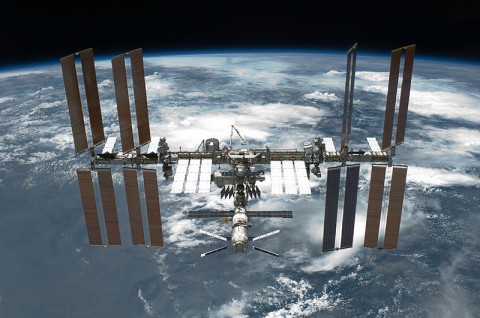
Astronaut Don Pettit Demystifies the Art of Taking Photographs in Space

Over the years, we’ve shown you Don Pet­tit’s work — his many time­lapse videos tak­en from the Inter­na­tion­al Space Sta­tion. (Find some below.) By now, we take these videos almost for grant­ed. We watch the breath­tak­ing scenery flow by, and we shrug our shoul­ders a bit. Rarely do we step back and think: holy mack­er­el, this cat is tak­ing art­ful videos in space. Nor do we won­der: how does one take pic­tures in zero grav­i­ty any­how?

It’s fas­ci­nat­ing when you think about it. And, now Don Pet­tit gives you a glimpse inside his cre­ative process. Speak­ing at the Lumi­nance 2012 con­fer­ence in New York City, Pet­tit explains the chal­lenges of pho­tograph­ing on the ISS — the equip­ment required, the quick deci­sions you need to make, the obsta­cles that get in the way, the aes­thet­ic choic­es you need to con­sid­er, etc. And then he gets into some intrigu­ing ques­tions. Like how do you cap­ture the col­ors of the auro­ra bore­alis? or what fab­u­lous pho­tographs can infrared pho­tog­ra­phy yield?

His talk runs 30 min­utes, and it will inter­est the casu­al observ­er or the all-out pho­tog­ra­phy geek.

Don Pet­tit Videos from the ISS:

Ani­mat­ed Auro­ra Bore­alis from Orbit

Great Cities at Night: Views from the Inter­na­tion­al Space Sta­tion

What It Feels Like to Fly Over Plan­et Earth

Star Gaz­ing from the Inter­na­tion­al Space Sta­tion (and Free Astron­o­my Cours­es Online)

via Metafil­ter

by | Permalink | Make a Comment ( 1 ) |

The Known Universe: The Hayden Planetarium’s Tour of the Cosmos Gets a Hans Zimmer Soundtrack

The Ger­man com­pos­er Hans Zim­mer has made a name for him­self (and earned a star on the Hol­ly­wood Walk of Fame) by cre­at­ing orig­i­nal scores for films. You’ve heard his music, even if you haven’t heard of him. The Lion King, The Dark Knight and Incep­tion are a few of the films he scored.

If you’ve seen Incep­tion then the music behind this video will sound famil­iar. Zim­mer’s music plays behind a small video with vast sub­ject mat­ter: The Known Uni­verse, a six minute tour of, that’s right, the entire known uni­verse. Put togeth­er in 2009 by the Hay­den Plan­e­tar­i­um in NYC, the video orig­i­nal­ly had a more New Agey, orches­tral score. Zimmer’s track is beau­ti­ful and thank­ful­ly some­body decid­ed to lay it down behind the Plan­e­tar­i­um’s video. The results are amaz­ing, a slick­er ver­sion of Charles and Ray Eames’ famous film Pow­ers of Ten, but with a more dis­tant start­ing and end­ing point.

Where Pow­ers of Ten start­ed its tour out at a bird’s eye lev­el above Earth, The Known Uni­verse begins above the planet’s high­est point, above the Himalayan Moun­tains, and quick­ly pans out to show the Moon’s orbit, the orbits of the oth­er plan­ets in our solar sys­tem, and beyond.

Real­ly beyond—all the way into the after­glow of the Big Bang. And even though it’s a sim­u­la­tion, it’s an accu­rate one.

The Known Uni­verse was made using the Dig­i­tal Uni­verse Atlas, a four-dimen­sion­al map of the uni­verse main­tained and updat­ed by astro­physi­cists at the Amer­i­can Muse­um of Nat­ur­al His­to­ry.

Slip into your head­phones and enjoy Zimmer’s music. The piece is called “Time (We Plants are Hap­py Plants Remix)” and it’s a tune­ful, upbeat sound­track that’s out of our galaxy.

Are you watch­ing, Carl Sagan?

Kate Rix writes about dig­i­tal media and edu­ca­tion. Find more of her work at .

Time-Lapse Film of the Space Shuttle Endeavor’s Final Journey Through the Narrow Streets of Los Angeles

Res­i­dents of Los Ange­les had a once-in-a-life­time oppor­tu­ni­ty last week to see the Space Shut­tle Endeav­or crawl through the streets of their city. It was a sur­re­al sight. Some folks could even look out their liv­ing-room win­dow and see a mas­sive space ship rolling by.

The recent­ly decom­mis­sioned shut­tle arrived in Los Ange­les on Sep­tem­ber 20, pig­gy­backed on top of a Boe­ing 747. Last thurs­day it embarked on an ardu­ous 12-mile jour­ney to its new home at the Cal­i­for­nia Sci­ence Cen­ter, where it will go on pub­lic dis­play begin­ning Octo­ber 30. It took three days to make the trip from the air­port to Expo­si­tion Park as the 85-ton orbiter, with a wingspan of 78 feet, was guid­ed though a num­ber of extreme­ly tight spots atop a com­put­er-con­trolled trans­porter oper­at­ed by NASA. The shut­tle arrived at the sci­ence cen­ter with­out a scratch on Sun­day. The whole oper­a­tion cost about $10 mil­lion.

What an Astronaut’s Camera Sees (and What a Geographer Learns About Our Planet) from the ISS

Justin Wilkin­son has a pret­ty cool sound­ing gig. He’s the chief geo­sci­en­tist at NASA, and he learns all about plan­et Earth from space. When astro­nauts head to the Inter­na­tion­al Space Sta­tion (ISS), Wilkin­son asks them to snap pic­tures of var­i­ous geo­graph­i­cal loca­tions. And, from this van­tage point 250 miles above the plan­et’s sur­face, he learns many things — for exam­ple, he tells Slate, “there are a lot more exam­ples of a geo­graph­i­cal phe­nom­e­non called an inland delta or megafan—that is, deltas formed far from coastlines—than was once thought.”

Out of Wilkin­son’s research comes some great pic­tures and videos, and today we’re fea­tur­ing two clips. The first video above shows you what an astro­naut sees at night, giv­ing you an aer­i­al tour of cities and coast­lines in the Amer­i­c­as, the Mid­dle East and Europe. The equal­ly impres­sive video below gives you stel­lar shots (in day­light) of Namib­ia, Tunisia, Mada­gas­car, Sici­ly, Chi­na, Iran, and Utah. You’ll find these videos added to our col­lec­tion of Great Sci­ence Videos. Cours­es on astron­o­my can be found in our col­lec­tion of Free Cours­es Online.  h/t @stevesilberman

by | Permalink | Make a Comment ( 3 ) |

Neil Armstrong’s Parents Appear on the Classic American TV Show “I’ve Got a Secret,” 1962

“I’ve Got a Secret” was an Amer­i­can game show aired by CBS. By ask­ing a series of ques­tions, a pan­el had to deter­mine the secret of con­tes­tants. On Sep­tem­ber 17, 1962, Stephen Koenig Arm­strong and Vio­la Louise Engel Arm­strong came on the show and har­bored this secret — their son was one of nine men made an astro­naut that very day. Almost sev­en years lat­er, on July 20, 1969, Arm­strong became the first per­son to set foot on the moon. This is why host Gar­ry Moore’s ques­tion is all the more amaz­ing: “Now, how would you feel, Mrs. Arm­strong, if it turned out — of course nobody knows — but if it turns out that your son is the first man to land on the moon? How would you feel?”

Neil Arm­strong died on August 25, 2012 in Cincin­nati, at the age of 82. Here is NASA’s trib­ute to his life and achieve­ments.

By pro­fes­sion, Matthias Rasch­er teach­es Eng­lish and His­to­ry at a High School in north­ern Bavaria, Ger­many. In his free time he scours the web for good links and posts the best finds on Twit­ter.

Watch Student Science Experiments Conducted on the International Space Station at 10:30 AM EDT

When YouTube Space Lab launched a com­pe­ti­tion call­ing for exper­i­ments to be con­duct­ed aboard the Inter­na­tion­al Space Sta­tion, thou­sands of high school stu­dents around the world respond­ed. The two win­ning exper­i­ments will be per­formed live Thurs­day at 7:30am PDT / 9:30am CDT / 10:30am EDT / 3:30pm BST / 4:30pm CEST. Back on Earth, we can watch astro­naut Suni­ta Williams live in the micro­grav­i­ty cap­sule as she puts the exper­i­ments to the test.

Stu­dents sub­mit­ted short videos explain­ing the sci­en­tif­ic exper­i­ments they hoped to see test­ed aboard the space sta­tion. One of the win­ning pro­pos­als, from Amr Mohamed of Egypt, asks whether zebra spi­ders, which jump on their prey, will be able to catch their food in their usu­al way in micro­grav­i­ty. The oth­er exper­i­ment, from Dorothy Chen and Sara Ma of Michi­gan, asks whether the growth of bac­te­ria deliv­ered into space will slow down when cer­tain com­pounds are added.

YouTube view­ers helped choose the win­ners from a pool of six semi-final­ists. Then mate­ri­als need­ed to con­duct the two win­ning exper­i­ments were packed into a rock­et and sent up to the space sta­tion, 250 miles above the Earth.

Watch live as Williams observes bac­te­ria and hun­gry zebra spi­ders in micro­grav­i­ty. Will the spi­ders fig­ure out a new way to hunt?

Kate Rix is a free­lance writer in Oak­land. See more of her work at .

Michio Kaku Schools a Moon Landing-Conspiracy Believer on His Science Fantastic Podcast

For every major world event, there’s a con­spir­a­cy the­o­ry to go along with it. Skep­tics, kooks and cranks did­n’t wait for the dust to set­tle before they start­ed spec­u­lat­ing on the real dark forces behind the 9/11 attacks. And the same hap­pened decades ear­li­er when Neil Arm­strong took his first steps on the moon. No soon­er had Arm­strong said â€śThat’s one small step for man, one giant leap for mankind” than con­spir­a­cy the­o­rists start­ed claim­ing that the moon land­ing was real­ly an elab­o­rate pro­duc­tion staged by Stan­ley Kubrick and oth­er Hol­ly­wood film­mak­ers. That strange line of think­ing was explored in William Karel’s 2002 mock­u­men­tary, Dark Side of the Moon. But despite the deri­sion, the moon con­spir­a­cies go on today. Take this exchange for exam­ple. It comes from a May 2011 episode of the Sci­ence Fan­tas­tic pod­cast host­ed by well-known physi­cist Michio Kaku. Amus­ing­ly, the clip walks you through the main claims of the moon land­ing con­spir­a­cy the­o­ry and the rea­son­able rejoin­ders to them.

If you would like to sign up for Open Culture’s free email newslet­ter, please find it here. It’s a great way to see our new posts, all bun­dled in one email, each day.

If you would like to sup­port the mis­sion of Open Cul­ture, con­sid­er mak­ing a dona­tion to our site. It’s hard to rely 100% on ads, and your con­tri­bu­tions will help us con­tin­ue pro­vid­ing the best free cul­tur­al and edu­ca­tion­al mate­ri­als to learn­ers every­where. You can con­tribute through Pay­Pal, Patre­on, and Ven­mo (@openculture). Thanks!

Relat­ed Con­tent:

Michio Kaku Explains the Physics Behind Absolute­ly Every­thing

Michio Kaku: We’re Born Sci­en­tists But Switch to Invest­ment Bank­ing

What Is Déjà Vu? Michio Kaku Won­ders If It’s Trig­gered by Par­al­lel Uni­vers­es


by | Permalink | Make a Comment ( 10 ) |

Remembering Neil Armstrong, the First Man on the Moon, with Historic Footage and a BBC Bio Film

Sev­er­al weeks ago, we watched NASA sci­en­tists explode with applause when they land­ed their rugged rover, Curios­i­ty, on Mars. Imag­ine how an ear­li­er gen­er­a­tion of sci­en­tists must have felt when, on July 20, 1969, Neil Arm­strong took his first steps on the moon and then uttered his immor­tal words: “That’s one small step for man, one giant leap for mankind.” You can get goose­bumps think­ing about it.

Today, Amer­i­ca lost a great one. Neil Arm­strong has died at 82, after under­go­ing heart-bypass surgery ear­li­er this month. Above, we bring you leg­endary footage from the Apol­lo 11 Mis­sion. And here you can view high res­o­lu­tion images from that his­toric space flight. Below, we present an hour-long BBC doc­u­men­tary on the life and times of the pio­neer­ing astro­naut.

Relat­ed Con­tent: 

“First Orbit”: Cel­e­brat­ing 50th Anniver­sary of Yuri Gagaran’s Space Flight

Dark Side of the Moon: A Mock­u­men­tary on Stan­ley Kubrick and the Moon Land­ing Hoax

125 Great Sci­ence Videos: From Astron­o­my to Physics & Psy­chol­o­gy

by | Permalink | Make a Comment ( 3 ) |

« Go BackMore in this category... »
Quantcast