Leonard Nimoy Narrates Short Film About NASA’s Dawn: A Voyage to the Origins of the Solar System

In 1996, sci­ence writer John Hor­gan pub­lished a book called The End of Sci­ence in which he claimed that we had learned all we could know about the nat­ur­al world. And in 2008, Wired mag­a­zine devot­ed an issue to, you guessed it, “The End of Sci­ence.” Snap­py, grandiose titles may sell copy, but it’s also the case that each time some­one or oth­er declares the end of some­thing massive—science, his­to­ry, war, and peri­od­i­cal­ly, the world–we can look back and be aston­ished at the hubris. It now seems that there are fron­tiers we are just begin­ning to explore, and they are the fron­tiers of our evo­lu­tion­ary begin­nings. While bio­physi­cists like Peter Hoff­mann chart the bound­aries between life and non­life at the mol­e­c­u­lar lev­el, NASA sci­en­tists explore the out­er reach­es to dis­cov­er what Leonard Nimoy, nar­ra­tor of the video above, calls “the very begin­ning of us.”

It’s a lit­tle wonky at times, but the short film above is nonethe­less a fas­ci­nat­ing overview of NASA’s Dawn mis­sion, a space­craft designed to col­lect data from the aster­oid belt. The ship itself is a mar­vel. Out­fit­ted with mas­sive solar pan­el wings that can pow­er it for years, Dawn con­verts xenon gas into plas­ma, which it pro­pels from its engine at speeds up to 78,000 miles per hour (or 21 miles per sec­ond) for max­i­mum accel­er­a­tion.

In fact, Dawn is the fastest ship NASA has ever launched. Even at top speeds, Dawn required four years to reach its first stop, the aster­oid Ves­ta, the bright­est aster­oid in the solar sys­tem and the only one vis­i­ble to the naked eye. Depart­ing Earth in 2007, the ship reached Ves­ta in July of 2011 and depart­ed last Sep­tem­ber for the aster­oid Ceres, which it will reach in Feb­ru­ary of 2015.

These two aster­oids are part of what is called the “pro­to­plan­e­tary disk,” a once-chaot­ic ring of dust and gas that began to coa­lesce into our solar sys­tem some 4.6 bil­lion years ago. One NASA sci­en­tist above describes the aster­oid belt as the “bone­yard” of deep space—remains from the ear­li­est epochs of time. Dawn’s mis­sion isn’t just a for­ay to unchart­ed space; it’s also a jour­ney bil­lions years into the past, into the ori­gins of our solar sys­tem.

Relat­ed Con­tent:

William Shat­ner Nar­rates Space Shut­tle Doc­u­men­tary

Star Trek Celebri­ties, William Shat­ner and Wil Wheaton, Nar­rate Mars Land­ing Videos for NASA

Josh Jones is a writer and musi­cian. He recent­ly com­plet­ed a dis­ser­ta­tion on land­scape, lit­er­a­ture, and labor.

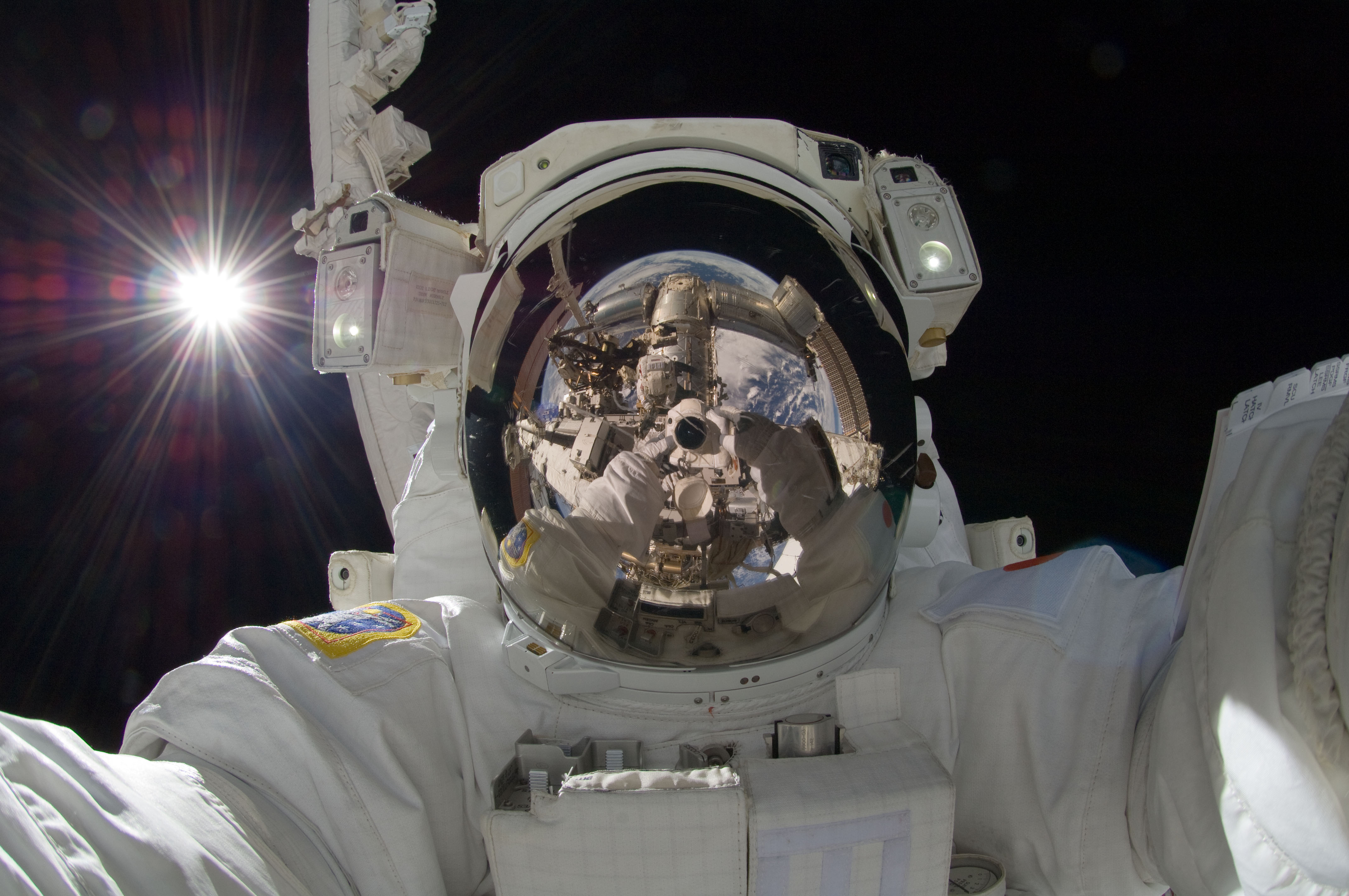
A Selfie That is Out of This World

Tak­en at the Inter­na­tion­al Space Sta­tion by astro­naut Aki Hoshide (Japan), this awe-inspir­ing self por­trait brings into one frame “the Sun, the Earth, two por­tions of a robot­ic arm, an astro­naut’s space­suit, the deep dark­ness of space, and the unusu­al cam­era tak­ing the pic­ture.” You’ll want to click the image above (or this link) to view the pic­ture dubbed “Orbit­ing Astro­naut Self-Por­trait” in a wor­thy larg­er for­mat.

Find oth­er self-por­traits tak­en in space here and here. And vis­it NASA’s Astron­o­my Pic­ture of the Day for more strik­ing images each and every day.

via @coudal

Fol­low us on Face­bookTwit­ter and now Google Plus and share intel­li­gent media with your friends! They’ll thank you for it.

by | Permalink | Make a Comment ( 5 ) |

The Wonder, Thrill & Meaning of Seeing Earth from Space. Astronauts Reflect on The Big Blue Marble

On Decem­ber 7, 1972, the Apol­lo 17 crew took a pho­to­graph of earth that became known as “The Blue Mar­ble” because of the whor­ling clouds above the con­ti­nents. Not the first image of the earth from space, it remains one of the most arrest­ing. To com­mem­o­rate the for­ti­eth anniver­sary of “The Blue Mar­ble,” Plan­e­tary Col­lec­tive, a group of visu­al artists, philoso­phers, and sci­en­tists, released the short film Overview (above) at a screen­ing at Har­vard this past Fri­day. Overview takes its title from author Frank White’s phrase for the per­spec­tive of the earth as seen from space: “The Overview Effect.” White’s book of the same name uses inter­views and writ­ings from thir­ty astro­nauts and cos­mo­nauts to build a the­o­ry about the psy­chol­o­gy of plan­e­tary per­spec­tives.

The film is a pre­lude to a fea­ture-length doc­u­men­tary called Con­tin­u­um, and it intro­duces many of that project’s themes: the inter­de­pen­dence of every­one on earth, the neces­si­ty of adopt­ing a plan­e­tary per­spec­tive, and the meet­ing of cer­tain reli­gious expe­ri­ences with the sci­ences. Through a selec­tion of inter­views with five astro­nauts and philoso­phers asso­ci­at­ed with think tank The Overview Insti­tute, one gets a thrilling and vic­ar­i­ous expe­ri­ence of what it’s like to see Bucky Fuller’s “Space­ship Earth.”  Across all of the respons­es emerge the cen­tral themes of Earth­’s uni­ty, and its fragili­ty: we’re all in this togeth­er, or else, the film con­cludes.

Espe­cial­ly inter­est­ing is the inter­view with Apol­lo astro­naut Edgar Mitchell; he comes to see his expe­ri­ence in mys­ti­cal terms, as a kind of intense med­i­ta­tive state known in San­skrit as savikalpa Samad­hi, a union with the divine. Dr. Mitchell’s attempts to inte­grate sci­en­tif­ic prac­tice and human con­scious­ness par­al­lel those of Plan­e­tary Col­lec­tive and The Overview Insti­tute, all of whom seek in their own ways to help the human race achieve a shift in per­spec­tive sim­i­lar to what the astro­nauts expe­ri­enced, a shift so well artic­u­lat­ed by Carl Sagan in his Cos­mos doc­u­men­tary series and his 1994 book Pale Blue Dot. Inspired by anoth­er icon­ic image of the earth from space, Voy­ager 1’s pho­to from 4 bil­lion miles out, Sagan’s mus­ings took a mys­ti­cal turn, but nev­er left the ground of sound sci­en­tif­ic rea­son­ing. His “Pale Blue Dot” has become a metaphor for a sim­i­lar per­spec­tive as White’s “overview effect,” albeit one con­sid­er­ably more detached. Watch Sagan’s words brought to life below by ani­ma­tion stu­dio ORDER.

via @kirstinbutler

Josh Jones is a doc­tor­al can­di­date in Eng­lish at Ford­ham Uni­ver­si­ty and a co-founder and for­mer man­ag­ing edi­tor of Guer­ni­ca / A Mag­a­zine of Arts and Pol­i­tics.

A Poignant, Elegant Tribute to the Mars Rover Curiosity

The Curios­i­ty mis­sion on Mars will soon bring us some big news. We don’t know what it is. We just know, accord­ing to one NASA sci­en­tist, the dis­cov­ery â€śis going to be one for the his­to­ry books.” As we await more infor­ma­tion, we bring you this: a short film by Dan Win­ters and Shervin Shaeri that weaves togeth­er com­men­tary from NASA engi­neers and some arrest­ing pho­tographs. Togeth­er, they remind us of the heart and soul that went into putting a state-of-the-art rover on a red plan­et some 200 mil­lion miles away from our own “pale blue dot,” as Carl Sagan once called it.

Google Presents an Interactive Visualization of 100,000 Stars

Stargaz­ers of all ages will enjoy the lat­est Google exper­i­ment designed for Chrome. One Hun­dred Thou­sand Stars is an inter­ac­tive map of space includ­ing the loca­tions of—you guessed it—more than 100,000 stars.

Ren­dered in three dimen­sions, our know­able, mapped galaxy is both stag­ger­ing­ly vast and easy to nav­i­gate. With imagery and data from NASA and the Euro­pean Space Agency, Google’s Chrome Work­shop built a 3D mod­el of our lit­tle cor­ner of the uni­verse.

You can pre­view One Hun­dred Thou­sand Stars above. Or you can enter the map, click on the upper left cor­ner, and take a tour of your own. You’ll start just beyond the stars that astronomers have stud­ied and named. Swipe all the way into our own solar sys­tem. The first thing you’ll notice is that Plu­to isn’t includ­ed, invit­ing a new mnemon­ic for the plan­et names (My Very Earnest Moth­er Just Served Us Nec­tarines?). That hazy cloud about a light year from the sun is the Oort Cloud, a mass of comets that’s thought to mark the out­er edge of the sun’s grav­i­ta­tion­al pull.

Swipe out a bit to see 87 rel­a­tive­ly near­by stars. Click on their names to read about them. Sir­ius is the bright­est in the night sky, part­ly because of its own lumi­nos­i­ty but also because it is com­par­a­tive­ly close to Earth. Vega is so well stud­ied that its bright­ness is used as the base­line to clas­si­fy stars accord­ing to their col­or.

Swipe out fur­ther for a galac­tic view of the Milky Way. It appears as a beau­ti­ful illu­mi­nat­ed disc cen­tered around a bright bulge. This shape is called the Galac­tic Plane. Click and drag to tilt the disc this way and that. Total­ing to some 400 bil­lion stars and as many plan­ets, the Milky Way does in fact bulge at its cen­ter, though astronomers think that the true core is real­ly an intense black hole.

Notice the tiny icon to “Tog­gle Spec­tral Index” up in the left cor­ner. On one set­ting, each cloud is pix­i­lat­ed to high­light its col­or (a key iden­ti­fi­er for astronomers).

Here’s where it helps to know a lit­tle about stars and how they form. Stars begin as clouds of most­ly hydro­gen, becom­ing grad­u­al­ly so dense through the process of nuclear fusion that even grav­i­ty can­not make them fly apart.

The amount of light a star gives off is mea­sured as dif­fer­ent col­ors and tem­per­a­tures. “Hot­ter” stars are younger and give off more blue light, and so are indi­cat­ed as blue. “Cool” stars are old­er, give off less blue light, and are indi­cat­ed as red.

By the way, the music behind One Hun­dred Thou­sand Stars is by Sam Hulick, whose music gamers may rec­og­nize  from Mass Effect.

Kate Rix writes about dig­i­tal media and edu­ca­tion. Vis­it her web­site and her blog, thenifty.blogspot.com.

The Moon Disaster That Wasn’t: Nixon’s Speech In Case Apollo 11 Failed to Return

Endur­ing con­spir­a­cy the­o­ries aside, the 1969 moon land­ing (above) was a rous­ing suc­cess for the gov­ern­ment space pro­gram known as NASA. After a decade-long space race, dur­ing which it seemed to all observers that the Sovi­ets had the edge, the U.S. land­ed Apol­lo 11–carrying Neil Arm­strong and Buzz Aldrin–at the Sea of Tran­quil­i­ty on July 20, 1969.  Nixon was pres­i­dent, the Viet­nam War and its oppo­si­tion raged, and Leonid Brezh­nev helmed a stag­nant Sovi­et empire.

On the great list of Cold War what-ifs, the near-miss of the Bay of Pigs is sure­ly num­ber one. But for all the space nerds out there, this one ranks pret­ty high: What if Aldrin and Arm­strong nev­er made it back? This was, of course, a dis­tinct pos­si­bil­i­ty, and one that the Nixon admin­is­tra­tion pre­pared for. While we were told dur­ing this last pres­i­den­tial elec­tion that Mitt Rom­ney failed to write a con­ces­sion speech, William Safire, speech­writer for Richard Nixon, did write a speech in the event that Apol­lo 11 couldn’t make the return trip. The speech, enti­tled IN EVENT OF MOON DISASTER, is a some­thing of a terse and poignant mas­ter­piece. Below is an excerpt of Safire’s brief, hypo­thet­i­cal address:

These two men are lay­ing down their lives in mankind’s most noble goal: the search for truth and under­stand­ing.

They will be mourned by their fam­i­lies and friends; they will be mourned by the nation; they will be mourned by the peo­ple of the world; they will be mourned by a Moth­er Earth that dared send two of her sons into the unknown.

In their explo­ration, they stirred the peo­ple of the world to feel as one; in their sac­ri­fice, they bind more tight­ly the broth­er­hood of man.

In ancient days, men looked at the stars and saw their heroes in the con­stel­la­tions. In mod­ern times, we do much the same, but our heroes are epic men of flesh and blood.

Oth­ers will fol­low, and sure­ly find their way home. Man’s search will not be denied. But these men were the first, and they will remain the fore­most in our hearts.

For every human being who looks up at the moon in the nights to come will know that there is some cor­ner of anoth­er world that is for­ev­er mankind.

Would the space pro­gram have con­tin­ued had these two brave pio­neers died on the moon? Cer­tain­ly. But this moment of tri­umph would instead be remembered—like the Chal­lenger dis­as­ter of 1986—as a moment of great loss and a very seri­ous set­back for our for­ays into out­er space.

Read the full speech here at Let­ters of Note.

Josh Jones is a doc­tor­al can­di­date in Eng­lish at Ford­ham Uni­ver­si­ty and a co-founder and for­mer man­ag­ing edi­tor of Guer­ni­ca / A Mag­a­zine of Arts and Pol­i­tics.

Relat­ed Con­tent:

Michio Kaku Schools Takes on Moon Land­ing-Con­spir­a­cy Believ­er on His Sci­ence Fan­tas­tic Pod­cast

Dark Side of the Moon: A Mock­u­men­tary on Stan­ley Kubrick and the Moon Land­ing Hoax

First Orbit: Cel­e­brat­ing 50th Anniver­sary of Yuri Gagaran’s Space Flight

Astronaut Sunita Williams Gives an Extensive Tour of the International Space Station

After a 125-day stay aboard the Inter­na­tion­al Space Sta­tion, ISS Com­man­der Suni­ta (Suni) Williams touched down in Kaza­khstan on Mon­day, along with Flight Engi­neers Aki Hoshide and Yuri Malanchenko. Part of what is known as Expe­di­tion 33, the three board­ed their Soyuz TMA-05M on Sun­day to return to Earth, but before they left, Williams down­linked an exten­sive tour above of the ISS orbital lab­o­ra­to­ry. Williams has giv­en sev­er­al inter­views from her ISS post, so you may have already seen her float­ing weight­less in front of the cam­era, a nim­bus of dark hair around her face.

Here we see a num­ber of inter­est­ing fea­tures of the sta­tion. She begins with the Japan­ese lab­o­ra­to­ry, then moves to the Euro­pean mod­ule, “Colum­bus,” where many of the med­ical exper­i­ments take place. Inter­est­ing­ly, every sur­face is a suit­able work­sta­tion; since there’s no ref­er­ence for floor, walls, or ceil­ing, and no need for any­thing to stand on, one can maneu­ver into any posi­tion with­out los­ing a sense of direc­tion. As Williams demon­strates the “sleep sta­tions,” phone booth-size com­part­ments with sleep­ing bags, she shows how the astro­nauts can also sleep in any posi­tion at all with­out feel­ing like they’re “upside-down” or dis­ori­ent­ed in any way. There’s also a lengthy tour of the “facil­i­ties” (in case you’ve ever won­dered how that works) and the “cupo­la,” a small trans­par­ent room like a WWII gun­nery sta­tion where the astro­nauts can gaze out at their home plan­et.

So, yes, I will admit, I’ve always liked to imag­ine the inte­ri­or of the ISS like the smooth, padded cor­ri­dors of Stan­ley Kubrick’s 2001, but the real­i­ty is still seri­ous­ly cool. The Wash­ing­ton Post has a slideshow of Expe­di­tion 33’s touch­down near the town of Arka­lyk in north­ern Kaza­khstan, and the video below shows the small cer­e­mo­ny that greet­ed the crew hours after their arrival back on Earth.

via Uni­verse Today

Josh Jones is a doc­tor­al can­di­date in Eng­lish at Ford­ham Uni­ver­si­ty and a co-founder and for­mer man­ag­ing edi­tor of Guer­ni­ca / A Mag­a­zine of Arts and Pol­i­tics.

NASA’s “Spot the Station” Will Text or Email You When the Space Station Passes Over Your Home

NASA writes: “Did you know you can see the Inter­na­tion­al Space Sta­tion from your house? As the third bright­est object in the sky, after the sun and moon, the space sta­tion is easy to see if you know where and when to look for it.”

And now, it turns out, there’s a ser­vice that will help you do just that: It’s called Spot the Sta­tion, and it’s pro­vid­ed free by NASA.

Sim­ply head here and pro­vide NASA with your loca­tion and email/text address. They’ll then ping you when the space sta­tion next pass­es over your home.

Hap­pi­ly, NASA will only noti­fy you of “good” sight­ing oppor­tu­ni­ties — that is, “sight­ings that are high enough in the sky (40 degrees or more) and last long enough to give you the best view of the orbit­ing lab­o­ra­to­ry.”

On a relat­ed note, don’t miss our post from Fri­day:

Astro­naut Don Pet­tit Demys­ti­fies the Art of Tak­ing Pho­tographs on the Inter­na­tion­al Space Sta­tion

by | Permalink | Make a Comment ( 31 ) |

« Go BackMore in this category... »
Quantcast