Big History: David Christian Covers 13.7 Billion Years of History in 18 Minutes

Per­haps you noticed? Dur­ing the past two years, the TED brand has mor­phed into some­thing new. Once known for stag­ing a cou­ple of high-priced annu­al con­fer­ences, TED has recent­ly launched a series of new prod­ucts: TEDx con­fer­ences for the mass­es, TED Books, TED Radio, TED ED and Ads Worth Spread­ing. In the wake of all of this, some have ques­tioned whether TED has grown too quick­ly, or to put it more col­lo­qui­al­ly, “jumped the shark.” There are days when TED feels like a vic­tim of its own suc­cess. But there are oth­er days — espe­cial­ly when it returns to its roots — where the orga­ni­za­tion can still be a vital force. That hap­pens when­ev­er TED wraps up its big annu­al con­fer­ence, as it did two weeks ago, and puts some note­wor­thy talks online. (See, for exam­ple, Stew­art Brand describ­ing how sci­en­tists will bring extinct species back from the dead.) Or it hap­pens when TED brings old­er talks from its archive to YouTube.

Which brings us to the talk above. Here we have David Chris­t­ian, a pro­fes­sor at Aus­trali­a’s Mac­quar­ie Uni­ver­si­ty, explain­ing the his­to­ry of the world in less than 18 min­utes, start­ing with the Big Bang and then cov­er­ing anoth­er 13.7 bil­lion years. For­mal­ly trained as a Russ­ian his­to­ri­an, Chris­t­ian began work­ing on Big His­to­ry in the 1980s, a meta dis­ci­pline that “exam­ines long time frames using a mul­ti­dis­ci­pli­nary approach based on com­bin­ing numer­ous dis­ci­plines from sci­ence and the human­i­ties.” Chris­t­ian then pop­u­lar­ized his new­fan­gled way of telling his­to­ry when he pro­duced for the Teach­ing Com­pa­ny: Big His­to­ry: The Big Bang, Life on Earth, and the Rise of Human­i­ty. It did­n’t hurt that Bill Gates stum­bled upon the lec­tures and gave back­ing to The Big His­to­ry Project, an online ini­tia­tive that exper­i­ments with bring­ing Big His­to­ry to high school stu­dents. The Big His­to­ry Project got its start at the 2011 TED con­fer­ence, with the talk pre­sent­ed above.

Relat­ed Con­tent: 

Free Online His­to­ry Cours­es from Great Uni­ver­si­ties

A Crash Course in World His­to­ry

The Com­plete His­to­ry of the World (and Human Cre­ativ­i­ty) in 100 Objects

The Pod­cast His­to­ry of Our World Will Take You From Cre­ation Myths to (Even­tu­al­ly) the Present Day

by | Permalink | Make a Comment ( 7 ) |

Carl Sagan, Stephen Hawking & Arthur C. Clarke Discuss God, the Universe, and Everything Else

Name the three fig­ures, liv­ing or dead, with whom you would most like to sit down to din­ner. Though per­haps a lit­tle tired, the chal­lenge still reveals some­thing worth know­ing about the respon­den­t’s per­son­al­i­ty. If I know the per­son­al­i­ties of Open Cul­ture read­ers at all, I’d wager that more than a few of you would choose to set places at the table for Carl Sagan, Stephen Hawk­ing, and Arthur C. Clarke. Any­one inter­est­ed in ask­ing the big, exis­ten­tial ques­tions and under­stand­ing the sci­ence under­neath them would have the time of their lives at such a meal, espe­cial­ly if astro­phys­i­cal­ly inclined. But until a genie grants you this wish, may we offer God, the Uni­verse, and Every­thing Else?

Pre­sent­ed by Mag­nus Mag­nus­son, long­time host of the BBC’s Mas­ter­mind, this pro­gram brings the three togeth­er to dis­cuss “the Big Bang the­o­ry, God, our exis­tence as well as the pos­si­bil­i­ty of extrater­res­tri­al life.” Hawk­ing, of course, talks through his sig­na­ture speech syn­the­siz­er, and Sagan joins up through a satel­lite link — beamed through, yes, the very sort of float­ing mir­a­cles of engi­neer­ing that Clarke wrote about in his nov­els. With minds like these, you can rest assured that the con­ver­sa­tion won’t stray far from what Sagan calls “the fun­da­men­tal ques­tions,” nor will it come unteth­ered from estab­lished human knowl­edge and float into the realms of wild spec­u­la­tion and wish­ful think­ing. And of course, in such con­ver­sa­tions, a sense of humor like Hawk­ing’s â€” a man who, not expect­ed to reach age thir­ty, would nev­er­the­less live to see more advance­ment in human knowl­edge than any­one else on the broad­cast — nev­er goes amiss.

Relat­ed Con­tent:

Carl Sagan and Stephen Hawk­ing Remixed

Watch Errol Mor­ris’ Trib­ute to Stephen Hawk­ing, A Brief His­to­ry of Time

Sev­en Ques­tions for Stephen Hawk­ing: What Would He Ask Albert Ein­stein & More

Col­in Mar­shall hosts and pro­duces Note­book on Cities and Cul­ture and writes essays on lit­er­a­ture, film, cities, Asia, and aes­thet­ics. He’s at work on a book about Los Ange­les, A Los Ange­les Primer. Fol­low him on Twit­ter at @colinmarshall.

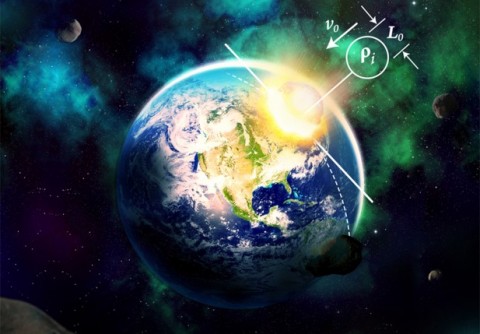
Simulate the Damage Caused by Comet and Asteroid Collisions with Impact: Earth!

impact earthOn Fri­day, the world had its eyes focused on the big aster­oid fly­by. For weeks, we knew it was com­ing, and we watched it buzz by with mild curios­i­ty. But, that same day, we were all caught off guard by a ten-ton mete­orite that blast­ed into the Siber­ian town of Chelyabin­sk, injur­ing 1,200 peo­ple and caus­ing con­sid­er­able struc­tur­al dam­age. (Watch footage here.) This abrupt and unex­pect­ed event has giv­en gov­ern­ments a rea­son to start tak­ing the risk of aster­oid impacts a bit more seri­ous­ly. And it might renew inter­est in a tool cre­at­ed by sci­en­tists at Pur­due Uni­ver­si­ty and Impe­r­i­al Col­lege Lon­don in 2010.

In a nut­shell, Impact: Earth! is an inter­ac­tive tool that lets any­one cal­cu­late the dam­age a comet or aster­oid would cause if it hap­pened to col­lide with our plan­et. You can cus­tomize the size and speed of the incom­ing object, and then find out if mankind sur­vives. (Usu­al­ly it does.) A grainy primer appears below. You can enter the web­site and start run­ning your own sce­nar­ios right here.

via @moseshawk

by | Permalink | Make a Comment ( 1 ) |

Live: Watch NASA’s Coverage of Asteroid As It Buzzes By Earth

Writes NASA:

NASA Tele­vi­sion will pro­vide com­men­tary start­ing at 11 a.m. PST (2 p.m. EST) on Fri­day, Feb. 15, dur­ing the close, but safe, fly­by of a small near-Earth aster­oid named 2012 DA14. NASA places a high pri­or­i­ty on track­ing aster­oids and pro­tect­ing our home plan­et from them. This fly­by will pro­vide a unique oppor­tu­ni­ty for researchers to study a near-Earth object up close.

The half-hour broad­cast from NASA’s Jet Propul­sion Lab­o­ra­to­ry in Pasade­na, Calif., will incor­po­rate real-time ani­ma­tion to show the loca­tion of the aster­oid in rela­tion to Earth, along with live or near real-time views of the aster­oid from obser­va­to­ries in Aus­tralia, weath­er per­mit­ting.

At the time of its clos­est approach to Earth at approx­i­mate­ly 11:25 a.m. PST (2:25 p.m. EST / 19:25 UTC), the aster­oid will be about 17,150 miles (27,600 kilo­me­ters) above Earth­’s sur­face.

The com­men­tary will be avail­able via NASA TV and streamed live online at: http://www.nasa.gov/ntv and http://www.ustream.tv/nasajpl2

Or you can just watch above.…

Note: You can also watch footage of the mete­orite hit­ting Siberia this morn­ing here.

by | Permalink | Make a Comment ( 3 ) |

Asteroid Will Give Earth a Close Shave on February 15

Prep­pers, it’s almost the big day you’ve been wait­ing for — the apoc­a­lypse and armaged­don all rolled into one. Almost, but not quite. Accord­ing to NASA, “an aster­oid about half the size of a foot­ball field will fly past Earth only 17,200 miles above our plan­et’s sur­face.” â€śThis [will be] a record-set­ting close approach,” says Don Yeo­mans of NASA’s Near Earth Object Pro­gram at The Jet Propul­sion Lab­o­ra­to­ry. “Since reg­u­lar sky sur­veys began in the 1990s, we’ve nev­er seen an object this big get so close to Earth.” It’ll be a close call and that’s all. So, prep­pers, keep your com­pass­es, iodine pills and dehy­drat­ed lentils packed and ready for anoth­er day. You’ll get your chance.

by | Permalink | Make a Comment ( 1 ) |

NASA Sends Image of the Mona Lisa to the Moon and Back

The same super-fast laser tech­nol­o­gy that sent clear images of Mars back to Earth just cleared anoth­er hur­dle clos­er to home by send­ing an image of the Mona Lisa to the sur­face of the moon and back again.

Sci­en­tists at NASA want­ed to know whether they could use laser puls­es to “com­mu­ni­cate” with the lunar sur­face using the same tool that tracks the posi­tion of the Lunar Recon­nais­sance Orbiter.

The team sent a dig­i­tized ver­sion of Leonardo’s famous­ly inscrutable sig­no­ra from the God­dard Space Cen­ter in Mary­land 240,000 miles up to a laser trans­mit­ter aboard the orbit­ing space­craft. Pix­els trav­eled one at a time and were adjust­ed for bright­ness by con­trolled delays in their arrival time. The team cor­rect­ed errors in the image using com­mon DVD and CD tech­niques.

Pret­ty much every­body knows what the Mona Lisa looks like, so maybe that’s why they picked her face, instead of, well, mine. Maybe NASA is hop­ing her name will be changed to Moona Lisa.

The Lunar Recon­nais­sance Orbiter (explained above) began its lunar orbit near­ly four years ago. Laser puls­es beam down to the moon and then bounce back to form images of the sur­face. Like those star­tling pic­tures of Mars, laser tech­nol­o­gy is help­ing devel­op a crys­tal clear topo­graph­i­cal map of the moon, includ­ing the tracks of two astro­nauts’ unsuc­cess­ful trek to the top of a crater and the site of a lost Russ­ian rover.

The Mona Lisa’s trip to the moon is impor­tant because the image was sent at the same time as laser puls­es that track the craft’s position—the first out­er space con­fer­ence call—and it sets the stage for future high-data trans­mis­sions between Earth and its satel­lite explor­ers.

via The Atlantic

Relat­ed Con­tent

NASA Presents “The Earth as Art” in a Free eBook and Free iPad App

Leonard Nimoy Nar­rates Short Film About NASA’s Dawn: A Voy­age to the Ori­gins of the Solar Sys­tem

NASA’s “Spot the Sta­tion” Will Text or Email You When the Space Sta­tion Pass­es Over Your Home

Kate Rix writes about dig­i­tal media and edu­ca­tion. Vis­it her at .

The Many Ways to Mars: A Reality Show, a New Martian City, and Mapping Mars from Home

Real­i­ty tele­vi­sion has been around since at least the late ’40s. First we had Can­did Cam­era, where hap­less, but real, peo­ple became the unwit­ting butt of Allen Funt’s jokes. But it wasn’t until fifty years lat­er that the genre explod­ed, bring­ing us Big Broth­er and, of course, Sur­vivor.

Now, make way for the unbe­liev­able and ultra-expen­sive mar­riage of real­i­ty tele­vi­sion and sci­ence fic­tion. Mars One, the brain­child of Dutch entre­pre­neur Bas Lans­dorp, plans to estab­lish a per­ma­nent human set­tle­ment on the red plan­et in 2023. First, four peo­ple would land on Mars. Every two years, anoth­er group of peo­ple would arrive. The trips would be one-way and all the set­tlers would live out the rest of their lives on Mars. Fund­ing for the first phase is esti­mat­ed at $6 bil­lion.

Mars One back­ers say rais­ing $6 bil­lion will be easy. Every four years the Sum­mer and Win­ter Olympics gen­er­ate mil­lions of dol­lars in rev­enue because peo­ple all over the world want to watch. The Olympics held in 2005 and 2008 togeth­er made near­ly $5.5 bil­lion from pro­gram­ming and spon­sor­ship.

So, what if there were an event so fas­ci­nat­ing, so unprece­dent­ed and amaz­ing, that lit­er­al­ly every tele­vi­sion, com­put­er, and smart device would be tuned in to watch? What if the entire Mars mis­sion was an inter­na­tion­al real­i­ty tele­vi­sion show? That’s the plan. Every­thing from the selec­tion of the first group of astro­nauts to the launch, land­ing, and dai­ly life on the red plan­et would be tele­vised. The audi­ence even gets to vote on the final four space trav­el­ers.

Inter­est­ed? Mars One has issued its require­ments for astro­naut selec­tion. No mil­i­tary, flight, or sci­ence expe­ri­ence required. Appli­cants must be at least 18, in good men­tal and phys­i­cal health, and will­ing to devote eight years to train­ing before begin­ning the jour­ney to their new home plan­et. Find­ing this hard to believe? The first ques­tion in Mars One’s FAQ page sort of says it all. Is this for real? Yes, the plans are for real. Whether any or every­thing Mars One imag­ines actu­al­ly takes place is anybody’s guess.

What’s cer­tain is that Mars is a hot des­ti­na­tion at the moment, and not just for aspir­ing real­i­ty stars. SpaceX fun­der and bil­lion­aire Elon Musk wants to build a city for 80,000 on Mars. While accept­ing an award from the Roy­al Aero­nau­ti­cal Soci­ety, Musk out­lined his vision to charge $500,000 per per­son to trans­port peo­ple to the new Mar­t­ian city. He’s men­tioned want­i­ng to retire on Mars and is using SpaceX as a lab to devel­op new inter­plan­e­tary rock­et tech­nol­o­gy.

But you don’t need to be rich or pop­u­lar to see some of the red plan­et. There’s also plen­ty of explor­ing to do on the sur­face of Mars from home. Cit­i­zen sci­en­tists can help Plan­et Four iden­ti­fy fans and blotch­es in images of the Mar­t­ian sur­face. The pic­tures come from a cam­era aboard the Mars Recon­nais­sance Orbiter, a NASA mis­sion to orbit Mars and trans­mit images and data to Earth using a pow­er­ful radio fre­quen­cy called the “Ka-band,” which works like an inter­plan­e­tary Inter­net.

Using sim­ple mark­ing tools, users can mark the sur­face col­orations and spots that help sci­en­tists study changes in the planet’s weath­er. So-called “spi­ders” of dry ice form on the planet’s poles in the win­ter and then lead to fan-shaped mois­ture foot­prints.

It’s fun to imag­ine that the data you cre­ate could bring us clos­er to our dis­tant neigh­bor plan­et. Unless of course you’d rather suit up and start train­ing to go there your­self. In that case, good luck and start sav­ing.

Kate Rix writes about dig­i­tal tech­nol­o­gy and edu­ca­tion. Read more of her work at .

Everything You Wanted to Know About Going to the Bathroom in Space But Were Afraid to Ask

Maybe you have won­dered about it. Maybe you haven’t. But either way, astro­naut Chris Had­field answers the big ques­tion — how one goes to the bath­room in space.

Had­field is cur­rent­ly aboard the Inter­na­tion­al Space Sta­tion, where he’s active­ly tweet­ing about life in orbit. You can fol­low him on Twit­ter here (and find us here).

Relat­ed Con­tent:

Astro­naut Suni­ta Williams Gives an Exten­sive Tour of the Inter­na­tion­al Space Sta­tion

The Won­der, Thrill & Mean­ing of See­ing Earth from Space. Astro­nauts Reflect on The Big Blue Mar­ble

Astro­naut Takes Amaz­ing Self Por­trait in Space

« Go BackMore in this category... »
Quantcast