Read the Original Letters Where Charles Darwin Worked Out His Theory of Evolution

darwin letter2

So much has been writ­ten about hand-writ­ten let­ters, most­ly lament­ing their death. What else can be added about the beau­ti­ful vul­ner­a­bil­i­ty of hand­writ­ing and the sat­is­fy­ing feel of paper sta­tion­ary and envelopes, not to men­tion the mir­a­cle of let­ter deliv­ery? Think of all those heart­sick sol­diers in wars old and mod­ern receiv­ing an actu­al let­ter from home, thou­sands of miles away.

The only news about let­ter writ­ing is that we con­tin­ue to dis­cov­er its val­ue. Just recent­ly Cam­bridge Uni­ver­si­ty pub­lished some 1,200 let­ters exchanged between Charles Dar­win and his clos­est friend, the botanist Joseph Dal­ton Hook­er. The let­ters span 40 years of Darwin’s work­ing life, from 1843 to his death in 1882, and join the oth­er let­ters in the Dar­win Cor­re­spon­dence Project.

There is so much to appre­ci­ate about these let­ters. Call it 19th cen­tu­ry bro­mance, if you must, but the cor­re­spon­dence between Dar­win and Hook­er touched on near­ly every sub­ject, sci­en­tif­ic and per­son­al. Dar­win wrote Hook­er for his help nego­ti­at­ing with pub­lish­ers, for his opin­ion about whether seeds from islands with­out four-legged ani­mals are ever hook-shaped, and for his sup­port after his 6‑year-old daugh­ter Maria died.

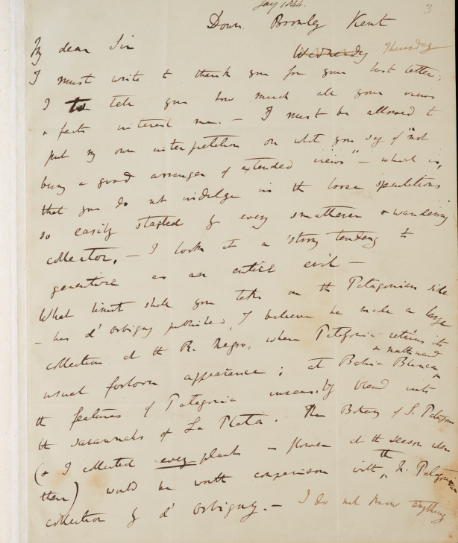
From a sci­en­tif­ic point of view the most impor­tant let­ter may be the one Dar­win wrote Hook­er on Jan­u­ary 11, 1844. Writ­ing from his home, Down House in Kent, Dar­win fires ques­tions at Hook­er about seeds, seashells and Arc­tic species—his mind obvi­ous­ly a blur of activity—and then describes that his work has tak­en a “pre­sump­tu­ous” turn. After years of research and col­lect­ing spec­i­mens, he was begin­ning to form an idea that “species are not (it is like con­fess­ing a mur­der) immutable.”

Fif­teen years lat­er Dar­win pub­lished On the Ori­gin of Species. (Find it on our Free Audio Books and Free eBooks col­lec­tions.)

In his let­ters to Hook­er, him­self a great botanist and explor­er, Dar­win works out and wor­ries over his ideas. In one let­ter he express­es impa­tience with all oth­er exist­ing expla­na­tions for the geo­graph­i­cal dis­tri­b­u­tion of plants.

The Cor­re­spon­dence Project has archived more than 7,500 of Darwin’s let­ters alto­geth­er, includ­ing the mail he sent home while at sea aboard The Bea­gle. Dar­win was 22 when he joined a team to chart the coast of South Amer­i­ca, a trip that was planned for two years but which stretched into five. After a bout of sea­sick­ness, Dar­win wrote home to his father.

A quick aside to those who long for the days of long let­ters and who believe that our IQs drop a point with each text: Take note of Darwin’s lib­er­al use of amper­sands, numer­als and quaint 19th cen­tu­ry con­trac­tions (sh’d for should, etc.). IMHO, these are all just Vic­to­ri­an short­cuts to speed up the process of hand­writ­ing when the mind can work so much more quick­ly.

Kate Rix writes about edu­ca­tion and dig­i­tal media. Vis­it her web­site: .

Are You Ready for the Return of Lost Species?: Stewart Brand on the Dawn of De-Extinction

The Earth is los­ing life forms at a dis­turb­ing rate. The biol­o­gist Edward O. Wil­son has esti­mat­ed that at least 27,000 species per year are dis­ap­pear­ing from our plan­et. That’s an aver­age of 74 species a day, or three every hour. Researchers warn that if we stay on this track, the Earth will enter its sixth mass extinc­tion–the first since the one that killed off the dinosaurs.

With ani­mal and plant habi­tats being crowd­ed out by a human pop­u­la­tion that has passed the 7 bil­lion mark and is grow­ing at a rate of 70 mil­lion peo­ple per year, sci­en­tists attempt­ing to stem the tide of extinc­tion have their work cut out for them. The vast major­i­ty of efforts, of course, are aimed at pre­serv­ing endan­gered species and mak­ing sure more species do not become endan­gered. But one man is spear­head­ing a bold project to actu­al­ly bring back species we have already lost.

Stew­art Brand first came to noto­ri­ety in the 1960s, as one of Ken Kesey’s Mer­ry Pranksters and as the cre­ator of the Whole Earth Cat­a­log. In 1996 he co-found­ed the Long Now Foun­da­tion, ded­i­cat­ed to fos­ter­ing long-term think­ing in our accel­er­at­ing cul­ture, with its “patho­log­i­cal­ly short atten­tion span.” One of Brand’s pet projects at Long Now is Revive & Restore, a pro­gram to coor­di­nate genet­ic research into bring­ing back present­ly extinct species. Brand spoke about the project (see above) on Feb­ru­ary 27 at a TED con­fer­ence in Long Beach, Cal­i­for­nia.

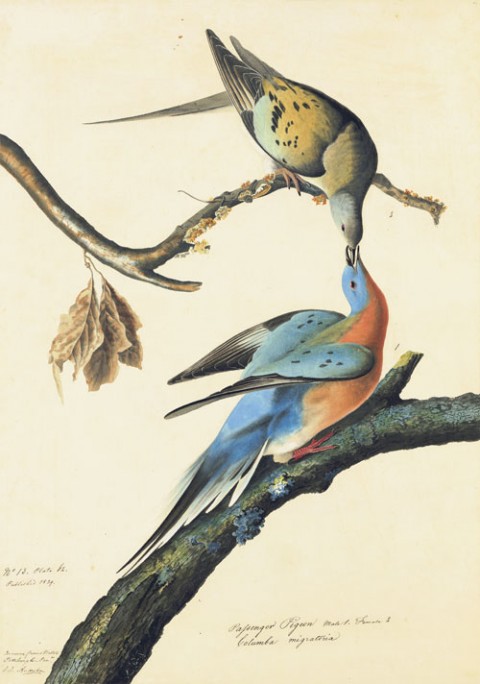
Revive & Restore’s first project is to bring back the pas­sen­ger pigeon, a bird that died off in 1914 but was once so abun­dant that migra­to­ry flocks in North Amer­i­ca would dark­en the sky. The pas­sen­ger pigeon was cho­sen as the ini­tial project because it is bet­ter-known than many extinct species and because the bird’s DNA (tak­en from muse­um spec­i­mens) has already been sequenced. But Brand promis­es that the pas­sen­ger pigeon is only the begin­ning. “The fact is,” he says, “humans have made a huge hole in nature in the last 10,000 years. We have the abil­i­ty now, and maybe the moral oblig­a­tion, to repair some of the dam­age.”

Passenger Pigeon Audubon .jpg

Pas­sen­ger Pigeon (Ectopistes migra­to­rius) by John James Audubon, 1824. Water­col­or, pas­tel, graphite, gouache, black chalk and black ink on paper. The image depicts a behav­ior known as “billing,” in which one bird shares food by regur­gi­tat­ing it into the bill of anoth­er. The male, with it’s more col­or­ful plumage, is shown stand­ing on the low­er branch, with the female up above.

Captivating Collaboration: Artist Hubert Duprat Uses Insects to Create Golden Sculptures

Once upon a time, the lar­vae of the Cad­dis Fly were con­sid­ered pret­ty unas­sum­ing crea­tures, fresh­wa­ter dwellers whose appeal was lim­it­ed to trout and trout fish­er­men. That is until French artist Hubert Duprat came along with an aes­thet­ic offer they could­n’t refuse.

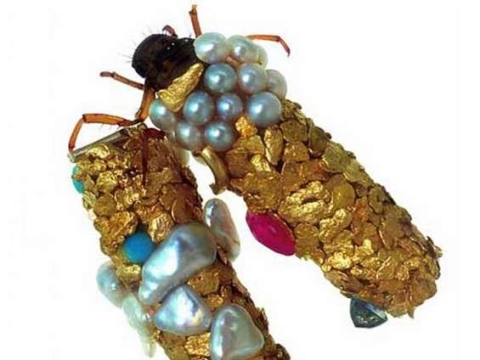
Left to their own devices, Cad­dis lar­vae con­struct pro­tec­tive cas­es from nat­ur­al mate­ri­als found in their habi­tat, patch­ing small pieces togeth­er with silken thread. A chance encounter with some prospec­tors at a riv­er in south­west­ern France led Duprat to won­der how the Cad­dis lar­vae might adapt if gold fig­ured more promi­nent­ly among their build­ing sup­plies. Thus began The Won­der­ful Cad­dis Worm: Sculp­tur­al Work in Col­lab­o­ra­tion with Tri­chopteras, an ongo­ing artis­tic exper­i­ment in a care­ful­ly con­trolled, sci­en­tif­ic set­ting.

Basi­cal­ly these birds are spin­ning their own gild­ed cages with what­ev­er lux­u­ry mate­ri­als Duprat intro­duces into their arti­fi­cial envi­ron­ment. The result­ing jew­el encrust­ed cre­ations would not be out of place in a Madi­son Avenue win­dow, though it’s pos­si­ble a near­sight­ed dowa­ger might mis­take the tiny jew­el­er for a cock­roach.

hubert-duprat

Whether or not one would opt to wear one of these blinged-out insect cas­ings were mon­ey no object, one has to admit their engi­neer­ing is a most unusu­al feat. It would make for one humdinger of a Sci­ence Fair project if only Duprat had­n’t patent­ed the tech­nique in 1983.

via Laugh­ing Squid

Relat­ed Con­tent:

Pi in the Sky: The World’s Largest Ephemer­al Art Instal­la­tion over Beau­ti­ful San Fran­cis­co

Artists Turn Weath­er Data into Swirling “Liv­ing Por­traits” of Con­ti­nen­tal U.S. Wind Pat­terns

Ayun Hal­l­i­day is slow­ly fig­ur­ing out how a writer home­schools a graph­ic nov­el enthu­si­ast in sub­jects of a sci­en­tif­ic nature. Fol­low her @AyunHalliday

Get Ready for MIT’s “Introduction to Biology: The Secret of Life” on edX

edX announced today what looks like a promis­ing new open course — Intro­duc­tion to Biol­o­gy: The Secret of Life. Host­ed by pro­fes­sor Eric Lan­der, one of the lead­ers of the Human Genome Project, this course will give stu­dents a ground­ing in “top­ics taught in the MIT intro­duc­to­ry biol­o­gy cours­es and many biol­o­gy cours­es across the world.” The course will cov­er every­thing from the basics of DNA to the intri­ca­cies of genomics. And it won’t run you any mon­ey. But it will require some time — about 6–8 hours per week, across 12 weeks (March 5 — May 28). Plus here’s a nice perk: any stu­dent who earns a pass­ing grade will receive “a cer­tifi­cate of mas­tery,” also free of charge. You can enroll in the course right here.

We have added Intro­duc­tion to Biol­o­gy: The Secret of Life to our ever-grow­ing list of MOOCs/Free Cer­tifi­cate Cours­es, along with anoth­er pri­mo edx course, a MOOC ver­sion of Michael Sandel’s Jus­tice: What’s the Right Thing to Do?. Be sure to check it out.

by | Permalink | Make a Comment ( 1 ) |

Cornell Launches Archive of 150,000 Bird Calls and Animal Sounds, with Recordings Going Back to 1929

Ornithol­o­gists and bird watch­ers rejoice. After a dozen years, The Cor­nell Lab of Ornithology’s Macaulay Library has ful­ly dig­i­tized its near­ly 150,000 audio record­ings (a total run­ning time of 7,513 hours), rep­re­sent­ing close to 9,000 dif­fer­ent species, such as the very unset­tling-sound­ing Barred Owl (above). While the col­lec­tion also includes the sounds of whales, ele­phants, frogs, pri­mates, and oth­er ani­mals, the pri­ma­ry empha­sis here is on birds (it is a Lab of Ornithol­o­gy, after all), and there is an incred­i­ble range of calls. Cor­nell rec­om­mends some of the high­lights below:

Ear­li­est record­ing: Cor­nell Lab founder Arthur Allen was a pio­neer in sound record­ing. On a spring day in 1929 he record­ed this Song Spar­row sound­ing much as they do today

Youngest bird: This clip from 1966 records the sounds of an Ostrich chick while it is still inside the egg – and the researchers as they watch

Liveli­est wake-up call: A dawn cho­rus in trop­i­cal Queens­land, Aus­tralia is burst­ing at the seams with war­bles, squeals, whis­tles, booms and hoots

Best can­di­date to appear on a John Coltrane record: The indri, a lemur with a voice that is part moan, part jazz clar­inet

Most spines tin­gled: The incom­pa­ra­ble voice of a Com­mon Loon on an Adiron­dacks lake in 1992

Most errat­ic con­struc­tion project: the stac­ca­to ham­mer­ing sounds of a wal­rus under water

Most like­ly to be mis­tak­en for aliens arriv­ing: Birds-of-par­adise make some amaz­ing sounds – here’s the UFO-sound of a Curl-crest­ed Manu­code in New Guinea

Whether you’re an enthu­si­as­tic bird­er, prac­tic­ing sci­en­tist, or sound-sam­ple hunter, you’ll find some­thing to blow your mind at the exten­sive col­lec­tions of the Macaulay Library. Both ama­teur and pro­fes­sion­al nat­u­ral­ists, for exam­ple, can acquire, visu­al­ize, mea­sure, and ana­lyze ani­mal sounds with a free ver­sion of the Cor­nell Lab’s pro­pri­etary inter­ac­tive sound analy­sis soft­ware, Raven.

And admir­ers of the aston­ish­ing vari­ety and beau­ty of the bird-of-par­adise should stay tuned for the Bird-of-Par­adise Project web­site, launch­ing this month. Sign up to receive an email when the full site launch­es. Mean­while, watch the project’s spell­bind­ing trail­er below.

Vis­it the Cor­nell Lab of Ornithol­o­gy’s YouTube page for more fas­ci­nat­ing bird videos.

Relat­ed Con­tent

Para­Hawk­ing in Nepal: What It’s Real­ly Like to Fly with Birds

The Wild King­dom: Brought to You by Mutu­al of Oma­ha (and YouTube)

Josh Jones is a free­lance writer, edi­tor, and musi­cian based in Wash­ing­ton, DC. Fol­low him @jdmagness

The Genius of Charles Darwin Revealed in Three-Part Series by Richard Dawkins

Evo­lu­tion­ary biol­o­gist Richard Dawkins has, over the past decade or so, grown close­ly asso­ci­at­ed in the pub­lic mind with athe­ism, and specif­i­cal­ly with the cause of tak­ing down cre­ation­ism. While he has no doubt court­ed this fame by writ­ing books like The God Delu­sion (wher­aeas thir­ty years ago he wrote books like The Self­ish Gene), we for­get at our own per­il that Dawkins can argue for things as well or bet­ter than he can argue against them. If Dawkins’ intel­lec­tu­al bĂŞte noire, the notion that an intel­li­gent design­er delib­er­ate­ly cre­at­ed life on Earth, already holds no appeal for you, you’ll enjoy The Genius of Charles Dar­win, his cel­e­bra­tion of the father of evo­lu­tion­ary the­o­ry, all the more. Even hard­core cre­ation­ists, in refer­ring to the accep­tance of evo­lu­tion­ary the­o­ry as “Dar­win­ism,” acknowl­edge the nine­teenth-cen­tu­ry nat­u­ral­ist’s exten­sive influ­ence. Dawkins, an even more ardent Dar­win admir­er than he is a cre­ation­ism detrac­tor, lays it unam­bigu­ous­ly out at the begin­ning: “This series is about per­haps the most pow­er­ful idea ever to occur to a human mind. The idea is evo­lu­tion by nat­ur­al selec­tion, and the genius who thought of it was Charles Dar­win.”

This British Broad­cast Award-win­ning Chan­nel 4 doc­u­men­tary series comes in three parts: “Life, Dar­win & Every­thing” (the title a nod to Dawkins’ late friend, Hitch­hik­ers’ Guide to the Galaxy author and biol­o­gy fan Dou­glas Adams), “The Fifth Ape,” and “God Strikes Back.” Begin­ning with the basics, it has Dawkins explain how, exact­ly, species evolve by way of nat­ur­al selec­tion, at one point to a dubi­ous high school class­room. After tak­ing the stu­dents on a field trip to check out the fos­sil record for them­selves, he returns to his colo­nial birth­place of Nairo­bi, Kenya — coin­ci­den­tal­ly, the geo­graph­i­cal ori­gin of homo sapi­ens itself. He explores the reli­gious impli­ca­tions of of evo­lu­tion, the wrong­head­ed nature of what’s called “social Dar­win­ism,” and the even wronger-head­ed nature of eugen­ics. He inter­views fig­ures like evo­lu­tion­ary psy­chol­o­gist Steven Pinker, Cre­ation Research pres­i­dent John Mack­ay, and Con­cerned Women for Amer­i­ca pres­i­dent Wendy Wright. All have some­thing to say about Dar­win’s obser­va­tion, whether for or against, and if against, Dawkins has a response. Call him over­con­fi­dent if you must, but in a show like this, he cer­tain­ly does take pains to approach his sub­ject from every pos­si­ble angle.

Relat­ed Con­tent:

Dar­win: A 1993 Film by Peter Green­away

Grow­ing Up in the Uni­verse: Richard Dawkins Presents Cap­ti­vat­ing Sci­ence Lec­tures for Kids (1991)

Richard Dawkins & John Lennox Debate Sci­ence & Athe­ism

Richard Dawkins Explains Why There Was Nev­er a First Human Being

Darwin’s Lega­cy, a Stan­ford course in our col­lec­tion of 650 Free Online Cours­es

Col­in Mar­shall hosts and pro­duces Note­book on Cities and Cul­ture and writes essays on lit­er­a­ture, film, cities, Asia, and aes­thet­ics. Fol­low him on Twit­ter at @colinmarshall.

Microscopic Battlefield: Watch as a Killer T Cell Attacks a Cancer Cell

Every day, inside our body, there is a war going on. Micro­scop­ic invaders of one kind or anoth­er try to make a meal of us, and our immune sys­tem fights back, seek­ing out the invaders and destroy­ing them. One of our body’s most impor­tant foot-sol­diers in this war is the T cell, a type of white blood cell with recep­tors that can rec­og­nize for­eign sub­stances. Like all white blood cells, T cells orig­i­nate in the bone mar­row, but then they migrate to an organ called the thy­mus (hence the “T” in “T cell”), where they evolve into spe­cial­ized immune sys­tem war­riors. Mature T cells, which leave the thy­mus and cir­cu­late around the body, come in dif­fer­ent types. One type, the cyto­tox­ic T cell, spe­cial­izes in attack­ing and killing cells of the body that are infect­ed by virus­es, bac­te­ria, or can­cer.

Which is where this fas­ci­nat­ing lit­tle video comes in. It shows a cyto­tox­ic T cell (also known as a “killer T cell”) attack­ing a can­cer­ous cell. The process is shown at 92 times the actu­al speed. And for a sense of scale, a cyto­tox­ic T cell is only 10 microns long, or about one-tenth the width of a human hair. The video was cre­at­ed by PhD stu­dent Alex Rit­ter at the Uni­ver­si­ty of Cam­bridge, and post­ed recent­ly in the uni­ver­si­ty’s “Under the Micro­scope” Web series. Rit­ter’s super­vi­sor in the Depart­ment of Med­i­cine, Pro­fes­sor Gillian Grif­fiths, explains the impor­tance of the research asso­ci­at­ed with the video:

Cyto­tox­ic T cells are very pre­cise and effi­cient killers. They are able to destroy infect­ed or can­cer­ous cells, with­out destroy­ing healthy cells sur­round­ing them.…By under­stand­ing how this works, we can devel­op ways to con­trol killer cells. This will allow us to find ways to improve can­cer ther­a­pies, and ame­lio­rate autoim­mune dis­eases caused when killer cells run amok and attack healthy cells in our bod­ies.

You can bone up on biol­o­gy by vis­it­ing the Bio sec­tion in our col­lec­tion of 625 Free Cours­es Online.

What Makes Us Tick? Free Stanford Biology Course by Robert Sapolsky Offers Answers

First thing you need to know: Before doing any­thing else, you should sim­ply click “play” and start watch­ing the video above. It does­n’t take long for Robert Sapol­sky, one of Stan­ford’s finest teach­ers, to pull you right into his course. Bet­ter to watch him than lis­ten to me.

Sec­ond thing to know: Sapol­sky is a MacArthur Fel­low, a world renowned neu­ro­bi­ol­o­gist, and an adept sci­ence writer best known for his book, Why Zebras Don’t Get Ulcers. Much of his research focus­es on the inter­play between the mind and body (how biol­o­gy affects the mind, and the mind, the body), and that rela­tion­ship lies at the heart of this course called “Human Behav­ioral Biol­o­gy.”

Now the third: Human Behav­ioral Biol­o­gy is avail­able on YouTube and iTunes for free. The course, con­sist­ing of 25 videos span­ning 36 hours, is oth­er­wise list­ed in the Biol­o­gy sec­tion of our big list of Free Online Cours­es (now 575 cours­es in total).

Ok, stop read­ing and just watch.…

Relat­ed Con­tent:

Robert Sapol­sky Breaks Down Depres­sion

Dopamine Jack­pot! Robert Sapol­sky on the Sci­ence of Plea­sure

« Go BackMore in this category... »
Quantcast